
Disclosure: This post contains affiliate links. If you book through one of these links, I may earn a commission at no extra cost to you.
Barcelona is really several cities wearing one name: Gaudí’s dreamlike Eixample, the medieval maze of the Gothic Quarter, the village-like plazas of Gràcia, and the sand-and-sea buzz of Barceloneta. Pick the wrong base and you’ll spend your days riding the metro past the neighborhoods you actually want to see; pick the right one and the city unfolds at your front door.
The good news: there’s no truly bad neighborhood in Barcelona, only one that doesn’t match your travel style. This guide breaks down the eight best areas to base yourself in 2026, who each one suits, the trade-offs nobody tells you about, and two standout hotel picks per area — plus the practical stuff (tourist tax, airport transfers, best months) that changes your budget math.
The quick answer
- First-timers who want it all: Eixample
- Local flavor and plaza culture: Gràcia
- Food, nightlife, and medieval streets: El Born
- Atmosphere over comfort: the Gothic Quarter
- Edgy, artsy, and great-value: El Raval
- Quiet, creative, near the beach: Poblenou
- Sea at your doorstep: Barceloneta
- Smart arrival base by the station: Sants-Montjuï
1. Eixample — the best all-rounder for first-timers
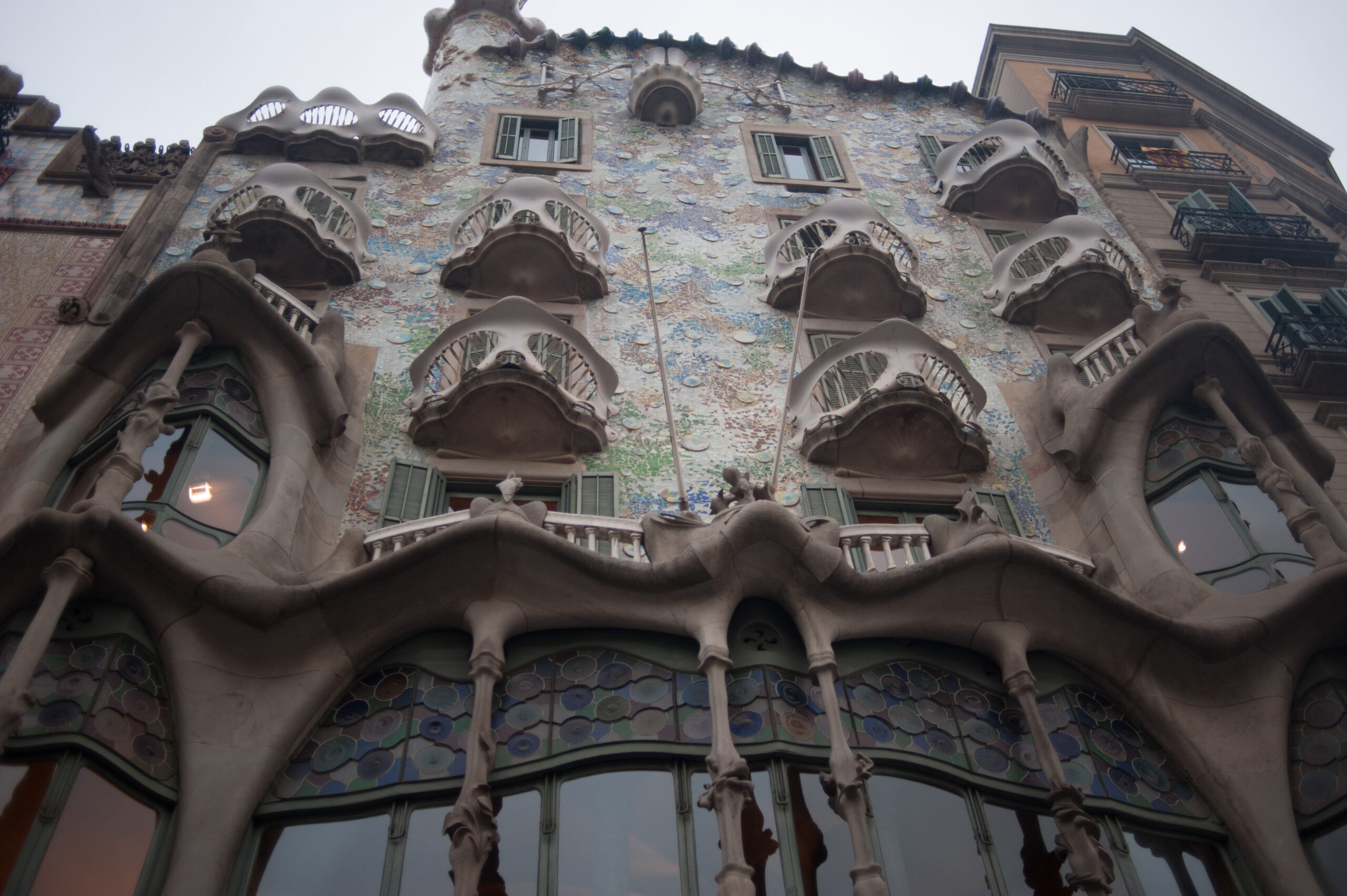
The Eixample is Barcelona’s grand 19th-century grid: wide boulevards, chamfered corners, and the highest concentration of Gaudí anywhere. Casa Batlló, Casa Milà, and the Sagrada Família are all here, plus Passeig de Gràcia’s luxury shopping. It’s the most practical base in the city — central to everything and superbly connected (L2/L3/L4 at Passeig de Gràcia, L3/L5 at Diagonal). The Esquerra side doubles as “Gayxample,” the LGBTQ+ hub with its own bar scene.
Best for: first-timers, couples, anyone who wants comfort and centrality without drama.
Keep in mind: it’s grand rather than quaint — you’ll get boulevards, not medieval lanes. And “Eixample” is big; check your hotel’s nearest metro before booking, because the wrong end can add 20 minutes of walking.
Hotel picks: El Palace — Barcelona’s original Ritz (1919), a 5-star grande dame with a Mayan-themed basement spa, a 14-meter pool, and a flower-laden rooftop; Casa Bonay — a design-led boutique in an 1896 building in Eixample Dreta, with Catalan-crafted interiors and a rooftop converted into an open-air spa with sauna, hammam, and cold plunge.
2. Gràcia — village life in the city
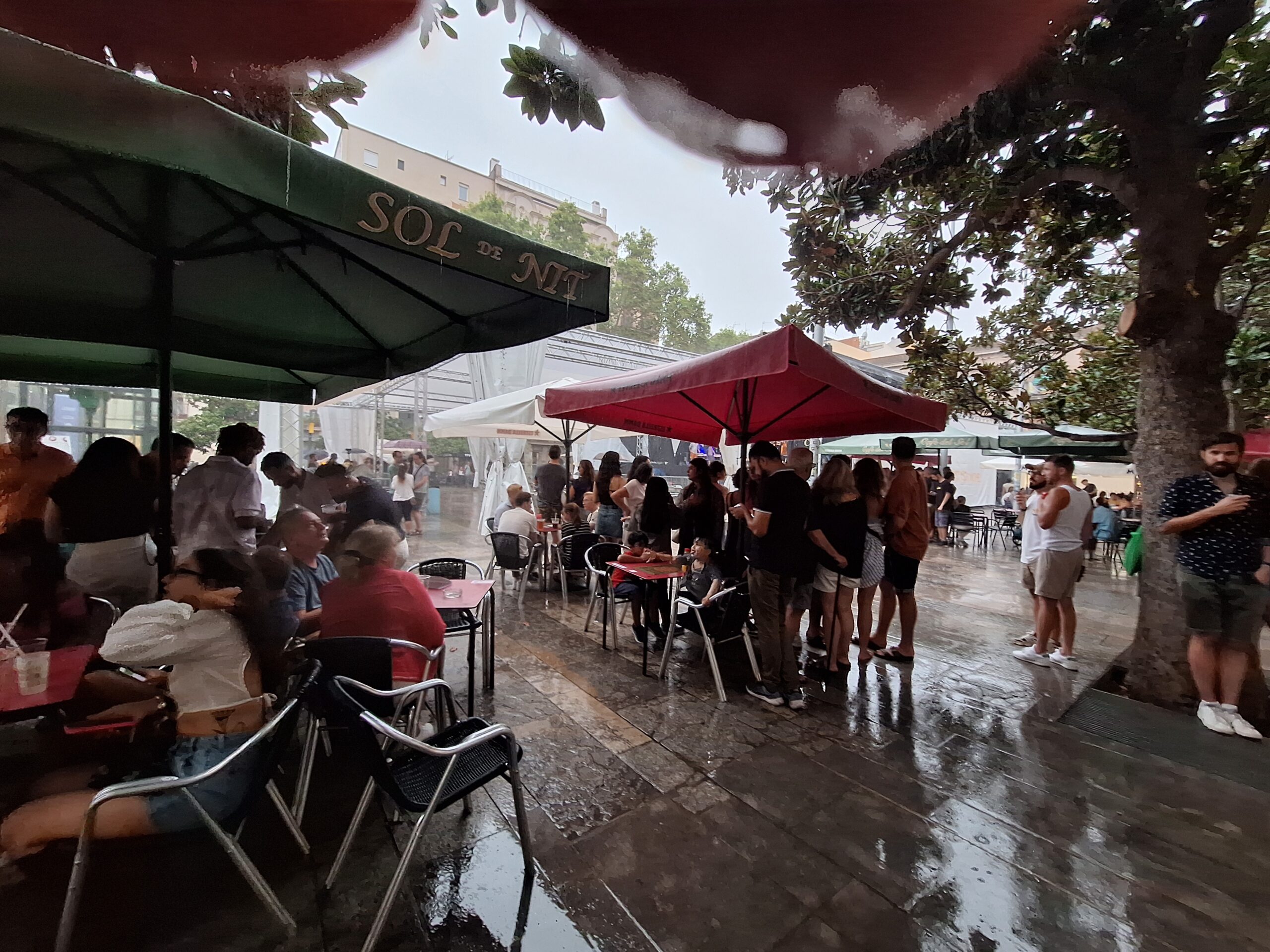
Gràcia was an independent town until 1897, and it still feels like one: a tight weave of plazas, indie boutiques, vermouth bars, and locals who actually know each other. Days here run on plaza time — coffee at Plaça del Sol, the vermouth hour, a stroll to Park Güell at the top of the hill. It’s the neighborhood travelers mean when they say they want the “real” Barcelona. The trade-off is distance: it’s a 20–25 minute walk or a short metro ride (L3 Fontana/Lesseps) to the old town.
Best for: independent travelers, repeat visitors, anyone who prefers local streets to tourist streets.
Keep in mind: it’s uphill toward Park Güell, and late-night transport thins out. Pair it with our 3-day Barcelona itinerary to see how a Gràcia morning flows into a city day.
Hotel picks: Hotel Casa Fuster — a 5-star icon in a 1908 modernista mansion by Lluís Domènech i Montaner, with a rooftop pool overlooking Passeig de Gràcia and the Café Vienés jazz club; Generator Barcelona — an upscale design hostel/hotel on Carrer de Còrsega at the Gràcia–Eixample border, with a rooftop terrace that punches far above its price.
3. El Born — the Gothic Quarter’s better cousin
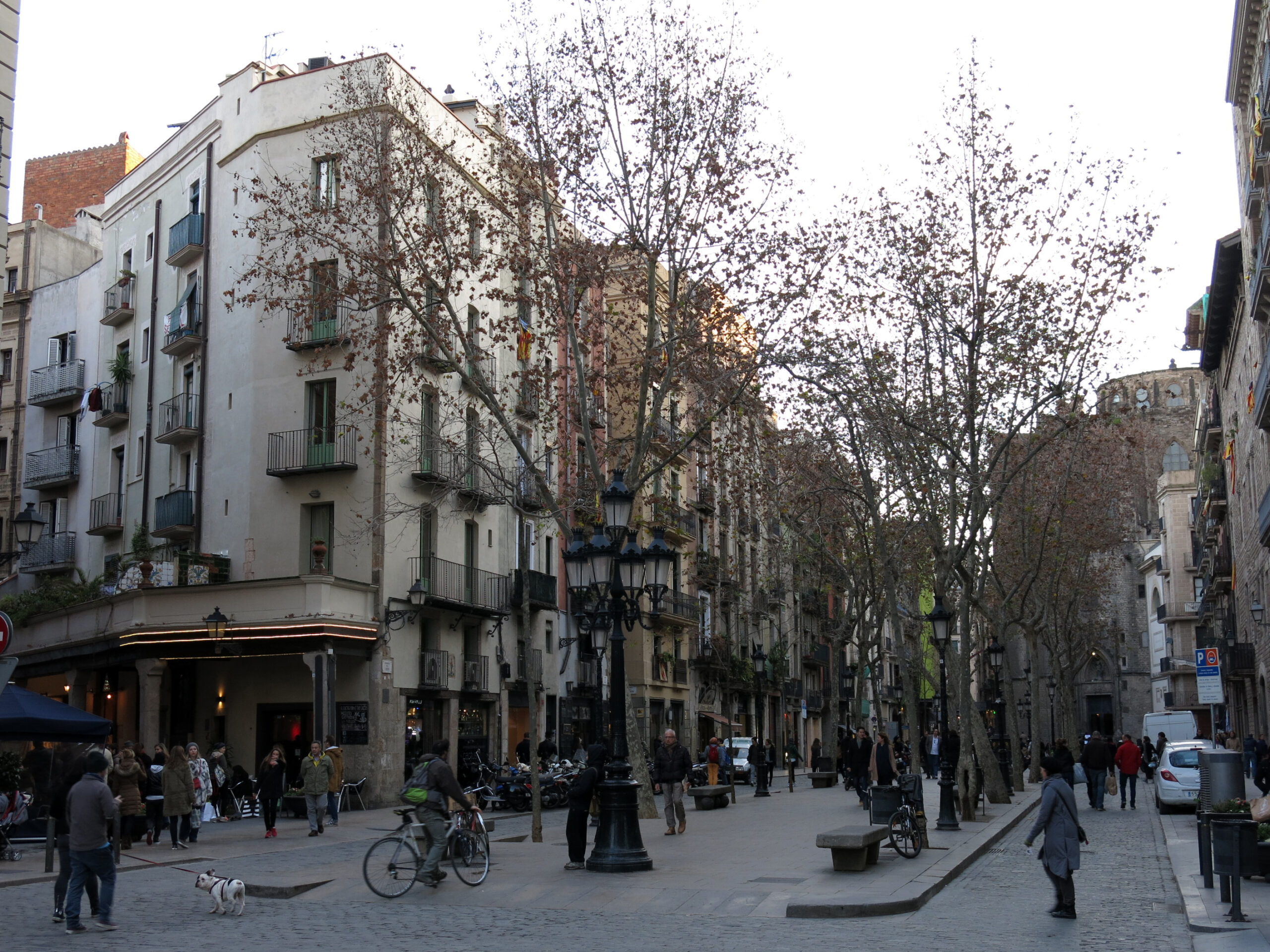
El Born has the medieval bones of the Gothic Quarter with more breathing room: leafy Passeig del Born, the soaring Santa Maria del Mar, the Museu Picasso, and Ciutadella park. It’s the city’s foodie and cocktail heart — tapas bars, wine cellars, and small-plates spots crowd the side streets, and the nightlife runs later than the old town without being rowdy. Metro connections (L4 Barceloneta/Jaume I) get you to the beach quickly.
Best for: food lovers, couples, nightlife fans who want character without chaos.
Keep in mind: prices run above average, and the best boutique stays book out early in high season. If you love wandering medieval lanes, our Barcelona hidden gems guide pairs perfectly with a Born base.
Hotel picks: Borneta — opened in late 2024 in a restored 19th-century building opposite Ciutadella park, art-filled with a rooftop pool and a mirrored egg sculpture by Pilar Zeta; Grand Hotel Central — a 5-star on Via Laietana at the Born’s edge, with rooms wrapped around the historic library of Catalan politician Francesc Cambó.
4. The Gothic Quarter — sleep where the history is
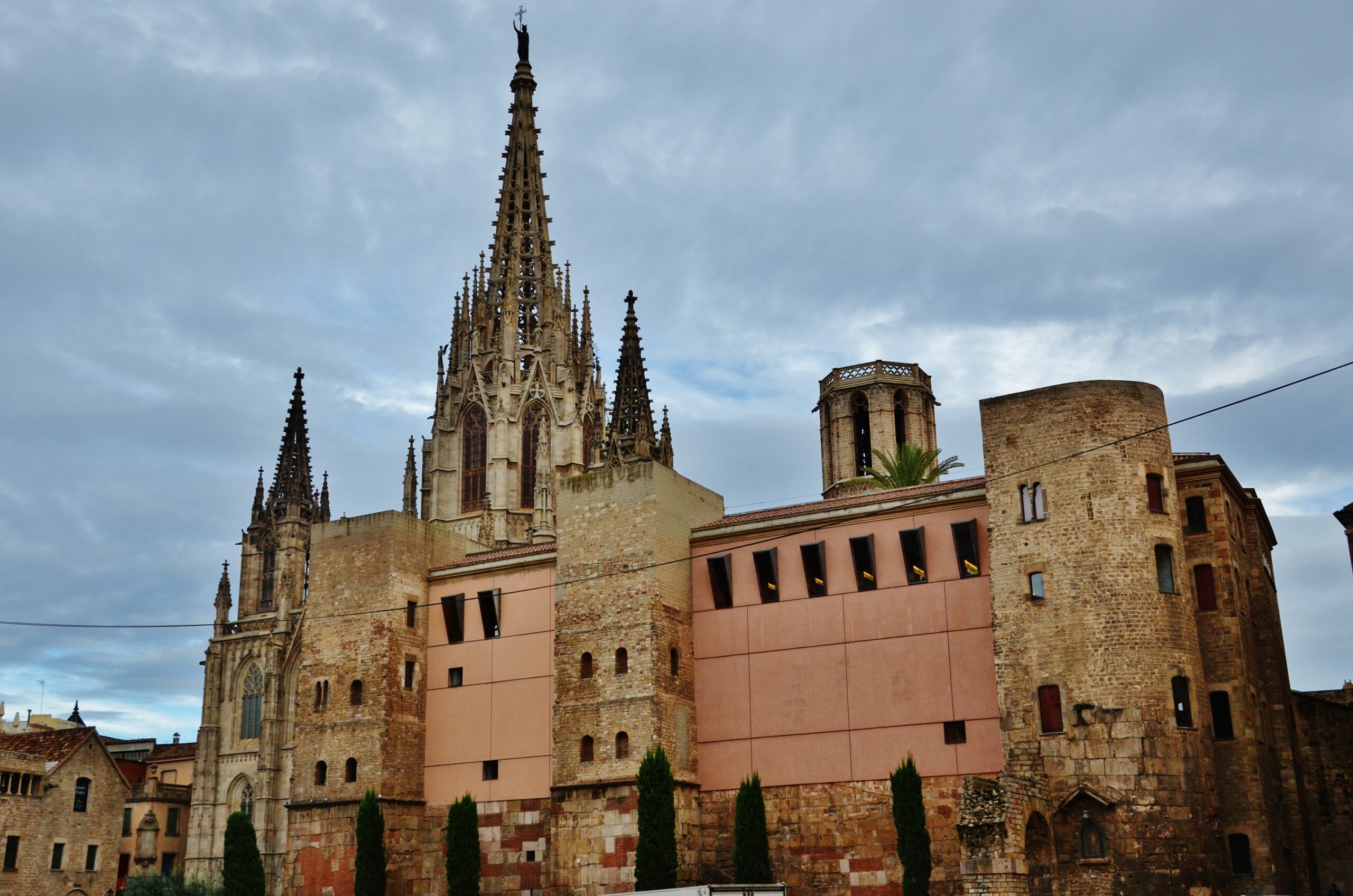
The Barri Gòtic is Barcelona’s oldest quarter: Roman walls, the Gothic cathedral, Plaça Reial’s arcaded palms, and hidden squares like Sant Felip Neri. Staying here puts you inside the postcard. The honest take: it’s magical by day but crowded, noisy at night, and hotel quality per euro lags behind the Eixample. A private guided walk through the Old Town and Gothic Quarter is the fastest way to decode the layers outside your hotel door.
Best for: romantics, photographers, travelers who prioritize atmosphere over convenience.
Keep in mind: expect noise and tourist-trap dining right outside your door — walk a street or two over for the good stuff. Light sleepers should choose a room off the main lanes or pick El Born instead.
Hotel picks: Kimpton Vividora — a 5-star on a quiet street in the quarter’s heart, with a 7th-floor wraparound rooftop overlooking the cathedral’s Gothic spires and a small dipping pool; The Wittmore — a 5-star boutique tucked on peaceful Carrer de Riudarenes, with a courtyard terrace, rooftop deck, and marble bathrooms.
5. El Raval — edgy, artsy, and excellent value
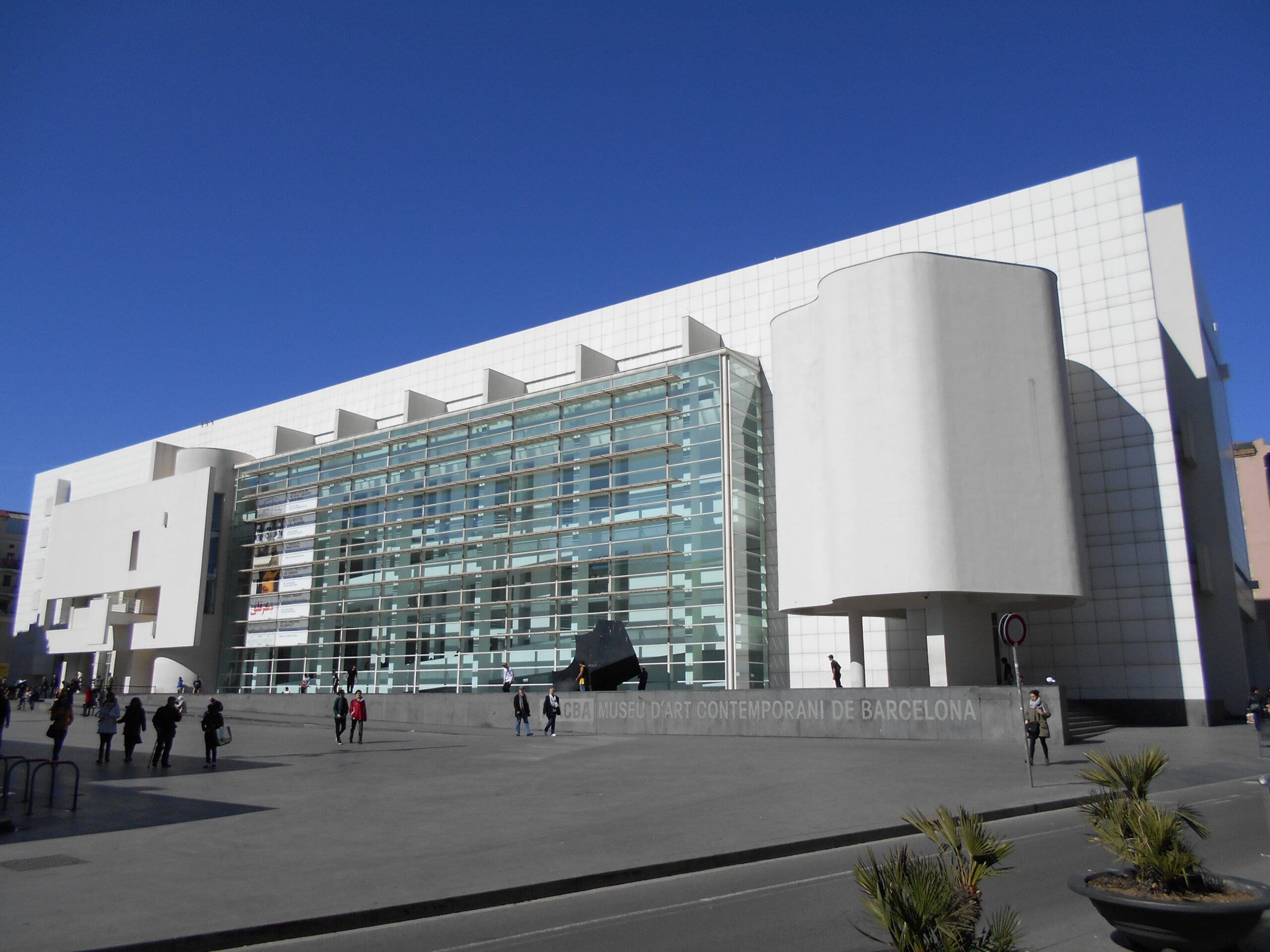
El Raval is Barcelona’s multicultural edge: the stark white MACBA museum and its skater-filled plaza, Palau Güell’s chimneys, and some of the city’s best-value dining — from Pakistani curry houses to hip natural-wine bars. It’s grittier than the Gothic Quarter, especially around La Rambla del Raval at night, but it has real character and the prices reflect it. Stay near the Paral·lel/MACBA side rather than the deepest lanes, and it rewards you handsomely.
Best for: budget-savvy travelers, art lovers, anyone who likes a neighborhood with an edge.
Keep in mind: block choice matters more here than anywhere else in the city — stick near Paral·lel and MACBA at night, and keep bags zipped like everywhere in the center.
Hotel picks: Soho House Barcelona — members-club-style hotel at the Raval’s port edge, with a rooftop terrace and pool that ranks among the city’s best; Hotel 1898 — a 4-star in a restored colonial-era building right on Las Ramblas at the Raval’s edge, with a rooftop pool and city views.
6. Poblenou — calm, creative, and near the sand
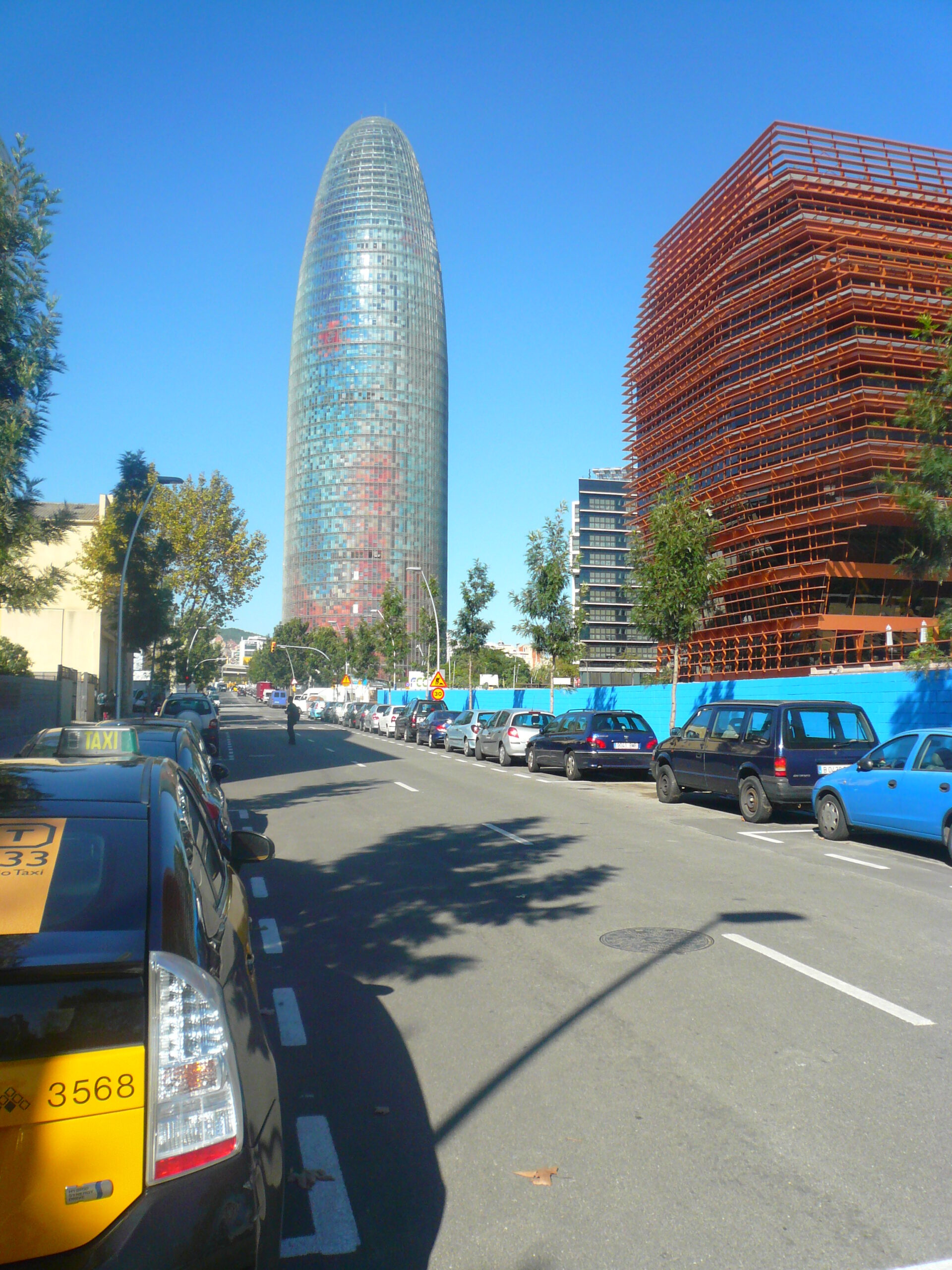
Once an industrial district, Poblenou is now Barcelona’s creative quarter — calm residential streets, design studios, the bullet-shaped Torre Glòries, and Bogatell beach a few blocks from the metro. It’s about 10 minutes by metro to the center (L4 Poblenou/Selva de Mar), so rates stay sane and crowds stay thin. If you’d rather sleep somewhere peaceful and commute to the sights, this is your move.
Best for: families, longer stays, travelers who want beach access without Barceloneta’s buzz.
Keep in mind: evenings are quiet — plan dinners in the center or Eixample and ride home. The area around the Rambla del Poblenou has the best restaurant concentration.
Hotel picks: The Hoxton, Poblenou — photogenic Mediterranean-style rooms and a rooftop pool with terrace, a 20-minute walk from both the Sagrada Família and the beach; SLS Barcelona — a maximalist resort at the Poblenou edge with three pools, a spa, and the Kyara cocktail bar, near the beach and Primavera Sound grounds.
7. Barceloneta — the sea at your doorstep
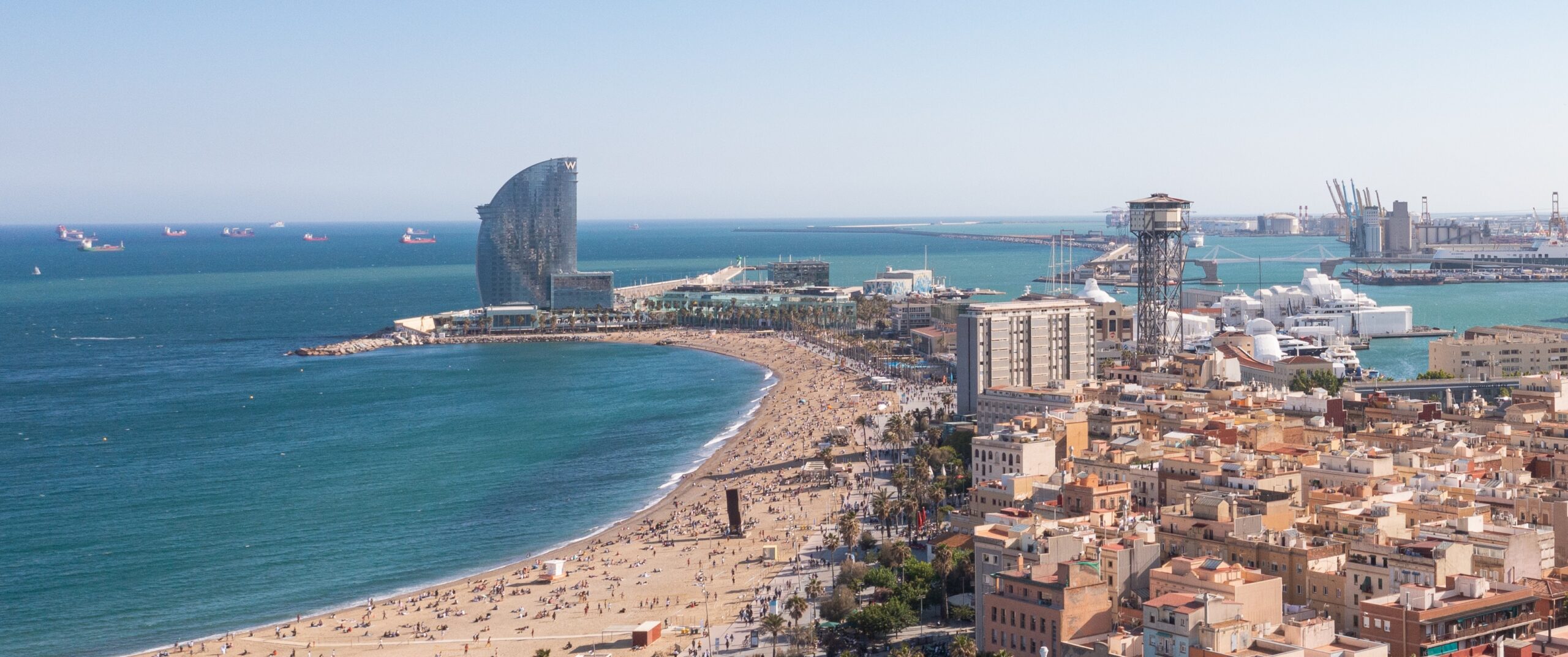
Barceloneta is the old fishermen’s quarter turned beach neighborhood: narrow lanes that still feel local, seafood restaurants along the front, and the sand literally at the end of your street. If the sea is a daily priority, nothing else in Barcelona compares. The honest take: hotel supply is very thin, summer brings noise and crowds, and it’s not the most efficient base for sightseeing days (the Park Güell and Sagrada Família combo tour with transport is a smart fix for that).
Best for: beach-first travelers, summer trips built around the sea.
Keep in mind: it’s a pricey, limited hotel market — book early, and brace for lively summer nights.
Hotel picks: W Barcelona — Ricardo Bofill’s sail-shaped landmark at the tip of Barceloneta, beachfront with the famous Eclipse rooftop bar and pool; Hotel Arts Barcelona — the Ritz-Carlton tower at the Olympic Port edge, with Gehry’s golden fish sculpture, a spa, and direct beach access.
8. Sants-Montjuï — the smart arrival base
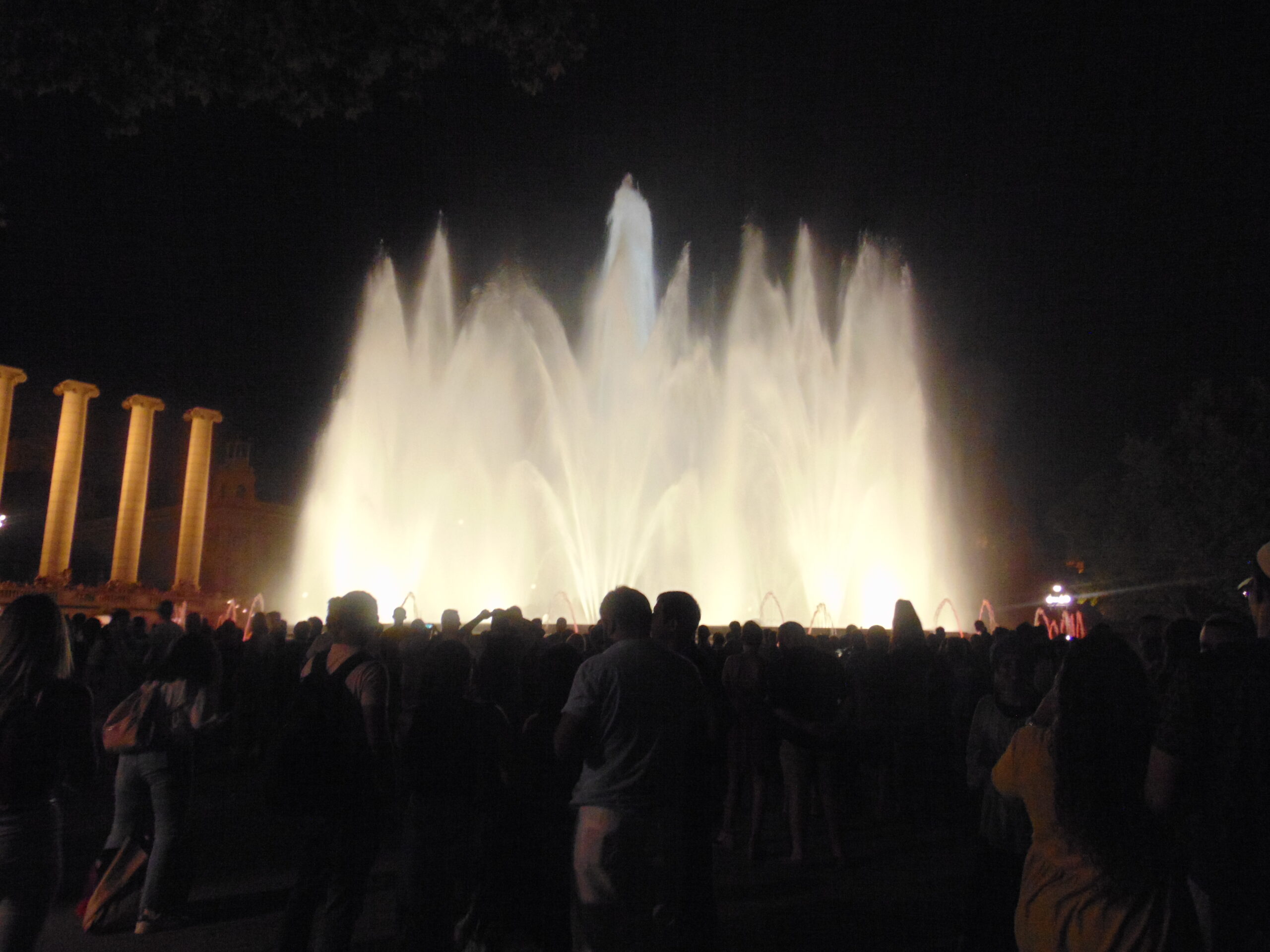
Sants-Montjuï isn’t where tourists usually look — and that’s the point. Barcelona Sants is the city’s main train station (AVE, Rodalies, L3/L5), so staying here makes arrivals and day trips effortless. Poble Sec, at the foot of Montjuïc, hides Carrer de Blai — arguably the city’s best pintxos street — and Montjuïc hill itself holds the castle, the museums, and the Magic Fountain’s light shows. Rates are lower than the center for equivalent quality.
Best for: rail travelers, night-before-a-flight stays, budget-conscious trips that don’t skimp on comfort.
Keep in mind: you’ll metro or taxi into the center for most sightseeing — fine, since Sants connects everywhere, but it’s not a “step outside and you’re there” base.
Hotel picks: Barceló Sants — a 4-star curved landmark built directly above Barcelona Sants station, with family-friendly suites and unbeatable rail access; Hotel Brummell — a boutique budget pick in Poble Sec at the foot of Montjuïc, well placed for the pintxos bars and the fountain shows.
Practical: tourist tax, airport, and timing
Tourist tax (2026): budget for it — Catalonia roughly doubled the nightly tourist tax from April 2026, and it now runs about €10–15 per person per night depending on your hotel’s category (5-star at the top, lower for 3-star and below), capped at 7 nights, with under-16s exempt. On a week-long stay for two, that’s a real line item — check whether your quoted rate includes it.
Airport to the city: El Prat sits 12 km southwest of downtown. The Aerobús (€7.25) is the sweet spot — about 25 minutes to Plaça Catalunya every 5–10 minutes. The L9 Sud metro (€5.65 special airport ticket) takes 35+ minutes with a transfer, and note your regular T-Casual won’t open the airport gates — buy the airport ticket first. The R2 train from Terminal 2 to Sants runs about 19 minutes and accepts the T-Casual. A taxi runs about €39 flat to the center from the official AMB rank. Use the official rank; don’t follow touts.
Best months: May–June and September–October — warm but not scorching (17–26°C), lively but not packed. Late spring and September are the sweet spot for sightseeing plus beach. July–August brings mid-30s heat, peak crowds, and peak prices; January–February is cheapest if you don’t mind cooler days.
Safety: Barcelona’s pickpocket reputation is real, especially on Las Ramblas and in the Gothic Quarter. Keep bags zipped, phones out of back pockets, and stay aware in crowds. Stroll Las Ramblas once — it’s a rite of passage — but don’t eat or stay there; the quality drops and the prices rise within a block of it.
Where I’d stay
If this were my trip: first-timers go Eixample — Casa Bonay for design lovers, El Palace if you’re splurging. Second visit or food-first trip: El Born. Beach-first summer: Barceloneta, booked early. Quiet and creative: Poblenou. And wherever you land, buy your Sagrada Família tickets before you arrive — same-day entry is a gamble, and the timed slots sell out first.
Pair this guide with our Madrid 3-day itinerary if you’re doing the classic Spain double — the two cities reward each other more than most travelers expect.