Barcelona in 3 Days: The Perfect Itinerary for First-Timers (2026)
There has never been a better time to visit Barcelona. In February 2026, the final section of the Sagrada Família’s Tower of Jesus Christ was lifted into place, topping the basilica out at 172.5 meters and making it the tallest church in the world — and on June 10, 2026, exactly one hundred years after Antoni Gaudí’s death, the new tower was blessed in front of tens of thousands of people. You get to see it fresh.
Never forget a thing before you fly. My free 8-page Travel Planning Checklist walks you through the whole trip — 6 planning timelines, 36 checks, from booking windows to travel-day basics. One email, no spam, unsubscribe anytime.
Disclosure: This post contains affiliate links. If you book through one of these links, I may earn a commission at no extra cost to you.
Three days is the sweet spot for a first visit: one day for the old town, one for Gaudí, and one for Park Güell and the sea. Here’s how to do it without the rookie mistakes — like assuming you can buy Sagrada Família tickets at the door (you can’t).
Before You Go: 5 Things First-Timers Should Know
Book Sagrada Família and Park Güell weeks ahead. Both use timed-entry tickets that sell out days — sometimes weeks — in advance in high season. There is no ticket office at the Sagrada Família; everything is online. A skip-the-line guided tour of the Sagrada Família guarantees your entry and means you actually understand what you’re looking at.
Stay central. The Gothic Quarter, El Born, and Eixample put you within walking distance of most sights and the metro. Book tickets for the two Gaudí headliners for the earliest slot of the day — the light is better and the crowds are thinner.
Getting in from the airport is easy. The Aerobus runs every 10 minutes from both terminals to Plaça de Catalunya in about 35 minutes for around €7 — the fastest cheap option. Taxis run €30–40.
Watch your pockets. Barcelona’s pickpockets are famously skilled, especially on La Rambla and in the metro. A crossbody bag with a zipper and your wits about you will do.
Eat on Spanish time. Lunch starts around 1:30 or 2, and dinner rarely before 9. Trying to get a proper dinner at 6pm will mark you as a tourist faster than anything else.
Day 1: The Old Town — Gothic Quarter, El Born & La Rambla
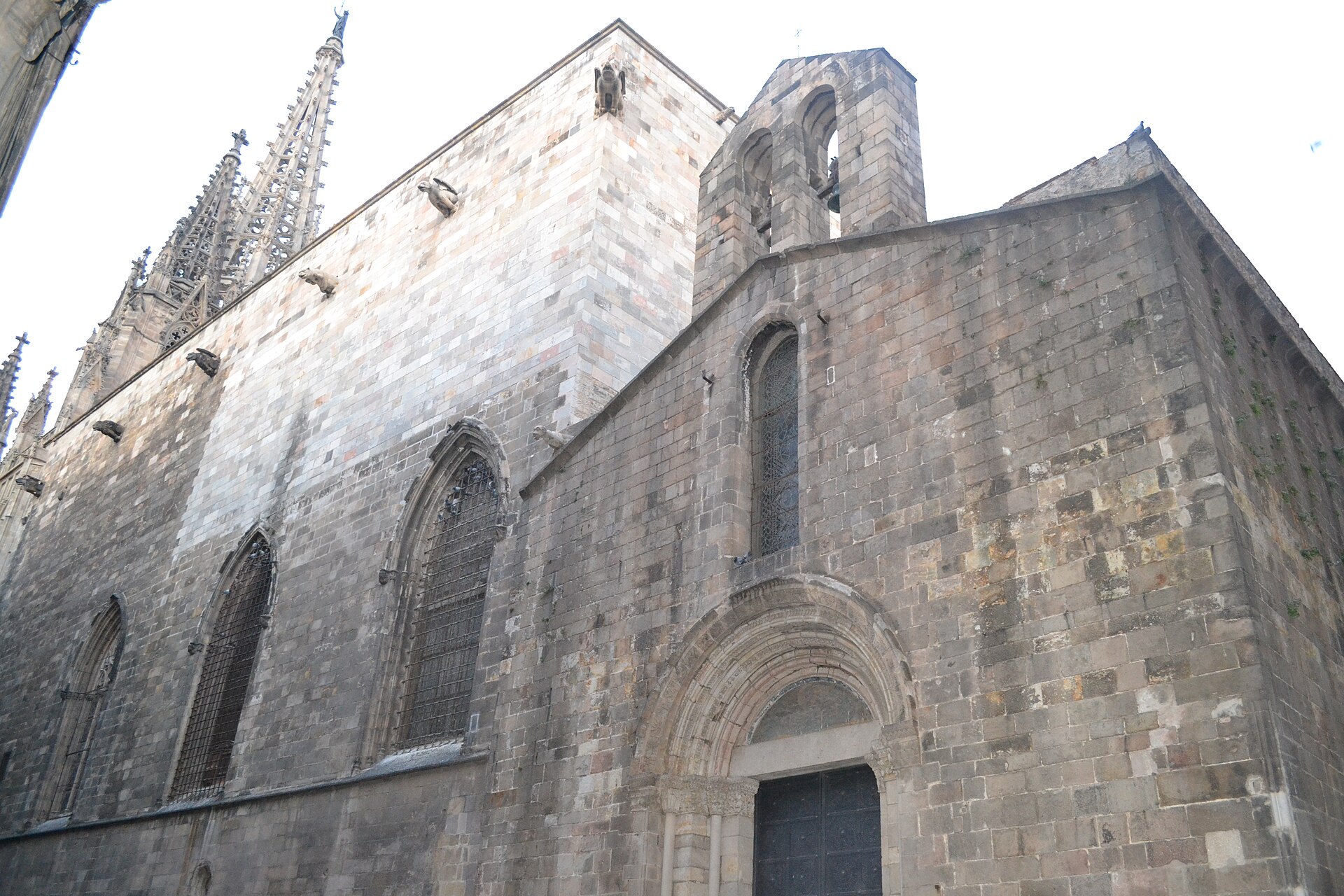
Narrow streets of the Barri Gòtic. Photo: Maxim Karpinskiy, CC BY-SA 3.0, via Wikimedia Commons
Start where Barcelona started, in the Barri Gòtic (Gothic Quarter). This maze of medieval streets sits right on top of the Roman city of Barcino — you can still see Roman wall fragments near Plaça Nova. The Barcelona Cathedral anchors the quarter; its cloister, with its geese and quiet courtyard, is one of the loveliest surprises in the city.
Wander to Plaça del Rei and the Plaça de Sant Felip Neri, a small square scarred by Civil War bomb shrapnel that still moves people to silence. Then cross into El Born, the quarter’s cooler, artsier sibling, for the spectacular Santa Maria del Mar — the 14th-century “cathedral of the sea” built by dockworkers in just 55 years.

Stalls inside La Boqueria market. Photo: Matti Blume, CC BY-SA 4.0, via Wikimedia Commons
Walk La Rambla itself — it’s a promenade, not a shopping street, and locals mostly come here for one place: La Boqueria market, the glass-and-iron food hall just off the boulevard. Graze on jamón, fresh fruit cups, and fried anchovies at the counter stalls for lunch. A 3-hour private walking tour of the Old Town and Gothic Quarter is a great way to get oriented on day one — a guide unlocks two thousand years of history you’d otherwise walk right past.
In the evening, get lost on purpose in El Born, then settle into a vermouth bar or a tapas spot for dinner at Spanish hours. If flamenco calls, Tablao Cordobés on La Rambla has been running respected shows for decades.
Day 2: Gaudí Day — Sagrada Família & Passeig de Gràcia

The Sagrada Família, completed as the world’s tallest church in 2026. Photo: Alvesgaspar, CC BY-SA 4.0, via Wikimedia Commons
Devote your second day to Antoni Gaudí, and start at his unfinished basilica. Go early. When the morning light hits the eastern stained-glass windows, the interior turns a cool blue and green — in the late afternoon it burns orange and red through the western windows. Timed tickets sell out, and this is one sight where a Sagrada Família guided tour with skip-the-line tickets genuinely pays for itself: the symbolism in the facades and columns is impossible to decode on your own.
Afterward, walk or metro down to Passeig de Gràcia, Barcelona’s grandest avenue, for Gaudí’s two apartment blocks. Casa Batlló — the dragon-backbone house with its shimmering trencadís facade — is the more theatrical of the two; standard entry starts around €35 and the rooftop is worth every cent. A few blocks away, Casa Milà (La Pedrera) stares back with its rippling stone facade and rooftop forest of warrior-like chimneys.

Casa Batlló’s trencadís facade on Passeig de Gràcia. Photo: Alvesgaspar, CC BY-SA 4.0, via Wikimedia Commons
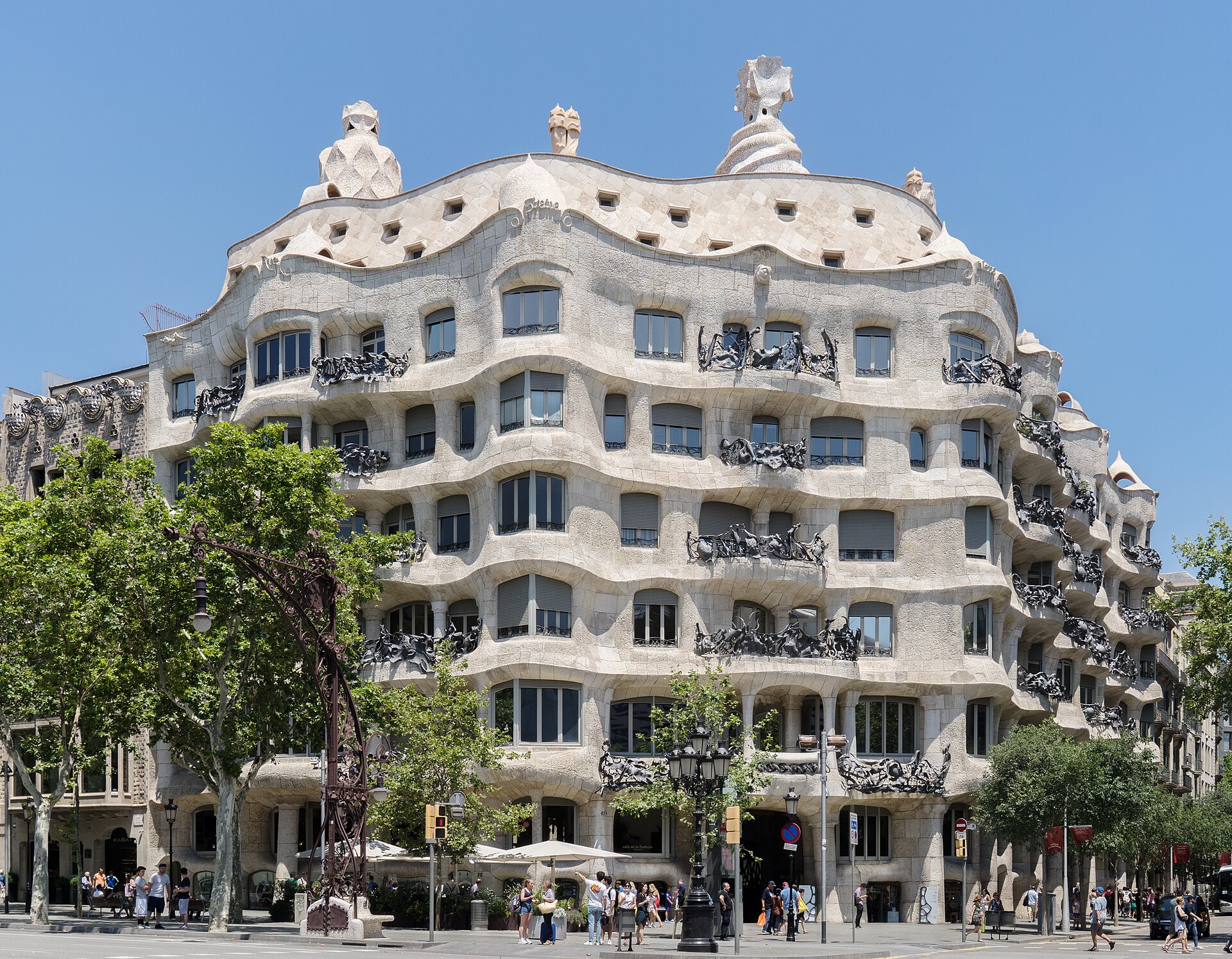
Casa Milà, known as La Pedrera. Photo: Thomas Ledl, CC BY-SA 4.0, via Wikimedia Commons
You don’t need to go inside both — if you tour one, pick Casa Batlló — but the avenue itself is a joy: this is the “Illa de la Discòrdia,” the Block of Discord, where Gaudí, Domènech i Montaner, and Puig i Cadafalch built rival modernist masterpieces side by side.
End the day in Gràcia, the former village-turned-bohemian neighborhood, where locals eat. The plazas fill with people drinking vermouth, and dinner here costs half of what it does on La Rambla.
Day 3: Park Güell & the Sea

The mosaic terrace at Park Güell. Photo: Jorge Franganillo, CC BY 2.0, via Wikimedia Commons
Go to Park Güell first thing in the morning. Gaudí’s mosaic-covered garden city — originally a failed luxury housing development — is the most joyful place in Barcelona: the salamander on the Dragon Stairway, the 86-column Hypostyle Room, and the world’s longest undulating bench on the Nature Square, with the whole city spread below. Entry to the Monumental Zone is a timed ticket (around €18 for adults, capped at 1,400 visitors per hour), so book the earliest slot. A combined Park Güell and Sagrada Família guided tour covers both in half a day with transport between them, if you’d rather not manage the logistics.
Then head downhill to the sea. La Barceloneta is Barcelona’s city beach — lively, a little gritty, and perfect for a long seafood lunch. Order the arroz negro (black rice) or a proper paella at one of the waterfront restaurants, then walk the promenade.

The promenade at La Barceloneta beach. Photo: Joe Mabel, CC BY-SA 4.0, via Wikimedia Commons
If you have energy left, close your three days at Montjuïc for sunset — the castle, the gardens, and the view back over the port. Check the schedule for the Magic Fountain’s evening light-and-music shows if they’re running during your visit.
How much does 3 days in Barcelona actually cost?
Prices are typical 2026 ranges for one person, excluding flights — expect the top end in May, June, and September.
| Per day (one person) | Budget | Mid-range | Comfortable |
|---|---|---|---|
| Accommodation | €40–70 | €120–180 | €280+ |
| Food & drink | €30–45 | €60–90 | €110+ |
| Sights & tours | €15–25 | €30–50 | €60+ |
| Transport | €8–12 | €12–18 | €25+ |
| Daily total | €93–152 | €222–338 | €475+ |
Sagrada Família slot strategy
Book two to three weeks ahead in high season — walk-up tickets are effectively a myth from May to October. Take the first slot of the day (9am): the shortest lines, and the morning light through the east-facing stained glass is the whole show. Tower access sells out first, so decide when you book, not when you arrive. Midday slots mean the longest waits of the day.
Rainy-day backup plan
If heavy rain is forecast, swap the Day 3 beach morning for interiors: the Palau de la Música Catalana guided tour (book ahead), the Museu Picasso with a timed ticket, and a food crawl through the Mercat de Sant Josep de la Boqueria. Light rain? Park Güell is actually better in it — thinner crowds, glistening mosaics — just bring a rain shell.
What I’d skip if you’re tired
The full Camp Nou experience if you are not a football fan — it eats half a day. And do not walk La Rambla end to end out of obligation: see the Boqueria market and the Liceu stretch, then escape into El Born, where the streets are prettier and the vermouth is cheaper.
The Practical Bit
Best time to go: April–June and September–October bring warm days and thinner crowds than the July–August furnace. Winter is mild and the cheapest time, with far fewer lines.
Getting around: The metro is clean, fast, and covers everything on this itinerary. A T-dia (day ticket) or Hola Barcelona travel card pays off if you’re making more than a couple of trips a day. Central Barcelona is very walkable — Day 1 and Day 2 are almost entirely on foot.
Day 4? If your trip stretches longer, Montserrat’s serrated mountain monastery is the classic day trip — about an hour by train. But three days covers Barcelona’s essential core without rushing.
Like this kind of city guide? Check out our Porto in 3 Days itinerary for another perfect European long weekend, or our Lisbon in 3 Days guide if Iberia has you hooked.