
Tokyo has a way of hiding its best self in plain sight. Beyond the Shibuya scramble and the Senso-ji crowds, the city keeps entire neighborhoods that feel like small towns, a wooded ravine that feels like countryside, and alleys that feel frozen in 1955. These are the places Tokyoites go on their days off — the ten spots locals would tell a friend to see once the big sights are done. If this is your first trip, start with our Tokyo in 3 Days itinerary for the headline sights, then use this list for everything after.
Never forget a thing before you fly. My free 8-page Travel Planning Checklist walks you through the whole trip — 6 planning timelines, 36 checks, from booking windows to travel-day basics. One email, no spam, unsubscribe anytime.
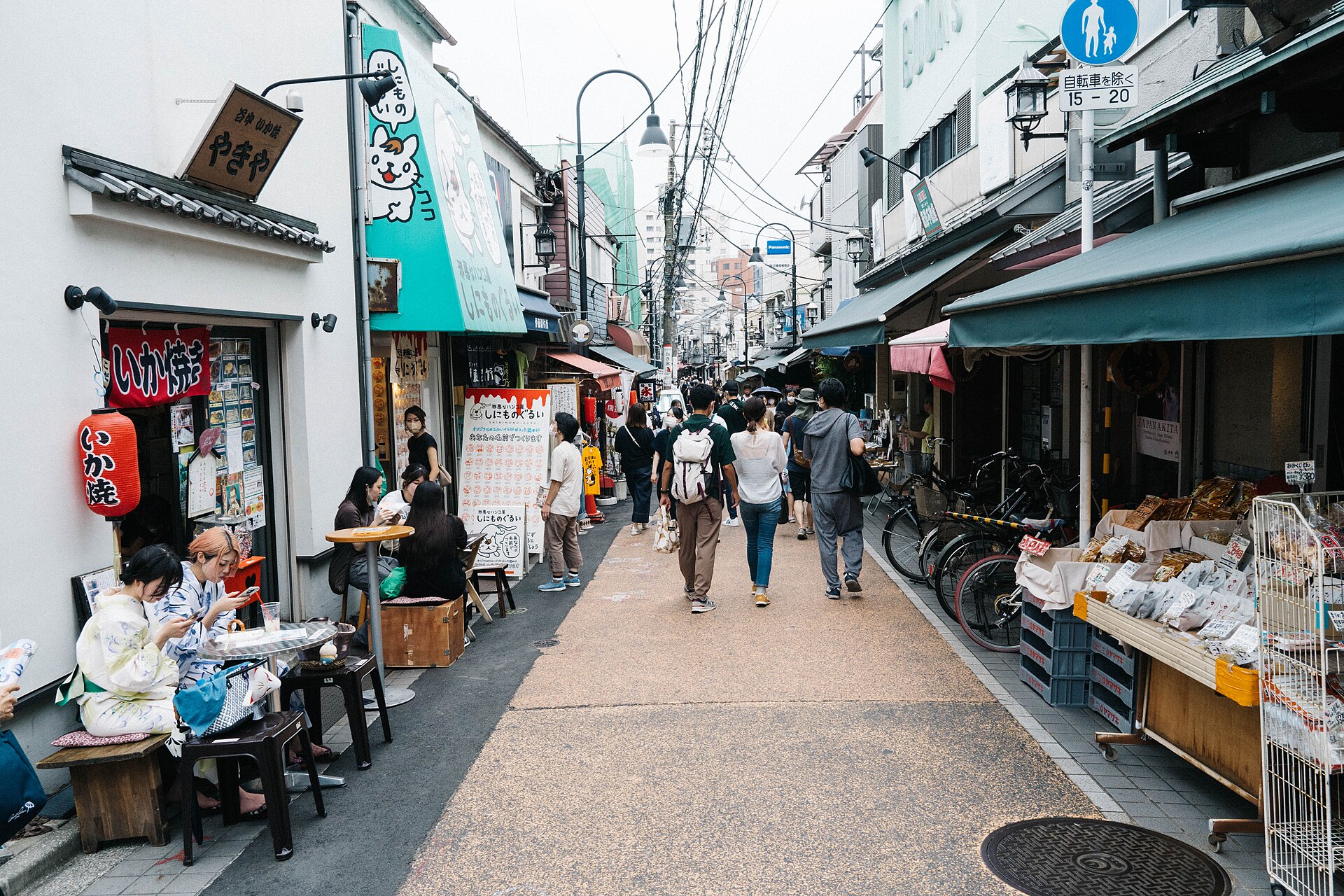
1. Yanaka Ginza: old Tokyo’s living room
Yanaka is the Tokyo that survived. While the rest of the city was flattened by earthquake and war, this pocket of the old shitamachi downtown kept its wooden shopfronts, its temples, and its unhurried rhythm. Its heart is Yanaka Ginza, a 170-meter shopping street of around 60 family-run shops selling croquettes, taiyaki, tofu doughnuts, and handmade crafts — most of it for pocket change. The neighborhood is nicknamed “Cat Town” for the strays that sunbathe on the walls and the cat motifs in half the shop windows.
Enter from the top of the Yuyake Dandan — the “sunset stairs” — about 30 minutes before dusk. The street runs due west, so on a clear evening the light pours straight down its axis and the whole lane turns amber. It’s five minutes on foot from Nippori Station, most shops trade roughly 10:00 to 18:00, many close on Mondays, and cash still rules here.
2. Gotokuji: the temple of a thousand lucky cats
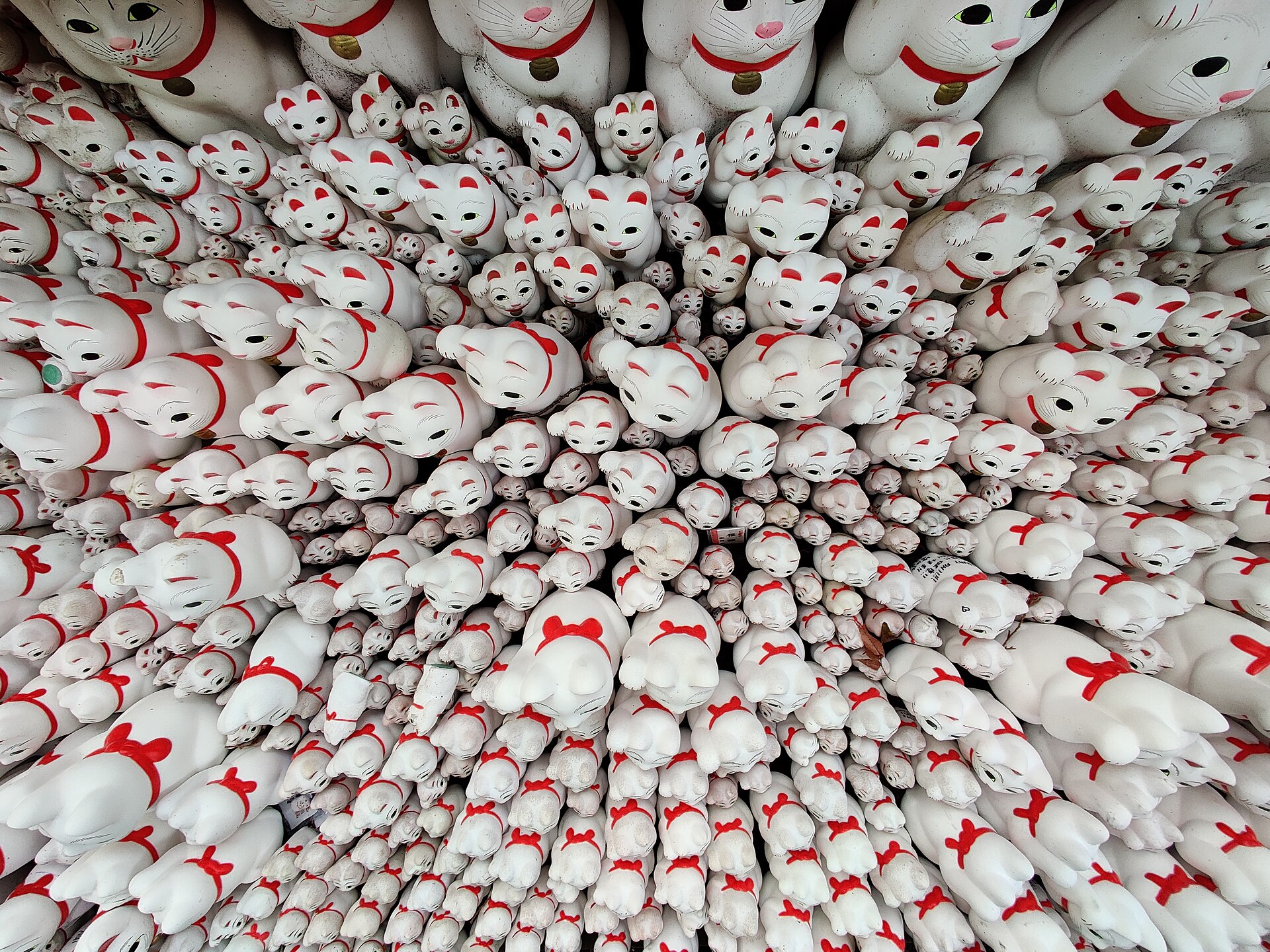
In a quiet Setagaya backstreet stands the temple legend credits as the birthplace of the maneki-neko, the beckoning lucky cat. The story goes that in the early 1600s, the feudal lord Ii Naotaka was caught in a thunderstorm outside the temple gate when a cat beckoned him inside — moments before lightning struck where he’d been standing. Grateful, he became the temple’s patron, and the cat was honored as a bringer of fortune.
Believers have been leaving lucky-cat figurines here ever since, and the result is extraordinary: shelf after shelf of white ceramic cats, all raising one paw, filling the Shofukuden hall and spilling out around it. It’s one of the strangest and calmest sights in Tokyo. Reach it on the Odakyu Line from Shinjuku to Gotokuji Station (about 20 minutes), then a short walk through a neighborhood that feels nothing like central Tokyo.
3. Todoroki Valley: a ravine hiding in the suburbs
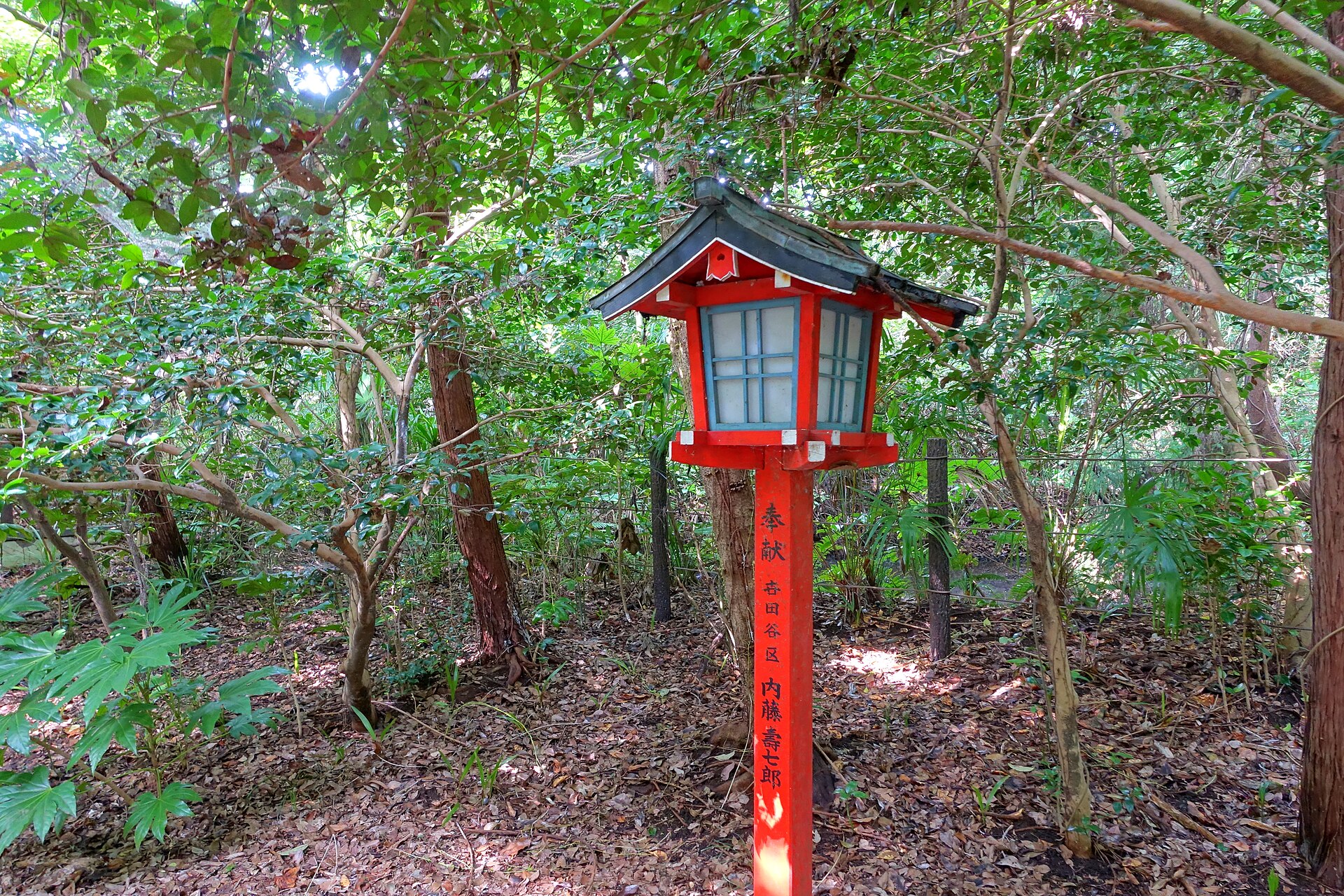
The only valley in Tokyo’s 23 wards sits in residential Setagaya, and it reopened in March 2026 after nearly three years closed for tree work — which means most guidebooks still list it as shut. Descend the steps near Todoroki Station and the city noise drops away: a one-kilometer trail winds through a narrow wooded gorge along the Yazawa River, past a small waterfall, old stone tombs, and the red Golf Bridge, ending at Todoroki Fudoson Temple with its Japanese garden and the Setsugekka teahouse.
The walk takes 20 to 30 minutes and the ravine runs a few degrees cooler than the streets above, making it a genuine summer refuge. It’s three minutes from Todoroki Station on the Tokyu Oimachi Line, about 20 minutes from Shibuya. Go in daylight — there is no lighting on the trail after dark — and wear shoes with grip, since some riverside stretches have no railings.
4. Nezu Shrine: torii gates without the Kyoto crowds
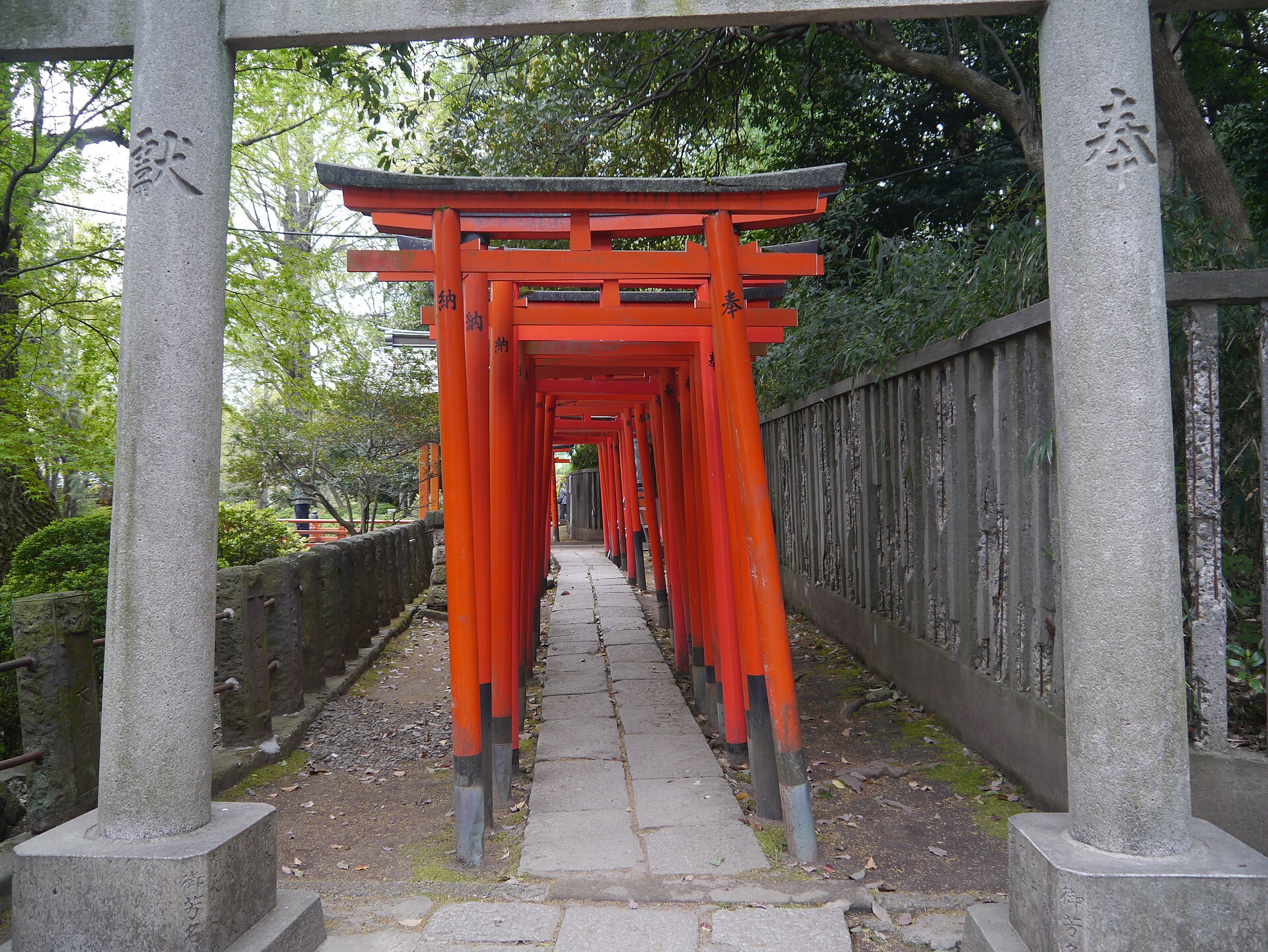
Everyone photographs the thousand torii at Fushimi Inari; almost no visitors find the vermilion corridor at Nezu Shrine, one of Tokyo’s oldest and most beautiful shrines. Its current halls were rebuilt in 1706 by the fifth Tokugawa shogun, Tsunayoshi, and the hillside path of small torii gates threading through ancient trees feels like Kyoto dropped into the middle of the city.
Time a spring visit for the azalea garden — the Bunkyo Azalea Festival usually runs from mid-April to early May, when some 3,000 bushes bloom around the pond. It’s a short walk from Nezu or Sendagi stations on the Chiyoda Line, admission to the grounds is free, and on weekday mornings you may have the torii path nearly to yourself.
5. Kagurazaka: cobblestones and quiet geisha streets
A few minutes from the towers of Iidabashi, Kagurazaka climbs a cobbled slope into one of Tokyo’s last hanamachi — a traditional geisha district. The lanes behind the main street, Kenban Yokocho and Kakurenbo Yokocho, are stone-paved and lantern-lit, lined with ryotei restaurants where geisha still entertain in the evenings. It’s also Tokyo’s French quarter, full of bistros, bakeries, and wine bars clustered around the Institut français, a legacy of the French schools that settled here.
Wander up from Iidabashi Station in the late afternoon, poke into the alleys, and stay for dinner — this is one of the city’s great evening neighborhoods, intimate in a way central Tokyo rarely is. If you’re lucky you’ll spot a geisha hurrying to an engagement as the lanterns come on.
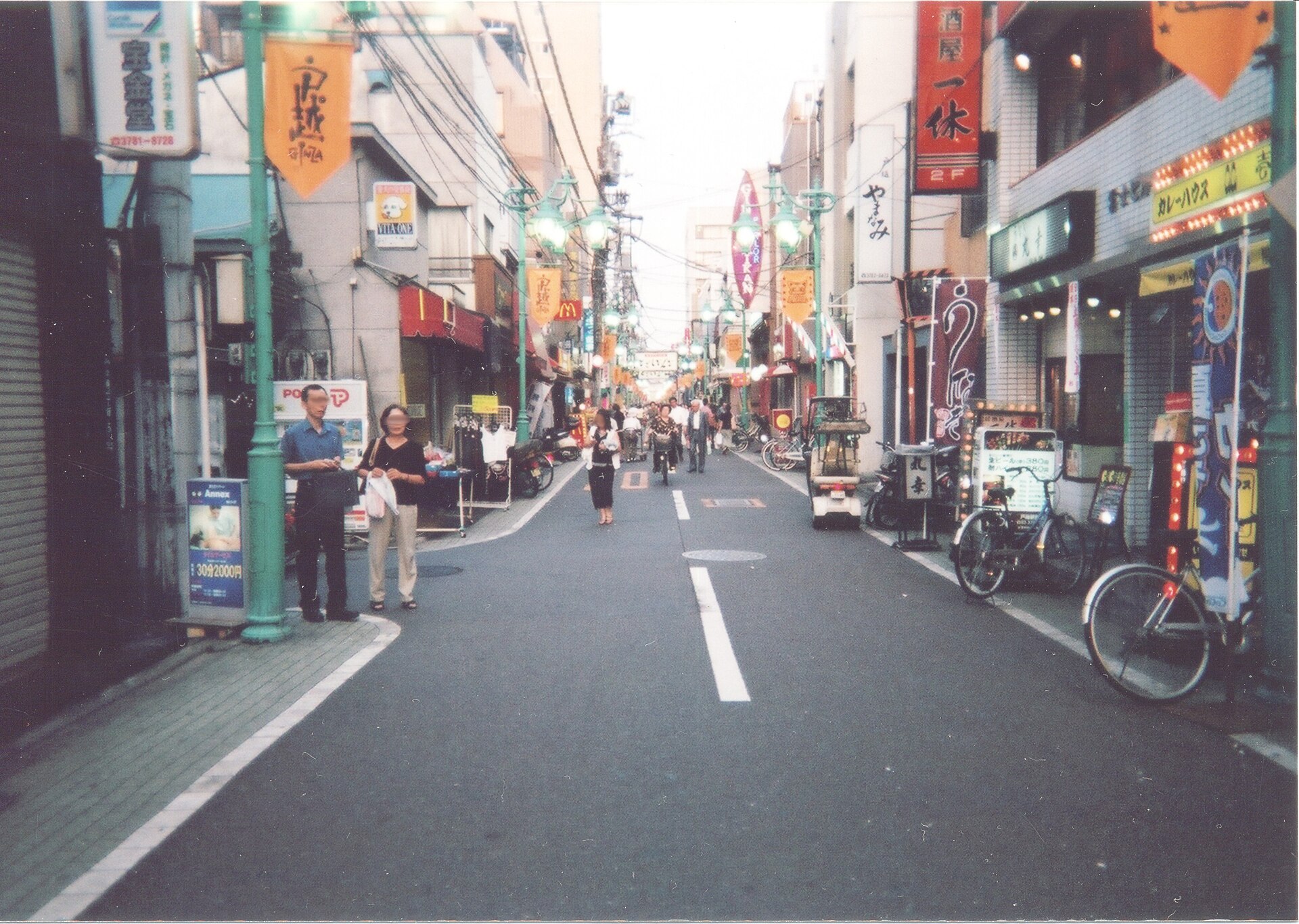
6. Togoshi Ginza: Tokyo’s longest shopping street
At 1.3 kilometers and some 400 shops, Togoshi Ginza in Shinagawa is the longest shotengai shopping street in Tokyo — and almost entirely unknown to visitors. There’s a lovely origin story: after the 1923 Great Kanto Earthquake, local shopkeepers hauled brick rubble from devastated Ginza with handcarts to pave their muddy street, borrowing the Ginza name in gratitude.
Come hungry and graze: the street is famous for its korokke (croquettes), with shops competing on fillings from classic beef-and-potato to curry and cheese, plus karaage, melon pan, oden, and dango. Signs are almost entirely in Japanese and the shops assume you live nearby — that is exactly the point. It’s right outside Togoshi-Ginza Station on the Tokyu Ikegami Line.
7. Shimokitazawa: vintage racks and tiny theaters
Five minutes from Shinjuku but a world away in attitude, “Shimokita” is Tokyo’s vintage and theater capital. The narrow lanes are packed with secondhand clothing shops — from curated designer resale to chaotic 500-yen bins — interspersed with some of the city’s smallest theaters and live-music venues, where bands and comedy acts play to rooms of fifty people.
It’s the best place in Tokyo to shop for clothes with a story, and the warren of backstreets rewards aimless wandering more than any itinerary. Arrive on the Odakyu or Keio Inokashira lines, and plan to lose at least half a day.
8. Jimbocho: the book town
Jimbocho holds one of the world’s great concentrations of secondhand and antiquarian bookshops — hundreds of them along Yasukuni-dori and the side streets, selling everything from ukiyo-e prints to vintage manga to academic tomes in a dozen languages. Even if you read no Japanese, the print shops and the sheer density of it are worth the trip.
The district doubles as Tokyo’s curry street, with dozens of storied curry houses (it’s the birthplace of several famous chains) that make the perfect lunch break between bookshops. Start at Jimbocho Station, served by the Hanzomon Line and two Toei lines.
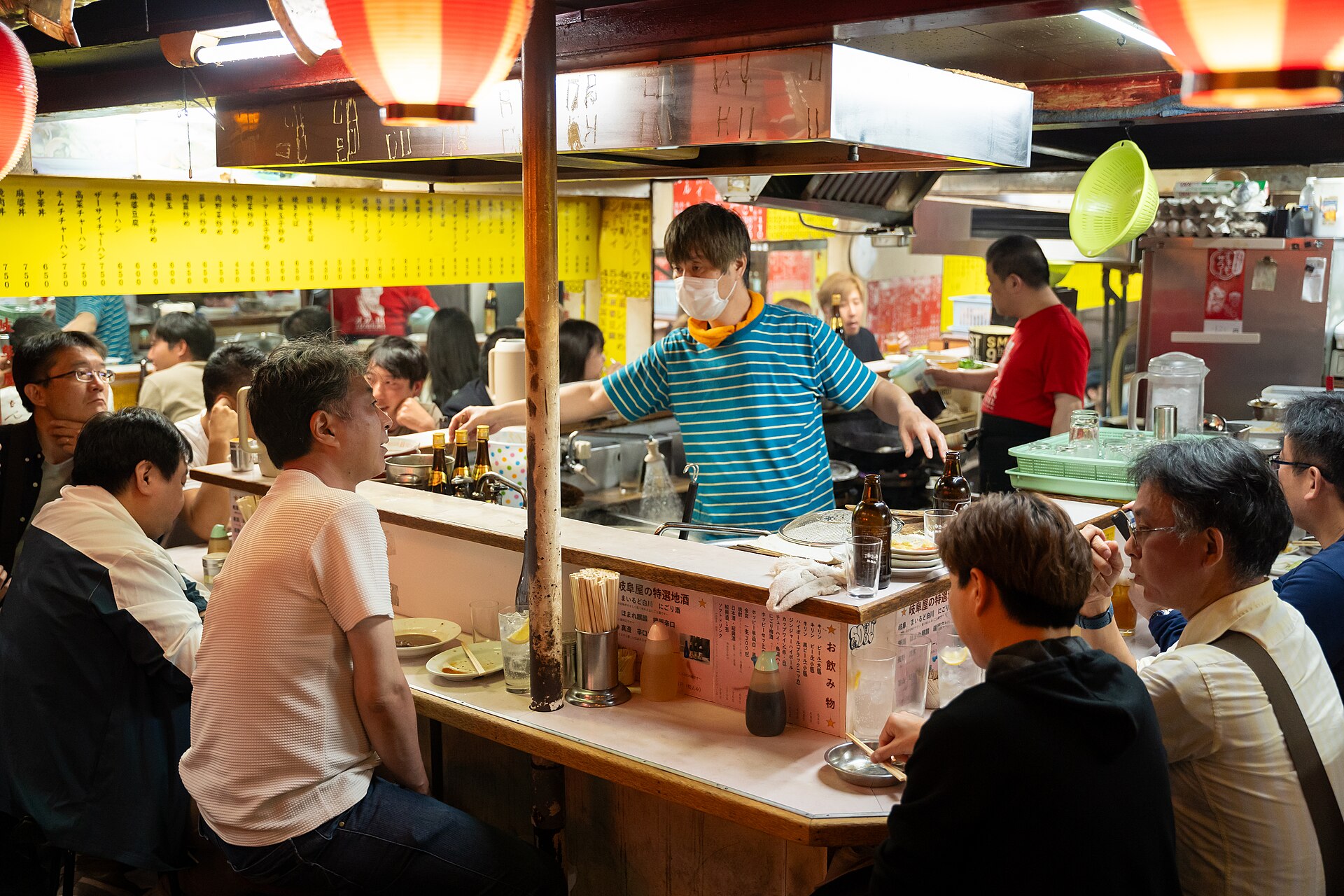
9. Omoide Yokocho: Shinjuku’s smoky yakitori alley
Steps from the world’s busiest station, Omoide Yokocho (“Memory Lane”) is a lantern-lit warren of some 60 yakitori grills and bars, most seating fewer than ten people. Born from the postwar black market, it keeps its 1950s bones: smoke, shouting cooks, salarymen shoulder to shoulder over skewers and beer.
Don’t overthink it — duck into any stall with an empty stool, point at what looks good, and order a nama (draft beer). It fills up fast after 18:00, so go early or be prepared to queue. Find the entrance near Shinjuku Station’s west exit; look for the smoke.
10. Kichijoji: the neighborhood Tokyo votes number one
Year after year, Kichijoji tops the polls of where Tokyoites most want to live, and one visit explains why. The retro Harmonica Yokocho alley — named for its harmonica-like warren of tiny bars and shops — sits next to Inokashira Park, one of the city’s loveliest green spaces, with its pond, swan boats, and the Ghibli Museum on its far edge (book museum tickets well ahead).
It’s about 20 minutes from Shinjuku on the JR Chuo Line and makes an ideal half-day escape: park stroll in the afternoon, Harmonica Yokocho as the lanterns light up. If the Ghibli Museum is on your list, this is the day to do it.
Practical tips for Tokyo’s hidden corners
A few habits will make these spots far more enjoyable. Carry cash — the old shopping streets and tiny bars often don’t take cards. Get an IC card (Suica or Pasmo) for the trains, since you’ll be hopping local lines all day. Start early: places like Yanaka and Nezu Shrine are at their best before 10:00, when the light is soft and the tour groups haven’t arrived. And learn the last-train times — the alleys are wonderful at night, but the trains stop around midnight.
For bases near these neighborhoods, see our Where to Stay in Tokyo guide — Shimokitazawa and Kichijoji both make excellent, well-connected places to stay. And if Tokyo has you hooked on Japan, our Kyoto in 3 Days itinerary is the natural next stop.