
Kyoto in 3 Days: The Perfect Itinerary for First-Timers (2026)
Kyoto doesn’t do casual visits. Every first-timer arrives with the same long list — Kiyomizu-dera’s wooden stage, the vermilion tunnels of Fushimi Inari, the Golden Pavilion, the bamboo grove, a glimpse of a geiko in Gion — and every first-timer discovers the same hard truth: Kyoto’s great sights are scattered across a wide basin, and the wrong order turns your days into a marathon of packed buses. The right order turns them into one of the great travel experiences of your life.
Planning a trip? Get our free Travel Planning Checklist:
This is the right order. I’ve grouped Kyoto’s essential sights geographically so each day flows without backtracking, timed the crowd magnets for their quietest hours (Fushimi Inari at dawn, the bamboo grove before 8am, Kiyomizu-dera first thing), and built in the food stops that make a Kyoto day sing. Three days covers the highlights with room to breathe.
Disclosure: This post contains affiliate links. If you book through one of these links, I may earn a commission at no extra cost to you.
How this Kyoto itinerary works
Kyoto’s sights cluster into three natural zones, and this itinerary takes one zone per day: Day 1 covers eastern Kyoto (Higashiyama and Gion) — entirely walkable. Day 2 heads west to Arashiyama, then to the northwest temple district (Kinkaku-ji, Ryoan-ji) — your heaviest transit day. Day 3 sweeps south and central: Fushimi Inari at dawn, Sanjusangendo, Nishiki Market, Nijo Castle, and the Heian Shrine–Philosopher’s Path–Nanzen-ji triangle in the northeast.
A note on getting around: the old 700-yen bus-only day pass was discontinued in March 2024. The replacement is the Subway & Bus One-Day Pass at ¥1,100, and it’s worth buying for Day 2 and Day 3, when you’ll actually need transit. Day 1 is almost entirely on foot. Individual city bus rides cost a flat ¥230, and your IC card (Suica, ICOCA, or PiTaPa) works everywhere — tap when boarding and alighting on buses.
Day 1: Eastern Kyoto — Higashiyama, Kiyomizu-dera & Gion
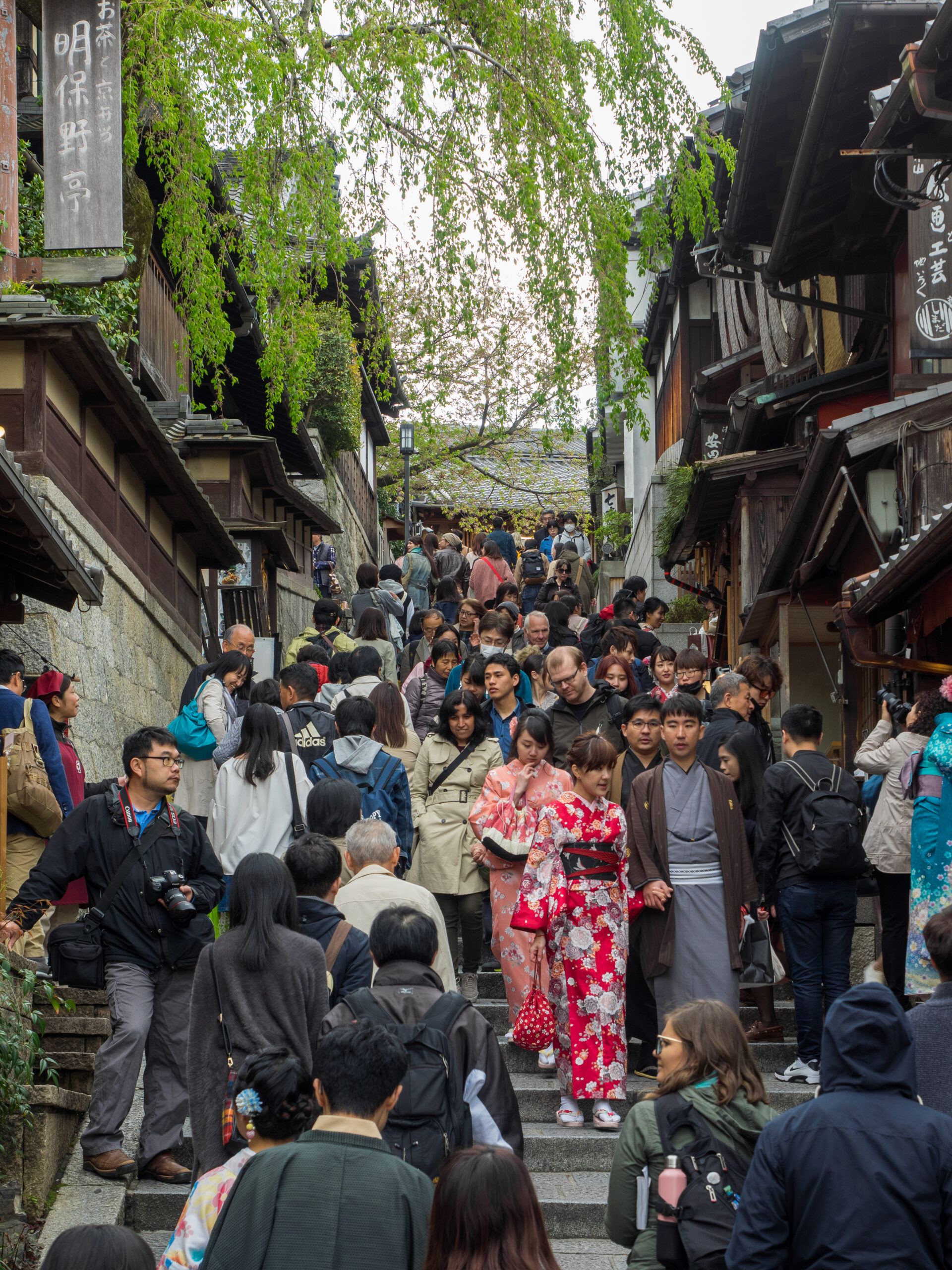
Morning: Kiyomizu-dera before the crowds. Kiyomizu-dera opens at 6:00 AM (admission ¥500), and getting there early is the single highest-value move of your whole Kyoto trip. The temple’s great wooden stage — built without a single nail — juts out over the hillside with a sweeping view of the city, and arriving around 7am means you might have it nearly to yourself. The approach up Ninenzaka and Sannenzaka is the most atmospheric half-mile in Japan: preserved wooden machiya townhouses, old-fashioned sweet shops, and — if you time it for late March or November — cherry blossoms or red maples framing everything.
Take your time walking back down through Ninenzaka and Sannenzaka — this is the Kyoto of the imagination, and it’s worth an hour of slow wandering. Grab a yatsuhashi (cinnamon rice-flour sweet) from one of the tasting stalls; nearly every shop hands out samples.
Afternoon: Yasaka Shrine and Maruyama Park. Walk down to Yasaka Shrine at the east end of Shijo-dori (free, open 24 hours). Its vermilion lanterns glow beautifully in daylight too, and Maruyama Park behind it is Kyoto’s favorite cherry-blossom picnic ground in spring. This is a relaxed afternoon — browse the shops along Shijo-dori, rest your feet, and have an early dinner.
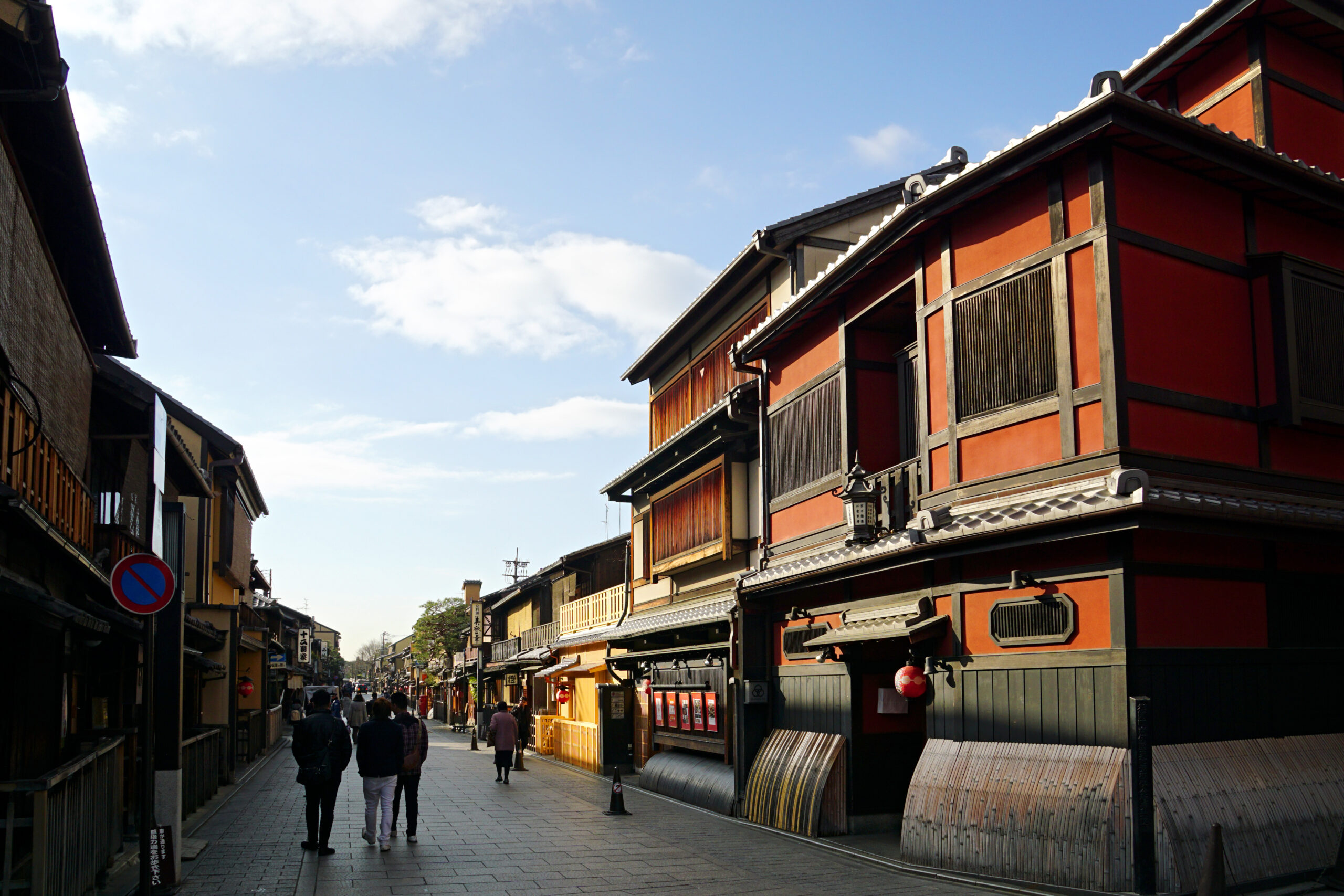
Evening: Gion and Pontocho. As dusk falls, walk the lantern-lit lanes of Gion — Hanamikoji is the famous one, lined with ochaya (teahouses) where geiko and maiko entertain. One etiquette note that matters: since April 2024, Gion’s residents have banned photography on private side streets and alleys, with signs warning of a ¥10,000 fine. Public streets are fine to photograph — just stay on them, never chase or photograph geiko and maiko without permission, and never touch them. Finish the night in Pontocho Alley, the narrow lane running parallel to the Kamo River, packed with restaurants glowing with lantern light; most kitchens open around 5pm, and 6–9pm is prime atmosphere.
To understand Gion after dark rather than just walking through it, this evening walking tour dives into geisha culture and the lantern-lit lanes with a local guide (4.9 stars, from $23).
Day 2: Arashiyama & the Golden Pavilion
Early morning: the bamboo grove before the crowds. The Arashiyama Bamboo Grove (officially Chikurin no Komichi, about 400 meters of towering stalks) is free and open 24 hours — and it is mobbed from mid-morning on. Walk it before 8:00 AM and you get near-silence with light filtering through the stalks. Take the JR Sagano Line from Kyoto Station to Saga-Arashiyama (about 15 minutes, ¥240).
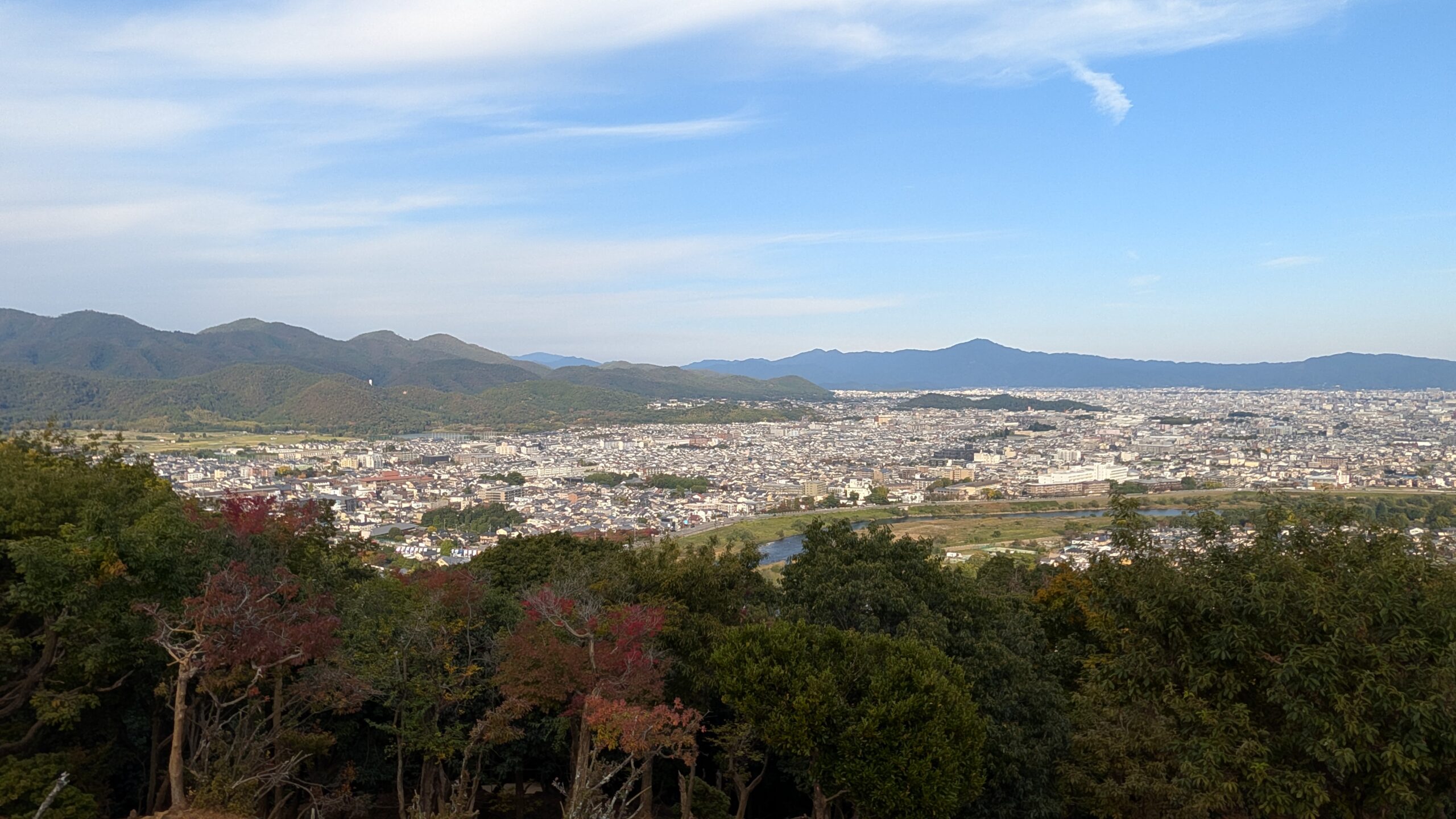
From the grove’s north end, walk straight into Tenryu-ji (garden ¥500, opens 8:30 AM), one of Kyoto’s great Zen temples, whose pond garden has survived in its original form for nearly 700 years. Then, if you have the legs, cross the Togetsukyo Bridge to Iwatayama Monkey Park (¥600, opens 9:00 AM): a 10–20 minute uphill hike through a cedar forest brings you to a summit clearing where roughly 120 wild macaques roam free, with a sweeping view over Kyoto. Feed them only inside the hut, no eye contact, no touching — the rules are posted everywhere.
Afternoon: Kinkaku-ji and Ryoan-ji. Head northeast to Kinkaku-ji, the Golden Pavilion (¥500, 9:00 AM–5:00 PM daily, no closing days). Aim to arrive around 2–3pm, when the morning tour-bus wave has thinned; you can’t enter the pavilion itself, but the circuit around the mirror pond — with the gold-leaf upper floors reflected in the water — is the most photographed sight in Japan for good reason.
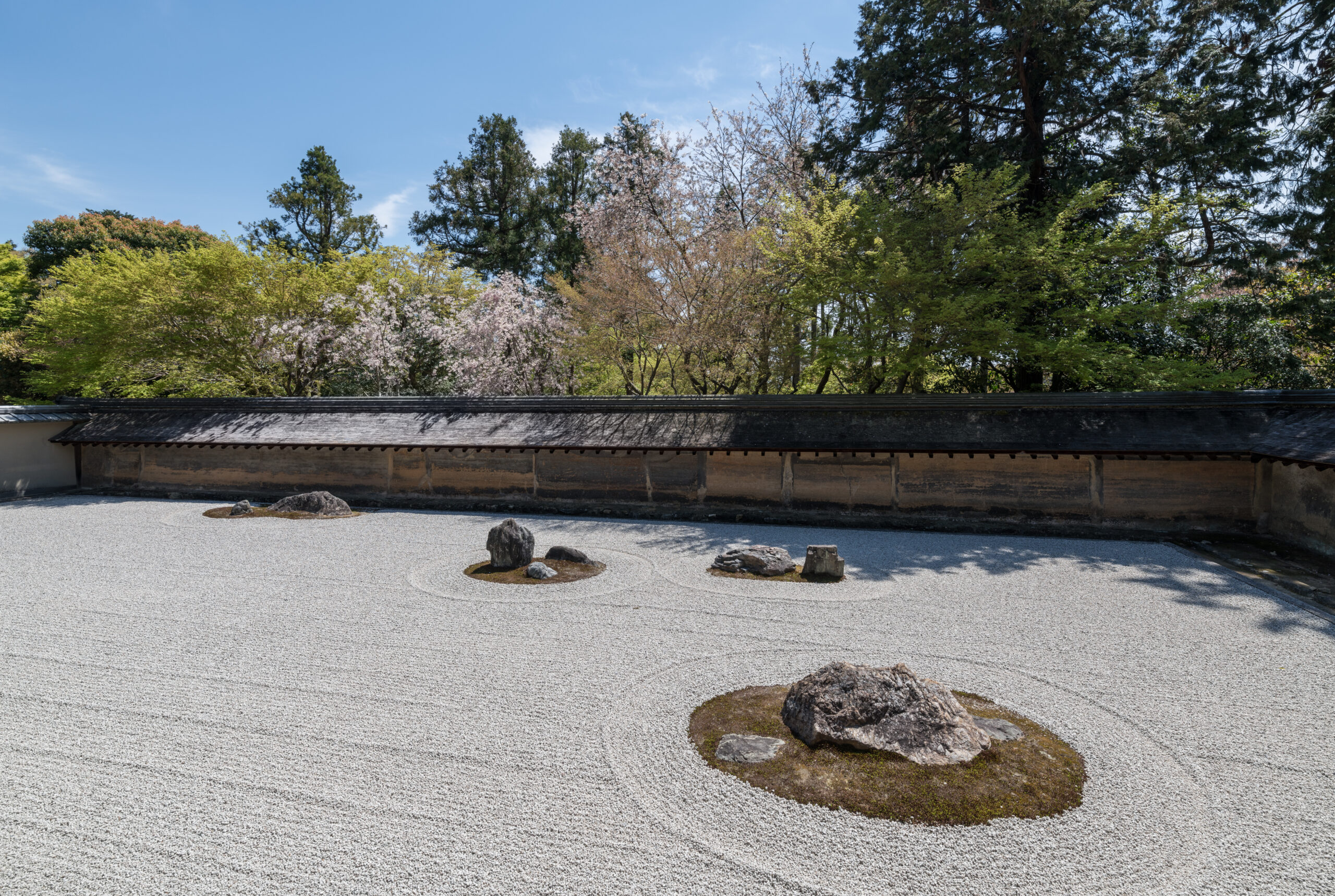
From Kinkaku-ji it’s about a 15-minute walk west to Ryoan-ji (¥600, 8:00 AM–5:00 PM March–November), home of the most famous rock garden in the world: fifteen rocks on white gravel, composed so that you can never see all of them at once from the veranda. Sit for ten minutes. That’s the whole point.
Day 2 is the day the ¥1,100 Subway & Bus One-Day Pass earns its keep — the northwest temples have no subway coverage, so buses fill the gaps. If you’d rather not coordinate the routes yourself, this full-day bus tour covers Fushimi Inari, Kinkaku-ji, and the Arashiyama Bamboo Grove in one efficient day (4.8 stars from 5,300+ reviews, from $97) — you can swap it in for Day 2 and keep Day 3 for everything else.
Day 3: Fushimi Inari at Dawn, Nishiki Market & the Imperial North
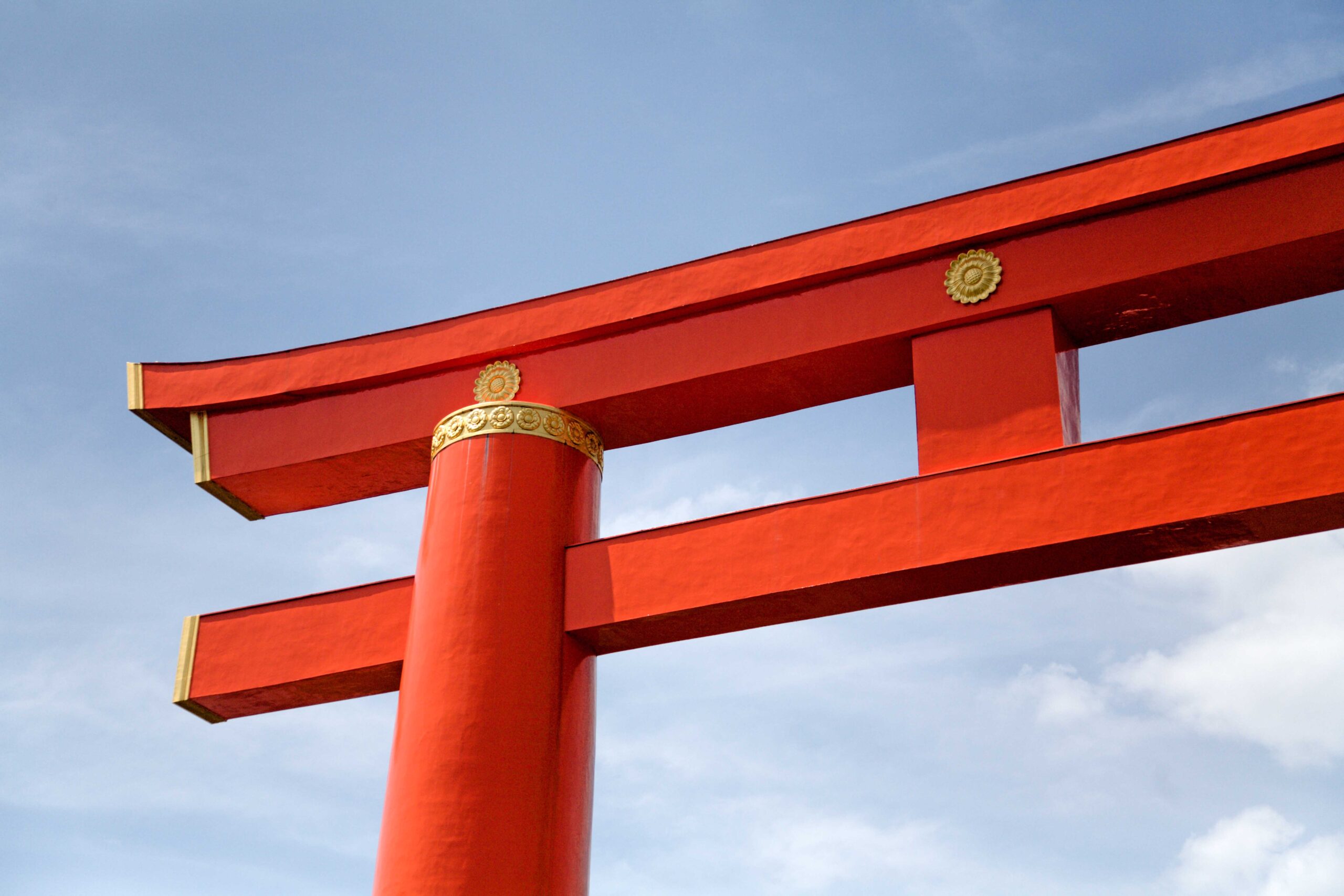
Dawn: Fushimi Inari. Fushimi Inari is free and open 24 hours, and the lower torii-gate tunnels are shoulder-to-shoulder from 10am to 3pm. Set the alarm, take the JR Nara Line from Kyoto Station (5 minutes), and walk the senbon torii — thousands of vermilion gates — as the sun comes up. The full hike to the summit of Mt. Inari and back takes 2–3 hours; the Yotsutsuji viewpoint, 30–45 minutes up, is the most popular turnaround and gives you the city panorama. Most tourists turn back at Yotsutsuji, so the upper mountain is quieter even at midday.
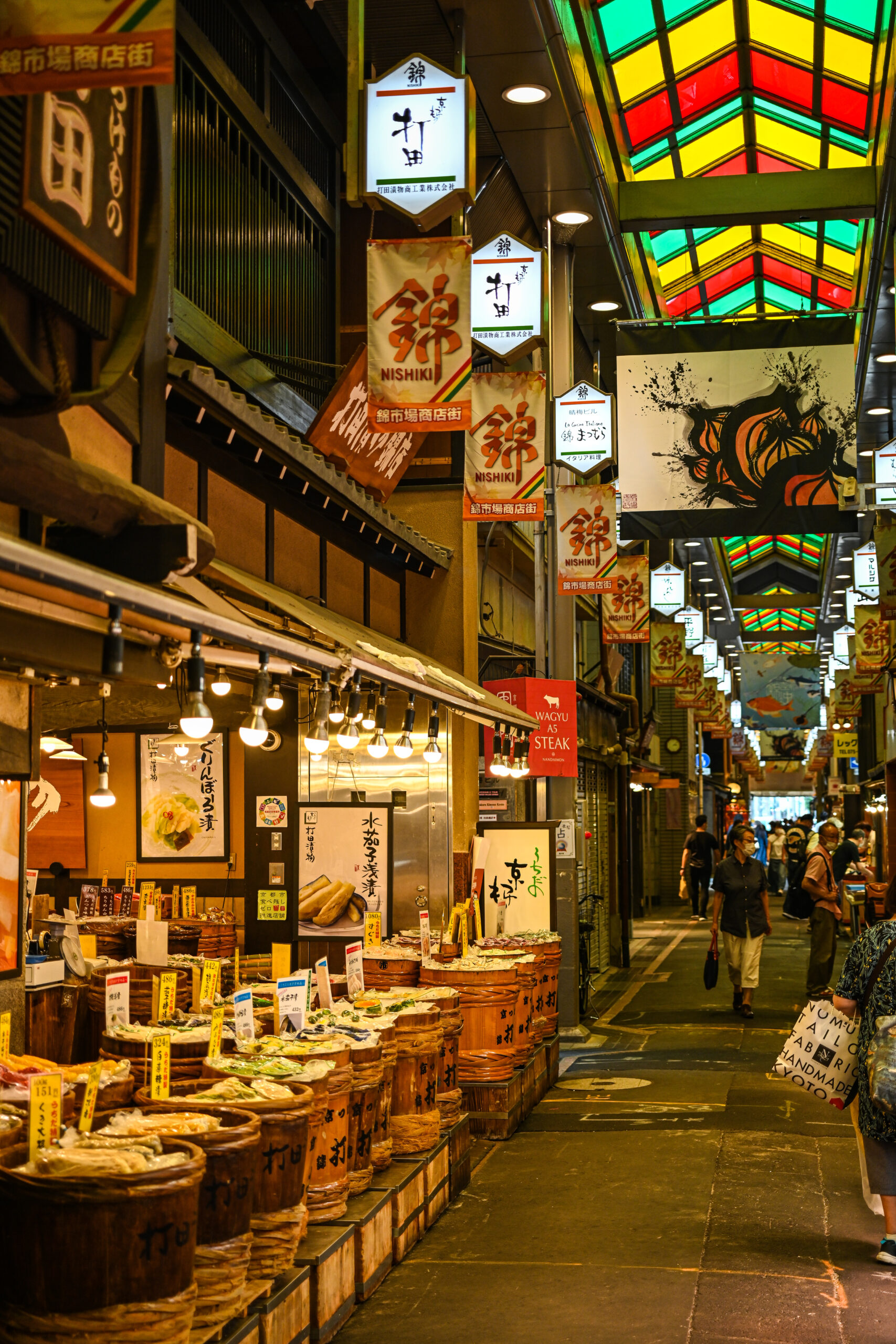
Morning: Sanjusangendo and Nishiki Market. Head back toward the station area to Sanjusangendo (¥600, opens 8:30 AM April–November), home to 1,001 life-size statues of the Thousand-Armed Kannon standing in perfect rows — one of the most staggering interiors in Japan. Arrive early, because tour groups fill the hall by late morning, and note that photography is strictly prohibited inside (exterior photos are fine). Then dive into Nishiki Market, “Kyoto’s kitchen”: five blocks of roughly 130 food stalls, most open from about 9–10am to 6pm. The sweet spot is 9–11am, before the midday crush. Snack your way down the arcade — tamagoyaki on sticks, fresh tofu doughnuts, grilled scallops — and remember the etiquette: eat at the stall where you buy, never walk and eat.
Afternoon: Nijo Castle and the imperial northeast. Take the Tozai subway to Nijo Castle (set ticket including Ninomaru Palace ¥1,300; entry 8:45 AM–4:00 PM). The Ninomaru Palace’s “nightingale floors” chirp as you walk — a security system for the Tokugawa shoguns — and the palace interiors are among the finest surviving examples of feudal-era architecture in Japan.
Then head east to Heian Shrine (grounds free; the Shin-en garden ¥600, and the garden — not the shrine buildings, parts of which have been under restoration — is the highlight).
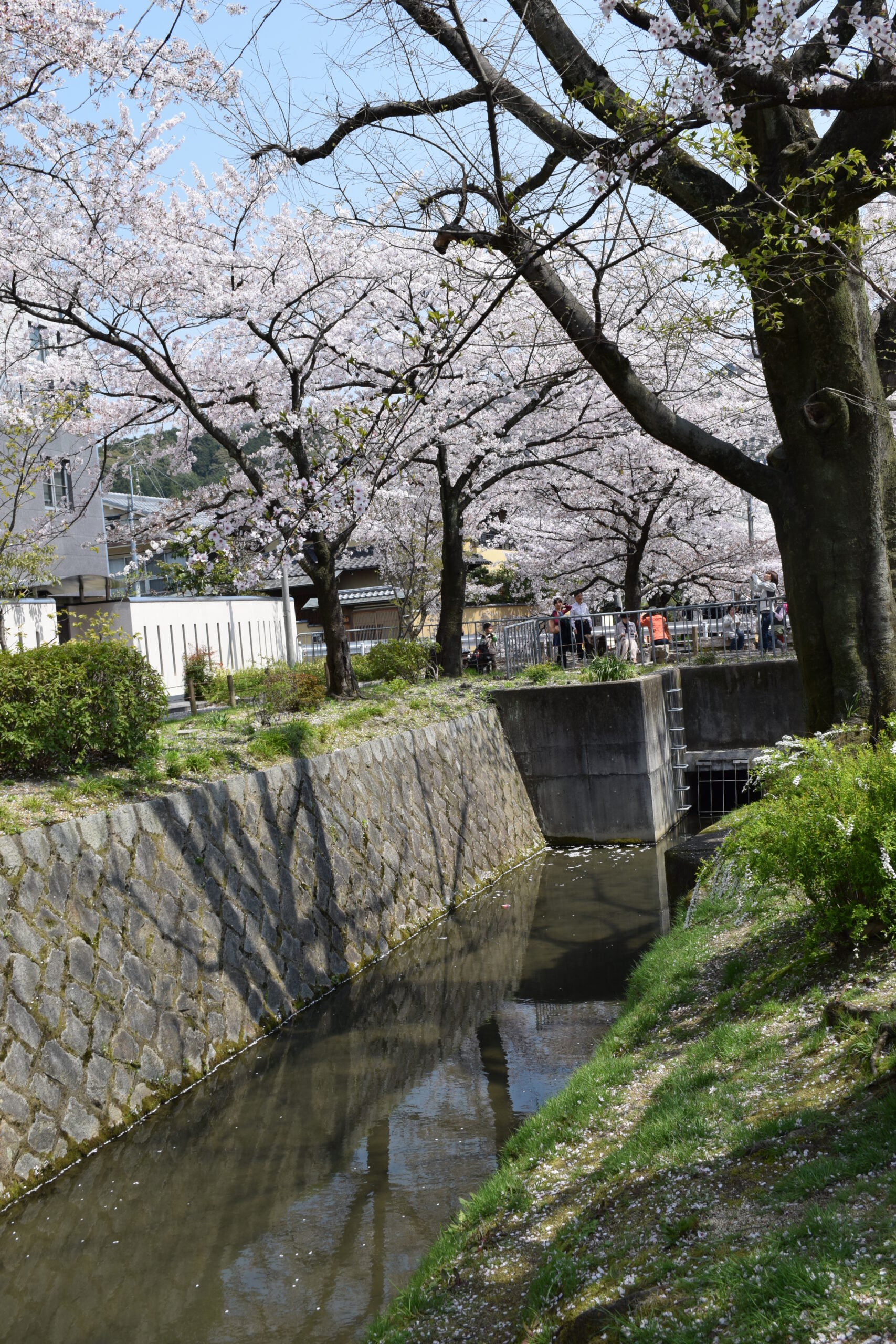
From there, stroll the Philosopher’s Path: a flat, 2-kilometer canal-side walk, free and lovely year-round, that runs south to the Nanzen-ji temple complex.
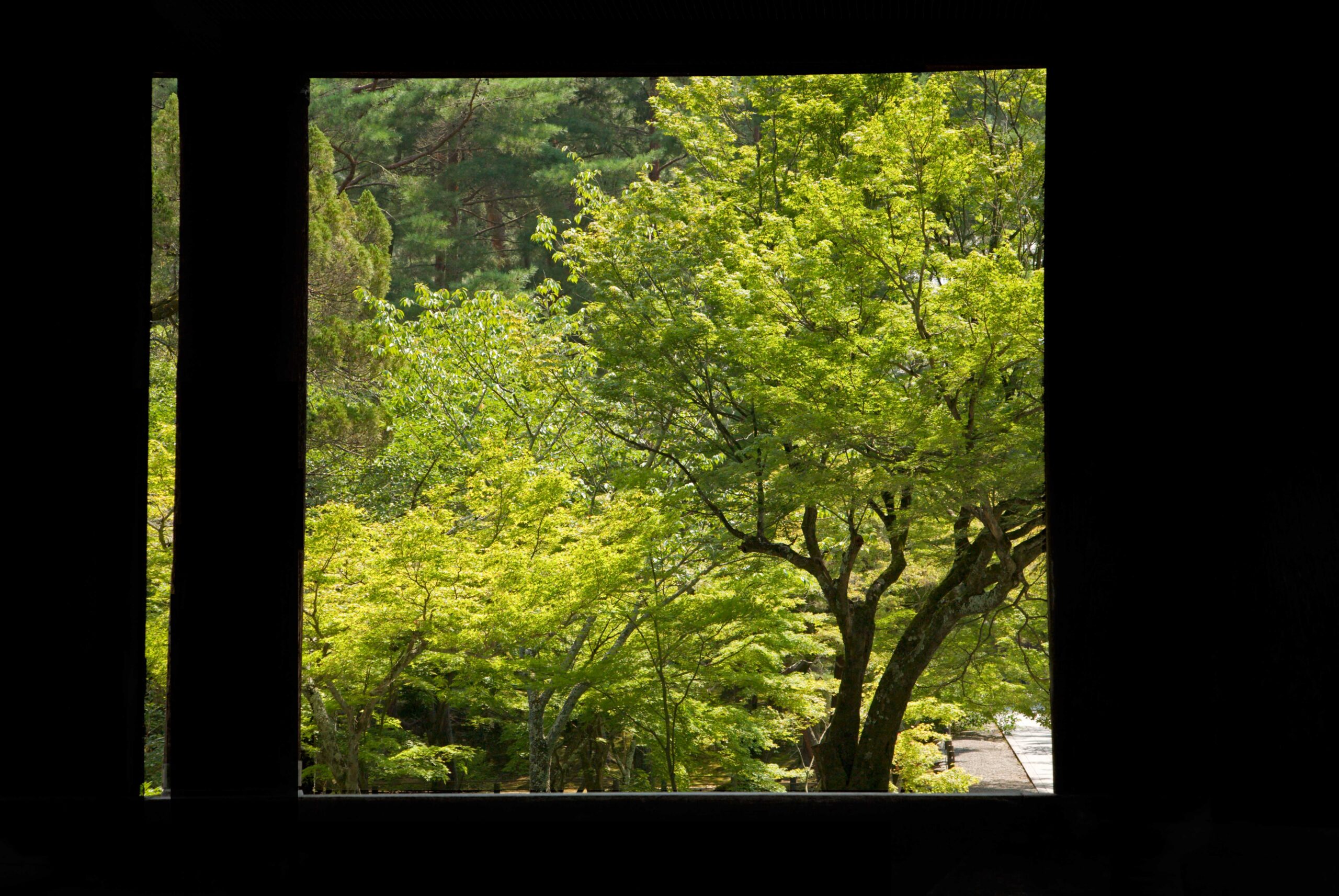
Nanzen-ji’s grounds and its famous brick aqueduct are free; the Sanmon gate climb (¥600) gives you a fine view back over the city.
End your three days the way Kyoto does things best: quietly. A traditional kimono tea ceremony in Gion (4.9 stars, from $49, free cancellation) is the experience Kyoto visitors consistently rate highest — and our guide to cultural experiences in Japan explains what you’re looking at, so the ritual lands the way it should.
Where to stay for this itinerary
Kyoto’s neighborhoods genuinely shape this itinerary — the temple districts on Days 2 and 3 start early, and the wrong base adds an hour of transit to every morning. Downtown Kyoto (Nakagyo) is the best all-round pick for first-timers; Gion and Higashiyama put Day 1’s sights on your doorstep; the station area is unbeatable for multi-city trips. Our full Where to Stay in Kyoto guide breaks down every neighborhood with honest pros, cons, and hand-picked hotels at every budget. If you’re pairing Kyoto with the capital, our Where to Stay in Tokyo guide covers the other end of the shinkansen line.
Extending your trip: a fourth day in Nara
If you have a fourth day, spend it in Nara — the ancient capital predates Kyoto by nearly a millennium. The JR Nara Line rapid runs from Kyoto Station to Nara in about 45 minutes (¥690 one way), and Todai-ji’s Great Buddha Hall, Kasuga Taisha’s lanterns, and the famously bold deer of Nara Park fit comfortably into a day trip. Osaka is even closer — 13–15 minutes by shinkansen — if you’d rather add street food and nightlife.
The bottom line
Kyoto rewards the traveler who plans around its geography and its crowds. See Kiyomizu-dera and Fushimi Inari in the early morning, the bamboo grove before 8am, and the Golden Pavilion after the tour-bus wave — cluster each day by district, walk where you can, and buy the ¥1,100 day pass when you can’t. Three days won’t show you all of Kyoto; nothing will. But it will show you why, after twelve centuries, Kyoto still stops people in their tracks.