
Vienna’s greatest hits are famous for a reason — Schönbrunn Palace, St. Stephen’s Cathedral, the Belvedere’s Klimt room. But behind the imperial postcard version of the city, there’s a second Vienna that most visitors walk straight past: a golden-domed Art Nouveau church on a hospital hill, a brutalist church built from 152 concrete blocks, a zoo inside a World War II flak tower, and a cemetery where Beethoven, Brahms, and Schubert lie within steps of each other. These are the spots locals love and guidebooks skim — and they’re the reason Vienna rewards a second, slower look.
Planning a trip? Get our free Travel Planning Checklist:
This guide rounds up 10 of Vienna’s best hidden gems, each with verified practical details: addresses, opening hours, admission prices, and how to get there by public transport. Pick three or four, cluster them by district, and go see the Vienna most tourists miss.
Disclosure: This post contains affiliate links. If you book through one of these links, I may earn a commission at no extra cost to you.
1. Kirche am Steinhof — Otto Wagner’s Golden-Domed Church on the Hill
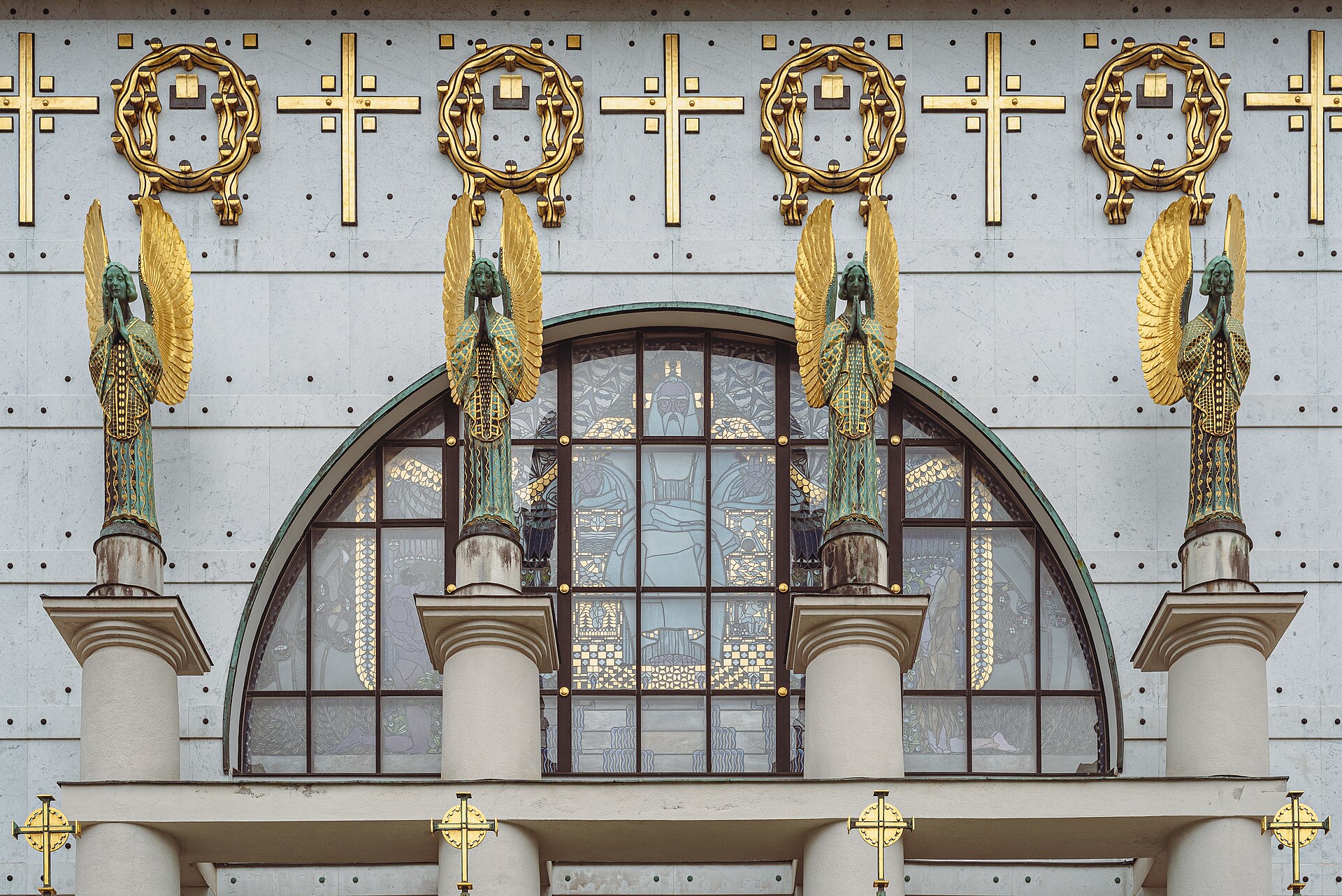
Start with the single most beautiful building most Vienna visitors never see. The Kirche am Steinhof (Church of St. Leopold) sits on the Baumgartner Höhe in the 14th district, a gleaming white Art Nouveau church topped with a copper dome that turns gold in the afternoon light. Otto Wagner designed it between 1904 and 1907 as the chapel of the Steinhof psychiatric hospital, and it’s widely considered the first modern church in Europe — every detail, from the Koloman Moser stained glass to the marble-and-metal interior, was designed as one unified work of art.
Practical details: Baumgartner Höhe 1, 1140 Vienna. Interior access is limited — guided tours (in German) run Saturday at 3pm and Sunday at 4pm for around €8, or you can visit independently for about €2 on Saturday afternoons and Sunday midday. Take the 48A bus from Ottakring station to the Otto Wagner Spital stop, then walk uphill on a gravel path — wear sensible shoes. Check the official schedule before you go, as hours change seasonally.
2. The Ankeruhr — Vienna’s Singing Clock
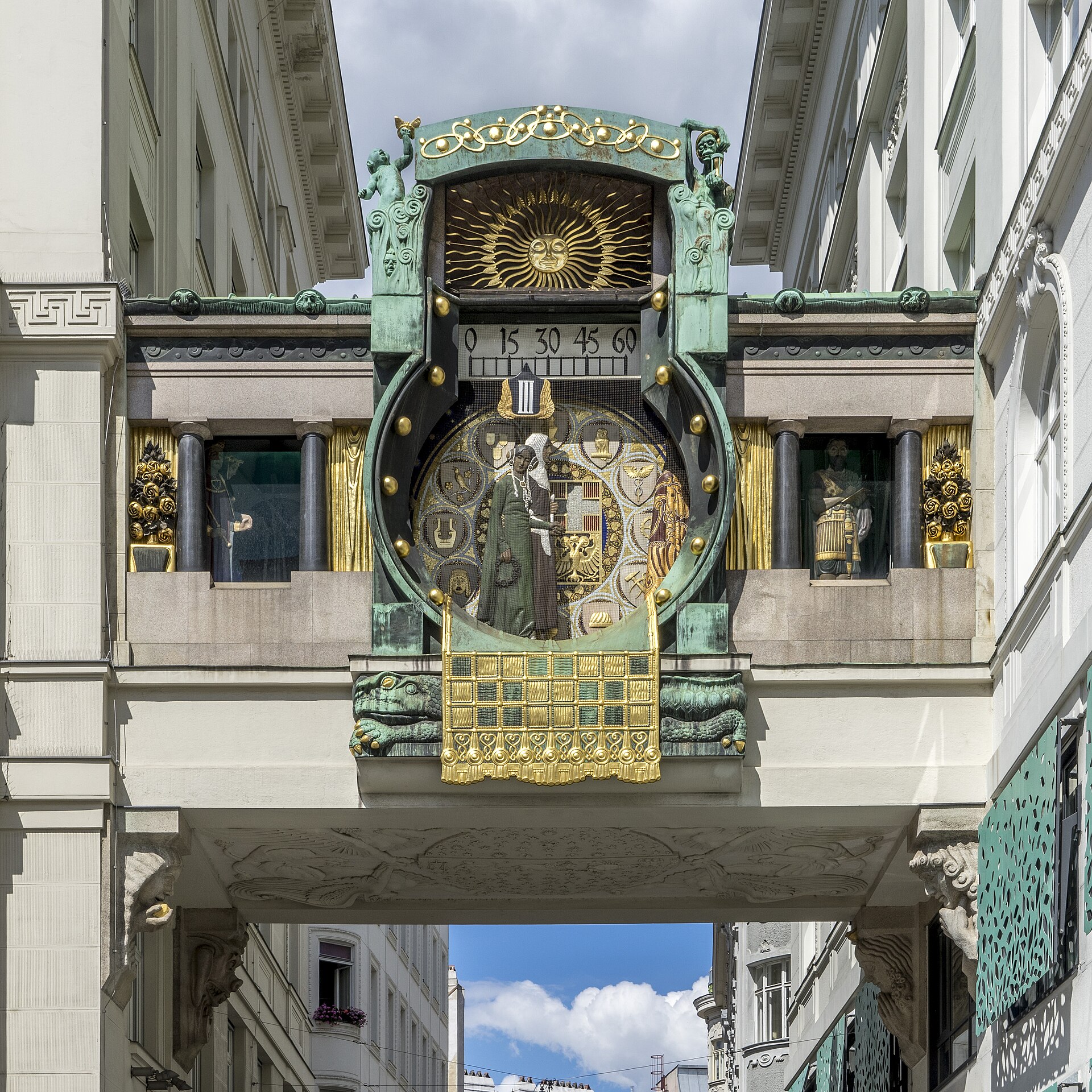
On the Hoher Markt, Vienna’s oldest square, a bridge-like Art Nouveau clock spans the gap between two buildings of the former Anker Insurance Company. Designed by Franz von Matsch and completed in 1914, the Ankeruhr doesn’t just tell time — every hour, one of twelve historical figures glides across its face, each accompanied by music from their era. Marcus Aurelius, Charlemagne, Maria Theresa, Joseph Haydn: two millennia of Austrian history, parading past in bronze.
Practical details: Hoher Markt 10–11, 1010 Vienna, free to watch, five minutes on foot from Stephansplatz. Time your visit for noon, when all twelve figures parade in sequence with a full musical accompaniment — it takes about 15 minutes. It gets busy, so arrive a few minutes early for a front-row spot.
If this kind of off-radar Vienna appeals to you, this guided tour of Vienna’s hidden courtyards goes deeper into the quiet corners most visitors walk straight past.
3. Wotrubakirche — The Brutalist Church in the Vienna Woods
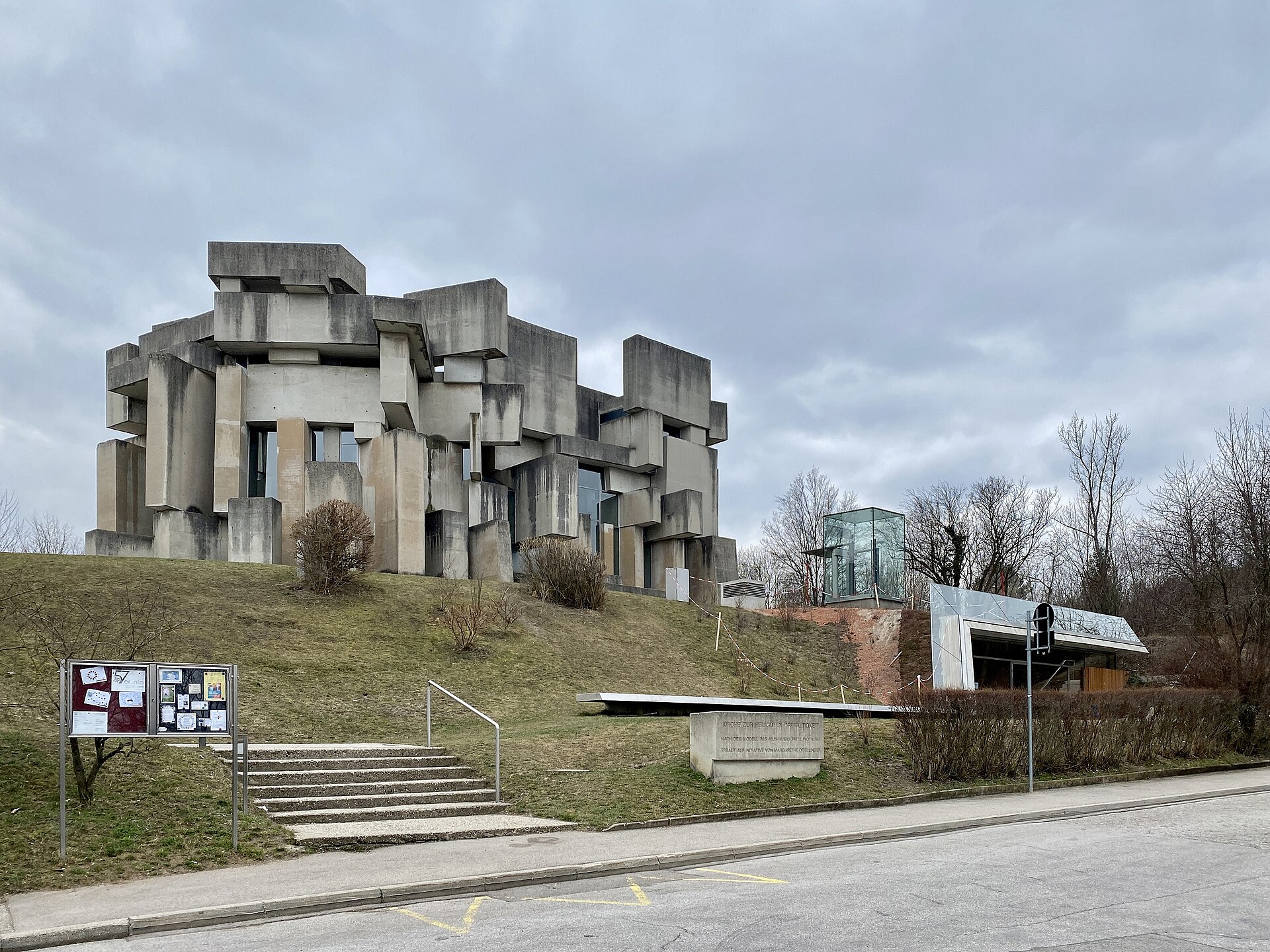
About as far from imperial Baroque as a church can get: the Wotrubakirche (Church of the Most Holy Trinity) on the Georgenberg in Mauer is a pile of 152 irregular concrete blocks stacked into a sanctuary. Sculptor Fritz Wotruba designed it; it was built between 1974 and 1976, and he died before it opened. From outside it looks like an alien Stonehenge. Inside, it’s unexpectedly full of light, with sun streaming through the gaps between the blocks.
Practical details: Ottillingerplatz 1, 1230 Vienna (Liesing district). Opening hours are limited — typically weekend afternoons and holidays, so check ahead. Take bus 60A to Kaserngasse or Lindauergasse. Combine it with a walk on the Georgenberg or through the surrounding Wienerwald vineyards for a half-day escape.
4. Haus des Meeres — The Zoo Inside a WWII Flak Tower
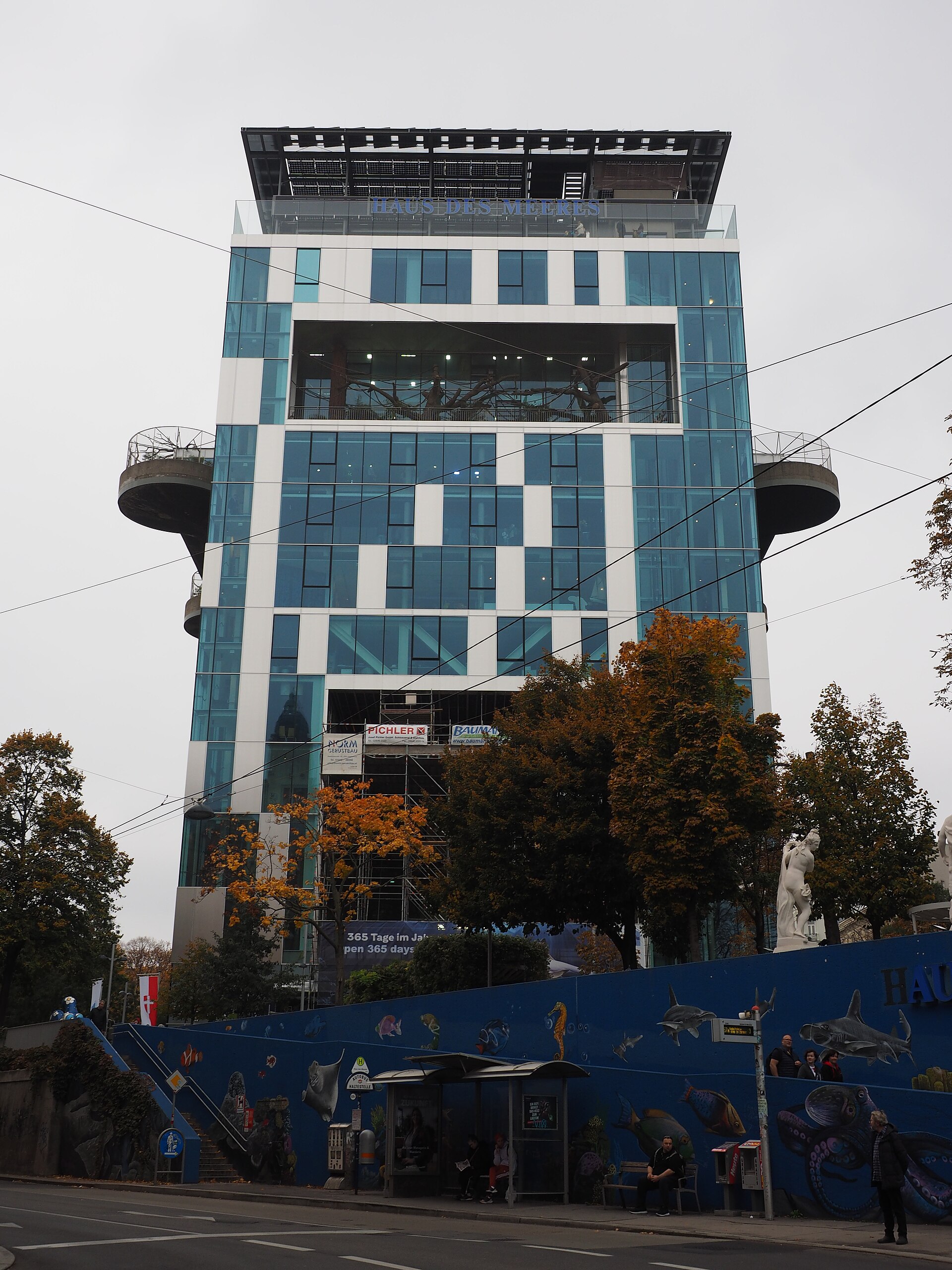
Esterházypark in the 6th district is dominated by a massive concrete flak tower left over from World War II — and inside it is one of Vienna’s best family attractions. The Haus des Meeres (House of the Sea) is an aqua-terra zoo spread across 11 floors, with more than 10,000 animals: sharks and rays in the big tanks, plus reptiles, monkeys, birds, and a tropical house. Start at the top and work down, and finish at the rooftop restaurant and viewing terrace for one of the best panoramas in the city.
Practical details: Fritz-Grünbaum-Platz 1, 1060 Vienna. Open daily 9am–8pm. Adult tickets are around €23.50 online (children 6–15 about €9.80, under 3 free). Book online for weekends and holidays — the queues get long. Budget travelers: there’s a reduced evening ticket (around €16) on weekday evenings from 5:30pm.
5. Hermesvilla — Sisi’s “Palace of Dreams” in the Lainzer Tiergarten
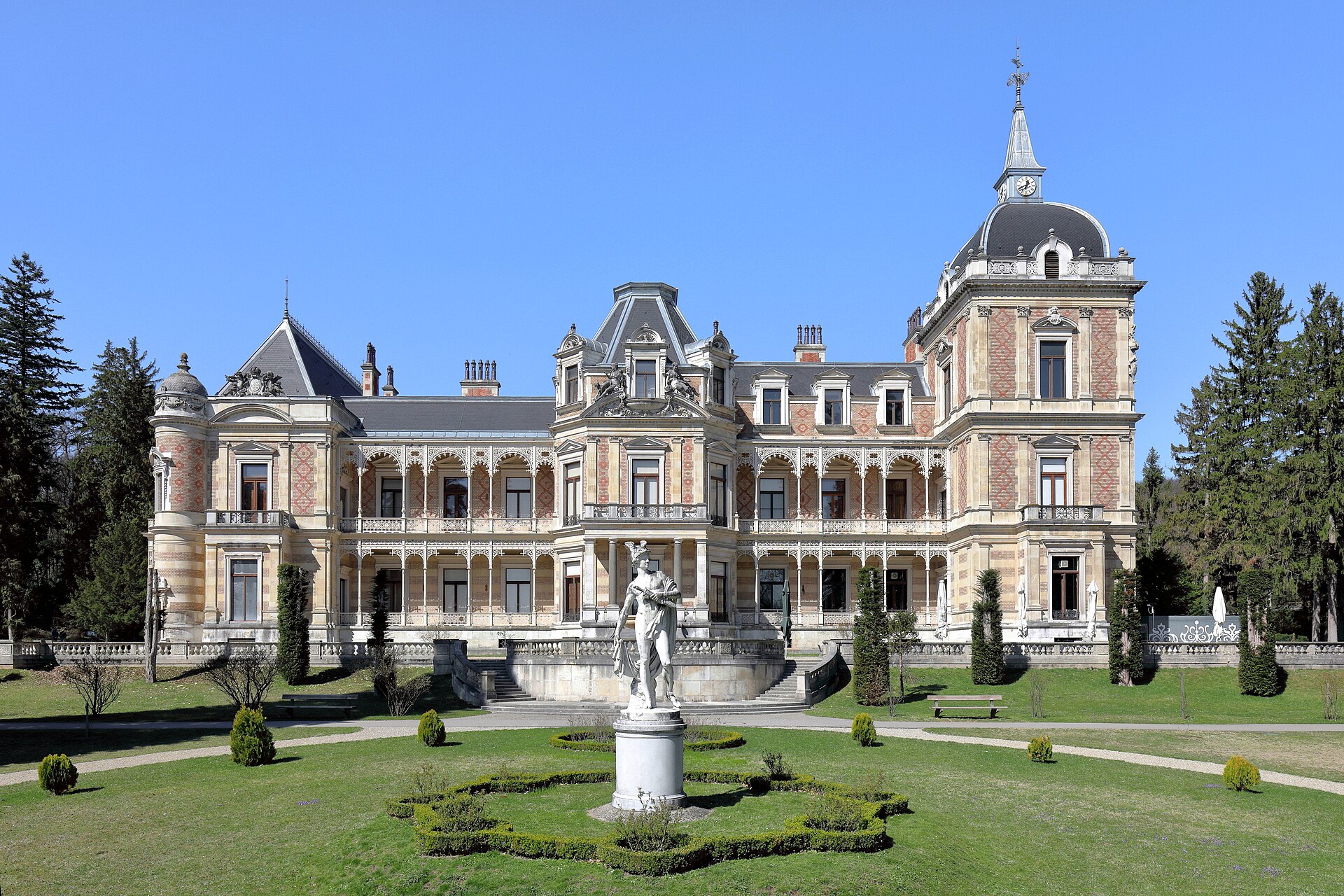
Deep in the Lainzer Tiergarten — a former imperial hunting ground turned 24-square-kilometer nature reserve — sits the Hermesvilla, the villa Emperor Franz Joseph gave to Empress Elisabeth in the hope his restless wife might spend more time in Vienna. She called it her “Palace of Dreams.” Architect Carl von Hasenauer built it in the 1880s, and today it’s a museum of imperial life with beautiful frescoed rooms. The walk through the Tiergarten to reach it is half the experience: free-roaming wild boars and deer, beech forest, and meadow viewpoints.
Practical details: Lainzer Tiergarten, 1130 Vienna. The villa museum is seasonal (roughly Palm Sunday to All Saints) and typically open Tuesday–Sunday 10am–5pm; admission is around €8, and entry to the park itself is free. Take tram 60 to Lainzer Tor. There’s a café in the villa — a good excuse to linger.
6. Setagayapark — A Japanese Garden in Döbling
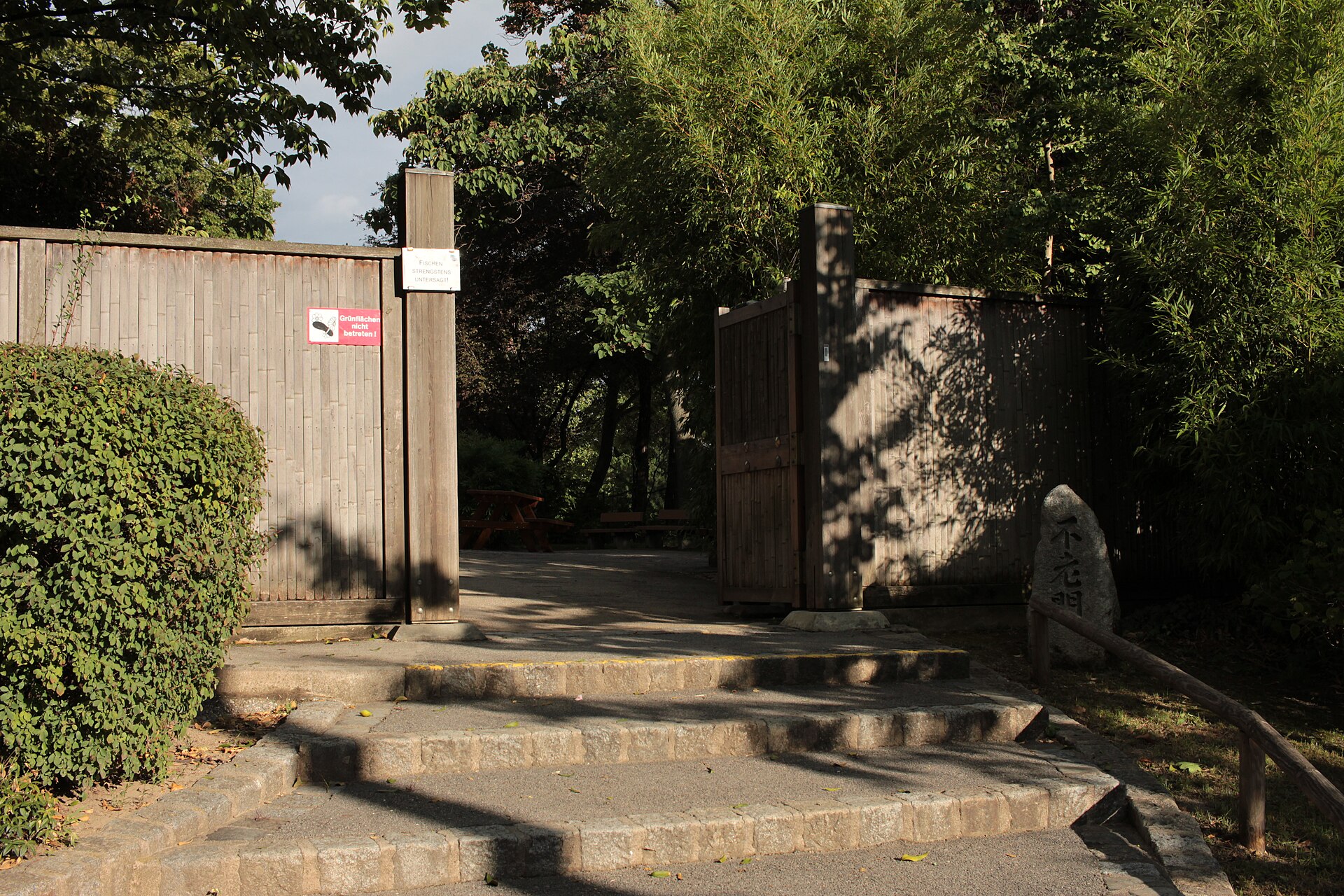
In the 19th district, behind an unassuming gate on Gallmeyergasse, Vienna keeps a 4,700-square-meter piece of Japan. Setagayapark opened in 1992 as a symbol of friendship between Döbling and Setagaya, a ward of Tokyo, and was designed by renowned landscape architect Ken Nakajima. Koi ponds, stone lanterns, a tea house, meticulously pruned maples — it’s a genuine Japanese stroll garden, and one of the most peaceful corners of the city.
Practical details: Gallmeyergasse 4, 1190 Vienna. Free entry. Open roughly March through October with seasonal hours (longer in summer, closed in winter); take tram 37 to Gallmeyergasse. Go in April for cherry blossom season, and note that dogs aren’t allowed inside.
7. Donaukanal — Vienna’s Graffiti Strand
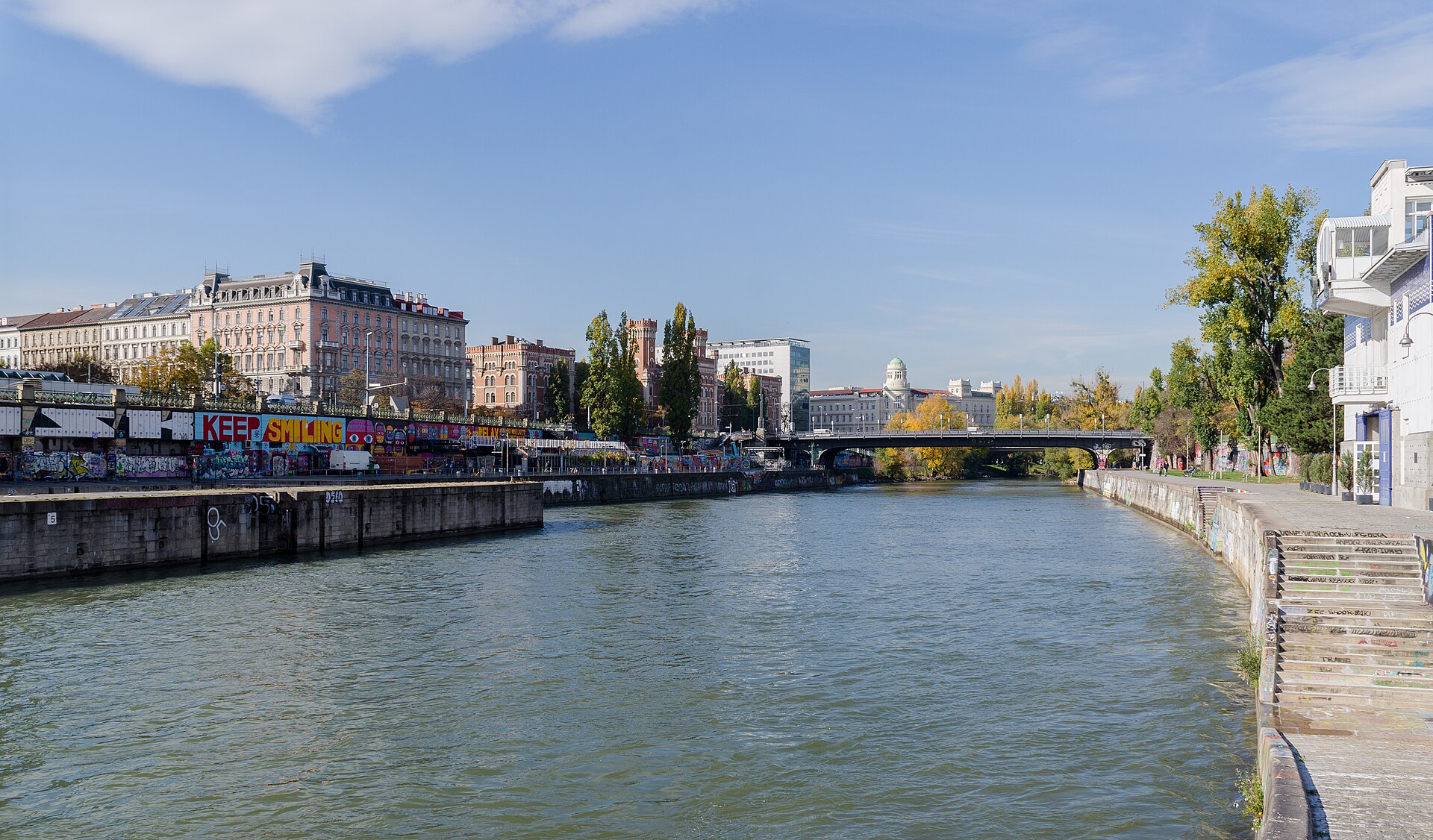
The Donaukanal (Danube Canal) is a 17.3-kilometer former arm of the Danube that runs right past the city center — and its embankment walls are one of Europe’s great open-air graffiti galleries. By day it’s a cycling and jogging route; on summer evenings it becomes Vienna’s living room, with beach bars like Strandbar Herrmann (sand, deck chairs, and DJs in Herrmannpark, open roughly April to mid-September), pop-up food stalls, and locals claiming every sunny ledge.
Practical details: Free, always open. The liveliest stretch runs between Schwedenplatz and Schottenring (U1/U2/U4). Come at golden hour, grab a drink, and walk the murals — it’s the best free evening in Vienna.
8. Narrenturm — The “Fool’s Tower”
Not for the faint-hearted, but unforgettable: the Narrenturm on the old General Hospital campus was built in 1784 under Joseph II as Europe’s first building designed for the mentally ill — a five-story round tower of 139 tiny cells. Today it houses the Natural History Museum’s Pathological-Anatomical Collection: more than 4,000 specimens, from historic wax moulages of diseases to skeletons and surgical instruments, tracing the history of medicine.
Practical details: Spitalgasse 2, 1090 Vienna (university campus). Open Wednesday 10am–6pm, Thursday–Friday 10am–3pm, Saturday noon–6pm; admission around €8 (reduced €6). Photography is not allowed inside. Be honest with yourself about your stomach — this is a medical museum, not a haunted house, and it’s genuinely intense.
9. Zentralfriedhof — Where Vienna’s Great Composers Rest
Vienna takes death seriously — it even has a Museum of Death — and the Zentralfriedhof (Central Cemetery) is the grandest expression of it. Opened in 1874, it covers nearly 2.5 square kilometers with some 330,000 graves, making it one of the largest cemeteries in Europe. Music lovers come for the Ehrengräber, the graves of honor: Beethoven, Brahms, Schubert, and both Johann Strausses lie within steps of each other. Note that Mozart’s monument here is just that — a memorial; his actual grave is at the St. Marx Cemetery.
Practical details: Simmeringer Hauptstraße 234, 1110 Vienna. Free entry, open daily (hours vary seasonally, roughly 7am–6/7pm). Take tram 71 to Tor 2 (the main gate) — in Viennese slang, “taking the 71” is a euphemism for dying. Allow at least an hour; there’s an on-site funeral museum and, gloriously, a branch of the Konditorei Oberlaa patisserie by the main entrance. Death, taxes, and cake, as the locals say.
10. Karmelitermarkt — The Market Where Locals Actually Shop
Tourists flock to the Naschmarkt; Viennese head to Karmelitermarkt in Leopoldstadt. This 19th-century neighborhood market in the old Jewish quarter is smaller, cheaper, and far more local: Austrian farmers’ produce, traditional butchers, bakeries, Vienna’s first tofu manufactory, and some of the city’s best döner. Friday and Saturday bring the big farmers’ market. The surrounding Karmeliterviertel has quietly become one of Vienna’s coolest areas for cafés and natural-wine bars.
Practical details: Karmelitermarkt 21, 1020 Vienna. Open Monday–Friday 6am–7:30pm, Saturday 6am–5pm, closed Sunday. Reach it via U2 Taborstraße or tram 2 to Karmeliterplatz. Go hungry, bring cash for the stalls, and go on a weekday morning for the friendliest vendors.
And if you want the famous market experience with expert guidance, this Naschmarkt food tasting tour (small groups, 2.5 hours) is the tastiest way to do it.
Planning Your Hidden-Gems Day
Don’t try to see all ten in one day — they’re scattered across the city, which is exactly the point. Cluster them: pair the Ankeruhr with the old town, the Donaukanal with Karmelitermarkt (both in/near Leopoldstadt), and make the Wotrubakirche or Hermesvilla a half-day excursion with a Wienerwald walk. If you haven’t planned the classic sights yet, my Vienna in 3 Days itinerary covers the imperial greatest hits these hidden gems pair with — and my Where to Stay in Vienna guide breaks down the neighborhoods if you haven’t booked yet.
Getting around is easy: Vienna’s U-Bahn, trams, and buses run on one ticket system, and a 24-hour ticket covers everything you’ll need for a day of gem-hunting.
What I’d Skip
The Narrenturm if you’re squeamish. It’s a genuine medical collection — wax models of diseases, specimens in jars — and there’s no gift-shop version of it. Fascinating for the right visitor, miserable for the wrong one. Know which you are.
Showing up at the Wotrubakirche on a weekday morning. Its hours are limited to weekends and holidays, and it’s a real trek out to the 23rd district. Check the schedule before you commit the trip.
Trying to do all ten in a single day. Vienna rewards lingering — the whole point of these spots is that they’re unhurried. Pick three or four, cluster by district, and leave the rest as a reason to come back.
The Bottom Line
Vienna’s famous sights earn their fame, but the city’s second layer — the golden dome on the hospital hill, the singing clock, the brutalist church, the cemetery of composers — is where it stops feeling like a museum and starts feeling like a place. Go find it.