Barcelona is one of those cities that makes you want to stay put — and then Catalonia reminds you what’s waiting an hour in any direction. A serrated mountain topped with a thousand-year-old monastery. A medieval city with the widest Gothic nave in the world. Roman ruins by the sea, surrealist dreamscapes, cava country, and coves of impossible blue. If you’re spending three days in Barcelona, steal one of them for the road. These are the seven day trips most worth it, ranked by wow-factor and ease.
Planning a trip? Get our free Travel Planning Checklist:
Disclosure: This post contains affiliate links. If you book through one of these links, I may earn a commission at no extra cost to you.
1. Montserrat: The Serrated Mountain and Its Monastery
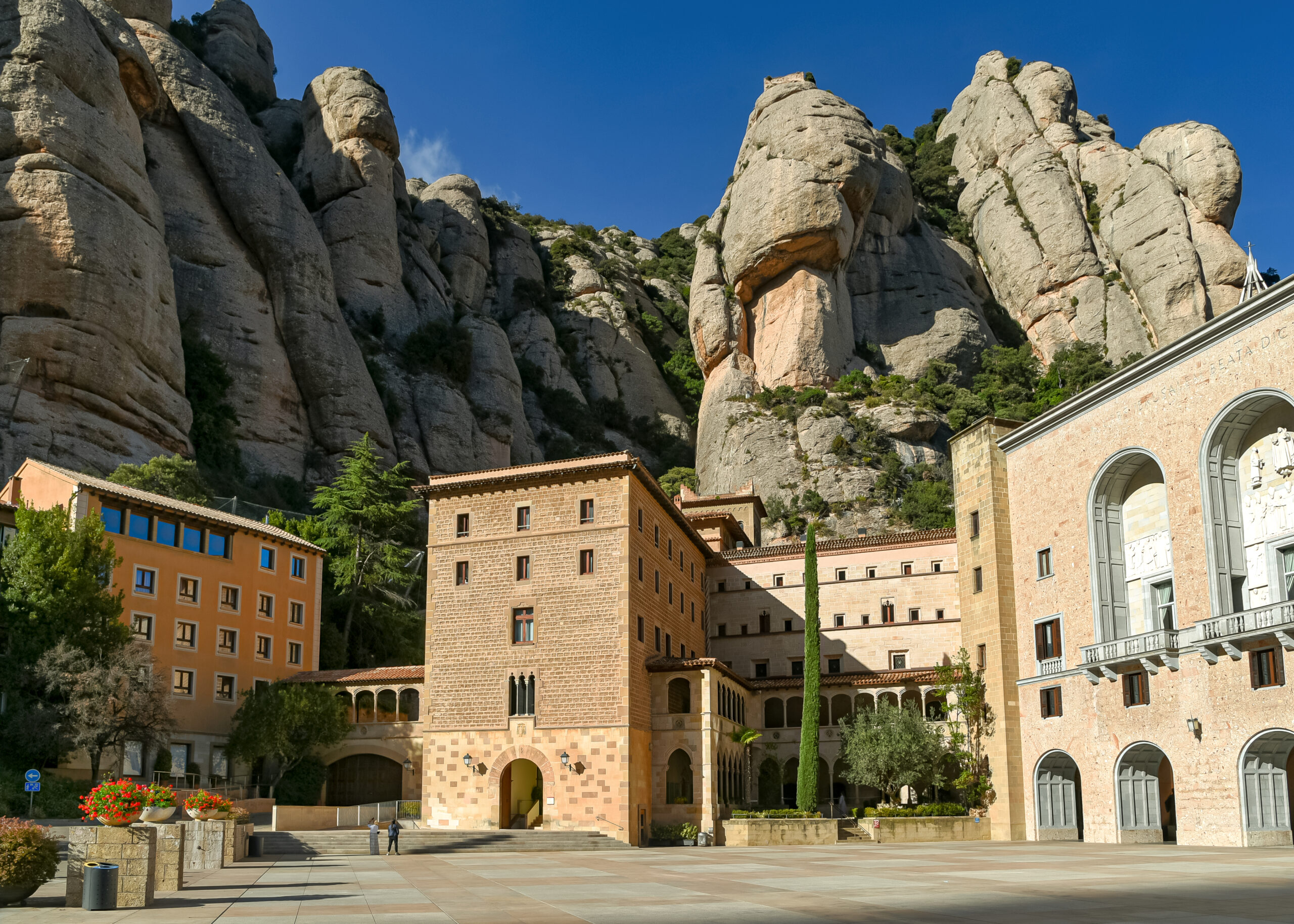
If you take one day trip from Barcelona, make it this one. About an hour northwest of the city, the mountain of Montserrat rises in bizarre, saw-toothed pillars of rock — mont serrat literally means “serrated mountain” — with the Benedictine abbey of Santa Maria de Montserrat clinging to its slopes. Founded in the 11th century, it’s Catalonia’s most important religious site and one of the strangest, most beautiful landscapes in Spain.
Inside the basilica sits the Black Madonna (La Moreneta), a 12th-century Romanesque statue and the patron saint of Catalonia. Viewing her throne is now timed entry, so book the combined ticket online in advance (about €18 — it also covers the basilica and the surprisingly good museum, with works by El Greco, Picasso, and Dalí). If your visit falls on a weekday, time it for 1pm to hear the Escolania, one of Europe’s oldest boys’ choirs — they don’t perform on Saturdays, in July, or during school holidays, so check the schedule.
Getting there is part of the adventure: take the R5 FGC train from Plaça Espanya to Monistrol, then ride the rack railway (or the cable car) up the mountainside. From the monastery, the Sant Joan funicular climbs higher still for panoramic hiking trails. Note that the Santa Cova funicular is closed for maintenance through at least early 2026 — plan around the Sant Joan side instead. A guided tour bundles the transport, the logistics, and the context:
Book the Montserrat tour with cogwheel railway, Black Madonna & winery visit → (4.7 from 6,922 reviews, from $44, free cancellation up to 24 hours)
2. Girona & the Dalí Theatre-Museum in Figueres
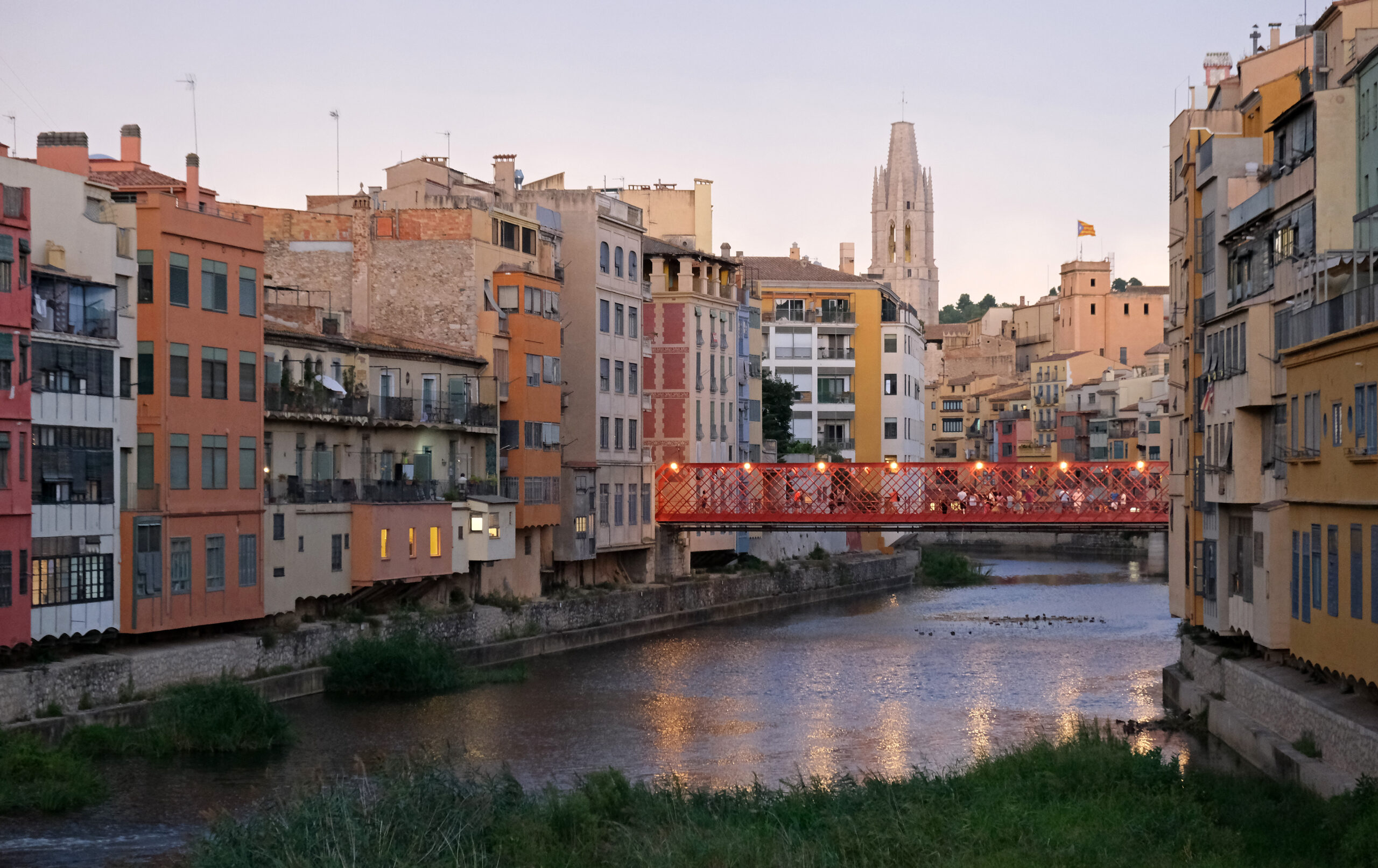
Two Catalan icons, one easy day. Start in Girona, about 40 minutes north by high-speed train — a medieval city of stone lanes, one of Europe’s best-preserved Jewish Quarters, and a cathedral with the widest Gothic nave in the world. Walk the Passeig de la Muralla along the old city walls, cross the Eiffel-designed bridge over the Onyar river for the classic photo of the pastel houses, and climb the cathedral’s 90 steps. Game of Thrones fans will recognize it instantly: much of season six’s Braavos and King’s Landing was filmed here.
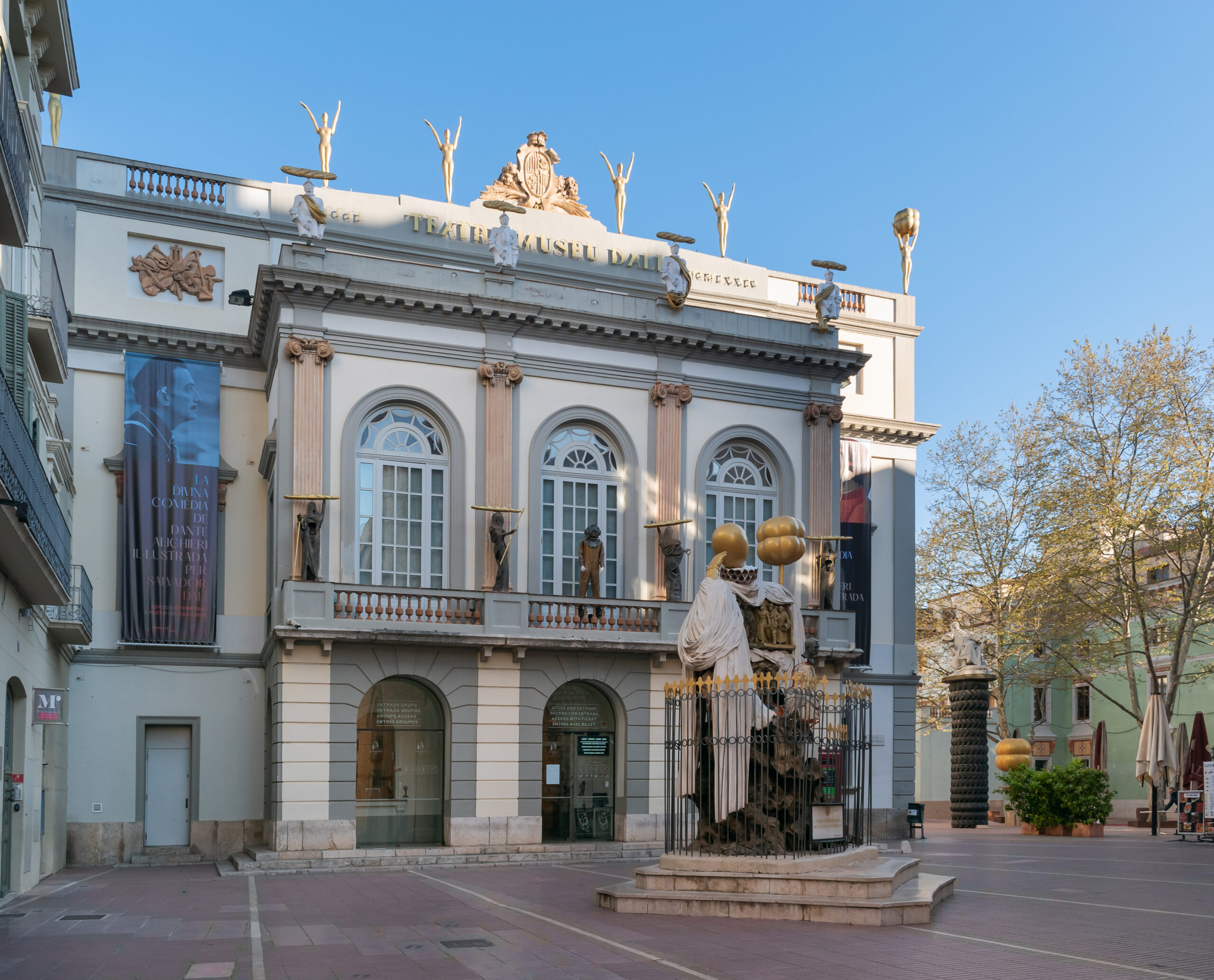
Then continue north to Figueres, Salvador Dalí’s hometown, for the Dalí Theatre-Museum — the largest surrealist object in the world, designed by Dalí himself on the ruins of the town’s old theater. Giant eggs crown the roof, a Cadillac rains snails in the courtyard, and Mae West’s face becomes an apartment you can climb inside. It’s weird, joyful, and unlike any museum you’ve ever visited. Doing both towns by public transport in one day is possible but fiddly, which is why the combined small-group tours are so popular:
Book the Girona & Dalí Museum small-group day trip → (4.7 from 2,162 reviews, from $79, free cancellation up to 24 hours)
3. Sitges & Tarragona: Beach Town Meets Roman Empire
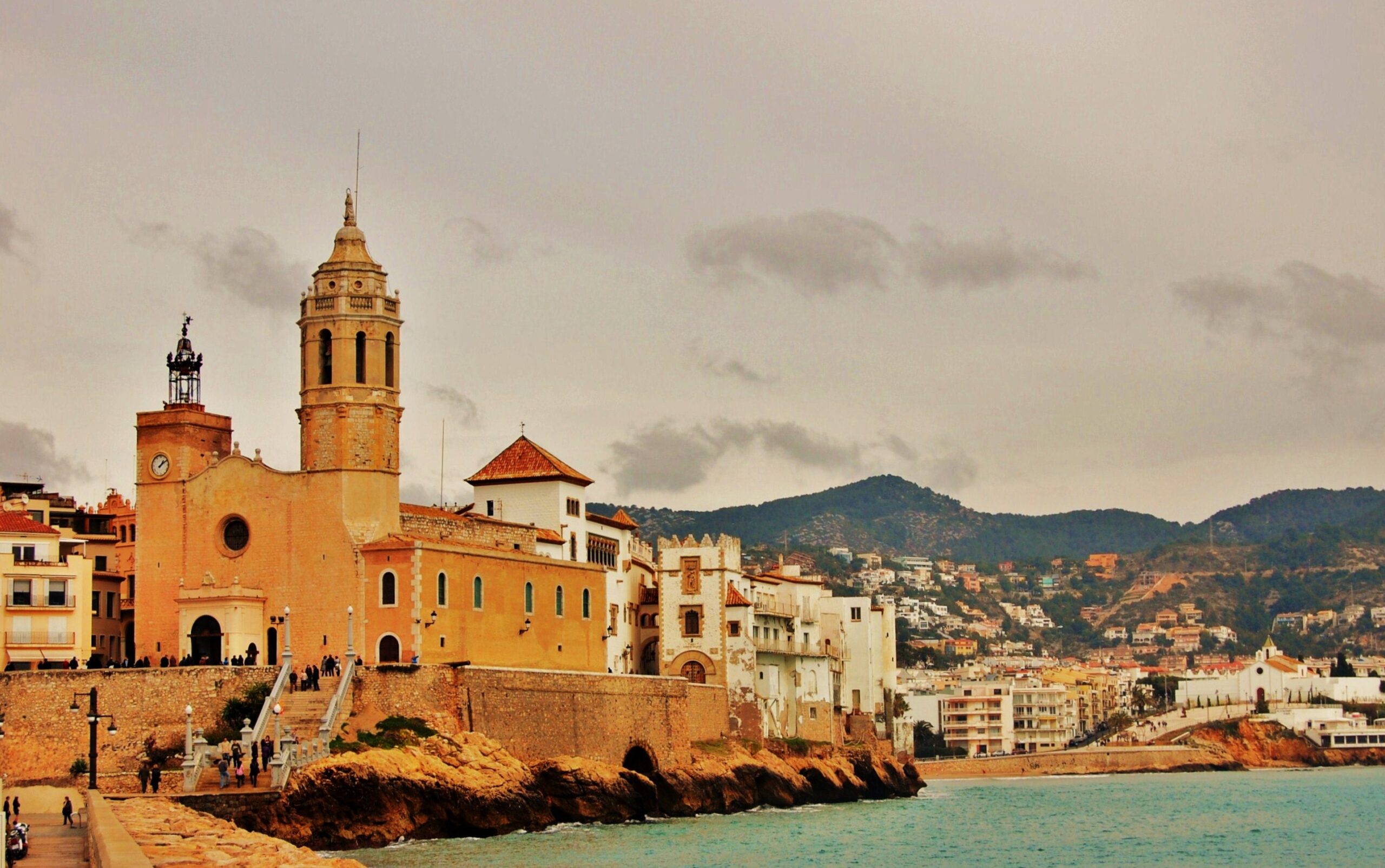
South of Barcelona, two very different coastal towns pair beautifully. Sitges, about 40 minutes by train, is the Mediterranean beach town perfected: 17 sandy beaches, a whitewashed old quarter, the church of Sant Bartomeu on its little hill, and a famously welcoming, anything-goes atmosphere. It’s the easy, lazy half of the day — swim, stroll, long seafood lunch.
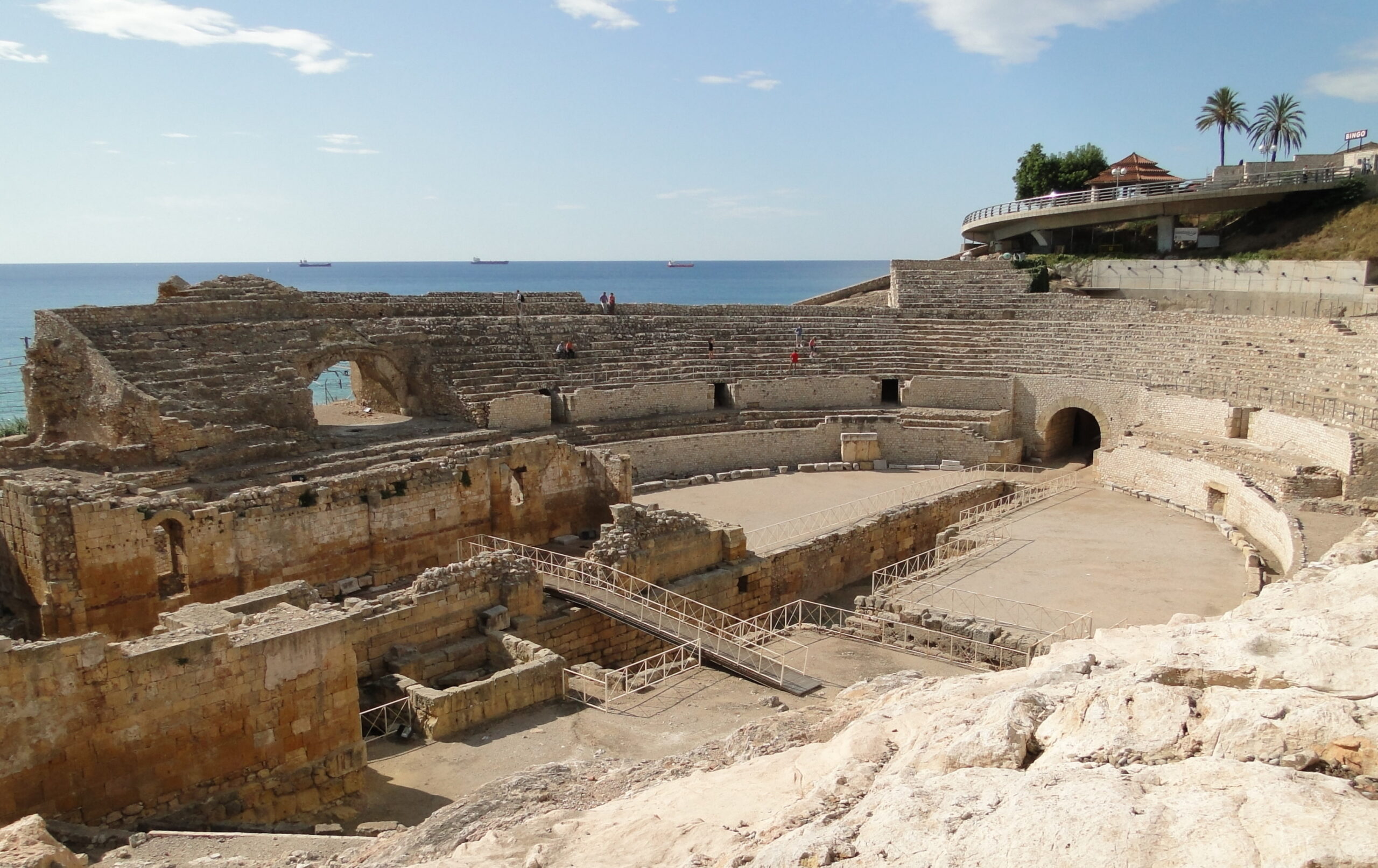
Tarragona, an hour south, is the serious half: 2,000 years ago this was Tarraco, the capital of Rome’s Spanish empire, and its archaeological ensemble is a UNESCO World Heritage Site. The Roman amphitheater sits in a curve of the coastline with the sea as its backdrop, the circus and forum are woven into the old town, and the cathedral crowns the hill. Few places in Europe layer Roman, medieval, and modern life this visibly — and you can swim between the sightseeing.
Book the Tarragona & Sitges full-day tour with pickup → (4.8 from 572 reviews, small group of 8, from $112, free cancellation up to 24 hours)
4. The Costa Brava: Wild Coast, Hidden Coves
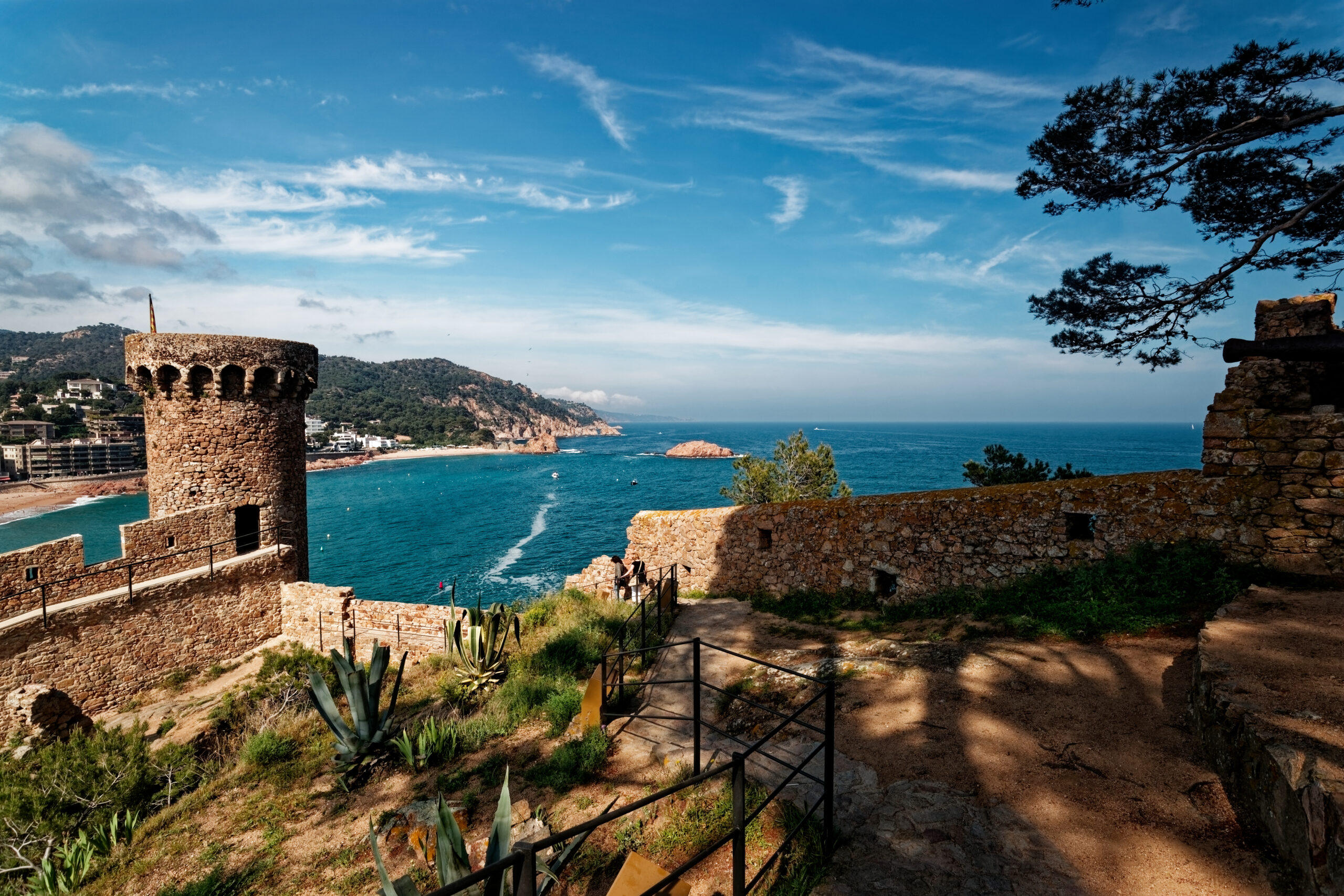
Costa Brava means “wild coast,” and the name is earned: pine-clad cliffs, pocket coves of turquoise water, and fishing villages that mass tourism somehow missed. The sweet spot for a day trip is Tossa de Mar, whose walled old town — the Vila Vella — is the only fortified medieval town still standing on the Catalan coast. Climb to the lighthouse for the view, then walk the coastal path to hidden calas you’ll share with almost no one outside August.
Boat trips from the harbor reach coves inaccessible by road, and the water here is some of the clearest in the western Mediterranean. Go on a weekday, bring water shoes for the pebbly coves, and stay for sunset if you can — the light on the cliffs is extraordinary.
5. The Penedès: Cava Country
An hour west of Barcelona, the rolling hills of the Penedès produce the sparkling wine that Spain drinks at every celebration: cava. Made by the same traditional method as Champagne but from local grapes — Macabeo, Xarel·lo, and Parellada — at a fraction of the price, it’s one of the great wine values of Europe.
The big historic houses around Sant Sadurní d’Anoia — Codorníu, with its modernist cellars designed by Gaudí’s contemporary Puig i Cadafalch, among them — run excellent tours, but the real charm is in the small family wineries, where the person pouring your tasting is often the person who made the wine. Many tours pair the cellars with a countryside lunch. This is the day trip for travelers who’ve done the cathedrals and want to taste Catalonia instead.
6. Colònia Güell: Gaudí’s Secret Laboratory
Everyone sees the Sagrada Família; almost no one sees where Gaudí worked out how to build it. In the industrial village of Santa Coloma de Cervelló, about 30 minutes from Barcelona, the textile magnate Eusebi Güell commissioned Gaudí to build a church for his workers — and Gaudí used it as a full-scale structural experiment, testing the leaning columns and hyperboloid vaults he’d later use in the Sagrada Família.
Only the crypt was finished, but what a crypt: a forest of tilted brick columns and stained glass, now a UNESCO World Heritage Site, with barely a crowd in sight. Pair it with the village’s modernist workers’ housing and you’ve got a half-day deep cut that makes the Sagrada Família itself make more sense when you return.
7. Vic: Medieval Market Town
About 70 kilometers north of Barcelona, Vic is the Catalonia of a thousand years ago, still going about its business. Its enormous arcaded Plaça Major hosts one of the region’s great markets, the Roman temple stands improbably intact in the old town, and the Cathedral of St. Peter anchors streets that feel untouched by the tourist century.
Come hungry: the surrounding Osona region is famous for its cured meats — the fuet and llonganissa you’ll snack on all over Catalonia start here — and the market-town restaurants serve the hearty, honest version of Catalan cooking. It’s the least famous town on this list, and regulars would like to keep it that way.
How to Plan Your Barcelona Day Trips
Base yourself well. Montserrat leaves from Plaça Espanya, the fast trains to Girona depart from Sants, and the Sitges trains use Passeig de Gràcia — so anywhere central works. Our Where to Stay in Barcelona guide breaks down the best neighborhoods and hotel picks for every budget.
DIY or guided? Sitges, Girona, and Tarragona are easy by train. But Montserrat’s mountain logistics, the Girona–Figueres double-header, and the Penedès wineries all run smoother with a guide — and small-group tours often cost less than a rental car once you add tolls, fuel, and parking.
More Spain? Barcelona pairs naturally with the capital — see our 7 best day trips from Madrid if you’re doing both cities in one trip.
Three days in Barcelona (here’s the perfect itinerary) is the minimum; add two or three of these escapes and Catalonia starts to feel like a second trip hiding inside the first.