
Disclosure: This post contains affiliate links. If you book through one of these links, I may earn a commission at no extra cost to you.
Never forget a thing before you fly. My free 8-page Travel Planning Checklist walks you through the whole trip — 6 planning timelines, 36 checks, from booking windows to travel-day basics. One email, no spam, unsubscribe anytime.
Three days in Siem Reap is the sweet spot for Angkor. One day is enough to gasp at Angkor Wat and rush home; three days lets you watch the sun rise behind its five towers, wander the smiling faces of the Bayon without a tour-bus deadline, drive out to the pink carvings of Banteay Srei, and still have an evening left for Pub Street and a slow dinner by the river. This itinerary sequences the temples the way experienced guides do — the famous small circuit first, the grand circuit and countryside second, and sacred Phnom Kulen and the floating village of Kampong Phluk third — so you see more and backtrack less.
Siem Reap itself is an easy town to love: compact, flat and built for visitors, with the Old Market (Psar Chas), Pub Street and the riverside all within a short walk of most central hotels. Base yourself there, hire transport the night before each temple day, and keep your afternoons loose — the heat in Cambodia rewards anyone who plans a pool or massage break in the middle of the day.
Before You Go: The Angkor Pass and Practical Basics
Every temple in Angkor Archaeological Park is covered by one ticket, the Angkor Pass, sold only by Angkor Enterprise — at its ticket office on Road 60 (Apsara Road), about 4km from central Siem Reap, or online at angkorenterprise.gov.kh. Prices have held steady for years: $37 for one day, $62 for three days (any 3 days within 10 days) and $72 for seven days (any 7 days within a month). Children under 12 enter free with a passport as proof of age. For this itinerary, the 3-day pass is the obvious buy — it costs less than two single days and gives you a spare day if rain ruins a sunrise.
Two logistics tips save real stress. First, buy your pass the afternoon before Day 1 (sales run until 5:30pm) or online, so your 4:30am sunrise start is not spent in a ticket queue. Second, getting here has changed: all flights now use Siem Reap–Angkor International Airport (SAI), which opened in October 2023 about 50km east of town. Allow 45–60 minutes for the drive in and pre-arrange a hotel transfer or taxi — the old airport 15 minutes from Pub Street is closed.
Dress codes are enforced, especially for Angkor Wat’s upper Bakan level: shoulders and knees must be covered, and staff do turn people away. Carry small US dollar bills (Cambodia runs largely on dollars alongside riel), drink far more water than feels necessary, and start temple days early — most sites open around 7:30am, while Angkor Wat itself opens at 5:00am for sunrise.
Day 1: Sunrise at Angkor Wat, Angkor Thom and Ta Prohm
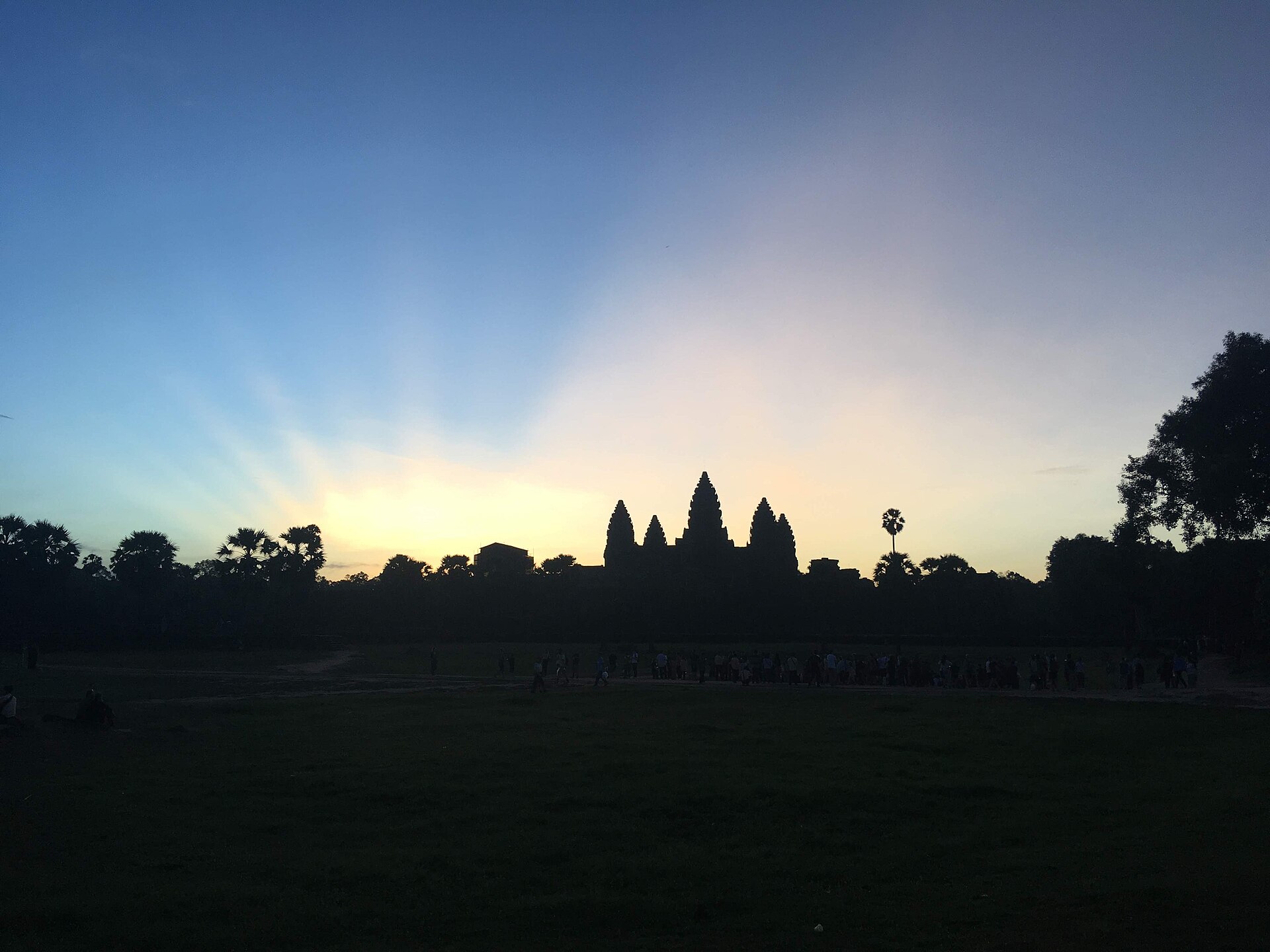
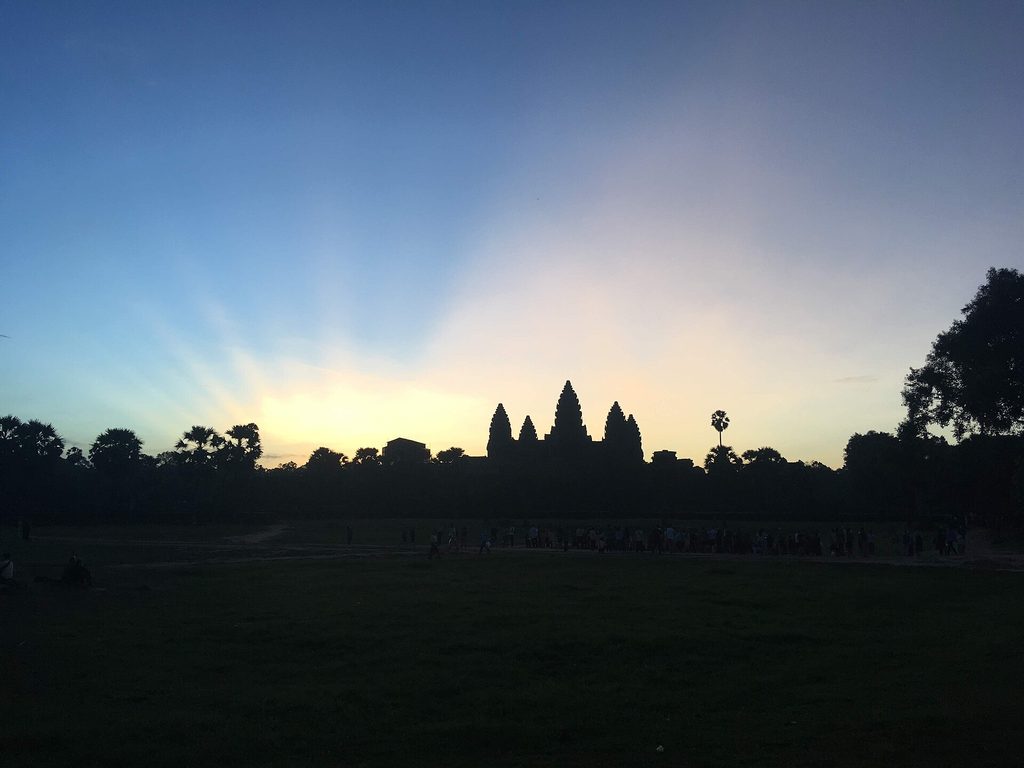
Set the alarm. A small-group Angkor Wat sunrise tour picks you up around 4:30am and puts you at the reflecting ponds in front of the west causeway before the sky lightens — the classic shot, with the five lotus-bud towers silhouetted and mirrored in the water, is worth every lost minute of sleep. Go with a guide on this first morning: Angkor Wat is the largest religious monument on earth, built in the early 12th century for King Suryavarman II, and its galleries of bas-reliefs — heavens and hells, churning oceans of milk, entire battle epics in stone — mean far more when someone decodes them as you walk.
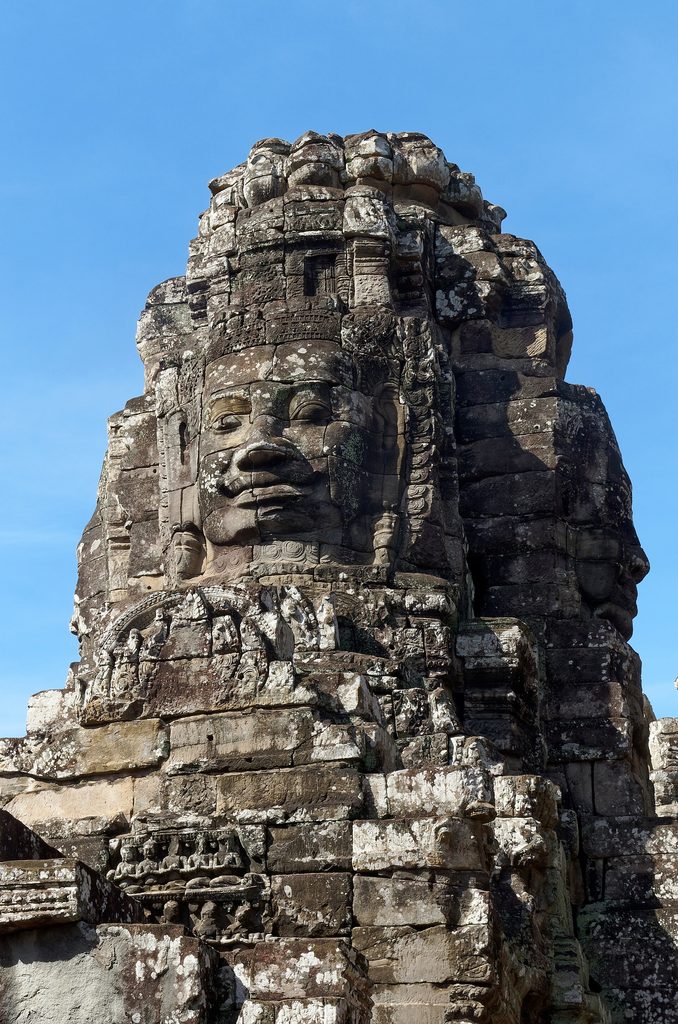
After sunrise, stay inside while the crowds head back to town for breakfast. The upper level, the Bakan, opens later in the morning and rewards the climb with the park’s best panorama. Then move on to Angkor Thom, the great walled royal city, entering through the South Gate past its avenue of gods and demons hauling a naga serpent. At its heart stands the Bayon, whose 54 towers carry 216 serene, smiling stone faces — go mid-morning, when angled light models the faces beautifully and the sunrise groups have thinned.
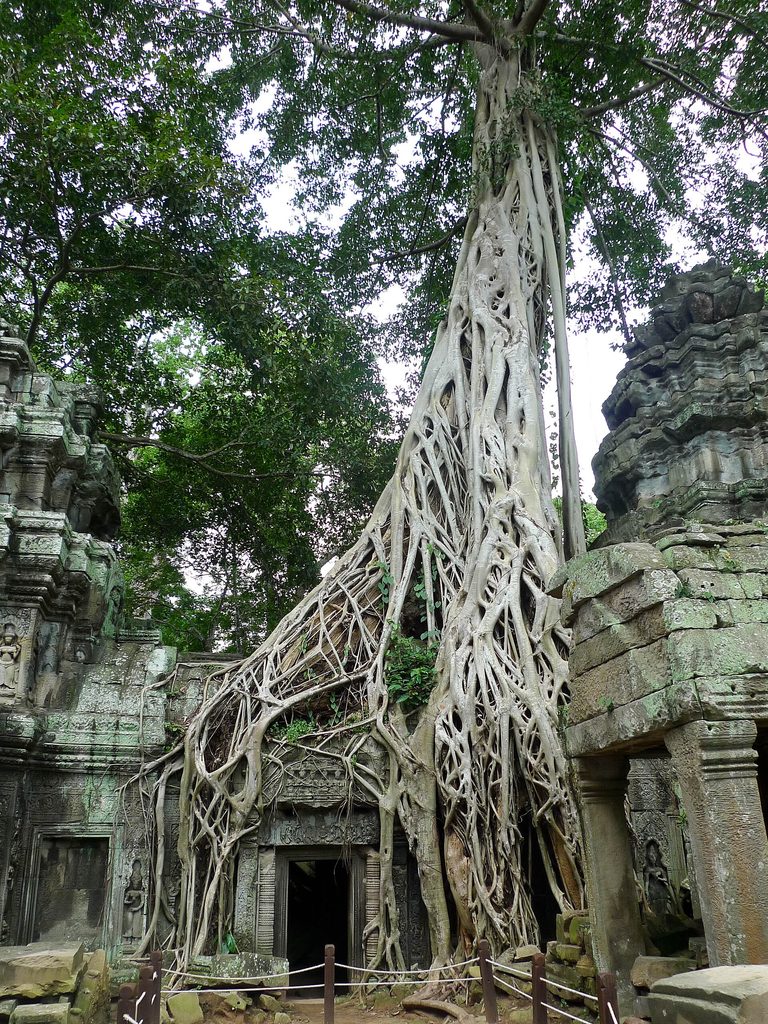
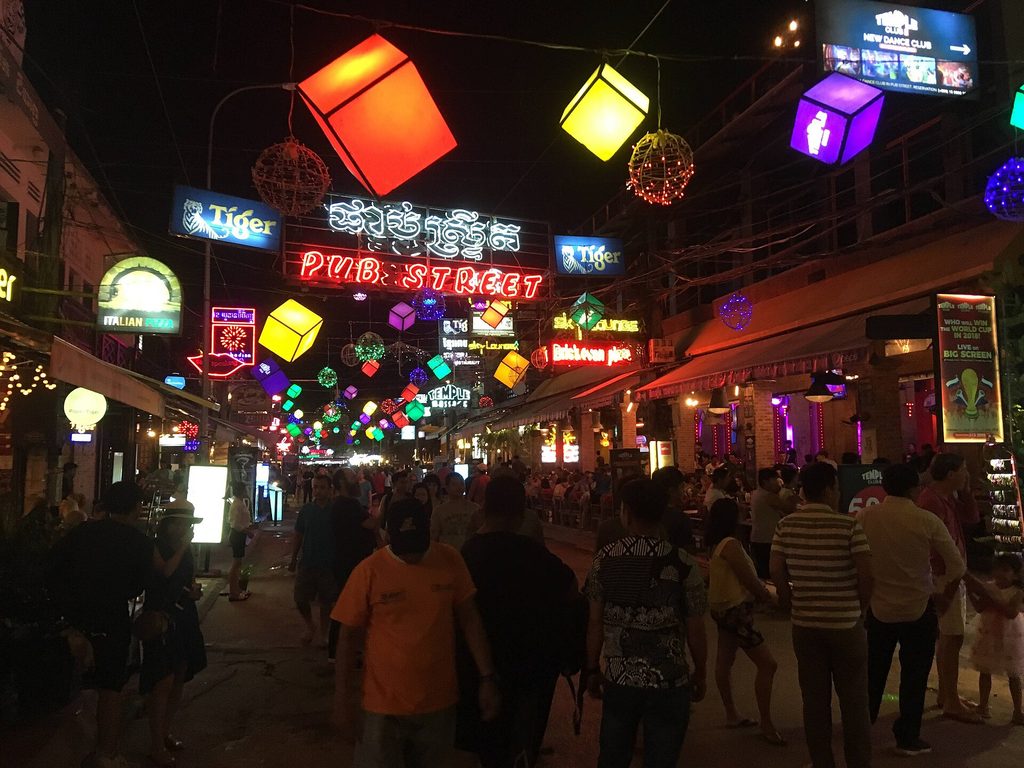
Finish the temple day at Ta Prohm, the jungle temple left largely as French explorers found it, with silk-cotton and strangler fig roots pouring over its galleries like candle wax. It is the Angkor of the films and the photographs, and in the softer early-afternoon light it feels genuinely lost. Then stop. Head back to town, swim, nap, and spend the evening around the Old Market and Pub Street — lively, unashamedly touristy, and exactly what tired legs need, with everything from amok curry to a $1 draft beer within a few streets.
Day 2: The Grand Circuit, Banteay Srei and Sunset
Day 2 starts later — aim for 8am — and heads out on the grand circuit, the loop of temples beyond Angkor Thom that most one-day visitors never reach. Start at Preah Khan, a vast, atmospheric labyrinth of corridors and lichen-green stone that was once a Buddhist monastery and university. Continue to Neak Pean, a tiny temple on an island in the middle of an ancient reservoir, reached by a long wooden walkway over the water, then to the pyramid of Pre Rup, whose warm red stone glows even under a midday sun.
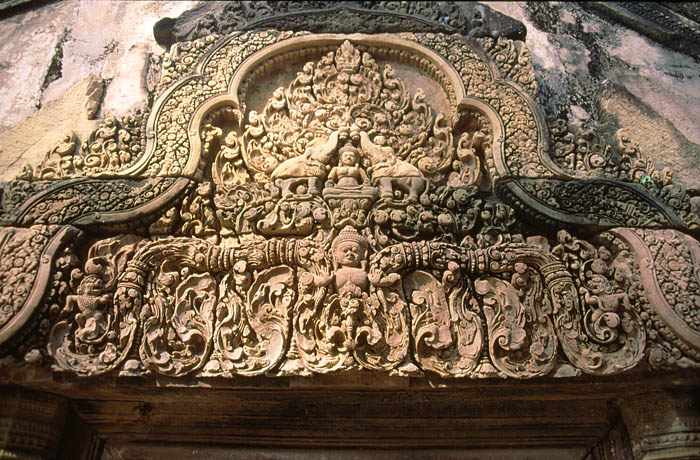
The afternoon belongs to Banteay Srei, about 37km northeast of Siem Reap and the jewel of Angkorian art. Built in the 10th century from pink sandstone, it is small, exquisite and carved with a delicacy no other temple matches — door lintels and pediments covered in swirling foliage, devatas and scenes from Hindu epics, sharp as if cut yesterday. Pairing it with the grand circuit in one guided day is exactly what a two-day Angkor tour covering Banteay Srei and the grand circuit is built for, if you would rather not negotiate tuk-tuk routes yourself.
On the way back, stop in a palm-sugar village — roadside stalls along this route boil palm sap into golden cakes you can taste still warm — and finish the day with sunset from Pre Rup or the quieter east side of Angkor Wat, where afternoon light turns the causeway gold and the crowds are a fraction of sunrise. Evening idea: the Angkor National Museum, open into the early evening, is the best single place to make sense of everything you have seen, with a gallery of 1,000 Buddha images and clear, modern exhibits on the Khmer Empire.
Day 3: Phnom Kulen, Beng Mealea and Kampong Phluk
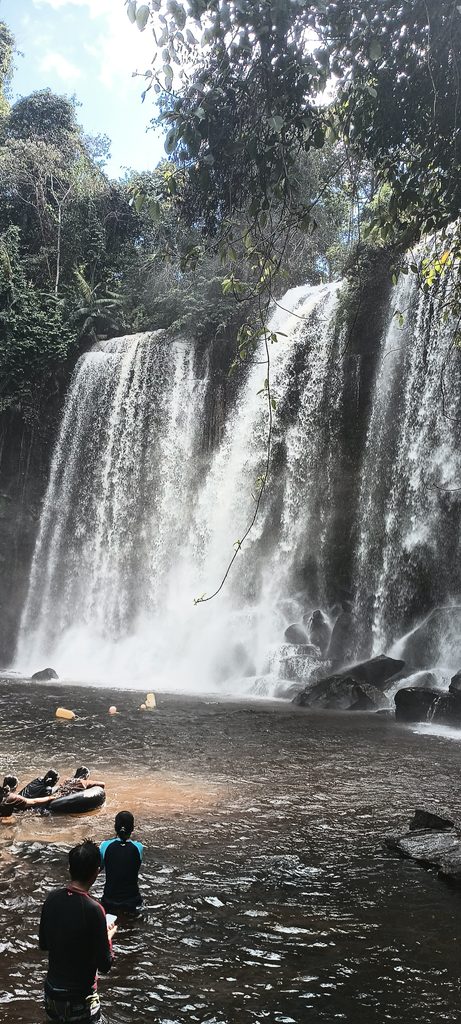
Your third day leaves the main park behind — which is precisely why it is so good. A day trip to Phnom Kulen, Beng Mealea and the Kampong Phluk floating village strings together three places that show you Cambodia beyond the postcards. Phnom Kulen, about 50km northeast, is the sacred mountain where the Angkorian empire was founded in 802 AD. You will see the River of a Thousand Lingas, where fertility symbols were carved into the riverbed so the water flowing down to Angkor was blessed, a huge 16th-century reclining Buddha cut from a single rock at Preah Ang Thom pagoda, and the Kulen waterfall — bring swimwear, because a plunge in its pool after a hot morning is one of the great pleasures of this trip. Note that Phnom Kulen has its own entrance fee (about $20), separate from the Angkor Pass.
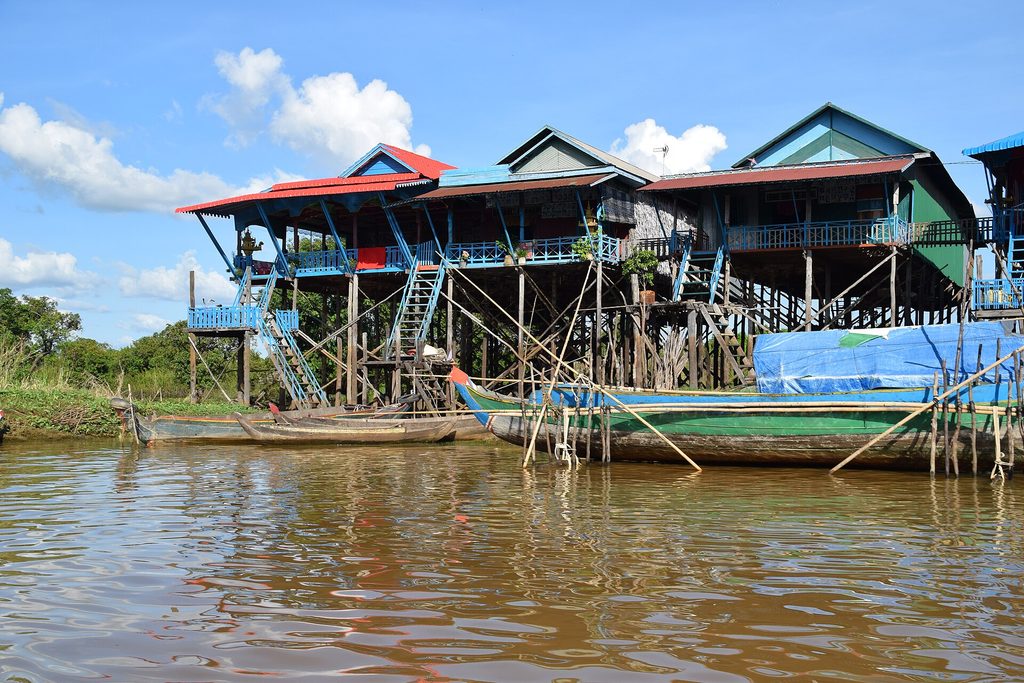
Next, Beng Mealea: a 12th-century temple of the same era and similar plan to Angkor Wat, still swallowed by jungle, its galleries collapsed and threaded with roots and vines. Wooden walkways now thread through the ruins, and because it sits an hour from town it draws a fraction of Ta Prohm’s visitors — many travelers rate it their favourite temple of all. End the day on the water at Kampong Phluk, a village of stilt houses rising on 6–8 metre poles above the floodplain of Tonle Sap, Southeast Asia’s largest freshwater lake. In the wet season (roughly August to February is prime) a boat carries you through the village and its flooded mangrove forest; in the dry season the houses tower overhead on their stilts and village life spills into the street — either way, it is a window onto a way of life governed entirely by the lake’s rise and fall. The village boat and entry fee (about $15) is paid locally.
Where to Eat and Drink in Siem Reap
Start at the Old Market in the morning, where the central food stalls serve kuy teav noodle soup and strong iced coffee for a couple of dollars. For lunch near the temples, the restaurants along the Srah Srang reservoir road do a good fish amok — Cambodia’s signature coconut curry, steamed in banana leaf. In town, look beyond Pub Street’s main drag: the lanes around it and the Wat Bo and riverside streets hold the better kitchens, including social-enterprise restaurants that train young Cambodians in hospitality — your dinner tastes better and does some good. Finish one evening on Pub Street itself, because everyone should once: it is loud, cheap and cheerful, and the people-watching is superb.
Getting Around
Tuk-tuks (remorks) are the default: agree the price before you set off, expect roughly $15–20 for a full small-circuit day and more for Banteay Srei or Kulen distances, and keep your driver’s number — hiring the same driver all three days builds a rhythm and he will learn your pace. Air-conditioned cars cost more but are a genuine upgrade in the March–May heat. In town, almost everything central is walkable, and ride-hailing apps work well for short hops. However you travel, build slack into temple days: Angkor is 400 square kilometres, and the distances between its temples are part of the experience, not an inconvenience.
Keep Planning Your Southeast Asia Trip
Siem Reap pairs beautifully with the region’s other great stops. If island time is next, my Langkawi in 3 Days itinerary follows the same unhurried rhythm, and food lovers should not miss Penang in 3 Days. For the full regional picture — stays, itineraries and tours across ten destinations — browse my Southeast Asia guides hub.
The Bottom Line
Buy the 3-day Angkor Pass, give sunrise one early alarm, and let each day have a different character: icons on Day 1, artistry on Day 2, and the living Cambodia of waterfalls, jungle ruins and lake villages on Day 3. Siem Reap rewards travelers who slow down — and three days is exactly enough to stop rushing and start seeing.