
Disclosure: This post contains affiliate links. If you book through one of these links, I may earn a commission at no extra cost to you.
Never forget a thing before you fly. My free 8-page Travel Planning Checklist walks you through the whole trip — 6 planning timelines, 36 checks, from booking windows to travel-day basics. One email, no spam, unsubscribe anytime.
Langkawi does not ask you to choose between mountains, mangroves and beaches — in three days you can do all three properly. This is an archipelago of 99 islands off Malaysia’s northwest coast, designated a UNESCO Global Geopark in 2007 — the first in Southeast Asia — for rocks that reach back more than 550 million years. The trick for first-timers is geography: put the cable car and the west-coast beaches on day one, the ancient Kilim karsts on day two, and the southern islands plus duty-free Kuah on day three. That order follows the weather, beats the queues, and keeps driving time short.
Base yourself at Pantai Cenang for all three nights. It is Langkawi’s main beach strip, about 10 minutes from Langkawi International Airport, with the widest choice of hotels, restaurants and tour pickups. Langkawi has direct flights from Kuala Lumpur (about 1 hour 5 minutes, multiple daily), Penang (35–40 minutes) and Singapore (about 1 hour 30 minutes). One warning that older guides get wrong: the direct Penang–Langkawi ferry is suspended indefinitely — fly from Penang, or travel via the mainland ferry ports of Kuala Perlis (about 1 hour 15 minutes) or Kuala Kedah (about 1 hour 45 minutes) into Kuah Jetty.
There is no public bus network on Langkawi, so plan transport honestly. Renting a small car is the easiest option for three days — traffic is light, roads are well signed, Malaysia drives on the left, and compact cars typically run about RM80–120 a day. Grab works well around the airport, Cenang and Kuah but gets patchy in the north and late at night. Visit in the dry season, November to April, when seas are calmest for boat tours; September and October are the wettest months.
Day 1: The SkyCab, the Sky Bridge and a Cenang Sunset
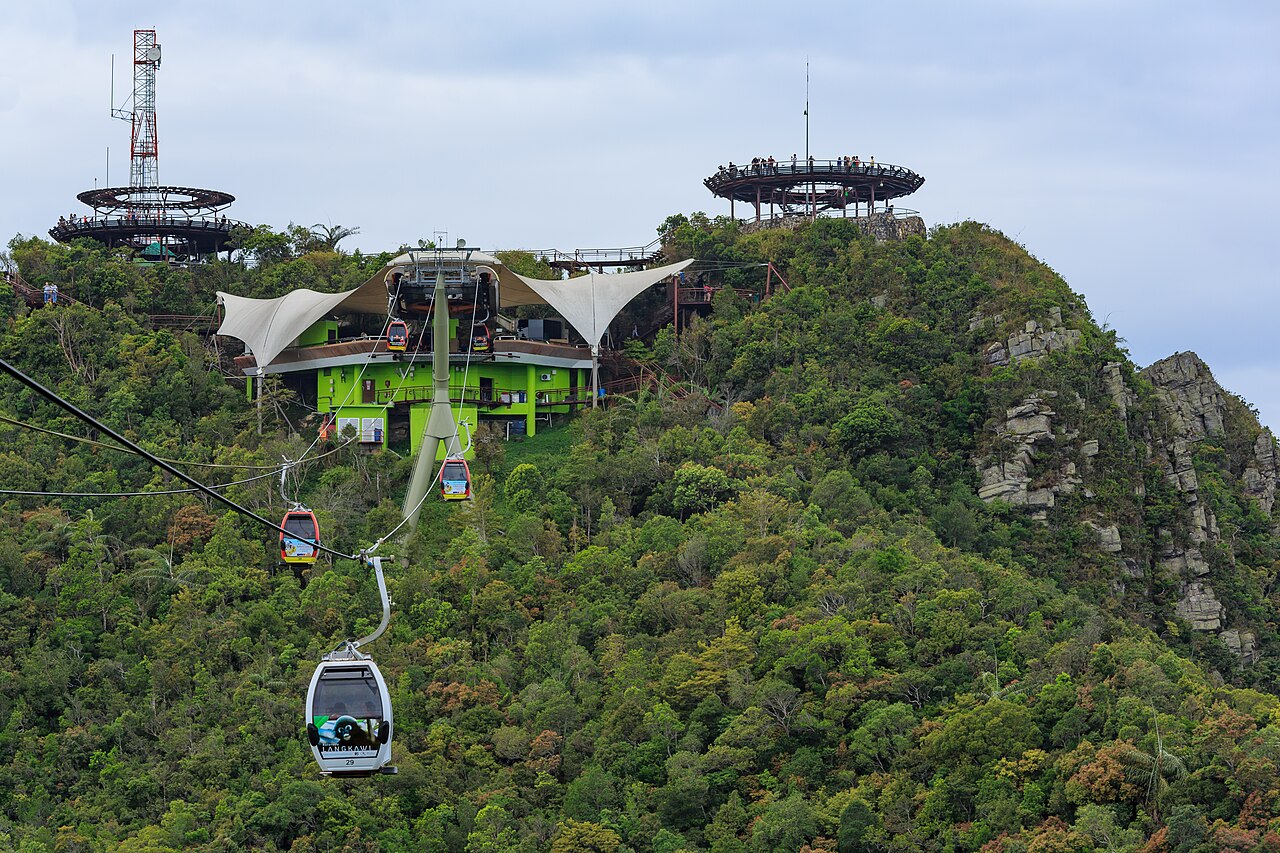
Go early. The Langkawi SkyCab, at the Oriental Village in Teluk Burau on the west coast, is one of the world’s steepest cable cars, climbing at 42 degrees on a roughly 2.2-kilometre, 15-minute ride. You pass a middle station at 650 metres before reaching the top station at 708 metres above sea level, on Gunung Machinchang — a formation around 550 million years old, and Langkawi’s second-highest peak. Go on the first clear morning of your trip: the top closes in high wind and lightning, and clouds can erase the view by midday. Normal hours are about 9:30am to 6pm, with a later noon opening on weekly maintenance days — usually Wednesday — so check the official calendar before you set an alarm.
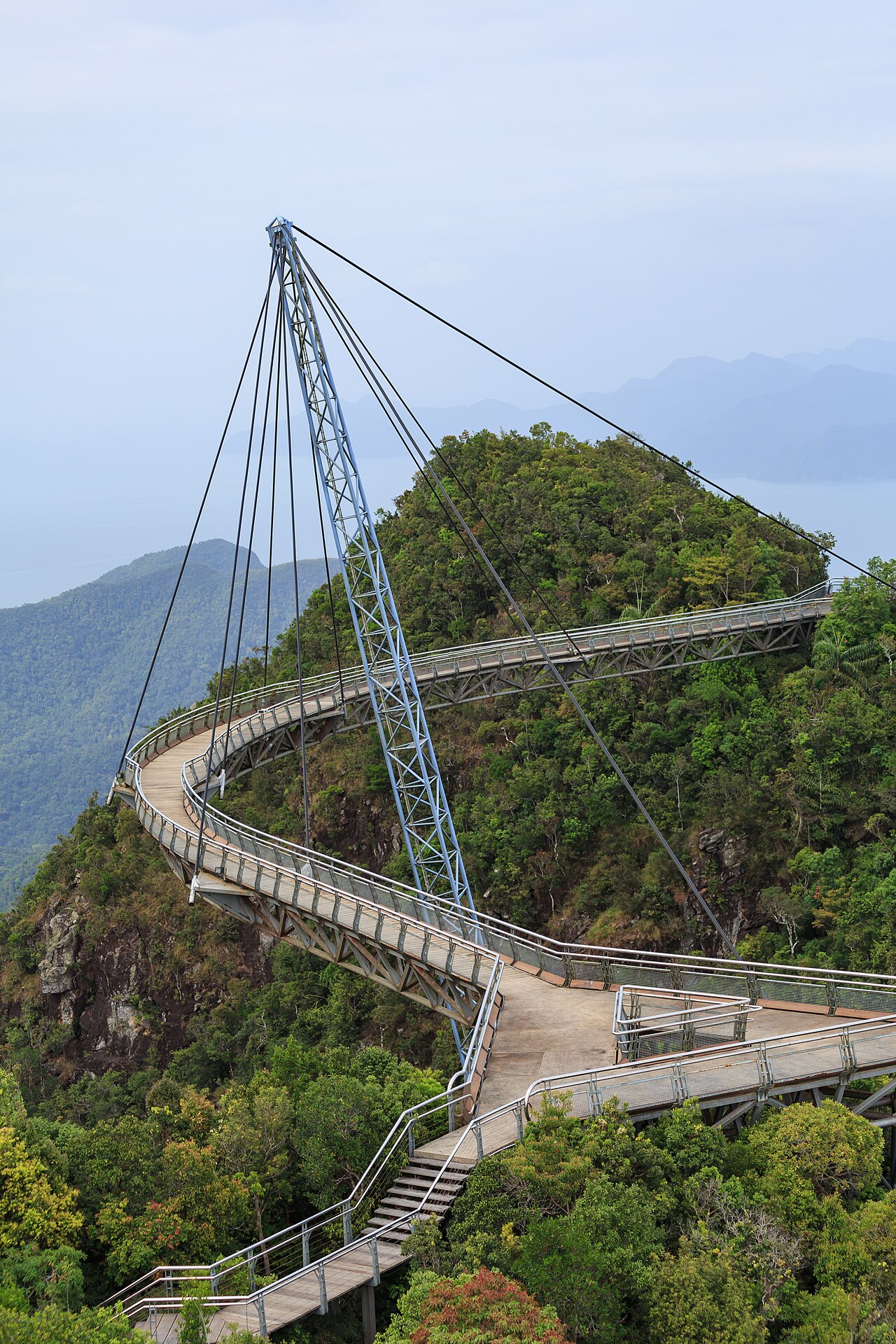
From the top station, walk (or ride the SkyGlide inclined lift, a separate small ticket) to the Langkawi Sky Bridge: a 125-metre curved pedestrian bridge held by a single pylon, high above the rainforest canopy, with glass sections that test your nerve and views across to Thailand on a clear day. For non-Malaysian visitors, standard SkyCab tickets were listed at RM85 for adults at the time of writing, with a SkyCab-plus-Sky-Bridge combo at RM89 — prices change, so confirm before you go. If you would rather not drive or queue for tickets, a private Sky Bridge and cable car tour with round-trip transport bundles the SkyCab, the bridge, the Oriental Village attractions and Eagle Square into one easy half-day.
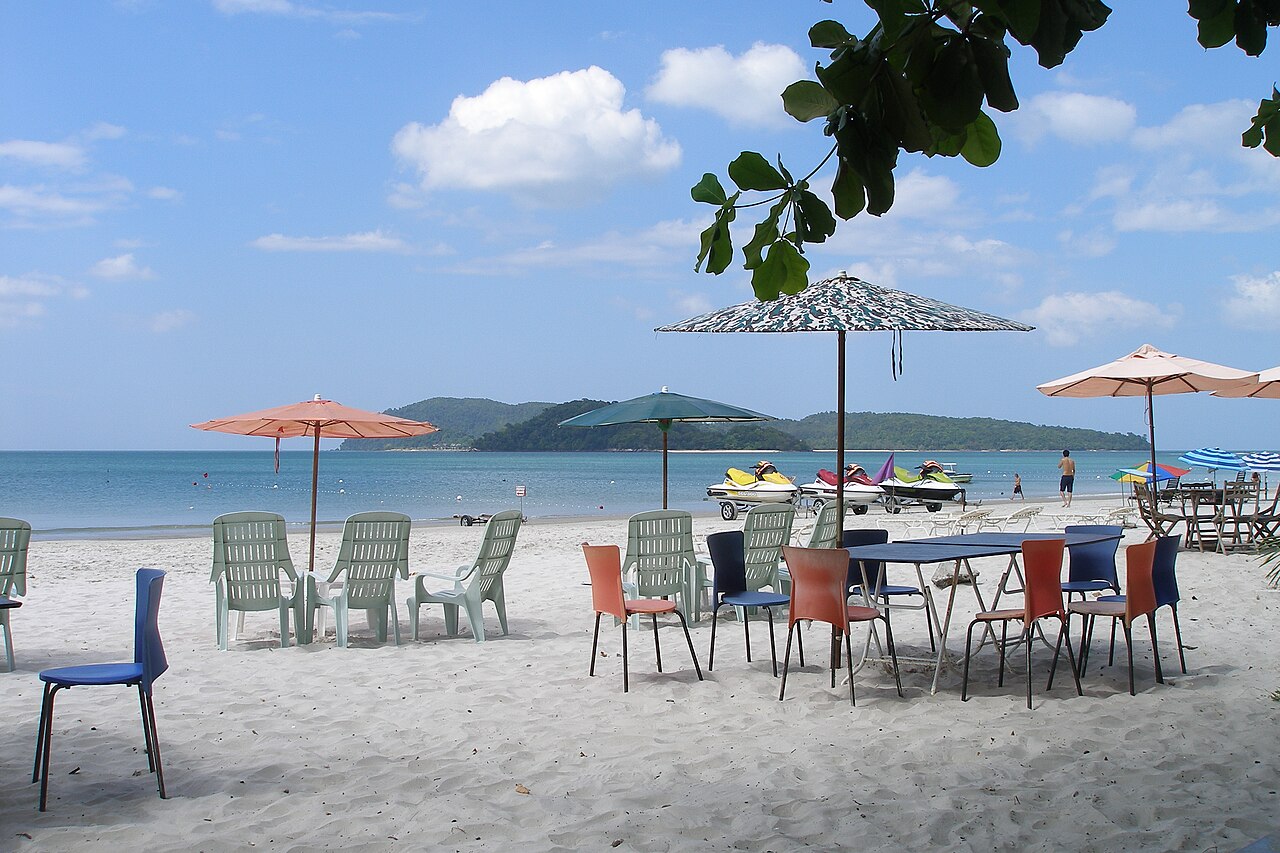
Spend the afternoon back at Pantai Cenang. The roughly 2-kilometre white-sand beach is busy — jet skis, parasailing and beach bars — but that is the point on day one: swim, rest, and stay for sunset, when the offshore islets turn black against an orange sky. If Cenang feels too lively, walk south to Pantai Tengah, its quieter continuation, for dinner. Travellers pairing this trip with the mainland should read my Penang in 3 Days itinerary — the two islands make a perfect one-week Malaysia pairing, just remember to fly between them.
Day 2: Kilim’s Ancient Mangroves and Tanjung Rhu
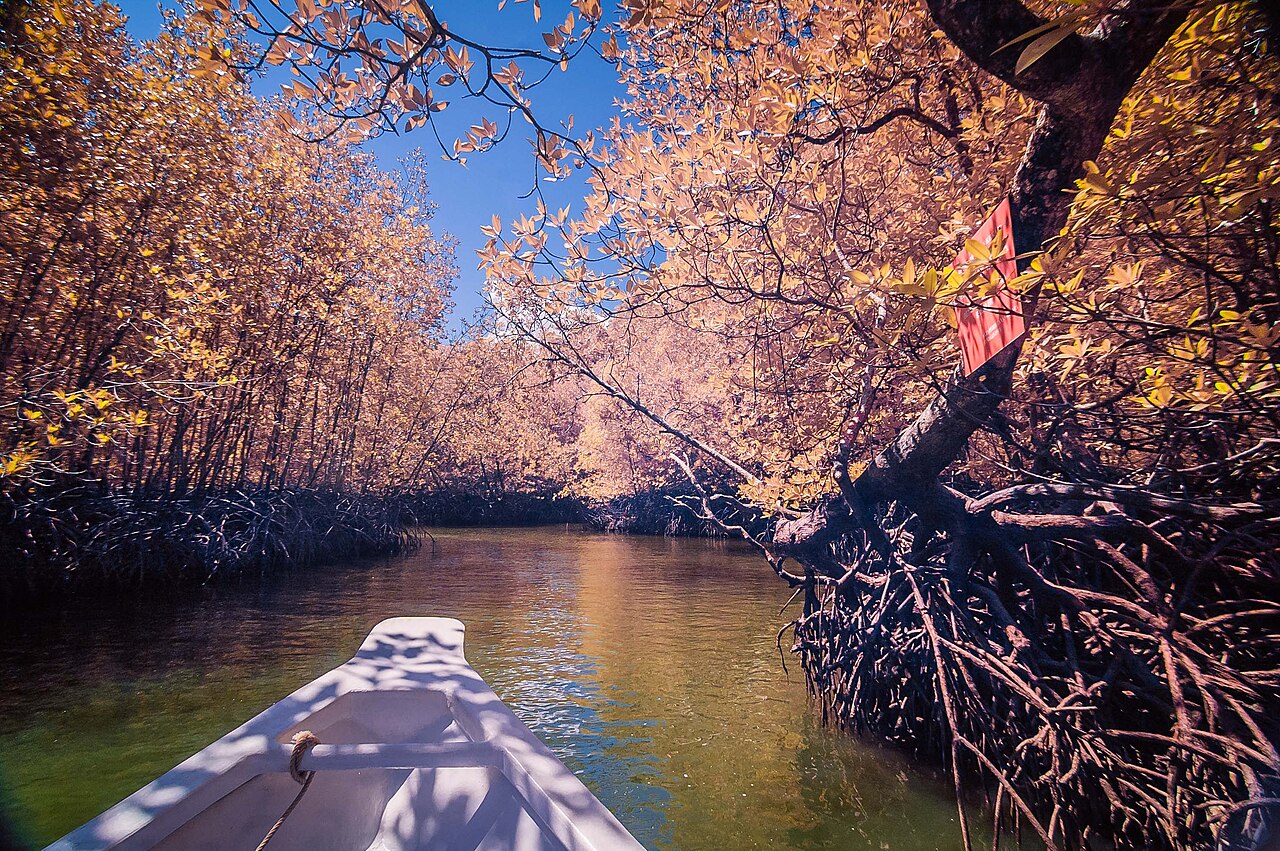
Day two belongs to the island’s oldest landscape. The Kilim Karst Geoforest Park, on the northeast coast, protects limestone from the Setul Formation — roughly 490 million years old, among the oldest in Southeast Asia — in a maze of mangrove rivers, karst pinnacles and sea caves. Boats from Kilim Jetty thread past the Bat Cave (Gua Kelawar), through the Crocodile Cave at low tide, and out to a floating fish farm, while brahminy kites and white-bellied sea eagles circle overhead. It is the single best half-day in Langkawi, and the one tour worth booking ahead.
The strongest option is the Kilim mangrove boat tour with hotel pickup and lunch — four hours on the water plus transfers, with the Bat Cave and a floating-restaurant lunch included, and no animal feeding. Book the morning departure: the river is calmer, the light on the limestone is better, and you will be back early enough for the beach.
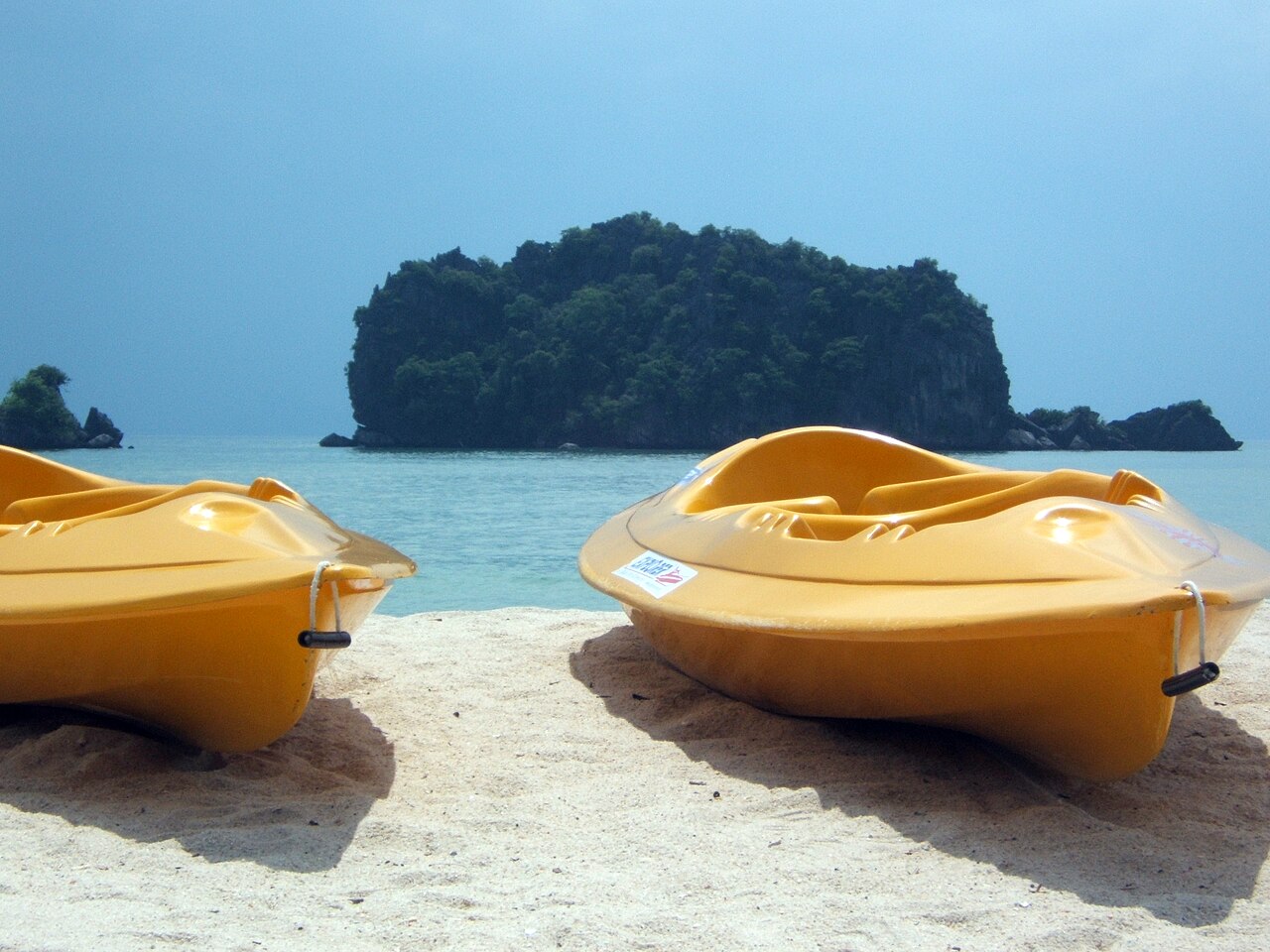
That beach is Tanjung Rhu, at the island’s northern tip, about 30 minutes from the airport and a short drive from Kilim. It is widely rated Langkawi’s most beautiful swimming beach — broad pale sand, casuarina shade, calm shallow water and limestone islets you can almost walk to at low tide on exposed sandbars. It is quiet and upmarket, with resort restaurants if you want lunch with a view. Further west, Datai Bay is even more secluded, set against ancient rainforest — but public access there is effectively limited to its luxury resorts, so admire it on a future splurge rather than planning a casual visit. Head back to Cenang for the evening; if you are building a longer Malaysia route, my Kuala Lumpur in 3 Days itinerary is the natural bookend, since almost every Langkawi trip starts or ends with a KL flight.
Day 3: Island Hopping, Then Eagle Square and Duty-Free Kuah
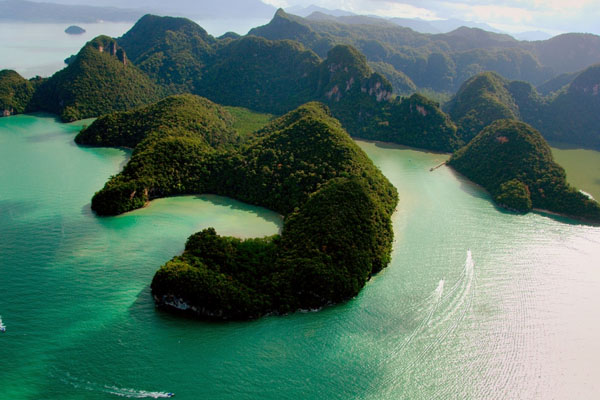
Take the classic southern island-hopping boat on your last morning — three to four hours, with departures from the Cenang area. The first stop is Pulau Dayang Bunting, the archipelago’s second-largest island, where a short stepped walk leads to Tasik Dayang Bunting, the Lake of the Pregnant Maiden: Langkawi’s largest freshwater lake, formed by a collapsed cavern and ringed by limestone hills whose outline resembles a reclining pregnant woman. Lake entry and activities are usually extra — carry small cash. Boats then pause off Pulau Singa Besar to watch sea eagles and kites swoop for food thrown by the guides, before a final swimming stop of about an hour at Pulau Beras Basah, a white-sand beach where the monkeys are bold — keep food and bags zipped and held.
Ratings for island-hopping operators are honestly mixed, so pick on review depth: this Langkawi island hopping tour is the most-reviewed version of the classic three-island route, with hotel pickup included. Go in the morning for calmer seas, wear swim gear under your clothes, and bring a dry bag.
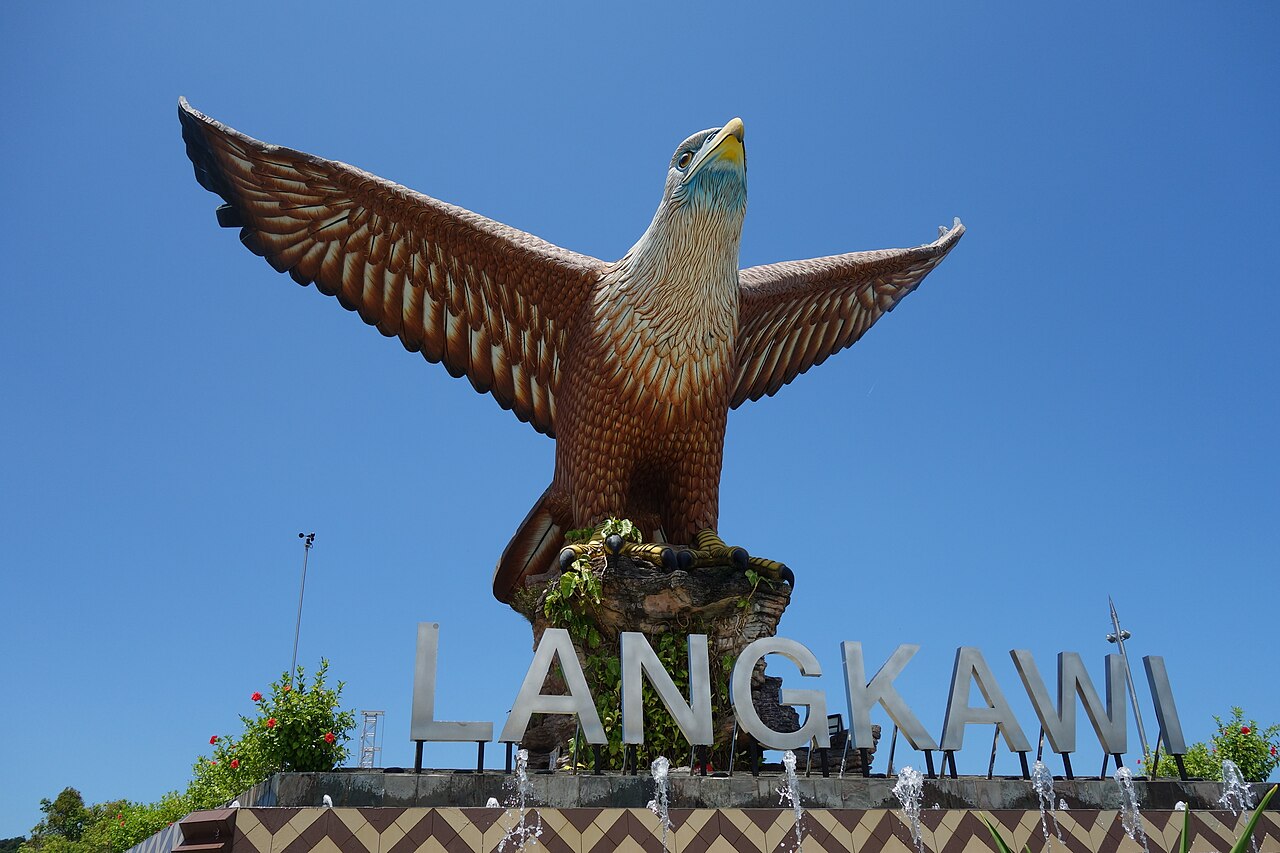
Finish in Kuah, the island’s main town on the southeast coast. At waterfront Eagle Square — Dataran Lang, a short walk from Kuah Jetty — a 12-metre reddish-brown eagle, wings spread, marks the island’s name itself: helang (eagle) plus kawi (reddish-brown). The square is free and open around the clock; late afternoon light is best for photos. Then use Langkawi’s duty-free status, in place since 1987, where it still counts: chocolate, perfume and kitchenware are the classic buys in Kuah’s big duty-free stores. Note that cigarettes have not been duty-free since 2021. If your flight is the next morning, a last Cenang sunset is the right goodbye.
Practical Tips and If You Have a Fourth Day
Carry cash in ringgit for lake fees, small stalls and jetty extras, even though hotels and malls take cards. Book SkyCab and Kilim tours a day or two ahead in December–February, the driest and busiest window. Dress modestly away from the beach resorts — Langkawi is relaxed, but it is still Malaysia. And pack reef-safe sunscreen and insect repellent for the mangroves.
With a fourth day, consider Pulau Payar Marine Park, the best snorkelling near Langkawi — but only with a licensed operator, well ahead: visits are strictly capped, the park closes Tuesdays and Wednesdays, and it shuts entirely from March to May for reef recovery. Otherwise, a slow Cenang day or a Tanjung Rhu return is time well spent. For more routes that pair well with this one, browse my best Southeast Asia guides collection, which gathers the region’s stays, itineraries and tours in one place.
Three days in Langkawi works because each day has a different texture: vertigo above a 550-million-year-old mountain, silence inside a mangrove river older than almost anything else in Southeast Asia, and a boat morning among the southern islands. Do those three things well, eat where the Cenang strip smells best each night, and you will understand why so many travellers who came for a beach break start planning a return before they leave.