
Madrid might be Spain’s best base for day-tripping. Within two hours of the capital sit no fewer than six UNESCO World Heritage sites — imperial Toledo, Roman Segovia, the monastery-palace of El Escorial, walled Ávila, royal Aranjuez, and Cervantes’ Alcalá — all reachable by fast train, commuter rail, or bus. You don’t need a car, you don’t need to change hotels, and you don’t need to overthink it.
Planning a trip? Get our free Travel Planning Checklist:
Disclosure: This post contains affiliate links. If you book through one of these links, I may earn a commission at no extra cost to you.
Here are the seven day trips worth your time, ranked by how much they reward the journey — with honest logistics for each. Still planning your Madrid days? My Madrid in 3 Days itinerary and where to stay in Madrid guide cover the city itself.
1. Toledo — The Deep Classic (Full Day)
If you take one day trip from Madrid, take this one. Toledo was the capital of Visigothic Spain and later the seat of Christian, Muslim, and Jewish cultures layered into a single hilltop city — the “City of Three Cultures,” and a UNESCO World Heritage Site since 1986. The AVANT high-speed train from Madrid’s Atocha station does it in about 33–34 minutes, direct, for roughly €14–18 one way (a slower coach from Plaza Elíptica costs closer to €5–9 if you’d rather save money than time).
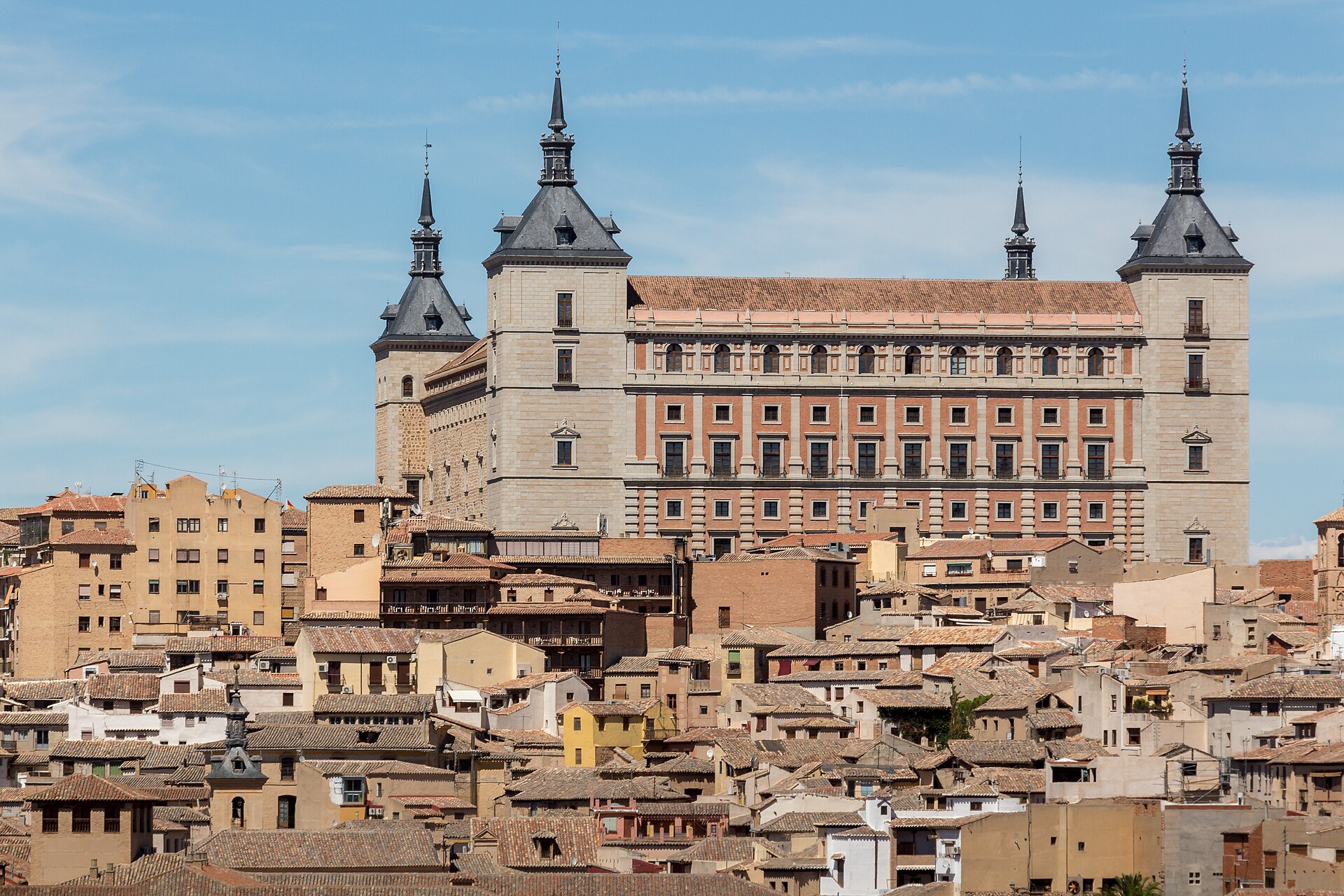
What to see: the Gothic Cathedral of Toledo, the Alcázar (now the Army Museum), El Greco’s The Burial of the Count of Orgaz inside the church of Santo Tomé, and the Synagogue of Santa María la Blanca — all walkable from each other in the old town. Start at Mirador del Valle across the river for the classic skyline view, then walk in.
DIY or tour? The train is easy, but Toledo’s sights are spread across steep hills and timed entries. A half-day or full-day group tour from Madrid handles transport and the key monuments in one sweep — pick the full day if you want the cathedral interior properly.
2. Segovia — The Easy Half Day
Segovia has the single most photogenic ancient monument in Spain: a Roman aqueduct of unmortared granite, some 28 meters tall, still standing after nearly 2,000 years. The AVE from Chamartín station takes just 26–28 minutes (around €10–15), making this the easiest half-day on the list. One catch: Segovia-Guiomar station sits about 4 km outside the old town, so budget for bus 11 or a taxi on arrival.
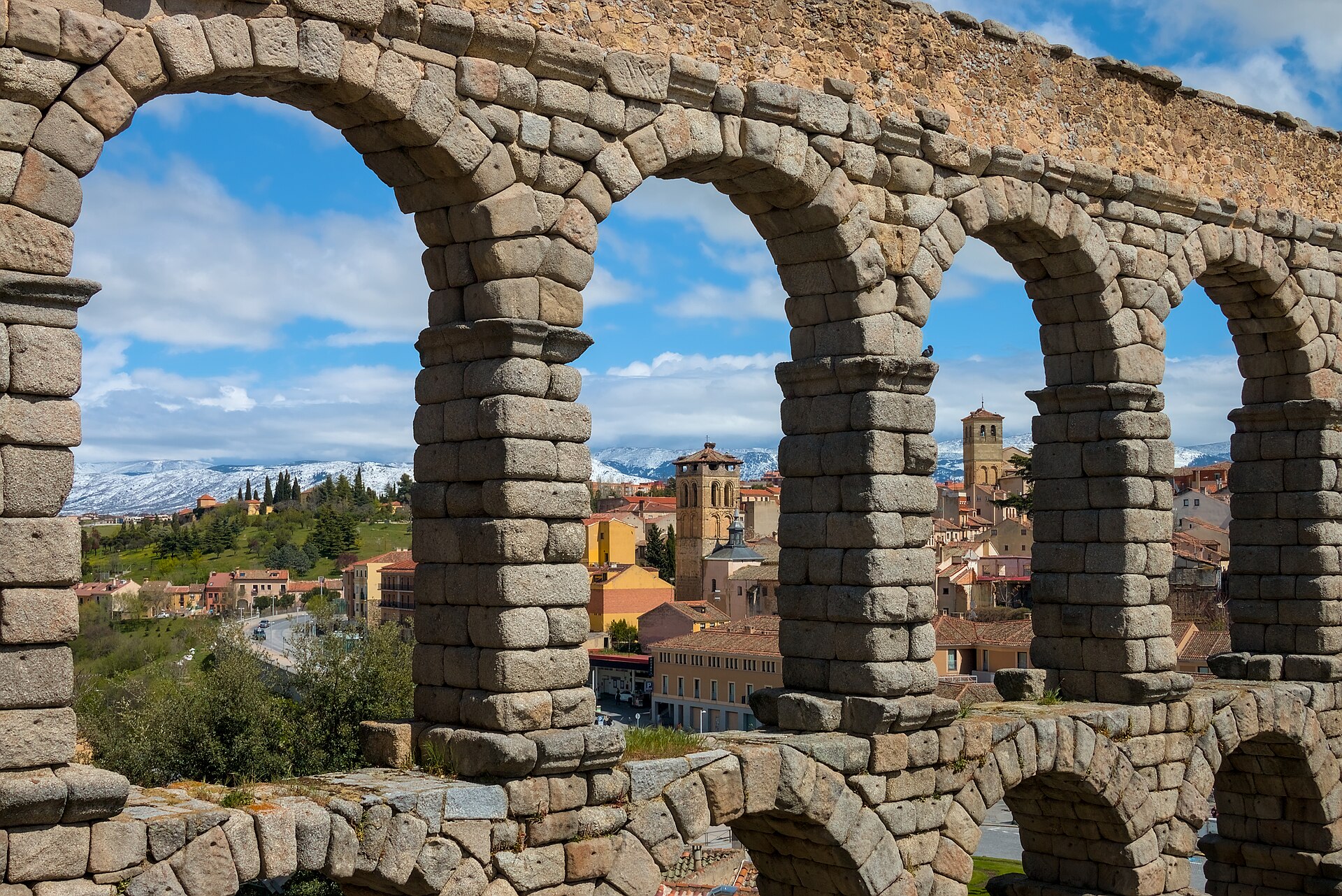
What to see: the aqueduct (a UNESCO site along with the old town, listed 1985), the fairy-tale Alcázar at the far end of town — said to have inspired Disney’s castle designers — and Segovia Cathedral. Then do as the locals do: lunch on cochinillo asado, roast suckling pig, at a classic asador like Mesón de Cándido.
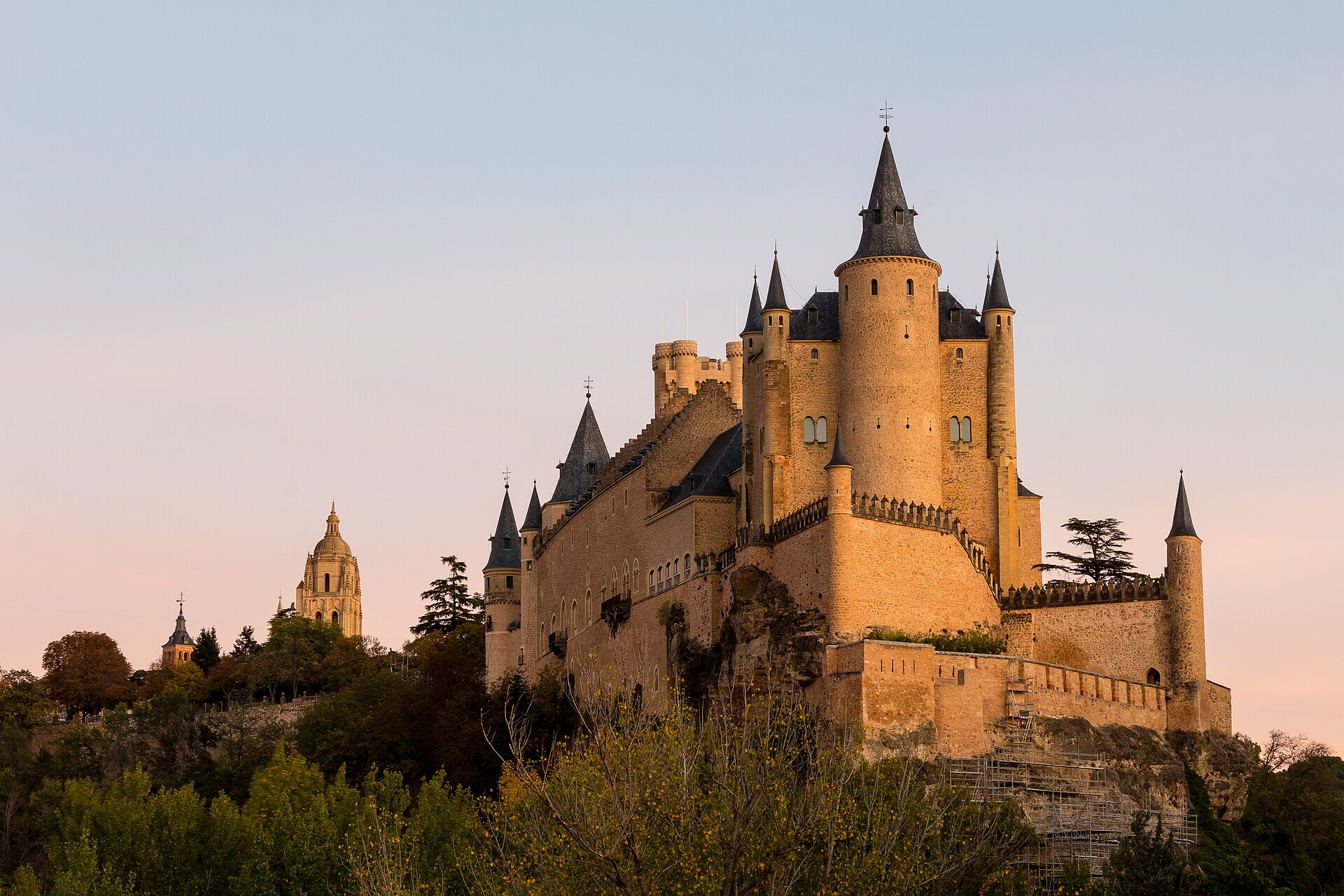
Combine it: Segovia pairs perfectly with Toledo in a single long day — a full-day Segovia and Toledo guided tour from Madrid covers both sets of highlights without the station transfers.
3. El Escorial — The Royal Monastery (Half Day)
An hour northwest of Madrid in the Guadarrama foothills sits one of the most imposing buildings in Europe: the Royal Site of San Lorenzo de El Escorial, Philip II’s 16th-century palace-monastery-basilica-pantheon, and a UNESCO World Heritage Site since 1984. Half a million visitors a year make the trip, and it’s easy to see why — the Royal Library’s frescoed barrel vault alone is worth the journey.
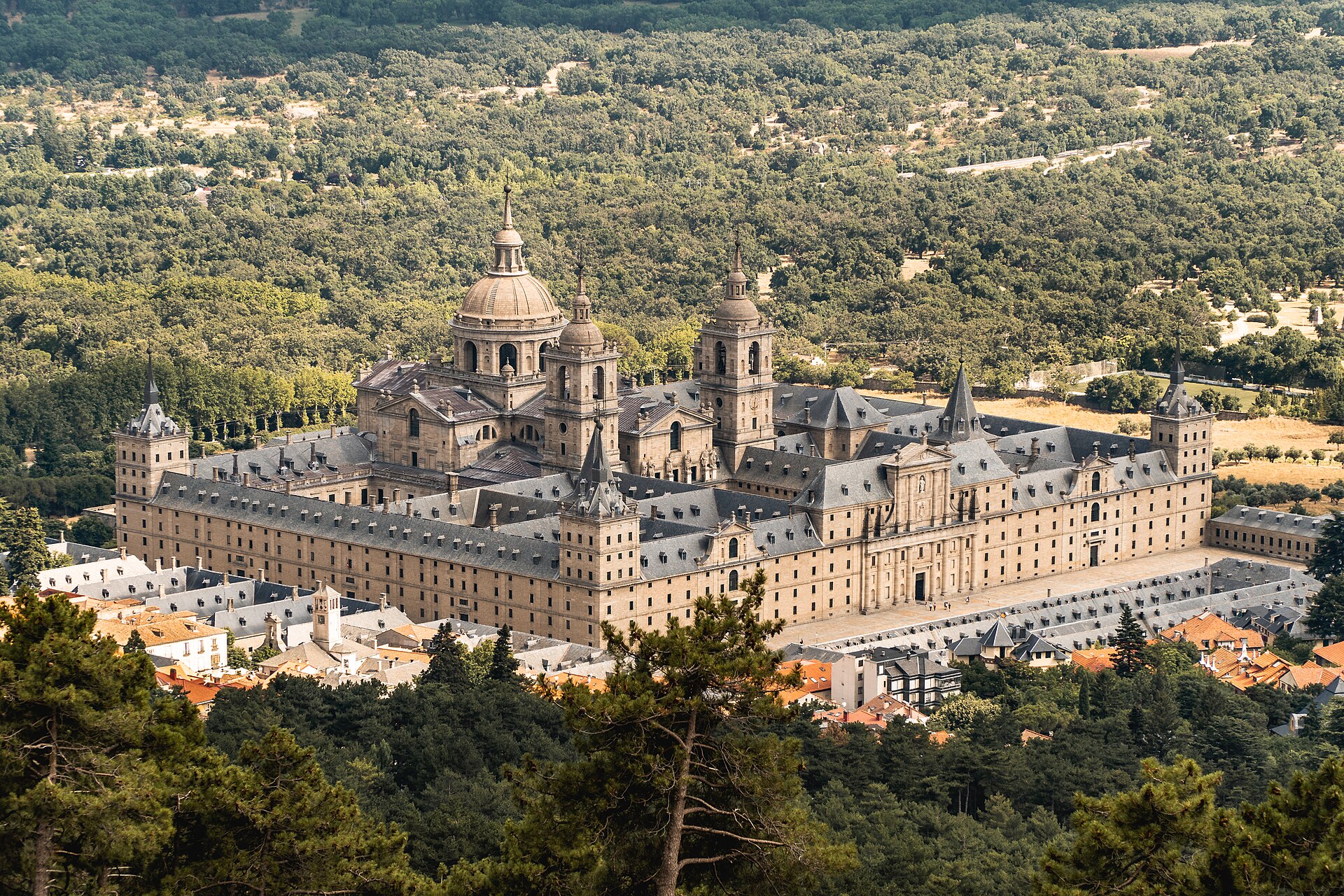
Getting there: Cercanías commuter trains take about 50–60 minutes; buses 661 and 664 run from Moncloa in about an hour. Guided option: an El Escorial and Valley of the Fallen half-day trip adds skip-the-line monastery entry and the nearby Valley of the Fallen memorial with its 150-meter cross — the two pair naturally in one morning.
4. Ávila — The Walled City (Full Day)
Ávila has the best-preserved medieval city walls in Europe: 2.5 kilometers of granite ramparts studded with 88 towers, encircling the old town exactly as they have for nine centuries (UNESCO-listed in 1985, along with its extra-muros churches). It’s also the city of St. Teresa, and the mystic’s convents and museums fill the streets inside the walls.
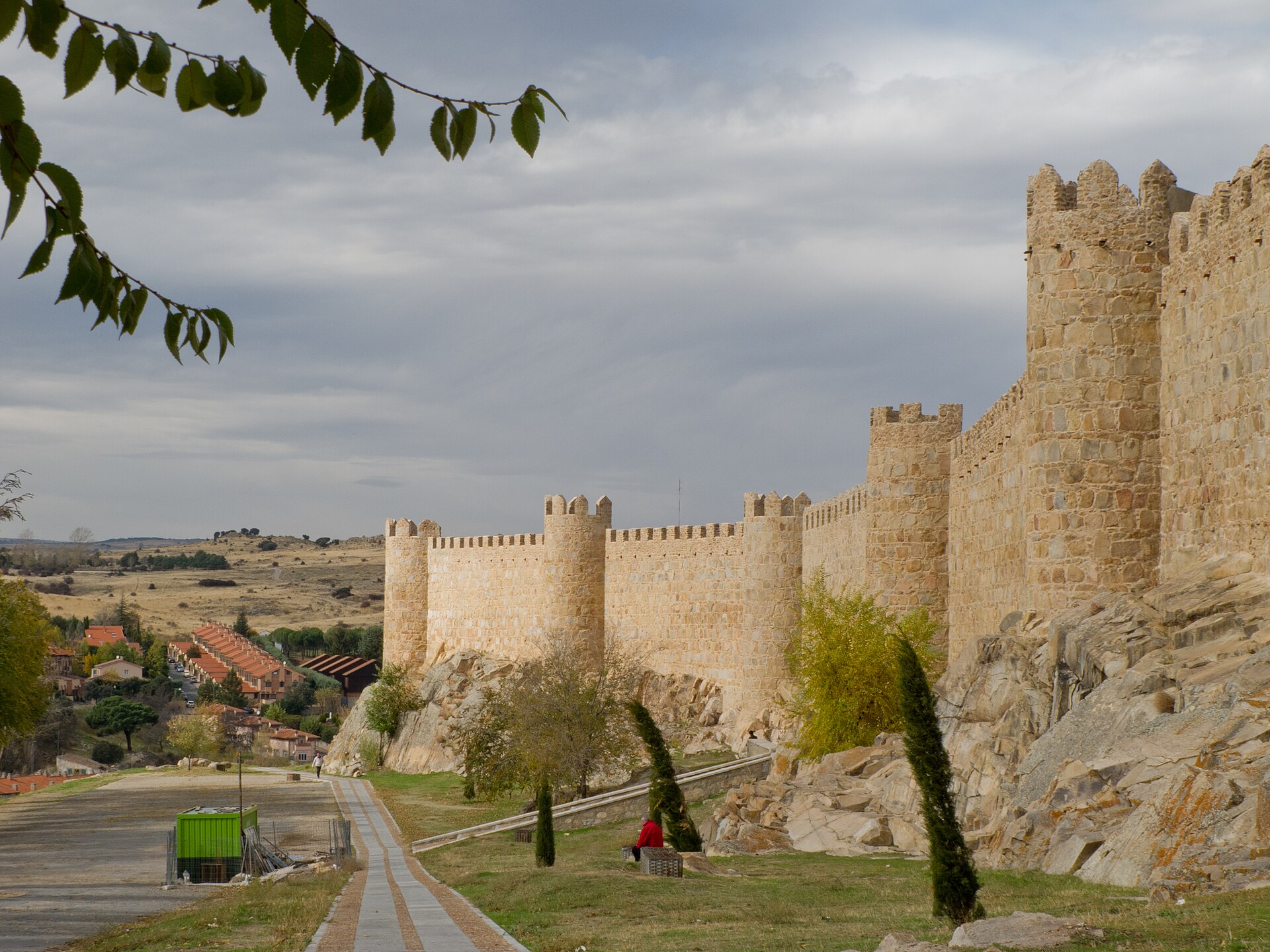
Getting there: Media Distancia trains take about 1h40–2h15 — the longest journey on this list, which is why Ávila works best paired with Segovia (they’re close to each other) or given a full, unhurried day. Walk a section of the walls at sunset, when the stone glows gold.
5. Aranjuez — Palaces and Gardens (Half Day)
For a lighter, greener day trip, head south to Aranjuez, the Bourbon kings’ spring retreat. The Royal Palace and its vast formal gardens — the Prince’s Garden alone sprawls along the Tagus — earned the whole cultural landscape UNESCO status in 2001. Cercanías trains (C-3) take about 45–50 minutes, and the town itself is flat, leafy, and made for slow wandering between garden gates and riverside terraces.
6. Alcalá de Henares — Cervantes’ Hometown (Half Day)
Thirty-five to forty-five minutes east by Cercanías lies the birthplace of Miguel de Cervantes and one of the world’s oldest university towns (UNESCO-listed 1998). The 16th-century university façade, the Corral de Comedias (one of Europe’s oldest theaters), and Cervantes’ birthplace museum make an easy, crowd-free half day — and the tapas crawl down Calle Mayor is genuinely excellent.
7. Chinchón — The Slow Afternoon
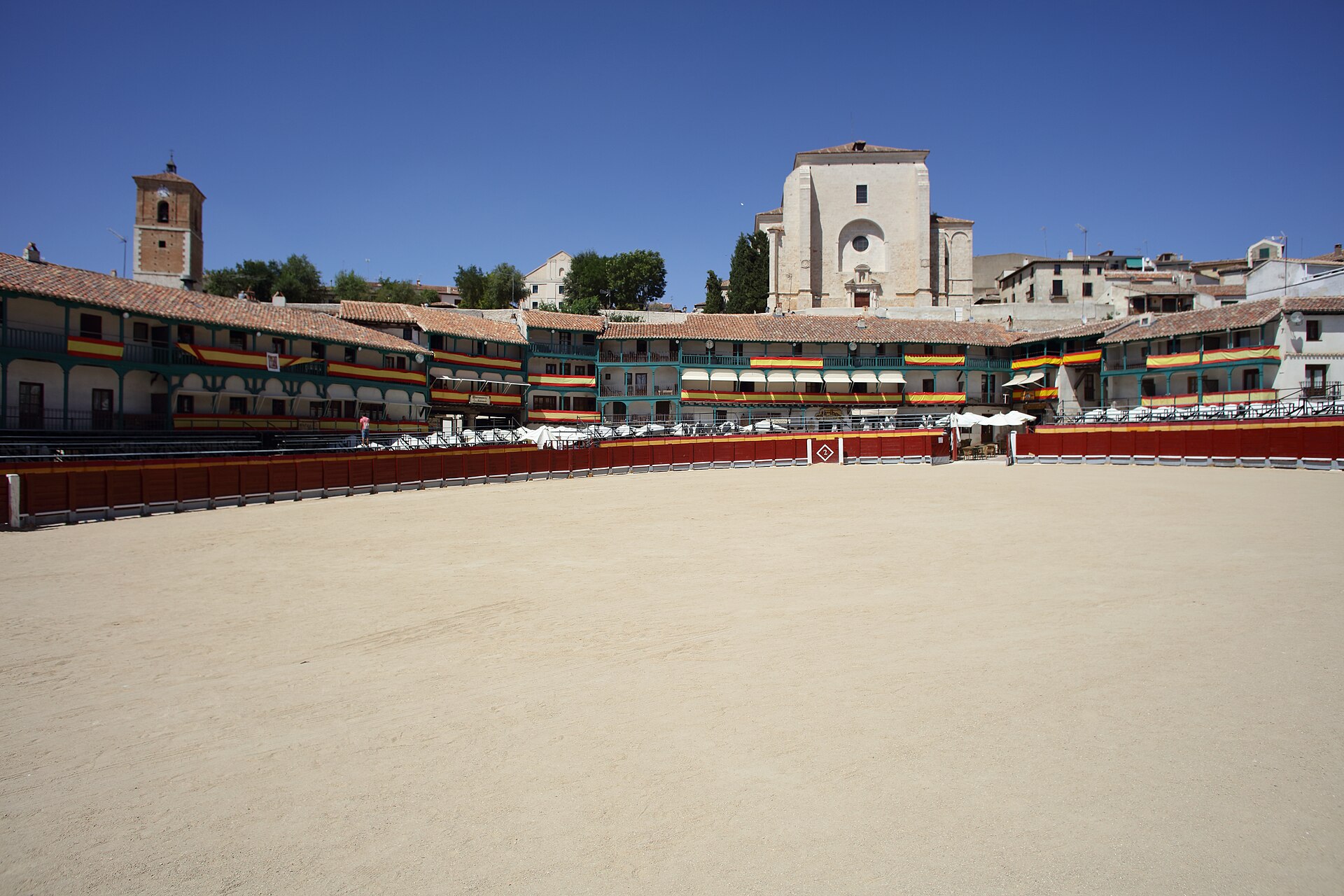
When you’ve done the blockbusters, do Chinchón. This small wine-country town, about 50 minutes by bus (line 337), is built around one of Spain’s great squares: the Plaza Mayor, a ring of arcaded wooden balconies where bullfights were once held and where half the town still seems to gather for a drink. Come for a long lunch, taste the local anise liqueur, and be back in Madrid for dinner.
Practical Tips for Madrid Day Trips
- Watch your stations. Toledo trains leave from Atocha; Segovia’s AVE leaves from Chamartín. They’re on opposite sides of the city — check before you book.
- Book high-speed trains ahead. AVANT and AVE fares rise closer to departure; Renfe’s site and app are the official source.
- Cercanías is your friend. The commuter rail covers El Escorial, Aranjuez, and Alcalá cheaply and frequently — no reservation needed.
- Start early for Toledo. It’s the one trip that deserves a full day; the half-day tours necessarily skim.
- Sundays can be a bonus. Several royal sites and museums offer free or reduced entry windows — check before you go.
The Bottom Line
Toledo for depth, Segovia for ease, El Escorial for grandeur, Ávila for walls, Aranjuez for gardens, Alcalá for literature, Chinchón for lunch. Pick two or three across your Madrid stay and you’ll have seen two millennia of Spanish history without ever changing hotels — which is exactly what a great base city is for.