
Three days in Cancún is the sweet spot. It’s enough to float in the Caribbean, stand at the foot of one of the New 7 Wonders of the World, and sail to an island where the sand squeaks under your feet — without feeling like you’re racing a clock. I’ve put together the day-by-day plan I’d hand a friend visiting for the first time, with the practical details (ferry prices, entry fees, drive times) already figured out so you can spend less time logistics-wrangling and more time in the water.
Planning a trip? Get our free Travel Planning Checklist:
Disclosure: This post contains affiliate links. If you book through one of these links, I may earn a commission at no extra cost to you.
Before You Go: Cancún Basics for First-Timers
Cancún sits on Mexico’s Yucatán Peninsula in the state of Quintana Roo, facing the Caribbean Sea. It runs on America/Cancun time — UTC-5 year-round, with no daylight saving time — and the currency is the Mexican peso. US dollars are widely accepted, but at poor exchange rates, so pay in pesos whenever you can.
The dry season runs roughly November through April, which is also high season. Hurricane season stretches June to November, and sargassum seaweed tends to wash up from around April through August, peaking in summer — beach crews clean it daily, and if it’s heavy on your beach day, cenotes and ruins are excellent sargassum-free alternatives. Still working out where to base yourself? My where to stay in Cancún guide breaks down the Hotel Zone, downtown, and the best hotel picks by budget.
Day 1: Arrive, Settle In, and Hit the Beach
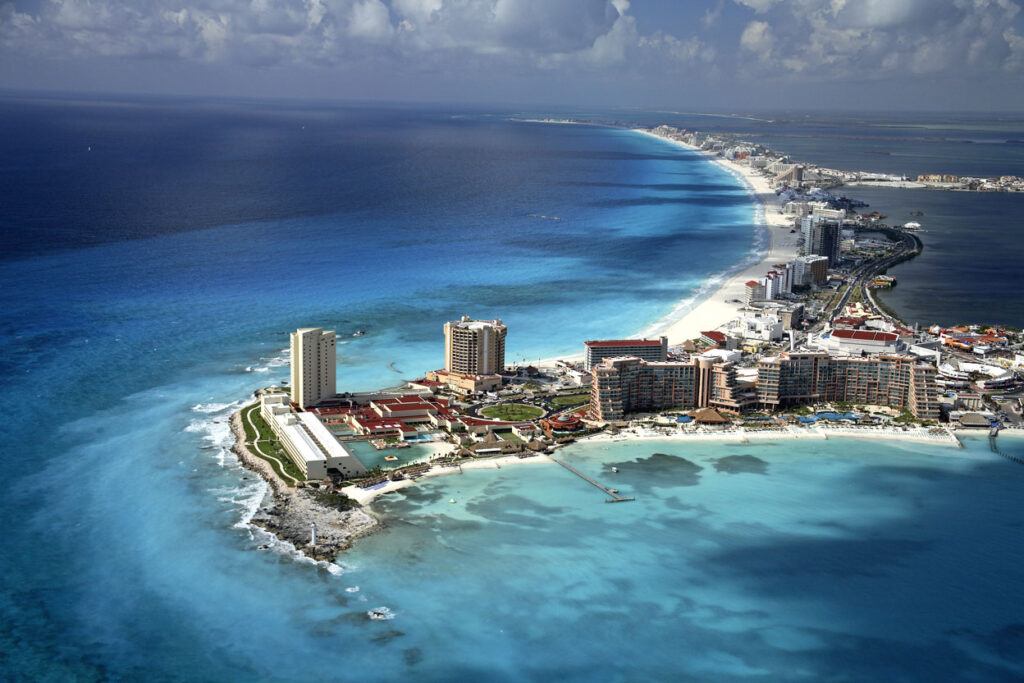
Land at Cancún International Airport (CUN) and head for the Hotel Zone, the 22-kilometer strip of hotels and beaches along Boulevard Kukulkán. The ADO bus now runs directly to the Hotel Zone (the Punta Cancún stop) since 2025 — roughly 140–170 MXN, 35–45 minutes, departing every 40–60 minutes. That’s the budget move. Official airport ta/imagexis typically run $50–100+ USD to the Hotel Zone; book at the official counters and ignore anyone hawking rides in the arrivals hall. Uber generally works around Cancún, but airport pickups are restricted by taxi-union rules, so don’t count on one from the terminal.
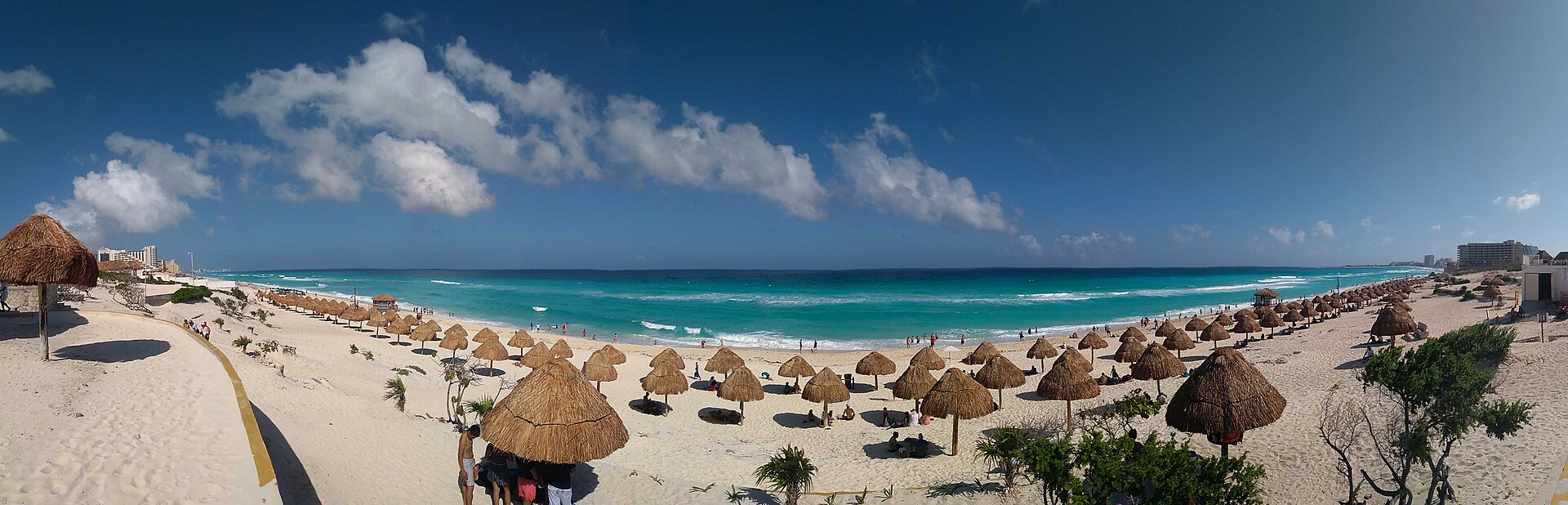
Once you’re settled, claim your first afternoon on the sand at Playa Delfines (Km 18 on Blvd. Kukulkán). It’s Cancún’s largest free public beach — free entry, free parking, free palapas (they’re limited, so arrive early), plus restrooms and showers. This is where you’ll find the giant CANCÚN letters at El Mirador viewpoint, the photo everyone comes home with. The waves here can be strong, so watch the warning flags before swimming.
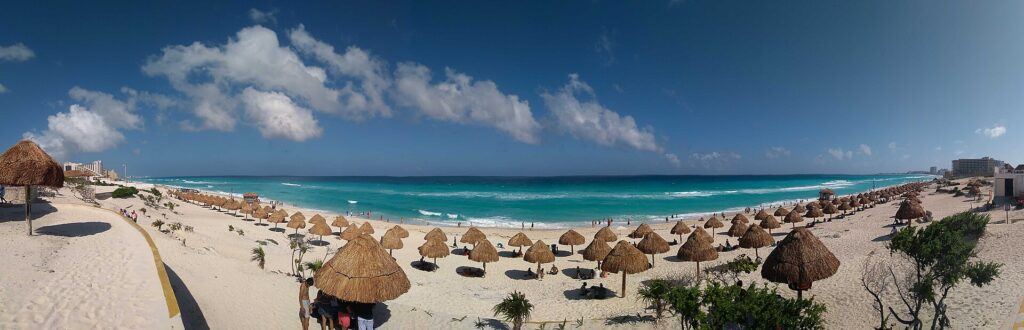
For getting around the Hotel Zone, the R-1 and R-2 buses are the unsung heroes of Cancún — about 12 MXN (under a dollar) per ride, running frequently up and down Blvd. Kukulkán between the Hotel Zone and downtown. As evening rolls in, walk the lagoon-side malecón, then eat like a local: tacos al pastor, a marquesita (a crispy rolled crepe) from a street cart, or a full browse-and-eat session at Mercado 28 downtown.
Day 2: Isla Mujeres Day Trip
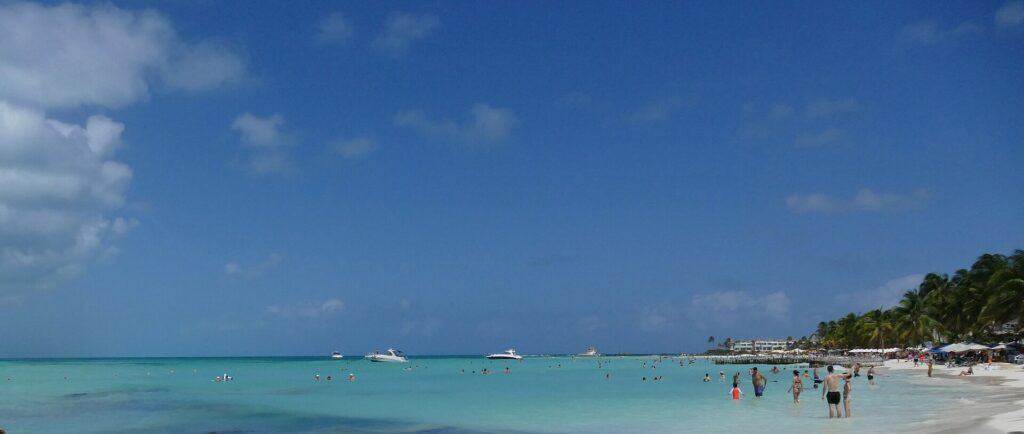
Eight miles off the coast sits Isla Mujeres — “the island of women” — and it’s the easiest, most rewarding day trip you can take from Cancún. The whole island is about four miles long, and its star attraction, Playa Norte, is at the north end, walkable from the ferry dock.
Getting there: Take the Ultramar ferry from Gran Puerto (Puerto Juárez). Adult round-trip is around $30 USD (~$15 one way), boats leave roughly every 30 minutes from 5:30 AM to 11 PM, and the crossing takes 15–25 minutes. Keep your return QR receipt. (Ferries also leave from the Hotel Zone at Playa Tortugas and Playa Caracol, but they cost more, run less often, and are more likely to be cancelled in rough weather — Puerto Juárez is the reliable choice.)
The plan: Arrive by 9 AM to beat the day-trip crowds. Swim and drift at Playa Norte — the water stays shallow far out, perfect for floating. Rent a golf cart (~standard day rate, negotiate) and loop the island: stop at Punta Sur for the cliff views and the small sculpture garden, swing by the sea turtle sanctuary if it’s open, and grab a late lunch of grilled fish on Hidalgo Street. Head back on the ferry by late afternoon — sunset from the water is a bonus, not a requirement.
Day 3: Chichén Itzá and a Cenote Swim
Save the longest day for the biggest payoff. Chichén Itzá is a UNESCO World Heritage Site (listed 1988) and one of the New 7 Wonders of the World — and after two days of beaches, standing in front of El Castillo puts the whole trip in a different register.
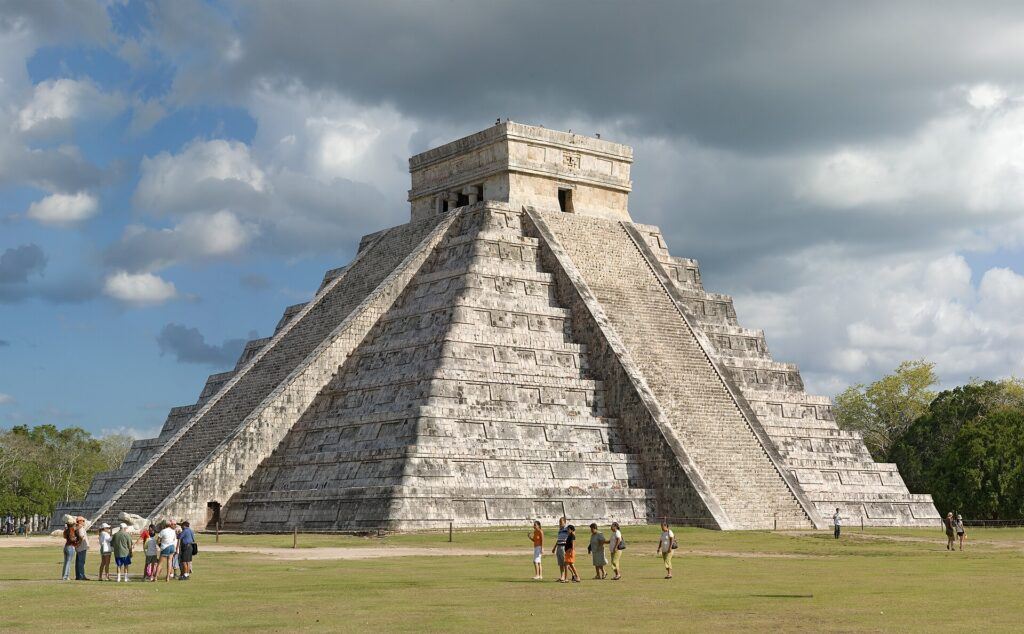
The essentials: The Temple of Kukulkán (El Castillo) rises about 30 meters including the temple on top, with 91 steps on each of its four sides — plus the top platform, that’s 365, a solar calendar in stone. At the equinoxes, shadows form a serpent slithering down the staircase (climbing the pyramid itself is no longer allowed). The site opens around 8:00 AM; arrive at opening to beat both the heat and the tour-bus crowds.
Entry and logistics: As of 2026, foreign visitors pay 697 MXN (about $38.50 USD) — split into two payments at two booths, a 105 MXN federal INAH fee plus a 592 MXN state CULTUR fee. Bring pesos or a credit card; US dollars are rarely accepted at the government kiosks. Children under 12 enter free. It’s roughly 200 km from Cancún, about 2.5–3 hours each way by road, with toll highways on the route.
DIY or tour? Driving yourself is doable, but the early start, tolls, parking, and two-ticket system make this the one day where a guided tour earns its keep. A full-day Chichén Itzá tour with a cenote stop and Valladolid handles pickup, tickets, and the long drive — you just show up. If you want a private experience with a slower pace, there’s also a Chichén Itzá and cenote day trip from Cancún with hotel pickup that covers the same highlights.
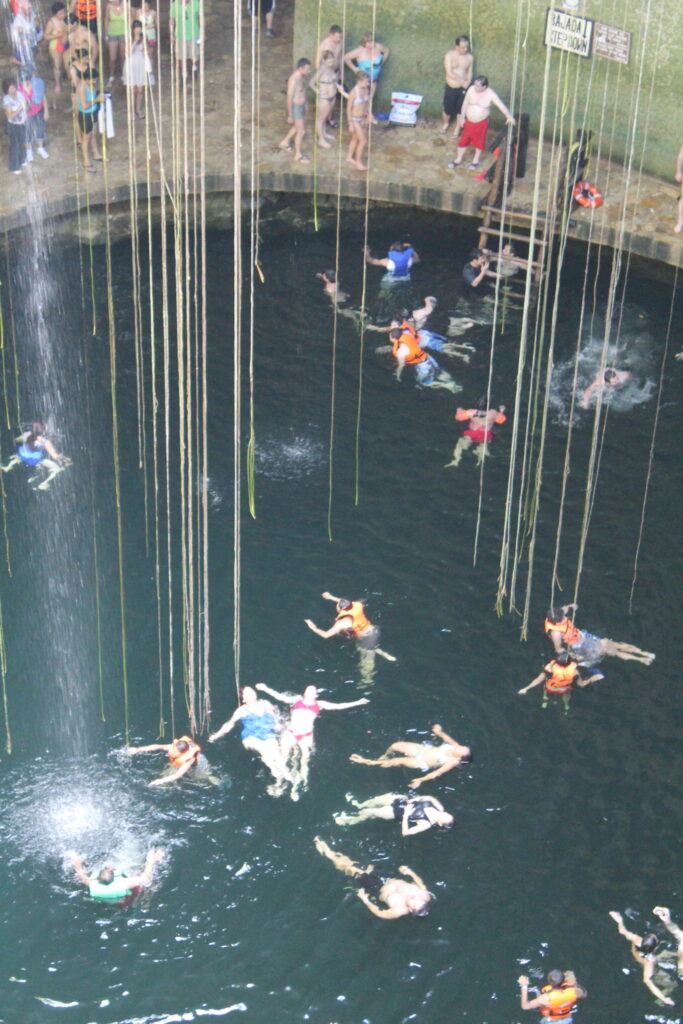
The cenote stop: Ik Kil sits just a few kilometers from Chichén Itzá, which is exactly why tour itineraries pair them. Swimming in a jungle cenote — sunlight pouring through the opening above, vines hanging down the rock walls — is one of the Yucatán’s signature experiences. Entry runs roughly 80–180 MXN; check the current price at the gate. (Going independently to Tulum instead? Gran Cenote near Tulum is the equivalent stop — entry fee applies, prices vary, confirm before you go.)
The Tulum alternative
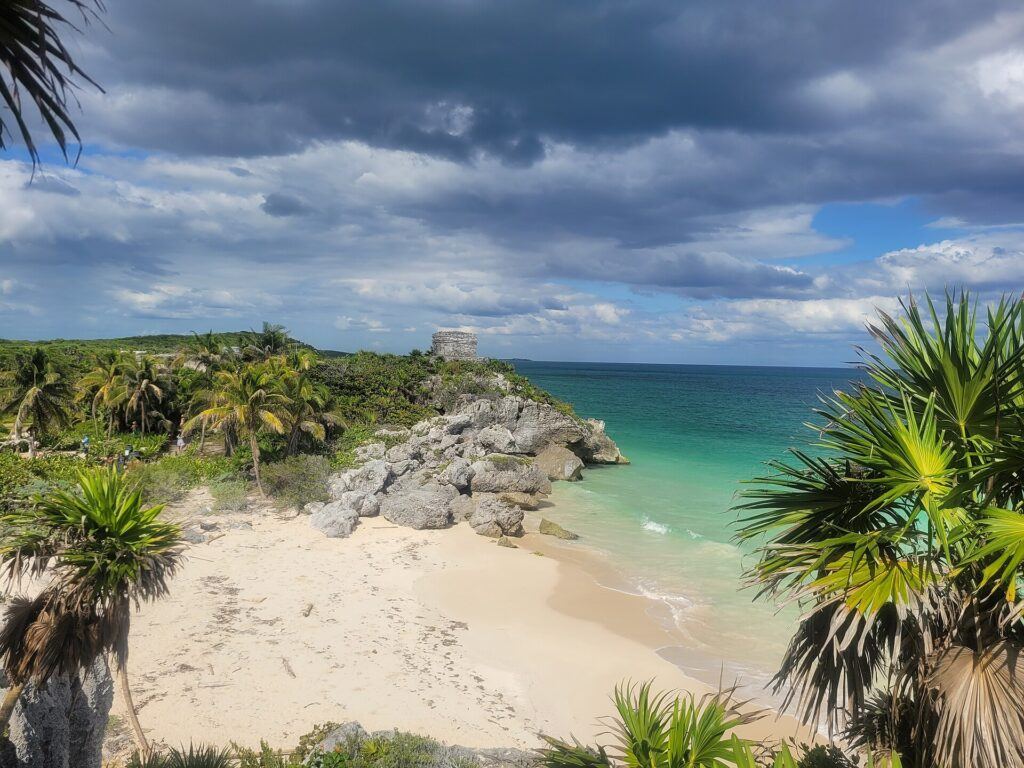
If a 5 AM wake-up for Chichén Itzá sounds like vacation sabotage, swap Day 3 for Tulum instead. The ruins sit on cliffs directly above the Caribbean — El Castillo framed by sea is one of Mexico’s most photographed views. Foreign entry is 209 MXN (about $11.50 USD) as of 2026, with a separate Parque Nacional Tulum (Jaguar Park) fee reported around 415 MXN for foreigners — reports vary, so verify at the gate. Hours are 8 AM–5 PM with last entry around 4 PM, and it’s about 130 km, roughly 2 hours, from the Hotel Zone. Pair it with a cenote stop and you’re home for dinner.
Tips That Will Save You Money (and Headaches)
- Pay the Visitax before you fly home. Quintana Roo charges foreign visitors a departure tax of roughly 283–285 MXN (~$16 USD), payable online at visitax.gob.mx — keep the QR code, as enforcement at Cancún airport tightened in 2026. Beware third-party sites charging $40 or more for the same thing. The larger federal tourist tax (~983 MXN) is already baked into your international airfare, so you don’t pay that separately.
- Sargassum backup plan: If seaweed is heavy on your beach day (peak season is roughly April–August), pivot — ruins and cenotes are completely unaffected.
- Colectivos for the budget-minded: Shared vans run from downtown Cancún (opposite the ADO terminal) to Playa del Carmen for roughly 45–130 MXN, and Playa to Tulum for about 40–60 MXN. Pesos only, fares vary — confirm before boarding.
- Stay flexible on lodging: If the Hotel Zone prices sting, downtown Cancún is cheaper and still 15 minutes from the beach by R-1 bus. Compare your options in my Cancún all-inclusive resort breakdown — some are genuinely worth it, some are a hard pass.
The Bottom Line
Day one gives you the Caribbean, day two gives you the island, day three gives you a thousand years of history — and you never have to change hotels. That’s what makes Cancún such a good first-timer’s destination: the variety is world-class and the logistics are straightforward once you know the ferry schedules, the bus routes, and which fees to expect. Book the Chichén Itzá day early, save a beach afternoon for sargassum roulette, and leave room in your suitcase for whatever you find at Mercado 28. ¡Buen viaje!