
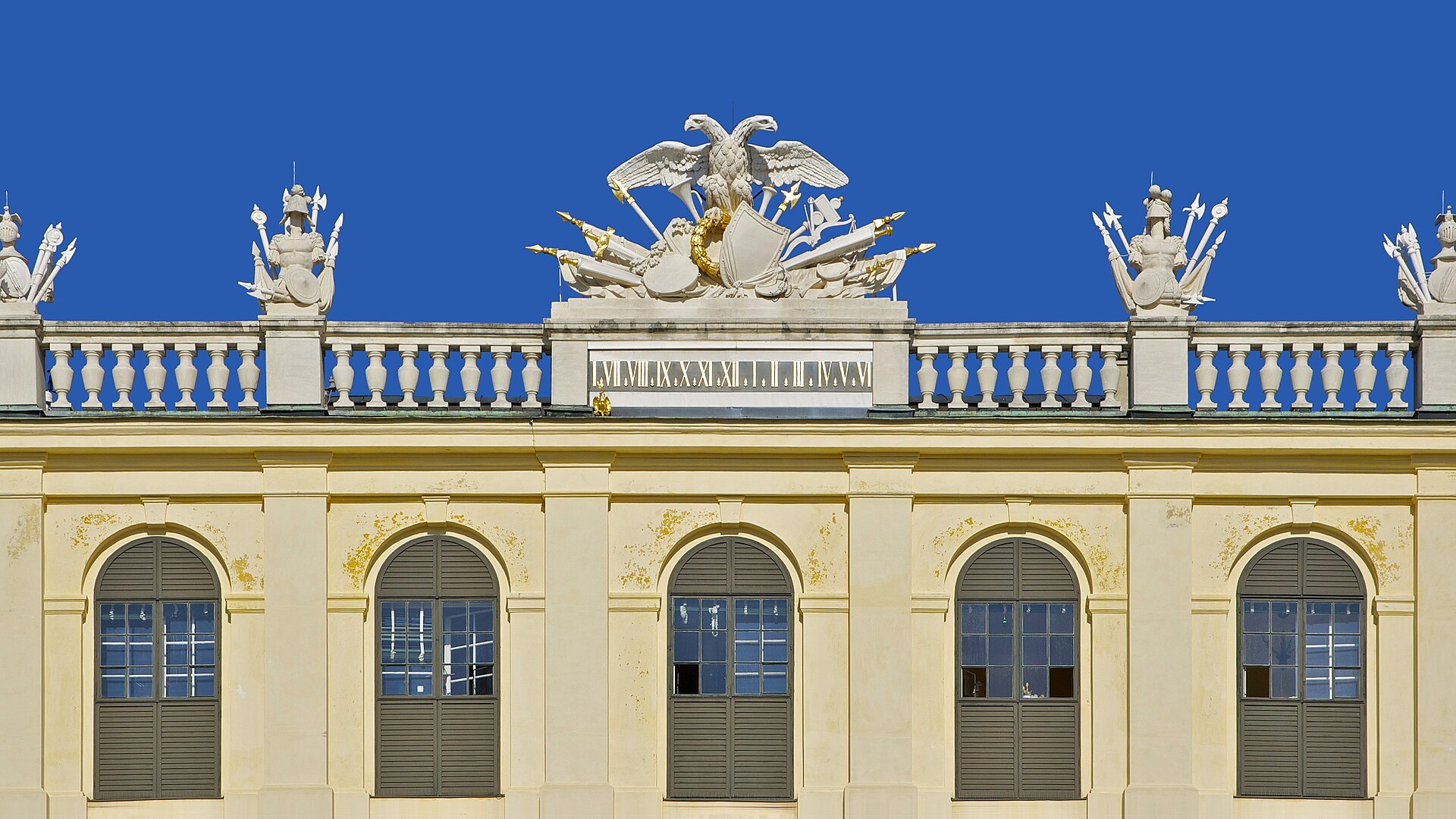
Vienna doesn’t announce itself the way Paris or Rome does. It wins you over slowly — with a sachertorte at a marble café table, with the hush of the Musikverein’s Golden Hall, with a 19th-century boulevard that somehow feels lived-in rather than museum-like. But where you sleep in Vienna shapes the trip more than the guidebooks admit: the city has 23 numbered districts spiraling out from the historic center, and the difference between the 1st and the 15th is the difference between walking to the opera and riding the U-Bahn for half an hour.
Planning a trip? Get our free Travel Planning Checklist:
This guide breaks down the seven best neighborhoods to stay in Vienna in 2026, with honest hotel picks at every price — from the grand dame Hotel Sacher to a family-friendly hostel-hotel by the Prater. Each area comes with who it’s actually best for and the trade-offs nobody puts in the brochure. Pairing Vienna with Hungary’s capital? Our Budapest in 3 Days itinerary makes the perfect Danube double-header — the two cities are under three hours apart by train.
Disclosure: This post contains affiliate links. If you book through one of these links, I may earn a commission at no extra cost to you.
Vienna Neighborhoods at a Glance
Short on time? Here’s the quick version:
- Best for first-timers: Innere Stadt (1st District) — the sights at your doorstep.
- Best splurge: Hotel Sacher Wien or Park Hyatt Vienna.
- Best for design lovers: Neubau (7th District) — Hotel Altstadt Vienna or 25hours Hotel beim MuseumsQuartier.
- Best for families: Leopoldstadt (2nd District) — green, calm, and close to the Prater.
- Best value base: Landstraße (3rd District) — central for less.
- Best for food lovers: Wieden (4th District), by the Naschmarkt.
- Best quiet escape: Hietzing (13th District), by Schönbrunn Palace.
1. Innere Stadt (1st District) — Best for First-Timers
The historic heart of Vienna: St. Stephen’s Cathedral, the Hofburg Palace, the Albertina, the Spanish Riding School, and the Graben’s grand shopping streets, all inside the Ringstrasse boulevard. Everything is walkable — this is the only district where you can plausibly see the big sights without touching public transport. The trade-offs are price (the most expensive rooms in the city), crowds around Stephansplatz, and the fact that it’s Vienna’s least populated district — it empties of locals after the shops close.
St. Stephen’s Cathedral (Stephansdom) towering over Stephansplatz in the Innere Stadt. Photo: Dietmar Rabich, CC BY-SA 4.0, via Wikimedia Commons
Luxury: The Hotel Sacher Wien is the legend — home of the original Sachertorte since 1876, facing the State Opera, all red velvet and old-world ritual (from around €700/night). The Park Hyatt Vienna, set in the former Austro-Hungarian bank headquarters on Am Hof, is the modern counterpart: vast suites and the candle-lit Arany Spa in the old bank vault (from around €650/night). The Rosewood Vienna on Petersplatz brings a quieter, residential take on 5-star luxury in a 19th-century building (from around €600/night). The Hotel Imperial, opened for the 1873 World’s Fair on the Ringstrasse, remains the classic grand-hotel splurge — its Café Imperial is worth a visit even if you don’t stay (from around €380/night).
Design luxury: The Guesthouse Vienna hides behind the Albertina: 39 serene, design-forward rooms by Sir Terence Conran with a ground-floor brasserie locals actually eat at (from around €350/night).
Staying this central puts Vienna’s musical soul within walking distance. One evening here is non-negotiable: a classical concert at the Musikverein — Mozart, Vivaldi, and Haydn in one of the world’s great concert halls — is the single best €50-ish you’ll spend in Vienna.
2. Neubau (7th District) — Best for Design Lovers and Nightlife
Just outside the Ring, Neubau is Vienna’s creative quarter: the MuseumsQuartier (one of the world’s largest cultural complexes), the cobbled Spittelberg lanes, independent boutiques, and the city’s best concentration of bars that stay open late. You’re 10–15 minutes on foot from the Hofburg but paying noticeably less than in the 1st. The downside: some streets near the Gürtel are gritty, and weekend nights around the MQ can be loud — ask for a courtyard-facing room.
Boutique: Hotel Altstadt Vienna is the district’s icon — individually designed rooms that double as an art collection, run with real warmth (from around €250/night). The 25hours Hotel beim MuseumsQuartier leans playful-circus with one of Vienna’s best rooftop bars, the Dachboden, looking over the rooftops (from around €200/night).
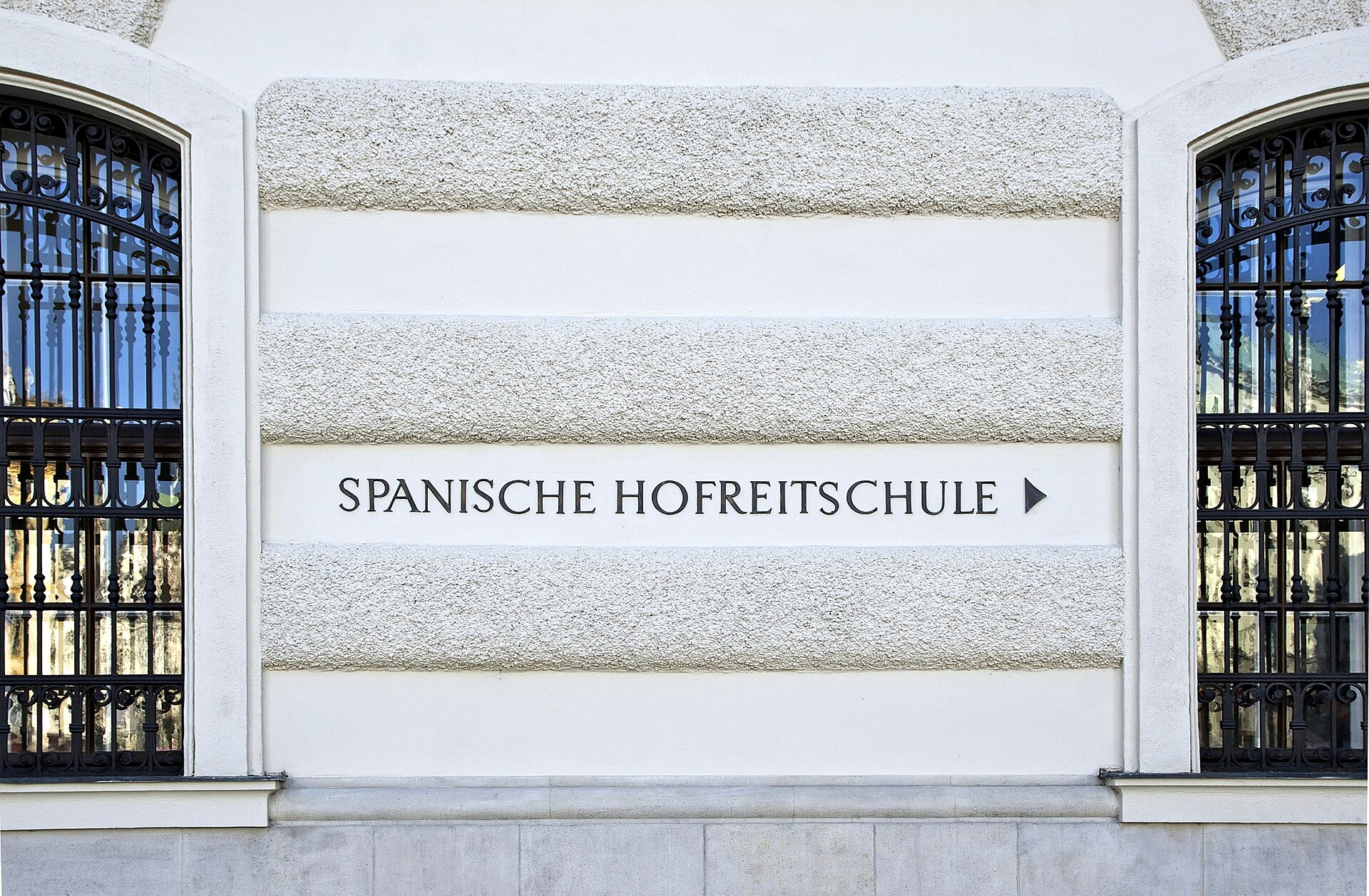
The entrance to the Spanish Riding School at the Hofburg Palace, a short walk from Neubau. Photo: Jebulon, CC0, via Wikimedia Commons
3. Leopoldstadt (2nd District) — Best for Families and Value
Across the Danube Canal from the old town, Leopoldstadt is Vienna’s greenest district: the vast Prater park (with the 1897 Riesenrad Ferris wheel), wide streets, and the up-and-coming Karmeliterviertel with its cool cafés. It’s quieter, roomier, and better value than the center, with U1/U2 metro links putting Stephansplatz 10 minutes away. Families love it; solo nightlife-seekers may find evenings too calm.
Mid-range / family: Superbude Wien Prater is a hostel-hotel hybrid right by the park — family rooms, a play corner, and genuinely friendly staff (from around €90/night). Budget: MEININGER Hotel Wien Downtown Franz nails the basics — clean, modern, well-located near the canal — at prices that leave budget for Sachertorte (from around €70/night).
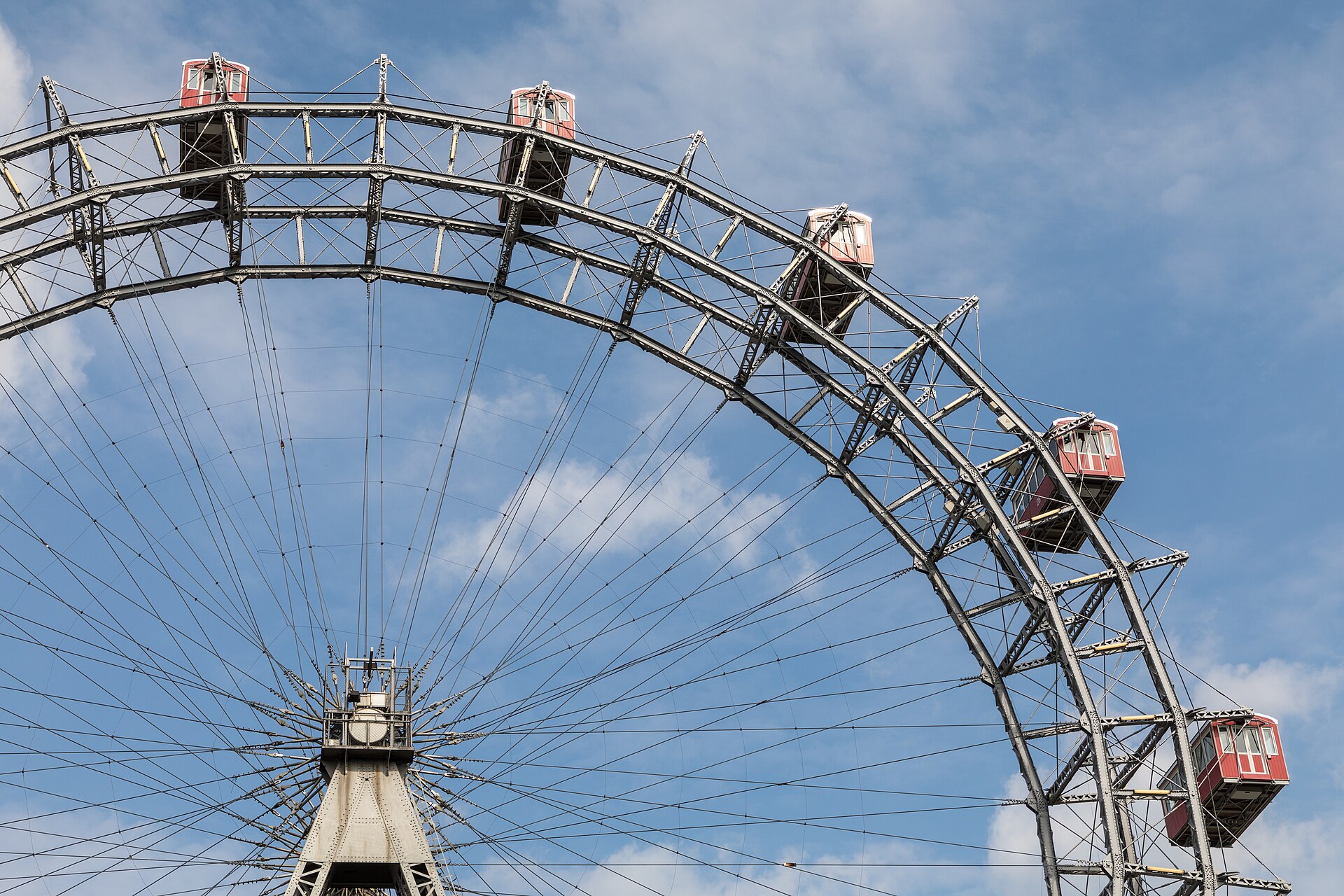
The Riesenrad Ferris wheel in the Prater, Leopoldstadt’s landmark. Photo: Dietmar Rabich, CC BY-SA 4.0, via Wikimedia Commons
4. Landstraße (3rd District) — Best Affordable-Central Base
The district of the Belvedere Palace: elegant, residential, and the sweet spot for travelers who want centrality without 1st-district prices. You’re a short tram ride or a 20-minute walk from the cathedral, with the Stadtpark and the Hundertwasserhaus nearby. It’s calmer than Neubau and less polished than the Innere Stadt — exactly why the value is so good here.
Design mid-range: Hotel Daniel Vienna is a design hotel with smart rooms, a bakery truck in the courtyard, and genuinely good value for how central it is (from around €130/night).
Being this close to the Belvedere is a genuine perk — the Upper Belvedere holds Klimt’s The Kiss, and the Baroque gardens are free to wander. To skip the ticket lines and actually understand what you’re looking at, this skip-the-line Upper Belvedere guided tour pairs the palace’s masterpieces with a stroll through the gardens.
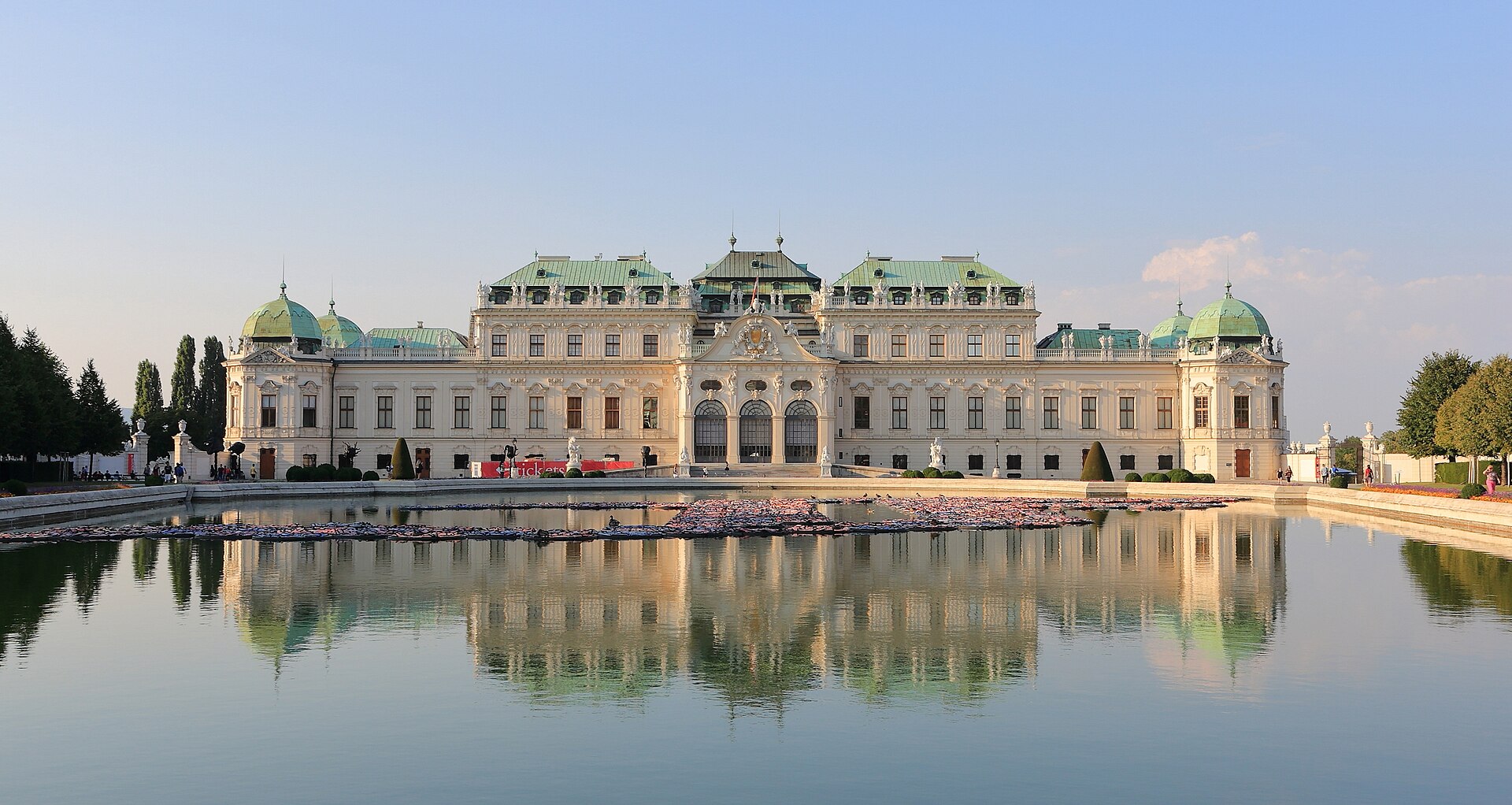
Upper Belvedere Palace, home to Klimt’s ‘The Kiss’. Photo: Martin Falbisoner, CC BY-SA 4.0, via Wikimedia Commons
5. Wieden (4th District) — Best for Food Lovers
Home of the Naschmarkt — Vienna’s 1.5-kilometer open-air food market — Wieden is where the city eats. The streets around the market are packed with wine bars, brunch spots, and some of Vienna’s best-value restaurants, and the Karlsplatz transport hub connects you everywhere. It’s lively without being rowdy; the trade-off is that it’s more “real neighborhood” than postcard — don’t expect imperial grandeur on every corner.
Boutique: Hotel Josefine is a small, stylish hideaway a short stroll from the Naschmarkt — the kind of place with a cocktail bar you’ll actually use (from around €180/night). Hotel Beethoven Wien pairs musical heritage with calm, comfortable rooms on a quiet street (from around €150/night).
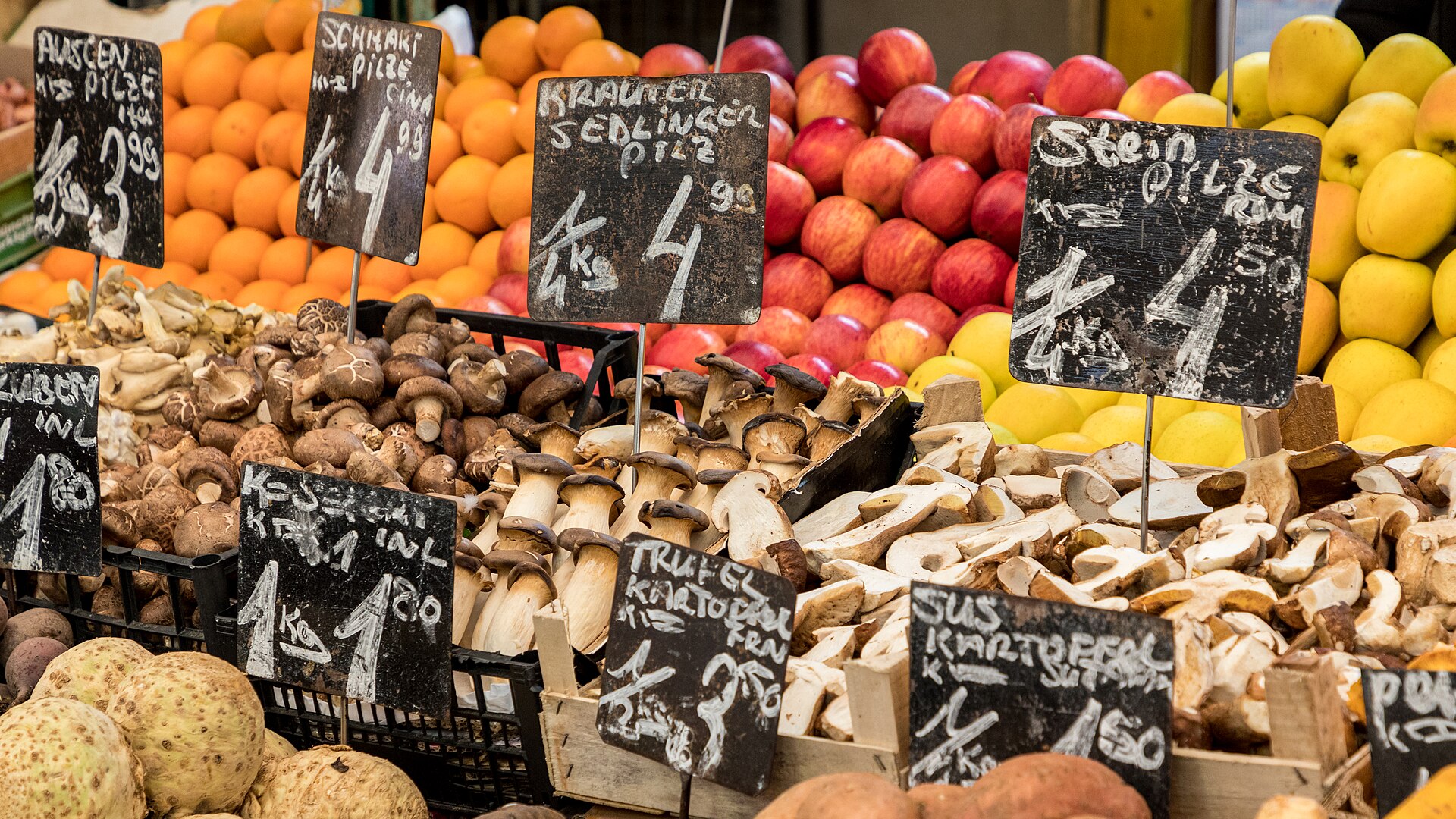
The Naschmarkt, Vienna’s open-air food market between Wieden and Mariahilf. Photo: Dietmar Rabich, CC BY-SA 4.0, via Wikimedia Commons
6. Mariahilf (6th District) — Best for Shoppers
Mariahilfer Straße is Vienna’s main shopping mile, and the streets around it mix big brands with the independent shops of the Gumpendorfer area. It’s well-connected, a bit younger in feel than the 1st, and good value. Nights are quieter than Neubau — fine for most, less so if you want bars on your doorstep.
Boutique: Das Tyrol is a design-forward boutique hotel with an Alpine-modern aesthetic, right in the thick of the shopping district (from around €170/night).
7. Hietzing (13th District) — Best for a Quiet Palace Stay
The villa district around Schönbrunn Palace: leafy, residential, and calm, with the palace gardens as your local park. You’re 20–25 minutes by U4 from the center, so this is for travelers who’ve done Vienna before or who value quiet over centrality. The payoff is waking up near one of Europe’s great palaces — and being first through the gates.
Classic: Parkhotel Schönbrunn sits across from the palace in a historic building with a garden restaurant — old-Vienna atmosphere at mid-range prices (from around €160/night).
Schönbrunn is Vienna’s most-visited sight for a reason: 1,441 rooms of Habsburg history and gardens made for wandering. The ticket lines are the catch — this skip-the-line Schönbrunn Palace and gardens tour (4.7 stars from 1,200+ reviews) covers 22 imperial rooms with a licensed guide, then the Gloriette viewpoint.
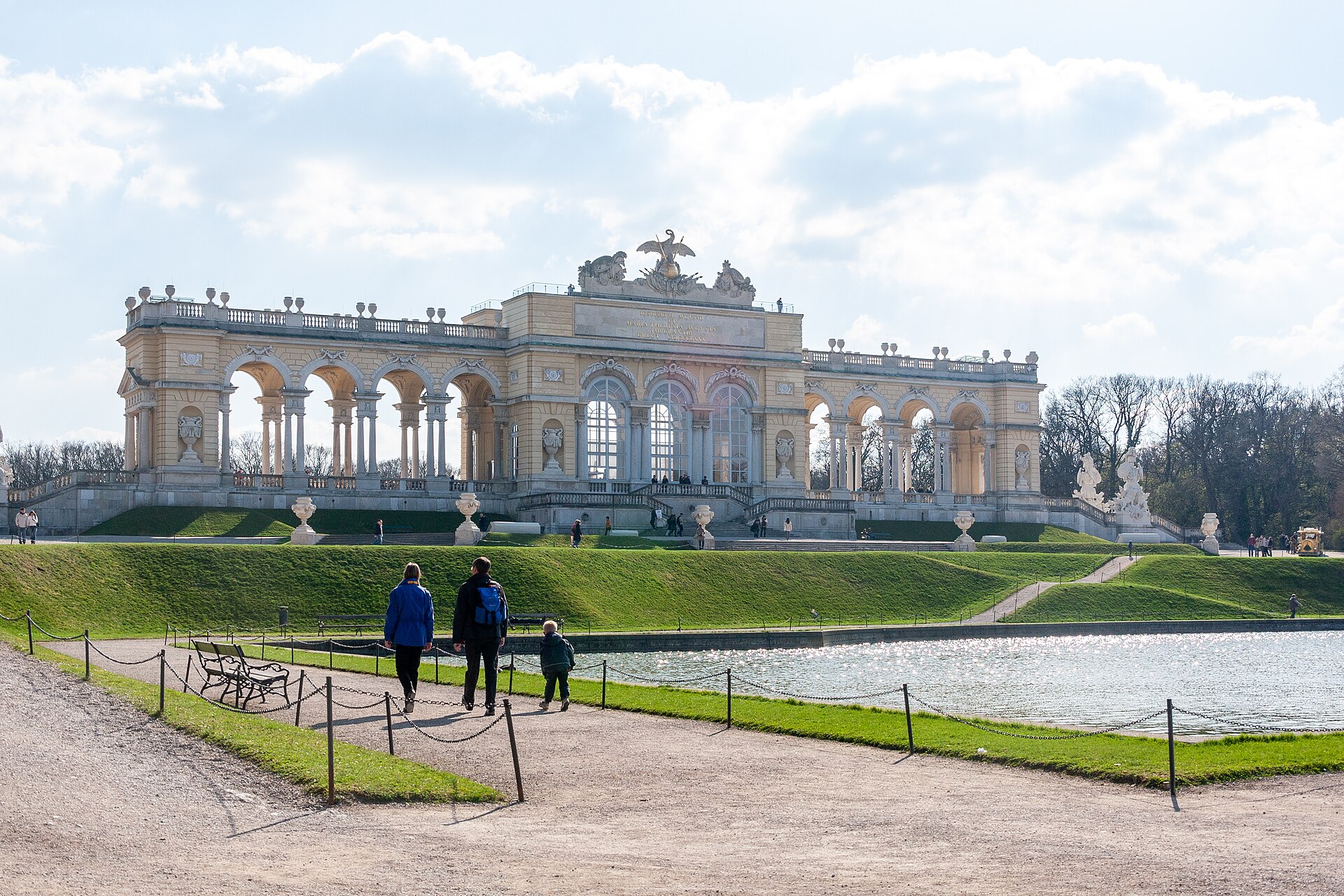
The Gloriette overlooking the gardens of Schönbrunn Palace. Photo: Dimitry Anikin, CC0, via Wikimedia Commons
Vienna Hotel Booking Tips
- Budget for the city tax. Vienna adds a 3.2% accommodation tax on top of your room rate, paid at the hotel — it won’t be in the Booking.com total you see at checkout.
- Stay inside districts 1–9 if you can. The outer districts (10–23) are mostly residential and add real transit time. A “Vienna” hotel near the airport or in Simmering can quietly cost you an hour a day.
- Book early for December and May. Christmas-market season and late spring sell out the good central rooms first; January–February and November are the value months.
- Check the map pin, not the headline. Some “central Vienna” listings sit well outside the Ring — verify the U-Bahn station in the listing before you book.
- Ask about the elevator. Historic-district hotels in converted 19th-century buildings sometimes have no lift. If stairs are an issue, confirm before booking.
- Don’t overpay for the hotel breakfast. Vienna’s coffee houses do a better (and often cheaper) breakfast than most hotel buffets — a melange and a warm apfelstrudel beats a chafing dish every time.
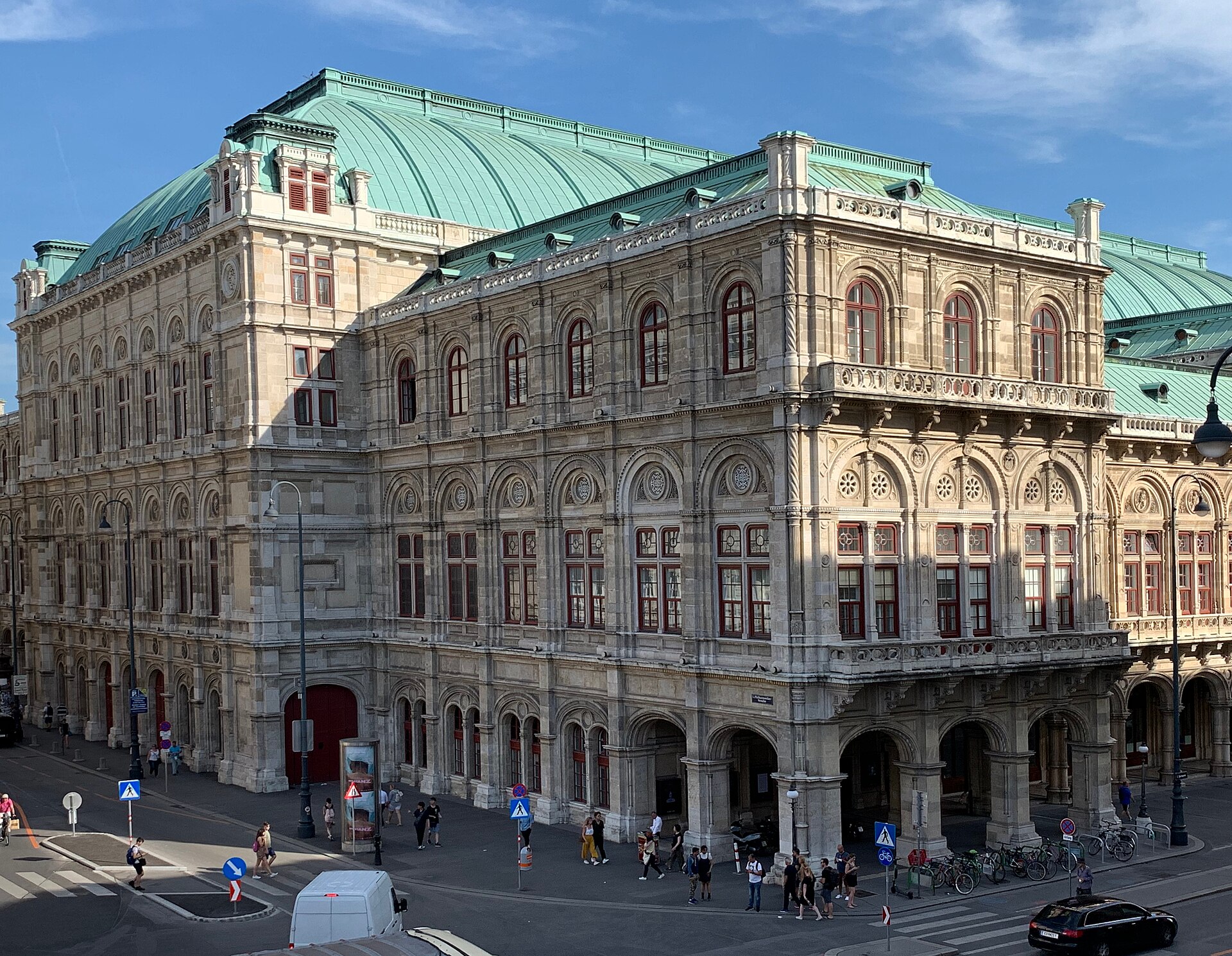
The Vienna State Opera on the Ringstrasse. Photo: Benoît Prieur, CC0, via Wikimedia Commons
Getting to Your Hotel
Flying into Vienna Airport (VIE)? The City Airport Train (CAT) reaches Wien Mitte in about 16 minutes — fast but pricey. The S7 S-Bahn takes around 25 minutes and costs a fraction; for most travelers it’s the smarter pick. Taxis to the center run roughly €40–50. Coming by train, you’ll arrive at Wien Hauptbahnhof (main station), on the southern edge of the center with U1 connections everywhere. Vienna’s U-Bahn, trams, and buses run on one ticket system — a 24-hour ticket covers everything, and the Vienna City Card bundles transport with museum discounts if you’re sightseeing hard.
What I’d Skip
Renting a car. Vienna is one of Europe’s great transit cities — parking in the center is expensive and the U-Bahn goes everywhere you’d want. The only reason to rent is a Wachau Valley or Salzburg day trip, and even those are easy by train.
Paying extra for a “cathedral view” room you won’t use. Stephansdom views command real premiums, but you’ll spend your days out and your evenings at concerts and wine taverns. Put the money toward the room size or the neighborhood instead.
The costumed-Mozart ticket touts. You’ll meet them around Stephansplatz in full 18th-century dress selling concert tickets. The concerts themselves can be fine, but book through a proper platform instead — you’ll get real seat choices and a cancellation policy.
The Bottom Line
First trip to Vienna? Stay in the Innere Stadt and walk everywhere — the premium is worth it for three days. Want character and nightlife? Neubau. Traveling with kids or watching the budget? Leopoldstadt and Landstraße give you centrality for less. Food-first travelers belong in Wieden, and romantics who’ve seen the center before will love Hietzing. Wherever you land, you’ll be in a city where the coffee houses, the concert halls, and the cake are all exactly as good as promised.
Ready to plan your days? Read our Budapest in 3 Days: The Perfect Itinerary for First-Timers — the ideal Danube pairing — or browse our 7 Perfect 3-Day Europe Itineraries for a Long Weekend for more trip ideas.