
Three days in Bali is not long — which is why the order matters more than the list. Trying to see everything turns a holiday into a traffic jam with scenery. Done right, though, three days gives you the real Bali in miniature: Ubud’s temples and rice terraces, a holy-spring purification, a waterfall swim, and a clifftop sunset over the Indian Ocean.
Never forget a thing before you fly. My free 8-page Travel Planning Checklist walks you through the whole trip — 6 planning timelines, 36 checks, from booking windows to travel-day basics. One email, no spam, unsubscribe anytime.
This itinerary groups each day by area, so you never cross the island twice: two days based around Ubud in the central hills, then a finish on the southern Bukit Peninsula. It assumes early starts — Bali rewards them.
Disclosure: This post contains affiliate links. If you book through one of these links, I may earn a commission at no extra cost to you.
How to use this itinerary — and where to base yourself
The base decision comes first. The smartest split is two nights in Ubud and one on the south coast — Uluwatu, Jimbaran or Sanur. Ubud puts the Monkey Forest, terraces and Tirta Empul on your doorstep; the coast puts the beaches, Uluwatu Temple and Ngurah Rai International Airport within easy reach. Our guide to where to stay in Bali compares all six main areas with hotel picks in each.
At a glance — Day 1: Ubud on foot: the Sacred Monkey Forest, Ubud Palace and market, the Campuhan Ridge at golden hour. Day 2: Tirta Empul, the Tegalalang terraces and Tegenungan Waterfall by driver — or the Mount Batur sunrise hike instead. Day 3: Padang Padang and the Bukit beaches, then Uluwatu Temple and the Kecak fire dance at sunset — or Nusa Penida instead.
Day 1: Ubud — monkeys, palace and the ridge at golden hour
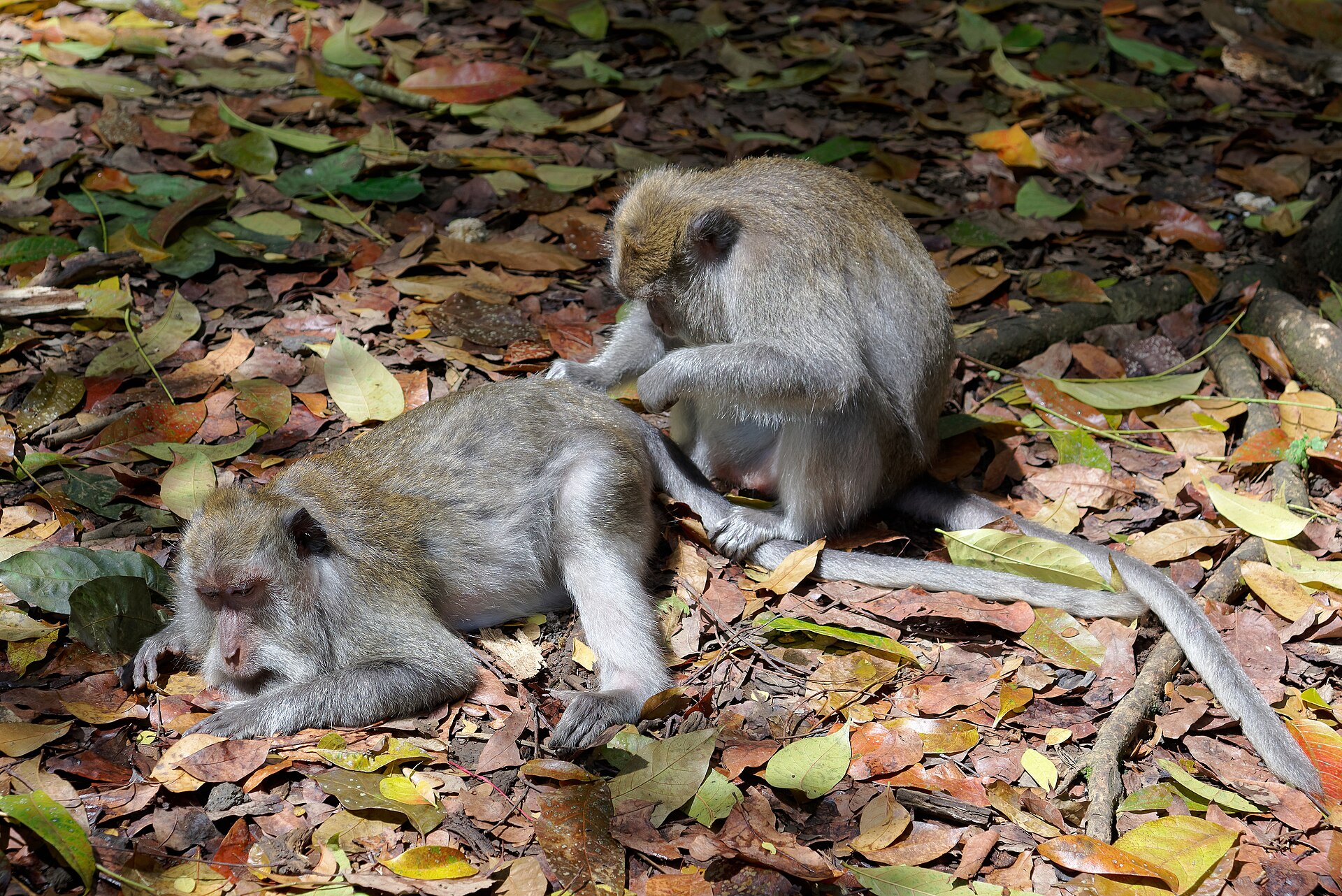
Start at the Sacred Monkey Forest Sanctuary, at opening. Gates open at about 9am (last entry around 5pm), and the first hour is calmest. This 12.5-hectare temple forest in Padangtegal village is home to more than a thousand long-tailed macaques and three 14th-century temples. Entry is around Rp130,000 for foreign adults. Follow the rules: no food or plastic bags in your hands, sunglasses secured, and never reach for a monkey. Allow 60 to 90 minutes.
Late morning in the centre of town. Ubud Palace (Puri Saren Agung), home of Ubud’s royal family, is a compact complex of carved gates and pavilions — free to wander, worth 20 minutes. Opposite, the Ubud Art Market sells baskets, sarongs and carvings; bargain politely. Nearby, Saraswati Temple’s lotus pond makes a peaceful coffee stop. Or skip the organising: a full-day Ubud highlights tour strings together the Monkey Forest, a jungle swing, Tirta Empul and Tegenungan Waterfall with a private driver — a swap that frees Day 2 for Mount Batur.
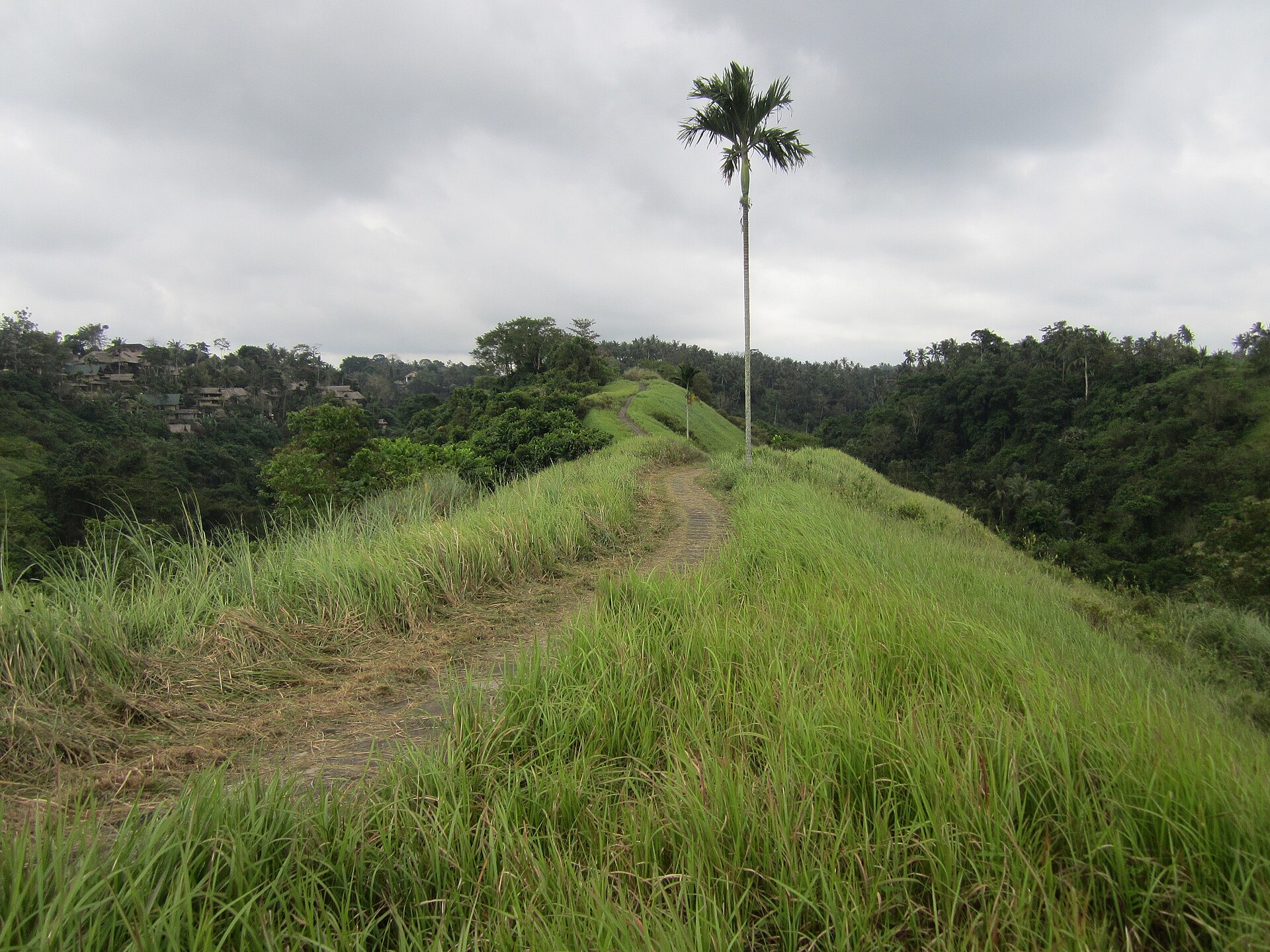
Golden hour on the Campuhan Ridge. In late afternoon, walk this paved path of roughly two kilometres over a grassy spine between two river valleys, starting near Gunung Lebah Temple. It is free, open at any hour, and best in the last light. Dine early afterwards — Ubud sleeps early, and Day 2 rewards it either way.
Day 2: Tirta Empul, the rice terraces and a waterfall — or a volcano at sunrise
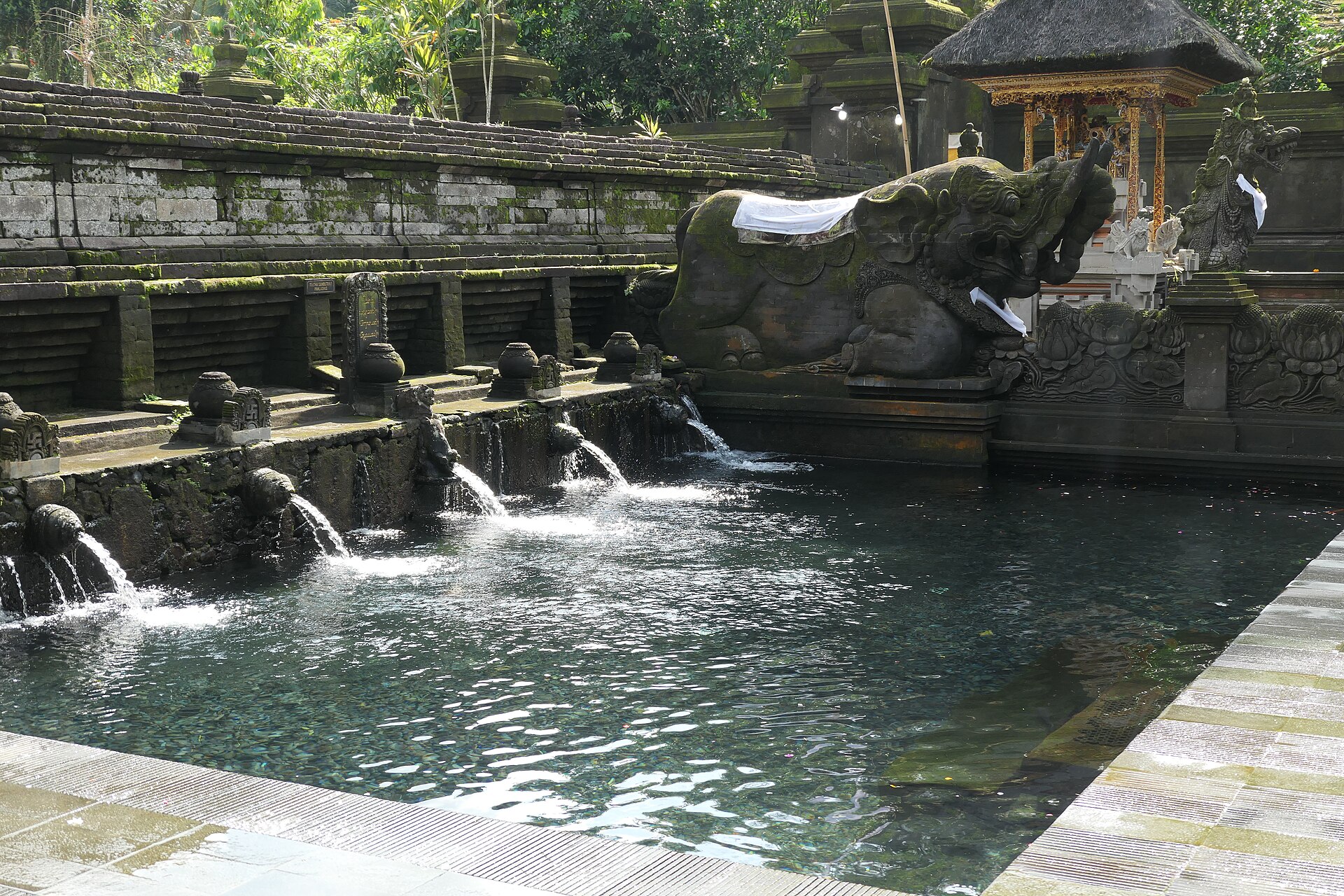
Option A — temples and terraces, by private driver. Leave by 8am for Tirta Empul, about 30 minutes north-east of Ubud near Tampaksiring. Founded in 962 AD around a sacred spring, this is Bali’s principal temple for melukat, ritual purification: worshippers move left to right under a line of carved stone spouts, ducking their heads under each in turn. Visitors are welcome to take part. You need a sarong and sash to enter, then a separate purification sarong for the water — both available at the gate — plus a towel and dry clothes. Skip the spouts reserved for funeral rites.
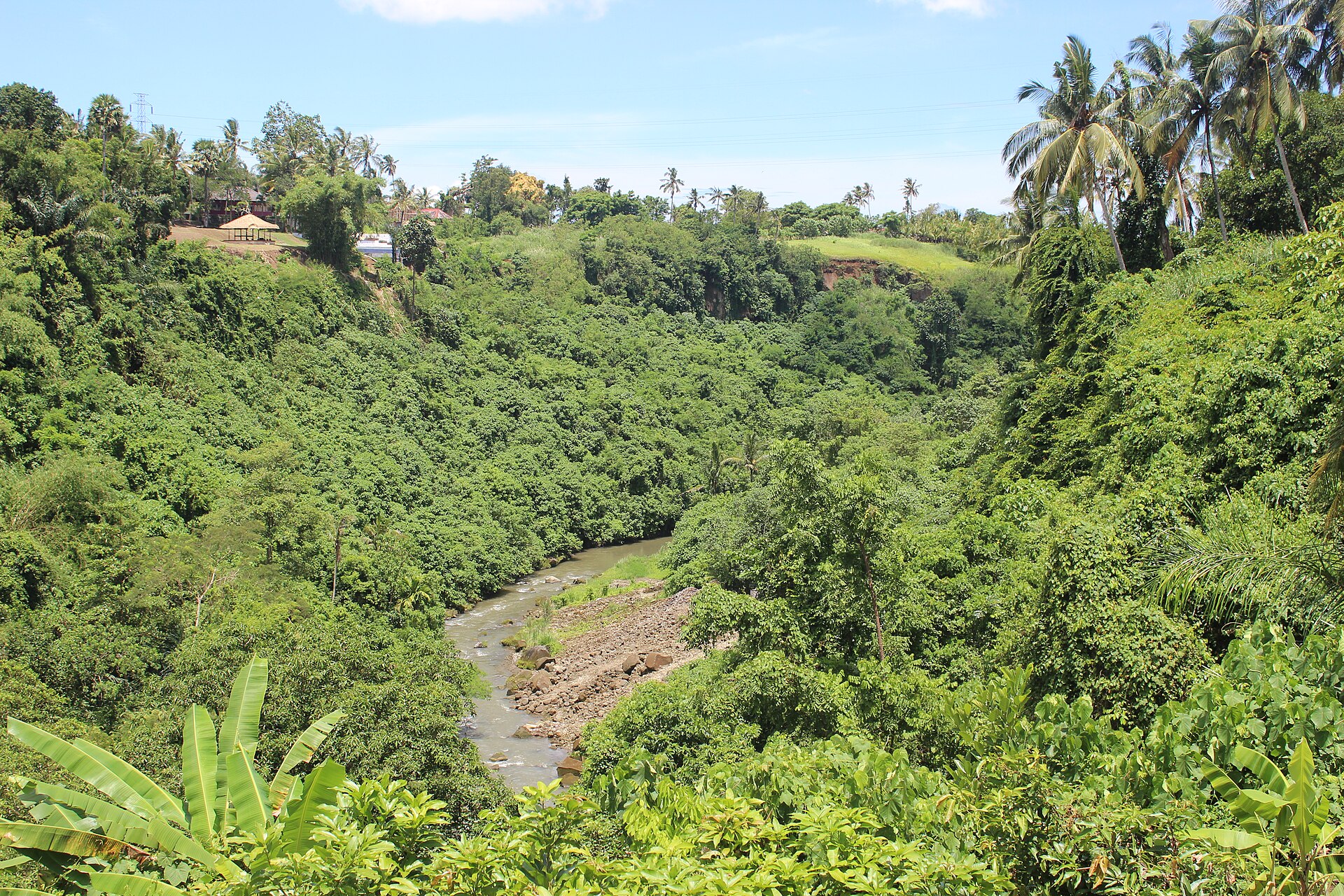
Then the Tegalalang rice terraces. On the drive back, stop where emerald terraces step down a valley wall, shaped by subak, Bali’s centuries-old cooperative irrigation system. Walk a section of the paths (small donations are expected at some points) and lunch at a café on the rim. Finish at Tegenungan Waterfall, south of Ubud: a broad, powerful cascade roughly 15 metres high, with a swimmable pool at its base — best as the day’s last stop, when a cold swim is exactly what you want.
Option B — the Mount Batur sunrise hike. If one big adventure matters more, swap Option A entirely: the Mount Batur sunrise hike is Bali’s signature early start. Pickup from Ubud is around 2am, you climb the 1,717-metre active volcano by torchlight for about two hours, and you reach the summit around 6am for breakfast as the sun rises over Lake Batur and Mount Agung. Do not combine Batur with Tirta Empul in one day; you will do neither properly.
Day 3: The Bukit beaches and Uluwatu at sunset — or Nusa Penida
Move south after breakfast — and leave early. Ubud to the Bukit Peninsula can run to two hours or more in bad traffic, which is why this itinerary splits its bases. Drop your bags at your southern base — the Uluwatu and Sanur sections of our Bali stay guide will settle the choice — then give midday to the Bukit’s coves. Padang Padang, reached through a cleft in the rock, is the famous one: a small, pretty bay with surf schools and warungs. The surf here is reef surf, best left to experienced surfers; swim at the sandy coves, with care.
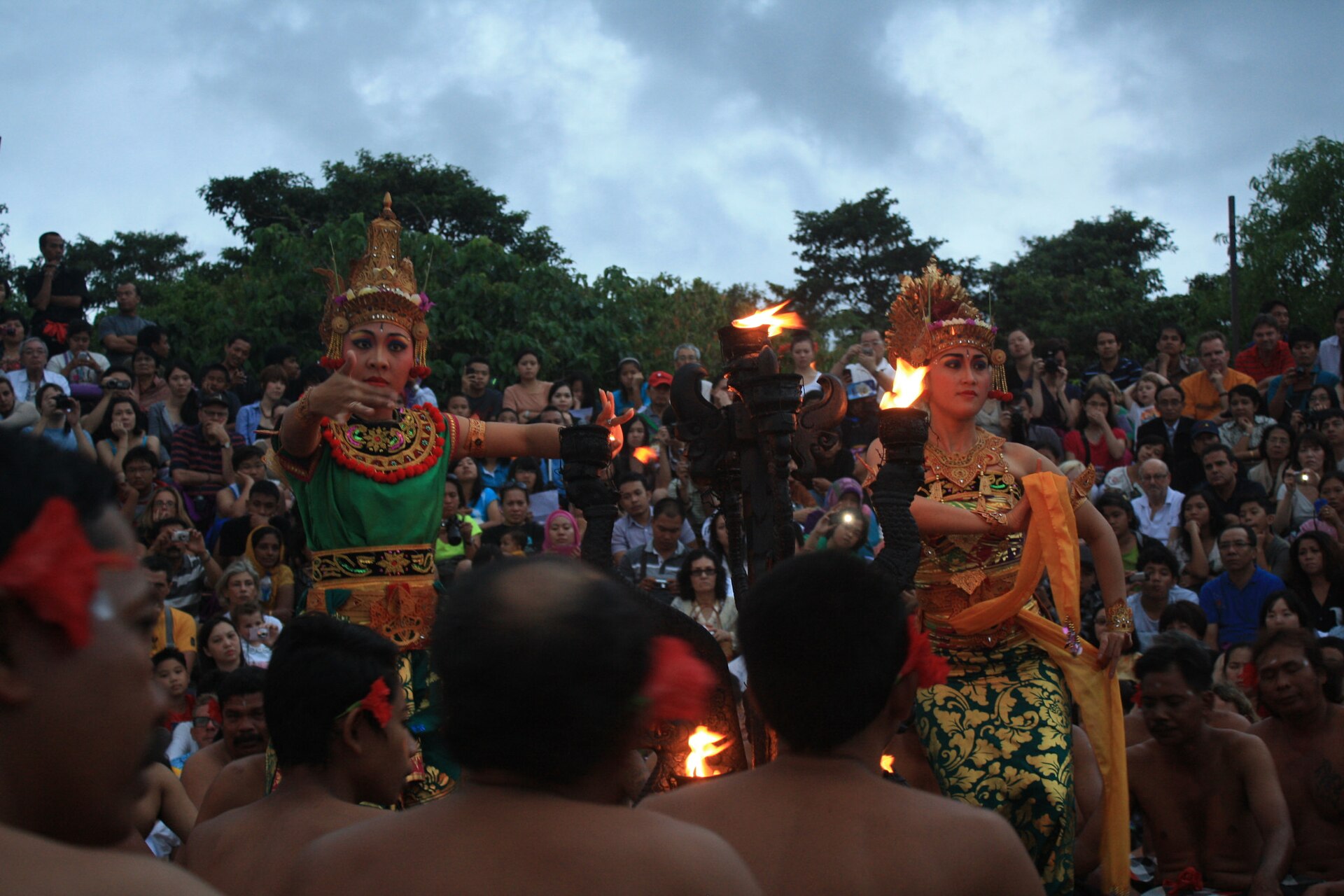
Sunset at Uluwatu Temple. Be at Pura Luhur Uluwatu by about 4:30–5pm. The temple stands on a limestone cliff roughly 70 metres above the Indian Ocean, guarded by monkeys as bold as Ubud’s — hold on to your sunglasses. Walk the cliff path, wear the sarong and sash provided at entry, then sit in the open-air amphitheatre for the Kecak fire dance, starting around 6pm as the sun drops. There is no orchestra: dozens of men chant “cak-cak-cak” in rhythm while Ramayana scenes play out and fire torches flare against the darkening sky. Tickets are sold separately from temple entry, and the amphitheatre fills fast.
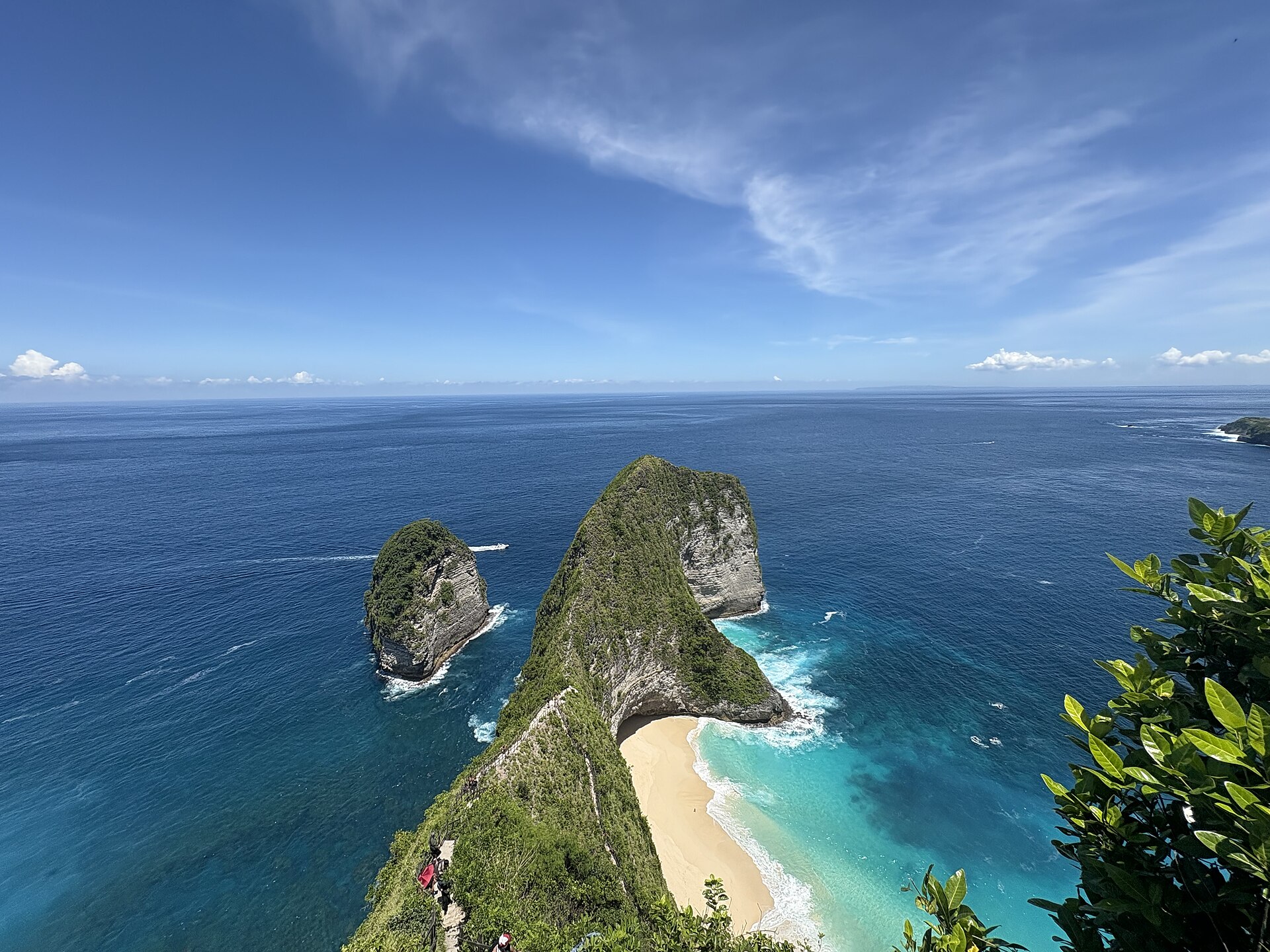
The swap — Nusa Penida instead. If dramatic cliffs matter more than a beach day, replace Day 3 with a Nusa Penida day trip. Fast boats leave Sanur Harbour for the roughly 45-minute crossing, and a good trip pairs snorkelling — with manta rays, when conditions allow — with Kelingking Beach, the T-Rex-shaped headland above a hidden cove, plus Angel’s Billabong and Broken Beach. Best done after a night in Sanur rather than Ubud. Choose Penida for drama, the Bukit for sunset — not both on the same day.
Practical tips for 3 days in Bali
Getting around. There is no train or metro, and self-driving in Bali’s traffic is no relaxing first-timer move. Hire a private driver by the day instead — bookable through your hotel, typically priced per car for eight to ten hours; agree the price before setting off. Use ride-hailing apps for short hops in the south. From Ngurah Rai airport, allow 60 to 90 minutes to Ubud, and buffer every transfer.
Temple etiquette. Every temple needs a sarong and sash covering legs and waist — most major temples include or rent them at the gate. Keep shoulders covered, do not climb on shrines, do not step on the palm-leaf offerings (canang sari) on pavements everywhere, and never point your feet at an altar. By Balinese custom, women who are menstruating do not enter temples.
Money. The currency is the Indonesian rupiah, and small notes are king — for donations, parking and warung lunches. Cards are fine in hotels and larger restaurants. Foreign visitors also pay the one-off Bali tourist levy of Rp150,000 per person; pay it on the official Love Bali portal before you fly, and beware lookalike sites.
When to go. The dry season runs roughly April to October, with the clearest Batur sunrises and calmest Penida crossings. From November to March — the rainy season — expect short, heavy afternoon downpours rather than all-day rain: front-load sightseeing to the mornings, and treat waterfall pools and sea crossings with extra caution after heavy rain.
The bottom line
Three days, three different Balis: forest temples and a royal town on Day 1, holy water and rice terraces — or a volcano at dawn — on Day 2, and limestone cliffs, chanting and sunset on Day 3. Group days by area, start early, and let Bali’s traffic shape the trip.
Pairing Bali with more of Southeast Asia? Our Singapore in 3 Days itinerary is the easy add-on, a short flight away, and our Hanoi in 3 Days itinerary gives you Vietnam’s capital in the same three-day rhythm.