
Bali is not one destination — it is six or seven different holidays sharing an island, and the single decision that shapes your trip most is not which hotel you book but which area you book it in. Ubud is inland jungle, temples and rice terraces with no beach at all. Seminyak is restaurants and sunset bars. Canggu is surf breaks and laptop cafés. Uluwatu is cliffs and coves at the end of steep staircases, Nusa Dua is a calm resort enclave built for families, and Sanur is the quiet, good-value coast the fast boats leave from. Pick the wrong base and Bali’s famous traffic — where 40 kilometres can honestly mean two hours — will eat your holiday one transfer at a time.
Never forget a thing before you fly. My free 8-page Travel Planning Checklist walks you through the whole trip — 6 planning timelines, 36 checks, from booking windows to travel-day basics. One email, no spam, unsubscribe anytime.
This guide breaks down the six areas most first-timers choose between, who each one suits, and the hotels we would actually book in each, from clifftop splurges to smart mid-range picks. The short version: with five nights or more, split your stay — a few nights in Ubud, then a few on one coast. It is the structure almost every great first Bali trip follows.
Disclosure: This post contains affiliate links. If you book through one of these links, I may earn a commission at no extra cost to you.
The short answer, by traveller
Culture, wellness and scenery: Ubud. Dining, shopping and an easy first landing: Seminyak. Surf, cafés and a longer, social stay: Canggu. Romance and a clifftop splurge: Uluwatu. Young kids and calm, swimmable water: Nusa Dua. Quiet, value and island day trips: Sanur. Everyone else should start with the split: Ubud plus whichever coast sounds like you.
How to split your stay (and why it matters)
Bali’s Ngurah Rai International Airport (DPS) sits in the busy south. In normal traffic, allow roughly 20–30 minutes to Nusa Dua, 30–45 to Seminyak and Sanur, 45–75 to Canggu and Uluwatu, and 60–90 minutes — often more — inland to Ubud. Moving between bases costs the same again: Ubud to Uluwatu can run two hours. So plan by nights, not by map. Four nights or fewer: pick one base and day-trip from it. Five to seven nights: two bases, Ubud plus one coast, with the coast last if you have an early flight home. Eight-plus nights: a third base only somewhere you chose on purpose, like Nusa Penida. Build sightseeing around your base instead of crossing the island daily.
Ubud: the soul of the island
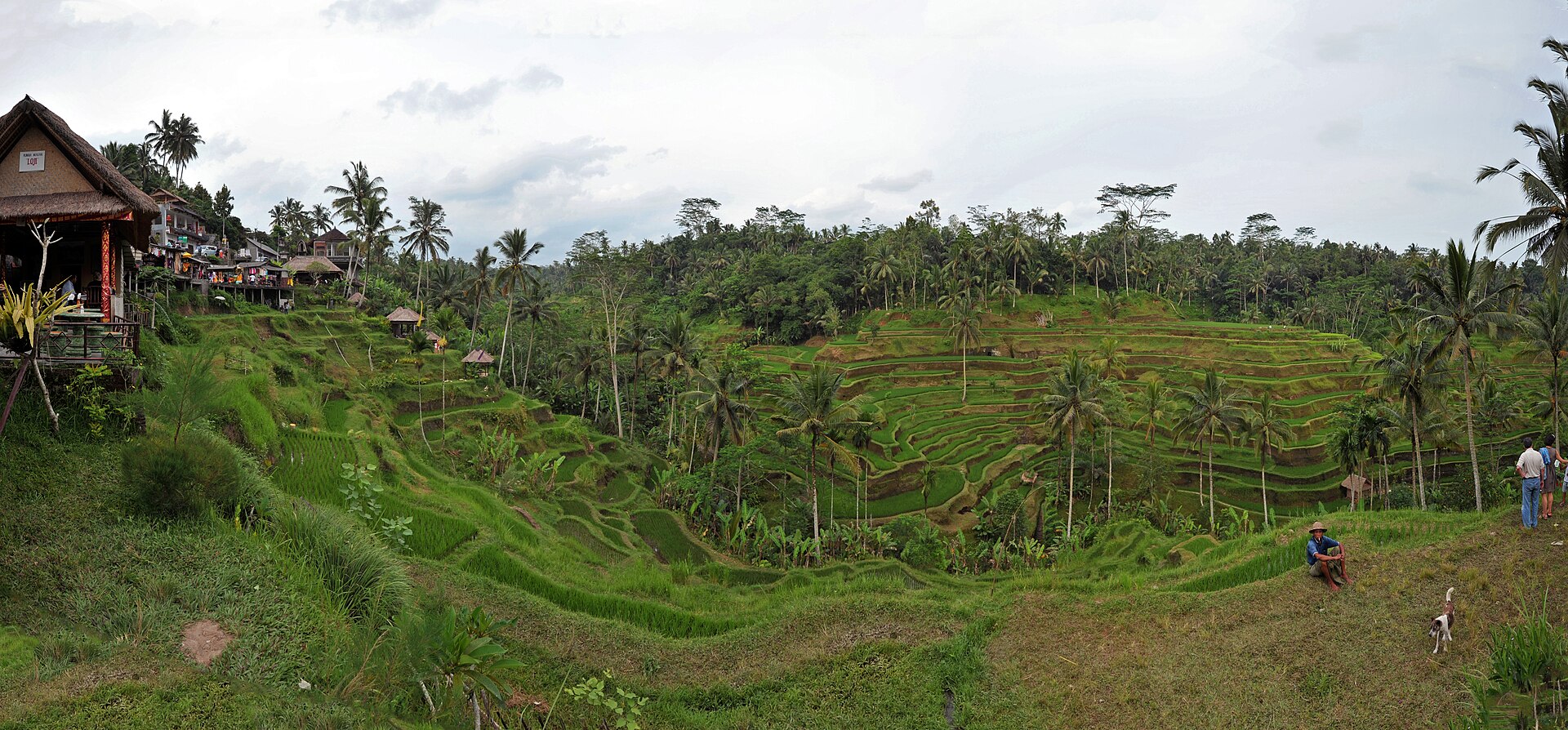
Ubud sits in the central hills, wrapped in river gorges, jungle and the emerald steps of the Tegalalang rice terraces. Days are temple visits, waterfall swims, spa afternoons and some of Bali’s best-value restaurants; evenings are dance performances and early nights. It is also the practical base for the inland sights — Tirta Empul temple, the Sacred Monkey Forest, and the Mount Batur viewpoints in Kintamani. The trade-off: no beach, and the nearest good sand is over an hour away. Stay two to four nights.
For a splurge that still feels personal, Komaneka at Bisma is a 32-room, art-filled resort overlooking the Campuhan River gorge, a 10-minute walk from central Ubud and the Monkey Forest, with two pools and spa villas. If you want the full resort spread, Maya Ubud Resort and Spa spreads 108 rooms along the Petanu River with two infinity pools and a riverside spa in thatched pavilions — it scores 9.6 with Expedia guests, and it is the one to book for a honeymoon-style Ubud stay.
Seminyak: the polished all-rounder
Seminyak is Bali’s most established beach town: a walkable grid of restaurants, boutiques, spas and beach clubs, fronted by a wide sunset beach. The surf and currents are strong, so treat it as a sunset-and-surf spot rather than a swimming beach. It is the easiest first landing on the island — 30–45 minutes from the airport, everything on your doorstep.
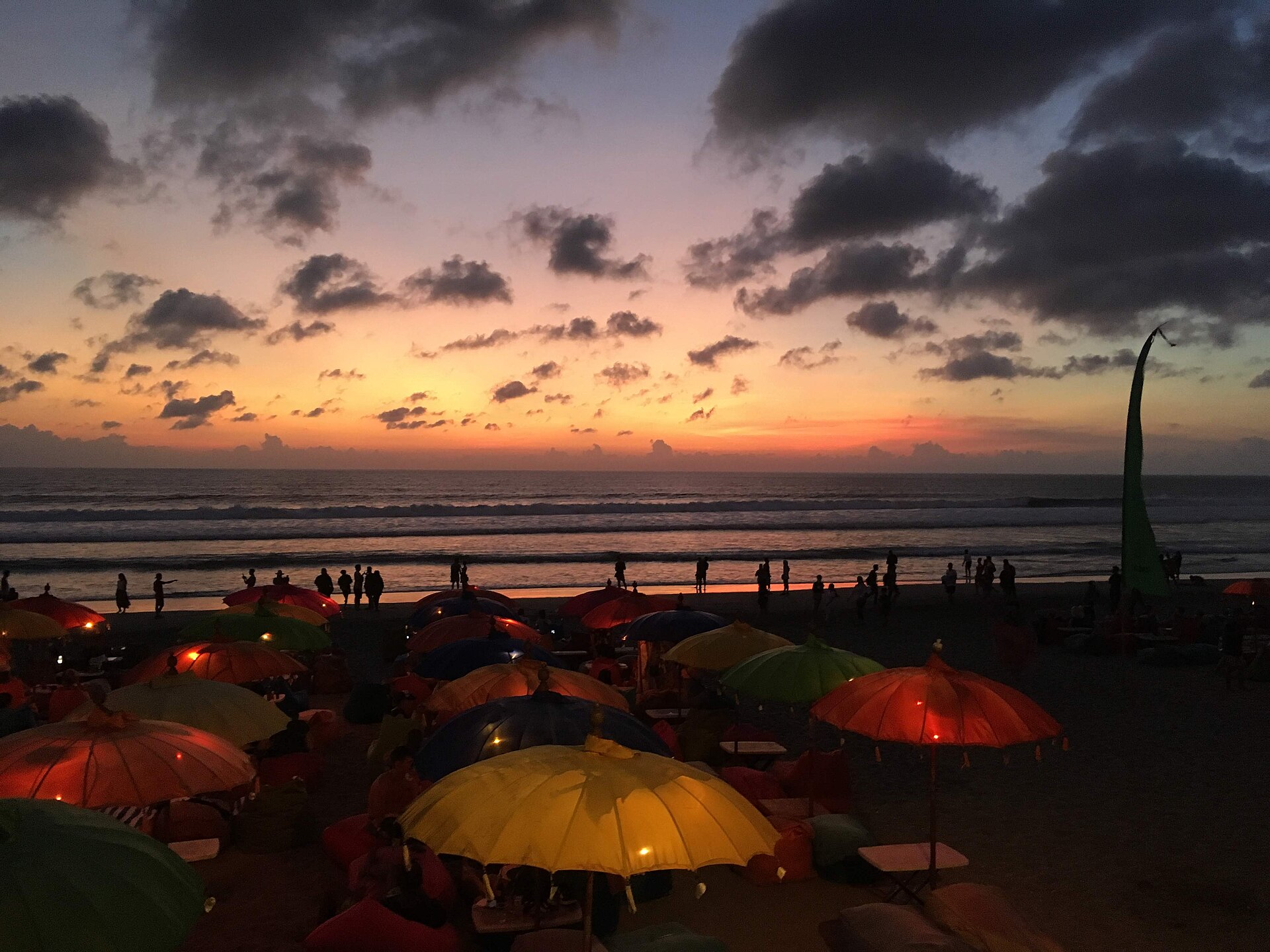
Right on the sand, The Seminyak Beach Resort & Spa puts its infinity pool directly in front of those sunsets; its 102 rooms rate 9.4 on Expedia. For the same neighbourhood at a friendlier price, Four Points by Sheraton Bali Seminyak is a garden-wrapped four-star in Petitenget, near Petitenget Temple, rated 8.6 — our value pick for Seminyak.
Canggu: surf, cafés and the long-stay crowd
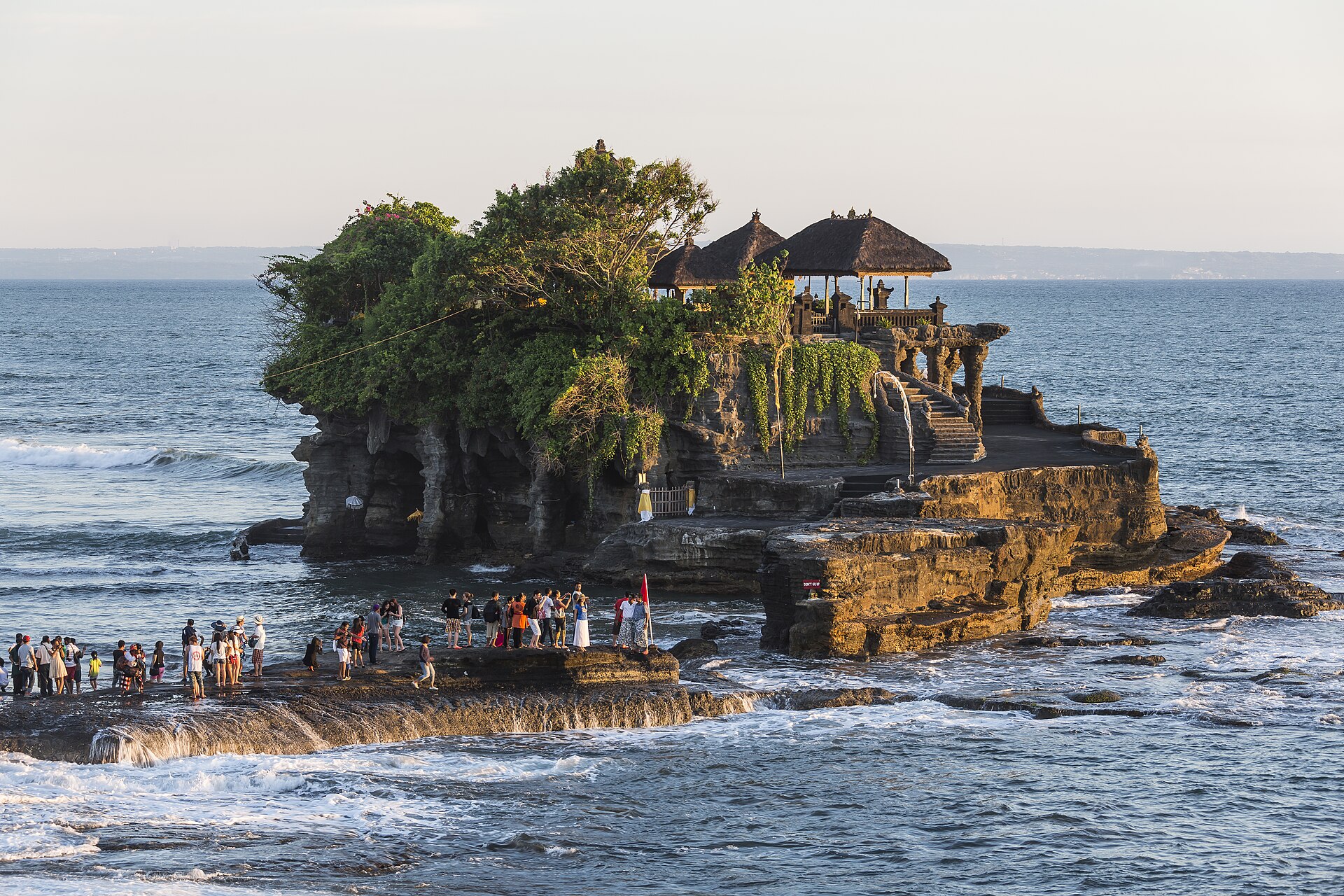
North-west of Seminyak, Canggu is a surf-and-café base scattered along beach roads rather than around one centre: black-sand beaches, friendlier beginner breaks than Uluwatu’s reefs, co-working spaces, and a young crowd that often stays for weeks. Tanah Lot, Bali’s famous offshore sea temple, is an easy sunset run up the coast. The downside: Canggu’s traffic is the island’s worst pinch point, and you will scooter or ride-share everywhere.
The design-led splurge here is COMO Uma Canggu, a five-star retreat on Echo Beach with a lagoon pool, a COMO Shambhala spa and its own beach club, rated 9.2 and steps from the Batu Bolong and Pererenan breaks. The mid-range alternative is Aston Canggu Beach Resort, a 93-room four-star steps from Batu Bolong Beach with a rooftop ocean-view pool — the sunset seat is the whole point.
Uluwatu: cliffs, coves and world-class surf
The Bukit Peninsula, Bali’s southern thumb, is the island’s drama: limestone cliffs, hidden coves reached by long staircases, and reef breaks like Padang Padang, Bingin and Impossibles. At the tip, Uluwatu Temple stands on the cliff edge, with kecak fire-dance performances at sunset. Uluwatu is not walkable or convenient — everything is a drive, and that is exactly why people love it.
The ultimate clifftop address is Bvlgari Resort Bali: 64 ocean-view villas more than 150 metres above the Indian Ocean, with a private beach reached by an inclined elevator, minutes from Uluwatu Temple. A step down in price but not in setting, Radisson Blu Resort Bali Uluwatu sits above the Impossibles break near Padang Padang and Bingin, with 125 rooms around a 40-metre pool — one practical note: its listing flags pool renovation work during November 2026, so check the current status before you book for this month.
Nusa Dua: the family-safe resort enclave
Nusa Dua is a planned, gated resort complex on the south-east coast — manicured lawns, a calm reef-protected beach with genuinely swimmable, shallow water, and big five-star resorts with kids’ clubs. It is 20–30 minutes from the airport and the island’s lowest-stress base. The honest trade-off: it can feel separated from everyday Bali, so plan a day trip or two out of the enclave.
Sofitel Bali Nusa Dua Beach Resort is the classic pick: French-Balinese styling, four outdoor pools including a big lagoon pool, a private beach and a spa. Just up the Tanjung Benoa strip, Conrad Bali matches it with four pools, a lagoon pool and a kids’ club, and rates 9.2 on Expedia — a strong choice if you are travelling as a family group.
Sanur: quiet value, and the island-hopping base
On the east coast, Sanur is old Bali at an easy pace: a calm lagoon behind a reef, a roughly five-kilometre paved beachfront promenade made for sunrise walks and cycling, and prices kinder than the west coast. It faces east, so this is the sunrise side. Sanur Harbour is also where the fast boats leave for Nusa Penida and Nusa Lembongan — 30–45 minutes across in calm seas — making Sanur the smart base the night before an island day trip.
The polished option is Maya Sanur Resort & Spa, a 103-room five-star right on Sanur Beach with lagoon-access rooms and a rooftop yoga deck for sunrise. For something smaller, Sudamala Resort, Sanur is a 34-room boutique hideaway in tropical gardens with a lap pool, art-filled Balinese design and a 9.4 guest rating, a five-minute stroll from the beach.
Three days out worth booking from your base
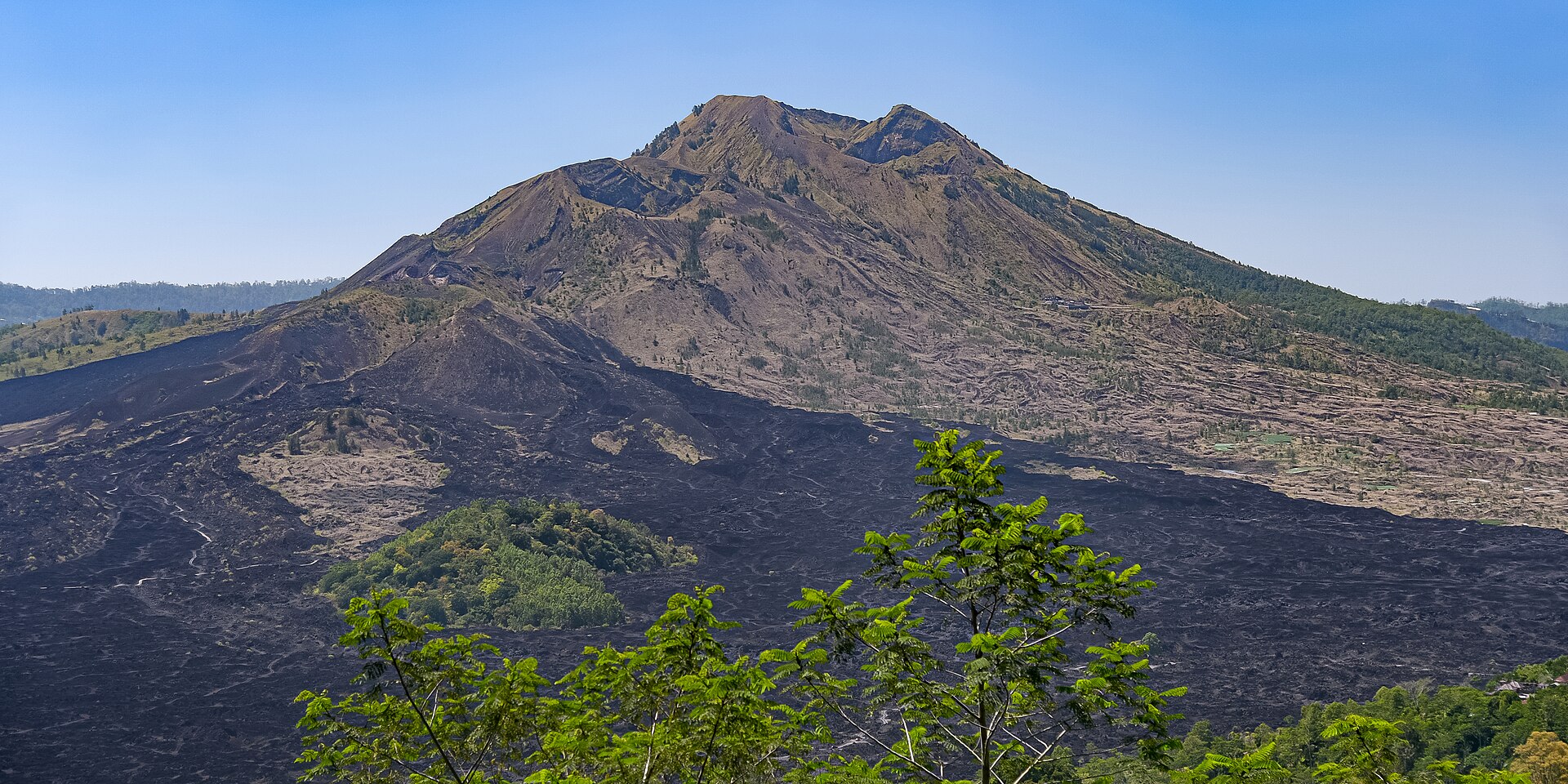
Whichever base you choose, three experiences are genuinely better booked ahead. From Ubud, a full-day Ubud highlights tour strings together the Monkey Forest, the Tegalalang terraces, Tirta Empul’s holy springs and Tegenungan Waterfall in one private day, from around $27 — far easier than negotiating drivers sight by sight, and it holds a perfect 5.0 rating across more than 8,000 reviews. Also from Ubud, the Mount Batur sunrise hike is Bali’s signature early start: a guided climb by torchlight, breakfast at the summit as the sun comes up over the caldera, from around $26 with free cancellation up to 24 hours before. And from Sanur, a Nusa Penida day trip pairs snorkelling with manta rays with the Kelingking Beach viewpoint, fast boat included, from around $70 — the one day trip we would protect in any itinerary.
Practical notes before you book
The levy: foreign visitors pay a one-off Bali tourist levy of Rp150,000 (about $9) per person, separate from any visa — pay it before you fly on the official Love Bali portal, as lookalike sites charge more. Season: dry months run roughly April to October; November to March brings short, heavy afternoon downpours rather than all-day rain, so front-load outdoor plans to the mornings. Money: most hotels add tax and a service charge on top of the room rate, so compare the final price. Getting around: there is no train or metro — hire private drivers by the day, and use ride-hailing apps for short hops in the south.
The bottom line
Choose the area first and the hotel second, split the trip if you have the nights, and let the coast come last. Planning a wider Southeast Asia trip around Bali? The same area-first logic applies in our guides to where to stay in Singapore and where to stay in Kuala Lumpur — Bali pairs with both on cheap one-to-two-hour flights.