
Kuala Lumpur is one of Southeast Asia’s great hotel cities — five-star rooms here routinely cost half what you’d pay in Singapore — but it is also a sprawling, traffic-tangled capital where the wrong base can cost you an hour a day in a car. The good news is that KL’s neighbourhoods are genuinely distinct: you can wake up under the Petronas Twin Towers, in the middle of the shopping-and-street-food action, in a heritage shophouse district, or in a leafy suburb where locals actually live. Pick the area that matches your trip, and the city becomes easy. Pick badly, and you’ll spend your holiday on the monorail. Here is how to choose, with the hotels we’d book in each area.
Never forget a thing before you fly. My free 8-page Travel Planning Checklist walks you through the whole trip — 6 planning timelines, 36 checks, from booking windows to travel-day basics. One email, no spam, unsubscribe anytime.
Disclosure: This post contains affiliate links. If you book through one of these links, I may earn a commission at no extra cost to you.
The Short Answer: Which Area Suits You?
First trip, classic sights: KLCC — the towers, the park, the polish. Shopping, food and nightlife: Bukit Bintang, KL’s buzziest district. Culture and value: Chinatown and the old town around Merdeka Square, where the best rates in the centre hide. A quieter, local-feeling stay: Bangsar and neighbouring Damansara Heights. An early flight or onward trains: KL Sentral, the transport hub above Brickfields’ Little India. Every area below is on the rail network — in KL, a hotel within a five-minute walk of a station is worth more than a fancier one that isn’t.
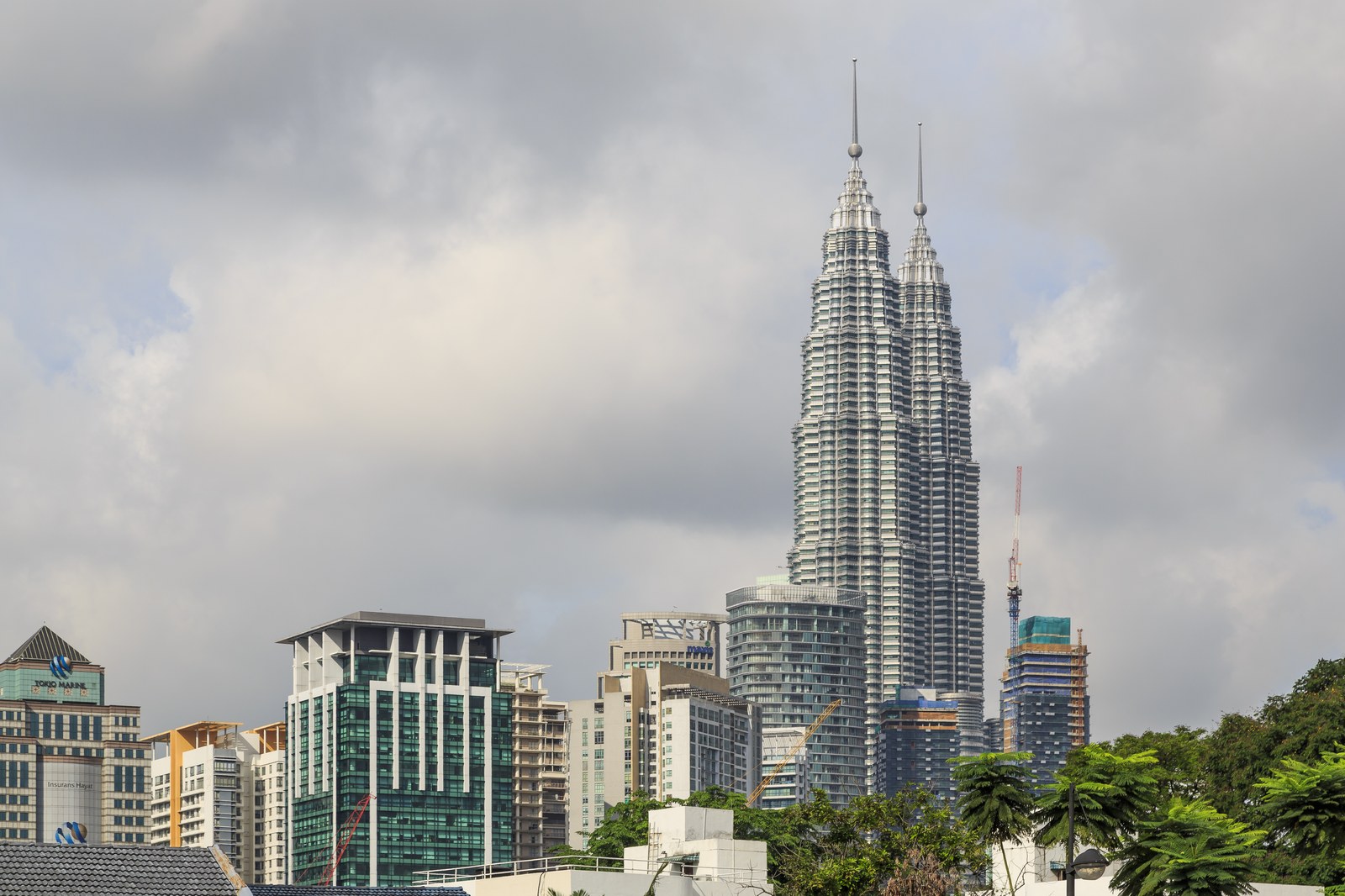
KLCC: The Postcard Address
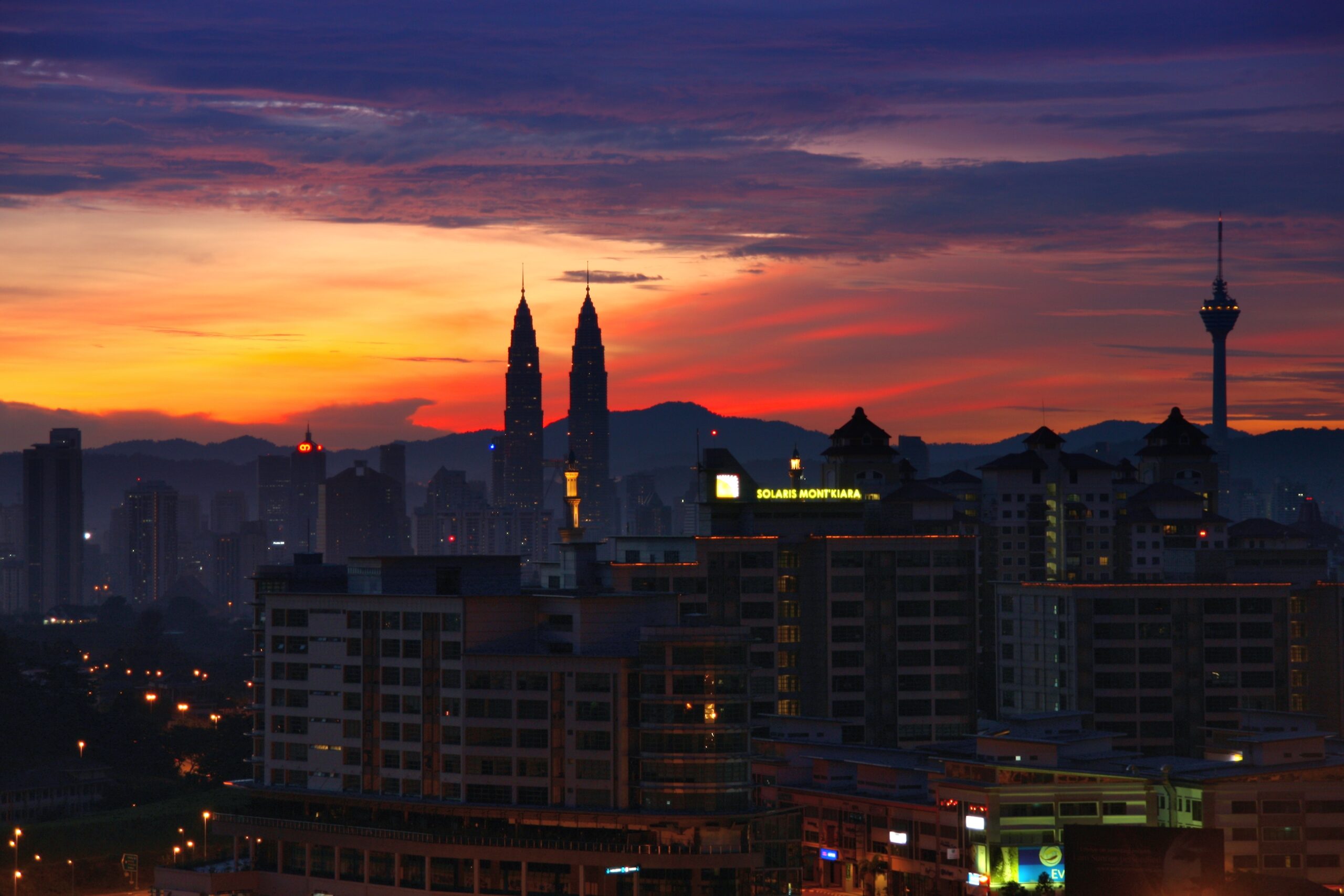
KLCC — Kuala Lumpur City Centre — is the district built around the Petronas Twin Towers, still the tallest twin towers in the world at 452 metres. At their feet sit the Suria KLCC mall, the 50-acre KLCC Park with its lake and fountain shows, and the Aquaria KLCC oceanarium. It is the city’s most polished quarter: wide pavements, air-conditioned walkways, and an LRT station (Kelana Jaya line) that puts you five stops from almost anywhere. Prices are KL’s highest, which in practice means international five-star quality at rates that would be mid-range in most capitals.
The classic choice is the Mandarin Oriental, Kuala Lumpur, set between the towers and the park — book a park-facing room and the fountain show is your evening entertainment. A few minutes’ walk away, the Four Seasons Hotel Kuala Lumpur on Jalan Ampang is the newer, sleeker option, rated 9.6 by Expedia guests and practically next door to Suria KLCC. For something with more pulse, the W Kuala Lumpur, also on Jalan Ampang, leans into rooftop-pool-and-cocktails energy while keeping the same tower views.
One KLCC tip that saves trips: Petronas Towers observation-deck tickets sell out days ahead in busy periods. If the towers are your priority, a private Kuala Lumpur tour with Petronas Twin Towers observation deck entry and Batu Caves included (4.9/5 from over 1,100 reviews) bundles the deck ticket with the city’s other headline sights and a driver for the day — the stress-free way to do both in one go.
Bukit Bintang: Shopping, Street Food and Buzz
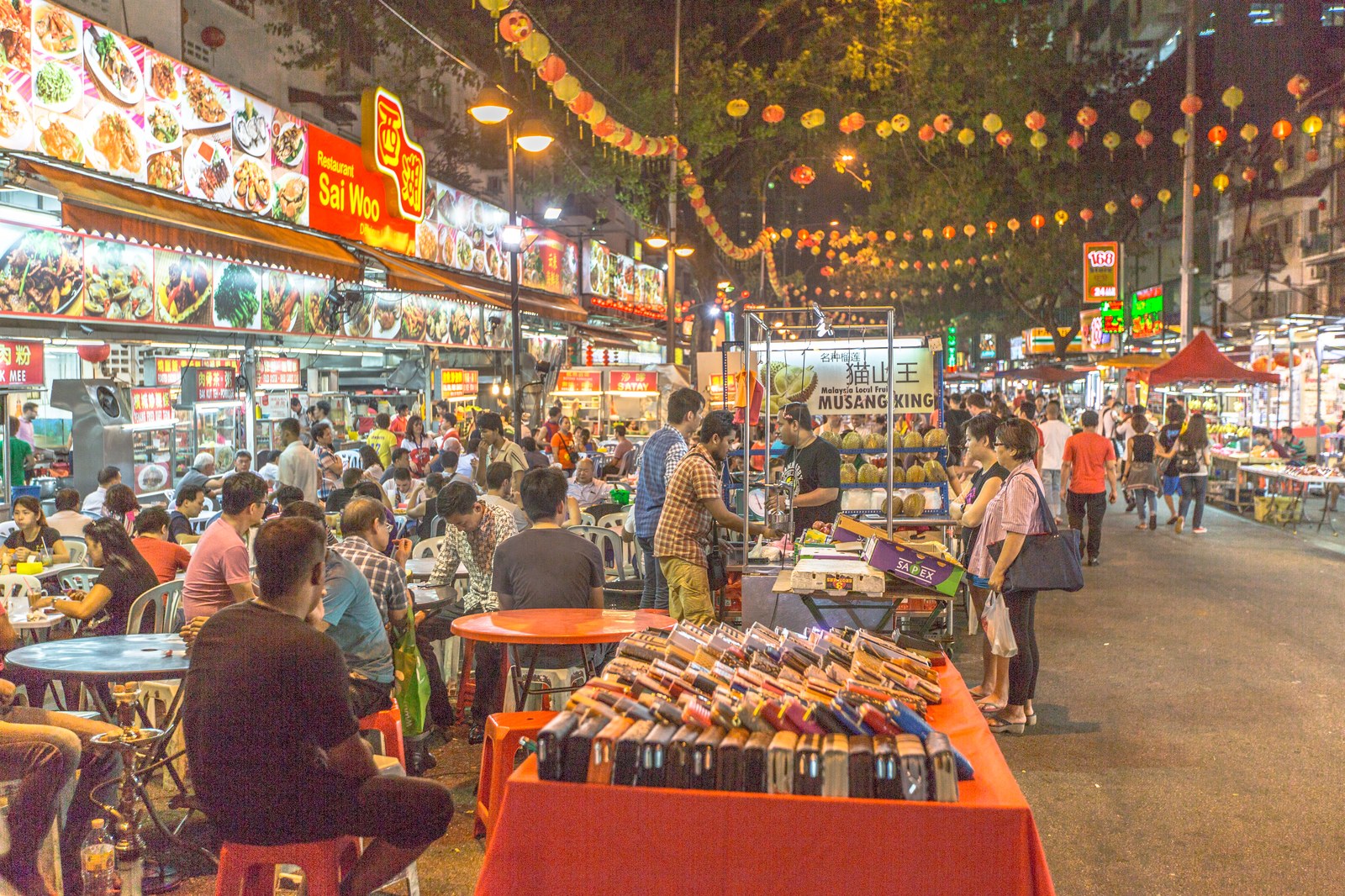
If KLCC is the city’s drawing room, Bukit Bintang is its night market with a luxury mall attached. This is where you’ll find Pavilion KL and Lot 10, the monorail rattling overhead, and — down one glorious street — Jalan Alor, where hawker stalls fire up wok hei under strings of lanterns every evening. It is the best base for first-timers who want to walk out of the hotel and straight into dinner, and it is served by both the MRT and the monorail. The trade-off is noise: if you’re a light sleeper, ask for a high floor away from Jalan Bukit Bintang itself.
The grandest address is the Pavilion Hotel Kuala Lumpur Managed by Banyan Tree, which sits directly above Pavilion mall — you can ride the lift from your room to some of the best shopping in Malaysia. Across the road, the JW Marriott Kuala Lumpur is the big, dependable five-star — 738 rooms, a serious spa, and a one-minute walk to Pavilion. The Grand Millennium Kuala Lumpur on Jalan Bukit Bintang itself is another well-priced classic, rated 8.8 and steps from Lot 10’s famous food basement. On a tighter budget, the citizenM Kuala Lumpur Bukit Bintang — rated 9.6 by guests — does small, smart, self-check-in rooms at a fraction of the neighbours’ prices.
And eat properly while you’re here. Jalan Alor is fun to graze on your own, but KL’s hawker centres reward local knowledge — the stalls with the longest queues are not always the best ones. The Eat Like a Local hawker centre and street food tour by night (4.8/5) spends four hours eating the way KL residents actually do, and it will recalibrate every hawker meal you have afterwards.
Chinatown and the Old Town: Heritage and the Best Value in the Centre
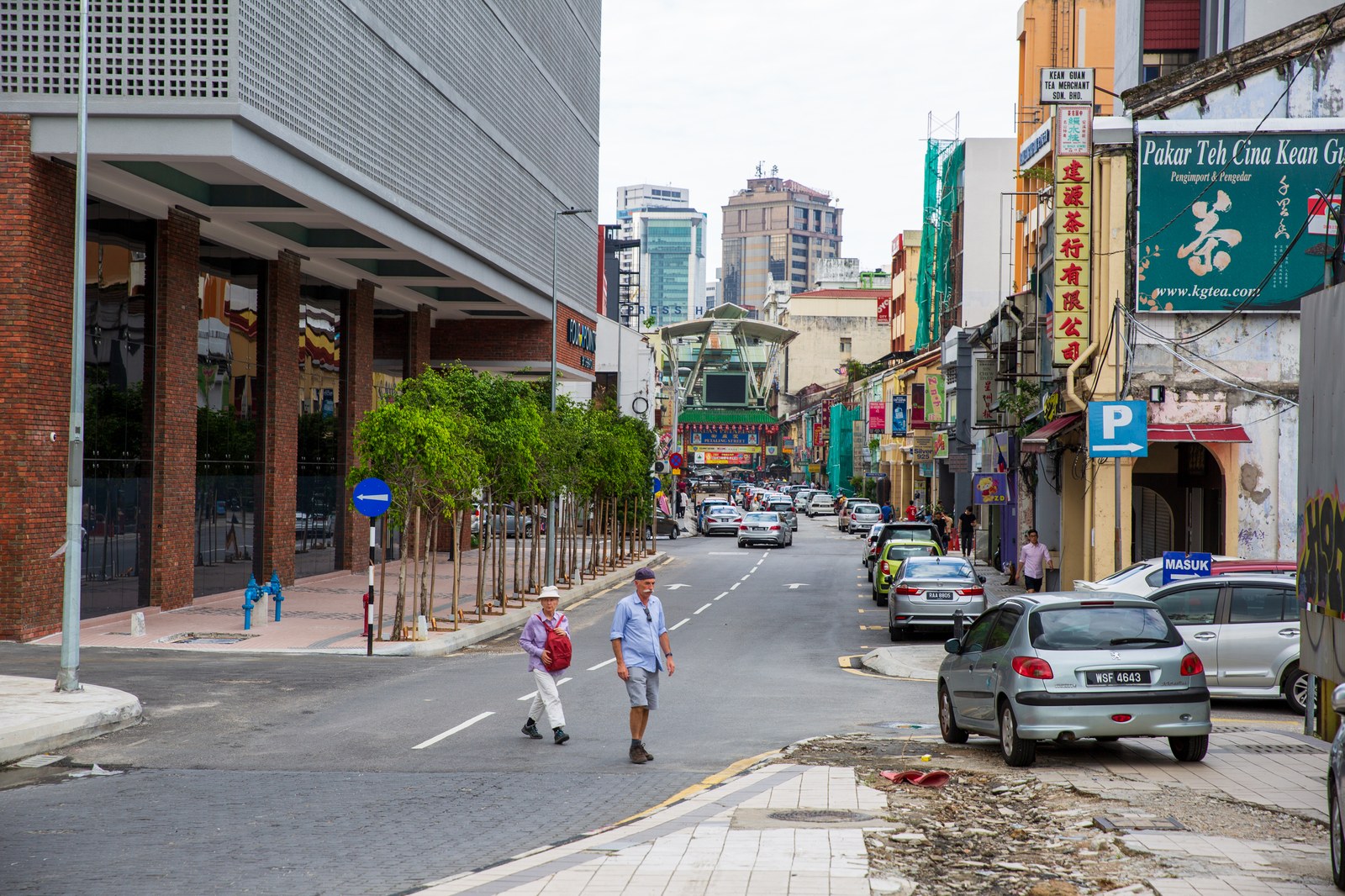
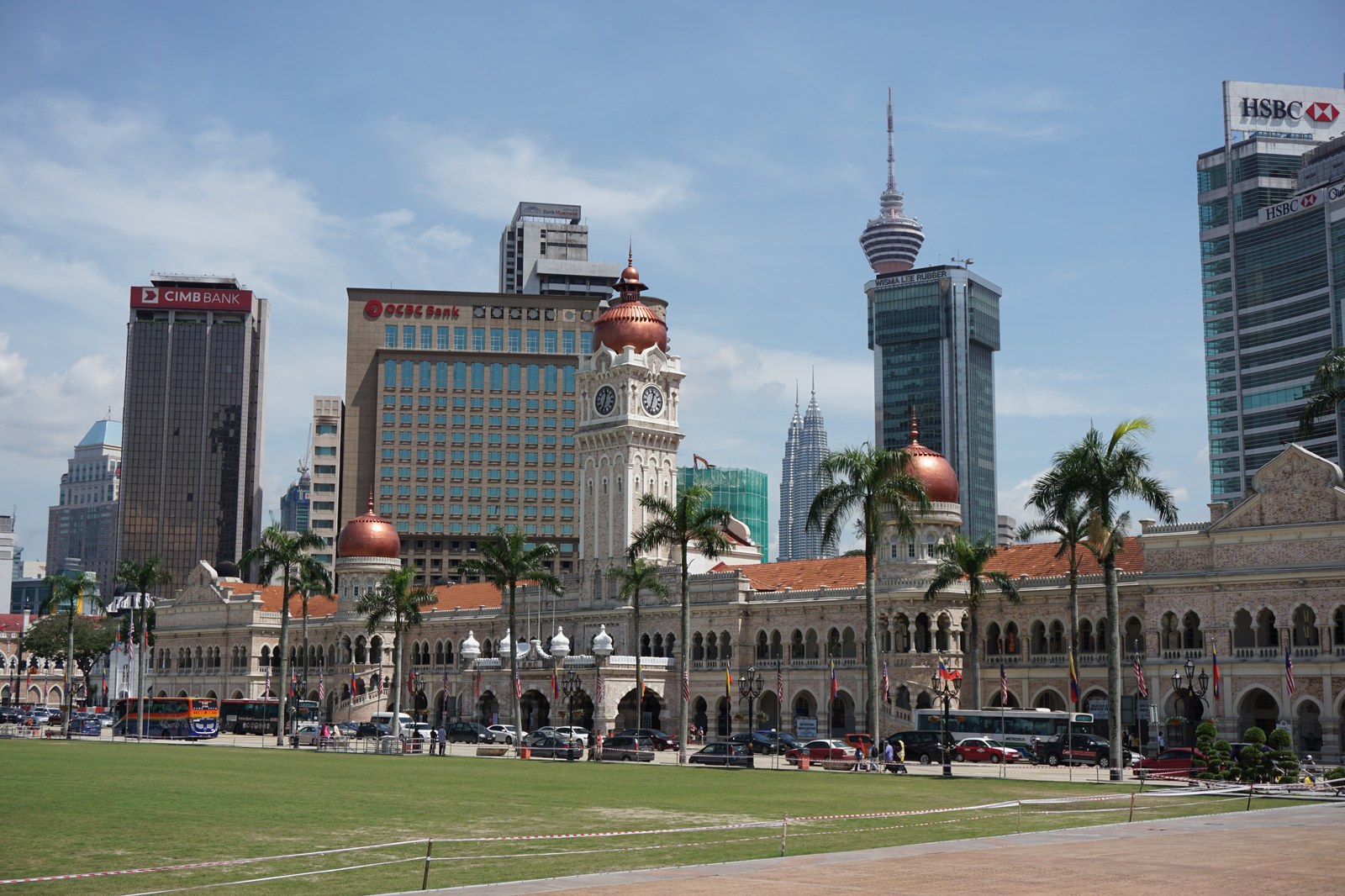
Old KL is the city before the skyscrapers: Petaling Street’s market stalls, the 1888-built Central Market, clan temples and kopitiams, and, a short walk north, Merdeka Square, where the Moorish-revival Sultan Abdul Samad Building faces the field where Malaysian independence was declared in 1957. The MRT at Pasar Seni makes it as connected as anywhere in the city, and room rates run noticeably lower than KLCC or Bukit Bintang. This is our pick for travellers who spend their days exploring and their money on food.
The headline new opening looms over the district — literally. The Park Hyatt Kuala Lumpur opened in 2025 near the top of Merdeka 118, the second-tallest building in the world, a ten-minute walk from Petaling Street; no hotel in the city can match its views. For character at ground level, the Hotel Stripes Kuala Lumpur, Autograph Collection, just north of the old town on Jalan Kamunting, is a brick-and-style boutique with a rooftop pool, rated 9.2 — a local favourite for weekends in the heritage quarter.
Bangsar and Damansara Heights: KL as the Locals Live It
Bangsar, a few stops southwest on the LRT, is where affluent KL actually lives: leafy streets, the café-and-bar strip along Jalan Telawi, the Bangsar Village malls, and a Friday-to-Sunday energy that has nothing to do with tour groups. Stay here on a longer trip, or on a return visit when you’ve done the towers and want the city’s rhythm instead of its sights. The centre is about 15 minutes away by train, and Grab rides are cheap.
Right next door in Damansara Heights, the Sofitel Kuala Lumpur Damansara is the area’s full-service anchor — a large, quiet five-star with a resort-style pool that suits travellers mixing sightseeing with downtime (or work). Serious food lovers should also know that Bangsar and Damansara are where many of KL’s most interesting independent restaurants have opened in the last few years.
KL Sentral and Brickfields: For Early Flights and Onward Journeys
KL Sentral is less a neighbourhood than a machine for leaving and arriving — Malaysia’s biggest transport hub, with the airport express, intercity trains, and three urban rail lines under one roof. Wrapped around it is Brickfields, KL’s Little India, a colourful grid of sari shops, banana-leaf restaurants and temples along Jalan Tun Sambanthan. If you land late, leave early, or are using KL as a base for trains around Malaysia, nowhere else competes.
The luxury option is built right into the hub: The St. Regis Kuala Lumpur on Jalan Stesen Sentral 2, with butler service and a 9.6 guest rating — you can be off the hotel lift and onto the airport train in minutes.
Getting Around, and the One Day Trip Everyone Takes
From the airport, skip the traffic entirely: the KLIA Ekspres runs non-stop to KL Sentral in 28 minutes (33 from Terminal 2) for RM55, every 20 minutes or so from 5am. From KL Sentral, the LRT reaches KLCC in about ten minutes, the monorail serves Bukit Bintang, and the MRT at nearby Muzium Negara covers Chinatown. Within the city, a Touch ‘n Go card works across rail lines, and Grab is the default for everything else.
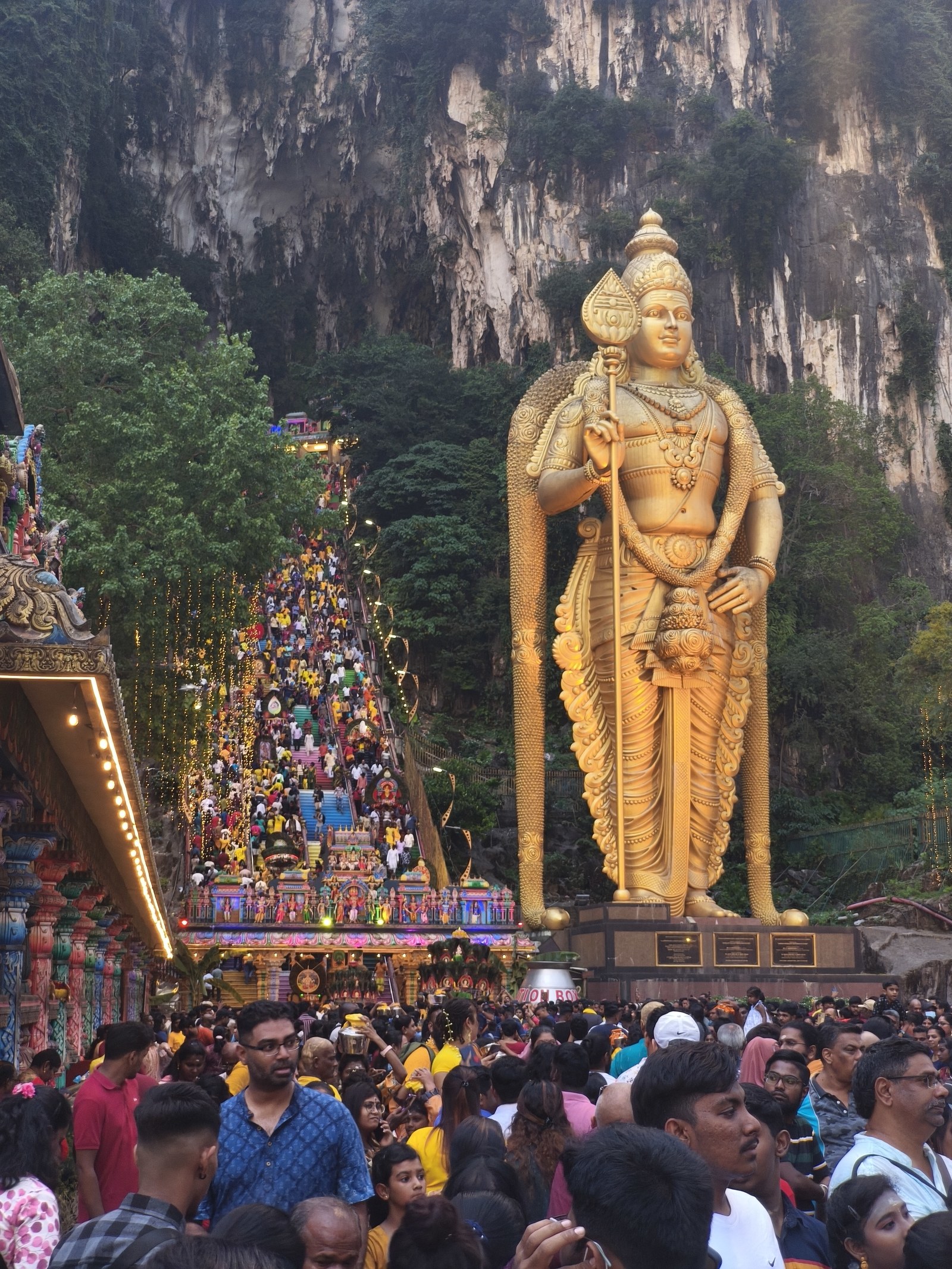
KL Sentral is also your launchpad for Batu Caves, the limestone hill temple 13km north where 272 rainbow-painted steps climb past a golden statue of Lord Murugan to a cathedral-sized cave. The KTM Komuter train runs there directly — but if you’d rather have the context and the logistics handled, the Batu Caves half-day tour with pick-up (4.5/5 from nearly 4,900 reviews, and remarkable value) is the most-booked way to do it. Dress modestly — shoulders and knees covered — whichever way you go.
So, Where Should You Stay in Kuala Lumpur?
First-timers who want the icons: KLCC. Travellers who measure a trip in meals and malls: Bukit Bintang. Culture-seekers and smart spenders: Chinatown and the old town. Repeat visitors and longer stays: Bangsar. Anyone with a 7am flight: KL Sentral. And if KL is one stop on a bigger Southeast Asia loop, compare notes with our guides to the neighbouring capitals — where to stay in Singapore and where to stay in Bangkok — then plan your days with today’s Bangkok in 3 Days itinerary if Thailand is next on the route. Kuala Lumpur rewards the traveller who chooses a base deliberately: get that one decision right, and everything else about this generous, delicious city falls into place.