
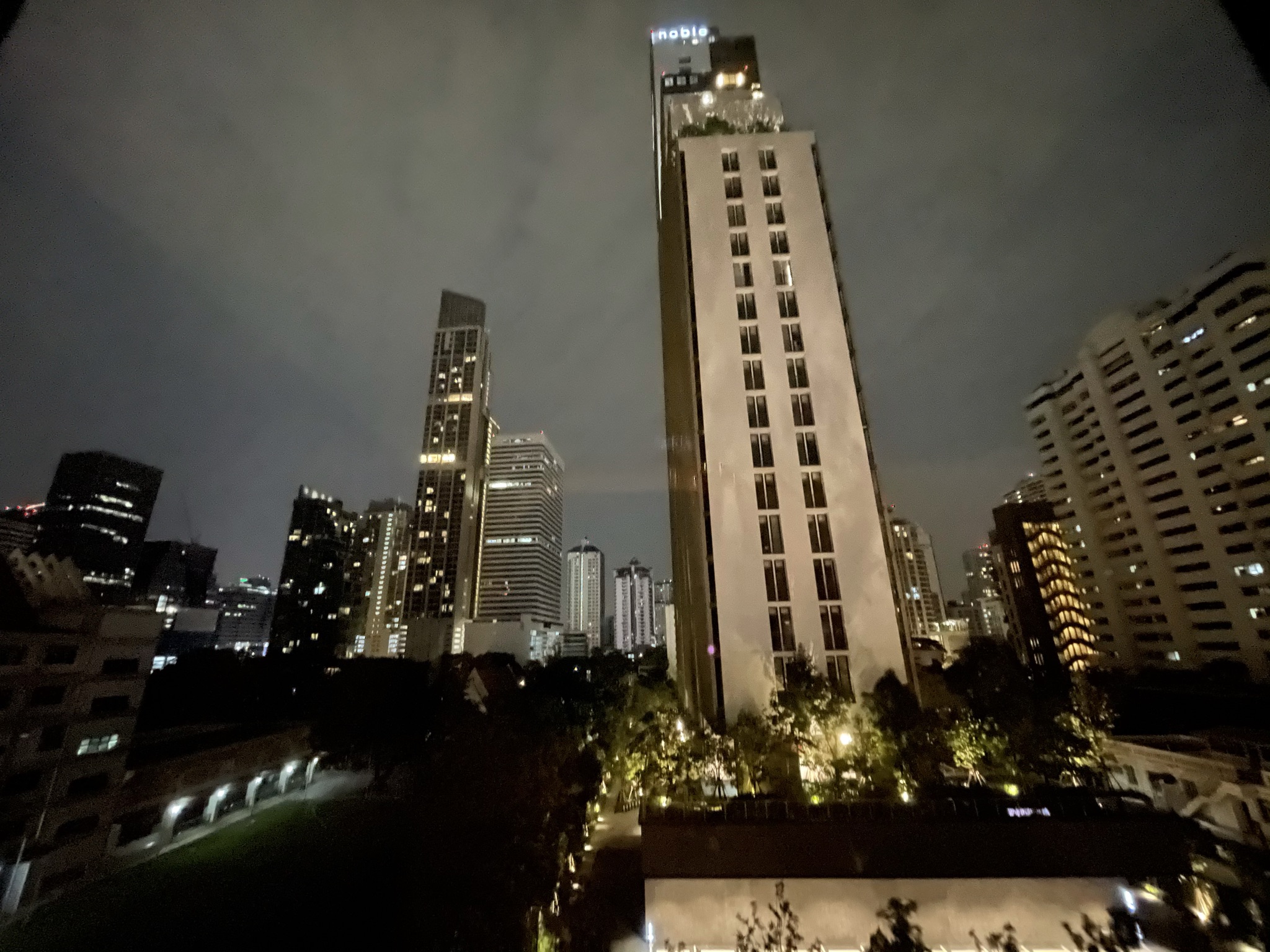
Bangkok is enormous, gloriously chaotic, and absolutely worth getting right. Pick the wrong neighborhood and you’ll spend your trip stuck in the city’s infamous traffic; pick the right one and the Skytrain, the river ferries, and a thousand street-food stalls are all within easy reach. I’ve broken the city down by area — from the neon buzz of Sukhumvit to the old-world calm of the riverside — with honest hotel picks for every budget in each.
Planning a trip? Get our free Travel Planning Checklist:
Disclosure: This post contains affiliate links. If you book through one of these links, I may earn a commission at no extra cost to you.
The short answer: where to stay in Bangkok
Short on time? Here’s the cheat sheet:
- First-timers: Sukhumvit — best Skytrain access, endless restaurants and nightlife. Try the Kimpton Maa-Lai Bangkok.
- Rooftop nights and business travel: Silom/Sathorn — try lebua at State Tower, home of the famous Sky Bar.
- A proper splurge: the Riverside — the Mandarin Oriental, Bangkok is one of the great hotels of the world.
- Temples on foot: the Old City (Rattanakosin) — the Riva Arun Bangkok faces Wat Arun across the river.
- Shopping trip: Siam/Pathum Wan — stay at the Sindhorn Kempinski Hotel Bangkok near the malls.
- Best budget base: Silom’s Villa Deva Resort & Hotel, a calm resort-style hideaway minutes from the BTS.
Sukhumvit — best for first-timers
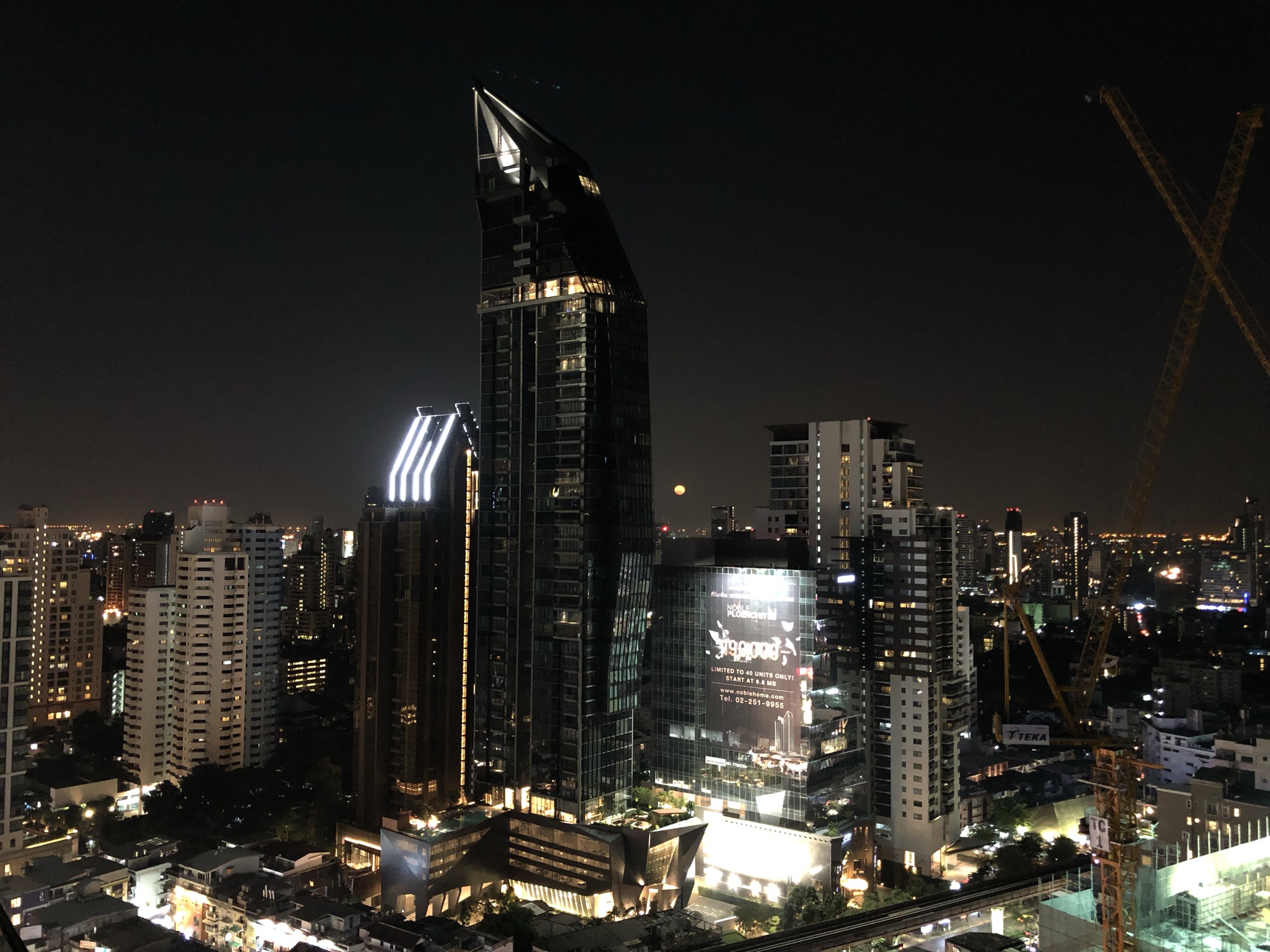
If it’s your first visit, base yourself along Sukhumvit. The BTS Skytrain’s Sukhumvit Line runs the length of it, so you’re never more than a few stops from anywhere that matters, and the street is lined with everything from Isaan street-food stalls to some of the city’s best cocktail bars. Asok is the sweet spot — it’s where the BTS meets the MRT subway — while Phrom Phong skews upscale (EmQuartier and Emporium malls) and Thonglor is the nightlife strip where Bangkok’s beautiful people go out.
For a mid-range stay with real personality, the Kimpton Maa-Lai Bangkok sits on Langsuan Road, a short walk from both Lumpini Park and the BTS. The name means “garland” in Thai, the design leans playful-luxe, and the rooftop bar has one of the better skyline views in this part of town. It’s the rare hotel that feels like a treat without the full five-star price tag.
Silom & Sathorn — best for rooftop nights and business travel
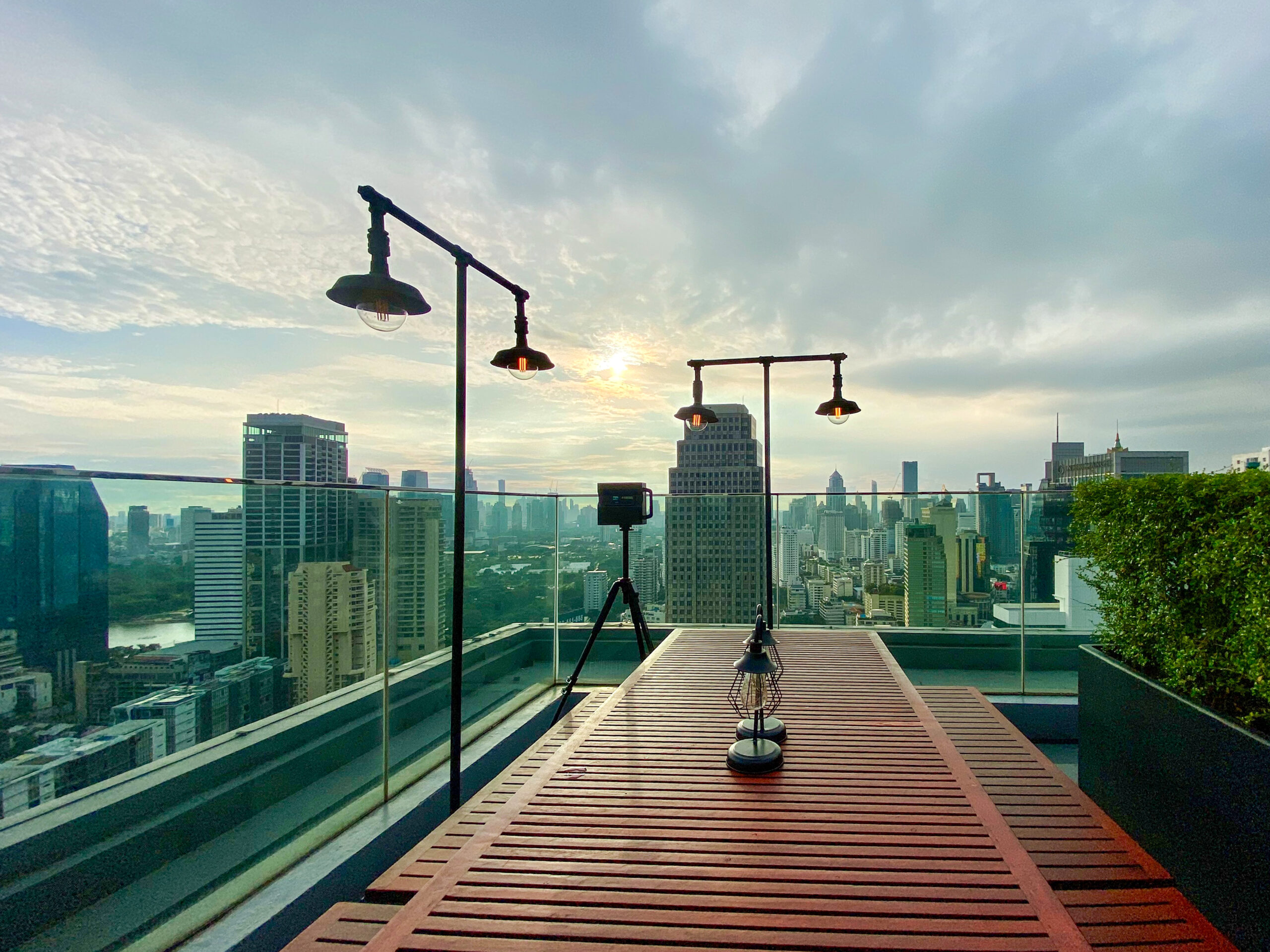
Silom is Bangkok’s business district by day and one of its best going-out areas by night, well connected by both the BTS Silom Line and the MRT. It’s also home to the city’s most famous rooftop. The lebua at State Tower occupies the upper floors of the State Tower on Silom Road, and its Sky Bar — 63 floors up, all open air — is the one from The Hangover Part II. Suites are spacious with huge windows over the river, and even if you don’t stay, the sunset cocktail up top is a Bangkok rite of passage.
On the quieter Sathorn side, The Sukhothai Bangkok is the connoisseur’s pick: a low-rise, Thai-inspired luxury hotel set around courtyards and lotus ponds on South Sathorn Road, a short walk from Lumpini Park. It feels like a resort that happens to be in the middle of a megacity — exactly what you want after a day in Bangkok’s heat.
Budget travelers shouldn’t skip this area either. The Villa Deva Resort & Hotel hides a tropical, almost resort-like calm behind its Silom address, with a pool wrapped in greenery and rates that are kind to wallets. You’re minutes from the BTS, so the whole city stays in play.
The Riverside — best for a splurge
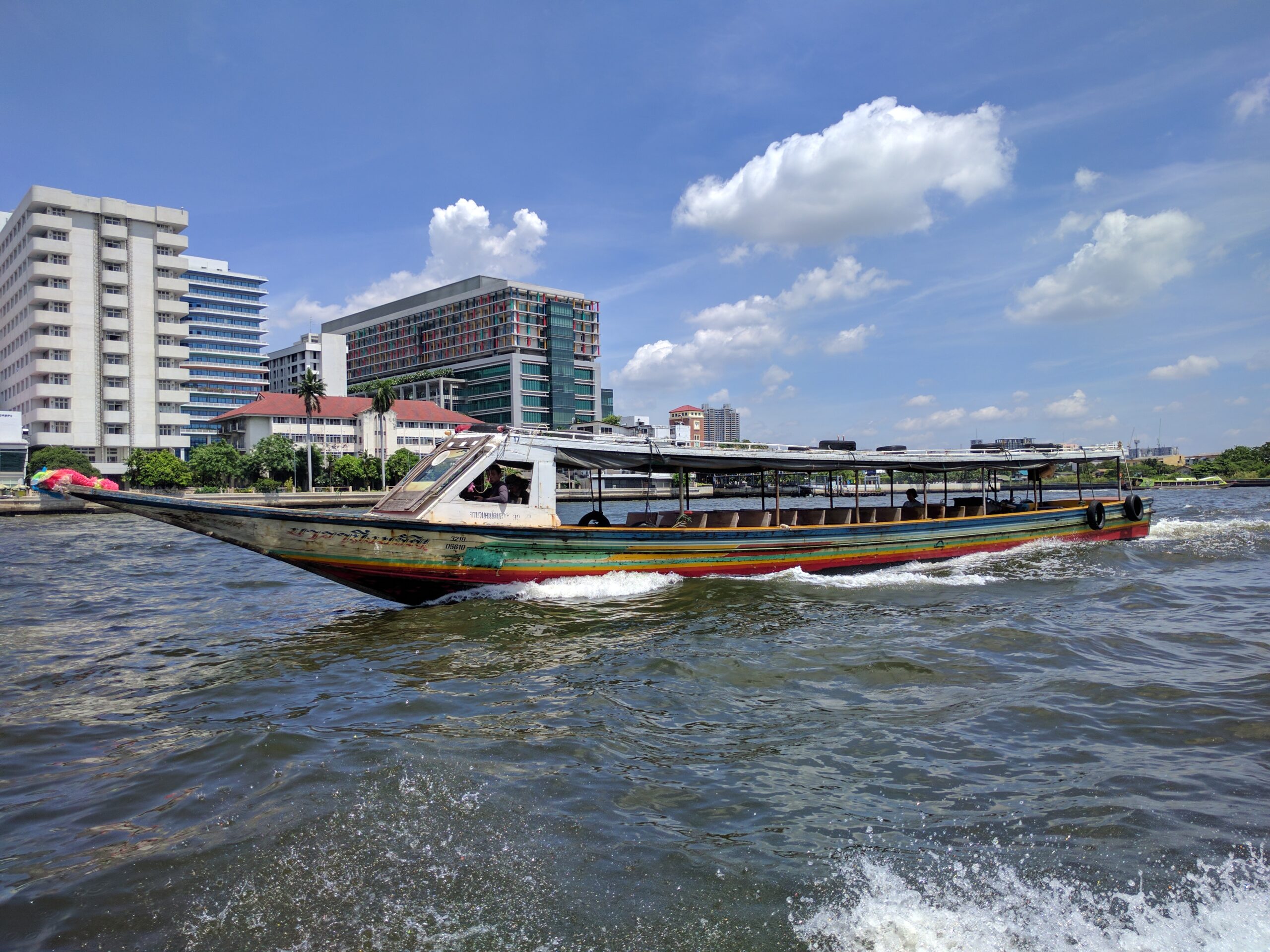
The Chao Phraya is Bangkok’s original highway, and the stretch of grand old hotels along Charoen Krung Road is where the city shows its most romantic side. Most riverside hotels run free shuttle boats to the BTS, so you’re not as cut off as the map suggests — and watching the sun set over the water from your balcony never gets old.
The Mandarin Oriental, Bangkok is the grande dame — operating on this spot since 1876, with an Authors’ Wing that has hosted everyone from Somerset Maugham to Joseph Conrad. Even if it’s beyond your budget, afternoon tea or a drink at the Bamboo Bar (a legendary jazz room) is worth planning an evening around.
For boutique luxury with an art-world soul, The Siam sits further upriver near the Dusit district: just 39 suites and villas, all art deco lines and private plunge pools, with a museum-worthy collection of Southeast Asian antiquities. And if you want the riverside magic at a gentler price, Praya Palazzo is a lovingly restored neo-Palladian mansion on the water near Phra Arthit Road — intimate, atmospheric, and far cheaper than the big-name palaces downstream.
Old City (Rattanakosin) — best for temples on foot
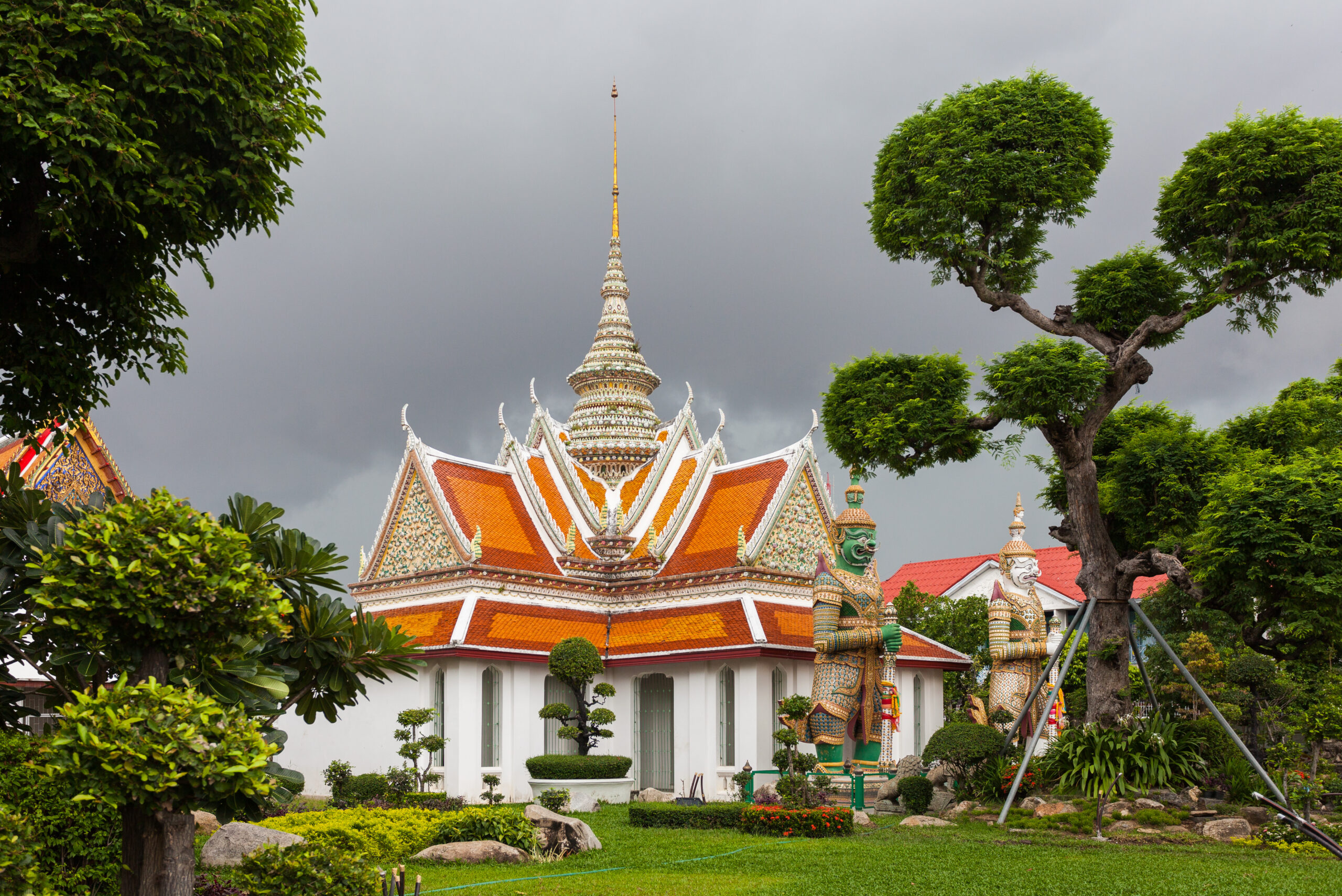
Bangkok’s historic heart — home to the Grand Palace, Wat Pho and its giant Reclining Buddha, and the Khao San Road backpacker strip — is short on Skytrain stations but unbeatable for sightseeing on foot. Stay here if your trip is temple-heavy and you don’t mind tuk-tuks and river boats doing the transport work.
The Riva Arun Bangkok is the standout: a sleek boutique hotel directly across the river from Wat Arun, so the Temple of Dawn fills your window at sunrise. The rooftop restaurant faces the wat straight on — book a table for dinner and watch it light up after dark.
Siam & Pathum Wan — best for shopping
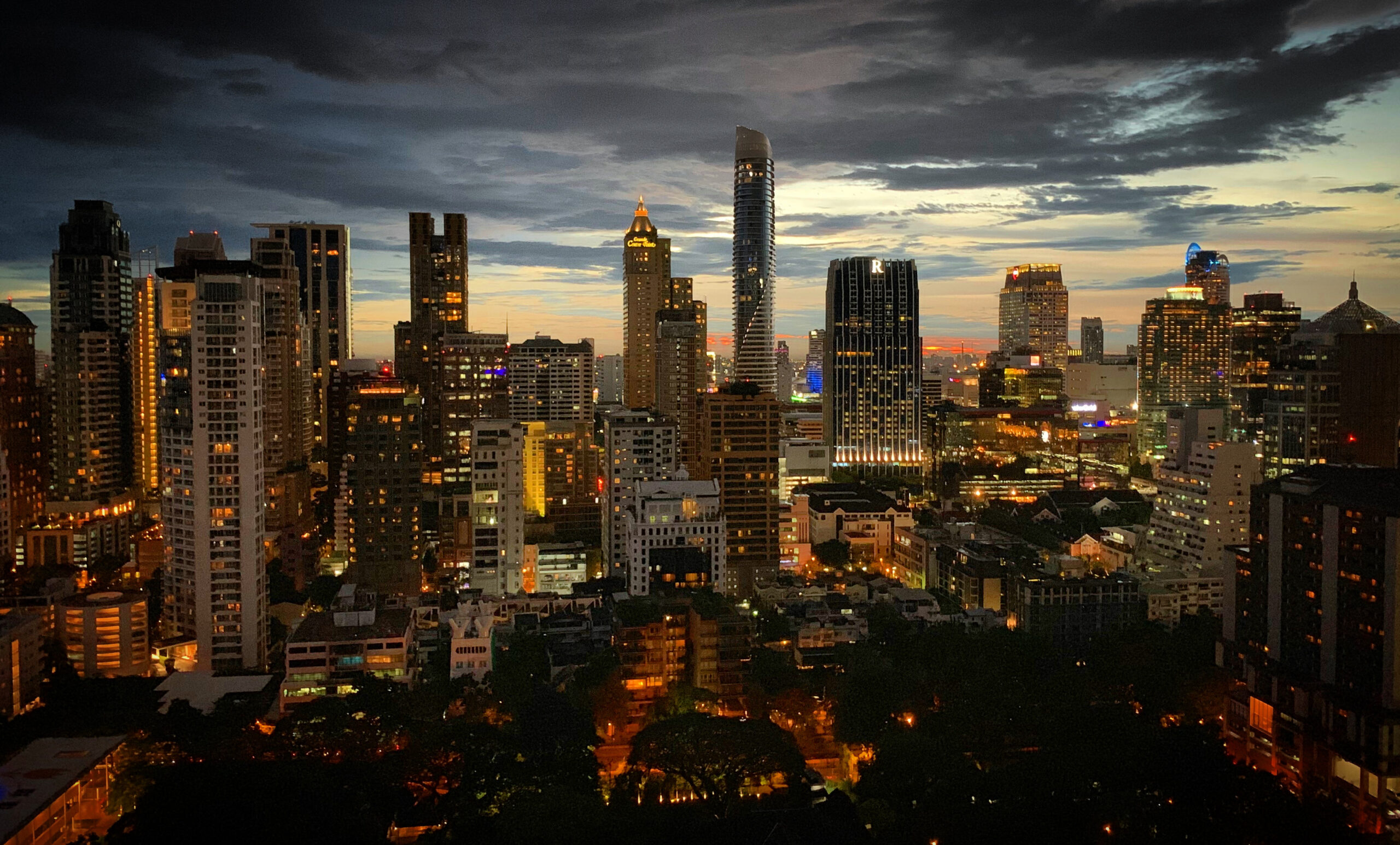
If your Bangkok trip revolves around malls — Siam Paragon, MBK, CentralWorld — plant yourself at Siam station, where the two BTS lines cross. Everything is connected by skywalk, so you can shop for hours without touching street level (a blessing in the hot season).
The Sindhorn Kempinski Hotel Bangkok on Langsuan Road is the area’s polished luxury option — all marble, top-floor pool, and one of the city’s better breakfast spreads — an easy walk to both the malls and Lumpini Park.
Getting around: the 60-second primer
Bangkok’s traffic is the stuff of legend, so stay near the rails. The BTS Skytrain (two lines) and MRT subway (Blue and Purple lines) cover most tourist areas and are cheap, air-conditioned, and fast. The Chao Phraya Express boats are the scenic way to reach the Old City temples and riverside hotels — hop on at Saphan Taksin BTS station. From Suvarnabhumi Airport, the Airport Rail Link or a metered taxi takes 30–45 minutes depending on traffic; Don Mueang (the low-cost airport) is a taxi or bus ride north of the center. Grab works well here and is often cheaper than haggling with tuk-tuks — though you should still take at least one tuk-tuk ride, for the story.
Where I’d stay
For a first trip of three or four days, I’d split it: two nights in Sukhumvit for the food and nightlife (the Kimpton Maa-Lai is my pick), then one or two nights on the river at the Mandarin Oriental or Praya Palazzo for the full old-Bangkok romance. It’s the rare city where changing hotels mid-trip genuinely upgrades the experience.
Bangkok rewards travelers who plan around its rhythms — temples in the cool morning, malls and museums in the midday heat, rooftops at sunset. And once you’ve eaten your way through the city, check out my guide to Bangkok street food to know exactly what to order. If Southeast Asia has you hooked, my Singapore where-to-stay guide covers the region’s other great city break, and you’ll find all my city hotel guides in the best where-to-stay guides roundup.