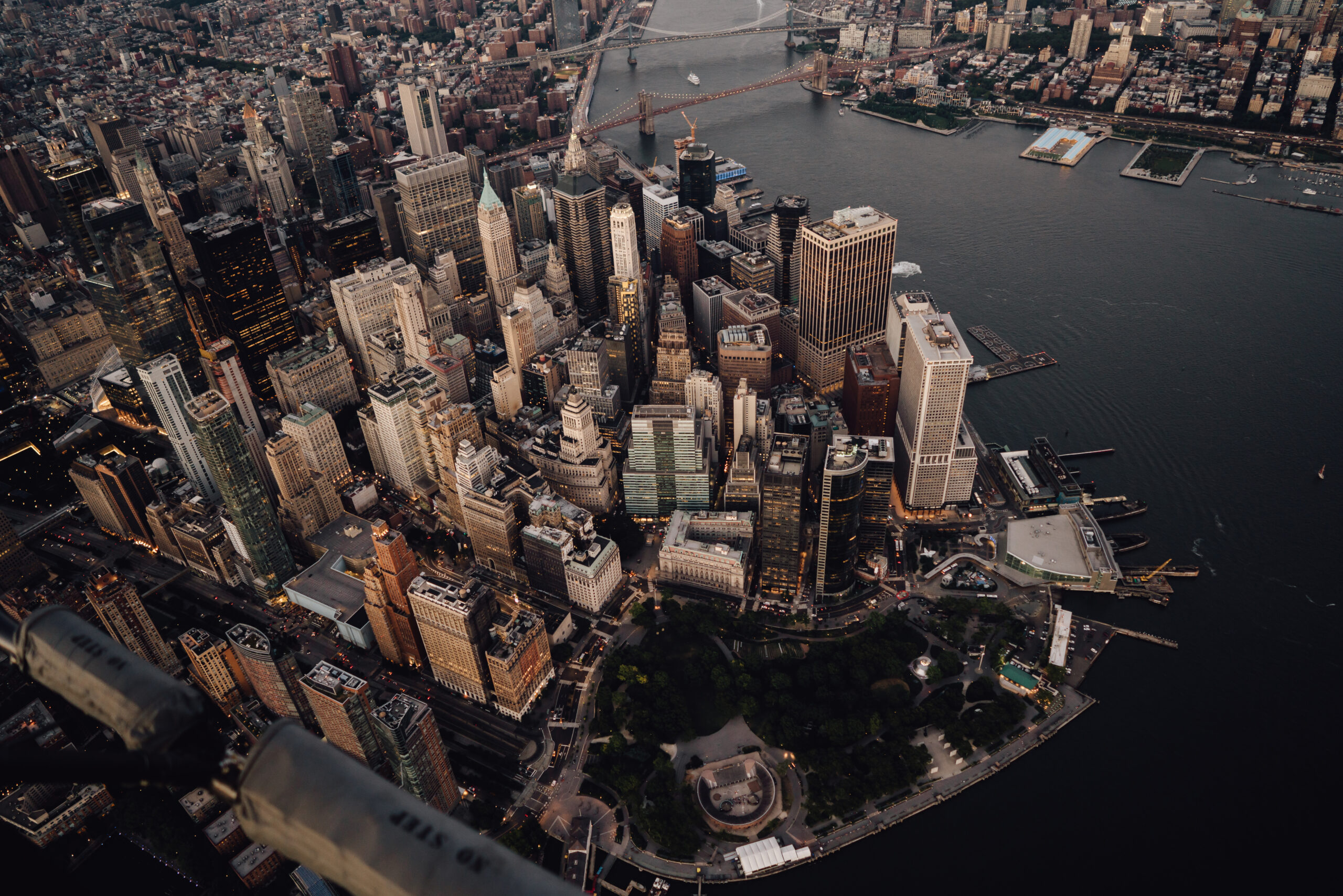
New York City is one of those rare cities where your hotel choice shapes the whole trip. Stay near Times Square and you’re 20 minutes from Broadway, Central Park, and three airports’ worth of transit connections — but you’ll pay a premium and hear sirens at 3 a.m. Stay in a quiet West Village townhouse block and you’ll live like a New Yorker — but you’ll still be tapping your OMNY card three times a day. The city is enormous: 20 miles from the Battery to the Bronx border, with neighborhoods that feel like different countries. And the subway, which is how everyone gets anywhere, runs 24/7 but rewards the traveler who picks a well-connected home base.
Planning a trip? Get our free Travel Planning Checklist:
Disclosure: This post contains affiliate links. If you book through one of these links, I may earn a commission at no extra cost to you.
The 30-second answer: First-timers should stay in Midtown — the transit access is unmatched, and you’ll waste less of your trip commuting. For luxury, the Upper East Side (The Carlyle, The Mark) and Midtown’s Plaza corridor are the classics. For the best value, look at Long Island City in Queens — one subway stop from Manhattan, skyline views, and rates well below Midtown. And if you’d rather feel like a local than a tourist, the West Village and Williamsburg are where New Yorkers themselves would put you up.
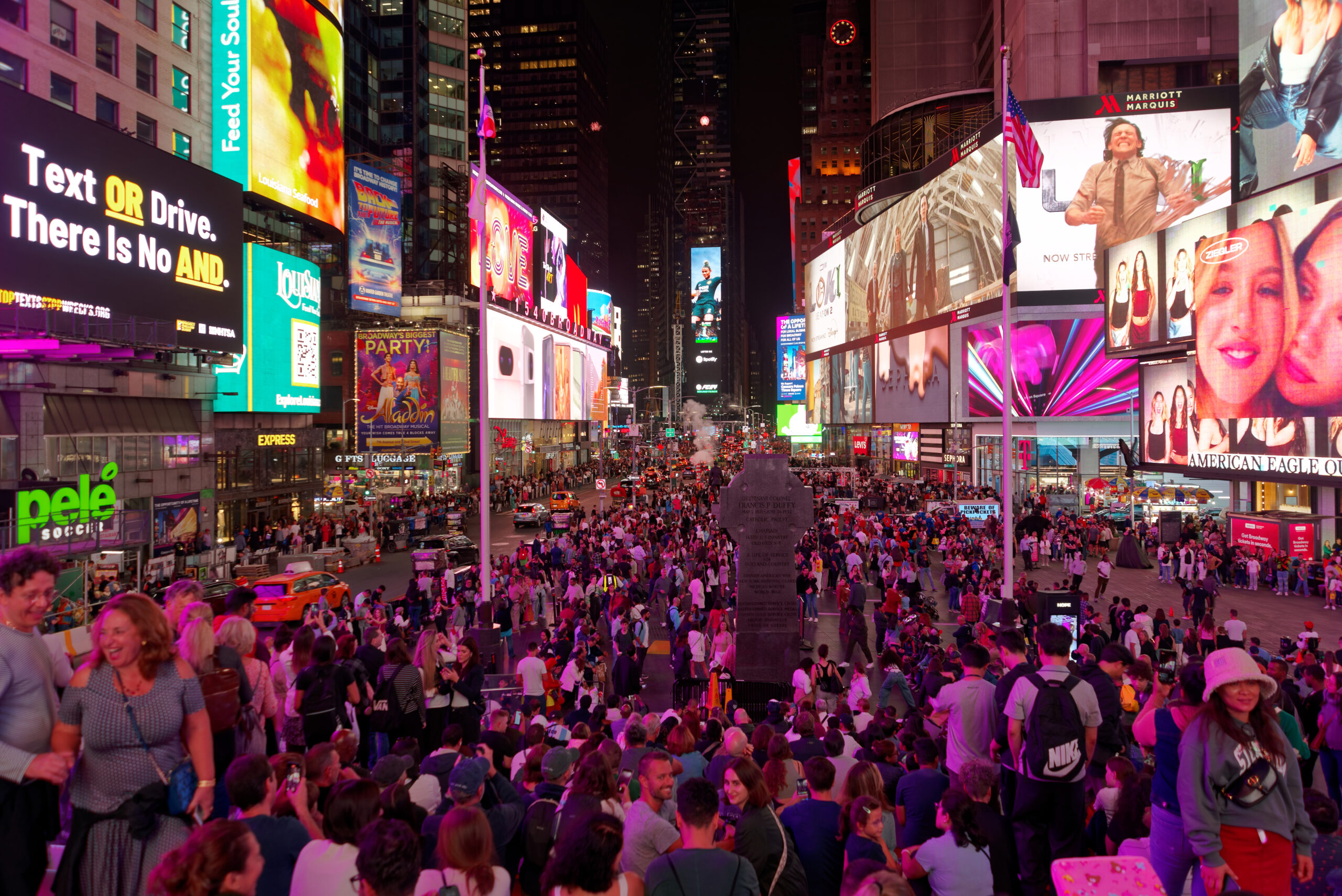
Midtown & Times Square: the first-timer’s home base
This is where most visitors land, and honestly, for a first trip it’s the smart call. Nearly every subway line passes through the Times Square–42nd Street, Grand Central, and Herald Square stations, so nowhere in the city is more than 30 minutes away. You’ll pay for that convenience — Midtown commands the highest average rates in the city — and the blocks around Times Square are loud, crowded, and relentlessly commercial. But step three avenues east or west and it calms down fast.
Hotel picks: The Plaza — the grande dame of Fifth Avenue, still the splurge of splurges with its Central Park views and afternoon tea. Lotte New York Palace — the landmark Villard mansion courtyard hotel a few blocks east of Times Square, grand without being stuffy. The New Yorker — an Art Deco icon from 1930 near Penn Station that does comfortable mid-range rooms for less than its flashier neighbors. Arlo Midtown — compact, well-designed rooms near Hell’s Kitchen that are built for travelers who spend their days out. citizenM New York Times Square — self-check-in, huge comfortable beds, and a rooftop bar, at prices that are realistic for Midtown. Pod Times Square — one of the city’s pod-style hotels: genuinely small rooms, genuinely low prices, and a fun communal vibe for solo travelers.
Upper West Side: Central Park at your doorstep
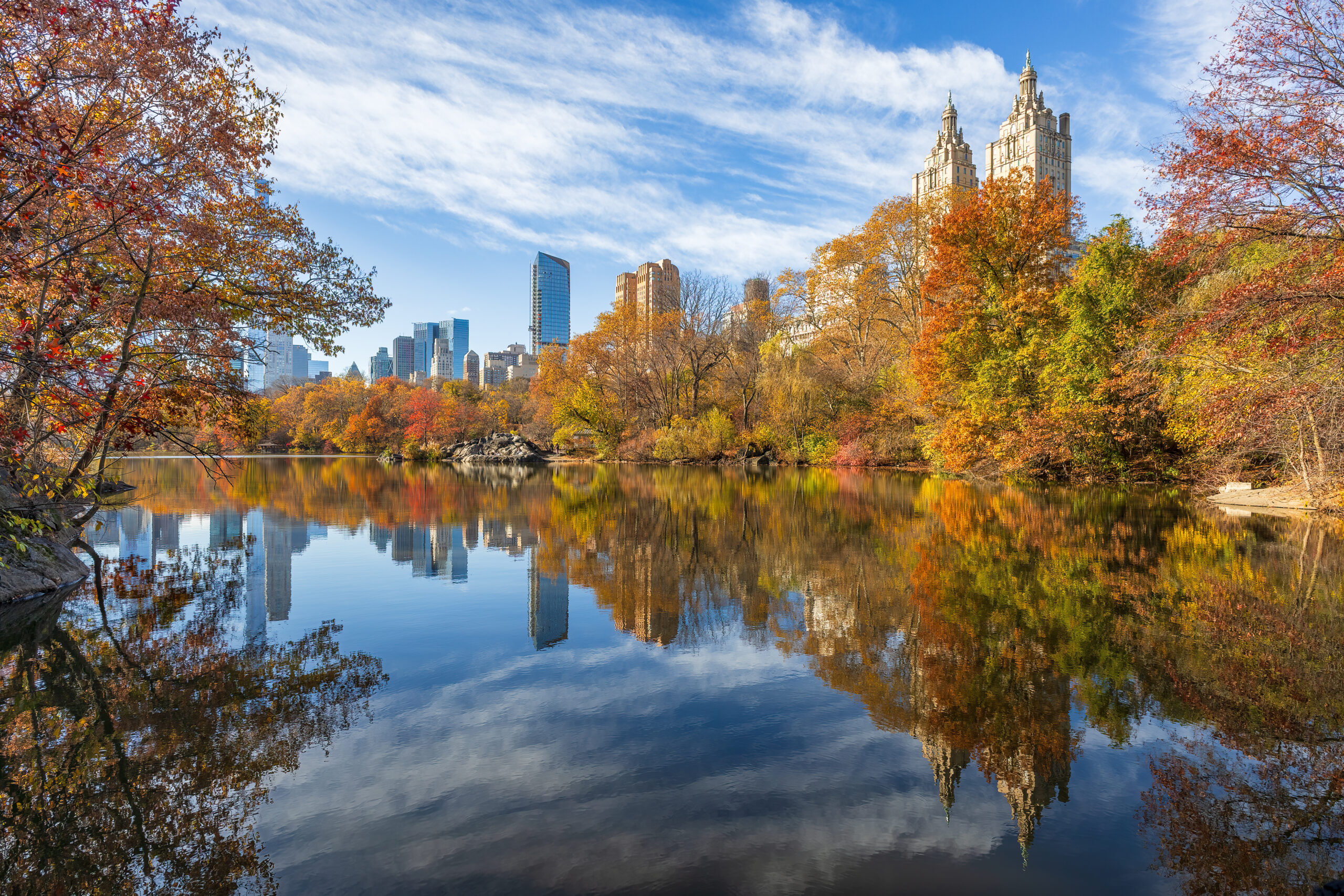
The UWS is where Manhattan families live, and it feels like it: wide streets, the 1/2/3 running up Broadway, the American Museum of Natural History and Lincoln Center on your doorstep, and Central Park across the street. It’s one of the calmest, safest-feeling places to sleep in the city. The trade-off is nightlife — the action here is dinner and a show, not bars and clubs, and getting to Brooklyn or downtown takes a while.
Hotel picks: The Lucerne Hotel — a classic Upper West Side landmark on 79th Street, two blocks from the park, with a warm old-New-York feel. Hotel Belleclaire — a Beaux-Arts beauty on Broadway with spacious rooms and a rooftop that looks toward Central Park.
Upper East Side: quiet luxury and museum mile
Park Avenue elegance, the Metropolitan Museum, the Guggenheim, and some of the quietest residential blocks in Manhattan. The UES is a favorite of repeat visitors who’ve done Times Square once and never need to again. The 4/5/6 and the Q on Second Avenue keep you connected, and Central Park is your front yard. Skip it if you want to be out late — the neighborhood rolls up the sidewalks earlier than anywhere else in Manhattan.
Hotel picks: The Carlyle — Bemelmans Bar, white-glove service, and the address that defines old New York glamour. The Mark — fashion-world favorite on 77th Street, known for its oversized rooms and Jean-Georges restaurant. The Whitby — a more modern, design-led Upper East Side option with colorful interiors and a proper afternoon tea.
Greenwich Village & the West Village: the romantic’s choice
Brownstones, Washington Square Park, jazz clubs, and streets that follow cow paths instead of a grid. The Village is the New York of a thousand movies, and it still lives up to it — bookstores, cafes, and some of the best restaurants in the city packed into a few square blocks. Transit is easy (the A/C/E, B/D/F/M, 1, and L all touch the neighborhood), but hotels here are few and pricey — book early. Skip it if you need big modern hotel amenities; this is a neighborhood of converted townhouses and boutique stays.
Hotel picks: The Marlton — a boutique charmer on 8th Street that feels like a Parisian hotel dropped into Manhattan. The Jane — a West Village landmark with cabin-style rooms (some with shared baths — check before you book) that are among the most affordable beds in the neighborhood.
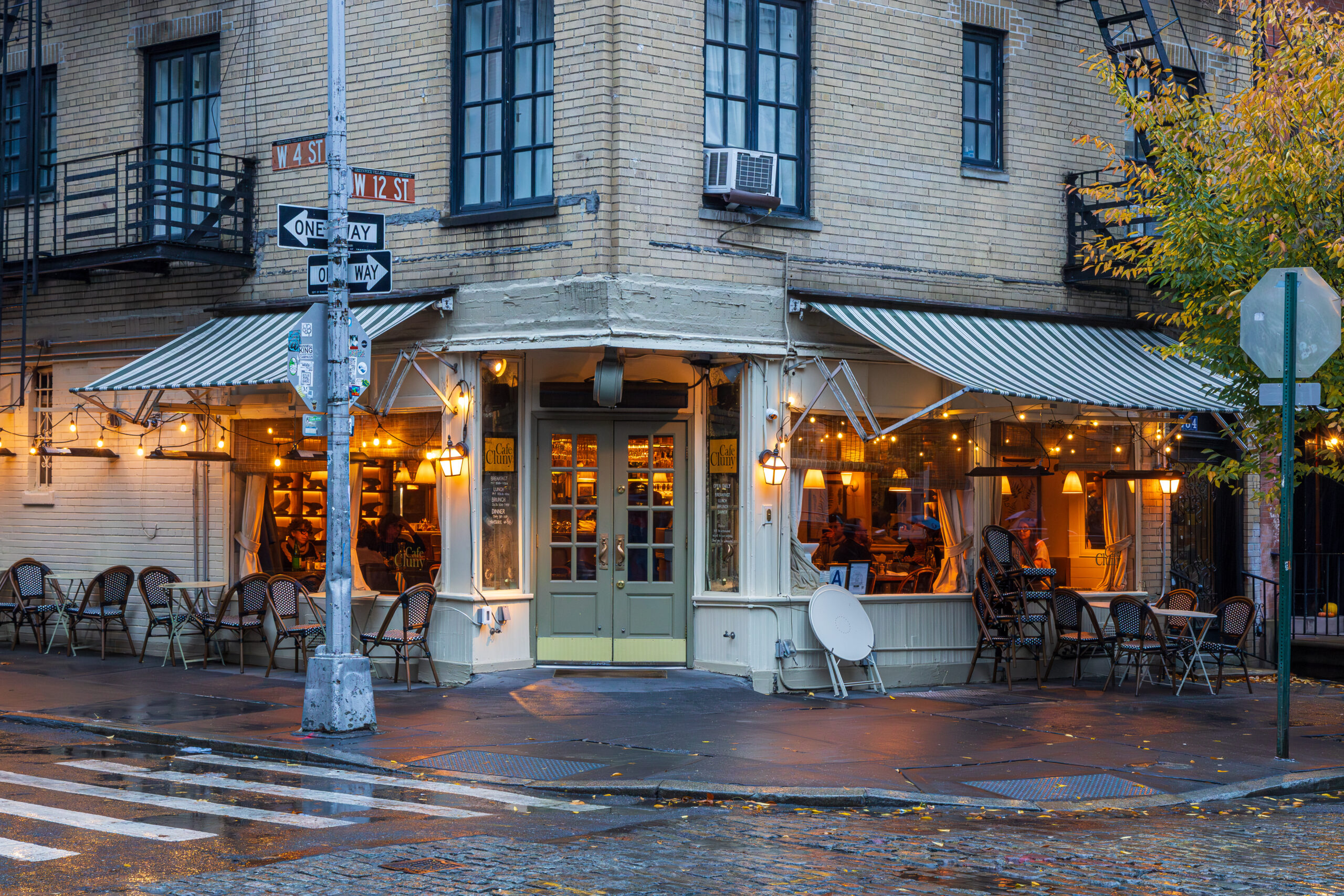
SoHo & NoHo: shopping, galleries, and cast-iron streets
SoHo’s cast-iron facades hide the city’s densest concentration of flagship stores and art galleries, and the neighborhood still buzzes from brunch to late evening. NoHo, just to the north, is quieter and leafier. Both are extremely well connected — the 6, N/Q/R/W, and B/D/F/M trains all converge here. Expect some of the highest room rates in the city; this is a splurge neighborhood.
Hotel picks: 11 Howard — a sleek, art-filled SoHo hotel with one of the city’s most stylish lobbies and a well-regarded restaurant.
Chelsea & the Meatpacking District: galleries, the High Line, and rooftop nights
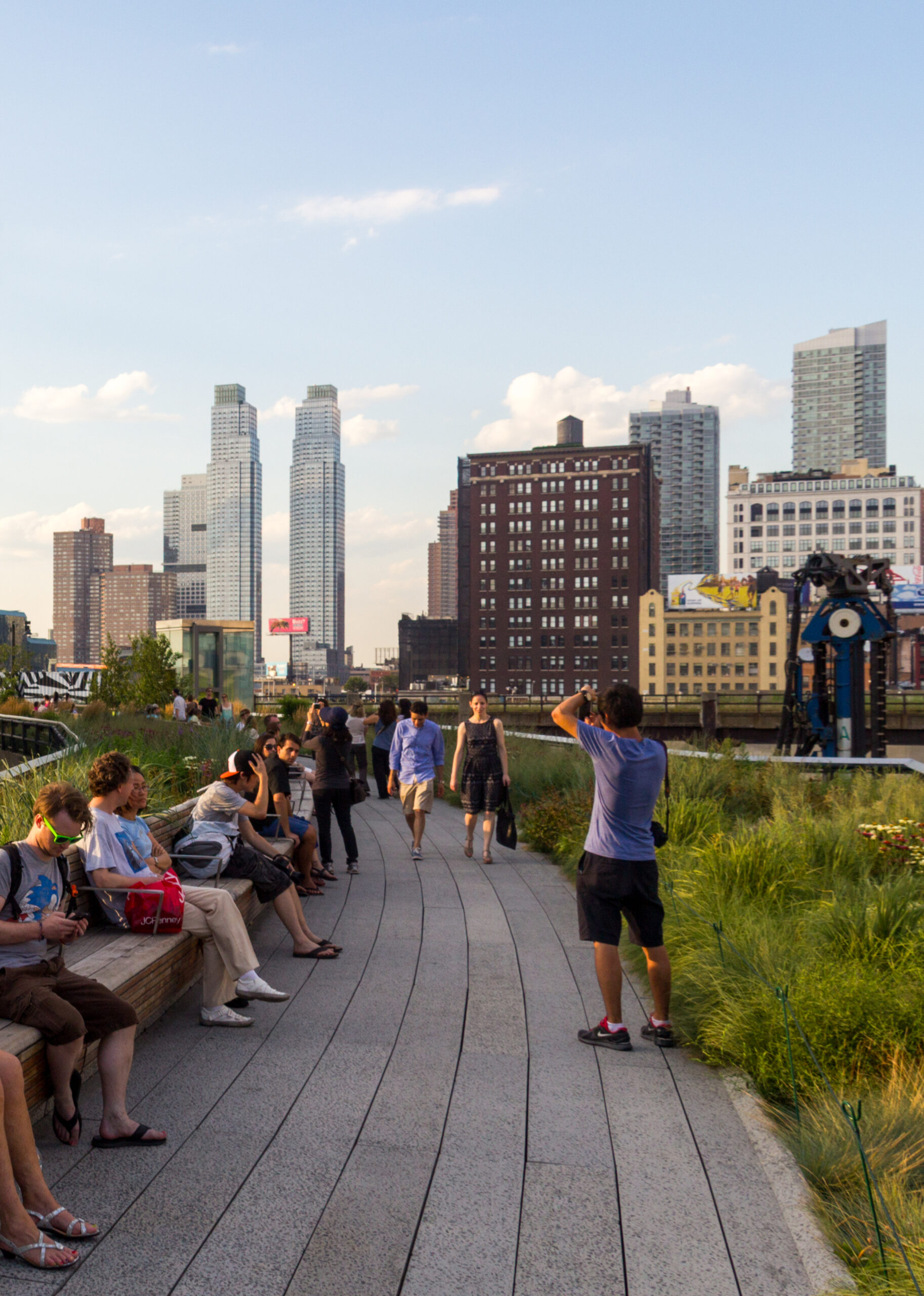
This is where New York’s art world lives — hundreds of galleries between 10th and 11th Avenues — plus the High Line elevated park, the Whitney Museum, and the Meatpacking District’s cobblestones, rooftop bars, and late-night scene. The A/C/E and 1 trains run through Chelsea, and the 7 reaches Hudson Yards. It’s trendy and lively, which means weekend nights are loud around the Meatpacking blocks.
Hotel picks: The Standard, High Line — the hotel that straddles the High Line itself, famous for its views, its rooftop scene, and rooms with floor-to-ceiling glass. Hotel Chelsea — the legendary former artists’ residence, reopened as a luxury hotel after a long restoration, dripping with history (and rock-star stories).
Lower East Side & East Village: nightlife and old New York
Tenement history by day, some of the city’s best bars, music venues, and late-night food by night. The LES and East Village are where younger visitors and night owls belong — Katz’s Deli, speakeasy-style cocktail bars, and live music within a few blocks. The F/M, J/Z, L, and 6 trains serve the area. It is loud late, and some blocks are still gritty — that’s the point, but it’s not for light sleepers or families with small kids.
Hotel picks: The Bowery Hotel — a Lower East Side institution with a louche, old-world lobby and one of the city’s great people-watching scenes.
Financial District & Tribeca: downtown power, weekend quiet
Home to the 9/11 Memorial, the Oculus, Wall Street, and the ferries to Brooklyn and Staten Island. The Financial District empties out on weeknights and weekends, which means surprisingly good hotel deals and peaceful streets — plus the 1/2/3/4/5, R/W, J/Z, and PATH trains all converge here. Tribeca, just north, keeps the beautiful cast-iron streets but adds serious restaurants and a neighborhood feel. Skip FiDi if you want nightlife outside your hotel.
Hotel picks: The Beekman — a landmarked 1880s building with a nine-story Victorian atrium that has to be seen to be believed. The Greenwich Hotel — Robert De Niro’s Tribeca hideaway, all hand-crafted details and quiet luxury on a cobblestone street.
Brooklyn: Williamsburg & DUMBO
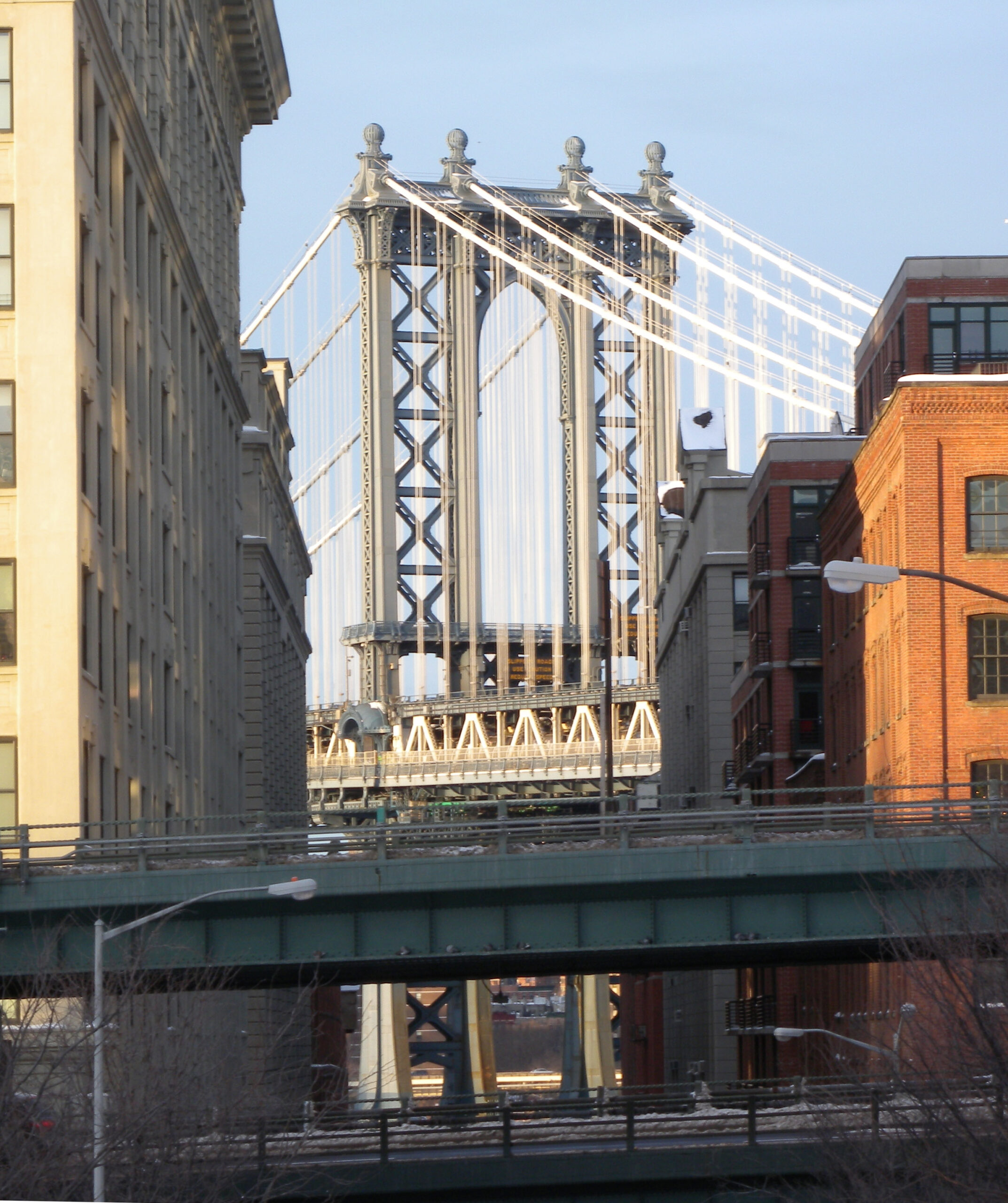
Crossing the East River is the best value move in New York travel. Williamsburg has the indie shops, breweries, and music venues; DUMBO has the cobblestone streets and the single most photographed view in the city — Manhattan Bridge framed between brick warehouses. The L train serves Williamsburg, and the F (York Street) and A/C (High Street) serve DUMBO. Budget an extra 15–25 minutes of transit versus Midtown, and check your hotel’s nearest station at night — some lines run less frequently after midnight.
Hotel picks: 1 Hotel Brooklyn Bridge — a sustainable-luxury hotel right on the Brooklyn Bridge Park waterfront, with the best Manhattan skyline views of any hotel pool in the city. The William Vale — Williamsburg’s design showpiece, with a long rooftop pool and skyline-facing rooms above the neighborhood’s main drag.
Long Island City, Queens: the budget-savvy skyline stay
One subway stop from Midtown on the 7, N, W, E, M, and R trains — and with hotel rates that routinely undercut Manhattan by a third or more. LIC’s waterfront towers come with floor-to-ceiling Manhattan views that cost four figures across the river. The neighborhood itself is still more residential towers than nightlife, and you’ll ride the subway for dinner most nights — but for budget-conscious travelers who want a real bed with a view, it’s unbeatable.
Hotel picks: Boro Hotel — a design-forward boutique hotel in the Dutch Kills section of LIC, with panoramic Manhattan views from nearly every room and easy access to MoMA PS1.
Getting around: you don’t need a car
Seriously — do not rent a car in New York City. Parking runs $50–$70 a day in Manhattan garages, traffic crawls, and the subway runs 24 hours a day, 7 days a week. In 2026 the MetroCard is gone: you pay with OMNY, the contactless tap-to-ride system. Just tap your phone (Apple Pay or Google Pay), your smartwatch, or any contactless credit/debit card on the reader at the turnstile — the fare is $3 per ride, with free transfers between subway and bus within two hours. Stick to one card or device all week and OMNY caps your spending: after 12 rides in a calendar week (Monday–Sunday), the rest of the week’s rides are free, which works out to about a $34 weekly cap. If you’d rather not tap your own card, reloadable OMNY cards are sold at station vending machines and retailers like CVS.
From the airports: JFK connects via the AirTrain ($8.75 in 2026, tap-to-pay with OMNY) to the A train at Howard Beach or the E/J/Z and LIRR at Jamaica station — the LIRR to Penn Station or Grand Central Madison is the fastest ride into Manhattan. Newark (EWR) connects via NJ Transit rail to Penn Station. LaGuardia (LGA), the closest airport, has free Q70 and M60 buses linking to the subway. A yellow cab or rideshare from JFK to Manhattan runs a flat-rate-style $70+ before tip and tolls — fine for a group with luggage, painful solo.
Tours worth booking in advance
SUMMIT One Vanderbilt — Midtown’s newest observation experience is genuinely different from the old decks: glass floors, mirrored rooms, and face-to-face views of the Chrysler Building. It sells out on weekends, so book your time slot ahead.
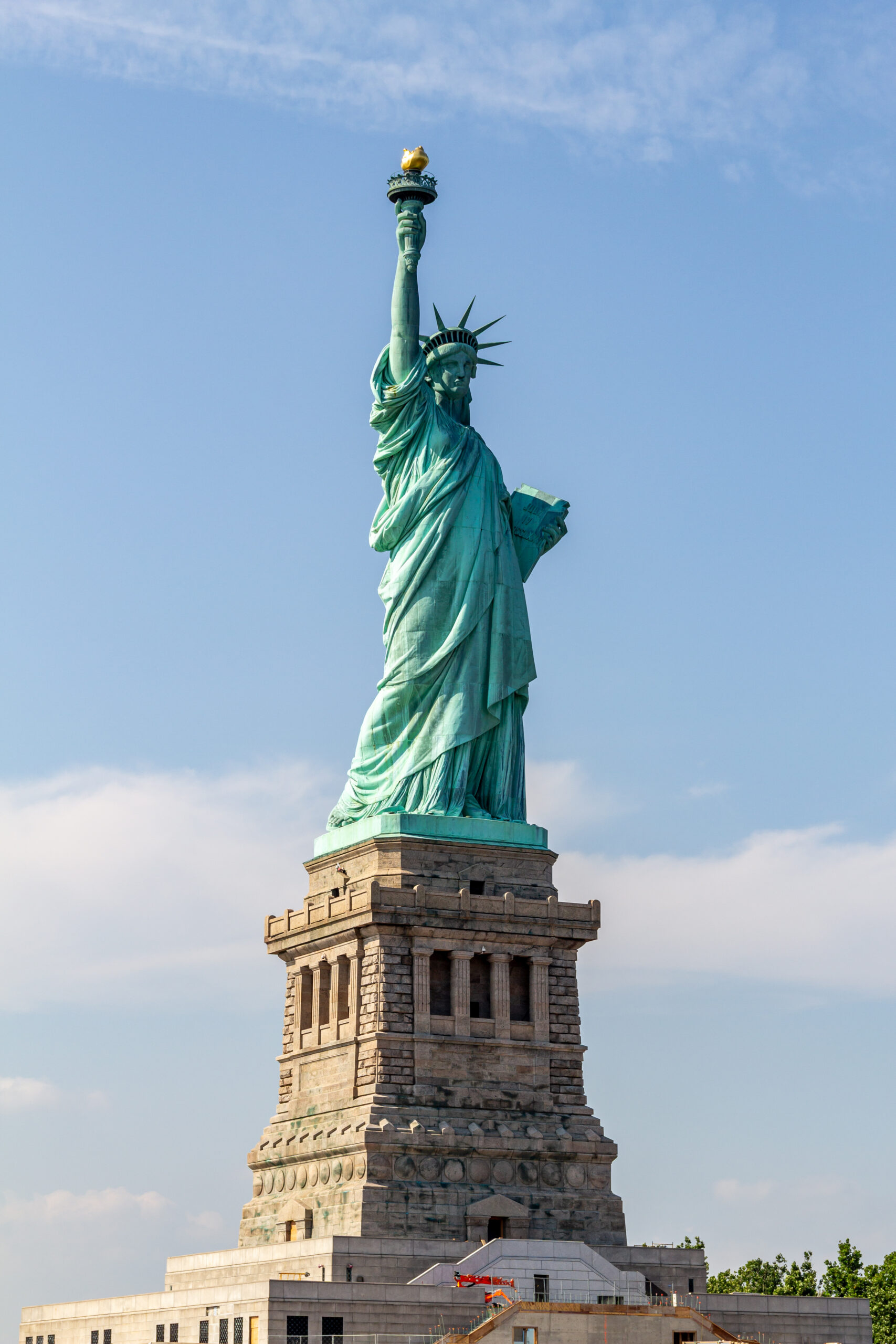
Statue of Liberty & Ellis Island — The ferry to Liberty Island, including the pedestal and crown (crown tickets sell out weeks ahead), is the one classic NYC experience that still justifies the planning. Go early in the day to beat both the crowds and the harbor haze.
Top of the Rock — Rockefeller Center’s deck remains the best skyline photograph in the city, because it’s the one view that includes the Empire State Building. Sunset slots are the first to go.
How to save money on NYC hotels
First, understand the real price: New York stacks a 14.75% hotel occupancy tax plus $3.50 per night on top of the advertised rate, and many Manhattan hotels add a $25–$40 nightly “destination” or “amenity” fee. A $200 room is really about $265 out the door. Always compare the all-in total, not the headline rate.
Second, play the calendar. Weekday business hotels in the Financial District drop on weekends; Times Square properties drop midweek in winter. January and February are the cheapest months in the city, and booking 2–3 months ahead usually beats last-minute rates — though if your dates are flexible, check our tips for finding affordable last-minute travel deals before you commit.
Third, look across the river. As the Brooklyn and Long Island City sections above show, crossing the East River can cut your nightly rate substantially while keeping you 15–20 minutes from Midtown by subway. And if New York is part of a bigger trip, consider pairing it with one of our best scenic road trips in the USA — driving out of the city is far cheaper than parking in it.
The bottom line
There’s no single best neighborhood in New York — there’s only the best neighborhood for your trip. First-timers: take Midtown and spend your energy on the city, not the commute. Romantics and food lovers: the Village. Night owls: the Lower East Side or Williamsburg. Bargain hunters who still want the skyline: Long Island City. Wherever you land, pick a hotel near a subway station with at least two lines, tap your phone at the turnstile, and let the city do the rest.