
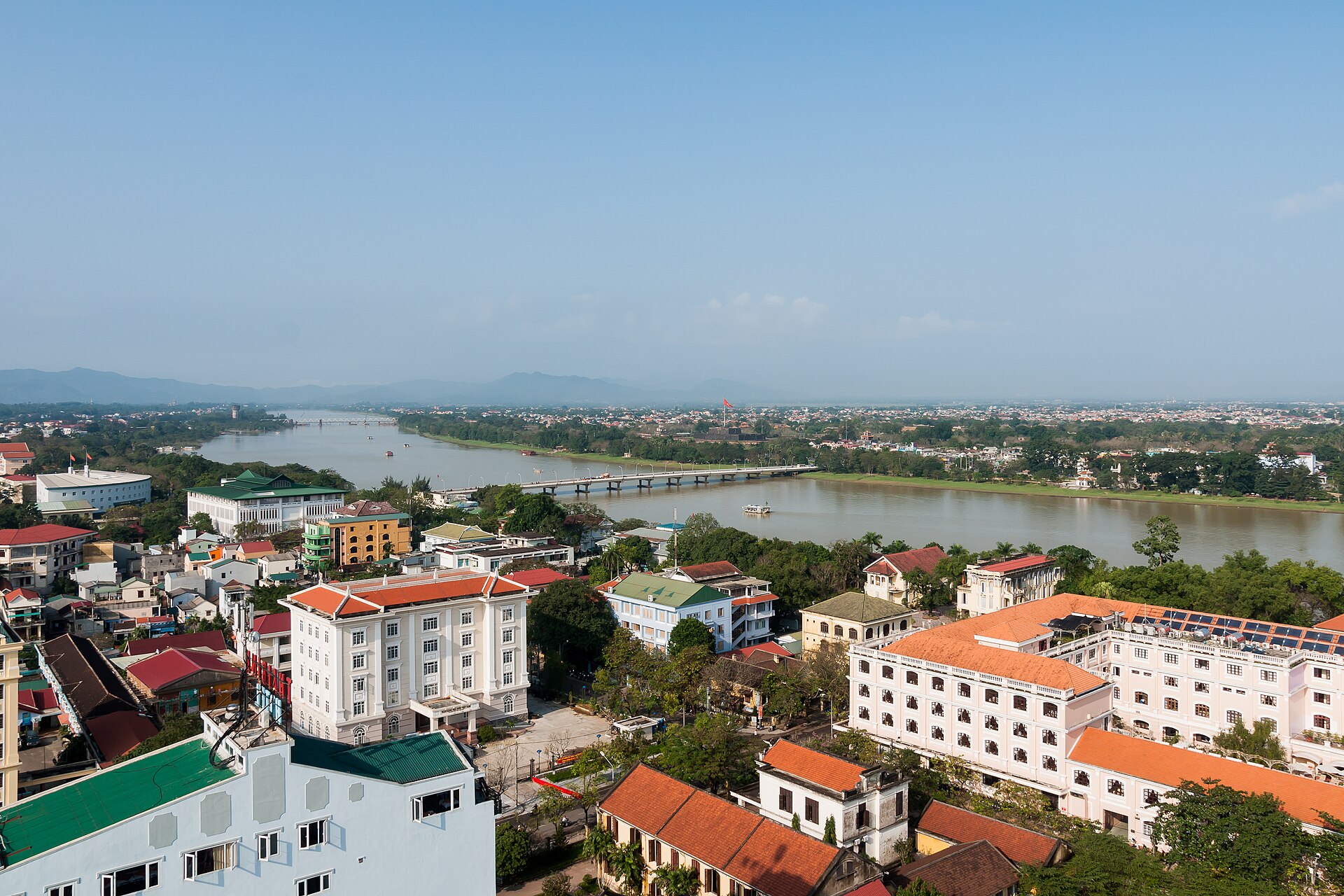
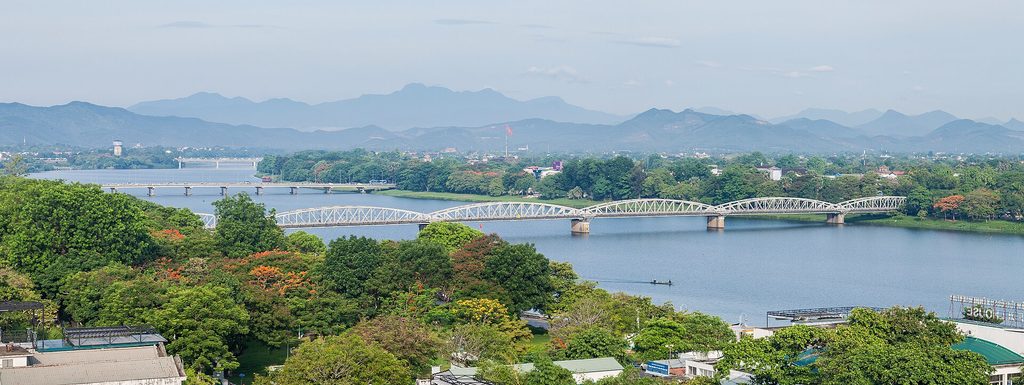
Hue asks you one simple question: which side of the Perfume River do you want to wake up on? North of the water sits the walled Citadel — the Imperial City, Dong Ba Market and quiet, leafy residential lanes. South of it is where modern Hue lives: the Le Loi riverfront, the big full-service hotels along Hung Vuong, and the lively Pham Ngu Lao walking-street pocket. Almost every hotel in the city is on the south bank, and the two sides are joined by the Truong Tien Bridge — a 10-to-20-minute walk that quickly becomes the rhythm of your stay.
Never forget a thing before you fly. My free 8-page Travel Planning Checklist walks you through the whole trip — 6 planning timelines, 36 checks, from booking windows to travel-day basics. One email, no spam, unsubscribe anytime.
This guide breaks down the five areas that actually matter, with a hotel pick for each style and budget, from a 1930s Art Deco mansion to a garden-house retreat on the Citadel side. Pair it with my Hue in 3 Days itinerary and your imperial-city trip is planned end to end.
Disclosure: This post contains affiliate links. If you book through one of these links, I may earn a commission at no extra cost to you.
The Short Answer: Which Hue Area Fits You?
First trip? Stay on the south bank along Le Loi or Hung Vuong — river views and the bridge at your door. On a budget? Head for Pham Ngu Lao and the walking streets. Want quiet and gardens near the Citadel? Look at Kim Long on the north bank. Resting between sightseeing days? The resort retreat out toward the royal tombs is the splurge that makes sense.
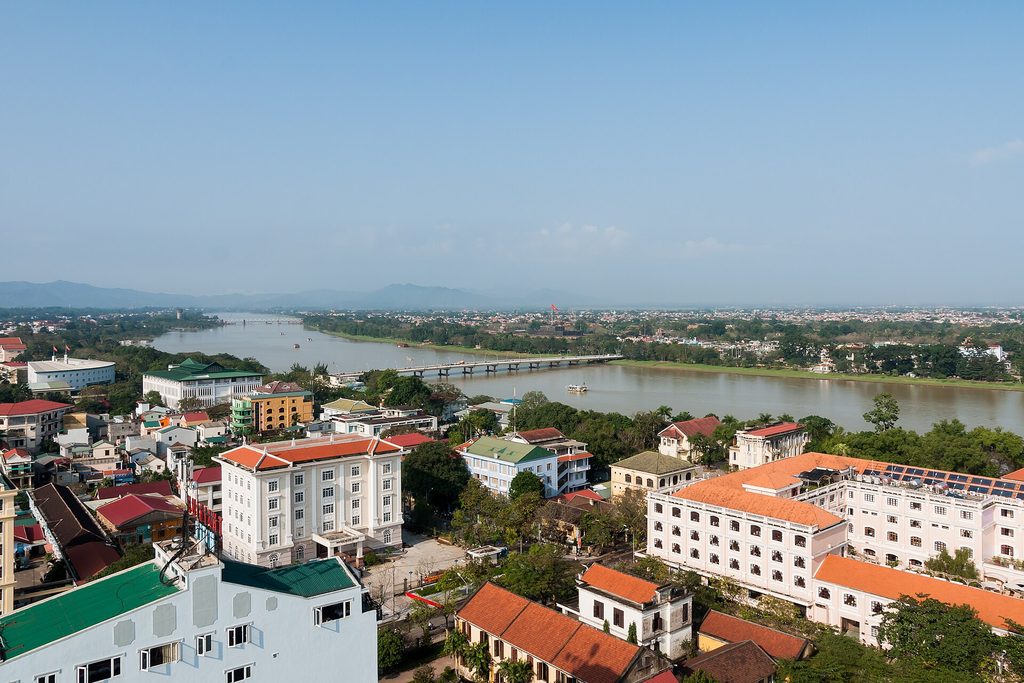
Le Loi Riverfront, South Bank: Best for First-Timers
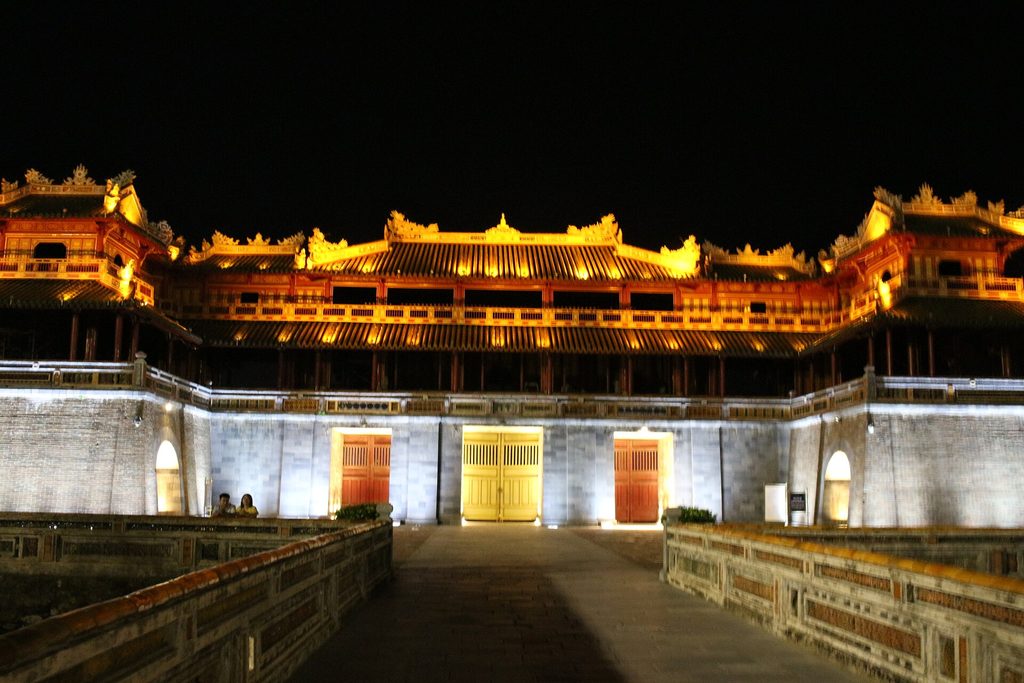
Le Loi is Hue’s grand riverfront avenue, running along the south bank from the railway station end of town to the Truong Tien Bridge. Staying here puts the Perfume River promenade at your front door, the illuminated bridge a short stroll away, and the Imperial City a 15-to-25-minute walk across the water — or five to ten minutes by Grab when the heat builds. It is the easiest, most scenic base in the city, and the right answer for most first visits.
Best splurge: The Azerai La Residence Hue is Hue’s landmark luxury hotel: a 1930s Art Deco mansion built as part of the French Resident Supérieur’s residence, now a 122-room hotel wrapped in two newer wings and 2.5 hectares of gardens at 5 Le Loi. There is a salt-water pool, a spa, free bicycles, and balconies looking straight across the river to the Citadel’s Flag Tower. Book it for the sense of occasion — no other address in Hue feels like this.
Best mid-range pick: Further east along the same avenue at 38 Le Loi, the Muong Thanh Holiday Hue Hotel is a dependable 4-star with 108 rooms, an outdoor pool and spa, and panoramic river and Citadel views from the upper floors. The Truong Tien Bridge is a few minutes’ walk east, the night walking streets are on your doorstep, and you get the Le Loi location without the Azerai price tag.
Hung Vuong & the City Centre: Best for Big-Hotel Comfort
One block back from the river, Hung Vuong is where Hue’s large, full-service hotels cluster — the practical choice if you value a proper pool, a big breakfast buffet and a high-floor view. The bridge is five to fifteen minutes away, and Dong Ba Market is just across it.
Best bridge-side pick: At 8 Hung Vuong, the TTC Imperial Hotel has the best sightseeing stats of any hotel in this guide: the Truong Tien Bridge is a two-minute walk, the Imperial City about 17 minutes on foot, and Dong Ba Market roughly 12. This 192-room tower, opened in 2006 as Hue’s first international five-star, adds an outdoor pool, a spa and a 16th-floor rooftop lounge made for sunset drinks over the river.
Best landmark tower: Hue’s tallest hotel, the 34-floor Melia Vinpearl Hue at 50A Hung Vuong, has 213 rooms, a heated indoor pool — genuinely useful in Hue’s wet season — a spa, and a 33rd-floor restaurant and sky bar with the city’s best panoramic views. It is within a ten-minute walk of the bridge and the night walking street.
Best pool pick: The Indochine Palace at 105A Hung Vuong wraps 222 rooms around one of the biggest hotel pools in Hue, styled with Indochine-colonial flourishes that nod to the Nguyen dynasty era. A full-service spa and a generous free breakfast buffet complete the package; the bridge is a 15-minute walk and Dong Ba Market a short drive.
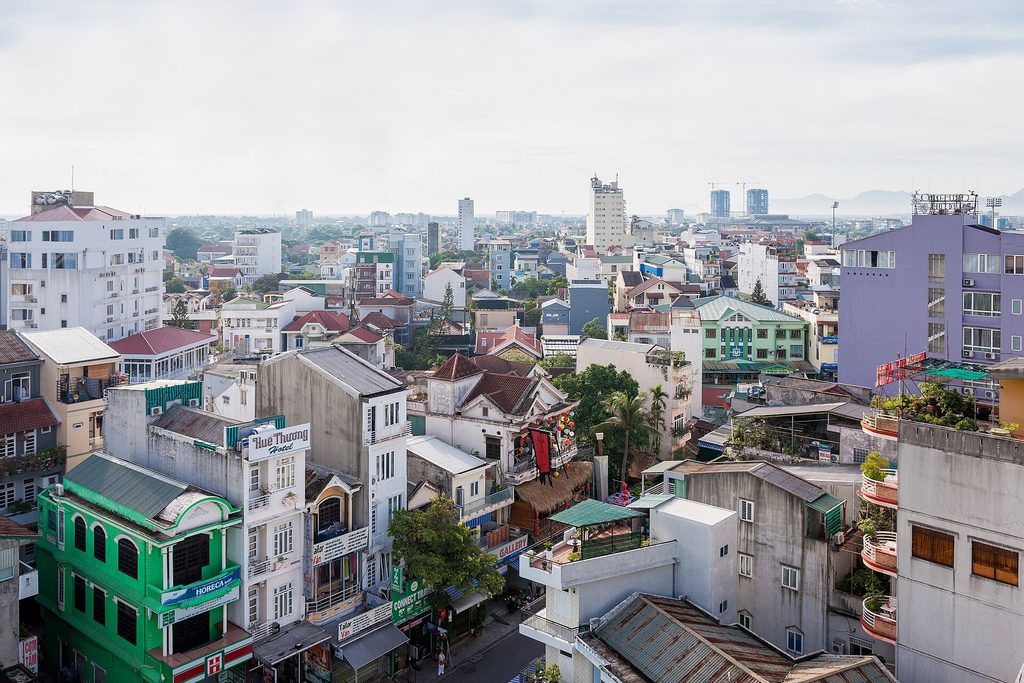
Pham Ngu Lao & the Walking Streets: Best for Budget and Buzz
Just south of the river, the grid around Pham Ngu Lao, Vo Thi Sau and Chu Van An is Hue’s traveller quarter: bars, cafés, tour offices and street food, pedestrianised as the Hue Night Walking Street on weekend evenings. It is the most social and best-value pocket in the city — and the noisiest, so light sleepers should ask for a high floor or a room at the back. This is also where Hue’s food scene is easiest to dive into; a Hue street food tour by cyclo, motorbike or on foot through these streets and Dong Ba Market is the tastiest first evening you can have.
Best in the middle of it: The Moonlight Hotel Hue sits literally at 20 Pham Ngu Lao, with 90 rooms, a spa and a rooftop terrace over the action. The bridge and the riverfront are within a five-minute walk when you want air, and the walking street is outside your door when you don’t.
Best quieter boutique: A few streets south at 60 Ben Nghe, the Eldora Hotel is a French-colonial-style 81-room hotel just off the main drag — close enough to walk to the walking street in five minutes, far enough to sleep properly. Its indoor pool and sauna make it a smart wet-season pick too.
Kim Long & the Citadel Side: Best for Quiet and Local Hue
Be honest about the north bank: Hue’s hotel stock is overwhelmingly southern, and the Citadel side is mostly residential — homestays and the famous garden houses of Kim Long, the leafy neighbourhood west of the Citadel walls where mandarins once built their pavilion homes. What you trade in walk-to-dinner choice you gain in calm and a glimpse of how Hue actually lives. Dong Ba Market, just east of the Citadel by the bridge, is your food anchor over here.
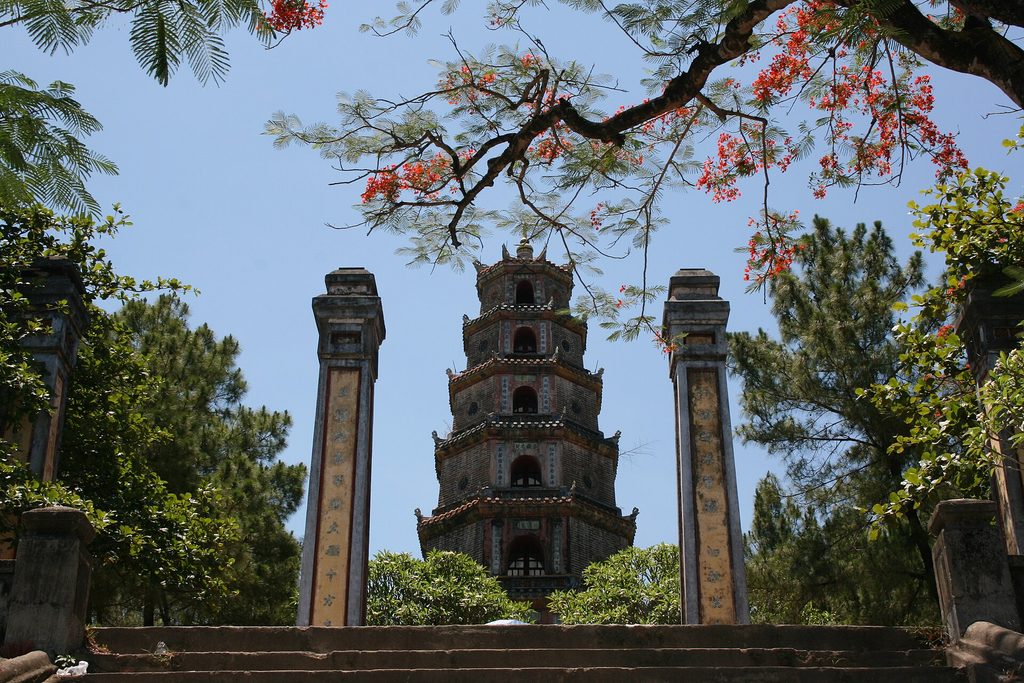
Best Citadel-side stay: Ancient Hue Garden Houses is a small collection of traditional garden houses and pavilions in Kim Long, with two outdoor pools, a spa, free breakfast and free bicycles among Nguyen-era-style gardens. The Imperial City is about a nine-minute drive and Thien Mu Pagoda is within three miles — a serene base if your Hue is citadels, pagodas and slow mornings rather than nightlife. Wherever you base yourself, a full-day Hue city tour of the Citadel and royal tombs, with a dragon boat ride and lunch included, is the efficient way to cover the big sights in one day.
Tomb Country: Best for a Resort Retreat
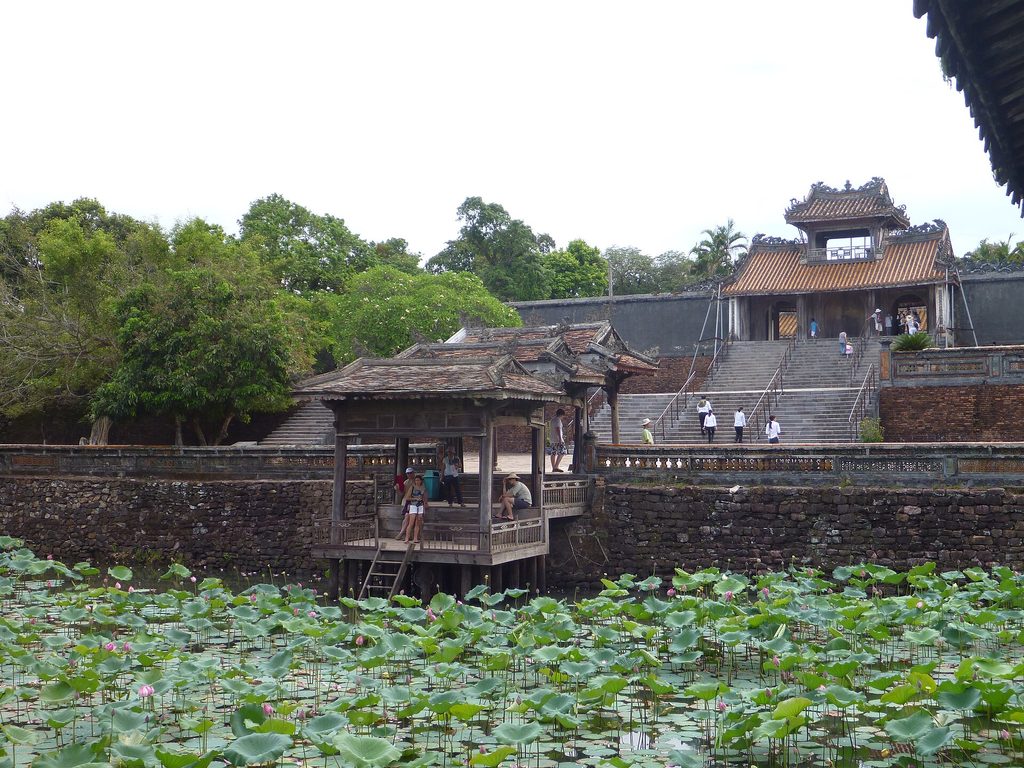
South-west of the centre, the road toward the royal tombs — Tu Duc about six kilometres away, Khai Dinh beyond it — turns properly rural: pine hills, incense villages and the river winding upstream. Nobody stays out here to walk to dinner. You stay out here to rest.
Best retreat: The Pilgrimage Village Resort & Spa on Minh Mang Road spreads 173 rooms and villas through tropical gardens, with three outdoor pools including an adults-only pool, a full-service spa and two restaurants. The Tu Duc and Khai Dinh tombs are a short drive away, so you can see them at opening time before the day-trip coaches arrive, then be back by the pool by lunch. If central Vietnam’s later history is also on your list, the DMZ — Vinh Moc Tunnels and Khe Sanh — runs as a long day trip from Hue; this private DMZ tour with your own guide and driver is the comfortable way to do it.
Hue Practical Tips: Getting There, Getting Around, When to Go
Getting there. Phu Bai Airport is about 15 kilometres south of the centre (20 to 30 minutes by car), with domestic flights from Hanoi and Ho Chi Minh City. Hue railway station, an easy walk from the Le Loi hotels, sits on the main north–south line — two to three hours from Da Nang along the Hai Van coast. If you are coming from Da Nang by road, compare bases with my guide to where to stay in Da Nang: beach city there, imperial calm here.
Getting around. The centre is compact and walkable — the bridge crossing becomes a pleasure, not a chore. Grab cars cover the tombs and airport runs cheaply, cyclos drift along the riverfront, and several hotels lend bicycles free, which suits Kim Long and the river paths perfectly.
When to go. Late January to April is the sweet spot: dry and warm. May to August is fiercely hot — another point for the pool hotels above — and September to December is the wet season, when Hue can flood and monuments occasionally close; an indoor pool and a flexible plan earn their keep then.
Beach day. Thuan An, Hue’s nearest beach, is about 12 to 15 kilometres east (20 to 30 minutes by taxi). Treat it as a day trip for a seafood lunch and a swim rather than a base — Hue’s stay scene is firmly in the city.
Wherever you land, Hue rewards staying put for a few nights: the city is small, but its pleasures — a river at dawn, a market breakfast, an emperor’s garden in the mist — take time to unfold. For the full route through the country, see my 10 best Vietnam guides, rounding up the itineraries, stay guides and tour picks for Hanoi, Ho Chi Minh City, Hoi An, Da Nang and beyond.