
The Amalfi Coast is only about 50 kilometers of coastline, but choosing where to stay along it is one of the most consequential decisions of your whole Italy trip. Base yourself wrong and you’ll spend your days stuck on crowded buses; base yourself right and the coast unfolds the way it should — by ferry, at golden hour, with a glass of Falanghina in hand.
Never forget a thing before you fly. My free 8-page Travel Planning Checklist walks you through the whole trip — 6 planning timelines, 36 checks, from booking windows to travel-day basics. One email, no spam, unsubscribe anytime.
Disclosure: This post contains affiliate links. If you book through one of these links, I may earn a commission at no extra cost to you.
I’ve stayed up and down this coast and researched it endlessly since, and the honest truth is that there is no single best town — only the best town for your trip. Positano is the postcard. Amalfi is the historic heart. Ravello floats above it all. Sorrento is the practical base. Praiano is the insider pick. Here’s how to choose, with hotel picks in each that I’ve verified are bookable right now.
The Short Answer: Which Town Is Right for You?
- First-timers who want the classic Amalfi Coast experience: Positano. It’s the most beautiful, the most walkable, and the most expensive.
- History lovers and ferry-hoppers: Amalfi town. It’s the coast’s transport hub and the Duomo alone is worth the trip.
- Honeymooners and romantics: Ravello. Hilltop gardens, sea-view terraces, and the famous Terrace of Infinity.
- Practical planners and day-trippers: Sorrento. Better prices, the train to Naples and Pompeii, and ferries to everywhere.
- Travelers who want Positano’s views without Positano’s prices: Praiano. Ten minutes down the road, half the crowds, and the best sunsets on the coast.
If you want help turning a base into a day-by-day plan, my Amalfi Coast in 5 days itinerary maps out exactly how to split your time between these towns.
Positano: The Postcard
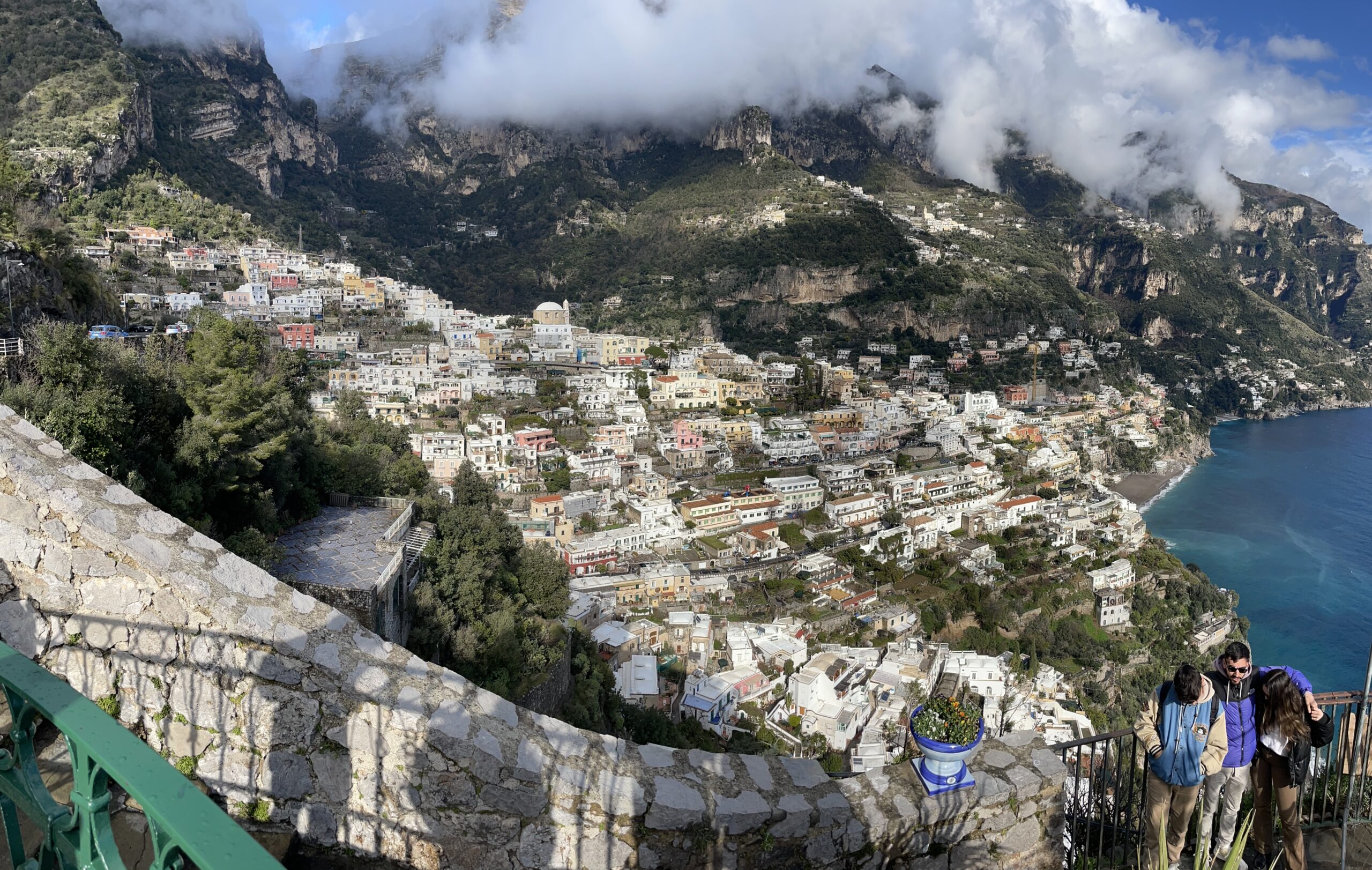
Photo: RDS0601, CC BY-SA 4.0, via Wikimedia Commons
Positano is the town everyone pictures: pastel houses stacked down a near-vertical cliff to Spiaggia Grande, the domed church of Santa Maria Assunta at its heart. It’s also the priciest town on the coast and its famous staircases are a workout — pack good shoes and accept that your calves will be part of the experience.
Le Sirenuse is the grande dame — 58 individually furnished rooms in the town center, a Michelin-starred restaurant (La Sponda), a seasonal pool, and a rooftop terrace with one of the great views in Italy. If money is no object, this is the splurge that justifies itself.
Il San Pietro di Positano sits on its own cliff about two kilometers outside town, carved into the rock with a private beach, a Michelin-starred restaurant, a tennis court, and rooms with terraces that hang over the sea. It’s a Relais & Châteaux member and regularly lands on Condé Nast’s best-in-the-world lists. The hotel’s shuttle runs you into Positano whenever you like.
Palazzo Murat Hotel is the smart luxury pick: an 18th-century palazzo wrapped around a lush garden courtyard — genuinely unusual in a town where most hotels are stacked vertically — right in the center of town, with the well-regarded Al Palazzo restaurant and an outdoor pool. Ask for a room in the original palazzo wing for the most character.
Amalfi: The Historic Heart
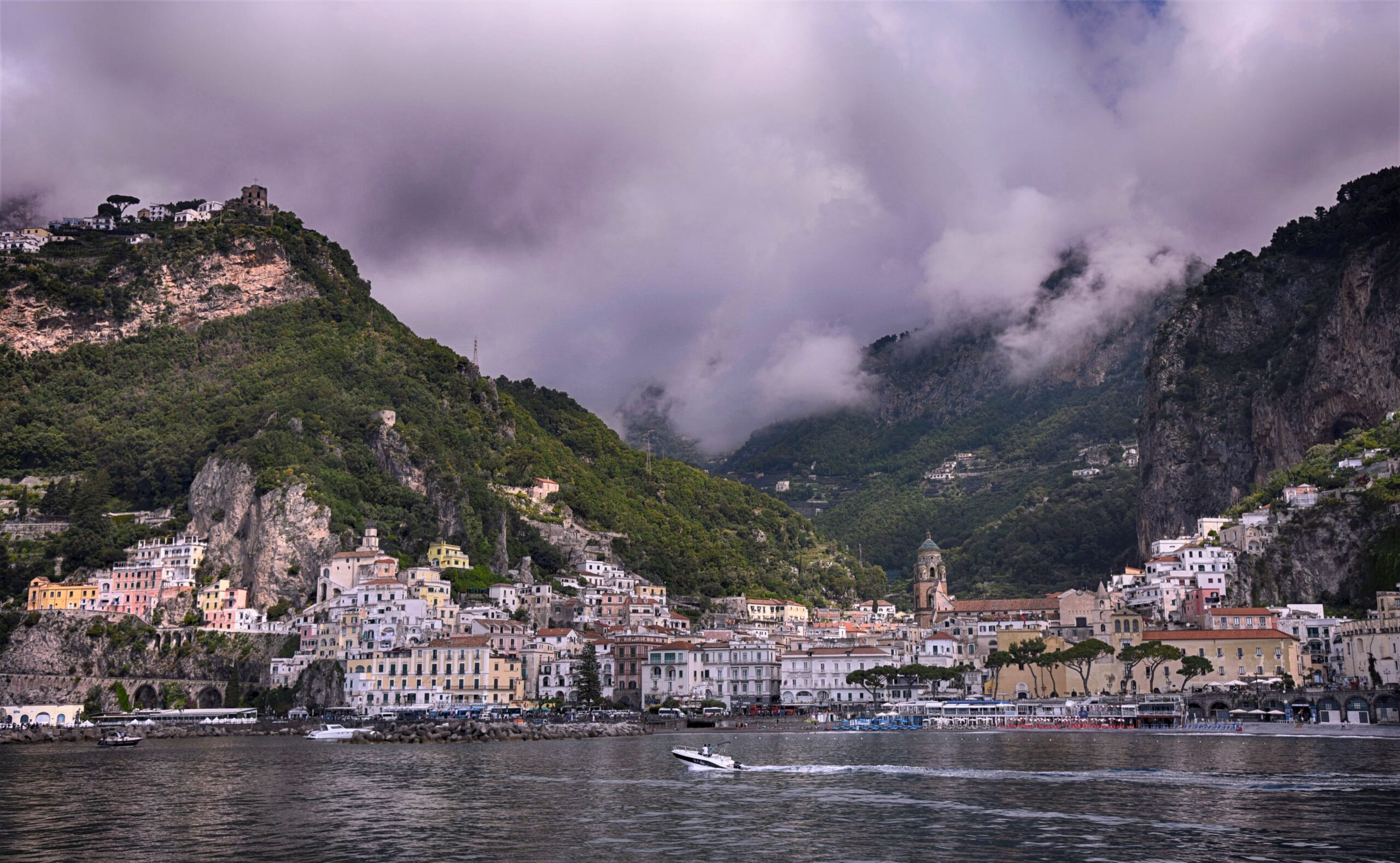
Photo: Anna Nicoletta Menzella, CC BY-SA 4.0, via Wikimedia Commons
Amalfi was once a maritime republic that rivaled Venice and Genoa, and it shows — the Arab-Norman Duomo di Sant’Andrea dominates the main square, and the town’s paper mills and lemon groves have been running for a thousand years. It’s also the coast’s ferry hub: from Amalfi’s harbor you can reach Positano, Salerno, and Capri by boat, which makes it a strong base if you want to sightsee by sea.
Santa Caterina is a family-run Leading Hotels of the World property set into the cliffs just outside town, with 66 rooms, four restaurants, a sea-view pool, and a saltwater swimming area at sea level reached by elevator. It earns its 9.8 guest rating the old-fashioned way: service.
Anantara Convento di Amalfi Grand Hotel occupies a 13th-century monastery perched on the cliffs above town, with vaulted stone corridors, an infinity pool facing the sea, and a free shuttle down into Amalfi. (Note: it was previously branded as the NH Collection Grand Hotel Convento di Amalfi — same historic building, new name.) History you can sleep in.
Ravello: Romance Above the Clouds
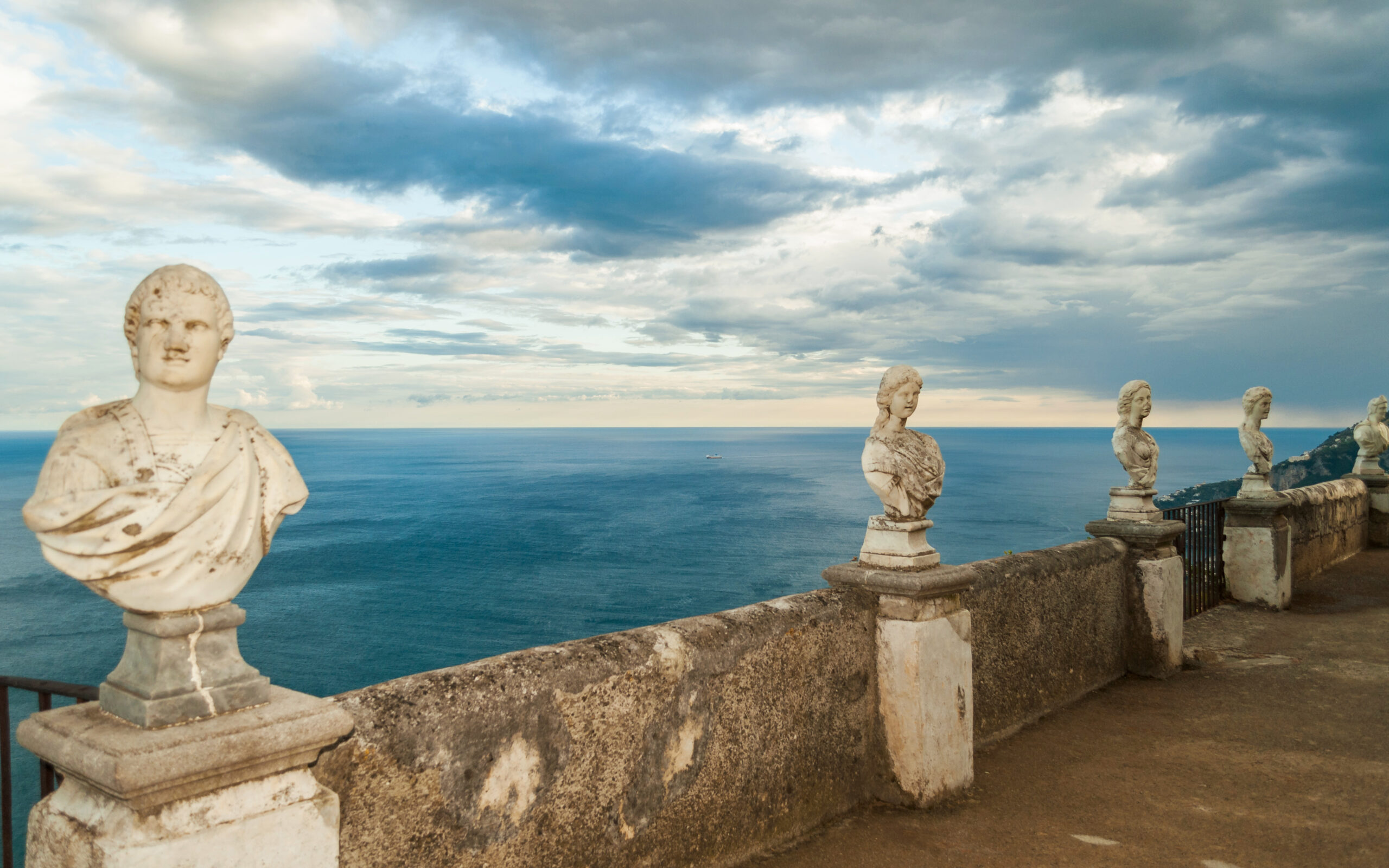
Photo: Mihael Grmek, CC BY-SA 4.0, via Wikimedia Commons
Ravello sits about 350 meters above the sea, which changes everything: cooler evenings, silence, and views that stretch from the Gulf of Salerno to Capri. The Villa Rufolo and Villa Cimbrone gardens are the coast’s great cultural sights — Wagner wrote part of Parsifal here — and the summer Ravello Festival fills the clifftop with music. The trade-off: you’re a 20-minute winding drive above the ferries, so Ravello suits slow trips, not packed itineraries.
Caruso, A Belmond Hotel, Amalfi Coast is an 11th-century palazzo with 50 rooms, a full-service spa, two restaurants, and an infinity pool that seems to pour into the Gulf of Salerno. Its perfect 10.0 guest rating tells you what you need to know.
Villa Cimbrone is the historic villa-hotel whose Terrace of Infinity — lined with marble busts against an open horizon — is one of the most photographed views in Italy. Guests get it before the day-trippers arrive. The fine-dining Il Flauto di Pan restaurant and the terraced gardens make this a destination in its own right.
Sorrento: The Practical Base
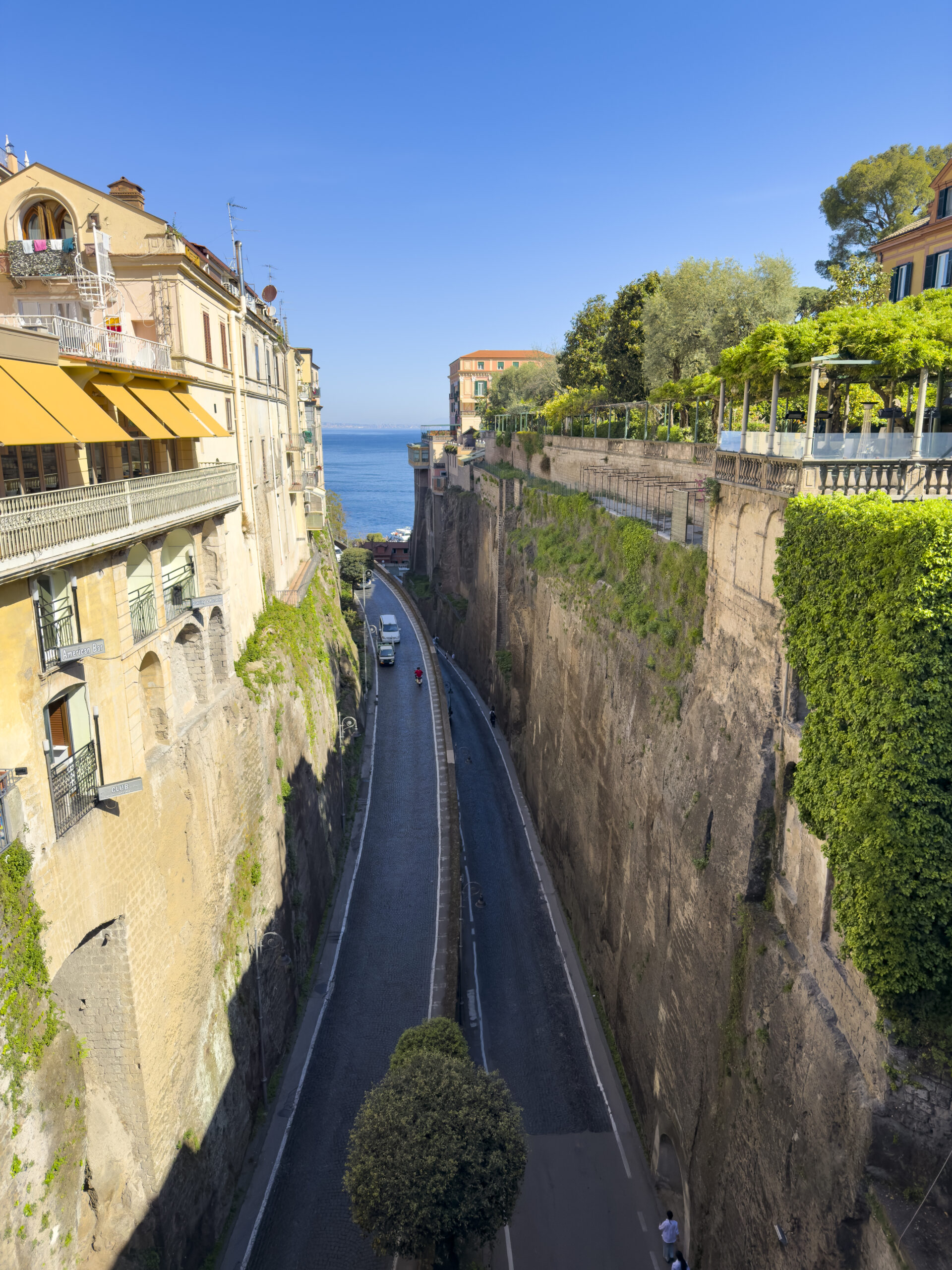
Photo: Alexis Lours, CC BY 4.0, via Wikimedia Commons
Technically on the Sorrentine Peninsula rather than the Amalfi Coast proper, Sorrento is the base I’d recommend to most first-timers on a budget or a tight schedule. The Circumvesuviana train runs to Naples and Pompeii, ferries run to Capri and the coast towns, and hotel prices drop noticeably compared with Positano. The town itself is lovely — Piazza Tasso, the old-town lanes, and sunset views across the Bay of Naples to Vesuvius.
Grand Hotel Excelsior Vittoria is Sorrento’s grand hotel in the truest sense: family-run since 1834, 82 individually decorated rooms on the cliffs above the marina, a Michelin-starred restaurant, a seasonal pool, spa, and a private beach setup below the cliffs. A Leading Hotels of the World member with a century of practice at hospitality.
Hotel Astoria Sorrento is the mid-range sweet spot: a 4-star in the heart of the historic center, minutes from Piazza Tasso, the port, and the train station, with a free buffet breakfast, a terrace and garden, and nearby pool access. Walkable to everything, priced for real life.
Praiano: Positano’s Calmer Neighbor
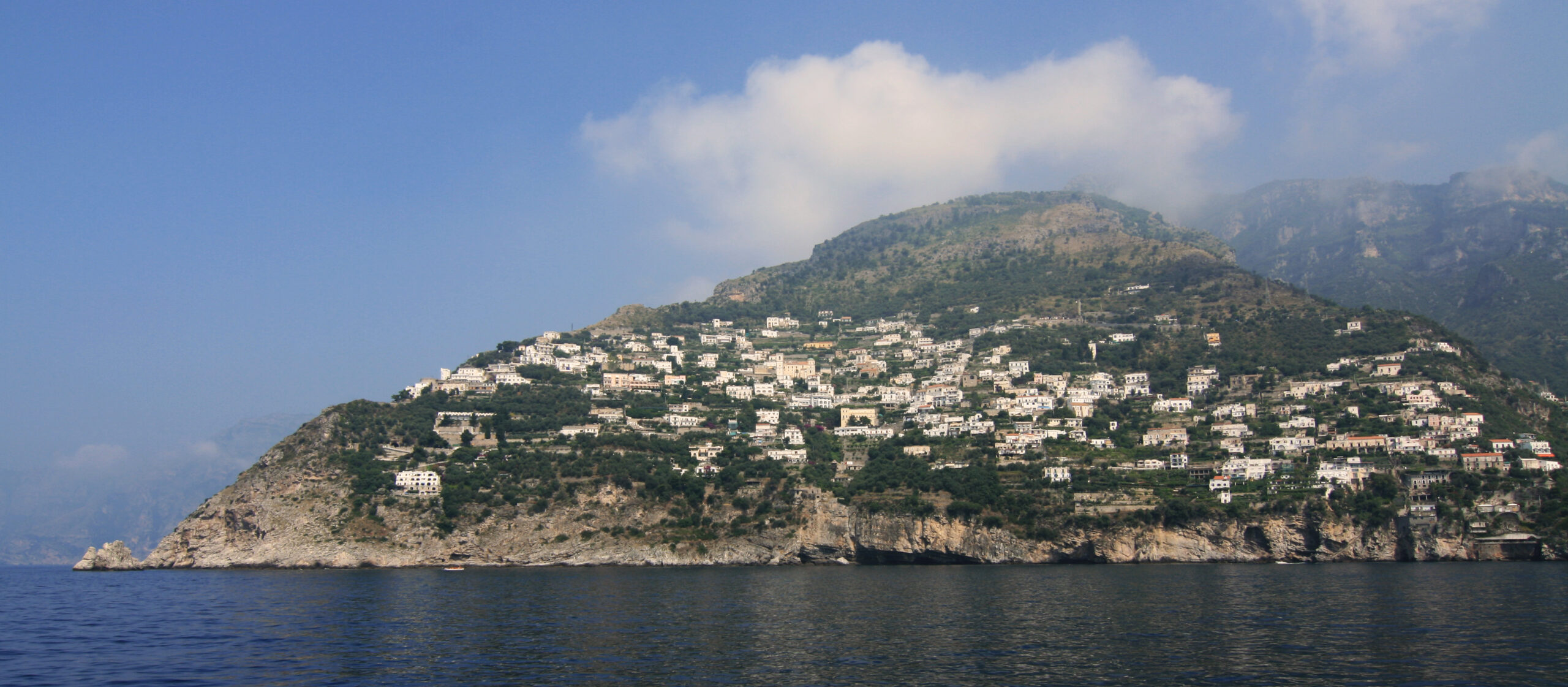
Photo: Jensens, public domain, via Wikimedia Commons
Praiano is ten minutes by bus from Positano and feels like a different planet: a working fishing village of whitewashed houses, two small beaches (Gavitella and Marina di Praia), and — the clincher — west-facing sunsets that Positano’s east-facing cliffs never get. If you want the coast’s beauty with its volume turned down, and hotel rates to match, start here.
Casa Angelina is a minimalist white-on-white design hotel on the cliffs, a Leading Hotels of the World member with a 9.8 guest rating, rooftop terraces facing the sunset, indoor and outdoor pools, and a full-service spa. It’s the coast’s great modern-luxury statement.
Hotel Tramonto d’Oro (“golden sunset”) is a family-run 4-star with 38 rooms, sea-view balconies, a rooftop pool, a Turkish bath, and a 9.6 guest rating — the kind of place where the staff remembers your name by day two and the sunset does the rest of the work.
What to Do While You’re There
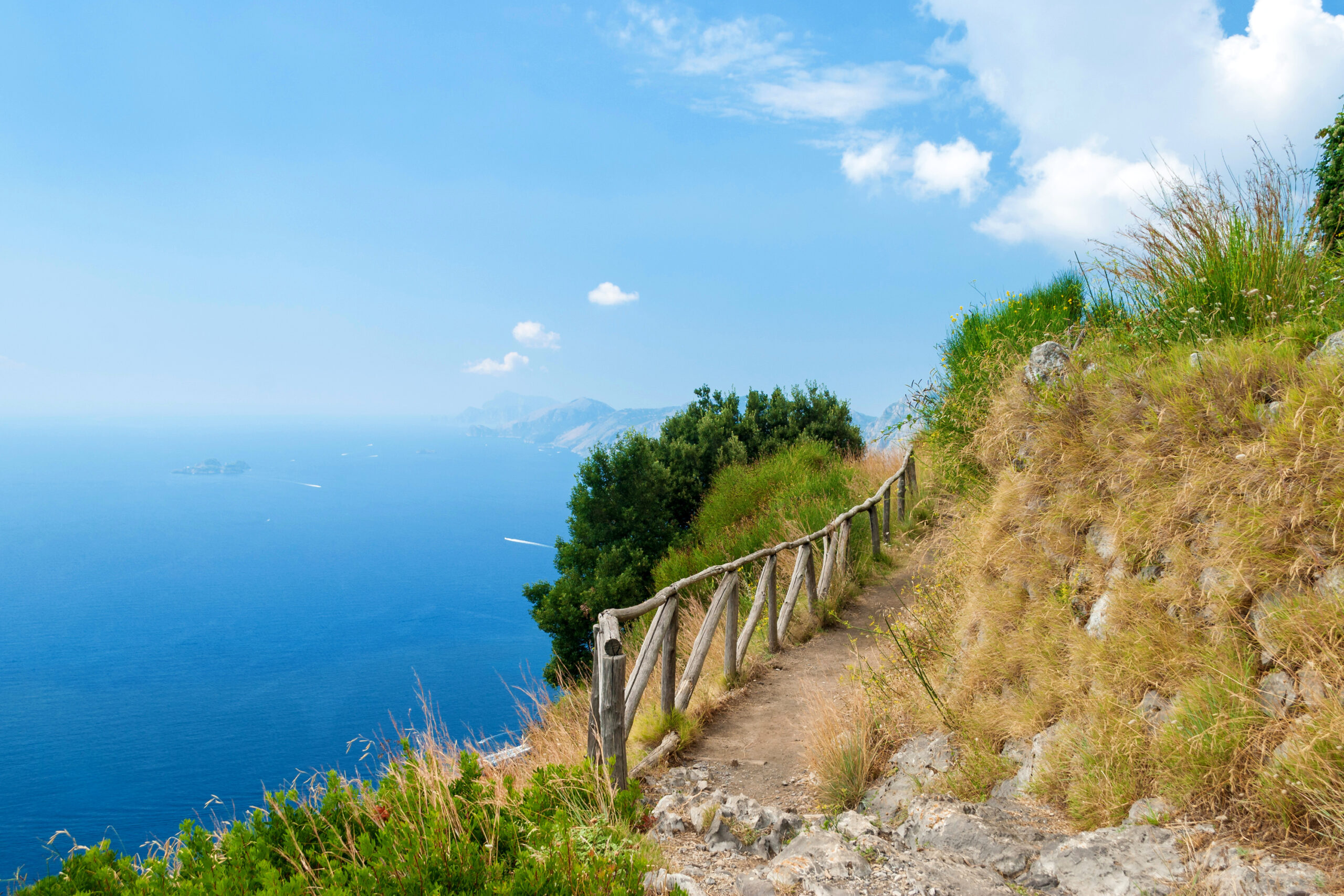
Photo: Mihael Grmek, CC BY-SA 4.0, via Wikimedia Commons
Three experiences are worth booking ahead, wherever you base yourself:
- Capri by boat. This small-group full-day Capri boat tour from Sorrento (from ~$150, 8 hours, hotel pickup, Badge of Excellence) circles the island past the Faraglioni and the Blue and White Grottos, with swim stops and 3–4 hours free on the island.
- The Path of the Gods. The 7-kilometer cliff trail from Bomerano to Nocelle is the coast’s essential hike. This private guided Path of the Gods hike (4.9/49 reviews, from ~$213 per person) pairs you with a local hiking guide so you get the history and the hidden viewpoints, not just the walk.
- A private coastal drive. If you’d rather see Positano, Amalfi, and Ravello in one day without touching a bus timetable, this private Amalfi Coast day tour from Sorrento (4.7/190 reviews, Badge of Excellence, 8 hours, from ~$314 per person) puts a driver at your disposal for all three.
Getting There, Getting Around, and When to Go
Getting there: Naples International Airport (NAP) is the main gateway — about an hour to Sorrento or Positano by car or private transfer. The smaller Salerno–Costa d’Amalfi Airport reopened to commercial flights in 2024 and sits closer to the coast’s eastern end. From Naples, the Circumvesuviana train reaches Sorrento in about 70 minutes; from there, ferries and buses fan out along the coast.
Getting around: From roughly April through October, ferries connect Sorrento, Positano, Amalfi, Capri, and Salerno — they’re faster, prettier, and calmer than the road. The SITA bus runs the famous SS163 coastal road year-round but fills up in summer. Driving the SS163 yourself is an experience, not a convenience: it’s narrow, busy, and parking in Positano and Amalfi is scarce and expensive. If you’re basing in Sorrento and want a car for Pompeii or inland day trips on your own schedule, you can compare rental cars on Booking.com — but for the coast itself, the boat wins.
When to go: Late April through June and September into early October are the sweet spots — warm seas, open ferries, manageable crowds. August brings peak prices, peak heat, and peak traffic. Many hotels in Positano and Ravello close from November through March, so the coast is really an April-to-October destination.
How long: Give it at least four nights. That covers a boat day (Capri), a hiking or driving day, a beach-and-wander day, and a buffer for the weather — ferries don’t run in rough seas, and you don’t want your one Capri day to be the stormy one.
Many travelers pair the coast with a few days in the capital first — my Rome in 3 days itinerary is built to slot right before or after. And if you’re planning more of Italy beyond the coast, browse my 10 best where-to-stay guides for 2026 for neighborhood-by-neighborhood hotel picks across the country.