
Vilnius is the Baltic capital that still feels like a discovery. Lithuania’s capital has one of the largest surviving medieval old towns in northern Europe — 352 hectares of Gothic, Renaissance and Baroque streets, inscribed by UNESCO in 1994 — yet it rarely feels crowded, prices stay well below western European capitals, and almost everything a first-timer wants sits within a 20-minute walk. Three days is exactly right: one day for the ducal Old Town, one for the city’s harder history and its playful artists’ republic, and one for the island castle at Trakai.
Never forget a thing before you fly. My free 8-page Travel Planning Checklist walks you through the whole trip — 6 planning timelines, 36 checks, from booking windows to travel-day basics. One email, no spam, unsubscribe anytime.
Disclosure: This post contains affiliate links. If you book through one of these links, I may earn a commission at no extra cost to you.
The short answer: how to split 3 days in Vilnius
Day 1: Cathedral Square, the Palace of the Grand Dukes, Gediminas Tower, Pilies Street and Vilnius University. Day 2: The Gate of Dawn, Sts. Peter and Paul’s Church, the Museum of Occupations and Freedom Fights, the MO Museum, and an afternoon in Užupis. Day 3: A half-day trip to Trakai Island Castle, then a relaxed final evening — sunset from the Three Crosses and dinner in the Old Town.
One timing warning before you book: several key sights close early in the week. The Palace of the Grand Dukes closes on Mondays outside summer, the Museum of Occupations closes Mondays and Tuesdays, and the MO Museum closes Tuesdays. A Wednesday-to-Saturday trip avoids almost every closure. Base yourself in or beside the Old Town — my guide to where to stay in Vilnius breaks down the neighbourhoods and hotel picks street by street.
Day 1: The ducal Old Town
Morning: Cathedral Square and the Palace of the Grand Dukes
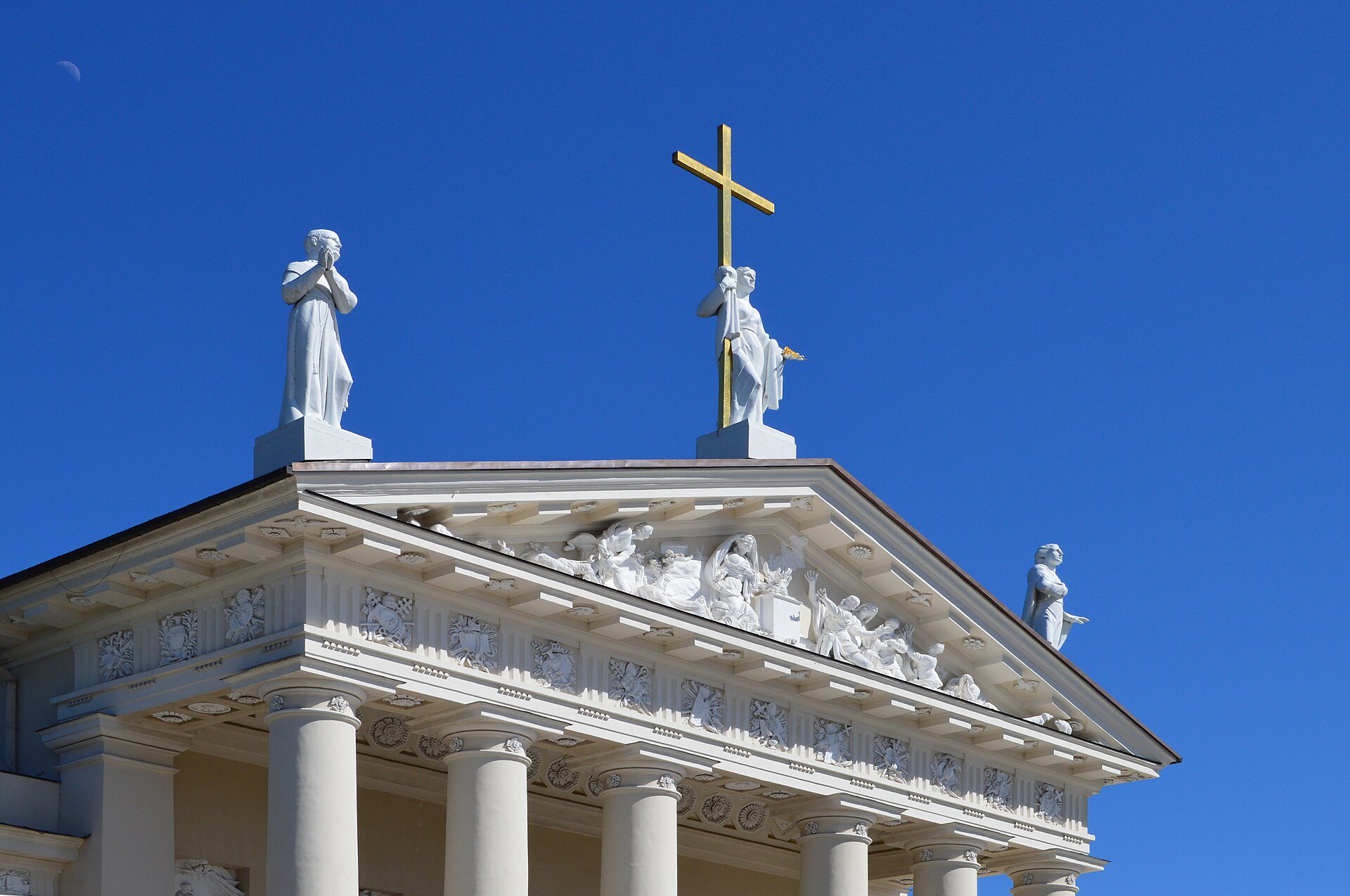
Start at Cathedral Square, the symbolic heart of the city. The white neoclassical Vilnius Cathedral stands apart from its freestanding bell tower — climb the tower if you want a first orientation, or save your legs for Gediminas Hill. Look on the square’s pavement for the small Stebuklas (“miracle”) tile: local tradition says standing on it and turning clockwise makes a wish come true, and it marks the Vilnius end of the 1989 Baltic Way human chain.
Directly behind the cathedral, the Palace of the Grand Dukes of Lithuania is a reconstructed residence of the rulers of the Grand Duchy, built on the site of the original palace that stood here from the 15th century until it was demolished in the 19th. Allow 90 minutes to two hours. The combined ticket covering all four exhibition routes costs around €17 for adults, with concessions at half price; check the current opening pattern before you go, because the palace closes on Mondays from September to May.
Midday: Gediminas Tower
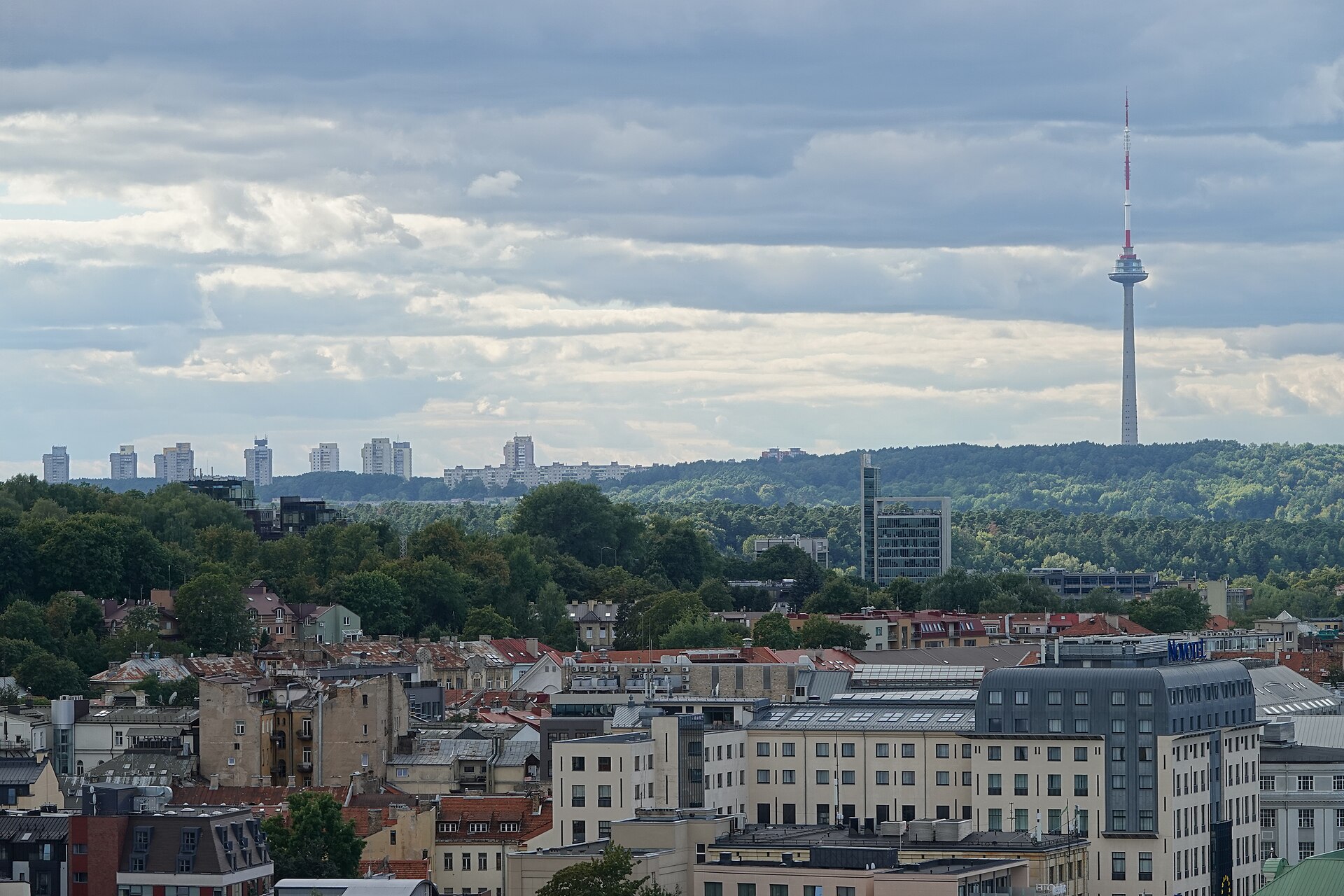
From the palace courtyard, walk to the foot of Castle Hill. You can climb the cobbled spiral path in about ten minutes for free, or take the funicular for a couple of euros. Gediminas Tower, the surviving western tower of the Upper Castle, is open daily and entry is around €8. Inside is a compact exhibition on the castle and the city; the real reward is the open rooftop — a full panorama over red roofs, church spires, the Neris River and the modern towers of Šnipiškės across the water. Do this on your first clear morning: the view explains the whole city layout at a glance.
Afternoon: Pilies Street and Vilnius University
Come down and drift south along Pilies Street, the Old Town’s main artery — amber shops, linen, cafés in hidden courtyards, and street musicians. Detour into Vilnius University, founded in 1579 and one of the oldest universities in Eastern Europe. Its sequence of courtyards, the frescoed Library halls and the Church of St. Johns with its towering bell tower repay an hour, and the university bookshop is one of the better souvenir stops in the city.
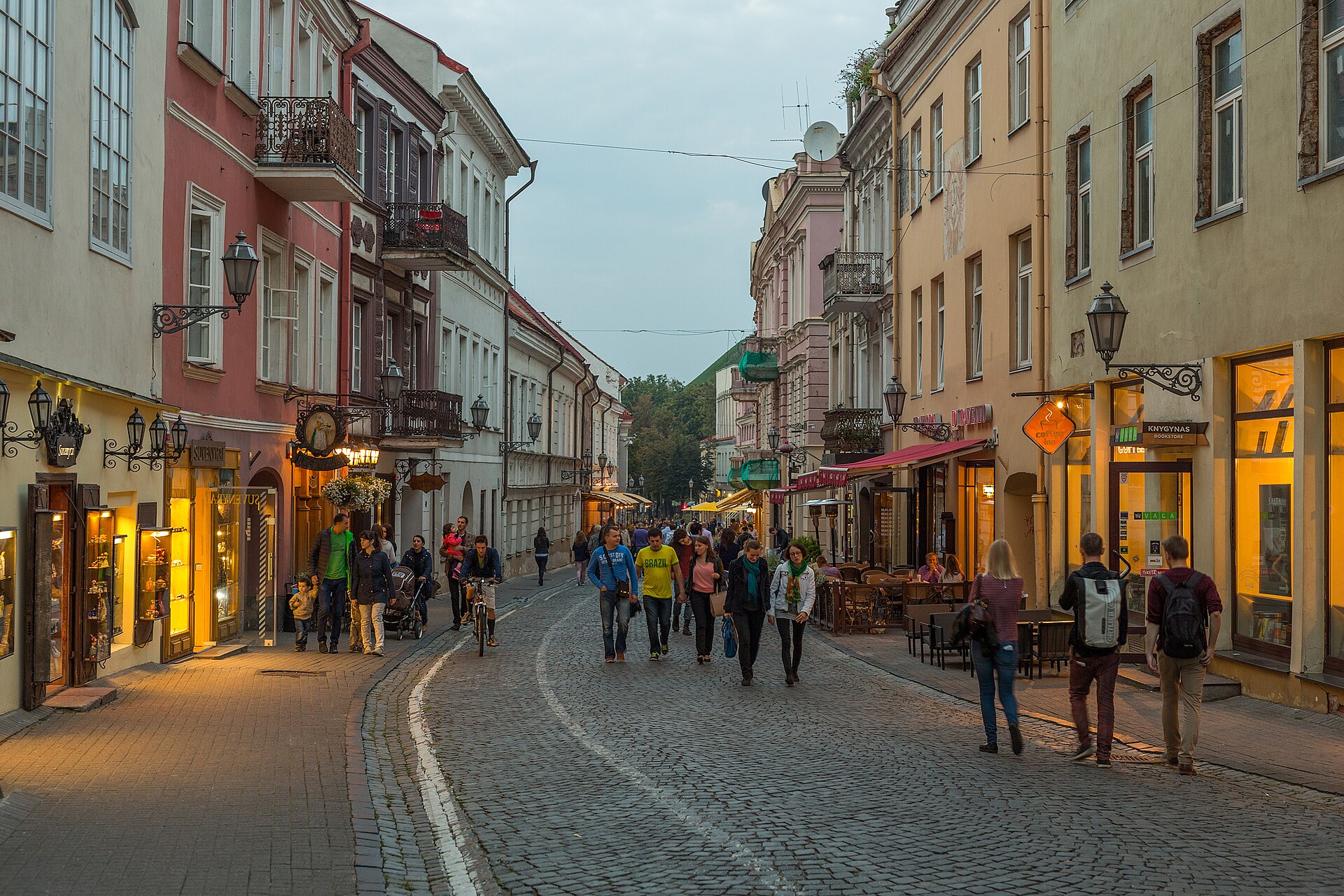
If it is your first evening, a guided Old Town walking tour is a genuinely useful way to lock in the geography — the best local guides connect the cathedral, the former Jewish quarter and the university quarter into one story, and you will navigate the lanes far more confidently for the rest of the trip.
Evening: dinner in the Old Town
Eat Lithuanian tonight. Order cepelinai — large potato dumplings stuffed with curd or meat, served with sour cream and spirgai (bacon bits) — or a cold pink šaltibarščiai beetroot soup in summer. The lanes around Pilies, Literatų and Stiklių streets have the densest choice, from old cellar restaurants to modern kitchens reworking Baltic ingredients.
Day 2: History, art and the Republic of Užupis
Morning: Gate of Dawn and Sts. Peter and Paul’s
Walk south to the Gate of Dawn (Aušros Vartai), the only surviving gate of the old city wall. The chapel above the arch holds a revered painting of the Virgin Mary, and pilgrims still climb the steps on their knees — be quiet and respectful as you pass through. From there, take a bus or a 25-minute walk northeast to Sts. Peter and Paul’s Church in Antakalnis. The plain exterior hides one of Europe’s great Baroque interiors: more than 2,000 white stucco figures cover the walls and vaults. Go in morning light if you can.
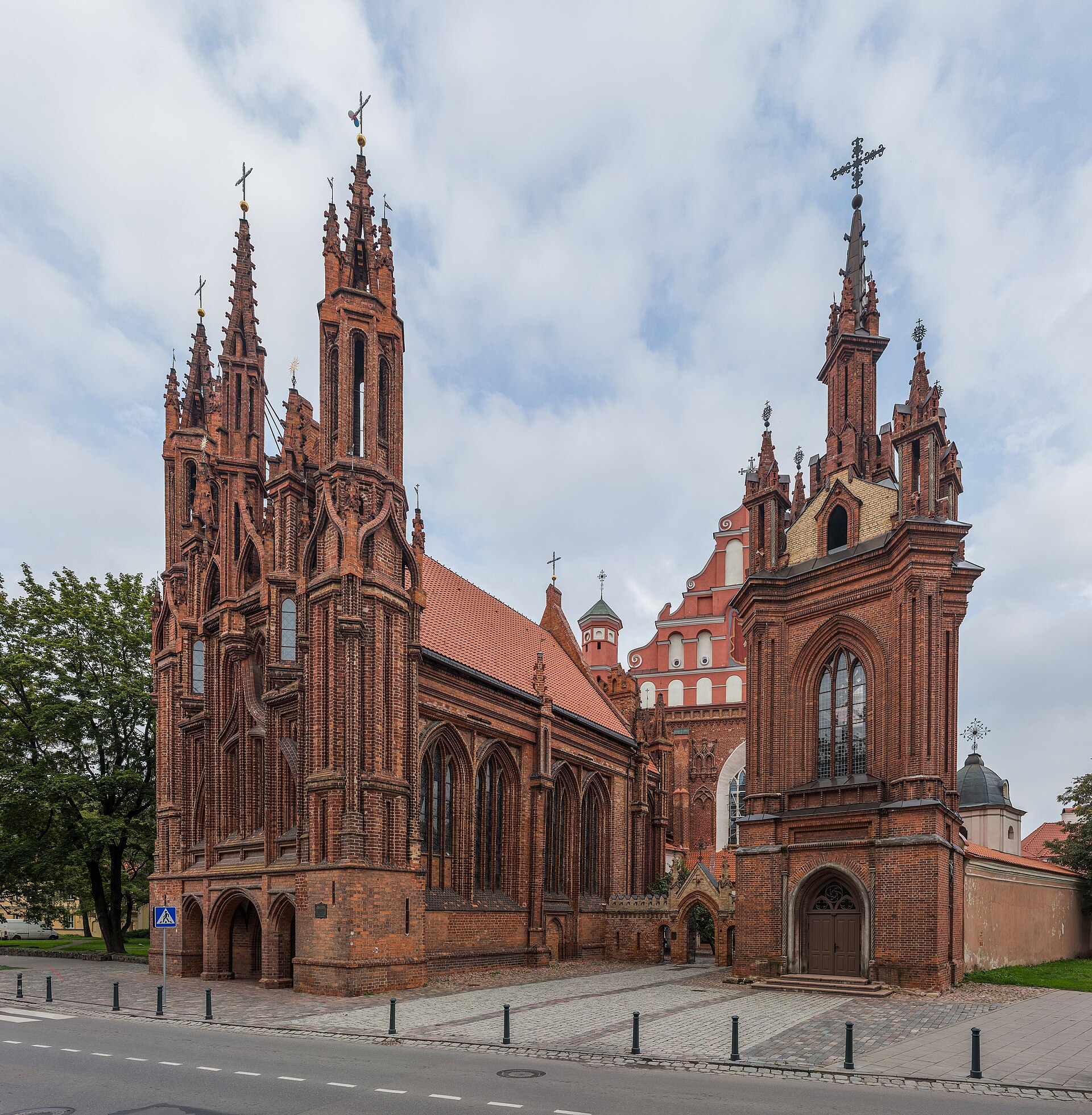
On your way back into the centre, stop at St. Anne’s Church, the red-brick Gothic jewel beside the Bernardine Church. Legend says Napoleon, passing through in 1812, wished he could carry it back to Paris in the palm of his hand. Whether or not he said it, the flamboyant brickwork earns the story.
Midday: the harder 20th century
The Museum of Occupations and Freedom Fights occupies the former KGB headquarters on Aukų Street, opposite Lukiškės Square. The exhibitions cover the Soviet and Nazi occupations, deportations and the partisan resistance; the preserved prison cells and execution chamber in the basement are sobering and essential. Entry is inexpensive (around €6), and you should allow at least 90 minutes. It closes Mondays and Tuesdays — another reason to anchor your trip midweek onward. Balance it afterwards with the MO Museum, Lithuania’s museum of modern and contemporary art in a striking Daniel Libeskind-designed building on Pylimo Street: bright, manageable in an hour, and closed on Tuesdays.
Afternoon: Užupis, the artists’ republic
Cross the Vilnia River on the small bridge hung with padlocks and you are in Užupis — literally “the place beyond the river.” On 1 April 1997 its artists declared it an independent republic, complete with a president, a small army that has since retired, and a constitution mounted on a wall in Paupio Street, translated into dozens of languages. Its articles include “Everyone has the right to be happy” and “Everyone has the right to be unhappy.” Spend a slow afternoon here: the Angel of Užupis statue on its column, gallery windows, riverside cafés, and the Tibetan Square nearby. It is playful, but it is not a joke — Užupis is also simply a lovely, lived-in neighbourhood.
Evening: Three Crosses at sunset
Climb to the Three Crosses monument on Bald Hill in Kalnai Park for sunset. The white crosses commemorate Franciscan martyrs and are visible from much of the Old Town; from the platform, the view back over the cathedral and Gediminas Tower in evening light is the best free show in Vilnius. Head down into the Old Town or across to the Paupys district’s food market hall for dinner.
Day 3: Trakai Island Castle, then a slow finish
Morning to midday: Trakai
Trakai, about 28 kilometres west of Vilnius, is the easiest and best day trip in Lithuania. Trains and buses from Vilnius take roughly 30 to 40 minutes, and from Trakai station or bus stop it is a pleasant 20-minute lakeside walk to the castle. Trakai Island Castle, a red-brick Gothic fortress built in the second half of the 14th century on an island in Lake Galvė, was a residence of the Grand Dukes and has been carefully restored. Inside, the museum covers the Grand Duchy, the castle’s rebuilding, and applied arts. Admission is around €12–14 depending on season; note the castle closes on Mondays in the colder months (and Tuesdays in deep winter), so keep Day 3 flexible.
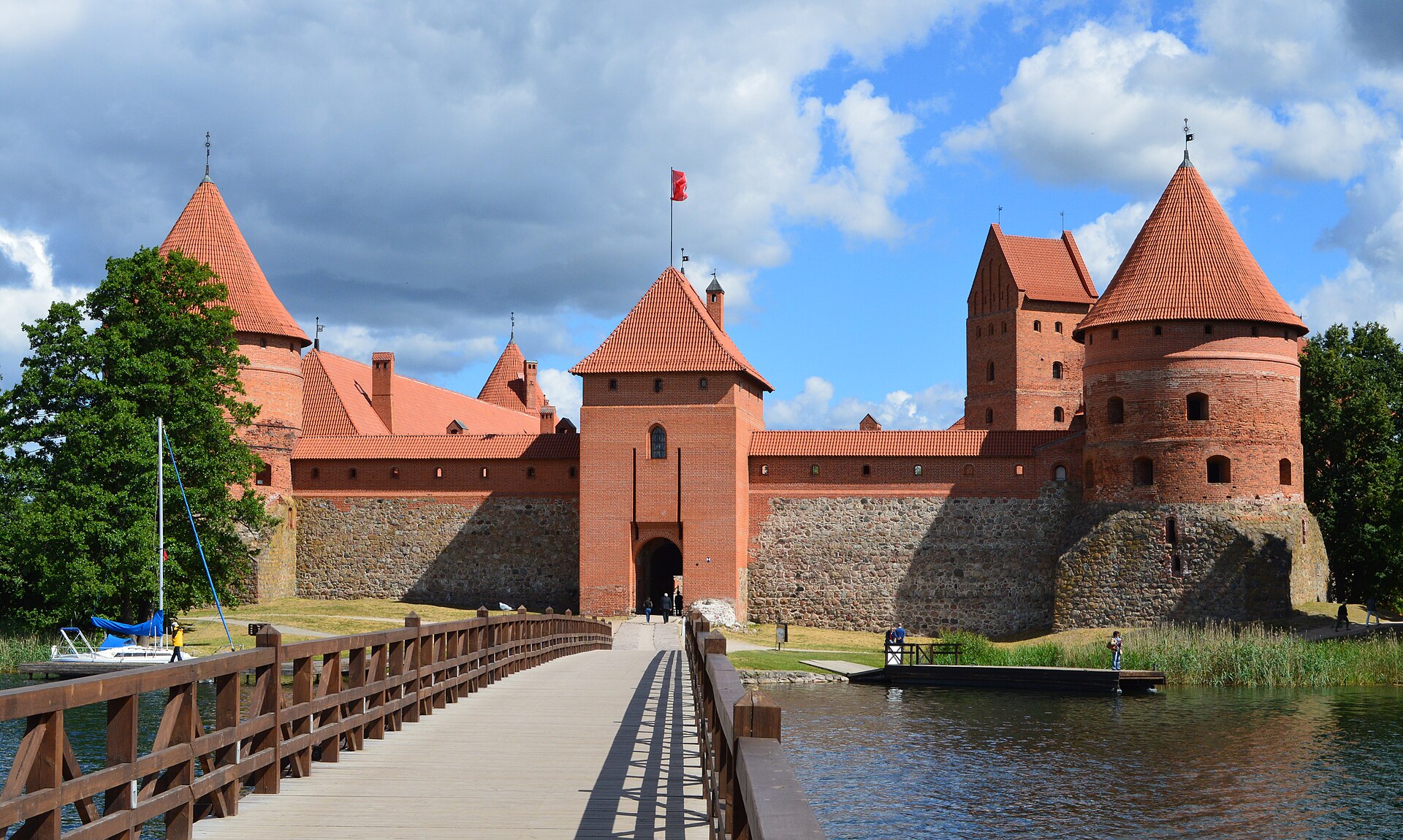
If you would rather not handle the transfers yourself, a half-day trip to Trakai Castle and the Paneriai Memorial combines the castle with the forest memorial site outside Vilnius in one organised outing — worth considering if your time is tight or you are travelling in winter.
In Trakai town, eat kibinai: crescent-shaped pastries introduced by the Karaite community, a small Turkic-speaking group brought here by Grand Duke Vytautas in the late 14th century, whose colourful wooden houses still line Karaimų Street. Mutton or beef kibinai with a bowl of broth is the classic lakeside lunch. In summer, rent a small boat or join a short lake cruise for the classic postcard view of the castle from the water.
Afternoon and evening back in Vilnius
Back in the capital, use the last afternoon for what you missed: the Presidential Palace courtyard and its free exhibitions, souvenir shopping for linen and amber on Pilies Street (check amber is genuine — reputable shops will happily explain the difference), or coffee in a courtyard you walked past on Day 1. For a final splurge, Vilnius is famous for hot-air ballooning — few capitals allow balloons directly over the old town — and a sunrise hot-air balloon flight over Vilnius or Trakai on a clear morning is the city’s signature splurge, weather permitting. Book it for your first morning, not your last, so a weather cancellation can be rescheduled.
Practical tips for 3 days in Vilnius
Getting there and around: Vilnius Airport (VNO) is only about 6 kilometres from the Old Town; buses and trains run into the centre, and ride-hailing is inexpensive. Inside the city you will walk almost everywhere — the Old Town is compact but cobbled, so bring shoes with grip. A contactless card works on city buses and trolleybuses.
When to go: May to September brings the warmest weather and the longest evenings — June stays light remarkably late. December adds a much-loved Christmas tree and market on Cathedral Square. Winter is cold but atmospheric, and the sights are at their quietest; just plan around the Monday and Tuesday museum closures noted above.
Money and language: Lithuania uses the euro, and cards are accepted almost everywhere. Lithuanian is the official language; English is widely spoken by younger residents and in tourism, and a polite “ačiū” (thank you, pronounced ah-CHOO) goes a long way.
Combining the Baltics: Vilnius pairs beautifully with its northern neighbours. Buses link the three capitals in a few hours each, so this itinerary slots straight before or after Tallinn in 3 days at the top of the Baltic chain — and if Riga is your middle stop, start with my guide to where to stay in Riga for its Art Nouveau Quiet Centre and Old Town picks.
Final thoughts
Vilnius rewards the traveller who walks slowly: a ducal palace in the morning, a stucco ceiling that stops you mid-sentence, a constitution that grants you the right to be unhappy, and a castle on a lake before lunch on day three. Three days will not exhaust it — but they will make you wonder why you waited so long to come.