
Vilnius is the Baltic capital most travellers still skip — and the one that rewards them most for stopping. Lithuania’s capital has one of the largest surviving medieval old towns in northern Europe: 352 hectares of Gothic, Renaissance and Baroque streets, inscribed by UNESCO in 1994, wrapped around the confluence of the Vilnia and Neris rivers. It is also, by western European standards, strikingly good value — a five-star Old Town room here often costs what a mid-range room costs in Berlin or Copenhagen. Where you stay decides which Vilnius you get: the baroque postcard, the bohemian republic across the river, or the modern boulevard city locals actually live in. This guide matches each area to the traveller it suits, with honest hotel picks and the trade-offs included.
Never forget a thing before you fly. My free 8-page Travel Planning Checklist walks you through the whole trip — 6 planning timelines, 36 checks, from booking windows to travel-day basics. One email, no spam, unsubscribe anytime.
Disclosure: This post contains affiliate links. If you book through one of these links, I may earn a commission at no extra cost to you.
The short answer: which Vilnius area fits you?
First visit, short trip: the Old Town (Senamiestis) — every main sight on foot, from Cathedral Square to the Gate of Dawn. Romance and quiet: Užupis and Paupys, across the Vilnia River, five minutes from St Anne’s Church. Modern comfort and value: Gedimino Prospektas and Naujamiestis, the grand central avenue running west from the cathedral. Business, views and easy airport runs: Šnipiškės, the glass-tower district across the Neris. Vilnius is compact — all four areas sit within about twenty minutes’ walk of each other — so this choice is about atmosphere, not logistics. Travelling the Baltics in one trip? My guide to where to stay in Tallinn applies the same area-by-area logic to Vilnius’s northern neighbour, and my guide to where to stay in Riga covers the capital in between — the three pair beautifully in a single week.
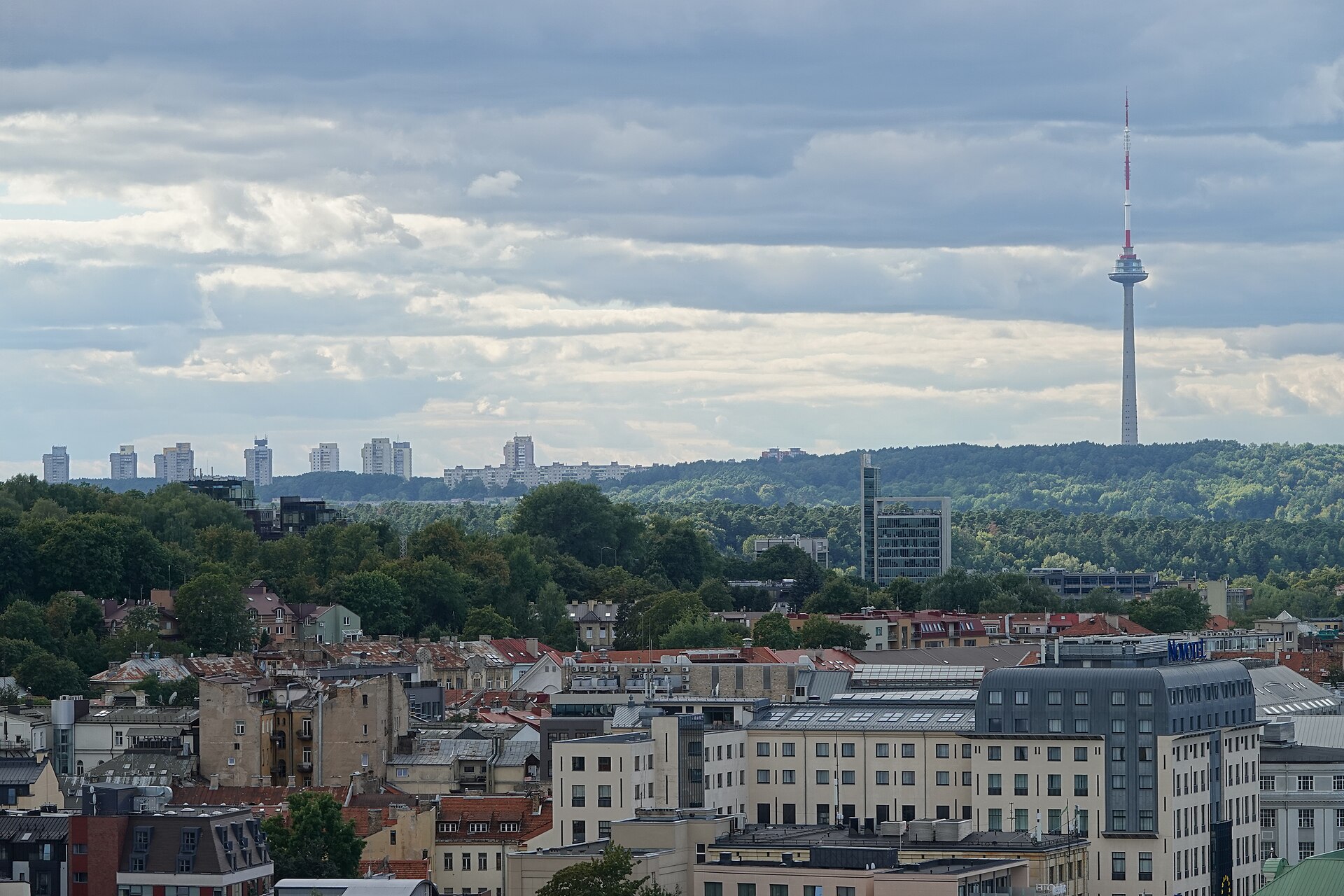
Old Town (Senamiestis): best for first-timers
The Old Town is the Vilnius of the postcards, and it earns it. Start at Cathedral Square, where the white neoclassical cathedral and its free-standing belfry face Gediminas Tower on the hill above — the surviving keep of the 14th-century Upper Castle, and still the city’s symbol. From there Pilies Street, the oldest street in Vilnius, runs south past the university (founded in 1579, a warren of thirteen courtyards), the amber shops and café terraces, down to Town Hall Square and, at the southern edge, the Gate of Dawn — the last surviving city gate, holding a chapel and an icon of the Virgin Mary that pilgrims still climb the steps to see. Staying inside this web of lanes means sightseeing starts at your front door and dinner is never more than a stroll. The honest costs: cobbles are unkind to wheeled suitcases and heels, and the streets around Pilies and Vokiečių can stay lively late on summer weekends — ask for a courtyard-facing room.
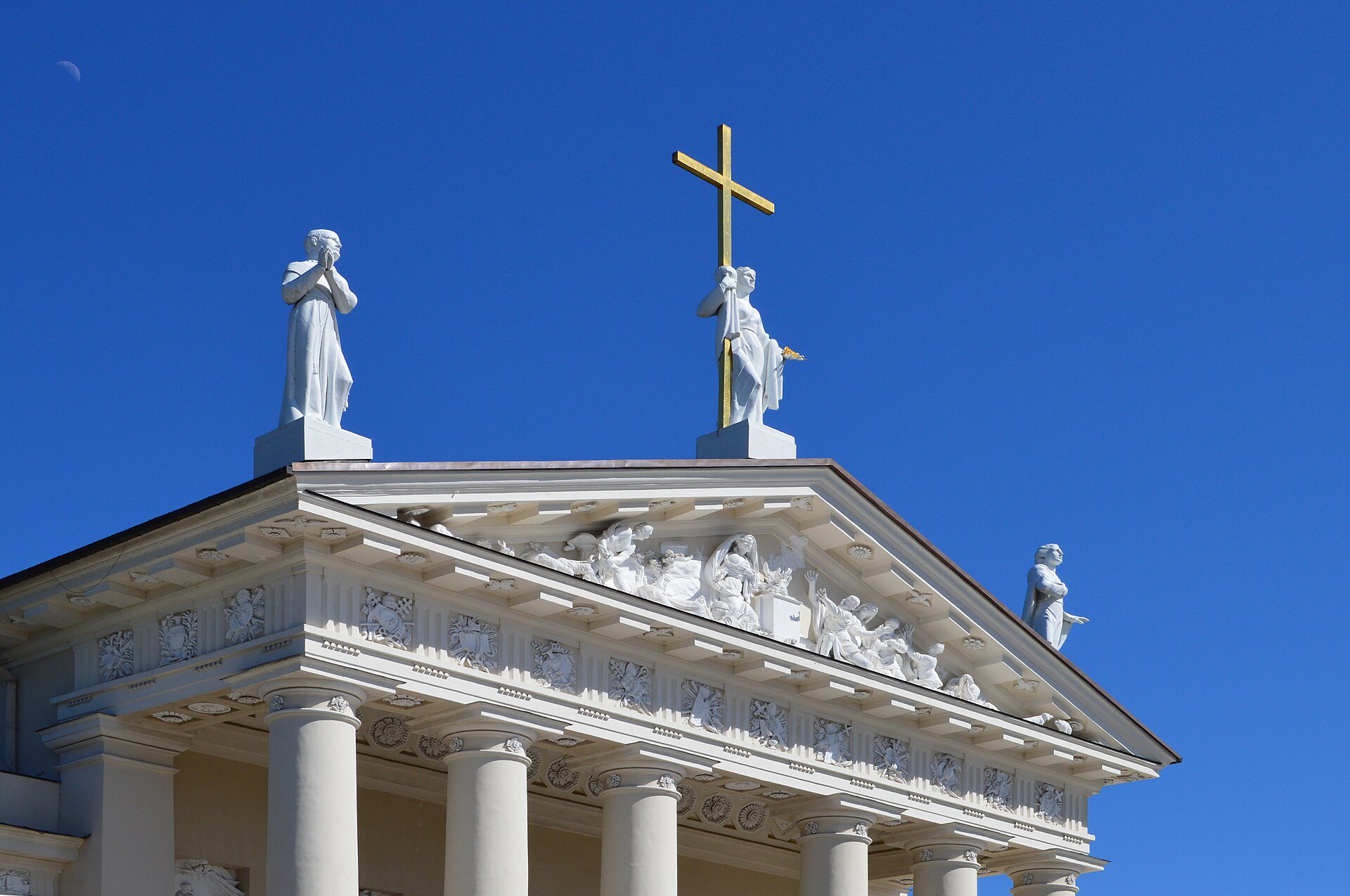
The Old Town pick I would book first is Hotel Pacai, a five-star Design Hotels member inside a baroque mansion built in 1677 for the Pac family on Didžioji Street. The restoration kept the frescoes, vaults and exposed brick and set contemporary rooms against them; there is a courtyard restaurant and a spa that has repeatedly been named Lithuania’s best. For the grandest address in the country, Grand Hotel Vilnius, Curio Collection by Hilton faces Cathedral Square itself — you breakfast looking at the belfry — with an indoor pool and spa in a set of restored historic buildings. A few steps down Pilies Street, Narutis Hotel occupies buildings parts of which date to the 15th and 16th centuries; it is smaller and more intimate, with a cellar restaurant and some of the Old Town’s most characterful rooms. The Stikliai Hotel, a Relais & Châteaux property in the old glassmakers’ quarter, is the boutique splurge, all courtyards and gardens. And on Didžioji near Town Hall Square, the Radisson Collection Astorija — a 1901 landmark that has hosted heads of state — pairs Old Town atmosphere with a pool, a spa and a rooftop lounge for summer evenings.
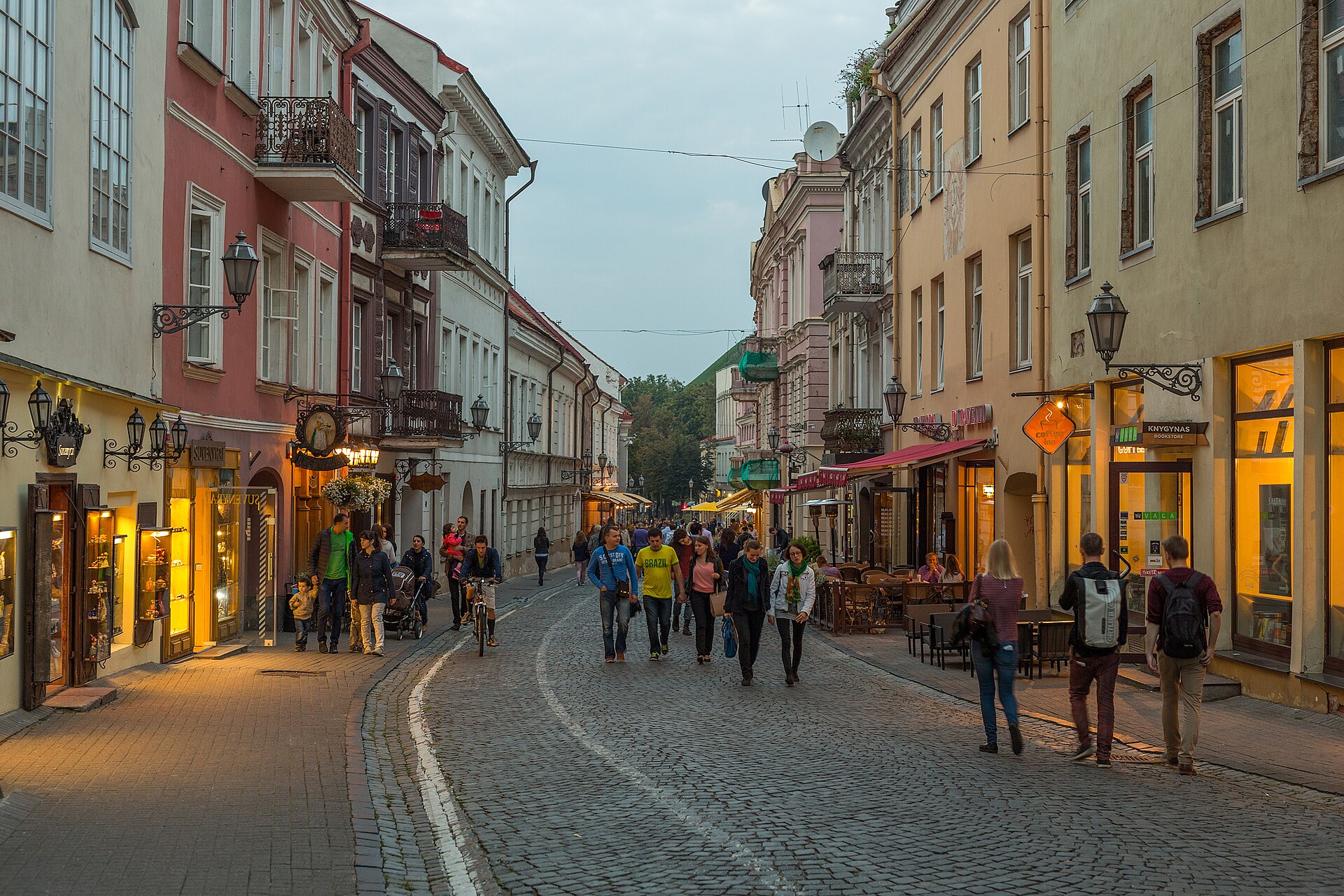
Old Town Vilnius also carries a heavier history, and a good guide makes it legible. Before the Second World War this was the “Jerusalem of the North,” one of Europe’s great Jewish scholarly centres; the quarter’s streets, the Choral Synagogue and the memorials tell that story. Whether you take a general Old Town walk on day one or a dedicated Jewish Vilnius tour, do take one — the lanes all look alike by design, and the stories are the point.
Užupis and Paupys: best for art, quiet and romance
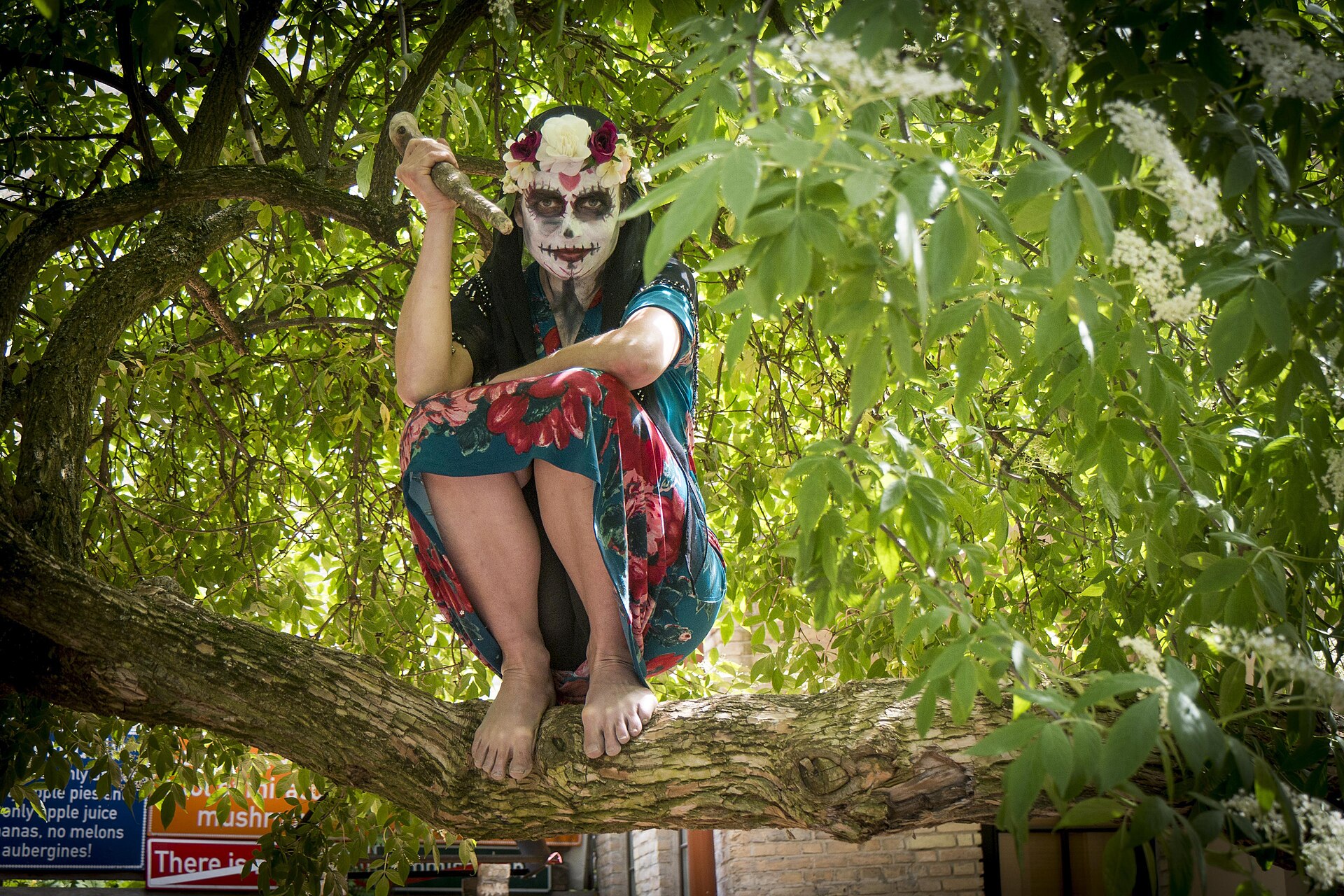
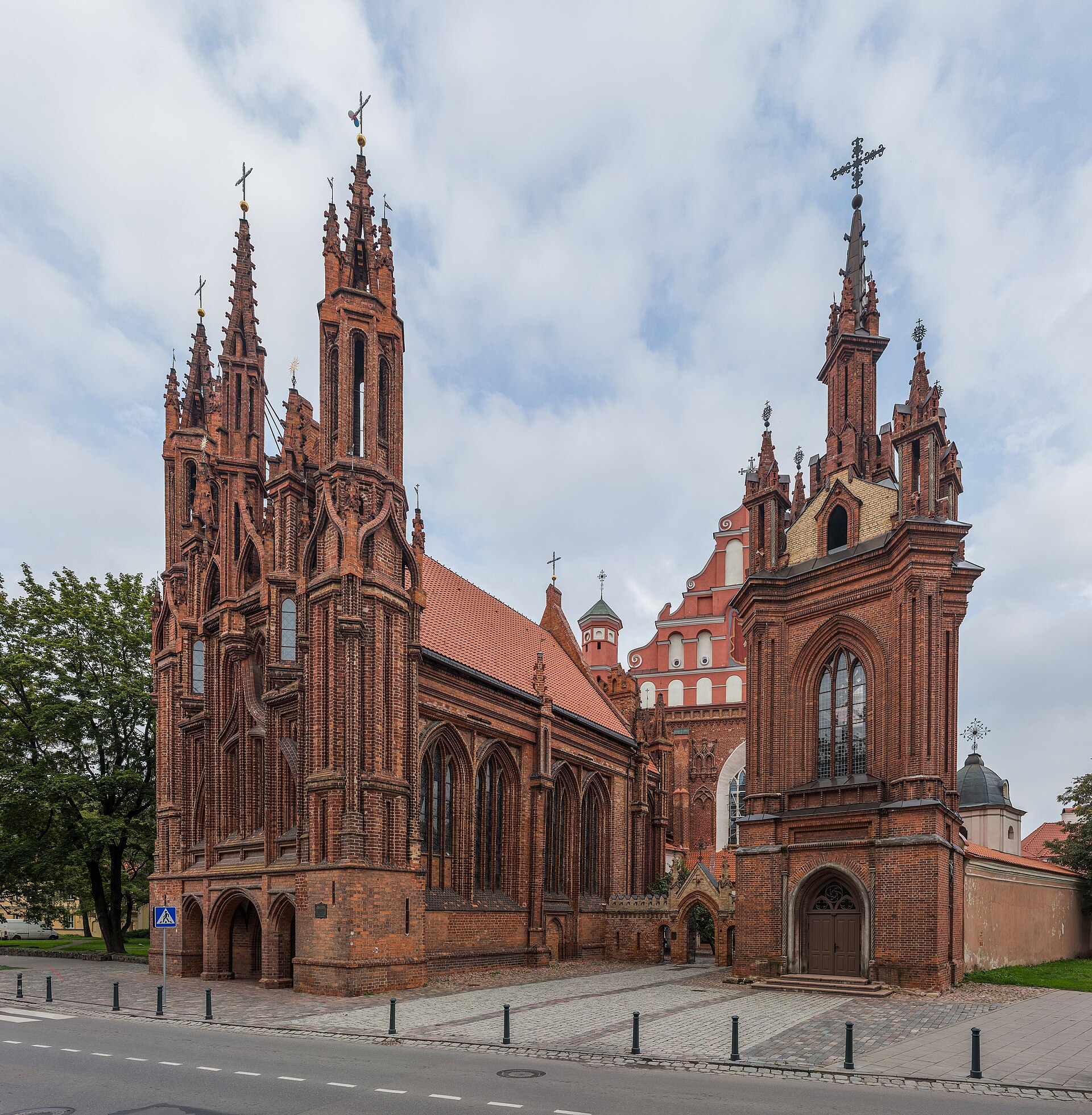
Cross the Vilnia by one of the small bridges behind St Anne’s Church — the flame-red Gothic masterpiece built from 33 different shapes of brick — and you enter Užupis, the artists’ district that declared itself an independent republic on 1 April 1997, complete with a president, a flag and a constitution. The constitution is the sight: 41 articles mounted on plaques on Paupio Street in dozens of languages, running from “Everyone has the right to be unhappy” to “A dog has the right to be a dog.” Around it are galleries, studios, riverside cafés and the bronze Angel of Užupis on its column in the main square. Immediately south, Paupys is the district’s newer half: a redeveloped quarter of courtyards, lofts and the Paupys Market food hall. Staying here puts you five to ten minutes’ walk from the Old Town crowds but in a village-quiet neighbourhood — the pick for couples, repeat visitors and anyone who travels for atmosphere over amenities. Hotels are few; this is boutique apartment and small guesthouse territory, so book early for summer. The trade-off is real: fewer full-service hotels, and the walk home crosses a bridge and a slight hill.
Gedimino Prospektas and Naujamiestis: best for modern comfort and value
West of Cathedral Square runs Gedimino Prospektas, the 1.8-kilometre ceremonial avenue to the Seimas (parliament): grand 19th-century facades, the city’s main shops, Lukiškės Square and, at its foot, the Museum of Occupations and Freedom Fights in the former KGB headquarters — the most sobering and essential museum in the city, its basement cells preserved. The streets just south, in Naujamiestis (New Town), mix offices, cafés and the approach to the train and bus stations, which makes this the practical base for day trips and early departures. Rooms here typically run noticeably cheaper than equivalent Old Town properties, in larger, newer buildings with lifts, parking and proper soundproofing.
The avenue’s classic stay is the Neringa Hotel, a landmark mid-century building a few minutes from the cathedral, long a meeting place for Vilnius’s writers and artists and now a comfortable four-star with one of the avenue’s best restaurants. Closer to the stations, look at the hotels around the Halės Market area for the city’s best value — you trade postcard views for a ten-minute walk and a much gentler bill. This is also the right base if Trakai is on your list: the castle town is about 28 kilometres west, reached by train or bus from the stations here in roughly half an hour.
Šnipiškės and across the Neris: best for views and business
Cross the Neris on the White Bridge or the Green Bridge and Vilnius turns modern. Šnipiškės is the new business district — glass towers, the Europa shopping centre, and riverbank paths that locals use for evening runs and hot-air-balloon watching (ballooning over the Old Town is a Vilnius signature on calm summer mornings). Hotels here are international-standard high-rises: bigger rooms, gyms, parking, and — the real prize — upper-floor views straight across the river to Gediminas Tower and the Old Town rooftops. The Courtyard Vilnius City Center is the representative pick, a modern four-star a short walk over the bridge from Cathedral Square. Choose this bank if you are in town for work, arriving by car, or simply prefer a quiet, contemporary room to a baroque one; the Old Town is ten to fifteen minutes on foot.
Three tours worth booking from any base
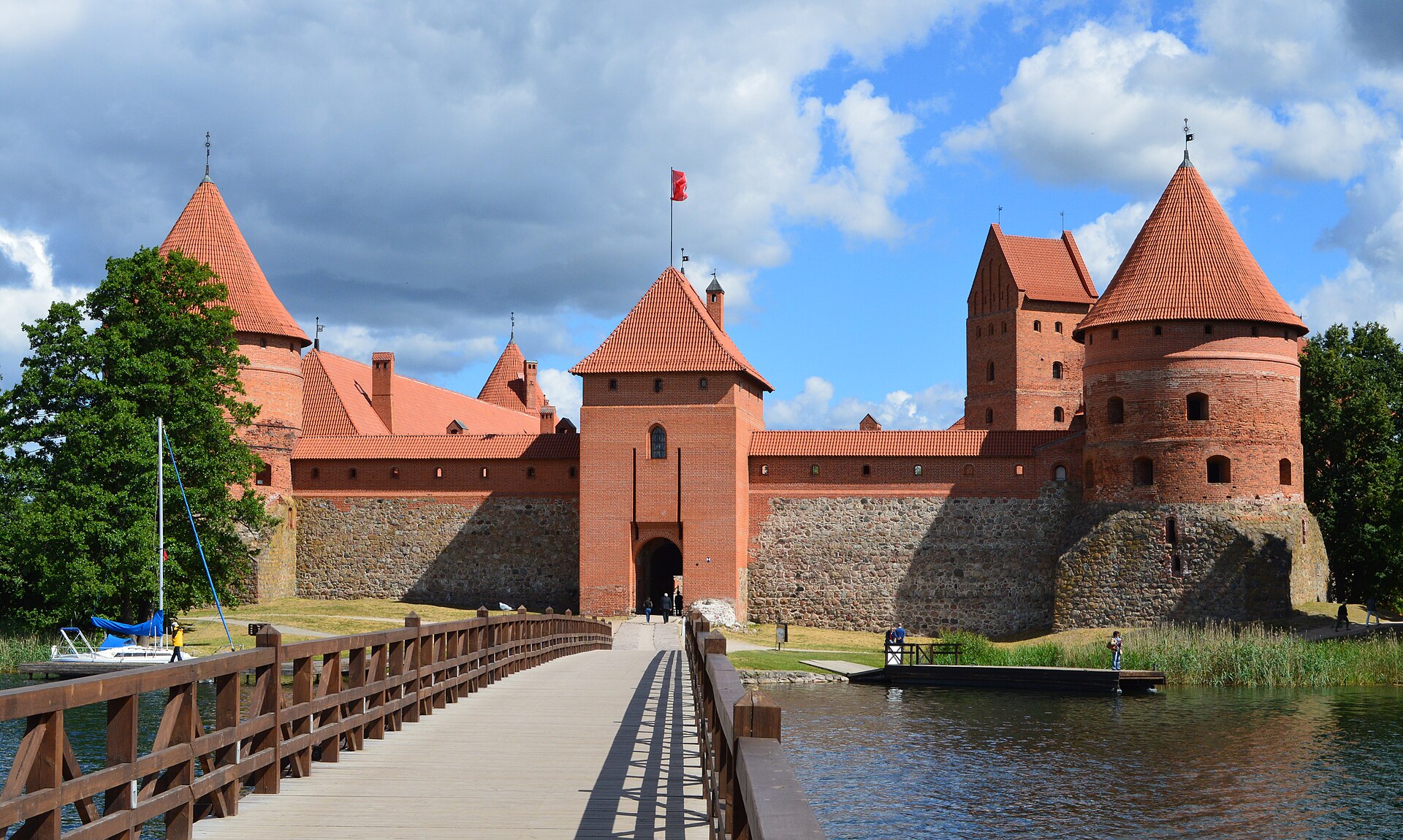
Wherever you sleep, three experiences repay booking ahead. First, a guided Old Town walking tour on your first morning — two and a half hours that orient you through seven centuries, from Cathedral Square to the Gate of Dawn. Second, the half-day trip to Trakai Castle and the Paneriai Memorial: Trakai’s red-brick island castle, the medieval capital of the Grand Dukes, sits in Lake Galvė about 40 minutes away, and pairing it with Paneriai — the forest memorial where Vilnius’s Jewish community was murdered — makes for the most complete day out of the city. Third, for a splurge, a sunrise hot-air balloon flight over Vilnius or Trakai: on a clear morning the basket drifts directly over the Old Town rooftops, something few European capitals allow.
Practical tips for booking Vilnius
The airport is close. Vilnius Airport is about 6 kilometres south of the Old Town; the train to the central station takes under ten minutes, buses are more frequent, and a taxi or Bolt ride is 15–20 minutes. Public transport is cheap and simple. Buses and trolleybuses cover everything beyond walking distance, with short tickets around a euro via the city ticket app. Book ahead for summer and December. June to August and the Christmas-market weeks are the peaks; shoulder months (April–May, September–October) are the sweet spot of price and weather. Mind the seasons. Late December gives you barely seven hours of daylight and a real case for a hotel spa; late June barely gets dark, so check for blackout curtains. Cobbles again: in the Old Town, take a taxi to the door rather than dragging a case from the station.
The bottom line
For a first, short trip, stay in the Old Town and let baroque Vilnius do the work — Hotel Pacai for design, Grand Hotel Vilnius for the Cathedral Square splurge, Narutis for intimate history. For quiet and character, cross the river into Užupis. For value and practicality, take Gedimino Prospektas; for space and skyline views, cross the Neris to Šnipiškės. Wherever you sleep, give Vilnius one slow evening in a neighbourhood that is not your own — constitution plaques at dusk, or the Old Town rooftops from Gediminas Tower — because this is a city that rewards crossing its own small borders.