
The Amalfi Coast is one of those places the photos can’t lie about — the cliffs really are that vertical, the water really is that blue, and Positano really does look like a stack of pastel boxes tumbling into the sea. But the coast rewards a plan: ferries stop running in winter and thin out by October, the coastal road turns into a slow-motion queue by midday, and each town deserves a full day rather than a drive-by. This 5-day itinerary is built for first-timers — the icons, the logistics that actually matter, and one day trip into ancient history for good measure.
Planning a trip? Get our free Travel Planning Checklist:
Disclosure: This post contains affiliate links. If you book through one of these links, I may earn a commission at no extra cost to you.
Day 1: Arrive in Sorrento — the Perfect Base
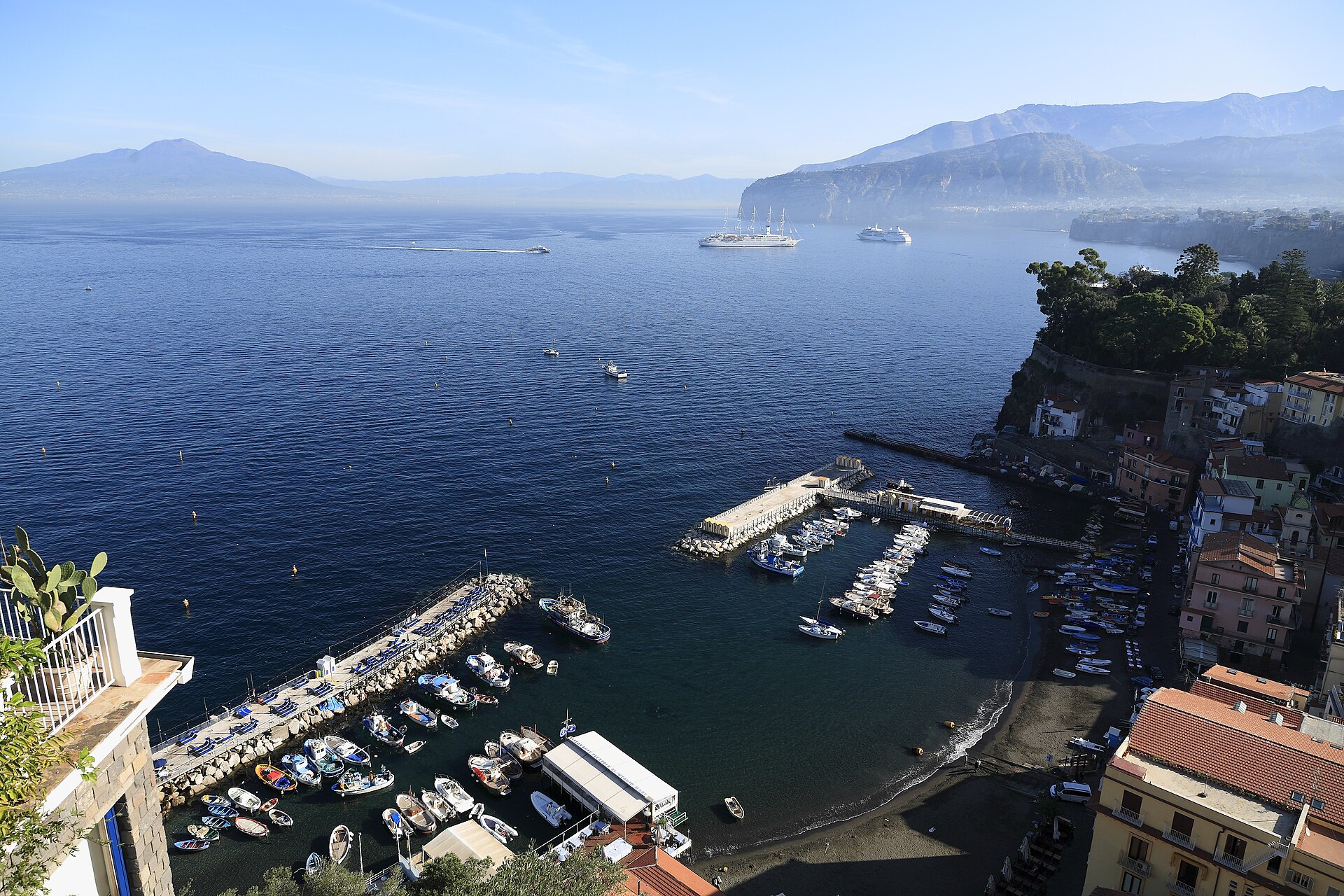
Start in Sorrento — the midpoint between Naples and Pompeii on one side and the Amalfi Coast and Capri on the other, with ferries and buses fanning out in every direction. The Circumvesuviana train from Naples ends here (about an hour, no reservation needed), which is exactly why Sorrento makes the best base for first-timers.
Spend your arrival afternoon getting oriented. Sorrento is flat and walkable — a relief after what comes later. People-watch on Piazza Tasso, wander down to Marina Grande, the old fishing harbor with restaurants right on the water, and finish at the Villa Comunale park for the best free sunset view on the peninsula: the sun dropping behind the Bay of Naples with Vesuvius on the horizon.
Day 2: Positano by Sea
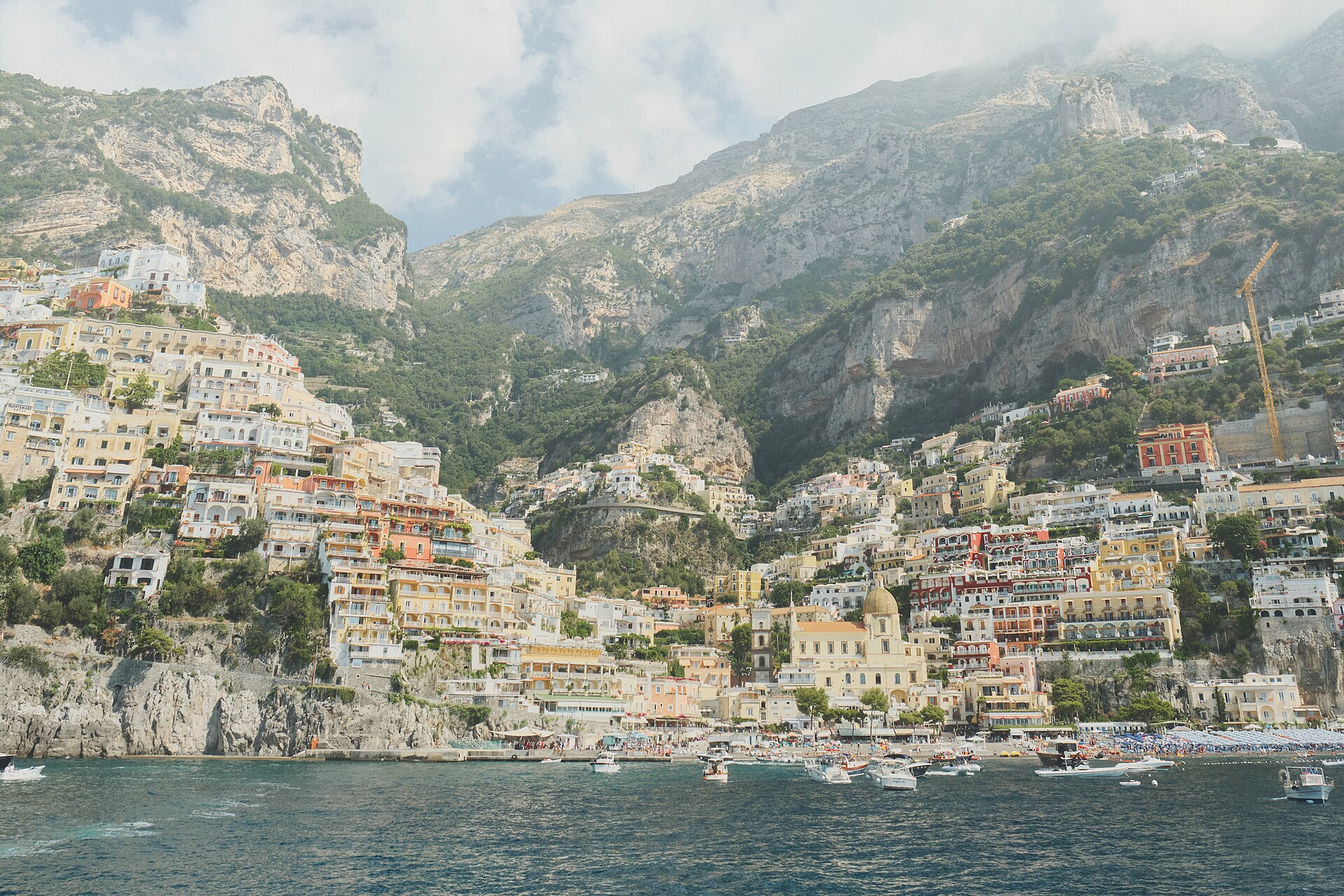
Day two is the day you’ll remember. Positano is the coast’s most famous village, and arriving by water is the single best thing you can do here.
If you only book one tour on this trip, make it a boat day. This small-group boat tour from Sorrento covers Positano and Amalfi in a full day with a maximum of 12 guests — swim stops in hidden bays and at the Li Galli islands, free time in both towns, prosecco on board (4.9 from 486 reviews, free cancellation). By boat you skip the SS163 traffic entirely, which on a summer day is worth the price alone.
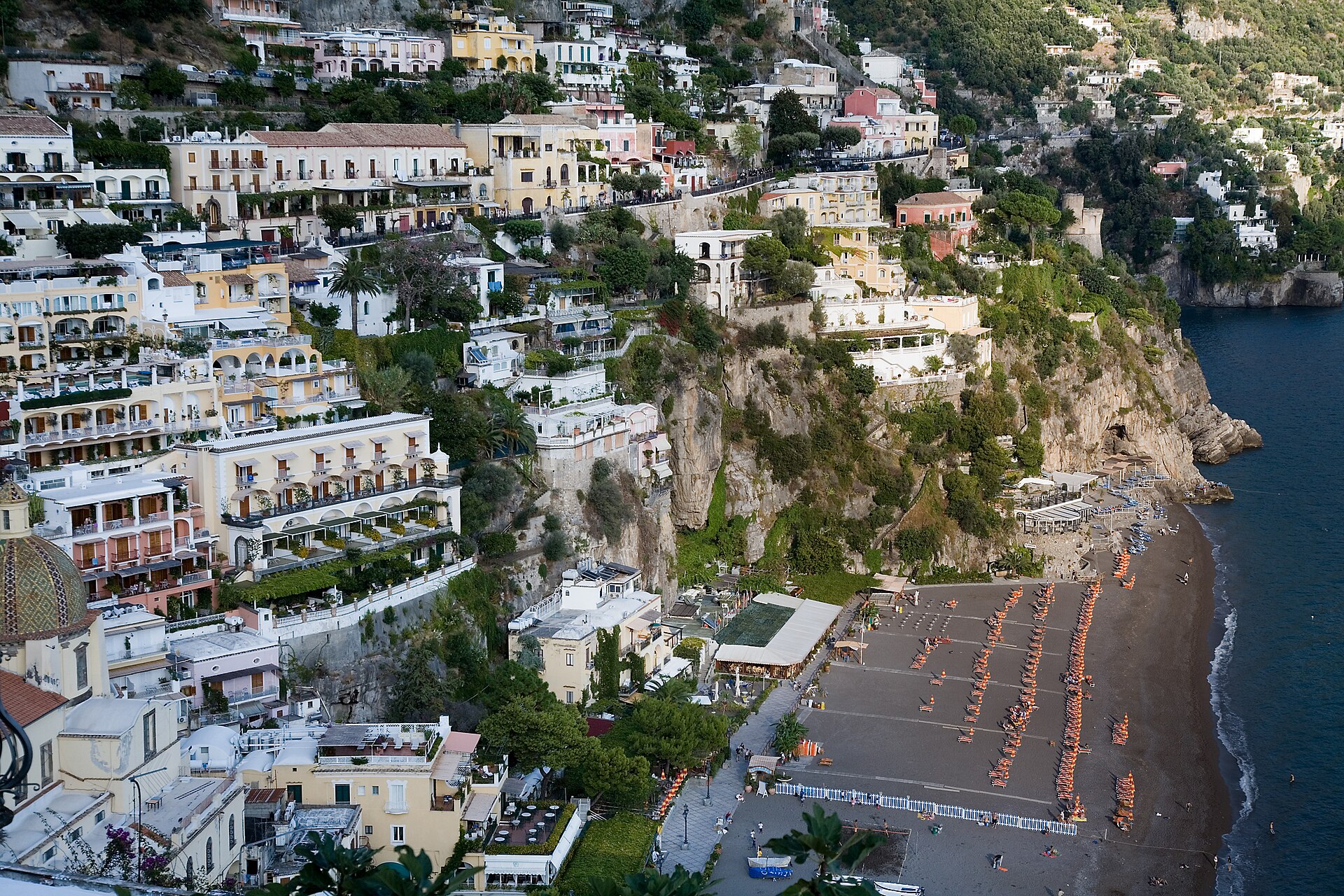
In Positano, don’t try to “do” the whole village — it’s vertical, and the stairs are the workout. Walk Via Cristoforo Colombo for the postcard viewpoint, dip into the 13th-century Church of Santa Maria Assunta with its majolica-tiled dome, and claim a patch of Spiaggia Grande or the quieter Fornillo beach. The Fiordo di Furore — a narrow fjord with a fishing hamlet and an arched bridge overhead — sits just east of town and is a favorite boat-tour swim stop.
Day 3: Amalfi Town and Ravello
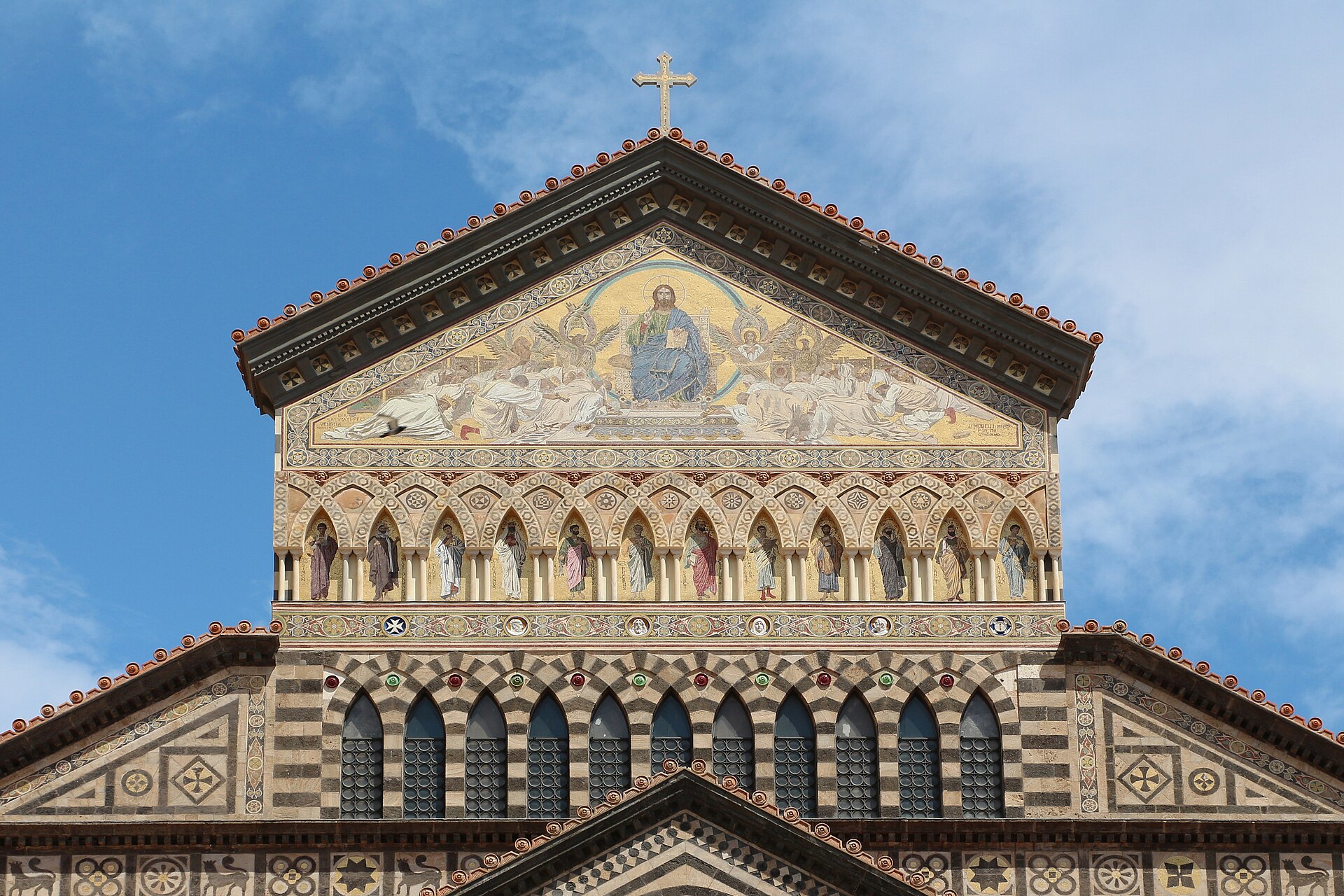
Take the morning ferry from Sorrento or Positano to Amalfi town — about 40–60 minutes, one of the great coastal rides in Europe. (Ferries run roughly mid-April to mid-October; otherwise take the bus.) Amalfi was once a powerful maritime republic, and its cathedral still carries that swagger: the 9th-century Duomo di Amalfi rises at the top of a grand staircase in Piazza del Duomo, with a striped marble facade, an Arab-Norman bell tower, and bronze doors. Then try a delizia al limone — the region’s domed lemon cream cake — in the square below.
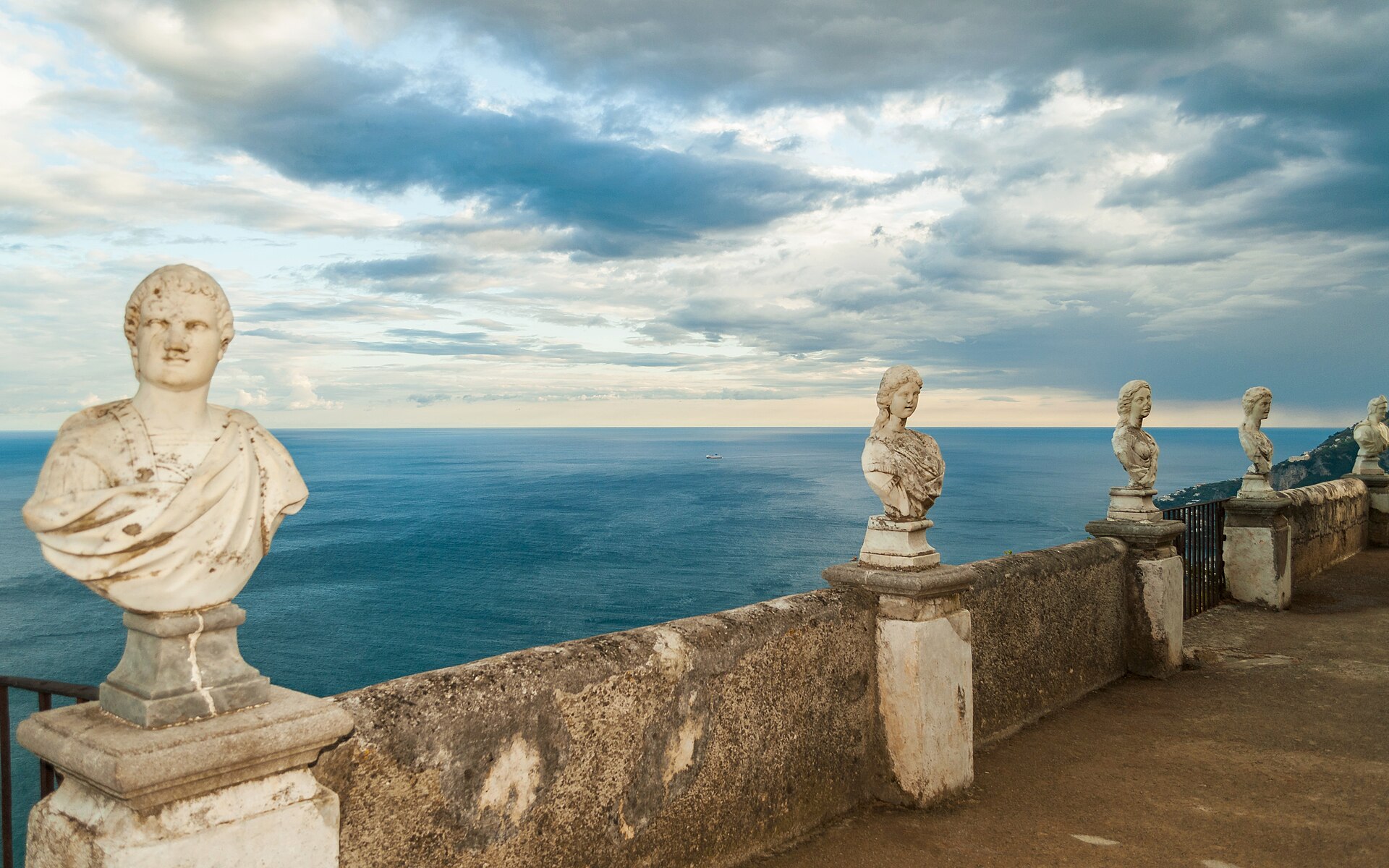
In the afternoon, head up to Ravello, perched about 350 meters above the sea (SITA bus ~20 minutes from Amalfi, taxi ~10). Ravello is the coast’s quiet counterpoint, and two villa gardens justify the climb. Villa Rufolo is the 13th-century villa whose gardens inspired Wagner’s Parsifal (entry ~€7–8), and Villa Cimbrone holds the Terrace of Infinity, a belvedere lined with marble busts over a 180-degree sea panorama (entry €10 — go in the morning for the best light; the villa is now a hotel, so the terrace occasionally closes for private events). If you only visit one, make it Cimbrone.
Day 4: Capri
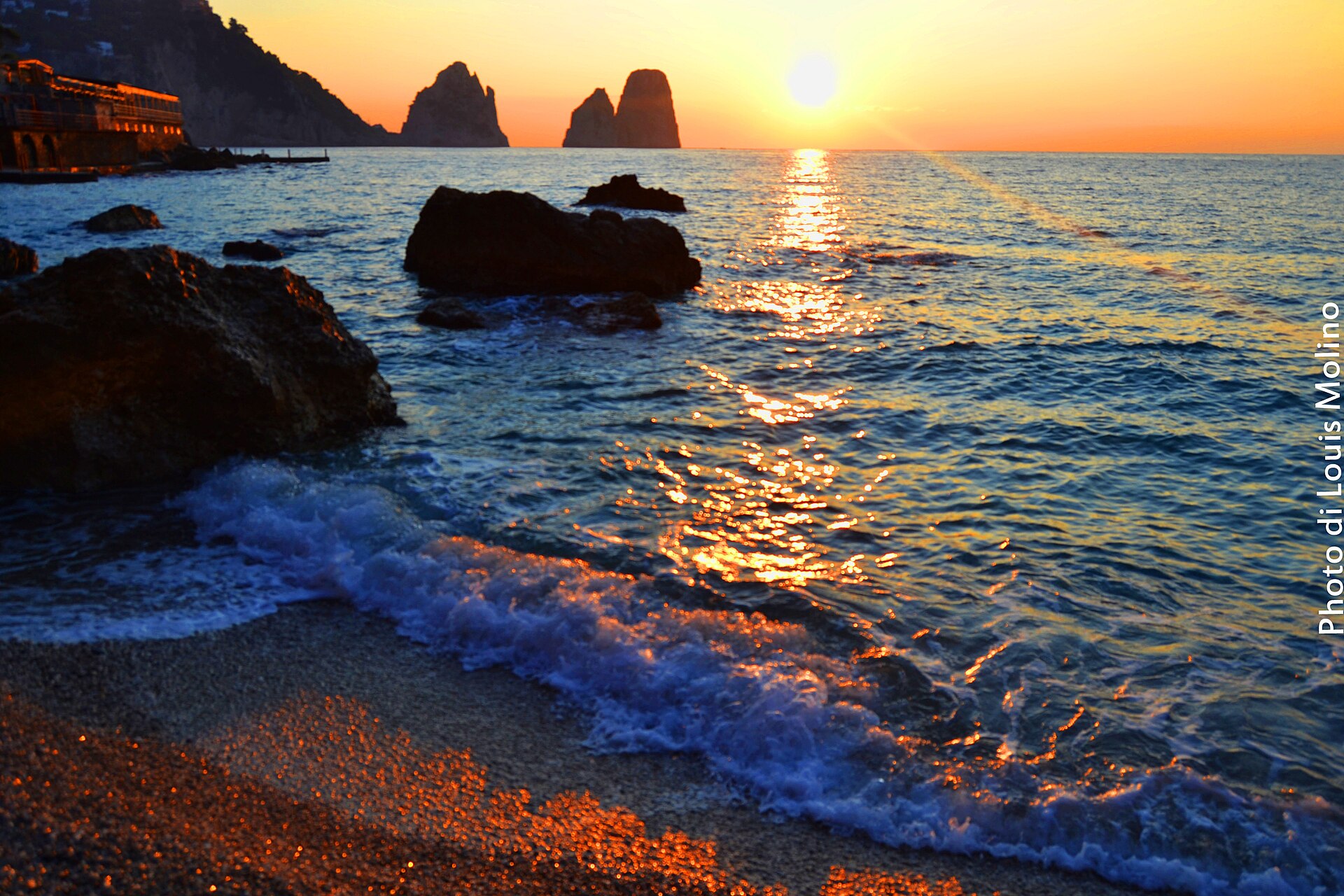
Capri day. Ferries run from Sorrento in about 20–25 minutes (book ahead in summer) or seasonally from Positano in about 50 minutes. The island is small but dense, so a boat-based day works best: this small-group Capri boat tour from Sorrento (max 8 guests, 7.5 hours, from $207) circles the island past the grottoes and the Faraglioni, gives you free time in Capri town, and includes a swim stop with prosecco and fruit.
The Blue Grotto comes with honest caveats: entry is only by small wooden rowboat (max four passengers, who lie back to slip under a cave mouth barely a meter high), the visit lasts about five minutes, and it costs ~€18–19 per person at the floating ticket office. It closes in rough seas — skippers decide each morning — and lines are longest noon to 2pm, so go first thing on a sunny morning.

With the rest of your day: ride the funicular up to Capri town and walk the Gardens of Augustus, a terraced viewpoint over the Faraglioni — the three sea stacks boats pass between. Then head to Anacapri, the quieter upper town, and take the chairlift up Monte Solaro for views from the Bay of Naples to the Amalfi Coast — or walk out to Villa Jovis, the clifftop ruins where Emperor Tiberius ruled Rome from exile.
Day 5: Pompeii and Vesuvius — or a Slow Finale
Option A: Pompeii and Vesuvius. From Sorrento this is genuinely easy — the Circumvesuviana drops you at Pompei Scavi–Villa dei Misteri station, right at the ruins’ entrance, in about 30–40 minutes. Allow 3–4 hours for Pompeii (buy entry tickets in advance), then shuttle up Vesuvius to the 1,000-meter parking area and walk 30–40 minutes to the crater rim, with the whole Bay of Naples below. Park entry is around €11.68. To skip the logistics, this Pompeii and Vesuvius tour from Sorrento uses the Campania Express fast train, includes a 2-hour guided Pompeii tour plus the Vesuvius bus transfer and entry — 8 hours door to door.
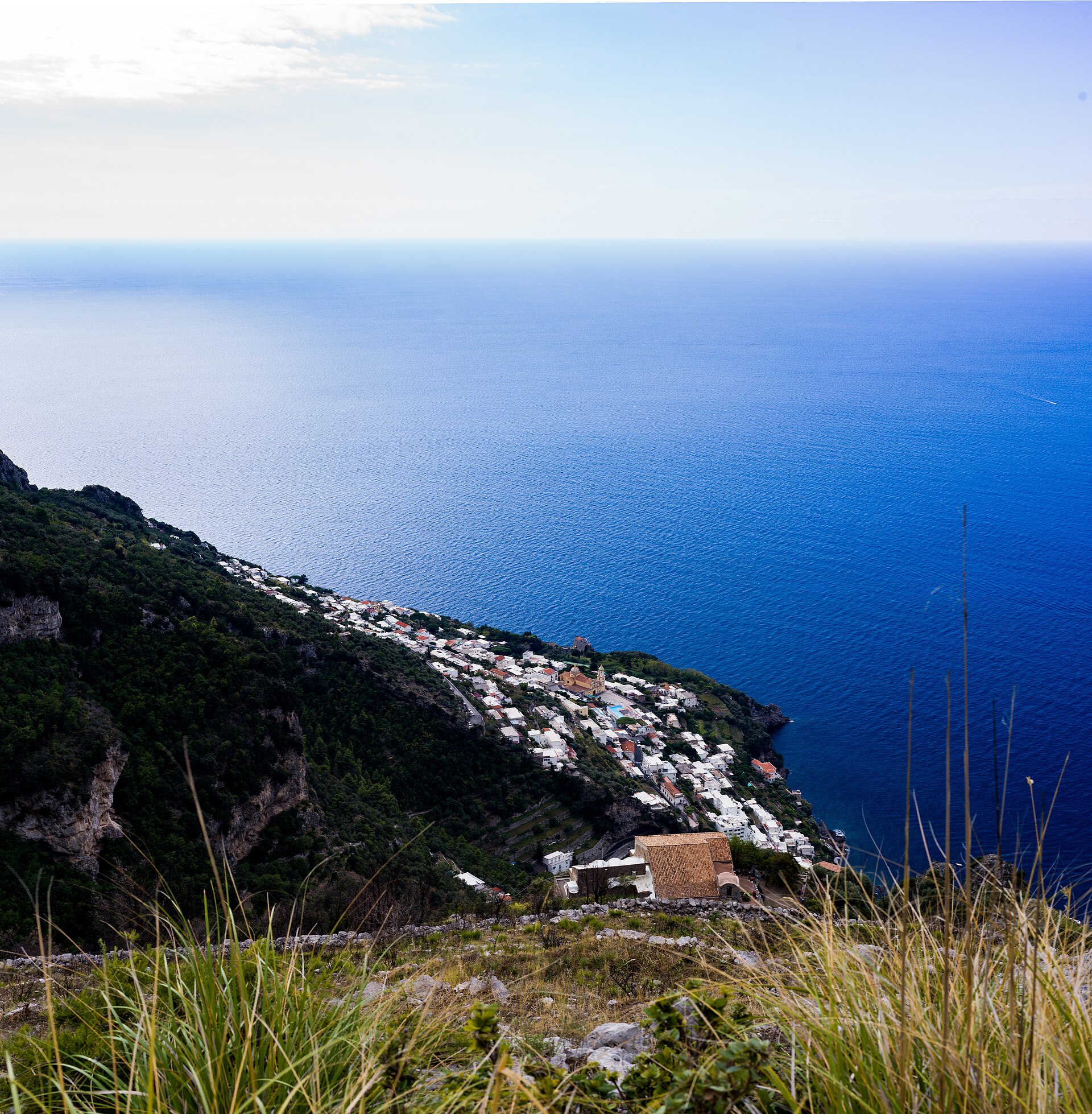
Option B: the Path of the Gods. Spend the day on the Sentiero degli Dei, the cliffside trail from Bomerano to Nocelle: 2–3 hours of easy-to-moderate walking, mostly slightly downhill, with nonstop views over Positano — then roughly 1,700 steps down into town. Best in April–May or September–October, early morning, with plenty of water.
Getting There
Fly into Naples International Airport (NAP). From the airport, reach Naples Centrale station, then take the Circumvesuviana to Sorrento (about an hour, no reservation needed). Pairing the coast with the capital? Our Rome in 3 Days itinerary covers the icons without the rush, and the fast train from Rome to Naples takes under 90 minutes.
Where to Base Yourself (Quick Primer — Not a Hotel Guide)
Sorrento is the best base for most first-timers: flat, well-connected by train, ferry, and bus, with the most choice. Positano is the dream base — waking up above the bay is unforgettable — but it’s expensive, stair-heavy, and harder to reach. Amalfi town has the best bus connections along the SS163, and Ravello is the quiet, romantic pick high above it all. For a 5-day first trip, base in one place and day-trip the rest; moving hotels mid-trip costs you half a day every time.
Practical Tips
Timing: May, June, and September are the sweet spot — warm seas, reliable weather, sane crowds. July and August bring heat, prices, and gridlock. Coast ferries run roughly mid-April to mid-October; outside that, Positano and Amalfi lose their ferry links (Capri stays reachable from Sorrento).
Getting around: Ferries beat the road between Sorrento, Positano, and Amalfi — faster and infinitely prettier. SITA buses are cheapest but packed in summer (buy tickets at bars and newsstands, not on board). Book Capri ferries ahead in high season; Positano’s small pier closes in rough seas.
Driving — think twice: The SS163 is narrow and winding; a 40-minute drive at 7am can take two hours at noon. Busy periods bring an alternating license-plate restriction (10am–6pm), town centers have camera-enforced ZTLs (~€100 fines), and parking runs €20–50+ per day in season. If you drive, rent small and use the garages outside the historic centers.
Money and miscellany: Villa entries (Cimbrone €10, Rufolo ~€7–8, Blue Grotto ~€18–19) add up — carry cash, as smaller operators and ticket offices can be card-shy. Wear proper walking shoes: every town here is stairs. And build in one buffer day — rough seas can reshuffle your ferry plans, and that’s normal.
The Bottom Line
Five days on the Amalfi Coast gives you the full arc: the sea-level drama of Positano, the history of Amalfi, the gardens of Ravello, the spectacle of Capri, and a day among the ruins of Pompeii. Base in Sorrento, move by ferry, book the boat day early in the trip (so you can reschedule if the sea misbehaves), and leave one afternoon unplanned — the coast’s best moments tend to be the unscripted ones.
Heading elsewhere in Italy after the coast? Our Florence in 3 Days itinerary is the natural next stop north, and the 7 Perfect 3-Day Europe Itineraries for a Long Weekend roundup has the full set of first-timer plans. Buon viaggio.