
Edinburgh does its famous sights very well — the castle, the Royal Mile, Arthur’s Seat. But the Edinburgh that stays with you is quieter: a cobbled village in a river gorge ten minutes from Princes Street, a walled garden behind an unmarked gap in the Royal Mile, a little Roman temple beside a river most visitors never walk. Pick two or three per half-day.
Never forget a thing before you fly. My free 8-page Travel Planning Checklist walks you through the whole trip — 6 planning timelines, 36 checks, from booking windows to travel-day basics. One email, no spam, unsubscribe anytime.
Disclosure: This post contains affiliate links. If you book through one of these links, I may earn a commission at no extra cost to you.
1. Dean Village — the mill village below the New Town
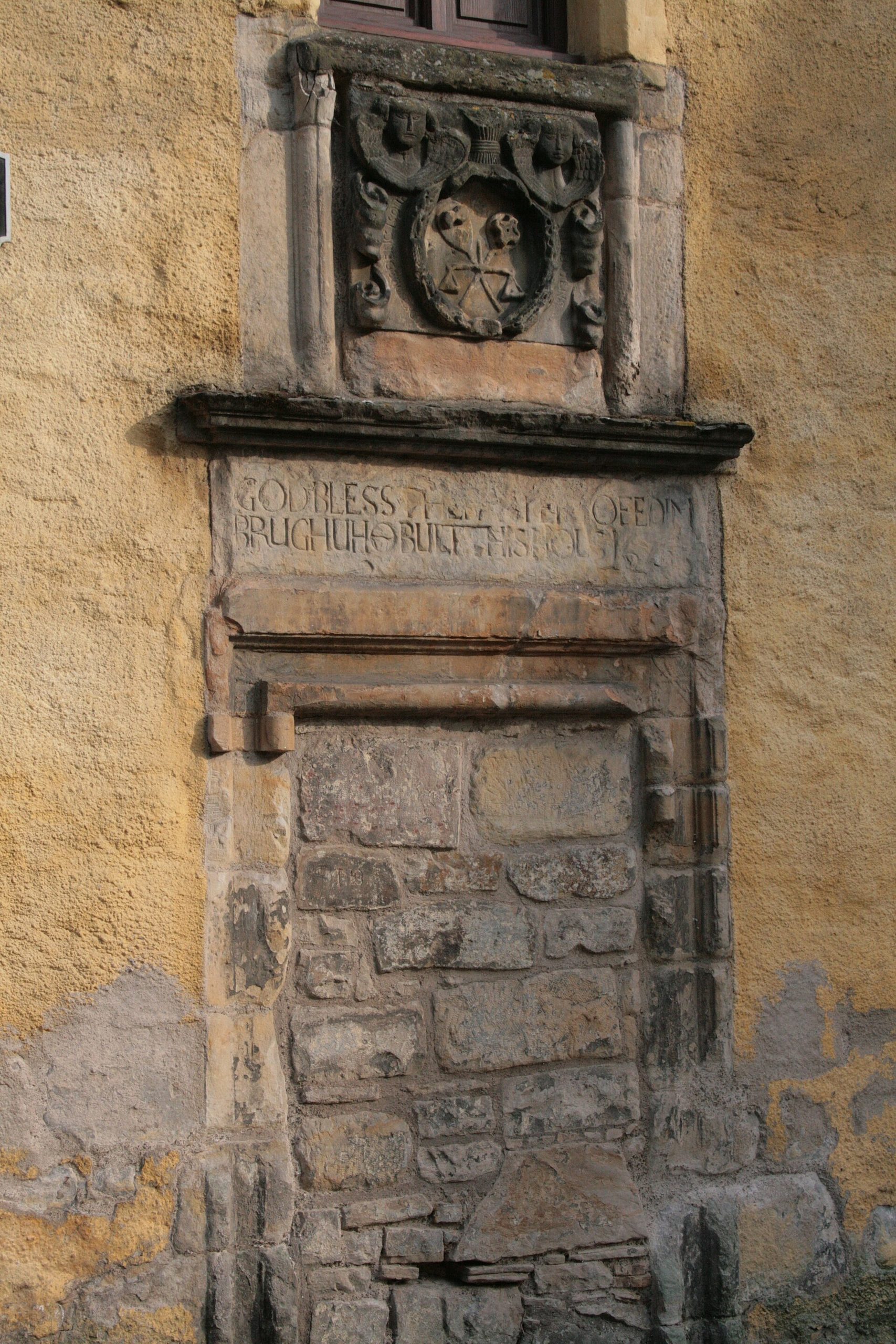
Ten minutes from Princes Street, down a steep cobbled lane, sits a village that looks as if it wandered in from the countryside. Dean Village grew up around the mills on the Water of Leith, grinding grain for Edinburgh’s bakers from the 12th century; the Baxters’ granary still stands at 13–15 Bell’s Brae, dated 1675. The building everyone photographs is Well Court, the red sandstone courtyard with its clock tower, built in 1883–1886 as workers’ housing. Follow the walkway downstream under Thomas Telford’s Dean Bridge (1829–1831). Come early — and keep it quiet, as this is a residential neighbourhood.
2. Dunbar’s Close Garden — the secret garden on the Royal Mile
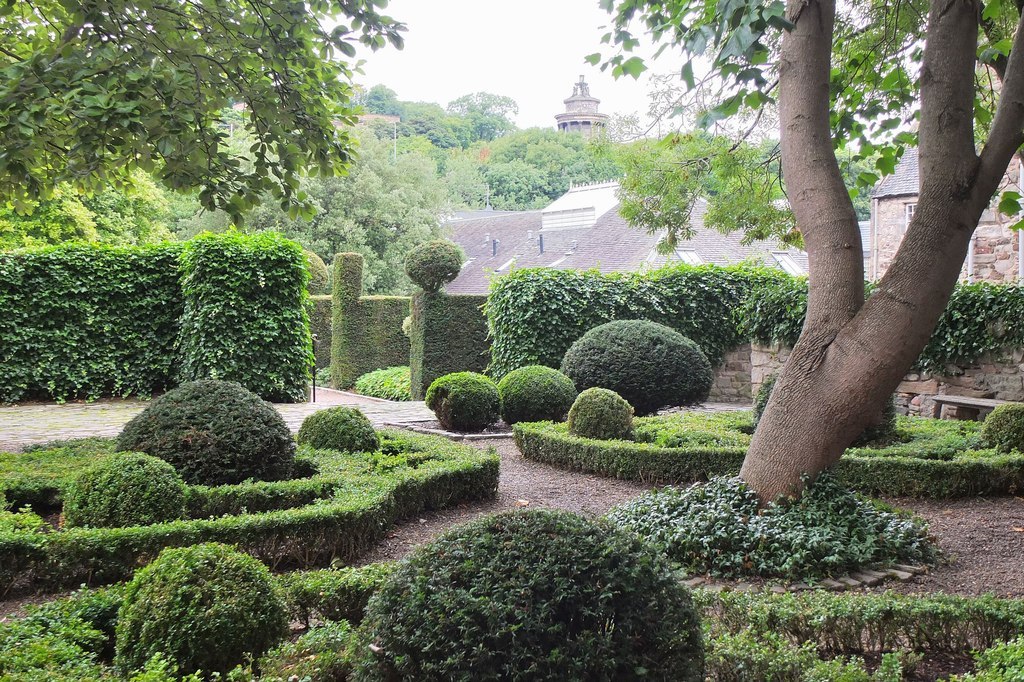
Thousands walk past this one daily without noticing. About halfway down the Canongate, at 137 Canongate, a narrow cobbled close opens — with no sign — into a walled garden in 17th-century style, all clipped hedges and gravel paths. The garden is newer than it looks: created in 1976 on a former building plot, designed by Seamus Filor. Entry is free. It opens at 7am daily; closing shifts with the season, from around 3:30pm in winter to around 7:30pm in summer.
3. Dr Neil’s Garden — the secret garden by the loch
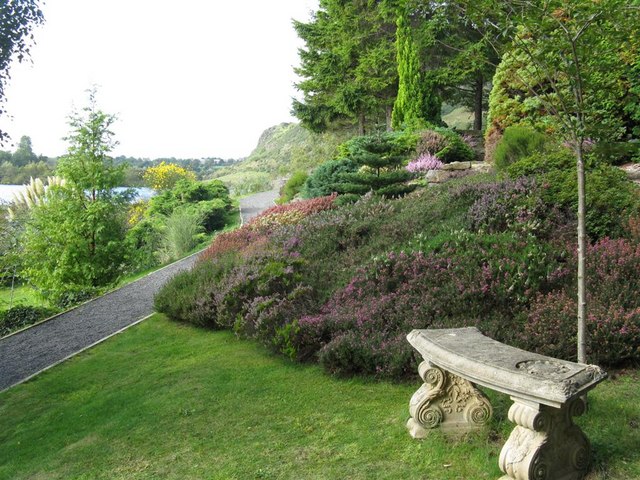
On the far side of Arthur’s Seat, beside Duddingston Loch, sits the garden many residents call the city’s most peaceful corner. Two local GPs, Dr Andrew and Dr Nancy Neil, began making it in 1963, and a volunteer-run charitable trust looks after it today. Terraces of alpines, heathers, and conifers wind toward the water, beside 12th-century Duddingston Kirk. Entry is free; the garden is open daily from 10am to dusk, and dogs are not allowed except assistance dogs. Afterwards, walk five minutes to the Sheep Heid Inn, which claims to be Scotland’s oldest pub, with records of a licence dating to 1360.
4. Circus Lane — the prettiest street in Stockbridge
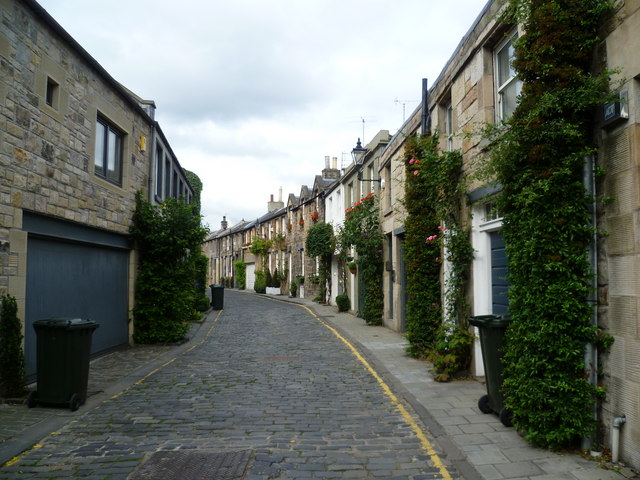
Stockbridge is already Edinburgh’s village-within-the-city, but its prettiest corner is one street back. Circus Lane is a curving cobbled mews built in the early 1800s as stables and coach houses for the wealthy families of the grand Royal Circus terraces nearby. Today the former carriage doors open onto private cottages dressed with window boxes and climbing plants. The view that makes it is the spire of St Stephen’s Church rising behind the rooftops: designed by William Henry Playfair, completed in 1827–1828, its 49-metre tower is said to house the longest clock pendulum in Europe. Come early in the morning.
5. St Bernard’s Well — a Roman temple on the riverbank
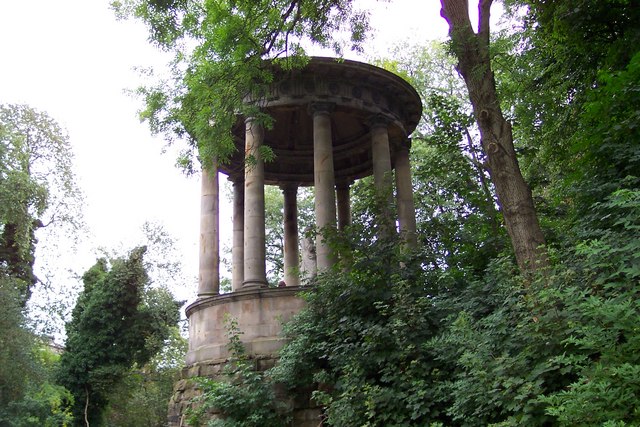
Follow the Water of Leith Walkway downstream from Dean Village toward Stockbridge for about ten minutes and you reach one of Edinburgh’s strangest sights: a small domed temple in the Roman Doric style, standing on the riverbank. The mineral spring here was rediscovered around 1760, and its waters became fashionable with Georgian Edinburgh, who believed them therapeutic. In 1789 Lord Gardenstone commissioned the painter Alexander Nasmyth to build the temple over the spring, modelled on the Temple of Vesta at Tivoli, with a statue of Hygieia, goddess of health, inside and the inscription Bibendo Valeris — “drink and you will be well” — over the door. Do not take it literally: the well was closed in the 1940s after the water was found to contain arsenic. The temple is usually locked, but it is free to view from outside.
6. Cramond Island — the island you can only walk to at low tide
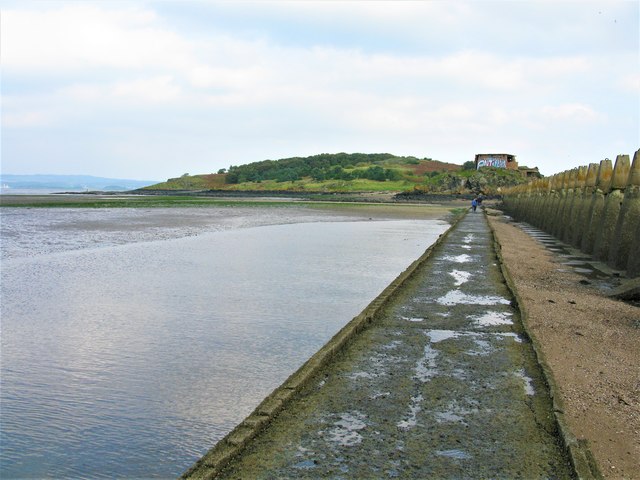
This is the one entry here that can genuinely go wrong. On Edinburgh’s north-west shore, a paved causeway about a mile long runs out to Cramond Island, flanked by concrete pylons — remains of a Second World War anti-boat barrier. The causeway is only walkable for roughly two hours either side of low tide, about four hours a day, and is fully submerged at high tide. Check the safe crossing times on the noticeboard at the causeway, or text CRAMOND to 81400. The crossing takes 20–25 minutes each way; allow about 90 minutes on the island, which has no facilities. If cut off, do not wade or swim: call 999 and ask for the Coastguard. Take Lothian bus 41 from the city centre.
7. Tweeddale Court — the Outlander close nobody queues for
Bakehouse Close, a five-minute walk away, draws the Outlander crowds. Tweeddale Court, its quieter neighbour, was used in the same series — season three, episode six, as a bustling 18th-century marketplace — and most days you will have it to yourself. Look for the arched pend at 14 High Street. Inside is Tweeddale House, first recorded in 1576, and a small shed said to be Edinburgh’s smallest listed building: an 18th-century sedan chair house. A stretch of old walling is thought to be part of the medieval King’s Wall.
8. White Horse Close — the courtyard that looks like a film set
Near the foot of the Canongate, a narrow pend leads into White Horse Close, a cobbled courtyard of crow-stepped houses that looks almost too picturesque to be real — and partly it is. The White Horse Inn was established here in 1623 by Laurence Ord, with stagecoaches leaving for Newcastle and London, and the close was heavily restored in the 1960s after falling into decline. One architectural historian described the result as “so blatantly fake that it can be acquitted of any intention to deceive.” Look for the datestone reading 1623 above the twin forestair, and the plaque recording that William Dick, founder of the Royal (Dick) School of Veterinary Studies, was born here in 1793.
9. Craigmillar Castle — Edinburgh’s other castle
Everyone knows the castle on the rock. Far fewer visitors make it to Craigmillar, three miles south-east of the centre: a ruined 14th-century tower house and courtyard castle. It is best known for Mary, Queen of Scots, who came here in November 1566 to convalesce after the birth of her son, the future James VI; here the Craigmillar Bond was plotted against her husband, Lord Darnley. Adult admission is £7.50 online or £8.50 in person. Summer hours are daily 9:30am–5pm (April–September); winter hours are 10am–4pm, closed over Christmas and New Year — check the Historic Environment Scotland page before you go.
10. St Cecilia’s Hall — Scotland’s oldest concert hall, hiding in plain sight
At 50 Niddry Street, steps from the Royal Mile, stands a building most visitors walk straight past: St Cecilia’s Hall, built in 1763 to designs by Robert Mylne and Scotland’s oldest purpose-built concert hall. Inside is the University of Edinburgh’s music museum, one of the world’s most important collections of historic musical instruments, displayed around the elegant oval Sypert Concert Room. Admission is free; the hall is open Tuesday to Saturday, 10am–5pm (last entry 4:30pm), closed Sunday and Monday. Concerts are still held here, and some instruments are still played. Allow about an hour.
How to string the gems together
Water of Leith morning: Dean Village → St Bernard’s Well → Circus Lane and Stockbridge for lunch. Royal Mile closes afternoon: Dunbar’s Close Garden → Tweeddale Court → White Horse Close, with St Cecilia’s Hall as the indoor stop. East side half-day: Dr Neil’s Garden and Duddingston village, then Craigmillar Castle. North-west half-day: Cramond village and the island, timed to the tide — never the other way round. Pair these finds with my Edinburgh in 3 Days itinerary, and pick a base with my where to stay in Edinburgh guide — Stockbridge for the river walk, the Old Town for the closes.
A few bookings worth making
Most of this list is free, and that is the point. But two paid experiences fit the hidden-Edinburgh theme. After dark, a haunted underground vaults walking tour takes you beneath South Bridge into the 18th-century chambers most visitors never see. On a rainy evening, a whisky tasting with storytelling in a private Royal Mile lounge pours four single malts, with non-whisky alternatives available. And if you have a spare day, the classic escape is a small-group Loch Ness and Highlands day tour with a cruise — Glencoe included.
Practical tips
Respect the residents. Dean Village, Circus Lane, and the closes are people’s homes — visit quietly and don’t block doorways for photographs. Check before you go. Garden closing times, Craigmillar’s conservation notices, and concert days all change; the venue’s own page is the authority. Wear proper shoes. Edinburgh is steep, cobbled, and often wet. Watch the tide, not the clock, at Cramond.
Edinburgh rewards the curious. Walk down the close with no sign and follow the river past the last café — and you will find the Edinburgh most visitors never know exists. If you enjoyed hunting for the quiet corners here, my London’s hidden gems guide works the same way down south, and my UK & Ireland hub pulls together all ten of our guides for London, Edinburgh, Dublin, and the Highlands.