
Three capitals, three currencies, three completely different ideas of what a Christmas market should be — and one easy rail line tying them together. Vienna does Christmas imperially, all floodlit palaces and orchestras of stall lights. Prague does it cinematically, in a medieval square under the Astronomical Clock. Budapest does it warmly, with a light show on a basilica and a thermal bath waiting at the end of the coldest evening. Strung together in the order Vienna, Prague, Budapest, they make the single best week-long Christmas market trip in Europe — no flights in the middle, no backtracking, and a new city roughly every two days.
Never forget a thing before you fly. My free 8-page Travel Planning Checklist walks you through the whole trip — 6 planning timelines, 36 checks, from booking windows to travel-day basics. One email, no spam, unsubscribe anytime.
This itinerary is the day-by-day version of that trip: seven days, two train rides, and all three flagship markets at the point in the season when every one of them is open. It builds on our roundup of Europe’s 10 best Christmas markets for 2026, where you will find the full dates, food notes, and market-by-market tips for each city below. Here, the job is sequencing: which market on which evening, which train to book, and where to slow down so the trip feels like a holiday rather than a checklist.
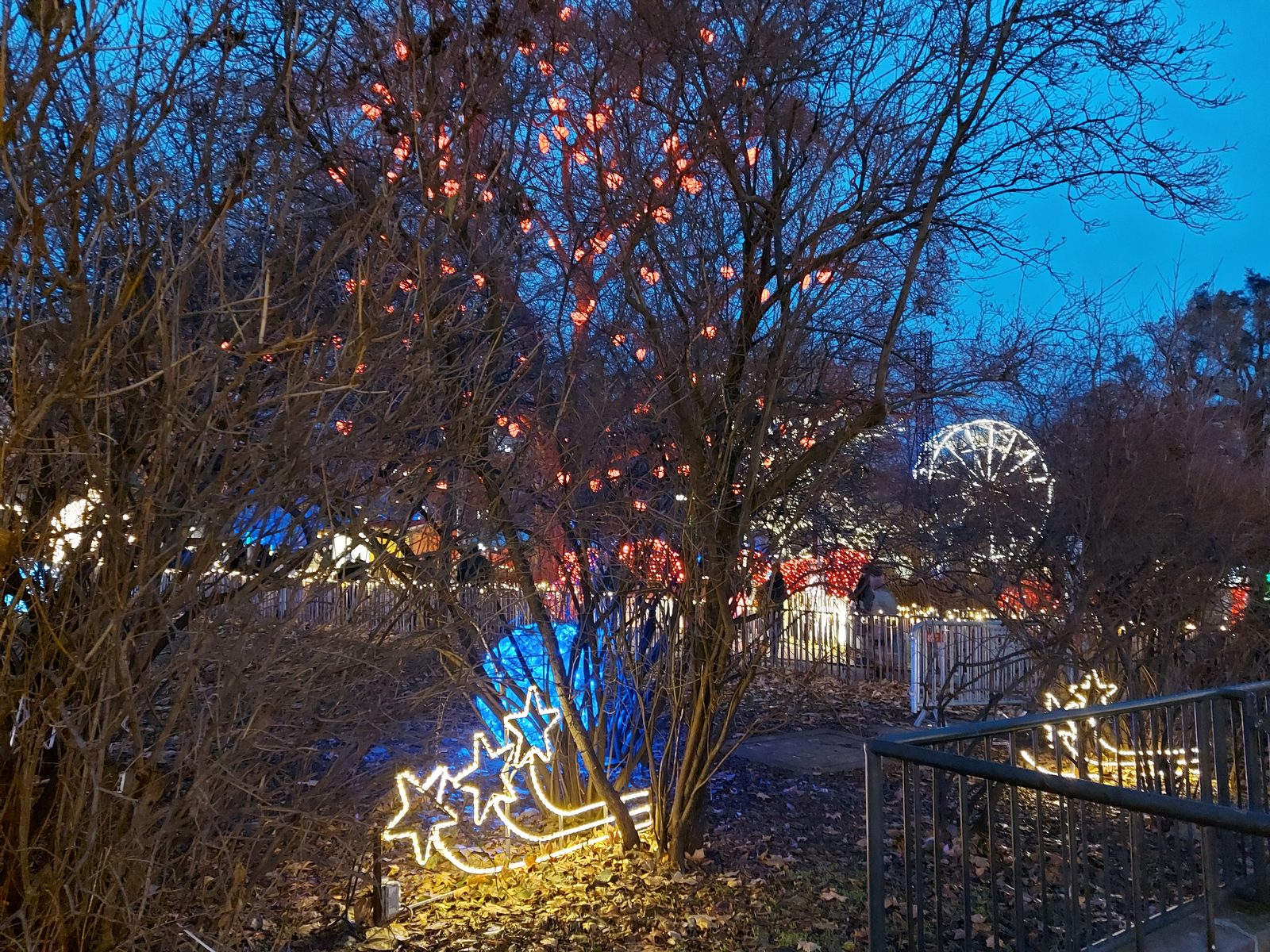
The route at a glance
Days 1–2: Vienna. Arrive, settle in, and give the Christkindlmarkt at Rathausplatz your first evening, when jet lag is irrelevant and the lights do the work. Day 2 adds the Schönbrunn and Spittelberg markets at a slower pace.
Day 3: Vienna to Prague. A morning Railjet, about four hours, then your first Prague evening in Old Town Square as the market lights come on.
Days 4–5: Prague. Two full days for the Old Town, Wenceslas Square, and Náměstí Míru markets, plus the castle across the river.
Day 6: Prague to Budapest. The long leg — a direct EuroCity at roughly six and three-quarter to seven hours — timed so you still reach Budapest in time for the Advent Basilica market after dark.
Day 7: Budapest. The Basilica and Vörösmarty Square markets by day, and a soak at the Széchenyi thermal baths to finish the trip the way Budapest intends.
The order matters. Starting in Vienna and ending in Budapest follows the natural west-to-east rail geography, keeps the longest train ride for the day when you are happiest to sit down, and saves the cheapest of the three cities — and its baths — for last. It also means flying into Vienna and home from Budapest, an open-jaw ticket that usually costs little more than a return and saves an entire retracing journey.
Days 1–2: Vienna — the imperial opener
Vienna’s Christkindlmarkt on Rathausplatz runs from November 13 to December 26, 2026, and it sets the scale for everything that follows: more than a hundred stalls in the park in front of the floodlit neo-Gothic City Hall, a giant illuminated tree, and the Ice Dream skating rink curling through the trees beside it. Do what experienced visitors do on night one — order a Punsch and a bag of roasted chestnuts, walk one full lap without buying anything, and only then start shopping; the best craft stalls sit toward the back, away from the entrance crush.
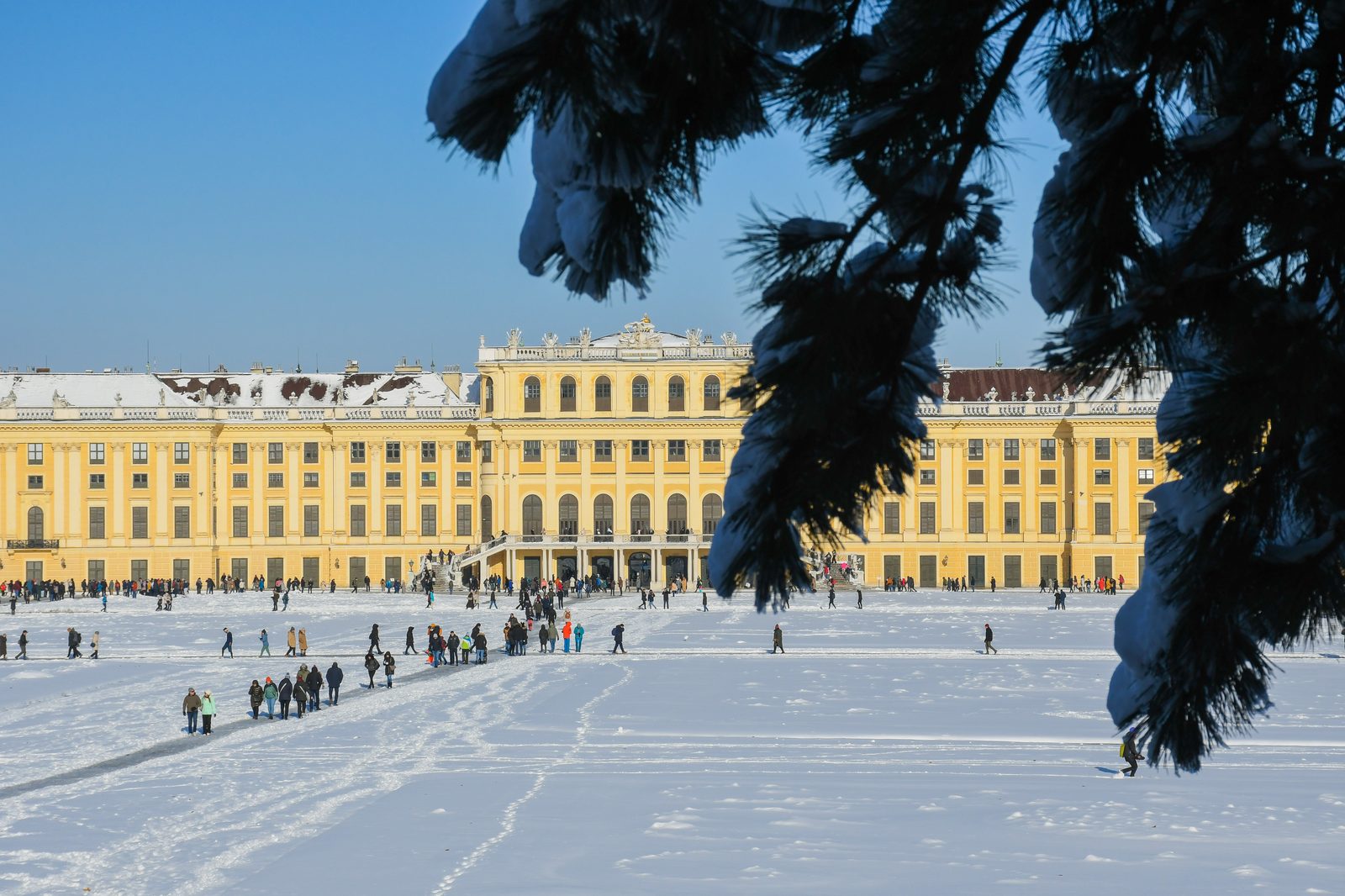
Day 2 is for Vienna’s other two essential markets. The Schönbrunn Palace market, in the great courtyard in front of the Habsburgs’ summer palace, is the most elegant of the three cities’ markets — fewer crowds, better crafts, and the palace facade as a backdrop. Go in the morning, tour the palace while the day-trippers are still arriving, and browse the stalls as you leave. Then, in the evening, walk the Spittelberg market in the Neubau district: a village of stalls threaded through narrow Biedermeier lanes, heavy on handmade work and mulled wine, and the market Viennese actually choose for themselves. Between markets, Vienna’s coffee houses are your warming stations — a melange and a slice of Sachertorte is a legitimate sightseeing stop here, not an indulgence.
Where you sleep shapes all of this more than most visitors expect, because December evenings are short and you will walk home from at least one market in the dark. Our guide to where to stay in Vienna breaks down the districts that work best for a market trip — the Innere Stadt for walking everywhere, Neubau for character near Spittelberg, and the better-value districts just outside the Ring — with the hotel picks we would book in each.
Day 3: Morning train to Prague, first evening in Old Town
Leave Vienna after breakfast on a Railjet to Prague — about four hours, city center to city center, with the Moravian countryside rolling past and none of the airport overhead at either end. Book a morning departure and you are in Prague by early afternoon, checked in with daylight to spare. Resist the urge to sightsee hard on arrival. Drop your bags, walk the Old Town slowly, and let the evening be the event.
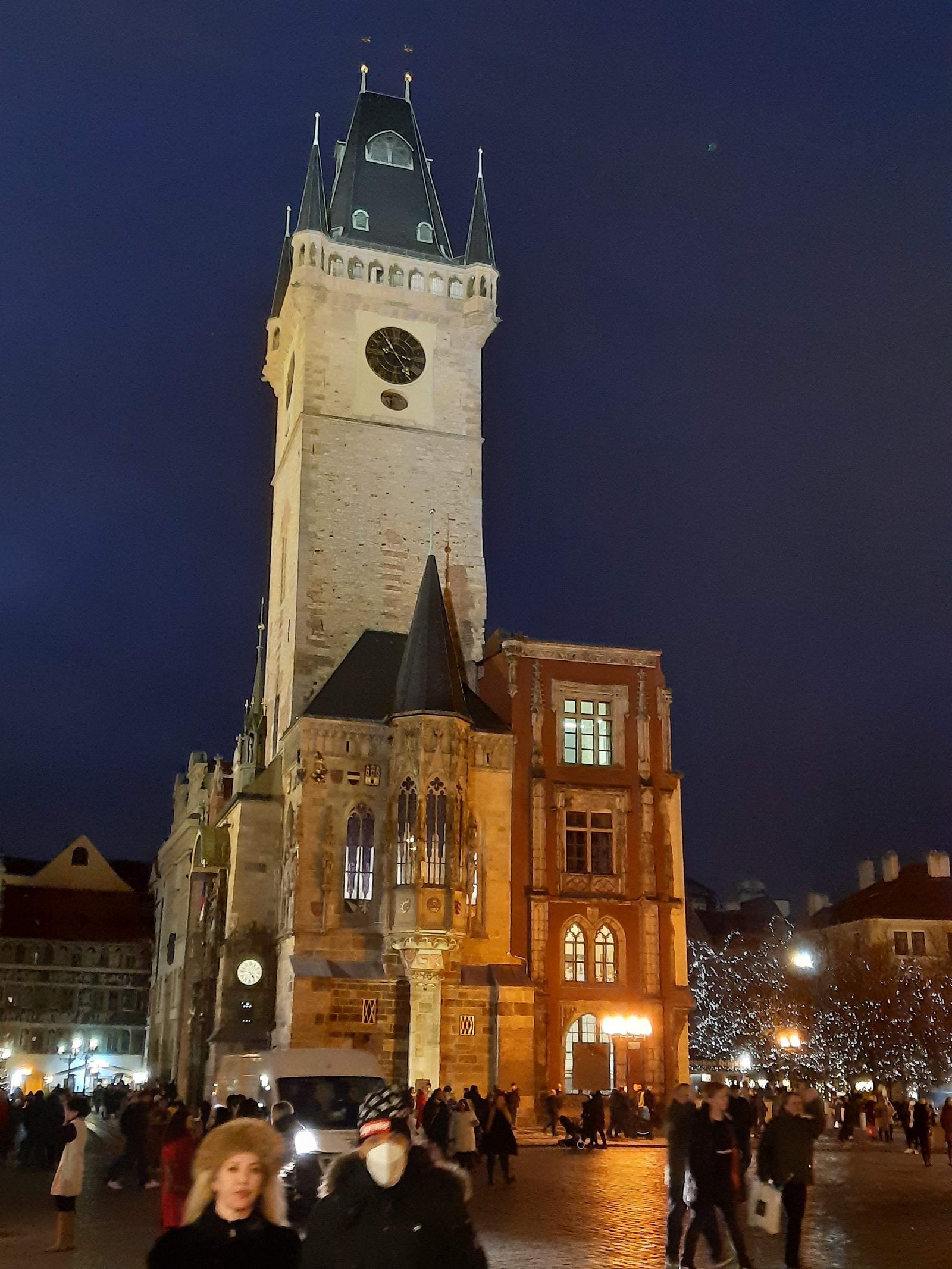
Prague’s Old Town Square market opens on November 28, 2026, and runs to January 6, 2027, organized by Taiko and open daily from 10am to 10pm. Beneath the Astronomical Clock and the twin spires of the Týn Church, it is the most cinematic market on this route: a giant tree, a nativity scene, choir concerts most evenings, and the smell of svařák — Czech mulled wine — over everything. Your first evening needs no plan beyond the square itself, a warm drink, and an early night. The one warning that matters here is pickpockets in the evening crush around the clock’s hourly show; keep your wallet zipped away and your daypack in front of you.
Days 4–5: Prague — three markets and a castle
Prague rewards a two-speed plan. Day 4 belongs to the markets: start at Old Town Square in the late morning, when the stalls are open but the crowds are still thin, then walk ten minutes to the Wenceslas Square market, the long boulevard market that is more local in feel and better for an inexpensive lunch. In the afternoon, detour to the Náměstí Míru market in Vinohrady — smaller, calmer, and the one Prague residents recommend when the Old Town gets overwhelming. It is also your best Prague market for handmade gifts rather than souvenirs.
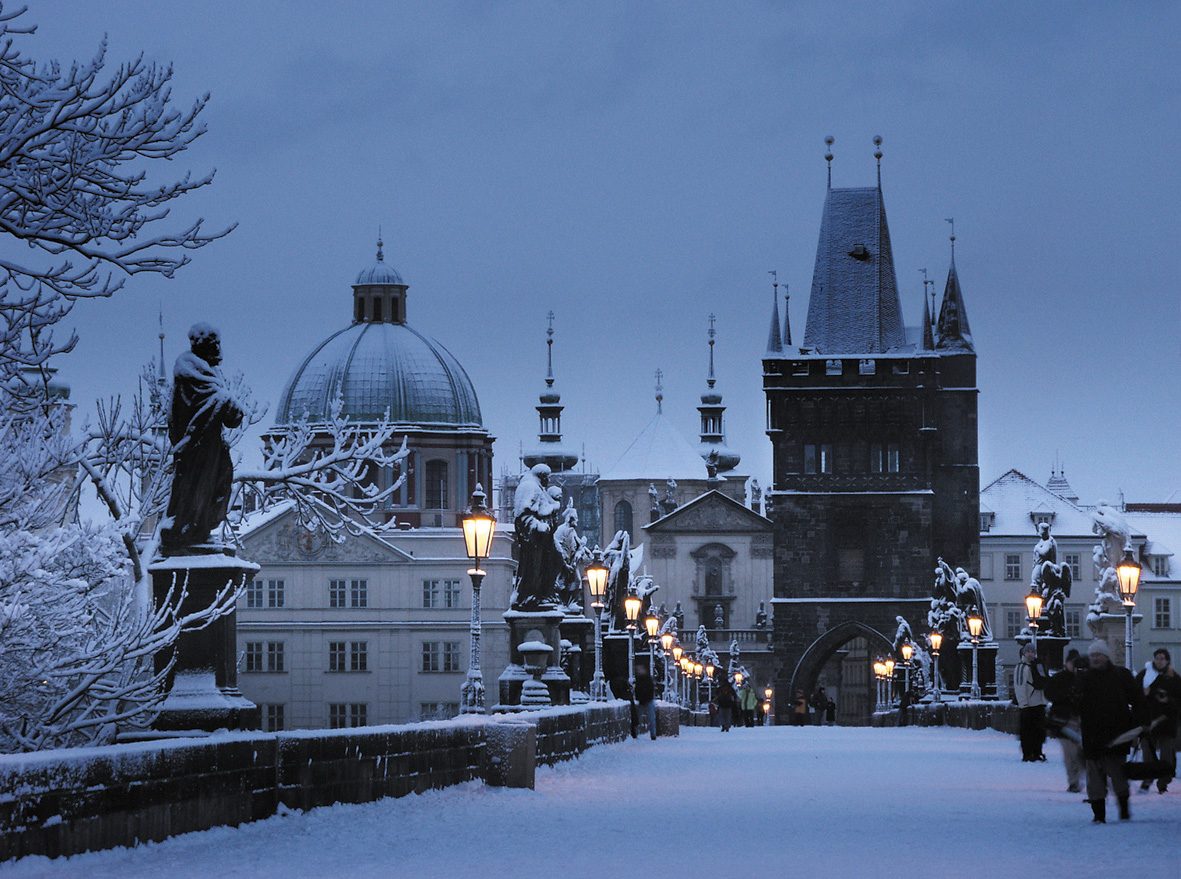
Day 5 belongs to the other Prague. Cross Charles Bridge early, before the crowds — in winter light, with mist on the Vltava, it is one of Europe’s great short walks — and climb to Prague Castle for the morning. The castle complex is enormous, so give it a proper half day rather than a rushed hour, then drift back down through Malá Strana’s baroque lanes as the light fades. Finish where you started, in Old Town Square after dark: the market you saw on night one looks different once you know the city around it.
Base yourself well and all of this is walking distance. Our guide to where to stay in Prague compares the bases that suit this itinerary — Old Town for the sights at your doorstep, Malá Strana for the romantic castle-side streets, and Vinohrady for local life at kinder prices — with honest hotel picks in each.
Day 6: The long train day to Budapest
Today is the honest trade-off in this itinerary, and it is worth stating plainly: Prague to Budapest is a long leg. Direct EuroCity trains take about six and three-quarter to seven hours. There are three sensible ways to handle it. The simplest is the direct day train — settle into a reserved seat with a book, a picnic, and the Danube Bend scenery on the final approach into Budapest, and treat the ride as a rest day built into the trip. The second option is routing back through Vienna, which breaks the journey into two shorter hops but adds a change and rarely saves real time. The third is the night train, which trades a hotel night for the travel hours and delivers you to Budapest in the morning — a good choice if your seven days are fixed and you would rather spend the daylight sightseeing.
Whichever you choose, aim to be in Budapest by evening, because the Advent Basilica market is at its best after dark. It runs from November 13, 2026, to January 1, 2027, in the square in front of St. Stephen’s Basilica, and its signature is a 3D light show projected onto the basilica facade through the evening. A first night of kürtőskalács — chimney cake, fresh off the spit — under those lights is the correct Budapest arrival, whatever train you came in on.
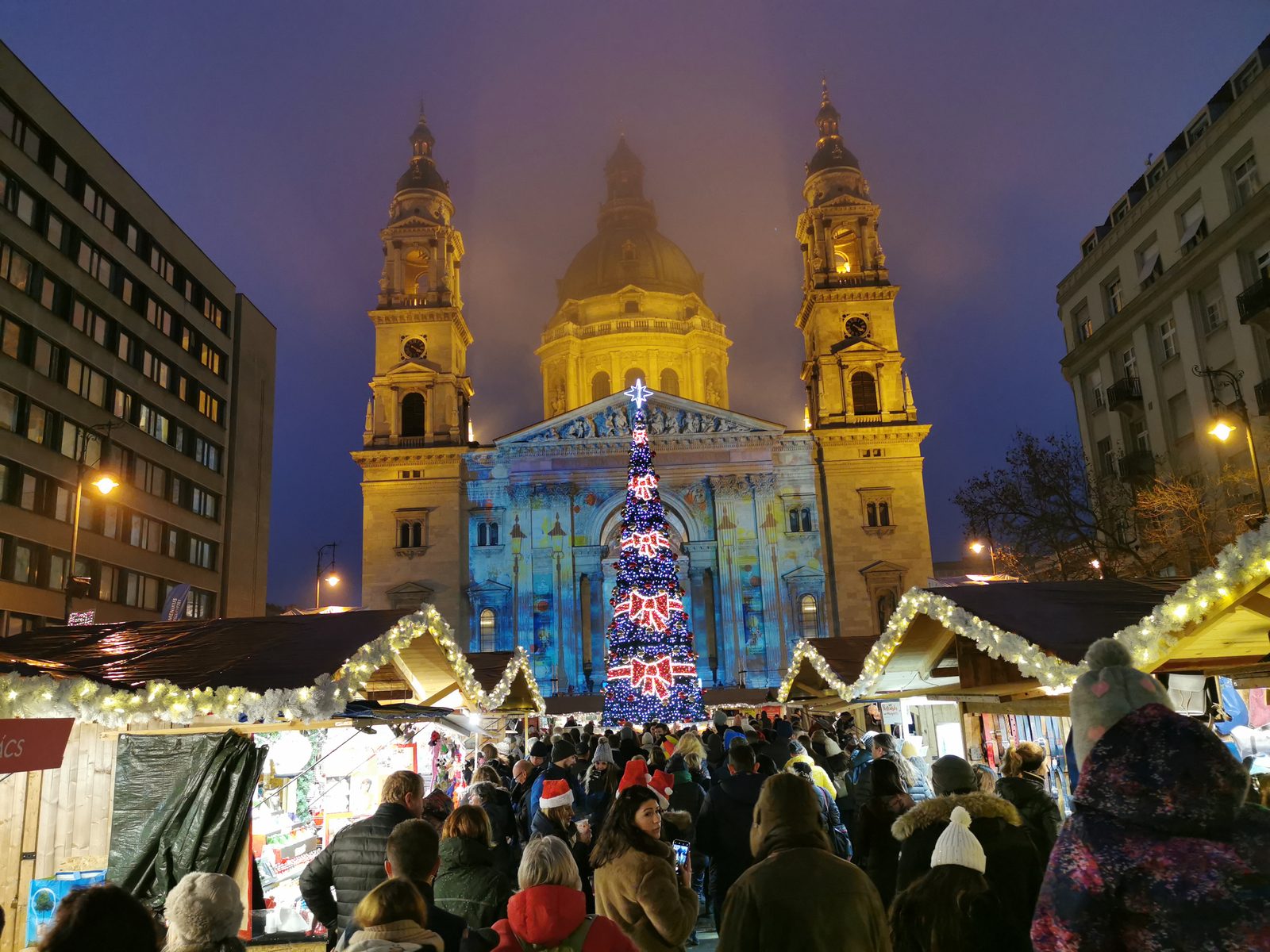
Day 7: Budapest — markets, then the baths
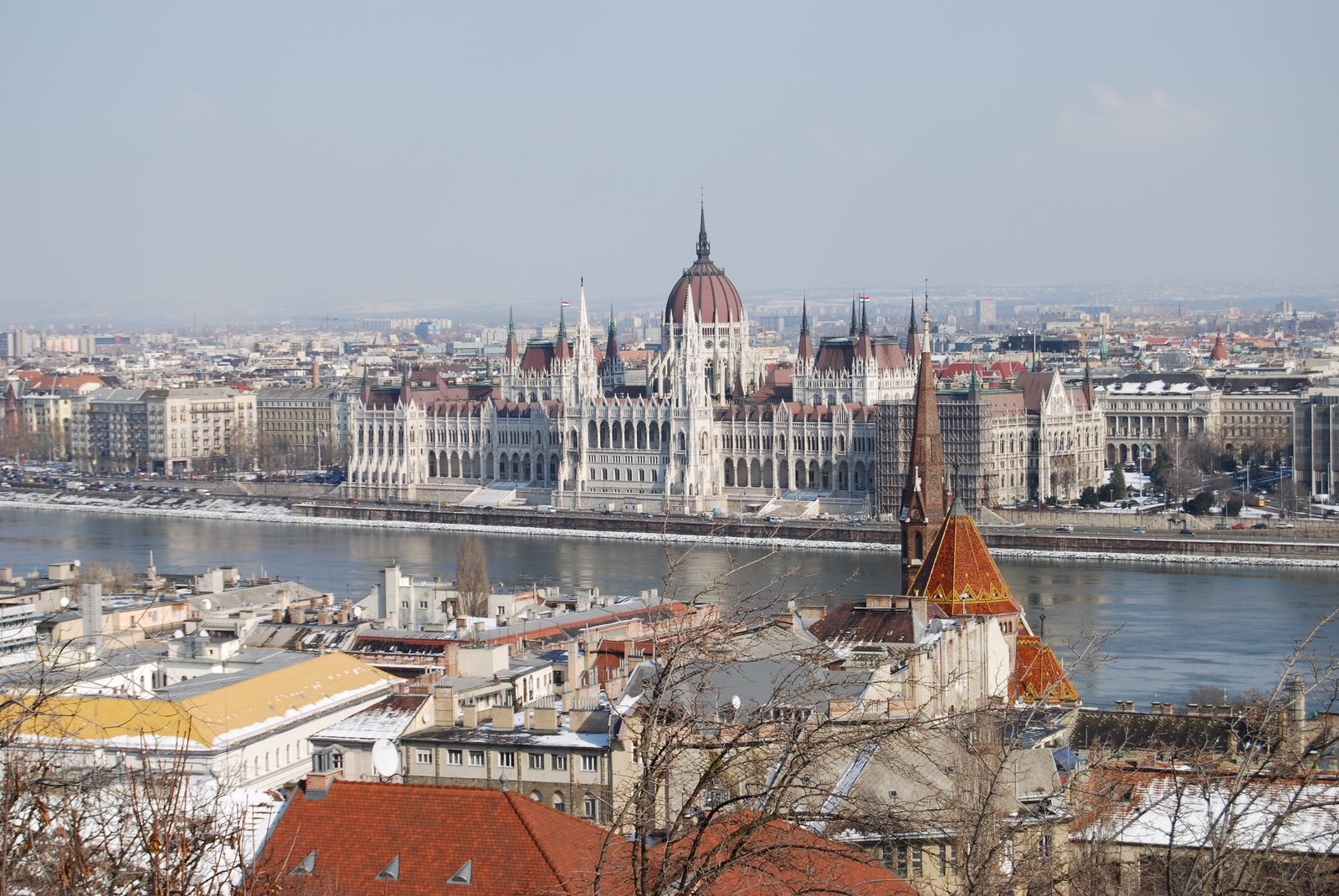
Your last day pairs Budapest’s two central markets. Start at the Advent Basilica in daylight to shop the craft stalls properly — this market is known for genuine handmade work — then walk a few minutes to Vörösmarty Square, Budapest’s traditional market square, for lunch from the food stalls. Together they take a comfortable half day, which leaves the afternoon for the trip’s built-in rest note: the Széchenyi thermal baths. Sitting in steaming outdoor water while the winter air sits near freezing, after six days of cold squares and train platforms, is not a tourist cliché — it is the single best recovery hour in Central Europe, and the right full stop for this itinerary. Book the baths ahead on a December weekend, go late in the afternoon, and stay into the early evening if you can.
For the night before, choose your base with the baths and the Basilica in mind. Our guide to where to stay in Budapest sorts the choice between buzzing Pest — District V puts both markets and the river on foot — and calm, view-filled Buda across the Danube, with hotel picks for each style of trip.
Trains: booking the two legs well
Both legs are simple if you follow three rules. First, book direct with the national railways — ÖBB for departures from Austria, ČD for departures from Czechia, and MÁV for Hungarian trains — rather than through resellers; you get the real timetable, the cheapest advance fares, and straightforward changes if plans move. Advance fares on the Vienna–Prague Railjet are released well ahead and the cheapest sell first, so book as soon as your dates are fixed. Second, reserve seats. In December, and especially on Friday and Sunday trains, an unreserved seat is a gamble you do not need; the reservation costs little and turns boarding into a non-event. Third, travel light enough to lift your own bag onto a rack — neither leg has checked luggage, and the stations reward travelers who can simply walk off and go.
On the day, arrive twenty minutes early, check the departure board rather than your app alone, and keep a paper or offline copy of each ticket. Trains on both routes are comfortable, café cars are standard on the Railjet and EuroCity services, and the stations at both ends of each leg sit in the city center — which is precisely why this itinerary works better by rail than it ever would by air.
When to go, and booking the trip
Timing is the one decision that makes or breaks this route. The three flagship markets overlap from November 28 to December 23 — Prague opens last, on November 28, and Vienna’s Rathausplatz market closes first after Christmas, on December 26 — so any seven-day window inside those dates gives you all three markets at full strength. Early December on weekdays is the sweet spot: every market open, lights at their best, and crowds a notch below the mid-December weekend peak. If you can only travel over a weekend, start on a Friday and let the two train days fall where they may; the markets are open daily, and weekday evenings in each city will still give you the calmer version at least twice.
Book in this order: trains first, because the cheapest advance fares go earliest; then hotels, because December rooms near the main squares are the scarcest resource on the whole trip. On that second point, do not guess — our European Christmas markets hotel-price data study checked real, bookable December prices near the major markets, including Vienna and Prague, and shows exactly how wide the price spread is between cities and how much the booking window matters. Pack for standing around in the cold rather than walking in it: thermal layers, a proper winter coat, and warm waterproof boots will earn their suitcase space every single evening.
The short version
Seven days, three capitals, two trains, and three of Europe’s great Christmas markets — each seen the way it deserves, in the evening, at walking pace, with a warm drink in hand. Vienna gives the trip its grandeur, Prague its storybook heart, and Budapest its warm, steaming finish. Book the trains early, pick your start date inside November 28 to December 23, and let the rail line do the rest.