
Introduction
Budapest is really two cities wearing one name, and where you sleep decides which one you get. Stay on the Pest side and you are in the thick of it: ruin bars, riverfront promenades, and a metro that drops you at the Parliament steps in minutes. Stay on the Buda side and you wake to hillside quiet, castle views, and the kind of mornings that start with church bells instead of tram brakes. Both are right. Only one is right for you.
Planning a trip? Get our free Travel Planning Checklist:
After covering hotel picks across Europe this year, I keep coming back to the same truth: the neighborhood matters more than the hotel. Get the neighborhood right and even a mid-range pick feels like a great decision. Here is my honest breakdown of Budapest’s best areas to stay in 2026, who each one suits, and what to expect to pay.
Disclosure: This post contains affiliate links. If you book through one of these links, I may earn a commission at no extra cost to you.
Buda or Pest? The First Decision
The Danube splits the city into two halves with genuinely different personalities. Pest is the flat, vibrant east bank: most of the big sights, the nightlife, the restaurant rows, and the densest concentration of hotels. It is where most first-timers should base themselves. Buda is the hilly west bank: residential, leafy, quieter at night, and home to the Castle District and its postcard views.
The two halves are well connected — the M1/M2/M3 metro lines all converge at Deák tér, and the bridges are easy walks — so do not agonize. Think of it as choosing your default evening mood: buzzing (Pest) or calm (Buda).
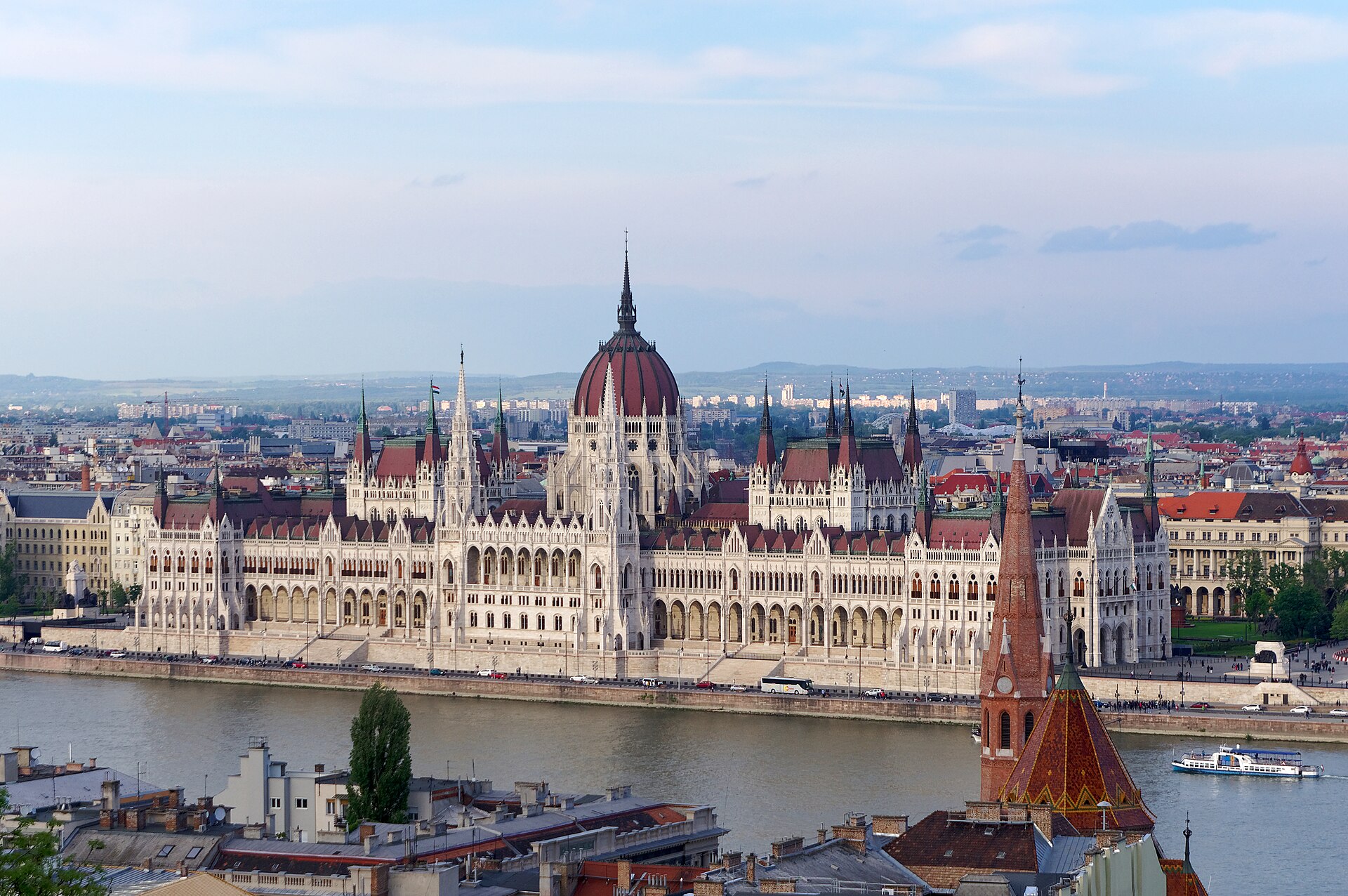
The Hungarian Parliament Building on the Danube. Photo: Jakub Hałun, CC BY-SA 4.0, via Wikimedia Commons.
1. District V: Belváros–Lipótváros — Best for First-Timers
This is downtown Budapest in the truest sense — Belváros literally means “inner city.” The Hungarian Parliament Building, St. Stephen’s Basilica, the Chain Bridge, Vörösmarty Square, and the moving Shoes on the Danube Bank memorial are all here or minutes away on foot. If you have three days and want zero wasted transit time, this is your neighborhood.
The trade-off is price: District V holds the city’s priciest addresses, including the Four Seasons Gresham Palace (an Art Nouveau landmark worth a cocktail at its Múzsa bar even if you are not sleeping there). Mid-range hotels typically run around $150 a night in the winter holiday season, with rooms on the compact side. The consolation is location — Deák tér, where the three metro lines meet, sits at the district’s edge, so everywhere else in the city is a short ride away.
Book District V if it is your first visit, you are short on time, or you want the sights at your doorstep. Skip it if you are traveling on a tight budget or want local character over convenience.
Tip: one of the smartest first-night moves in Budapest is seeing the city from the river — the Parliament and Chain Bridge lit up at night are the reason so many photos exist. A sightseeing evening cruise on the Danube departs from near Elizabeth Bridge in District V and is an easy orientation for day one.
2. District VII: Erzsébetváros (Jewish Quarter) — Best for Nightlife
If your Budapest fantasy involves ruin bars, this is ground zero. The Jewish Quarter packs Szimpla Kert and its imitators, some of the city’s best cheap eats (soup in a bread bowl at Bors Gasztrobár runs about 1,500–2,500 HUF, roughly $4–7), and a genuinely historic streetscape beneath the party veneer. Hotels and hostels here skew budget to mid-range, which is why this is the default pick for younger travelers.
The honest caveat: it is loud. As one local guide puts it, book District VII if nightlife is the point and you can sleep through anything — skip it if you are traveling with kids or need to function the next morning.
Book District VII if you want to be out late, eat cheap, and meet people. Skip it for quiet, romance, or family trips.
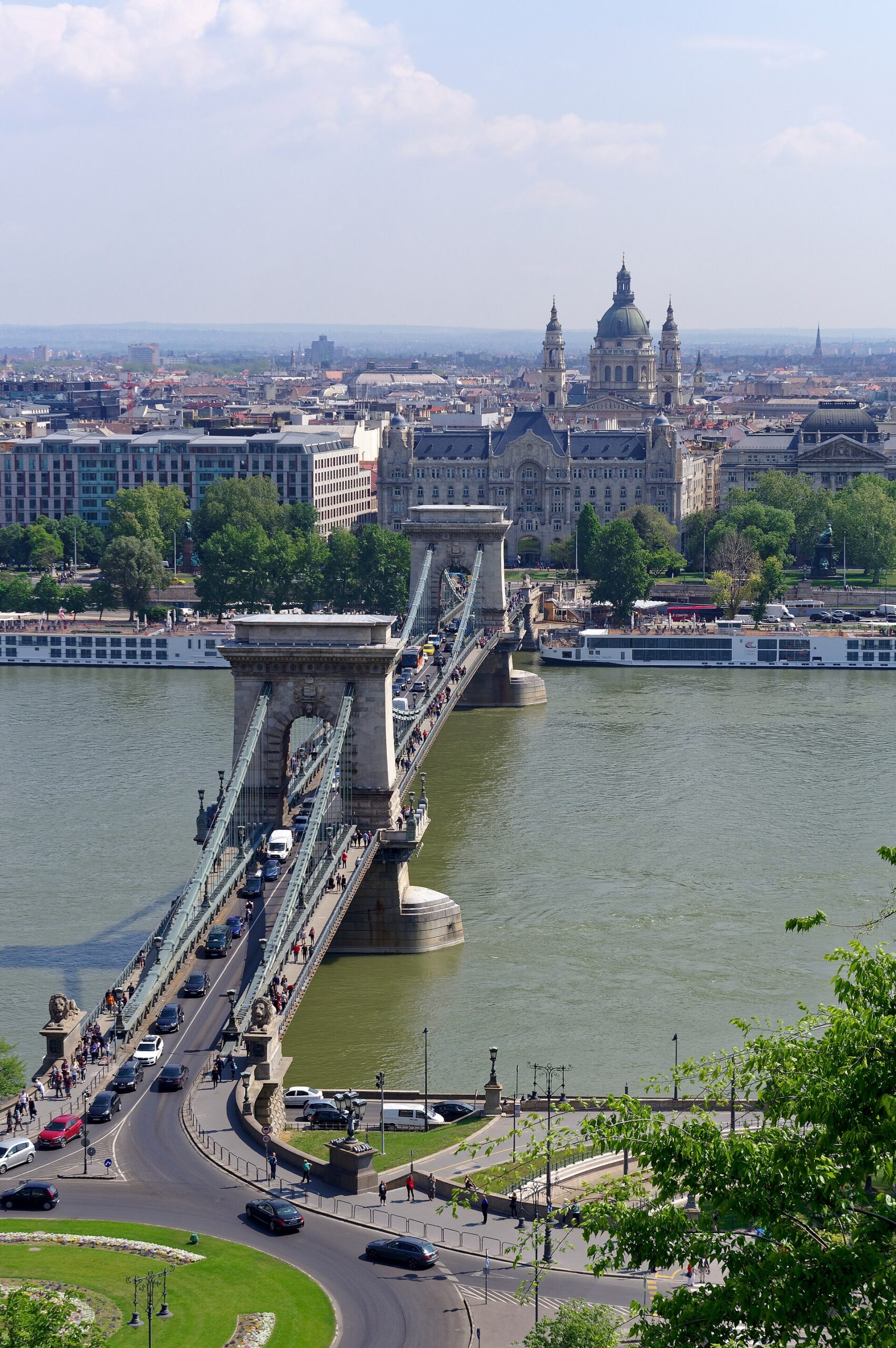
The Széchenyi Chain Bridge, the oldest and most photographed bridge in Budapest. Photo: Jakub Hałun, CC BY-SA 4.0, via Wikimedia Commons.
3. District I: The Castle District (Várkerület) — Best for Views and Families
Up on Castle Hill, the Várkerület feels like a different century: cobbled lanes, baroque townhouses, Matthias Church (where Hungarian kings were crowned), and Fisherman’s Bastion with its sweeping views across the Danube to Parliament. It is quiet at night — the party is across the river — which makes it a strong pick for families and couples who want the fairy-tale version of Budapest.
The trade-offs are real: fewer hotels, higher prices, and hills. The Castle Hill funicular (a few dollars) or bus 16 saves your legs. But waking up inside a UNESCO-listed old town, above the morning mist on the river, is hard to beat.
Book the Castle District if views and atmosphere top your list, or you want calm evenings. Skip it if you plan to be out late in Pest’s bars — the uphill return gets old fast.
To get oriented up here, a small-group walking tour of the Castle District with a historian guide covers the Castle complex, Matthias Church, and Fisherman’s Bastion in three hours — ideal for your first morning.
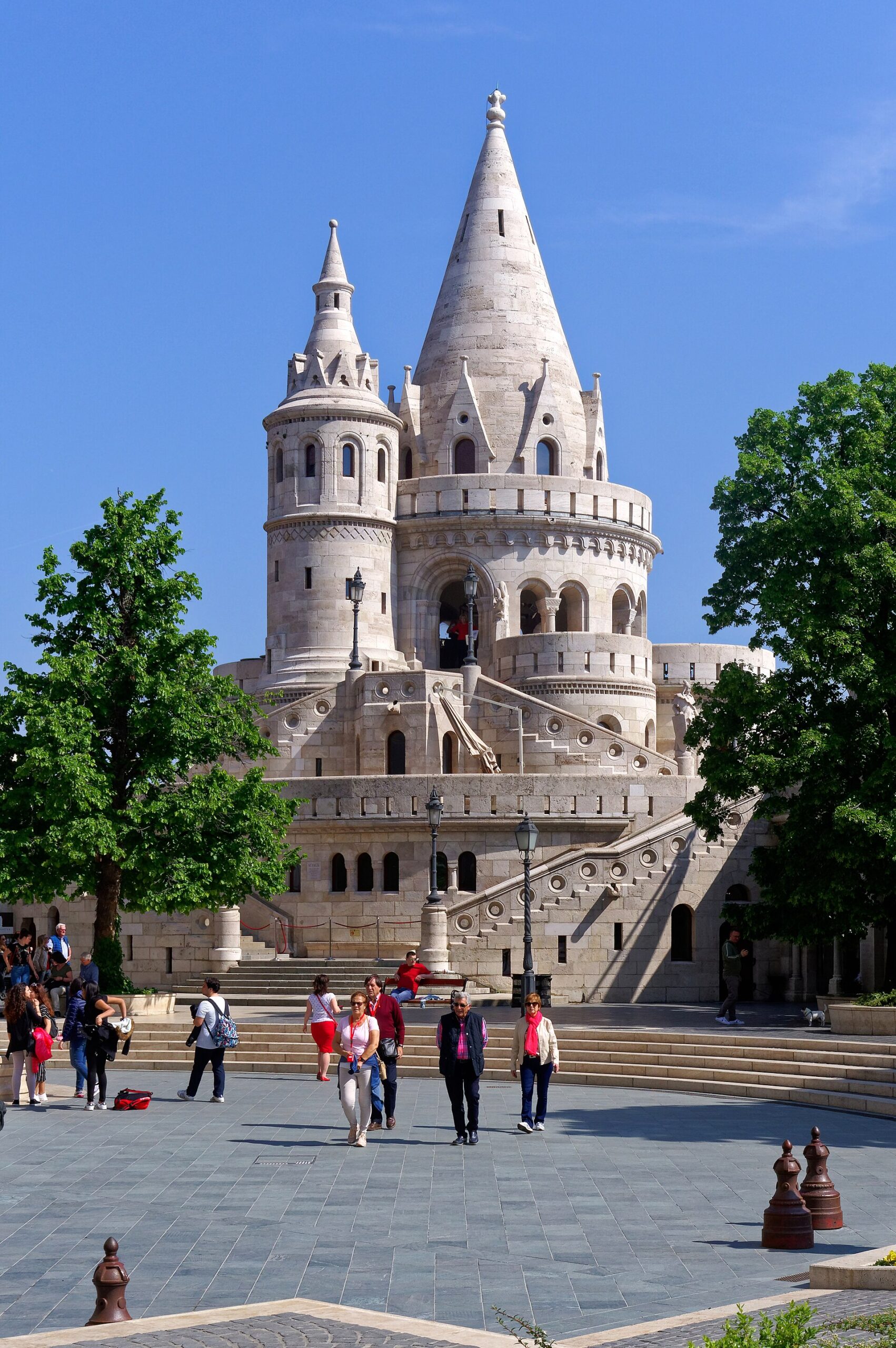
Fisherman’s Bastion overlooking the Danube and Pest. Photo: Jakub Hałun, CC BY-SA 4.0, via Wikimedia Commons.
4. District VI: Terézváros — Best Local Vibe (and the Baths)
Terézváros sits just north of the center and quietly offers one of the best balances in the city. It holds the Széchenyi Baths — the big yellow palace of thermal pools that tops every Budapest must-do list — plus Andrássy Avenue (a UNESCO-listed boulevard often called Budapest’s Champs-Élysées), the Opera House, and the House of Terror Museum. Fewer big hotels cluster here than in Districts V and VII, which means better value and a more local rhythm, while downtown is still an easy walk or one metro stop away.
Book Terézváros if you want the baths within walking distance and a neighborhood that feels lived-in. Skip it if you need to be steps from the riverfront sights.
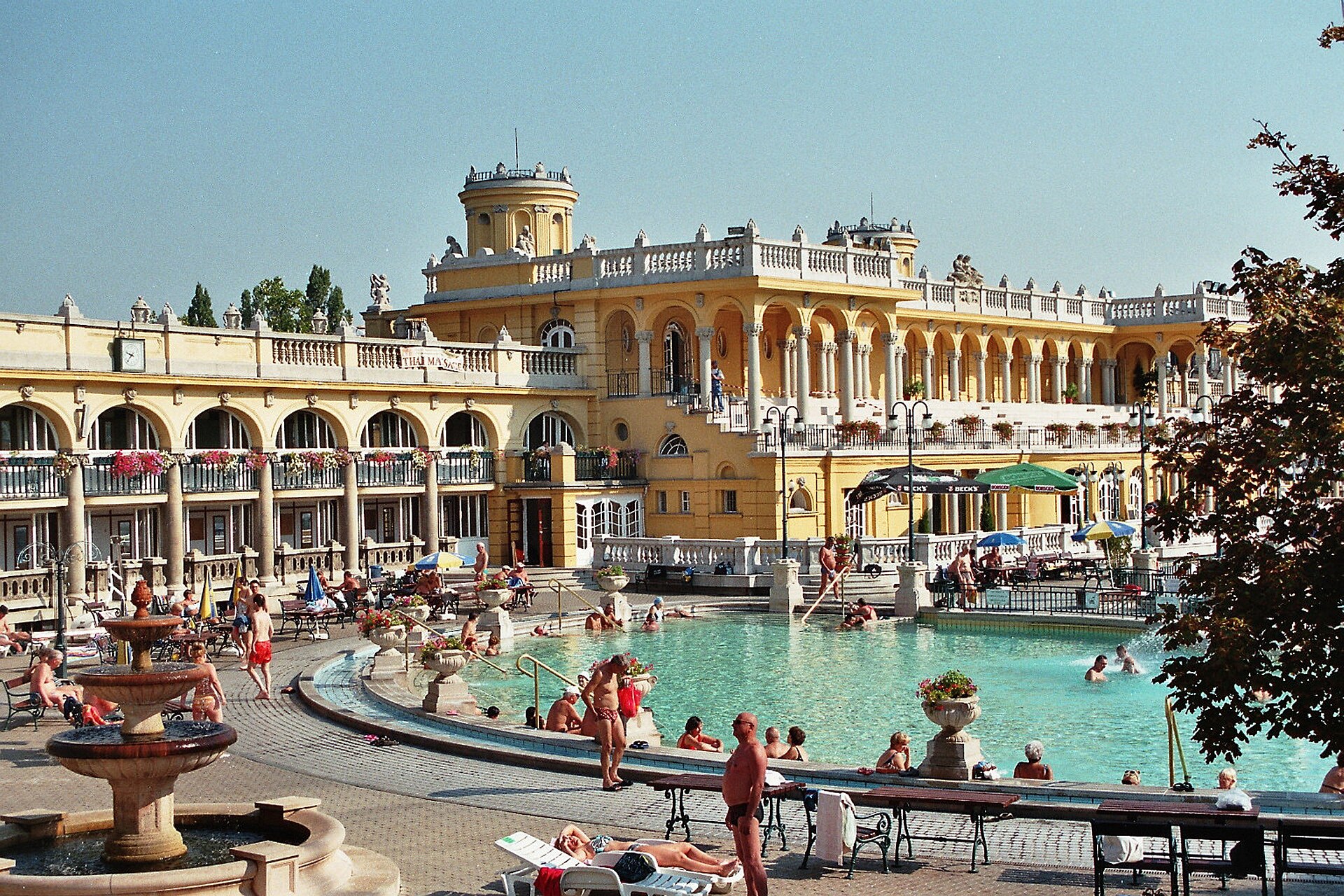
The outdoor thermal pools of Széchenyi Baths. Photo: Dguendel, CC BY 3.0, via Wikimedia Commons.
5. District VIII: The Palace Quarter — Best Value Without the Noise
Ask Budapest locals where visitors should stay and many quietly say the Palace Quarter (Palotanegyed), the inner part of District VIII. Five minutes east of the ruin-bar chaos, the mood flips completely: tree-lined streets, neoclassical buildings that survived the war intact, university crowds, and café squares like Mikszáth Kálmán tér — real Budapest without the tourist markup or the 3 a.m. noise. Hotels and apartments here are noticeably cheaper than Districts V and VII.
One caution, from the locals: stay within the inner Palace Quarter. The outer stretches of District VIII around Mátyás tér and Magdolna are the city’s most economically mixed area and warrant more care after dark. Even so, they are calmer than troubled neighborhoods in most Western cities — just pick your streets wisely.
Book the Palace Quarter if you want value, quiet, and local character. Skip it if you want to be in the middle of the action.
Quick Picks: Who Should Stay Where
- First visit, short trip: District V (Belváros–Lipótváros) — everything on foot.
- Nightlife and budget: District VII (Jewish Quarter) — ruin bars at your door.
- Views, romance, families: District I (Castle District) — quiet and postcard-perfect.
- Baths and local life: District VI (Terézváros) — Széchenyi a short walk away.
- Value and calm: District VIII (Palace Quarter) — local Budapest, lower prices.
Practical Tips for Booking in Budapest
Get a transit pass. Budapest’s metro, trams, and buses are excellent and cheap — a 72-hour travelcard costs roughly 5,500 HUF (about $15). The M1 line, opened in 1896, is the oldest electrified underground railway on the European continent and a small attraction in itself. Wherever you stay, being within a few minutes’ walk of a metro or tram stop matters more than the exact district.
Book baths ahead. Széchenyi’s outdoor pools are magical in any season, but weekends sell out — reserve a cabin (private changing room) rather than a locker if you can, and go early morning or late evening for thinner crowds.
Time it right. Summer and the December Christmas markets at Vörösmarty Square are peak season with peak prices. Late spring and early fall bring the best mix of weather, prices, and elbow room.
Splurge one evening on the river. Budapest after dark, from the water, is one of Europe’s great cheap luxuries. The Danube dinner cruise with live music pairs floodlit landmarks — Parliament, Buda Castle, the Chain Bridge — with Hungarian food and folk music. Book the later sailing so you are on the water when the lights come on.
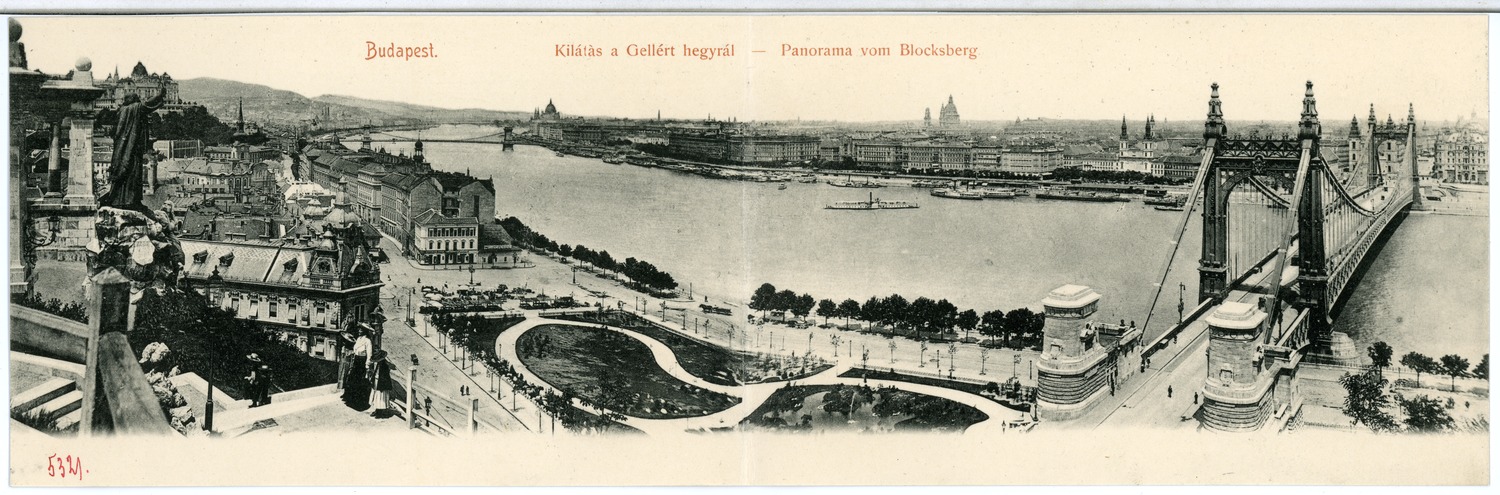
Panoramic view over the Danube and Budapest’s bridges. Photo: Brück & Sohn Kunstverlag Meißen, CC0, via Wikimedia Commons.
The Bottom Line
Budapest rewards the traveler who picks a neighborhood with intent. First-timers get the most from District V, night owls belong in District VII, view-chasers in the Castle District, bath lovers in Terézváros, and value seekers in the Palace Quarter. Whichever you choose, you are never more than a short metro ride from the thermal pools, the ruin bars, and that lit-up river at night.
If you are building a longer Central Europe trip, pair this with my neighborhood-by-neighborhood breakdowns of where to stay in Prague and where to stay in Seville — same approach, different city. And if Budapest is one stop on a bigger European loop, my roundup of 7 perfect 3-day Europe itineraries will help you string the journey together.