
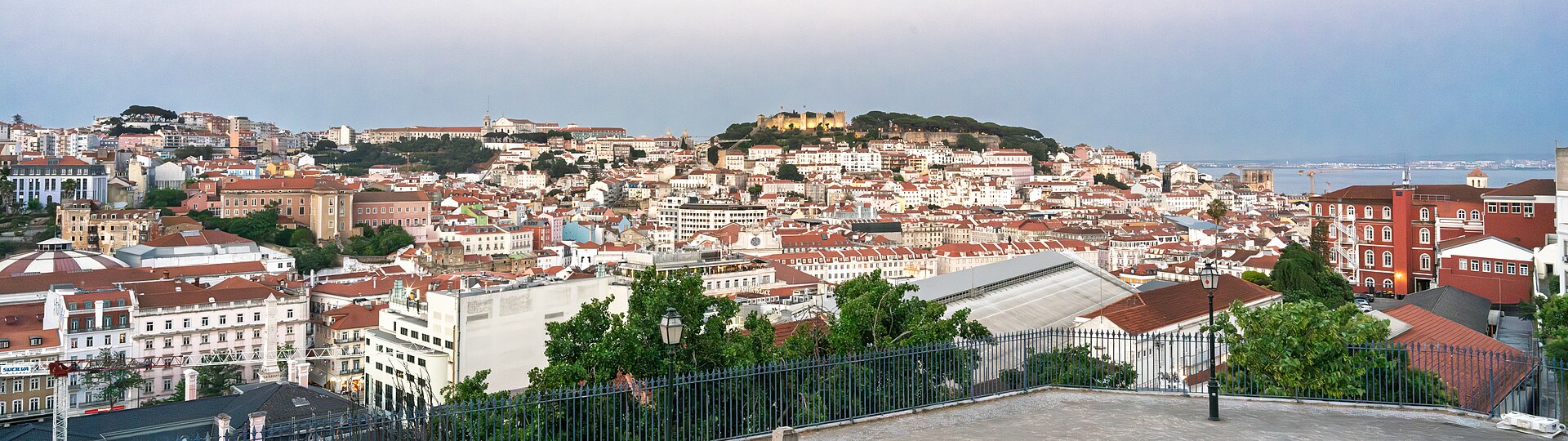
Lisbon is one of those rare cities that never truly closes for winter. Portugal’s capital sits at the southwestern edge of Europe, bathed in a light photographers cross continents to chase, and it enjoys some of the mildest weather of any European capital — even in January, daytime highs hover around 59°F (15°C). But “good all year” doesn’t mean “great all year,” and the difference between a trip in June and a trip in November is the difference between dancing in the street with grilled sardines in your hand and watching the rain move across the Tagus from a café window. Both can be wonderful. They are just very different trips.
Planning a trip? Get our free Travel Planning Checklist:
Here’s the honest month-by-month breakdown: when it’s hot, when it’s crowded, when it’s cheap, when it rains, and the events worth timing your trip around. If you’re still building your itinerary, my Lisbon in 3 Days: The Perfect First-Timer’s Itinerary pairs with any month you choose, and my Where to Stay in Lisbon: Best Neighborhoods and Hotel Picks (2026 Guide) will help you pick a base once you’ve chosen your season.
Disclosure: This post contains affiliate links. If you book through one of these links, I may earn a commission at no extra cost to you.
The quick answer: when should you go?
If you only have ten seconds: late April through June, and September through October. These are the months when Lisbon’s Mediterranean climate does its best work — warm, mostly dry, long golden evenings, and crowds that are present but manageable. July and August are hot and packed. November through February is mild by European standards but genuinely rainy, and some beach towns along the coast feel half-asleep. December brings Christmas markets and festive lights, plus the cheapest hotel rates of the year.
One important caveat: Lisbon’s famous cobblestones (calçada) turn treacherous when wet, and they’re wet a lot in winter. Pack shoes with real grip — a non-negotiable from November to March.
January: quiet, mild, and honest
Weather: highs around 59°F (15°C), lows near 48°F (9°C), with roughly 4 inches of rain spread across about 12 days. Days are short — sunset around 5:30pm.
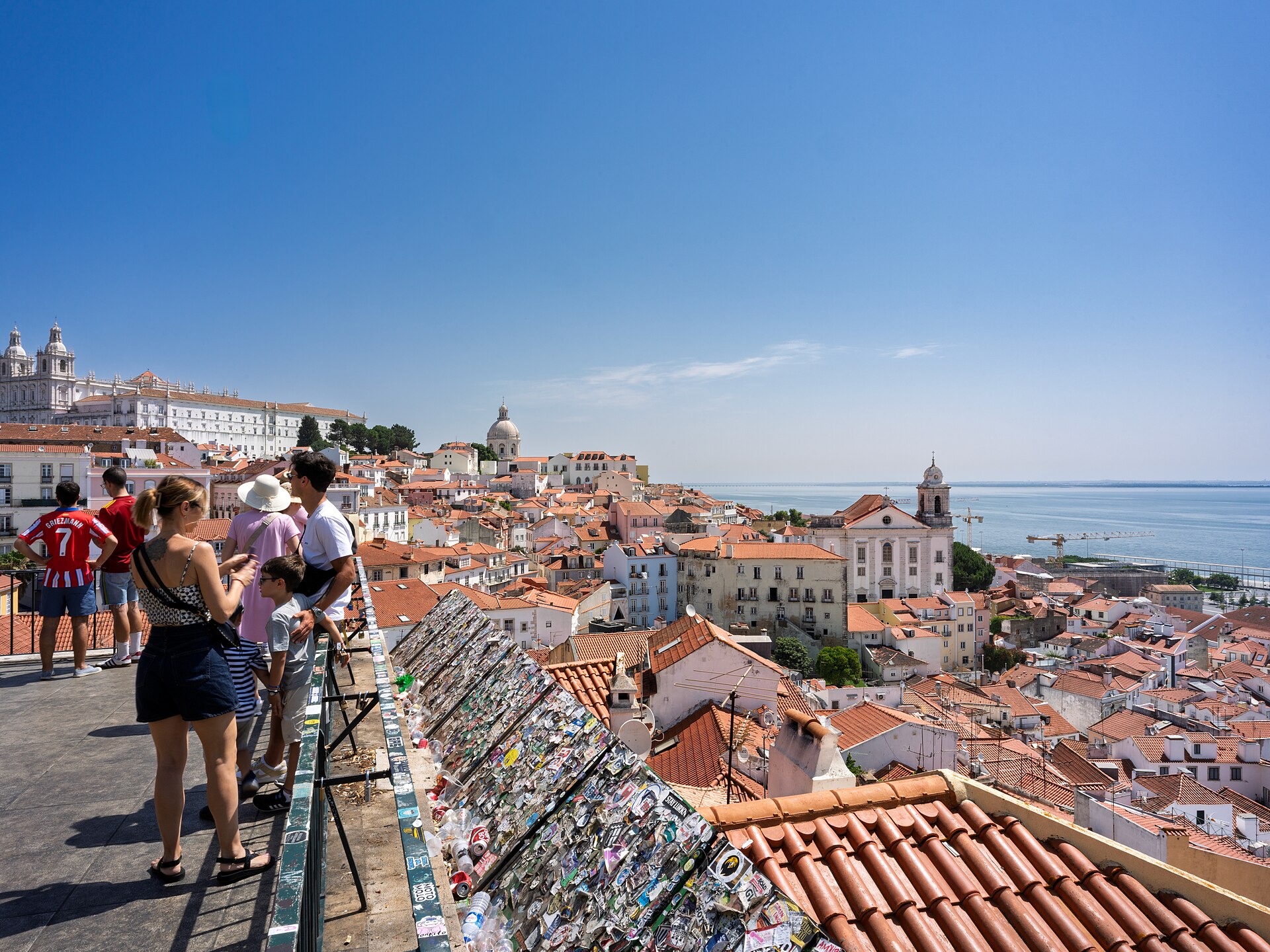
January is Lisbon at its most local. The summer crowds are long gone, hotel rates bottom out, and you’ll share the miradouros with a handful of residents instead of a hundred selfie sticks. Museums and restaurants are uncrowded, and the light on clear winter afternoons is some of the most beautiful of the year. The trade-off: it’s the rainiest stretch of the year alongside November and December, so bring a real jacket and plan a few indoor hours — the Calouste Gulbenkian Museum and the Tile Museum (Museu Nacional do Azulejo) are excellent rain-day answers. This is a month for slow travelers and budget hunters, not for beach days.
February: carnival light
Weather: highs around 61°F (16°C), lows near 49°F (9°C), about 2.5 inches of rain over 10 days.
A touch drier than January, still quiet, still cheap. February occasionally delivers a stretch of brilliant spring-like days that make the whole city exhale — locals pour onto esplanadas in t-shirts at the first 65°F afternoon, usually too early. Lisbon doesn’t have Rio-scale Carnival, but there are parades and parties around the city. Otherwise it’s much the same deal as January: museum month, neighborhood-wandering month, eat-well-for-less month. Bring layers; the wind off the Tagus bites.
March: spring arrives
Weather: highs around 65°F (18°C), lows near 52°F (11°C), about 2.9 inches of rain over 9 days.
March is when Lisbon starts waking up properly. Jacaranda isn’t out yet, but the days lengthen noticeably — sunset pushes toward 7pm — and average highs creep into the high 60s on good weeks. Rain still passes through regularly, so keep the flexible plan. Prices remain shoulder-season reasonable, and it’s a fine time for day trips: Sintra’s misty palaces are atmospheric without the summer ticket-sellout stress, and Cascais is quiet and lovely. If you’re on a budget but want something resembling spring, March is your month.
April: one of the best months
Weather: highs around 68°F (20°C), lows near 54°F (12°C), about 2.6 inches of rain over 10 days.
April is where the guidebook ideal starts to match reality. Warm enough for a t-shirt most afternoons, cool enough to walk the hills comfortably, and the city blooms — jacaranda trees begin their violet show late in the month. Showers still come through (Lisbon’s springs are showery, not monsoonal), but they clear fast. Crowds are up from winter but nothing like summer. This is prime season for the classic itinerary — my 3-day Lisbon itinerary with its Alfama wandering, Belém morning, and Sintra day trip works perfectly in April weather. Book accommodation a month or two ahead; Easter week fills up.
May: the sweet spot
Weather: highs around 73°F (22°C), lows near 58°F (14°C), about 2.2 inches of rain over 7 days.
May is, for my money, the single best month to visit Lisbon. Warm days, cool evenings, rain mostly behind you, long daylight (sunset past 8pm), and the city buzzing without the August gridlock. Hotel prices climb toward peak but haven’t arrived. The Alfama food tour with 18 tastings is at its best when you can taste pastel de nata without sweating through your shirt. Day trips to Sintra, Cascais, and the coast are glorious. If you can choose one month, choose May.
June: the festival month
Weather: highs around 78°F (25°C), lows near 62°F (17°C), about 0.5 inches of rain over 3 days.
June is Lisbon’s party. The whole month belongs to the Festas de Santo António, honoring the city’s patron saint — and it reaches its peak on the night of June 12 to 13, when the Marchas Populares parade down Avenida da Liberdade and the old neighborhoods of Alfama, Graça, Mouraria, and Bica turn into open-air street parties (arraiais) with grilled sardines, cheap beer, basil pots, and dancing until dawn. June 13 is a public holiday in Lisbon. The whole city gets dressed up — even if you’re not there for the festival, the decorations alone are worth the trip.
The weather is near-perfect: warm days, minimal rain, and the famous late-June light that lasts until nearly 9pm. The catch is price and availability — this is the start of high season, and hotels in the historic quarters fill fast. Book 2–3 months ahead, especially for the June 12 weekend. If you go, do as the locals do: eat the sardines, drink the red wine from a plastic cup, and stay out past midnight in Alfama.
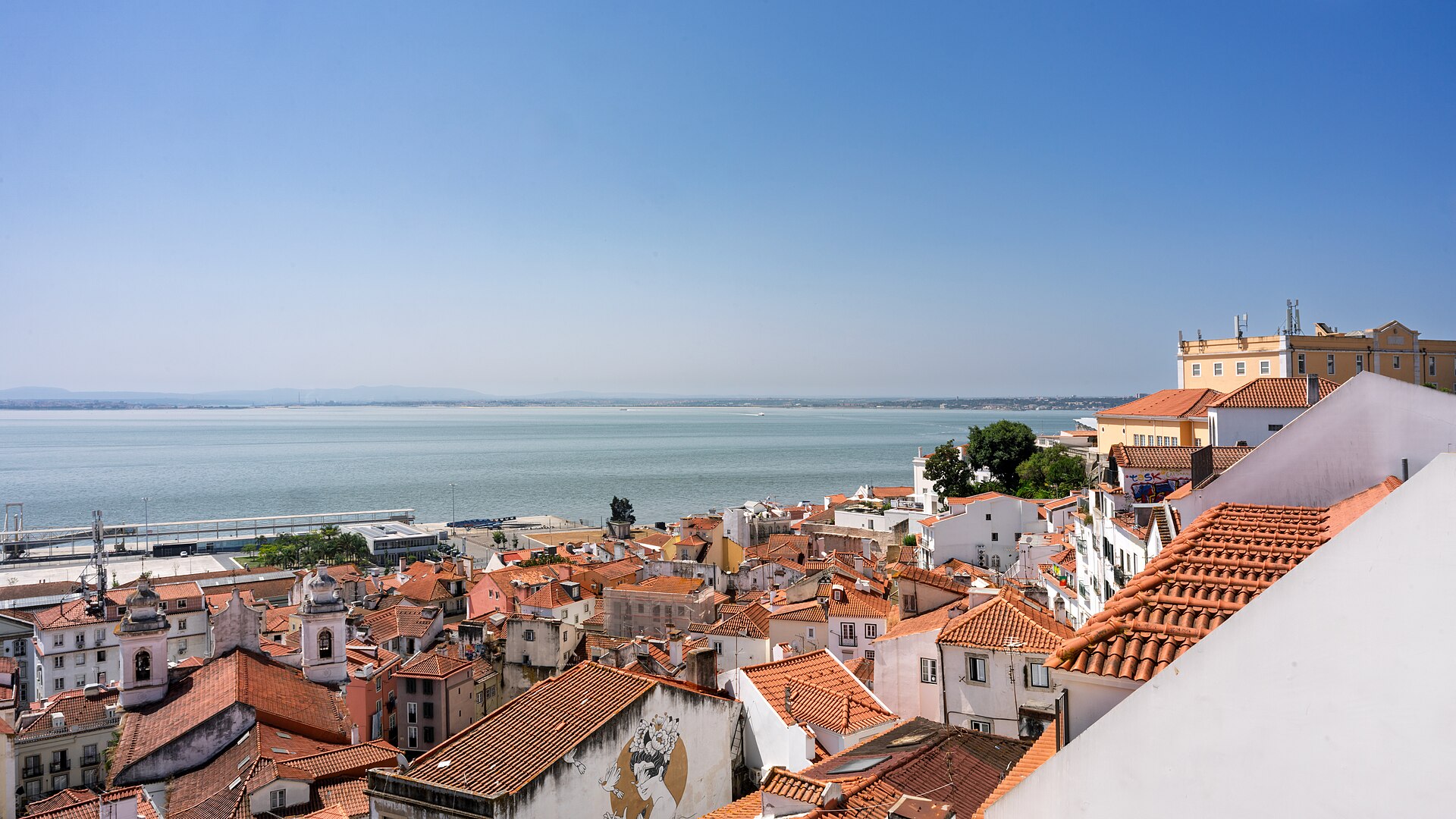
Late June also brings Rock in Rio Lisboa to Parque Tejo (June 20–21 and 27–28 in 2026) — another stretch when the city fills and hotel prices spike, so check both event calendars before booking.
July: hot, dry, festival-fueled
Weather: highs around 82°F (28°C), lows near 65°F (18°C), about 0.1 inches of rain over 1 day. July gets around 300 hours of sunshine.
July is officially summer and officially peak season. Rain is essentially a rumor. Days are hot — mid-80s most afternoons, with the occasional heat spike pushing past 90°F — but the Atlantic breeze keeps Lisbon more bearable than Seville or Madrid, and nights cool to the mid-60s. The big event is NOS Alive, Portugal’s premier music festival, held July 9–11 at Passeio Marítimo de Algés just west of the city (2026 headliners include Foo Fighters, Florence + The Machine, and Twenty One Pilots). Festival week sends hotel prices soaring; if you’re not attending, it’s either worth embracing or avoiding.
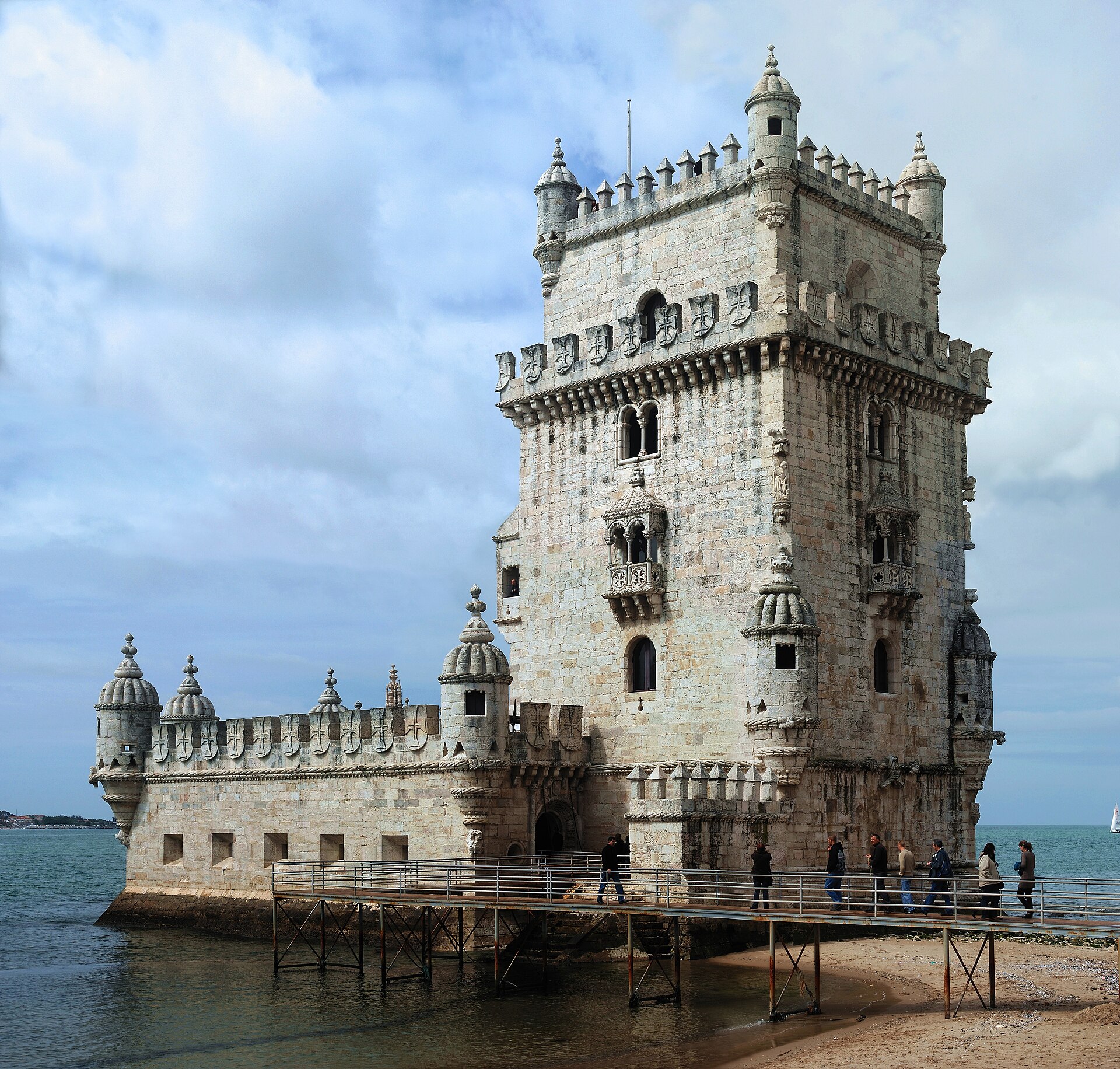
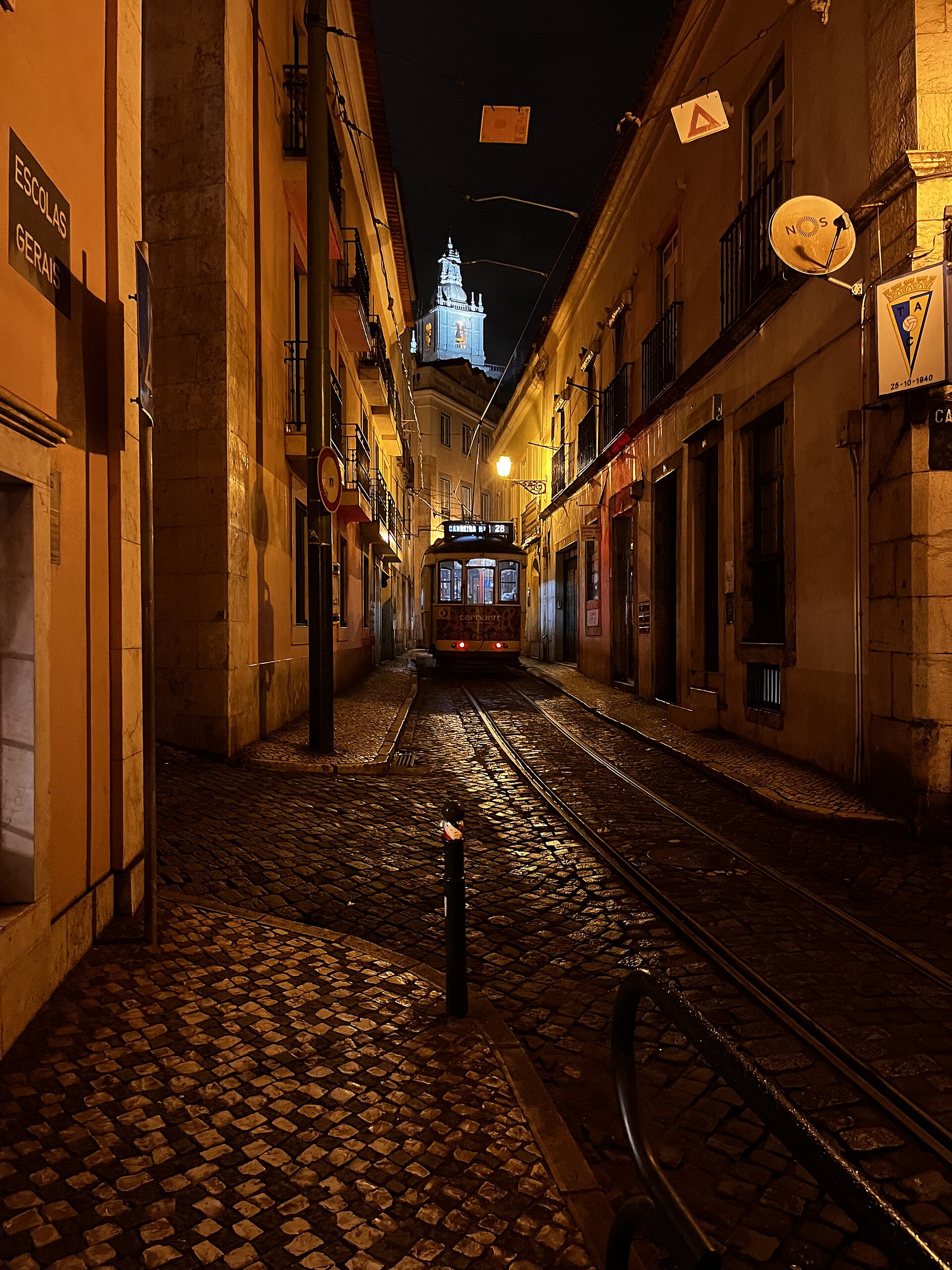
Practical July advice: book the big-ticket sights (Pena Palace timed entry, São Jorge Castle) ahead, ride Tram 28 before 9am to dodge the queues, and plan your day around a midday rest — the hills in full sun are no joke. Sunset sails are at their golden-hour best: a sunset sailing tour on the Tagus departs from central Lisbon in the evening and gives you the Belém Tower and 25 de Abril Bridge bathed in that long summer light.
August: the hottest, most crowded month
Weather: highs around 83°F (28°C), lows near 66°F (19°C), about 0.3 inches of rain over 2 days.
August is Lisbon’s most popular and most demanding month. It’s the hottest — average highs around 83°F with 4–5 days topping 90°F — and the most crowded, as much of Europe goes on holiday. Prices are at their annual peak, the queues at São Jorge Castle and the Santa Justa Lift stretch longest, and some smaller family-run restaurants close as their owners take their own holidays. On the plus side: guaranteed sunshine, warm Tagus evenings, and the beach towns (Cascais, Costa da Caparica) at full buzz.
If August is your only option, plan strategically. Stay somewhere with air conditioning (not a given in older Alfama guesthouses — confirm before booking), start sights at opening time, and consider the heat-and-crowd escape: a guided day trip to Sintra, Cascais, and Pena Palace is 5–10 degrees cooler in the hills and handles the ticket logistics you’d otherwise queue for in the sun. Or just accept it: August Lisbon is crowded for a reason.
September: the second sweet spot
Weather: highs around 79°F (26°C), lows near 64°F (18°C), about 1.4 inches of rain over 5 days.
September is the other answer to “when should I go?” The August crowds thin, the sea is at its warmest after months of summer sun, hotel rates start easing, and the weather stays firmly summery — highs in the upper 70s with low-80s days well into the month. Rain returns as a possibility late in the month but rarely spoils a trip. This is the connoisseur’s choice: everything that makes summer good, minus the crush. Harvest season in the nearby wine country adds another layer if you’re pairing Lisbon with a wider Portugal trip — see my Porto in 3 Days itinerary for the classic two-city combo.
October: golden shoulder season
Weather: highs around 73°F (22°C), lows near 60°F (16°C), about 4.4 inches of rain over 11 days.
October is Lisbon’s prettiest season and its wettest transition. The first half of the month often feels like an extension of summer — warm afternoons, golden light, thinner crowds, and some of the year’s best hotel deals. Then the Atlantic lows start rolling through and the rain returns in earnest. The trick is flexibility: plan the outdoor-heavy days early in a trip and keep museum days in reserve. An Alfama food tour with 18 tastings is a perfect October pick — family-run restaurants and wine tastings are equally good in any weather, and the guide’s restaurant recommendations become your personal rainy-day hit list.
November: mild, wet, and cheap
Weather: highs around 64°F (18°C), lows near 53°F (12°C), about 3.9 inches of rain over 12 days.
November is the year’s wildcard. It’s also home to Web Summit, one of the world’s largest tech conferences — held November 9–12 at the MEO Arena — which floods the city with tens of thousands of attendees and spikes hotel prices for that one week, even though the rest of November is among the cheapest months of the year. If you’re not attending, check the conference dates before booking.
Aside from that week, November is genuinely pleasant in its own way: mild enough to walk comfortably, crowd-free, with hotel deals galore. But the rain is real — a third of days see some — and the famous light is dimmer. Pack a waterproof jacket, keep the flexible schedule, and you’ll have a city largely to yourself.
December: Christmas lights and bargains
Weather: highs around 59°F (15°C), lows near 49°F (9°C), about 4 inches of rain over 12 days.
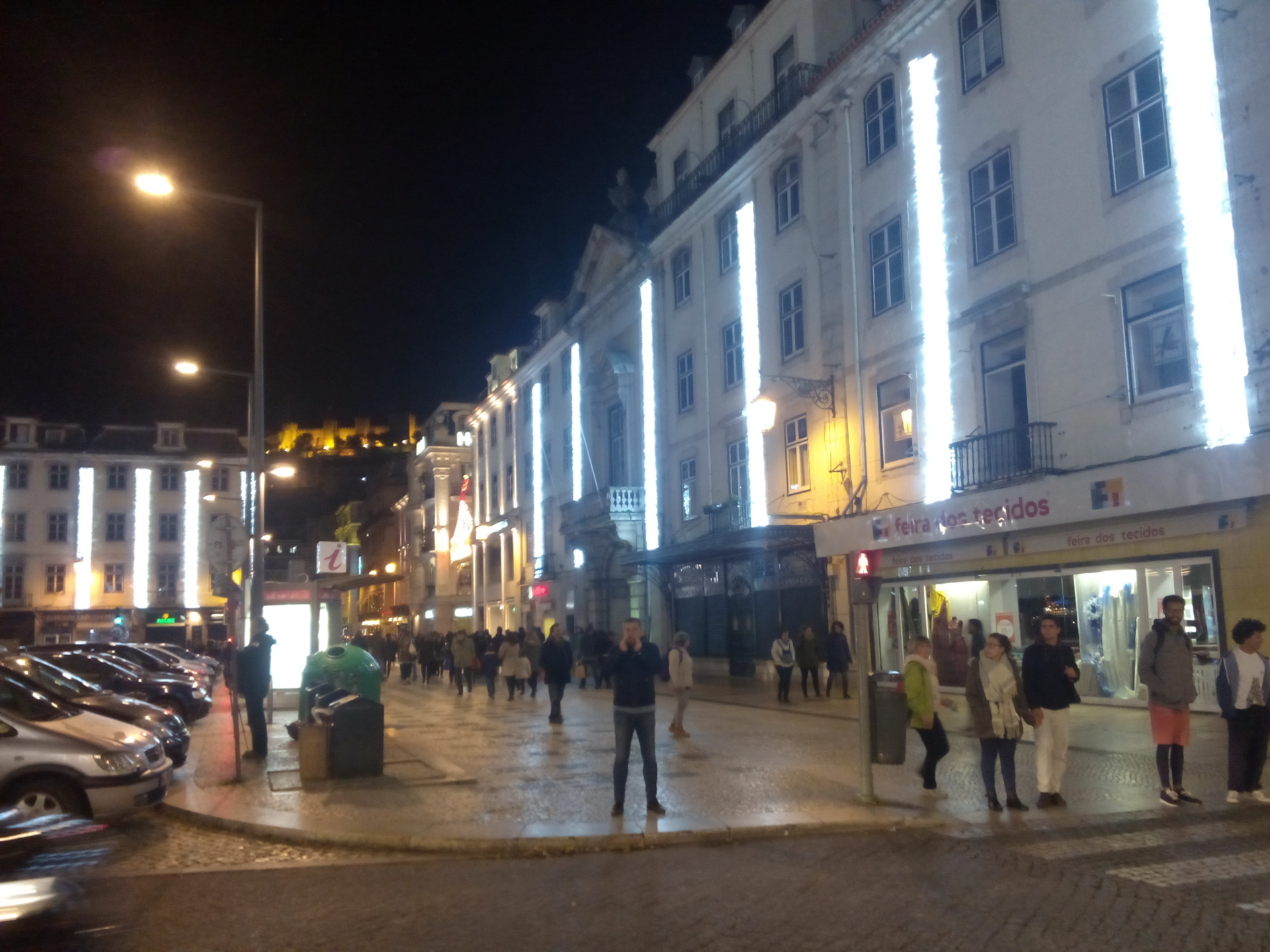
December surprises people. Lisbon goes all-in on Christmas: the Christmas markets (Wonderland Lisboa in Parque Eduardo VII is the big one) run through the month, festive lights line the avenues, and the city’s mellow winter pace feels downright cozy. Temperatures stay in the high 50s most days — pack a proper coat, but you’ll rarely need a heavy one. Hotel prices are at their annual floor (outside the New Year spike), and restaurants are quiet and welcoming. Rain is the main risk, as all winter. It’s not a beach holiday, but as a festive city break with sardine-free warmth by European standards, December punches well above its weight.
When would I go?
If I were planning a first trip to Lisbon tomorrow, I’d aim for late May or early June — the weather’s at its warmest without the August heat, the Santo António celebrations give the trip an extra dimension, and the evenings are long enough for a miradouro sunset that doesn’t require rushing dinner. Tight budget? March or November (skipping Web Summit week). Chasing the biggest festival energy? June 12–13 is unbeatable. And if all you care about is swimming and sunshine, September gives you summer’s rewards without summer’s lines.
Whatever month you land on, Lisbon’s rhythm barely changes: hills, custard tarts, tiled facades, and that light. The calendar just decides how many layers you need and how early you should book. Bom viagem.