
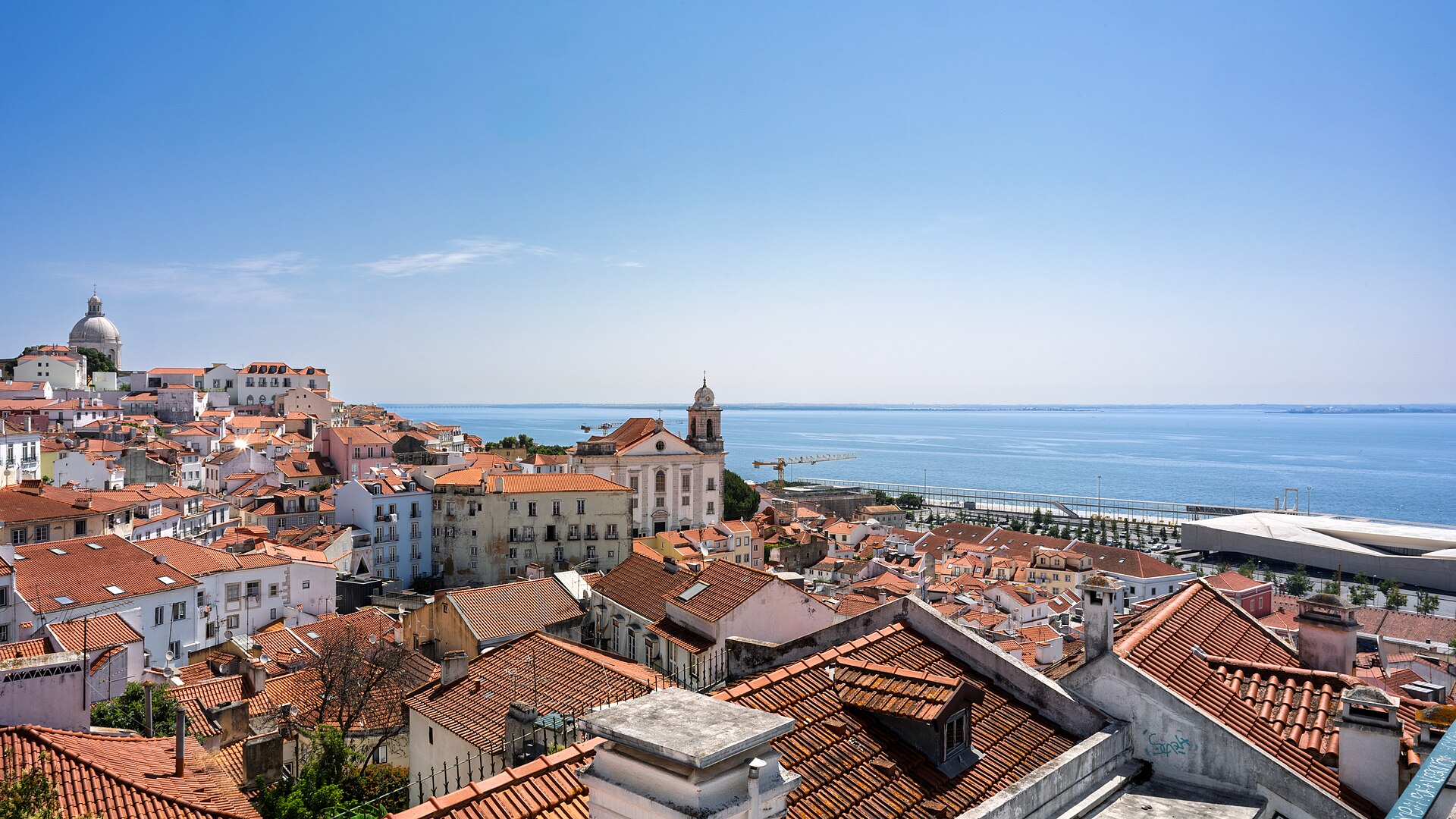
Lisbon does the big-ticket sights beautifully — the yellow trams rattling past the Sé, the castle views, the custard tarts warm from the oven in Belém. But ask a Lisboeta where they actually spend a free Saturday, and you’ll hear about somewhere else entirely: a bookstore built around an old printing press, a flea market that’s been running since the 1200s, a restaurant across the river you can only reach by ferry. This guide rounds up ten of those places — the Lisbon that locals love and most visitors walk straight past.
Planning a trip? Get our free Travel Planning Checklist:
Disclosure: This post contains affiliate links. If you book through one of these links, I may earn a commission at no extra cost to you.
1. LX Factory, Alcântara
Photo: Kent Wang, CC BY-SA 2.0, via Wikimedia Commons
Under the 25 de Abril Bridge in the Alcântara district sits one of Lisbon’s most enjoyable half-days: a former industrial complex — built in 1846 as one of the city’s most important manufacturing sites — reborn in 2008 as a creative village of galleries, indie shops, cafés and restaurants. Every wall seems to carry street art, including large-scale pieces by Bordalo II. The star is Livraria Ler Devagar (“read slowly”), a bookstore built around a giant old printing press that the Financial Times and Daily Mail have both named among the world’s most beautiful bookshops. Come on a Sunday, when the weekly market fills the main street with vintage clothing, handmade jewellery, ceramics and gourmet food stalls from around 10am to 6pm. Entry to the complex is free; individual shops mostly open around 10am.
2. Miradouro da Graça — the locals’ viewpoint
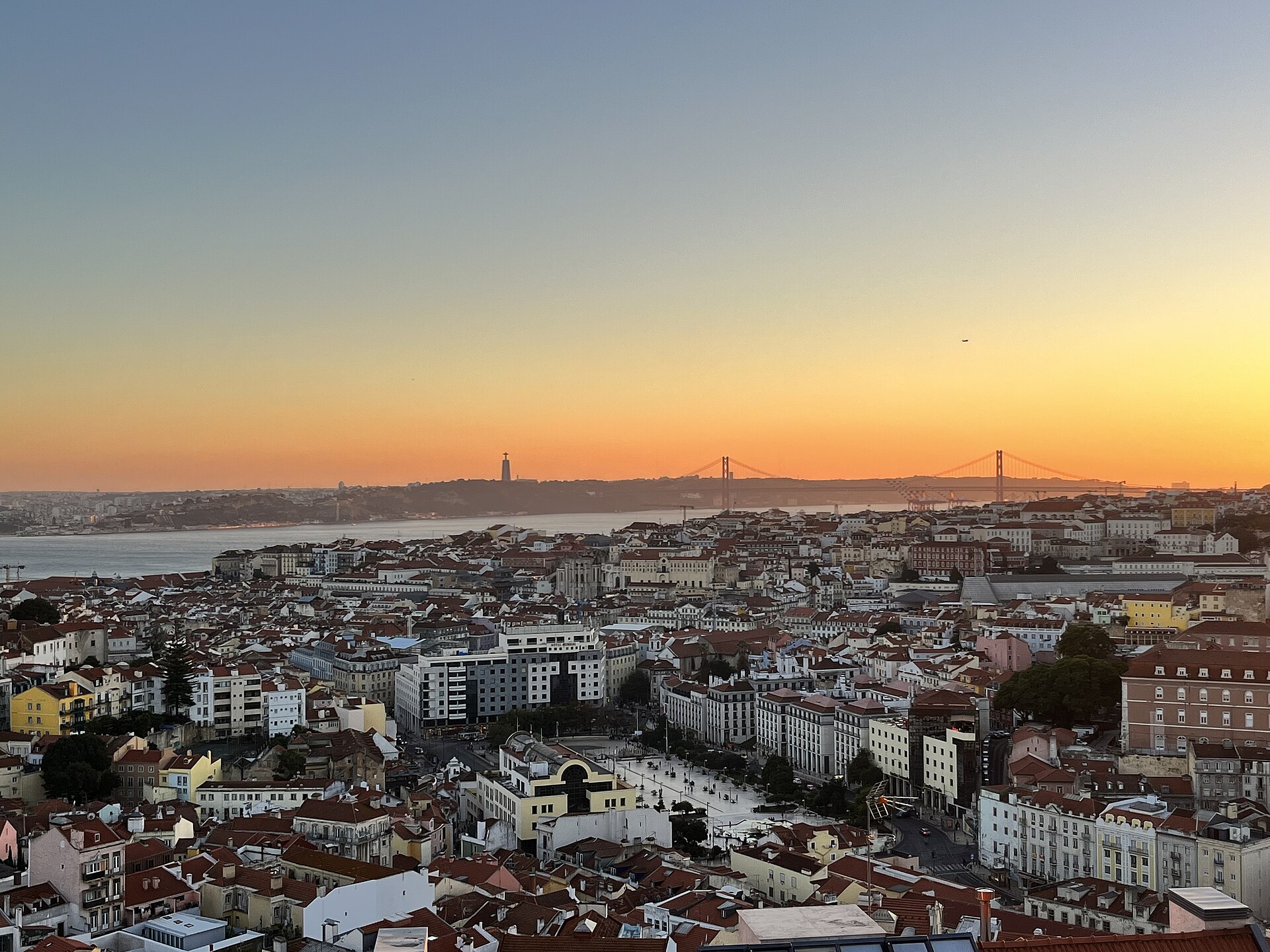
Photo: TheDumpy, CC BY-SA 4.0, via Wikimedia Commons
Lisbon has no shortage of viewpoints, but this is the one locals claim as their own. Perched above the Alfama in the Graça district, the Miradouro da Graça (officially the Miradouro Sophia de Mello Breyner Andresen) looks straight across the terracotta rooftops to São Jorge Castle and the Tagus — and it has its own kiosk bar, so sunset here comes with a glass of vinho verde in hand. Arrive an hour before sunset to claim a spot on the low wall; the light turning the castle gold is one of the city’s great free shows. Its higher sibling, the Miradouro da Senhora do Monte a short walk uphill, is the highest viewpoint in Lisbon and worth the extra climb on a clear day. Reach Graça on tram 28 or the 12E from Martim Moniz.
3. Mouraria — where fado was born
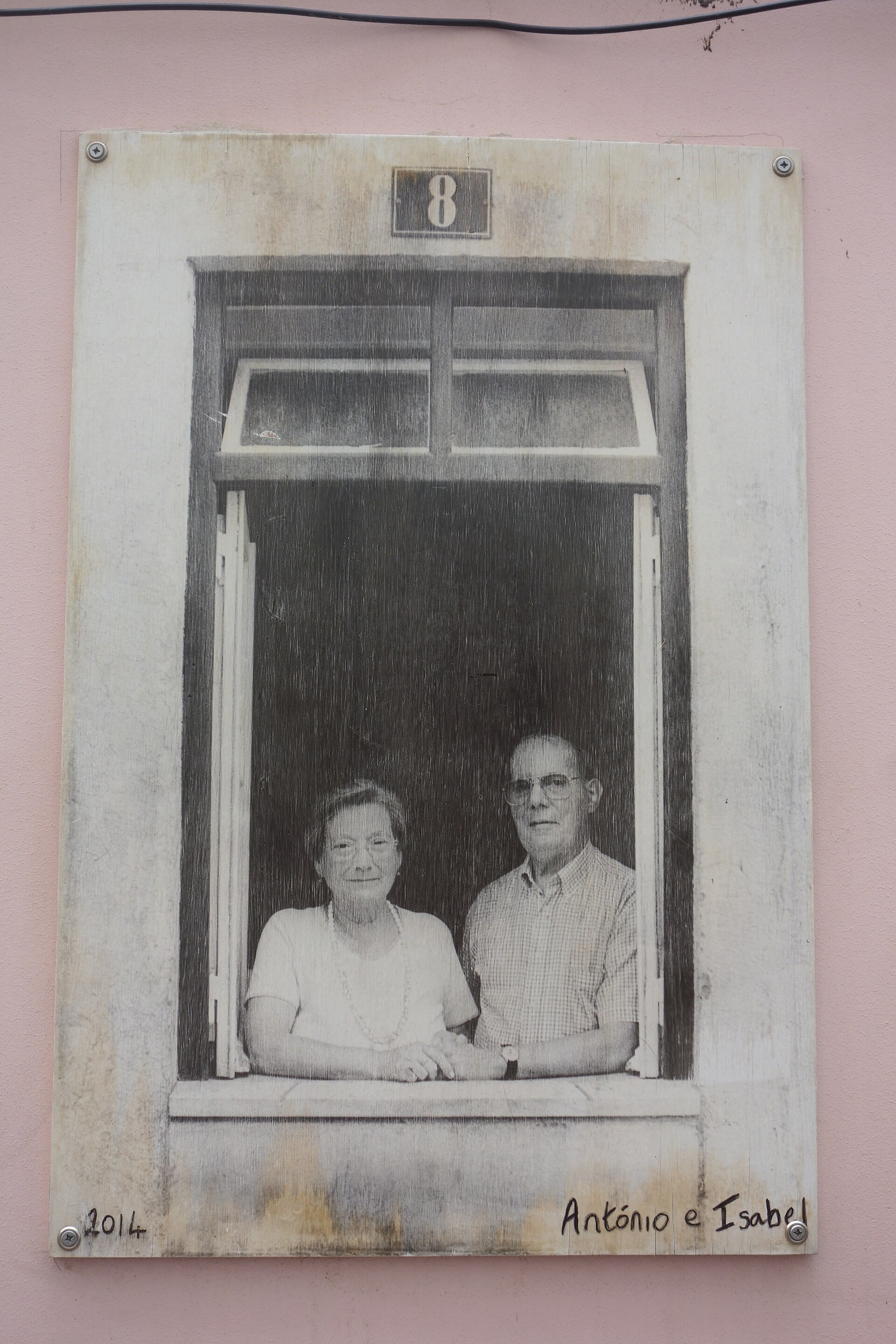
Photo: Sonse, CC BY 2.0, via Wikimedia Commons
Tucked beneath São Jorge Castle, Mouraria is one of Lisbon’s oldest quarters — and its most soulful. After the Christian reconquest of 1147, the city’s remaining Moors were resettled on this hillside, giving the neighbourhood its name (from “mouros”). It went on to become the undisputed birthplace of fado: Maria Severa, the genre’s first legendary singer, performed here in the 19th century, and the tiny Largo da Severa is still regarded as fado’s cradle. Today it’s Lisbon’s most multicultural district, home to residents of more than 50 nationalities, and its stairways and alleys double as an open-air gallery — look for the fado murals on the Escadinhas de São Cristóvão and the portrait tributes by artist Camilla Watson. Come hungry: the mix of Portuguese tascas and Goan, Bangladeshi and Cape Verdean kitchens is one of the city’s best-value food scenes.
Want a guided taste of these backstreets? The Treasures of Lisboa food tour packs 18 tastings into a small-group walk through Alfama — it’s rated 5.0 from over 2,000 reviews, the highest of any food tour I checked.
4. Museu Nacional do Azulejo — the tile museum
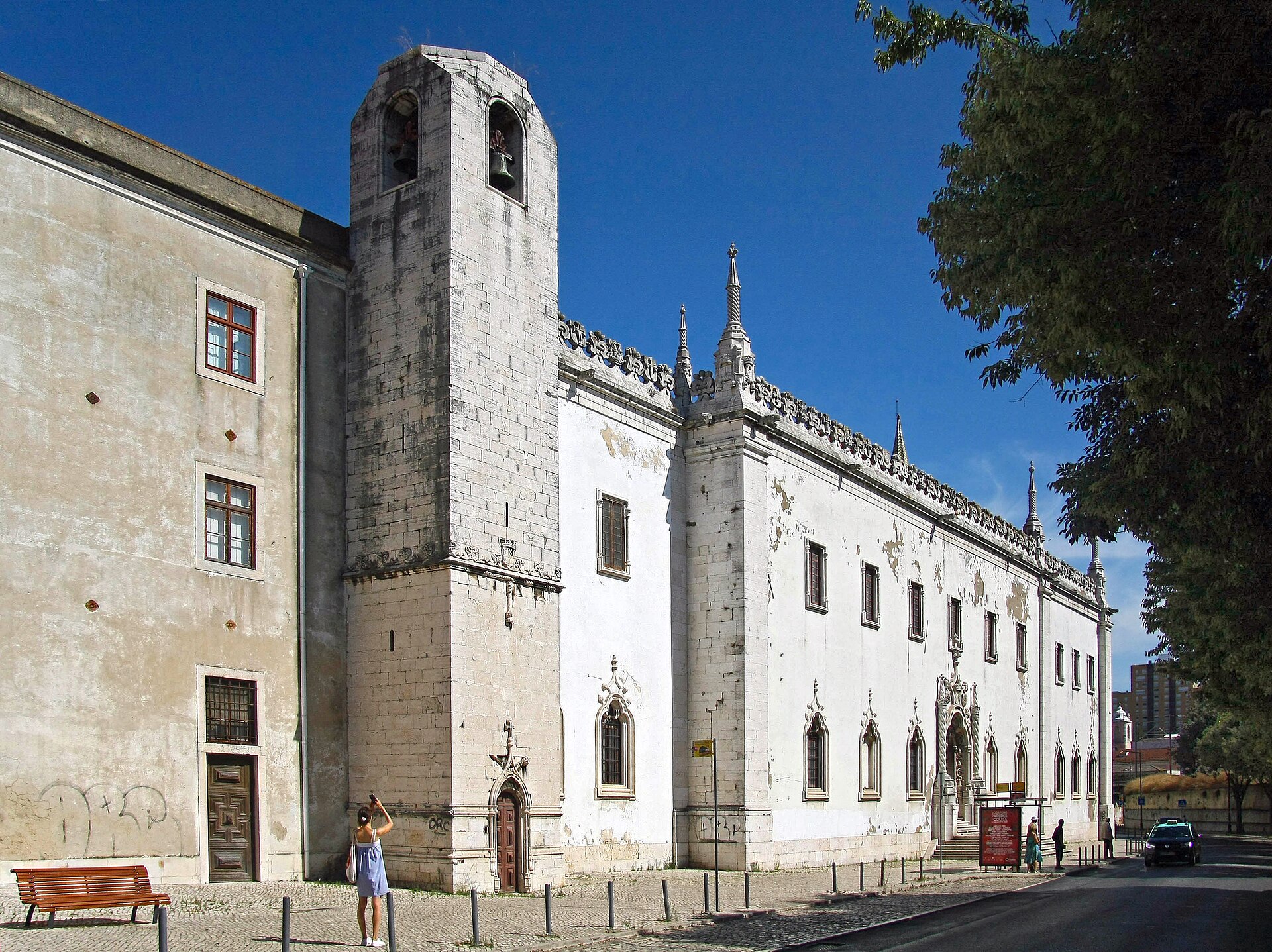
Photo: Vitor Oliveira, CC BY-SA 2.0, via Wikimedia Commons
Azulejos are everywhere in Lisbon — on church walls, palace facades, metro stations — and this museum explains every one you’ve walked past. Housed in the former Madre de Deus Convent, founded in 1509 by Queen Leonor in the eastern Xabregas district, the Museu Nacional do Azulejo holds one of the world’s largest ceramic collections, tracing Portuguese tilework from the 15th century to the present day. The building is half the experience: a 16th-century mannerist cloister, a baroque church dripping with gilded woodwork, and a 23-metre-long blue-and-white tile panorama of pre-earthquake Lisbon. It’s open Tuesday to Sunday, and it pairs perfectly with a morning in nearby Marvila (see #10). Admission is a few euros — a fraction of the big-ticket museums, with a fraction of the crowds.
5. Feira da Ladra — the Thieves’ Market
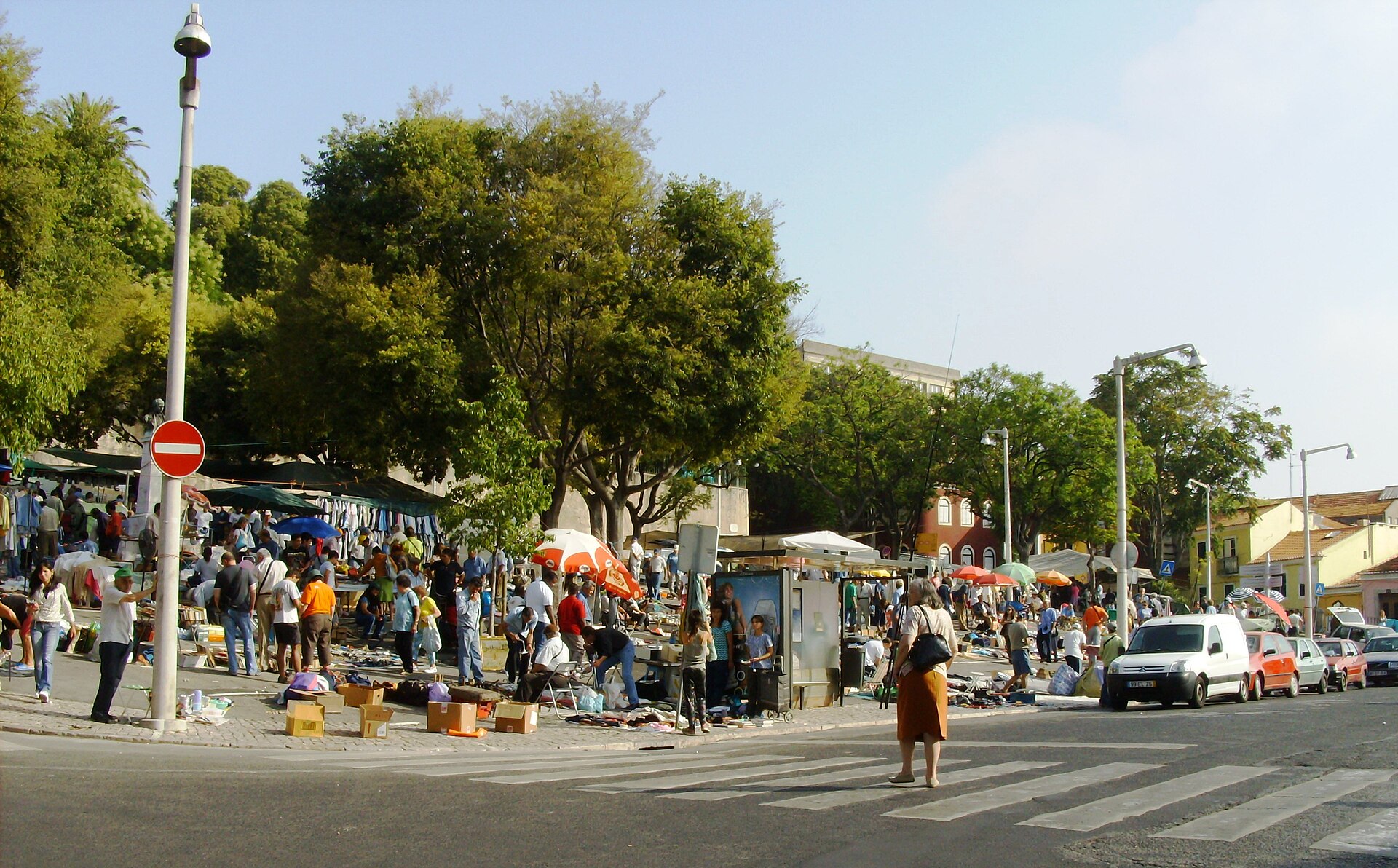
Photo: Carlos Luis M C da Cruz, Public domain, via Wikimedia Commons
Every Tuesday and Saturday, the Campo de Santa Clara in Alfama fills with Lisbon’s oldest flea market — and one of Europe’s, with roots stretching back to 1272. The name translates as the “Thieves’ Market,” a label documented since 1610 (a rival theory blames “ladro,” a flea found in antique furniture). Licensed dealers’ tables mix with vendors who simply unroll a blanket on the cobblestones: vintage clothing, vinyl, ceramics, coins, militaria, and the odd genuine treasure. Go early — stalls run roughly 9am to 6pm but the best finds go by late morning — bring cash (cards are rarely accepted), haggle politely, and be cautious with antique tiles, which are sometimes stripped from historic buildings. Afterwards, walk uphill past the Panteão Nacional to the Jardim Botto Machado terrace for the view over Alfama’s rooftops.
6. Ponto Final & the Cacilhas ferry

Photo: Pedro Simões, CC BY 2.0, via Wikimedia Commons
Some of Lisbon’s best views aren’t in Lisbon at all — they’re across the river. Board the public ferry at Cais do Sodré for the ten-minute crossing to Cacilhas, turn right along the waterfront past the old warehouses, and walk about a kilometre to Ponto Final: a family-run restaurant, open since 1978, with yellow chairs and white-clothed tables set right at the water’s edge. The whole of Lisbon faces you across the Tagus, the 25 de Abril Bridge frames one side, and the sunset light does the rest. It’s deservedly famous — reservations often need to be made months ahead via email — so book before you fly, or go at lunch on a weekday when walk-ins are more realistic. Even without a table, the ferry crossing itself and the waterfront walk are worth the trip.
Prefer the water at golden hour without the reservation battle? A 2-hour sunset sailing cruise on the Tagus — wine included, rated 5.0 from nearly 400 reviews — leaves from the Lisbon side and catches that same light over the bridge.
7. Jardim do Príncipe Real — the garden with the impossible tree
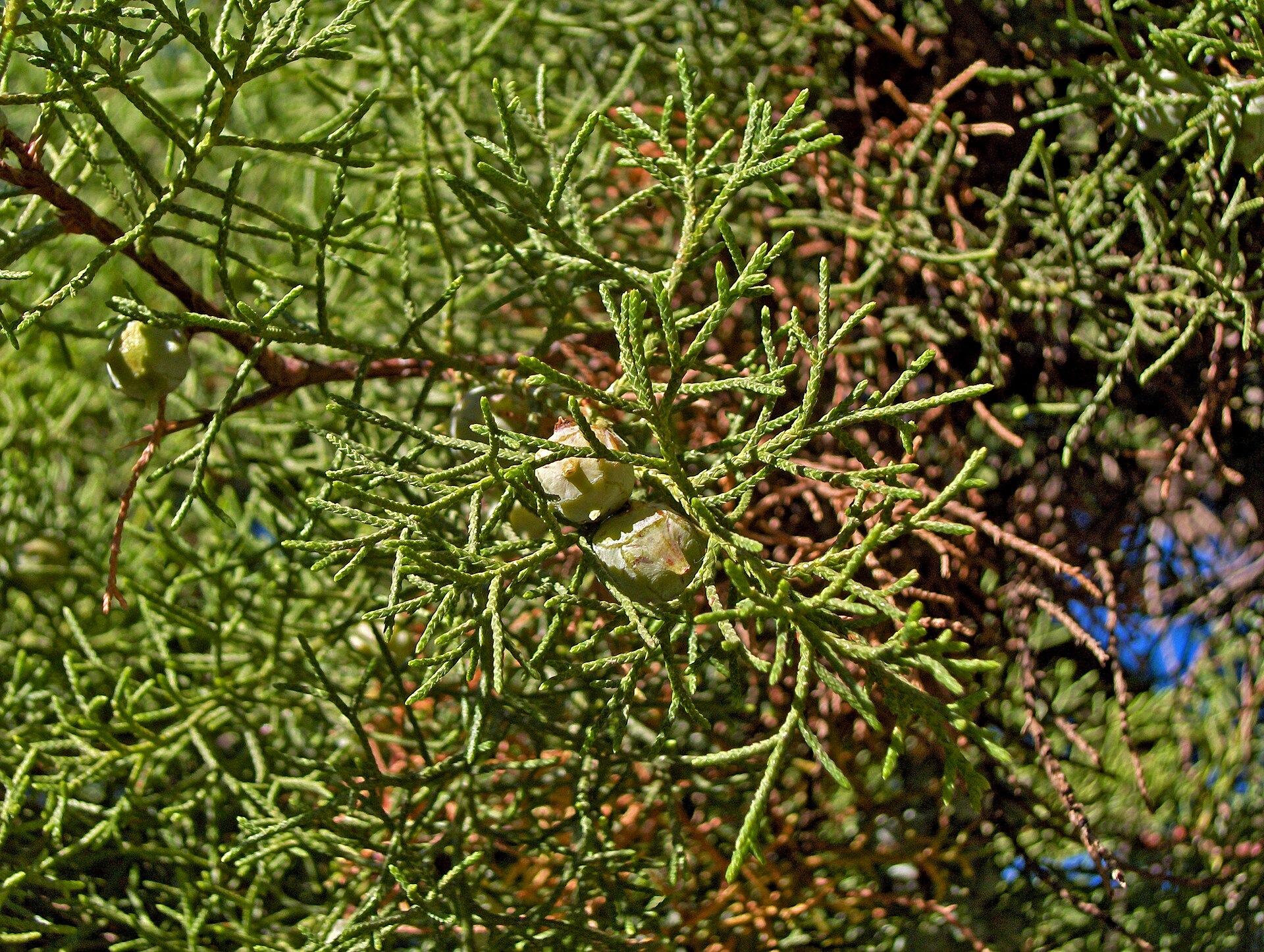
Photo: PatríciaR, CC BY-SA 4.0, via Wikimedia Commons
A short walk northwest of Bairro Alto, this 19th-century English romantic garden hides one of Lisbon’s great natural oddities: a roughly 150-year-old Mexican cypress whose canopy spreads more than 20 metres sideways — held up by a metal framework like a living pergola, with benches underneath for the perfect hot-afternoon pause. The garden itself is all symmetry, flowerbeds and shaded paths, surrounded by the palaces of romantic-era Lisbon. On Saturday mornings it hosts an organic farmers’ market, and once a month an antiques market. It’s free, it’s calm, and it’s the kind of place you stumble into and end up staying an hour.
8. Museu do Fado, Alfama
Down by the water in Alfama, at Largo do Chafariz de Dentro 1, the Museu do Fado tells the story of Portugal’s soul music from the 19th century to the present — its tavern origins, its years under censorship, its starring role in cinema, and the evolution of the Portuguese guitar. The permanent exhibition is compact and well-curated, with a multimedia archive of recordings and biographies of hundreds of fado personalities. It closes a loop that starts in Mouraria (#3): come here to understand the music, then hear it live in the tiny candlelit casas de fado of Alfama in the evening. Closed Mondays; the rest of the week it runs 10am to 6pm.
9. Casa-Museu Amália Rodrigues, São Bento
Amália Rodrigues (1920–1999) — the Rainha do Fado, the Voice of Portugal, with over 170 albums and 30 million records sold — lived for almost half a century in a yellow house at Rua de São Bento 193. Per her wishes, it opened as a museum: her furniture, portraits, glittering stage costumes, jewellery and crackly recordings preserved as if the diva might still be in residence. The dining room table is still laid for a dinner party. Short guided tours run through the house (reservations recommended), and on select evenings the garden hosts intimate fado concerts. She’s buried at the National Pantheon — but this is where she lived, and it shows.
10. Marvila — Lisbon’s warehouse quarter
East along the river, the former industrial district of Marvila is where Lisbon’s creative energy is moving next. This is the city’s beer district: the Dois Corvos and Musa taprooms pour small-batch craft beer among the warehouses (Marvila’s breweries even banded together during the pandemic as the “Lisbon Beer Department”). The galleries along Rua do Açúcar, the 8 Marvila container yard, and the Fábrica Braço de Prata — a former military arms factory turned bookshop, bar, restaurant and live-music venue — keep the nights busy. It wakes up late and rewards an unhurried afternoon drifting into evening. Come straight from the tile museum (#4): they’re neighbours.
Planning your Lisbon trip
These spots work best woven between the classics rather than instead of them — do the castle and Belém, then spend your second day the local way. If you’re still deciding where to base yourself, our guide to where to stay in Lisbon breaks down the best neighbourhoods and hotel picks, and our Lisbon in 3 days itinerary shows how to fit the big sights around them. And if you have a spare day, the Sintra, Pena Palace, Cabo da Roca and Cascais day trip (4.8 from 2,266 reviews) covers the palaces and the coast in one go — our guide to the best day trips from Lisbon covers the rest. For more in this series, see our Paris hidden gems guide and Sydney hidden gems guide.