
Paris has a way of funneling every first-time visitor down the same golden path: Eiffel Tower, Louvre, Notre-Dame, done. They’re magnificent, and you should see them. But the Paris that Parisians actually love lives one layer deeper — in a 19th-century glass-roofed arcade where stamp dealers have traded for generations, in a pocket park at the tip of an island with the Seine on three sides, in a tea room that feels like Marrakech ten minutes from the Jardin des Plantes.
Planning a trip? Get our free Travel Planning Checklist:
This is the second Paris: ten genuinely special places most visitors walk straight past, with honest practical details for each — how to get there, what it costs, and when to go.
Disclosure: This post contains affiliate links. If you book through one of these links, I may earn a commission at no extra cost to you.
1. Musée Marmottan Monet — the world’s largest Monet collection
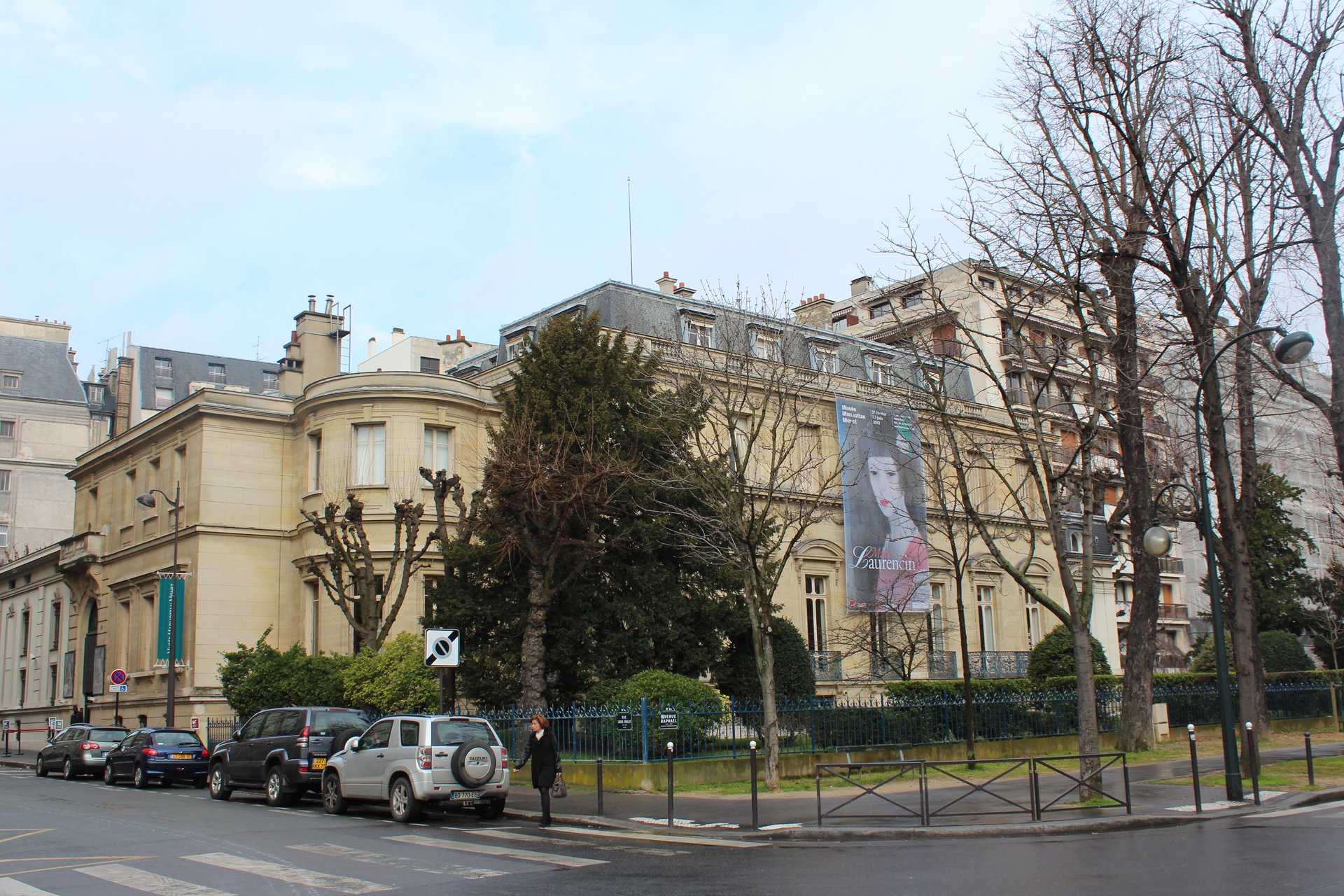
Everyone queues for the Orsay; almost no one makes it to the 16th arrondissement’s Musée Marmottan Monet — which is a shame, because it holds the world’s largest collection of Claude Monet’s works: more than a hundred canvases, including Impression, Sunrise, the very painting that gave Impressionism its name. Add a superb Berthe Morisot holding, all inside a former hunting lodge near the Bois de Boulogne, and you have one of Paris’s great uncrowded museum mornings.
Getting there: 2 rue Louis-Boilly; Métro Line 9 to La Muette (five-minute walk) or RER C to Boulainvilliers. Open Tuesday–Sunday 10:00–18:00, Thursdays to 21:00; closed Mondays. Admission is around €14 for adults, and online timed-entry booking is recommended. Tip: go Thursday evening for late hours and the thinnest crowds, then stroll the adjacent Jardin du Ranelagh or into the Bois de Boulogne.
2. La Coulée Verte — Paris’s original High Line
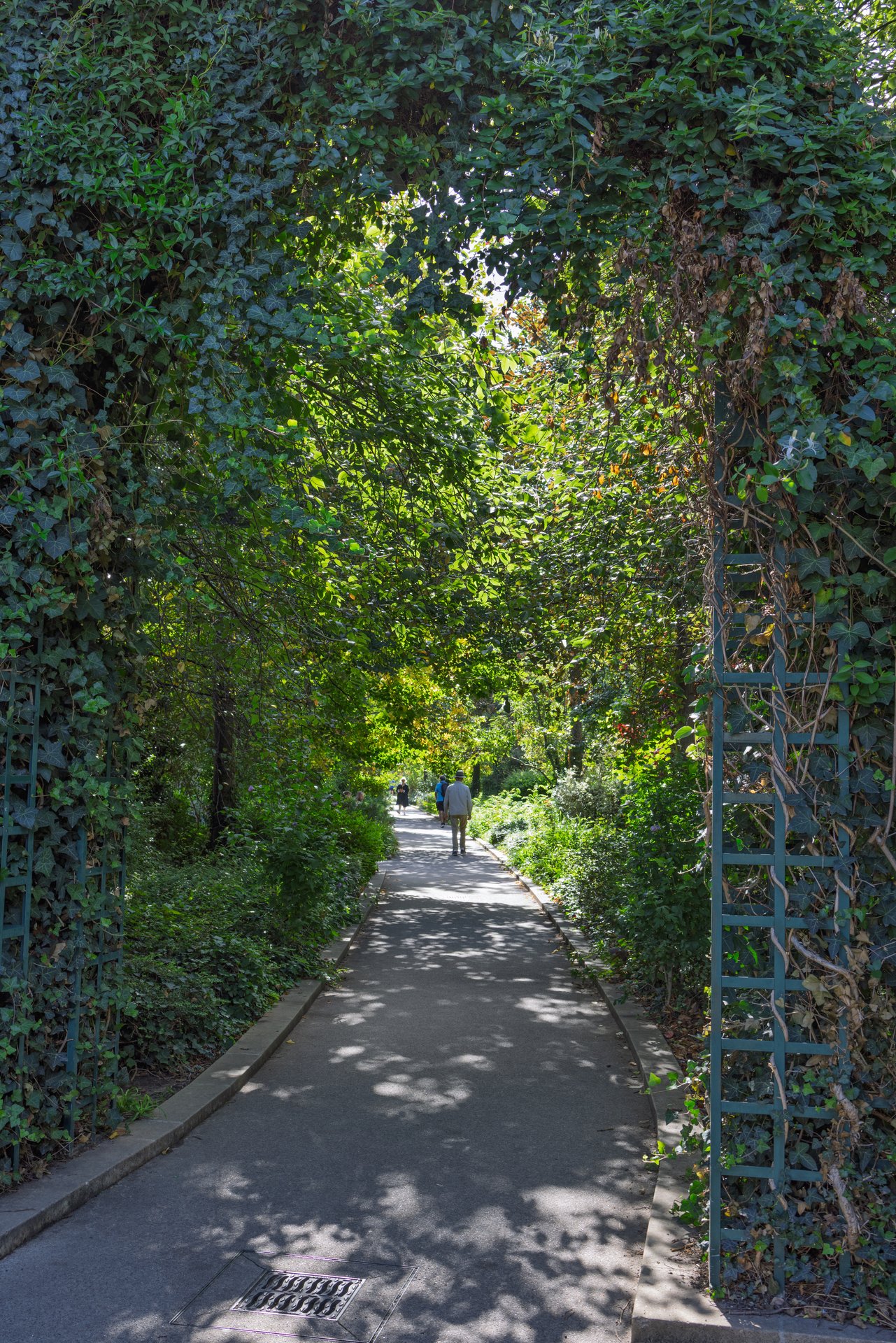
New York’s High Line has a Parisian grandmother — and she’s sixteen years older. The Coulée Verte René-Dumont (better known as the Promenade Plantée) is a 4.7 km elevated linear park built on a disused railway viaduct, inaugurated in 1993. It winds above the streets of the 12th arrondissement past the artisan workshops of the Viaduc des Arts, through tunnels, all the way toward the Bois de Vincennes — gardens in the sky, entirely free.
Getting there: the western entrance is at Place de la Bastille (Métro Bastille); Gare de Lyon sits midway. Open daily from morning to dusk (hours vary by season); free, no booking. Tip: walk it end to end (about 45 minutes) and look down into the Viaduc des Arts arches — glass-fronted artisans’ workshops at street level. Weekday mornings are the quietest.
3. Jardin du Palais-Royal & the Colonnes de Buren
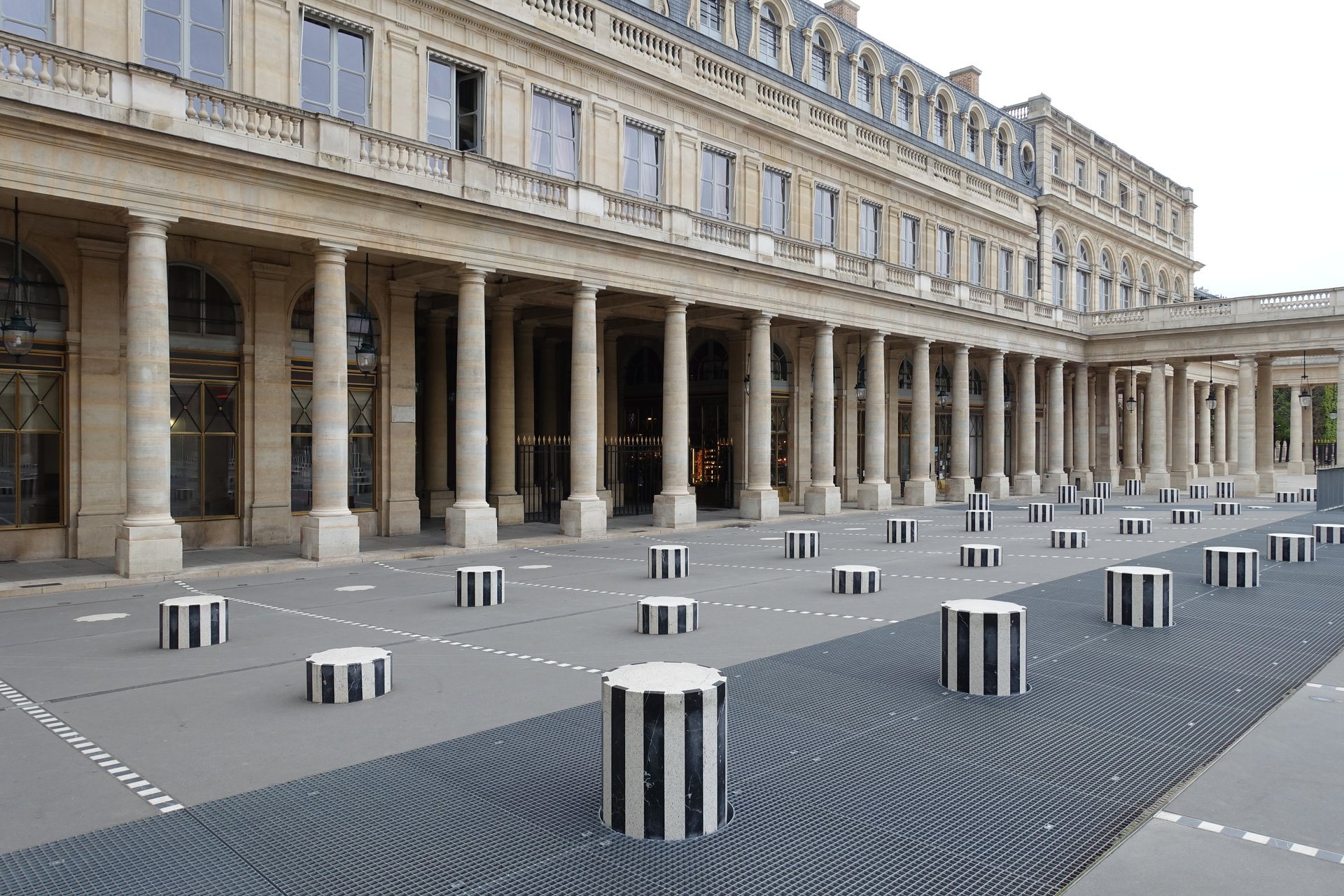
Five minutes from the Louvre’s crowds, through an archway most tourists never notice, sits one of Paris’s most serene free spaces: the Jardin du Palais-Royal, a perfectly symmetrical 17th-century royal garden (built in the 1630s for Cardinal Richelieu) wrapped in elegant arcades — fronted by Daniel Buren’s 1986 installation of black-and-white striped columns, the Colonnes de Buren. Classical calm meets contemporary provocation, and first-timers walk right past the entrance.
Getting there: 8 rue de Montpensier, 1st arr.; Métro Palais Royal–Musée du Louvre. Gardens open daily (roughly 7:30/8:00 to 20:30, later in summer); free. Tip: early morning or golden hour for empty benches and the best photos among the columns — then walk three minutes to the Galerie Vivienne (below).
4. Galerie Vivienne & Passage des Panoramas — the covered passages
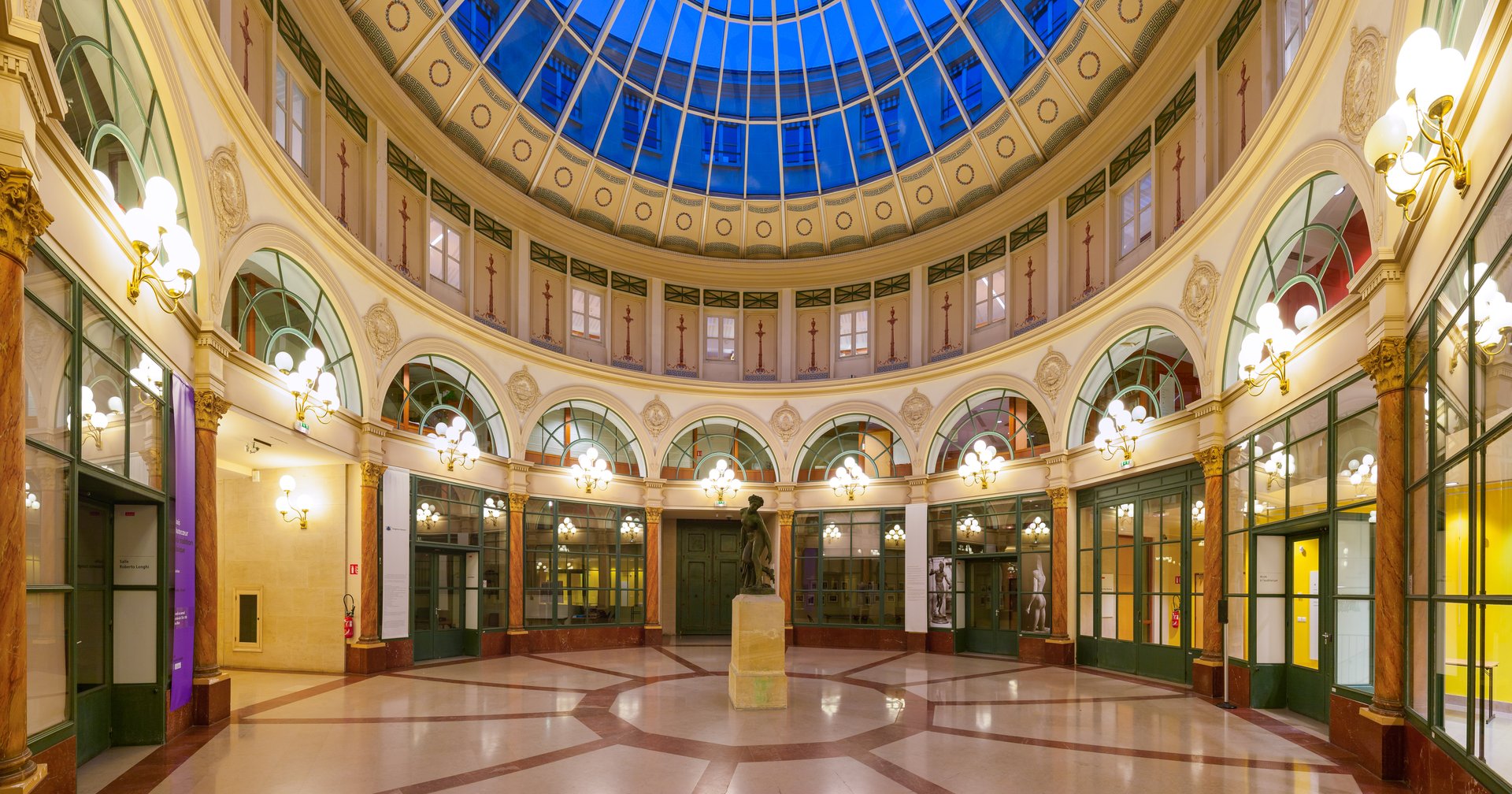
Before department stores, Paris shopped in glass-roofed arcades — and a handful survive in the 2nd arrondissement, essentially unchanged. Galerie Vivienne (1823) has Pompeian-style mosaic floors under a high glass dome; Passage des Panoramas (1800), the oldest of them all, is still a maze of stamp, coin, antique, and wine dealers — it was among the first Paris streets lit by gas, back in 1817. On a rainy day, they’re pure gold.
Getting there: Galerie Vivienne at 4 rue des Petits-Champs; Passage des Panoramas at 11 bd Montmartre. Métro Bourse or Richelieu–Drouot. Free to enter, no booking; shops generally keep daytime hours. Tip: in the Panoramas, browse the philately shops that have been there for decades and peek at the Théâtre des Variétés at its end; in Vivienne, stop for wine at Legrand Filles et Fils. If you’d rather have a guide unlock their stories, a small-group covered passages walking tour covers the arcades’ history with a wine tasting along the way.
5. Père Lachaise Cemetery — the world’s most-visited cemetery
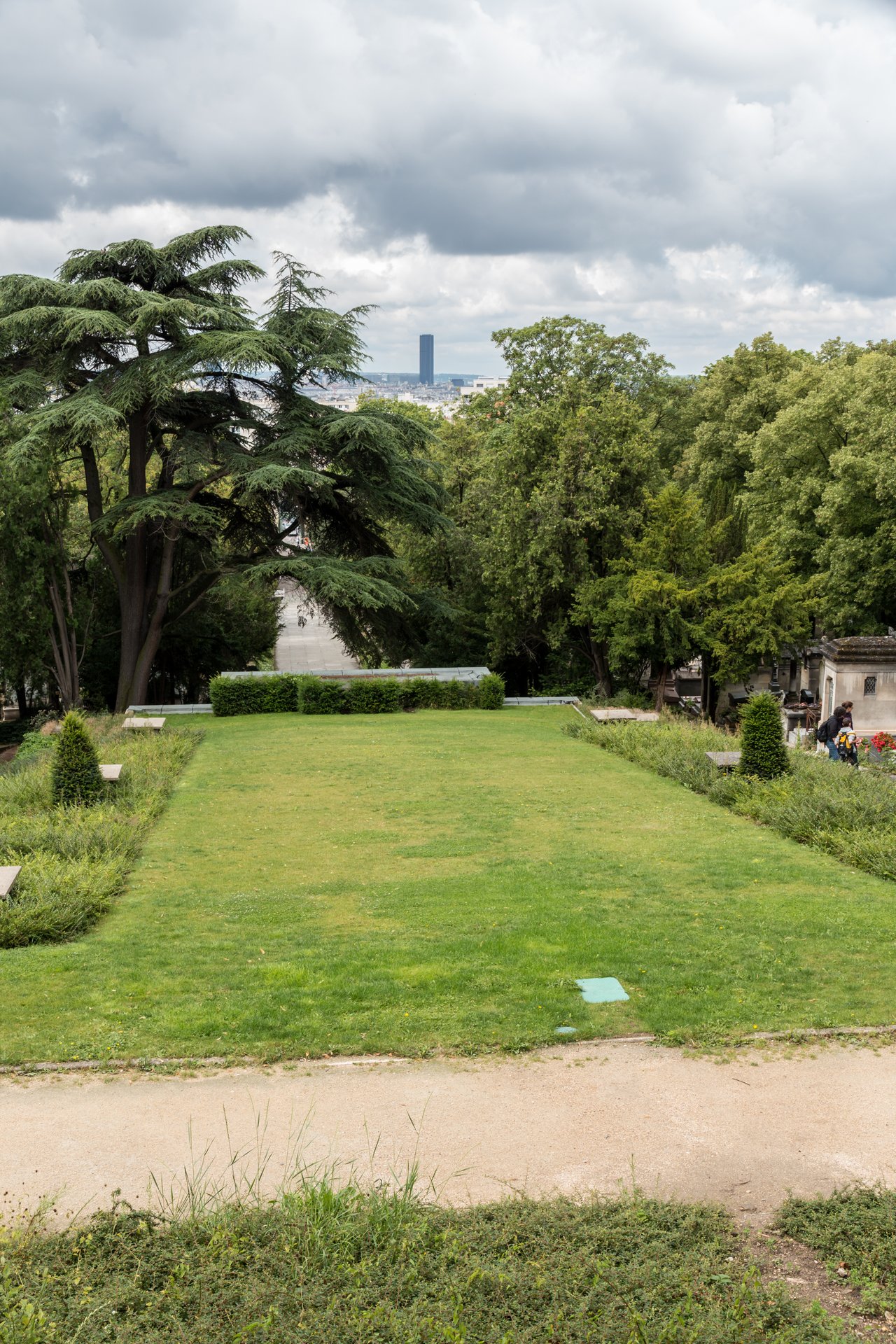
Opened in 1804, Père Lachaise is 44 hectares of sculpted tombs and tree-lined avenues holding Chopin, Édith Piaf, Oscar Wilde, Molière, Jim Morrison, and more than 70,000 others. It feels less like a graveyard than a peaceful garden city — which is exactly why it’s the most-visited cemetery in the world, and still far calmer than any major museum.
Getting there: main entrance at 21 bd de Ménilmontant, 20th arr.; Métro Père-Lachaise or Philippe Auguste. Open daily (roughly 8:00/9:00 to 17:30/18:00, longer in summer); free, no booking. Tip: grab the free map at the conservation office by the main entrance — the famous graves are scattered across 97 divisions, and you’ll want it — or join a guided walking tour if you’d rather have someone point out the famous graves. Go early.
6. Musée Carnavalet — the museum of Paris itself
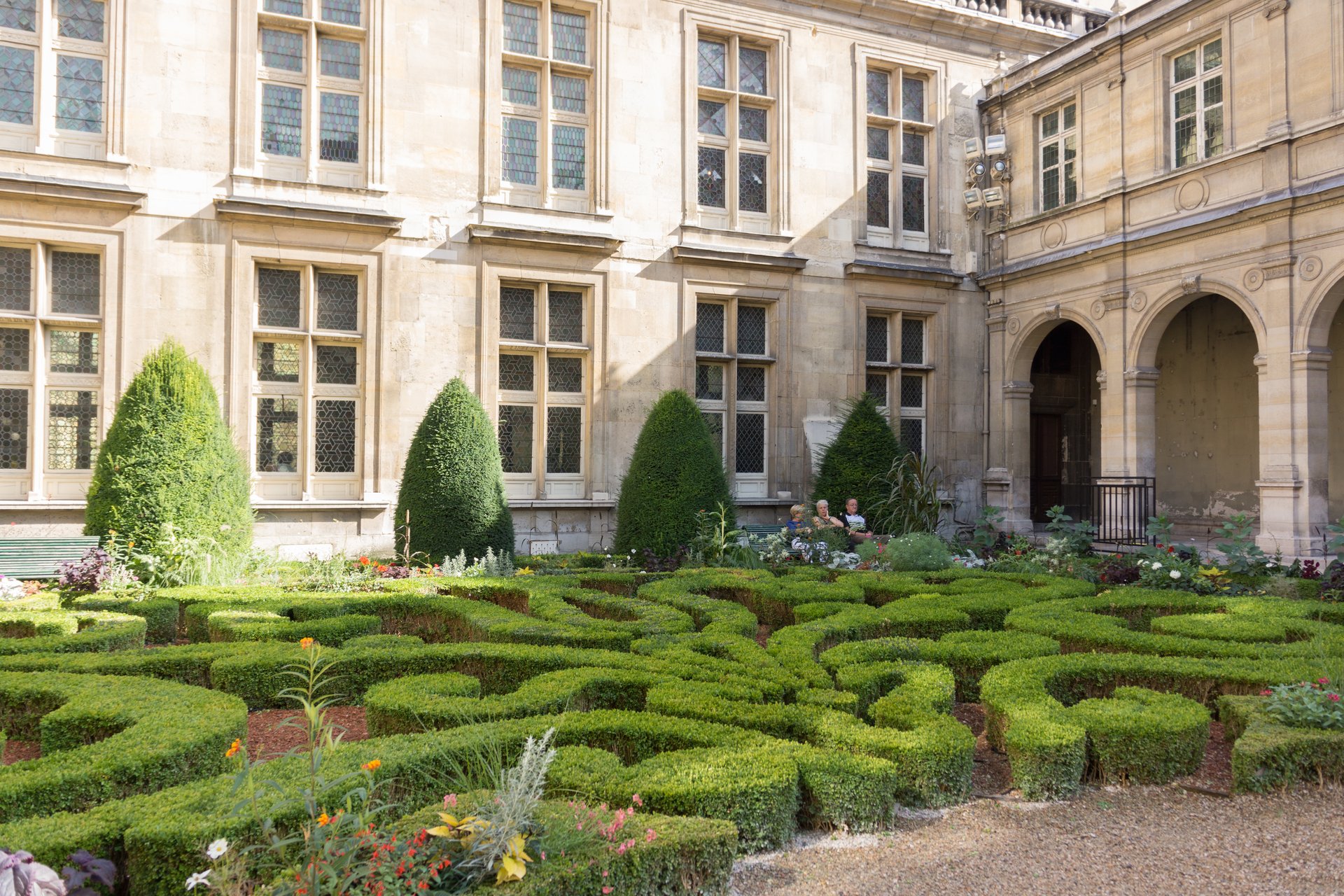
Want to understand the city you’re walking through? The Musée Carnavalet — the museum of the history of Paris, set in two 16th- and 17th-century Marais mansions — traces Paris from prehistory to today: period rooms, Revolution relics, centuries of shop signs, some 3,800 works on display. Renovated and reopened in 2021, and the permanent collection is free with walk-in access.
Getting there: 23 rue de Sévigné, 3rd arr.; Métro Saint-Paul. Tuesday–Sunday 10:00–18:00, closed Mondays. Permanent collection free, no reservation needed (temporary exhibitions are ticketed). Tip: the museum’s little garden courtyard is a calm break between Marais streets — and the Village Saint-Paul antiques quarter (below) is five minutes away.
7. Square du Vert-Galant — the island tip nobody finds
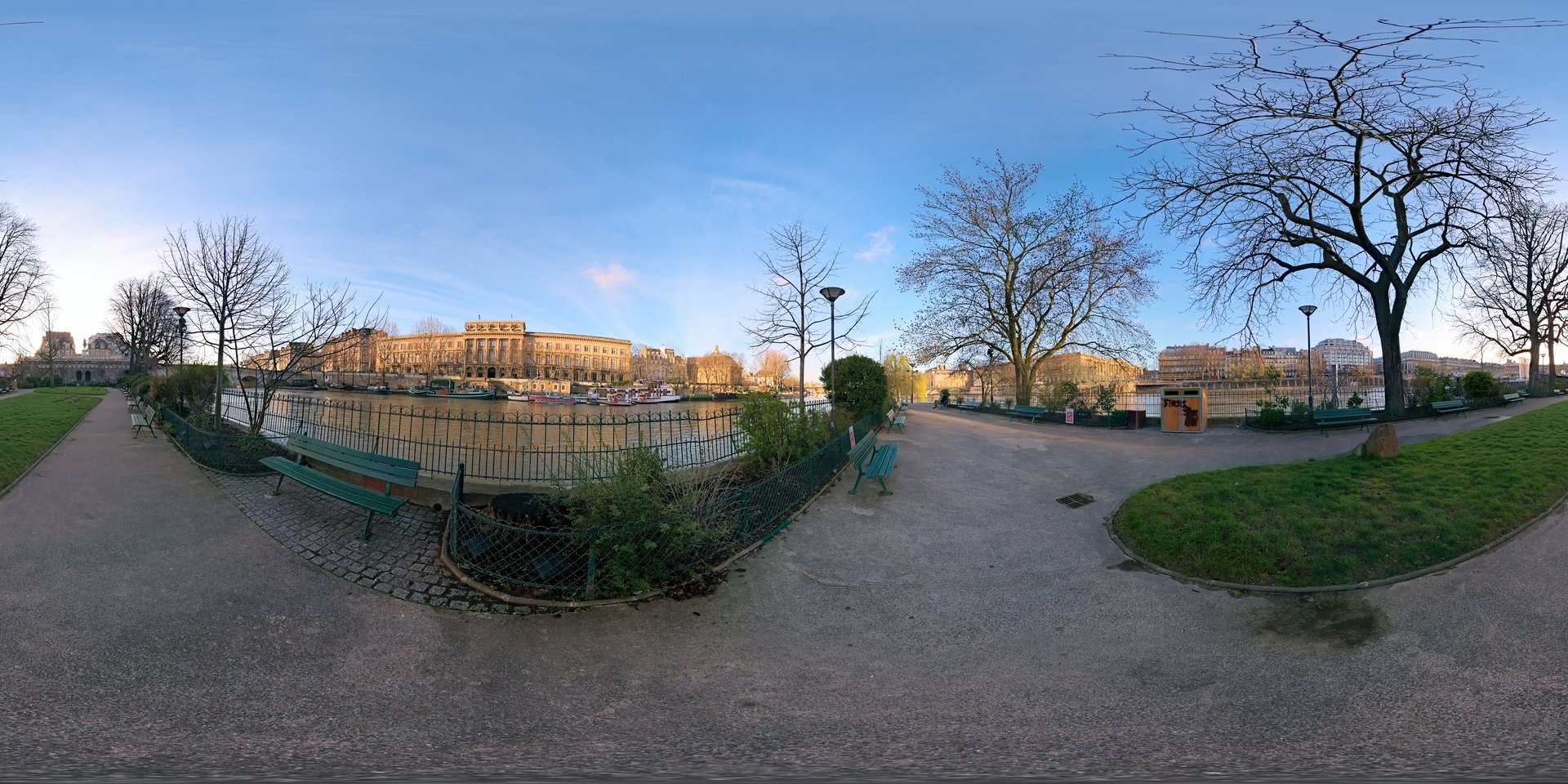
At the very western tip of the Île de la Cité — down a flight of stairs behind Henri IV’s equestrian statue on the Pont Neuf — hides a triangular pocket park with the Seine on three sides, a huge weeping willow, and views up the river toward the Louvre. Locals picnic here; most tourists cross the bridge above without ever noticing. Come at 8 or 9 am with a coffee and a croissant to go, and it’s nearly empty.
Getting there: 15 place du Pont-Neuf, 1st arr.; Métro Cité or Pont Neuf. Open 24/7; free. Tip: it’s also a lovely quiet sunset spot — and look for the plaque marking where Jacques de Molay, last Grand Master of the Knights Templar, was executed nearby.
8. The tea room of the Grande Mosquée de Paris
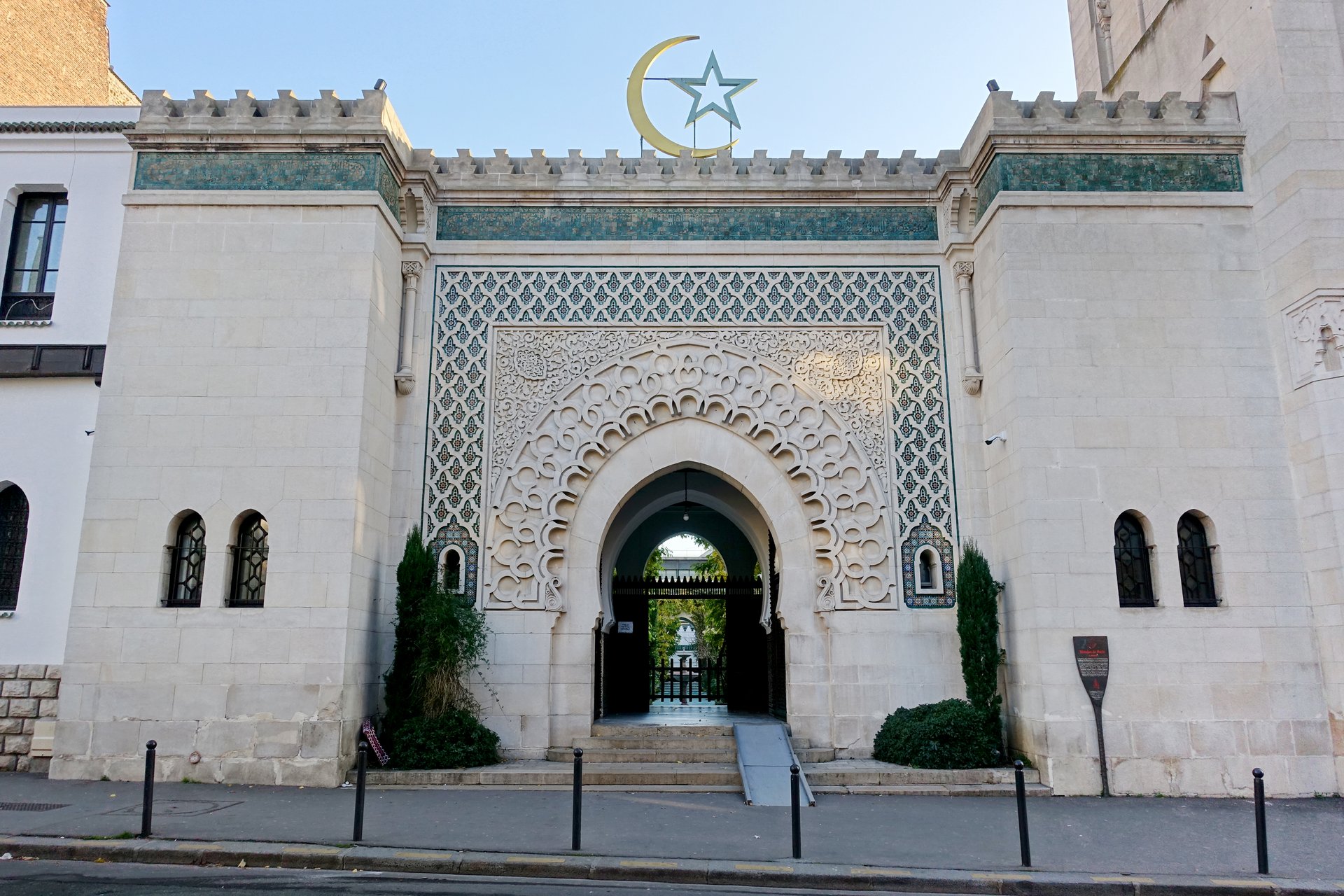
Ten minutes from the Jardin des Plantes, Paris’s oldest mosque (1926) hides a Moorish tea room that feels like Marrakech: tiled courtyards, shaded terraces, mint tea in painted glasses, baklava and pastries — alongside a hammam, a restaurant, and a small souk. It’s one of the city’s great slow afternoons, and most first-time visitors never hear about it.
Getting there: 39 rue Geoffroy-Saint-Hilaire, 5th arr.; Métro Jussieu or Censier–Daubenton. The tea room typically runs about 10:00–19:00 daily; no booking needed for tea. Tip: specify “sans sucre” if you want unsweetened tea — sugar goes in by default — and avoid weekend afternoons, when the terrace fills. (Prices aren’t published consistently online, so expect modest café pricing and check on the day.)
9. Le Village Saint-Paul — the Marais’ secret antiques quarter
Behind arched porches off the Marais streets, between rue Saint-Paul and rue Ave Maria, hides a cluster of five interlinked courtyards holding some eighty antique dealers and artisan boutiques — medieval to 1970s, plus tiny cafés. Le Village Saint-Paul is free to wander, bargaining is welcomed, and each courtyard has its own character.
Getting there: rue Saint-Paul, 4th arr.; Métro Saint-Paul (three-minute walk). Dealers generally run Wednesday–Monday 11:00–19:00, closed Tuesdays (individual hours vary). Tip: Saturday and Sunday mornings are liveliest, with informal spill-over markets on the surrounding streets — and pair it with the Église Saint-Paul-Saint-Louis and Place des Vosges nearby.
10. Musée Delacroix — the painter’s last apartment
Through one of Paris’s prettiest squares, Place de Furstemberg, you enter the actual last apartment of Eugène Delacroix — and the studio he built for his large canvases. Intimate rooms of sketches (including studies for Liberty Leading the People), letters, and palettes, plus a private walled garden the painter designed himself. It’s administered by the Louvre and sees a fraction of the crowds.
Getting there: 6 rue de Furstemberg, 6th arr. (Saint-Germain-des-Prés); Métro Saint-Germain-des-Prés or Mabillon. Open Wednesday–Monday; closed Tuesdays. Admission around €7 (free first Sunday of the month); check musee-delacroix.fr for current hours, as weekday opening times vary with group bookings. Tip: the tiny walled garden is the payoff — linger there after the apartment rooms, and aim for after midday on weekdays when group visits thin out.
How to string them together
These gems cluster neatly into easy half-days:
- The 1st–2nd arrondissement loop: Palais-Royal gardens (morning) → Galerie Vivienne and Passage des Panoramas → Square du Vert-Galant at sunset.
- The Marais day: Musée Carnavalet → Village Saint-Paul antiques → Place des Vosges.
- East side: Père Lachaise (morning) → Coulée Verte from Bastille eastward.
- Left Bank: Musée Delacroix → Grande Mosquée tea room → Jardin des Plantes.
- West: Musée Marmottan Monet (Thursday evening if you can) → Bois de Boulogne.
Bonus for sunset chasers: if you have one more evening, climb to Parc de Belleville in the 20th arrondissement — a terraced hillside park with one of the best free panoramas in Paris (Eiffel Tower and Montmartre both visible), surrounded by street art and wine bars, without the Sacré-Cœur crowds.
The bottom line
The famous Paris will always be worth it — but the hidden Paris is what makes people come back. These ten spots ask little of you: most are free, none need weeks of advance planning, and none come with crushing crowds. Just curiosity, comfortable shoes, and a willingness to step through the archway everyone else walks past. If you’re still planning the practical side of your trip, my where to stay in Paris guide breaks down the best neighborhoods and hotel picks, and the Paris in 3 days itinerary shows how to fit the classics around these secrets.