
Disclosure: This post contains affiliate links. If you book through one of these links, I may earn a commission at no extra cost to you.
Never forget a thing before you fly. My free 8-page Travel Planning Checklist walks you through the whole trip — 6 planning timelines, 36 checks, from booking windows to travel-day basics. One email, no spam, unsubscribe anytime.
Da Lat is Vietnam’s cool change — literally. Perched at 1,500 metres on the Langbiang Plateau in the Central Highlands, it trades the lowlands’ humidity for pine forests, flower farms and evenings that genuinely call for a jacket. The French built it as a hill station after the explorer Alexandre Yersin surveyed the plateau in 1893, and the legacy still shows in its villas, its crescent-shaped lake and its coffee hillsides. Locals call it the City of Eternal Spring, with daytime temperatures usually sitting between about 18 and 24°C. Three days is the sweet spot here: one day for the town itself, one for the monastery and waterfalls to the south, and one for the vintage train, the mountain and the countryside. It pairs beautifully with the coast — if you are coming up from the beach, our Nha Trang in 3 days itinerary is the natural first half of the trip, with a three-to-four-hour mountain road linking the two.
Before You Go: The Practical Basics
Getting there. Lien Khuong Airport sits about 30 kilometres south of the centre, with flights from Ho Chi Minh City, Hanoi and other Vietnamese cities, and shuttle buses and taxis meeting arrivals. By road, buses take roughly seven hours from Ho Chi Minh City (about 300 kilometres) and three to four hours from Nha Trang. Book the Nha Trang route for daylight if you can — the climb through the passes is part of the scenery.
Getting around. The centre around the lake and market is genuinely walkable, one of the few Vietnamese cities where that is a pleasure rather than a test of nerve. The sights, though, spread up to 25 kilometres apart on hilly roads. Ride-hailing cars and motorbikes cover town trips easily; for the southern and countryside loops, a car with a driver for the day or a guided tour is far simpler. Rent a scooter only if you are an experienced rider — expect mist, steep grades and rain-slick bends.
Pack for the altitude. Even in summer, nights drop cool enough for a proper jacket, and winter evenings can approach single digits. The sun at 1,500 metres is stronger than it feels, so bring sunscreen as well as layers.
Day 1: The Lake, the Crazy House and the Last Emperor’s Palace
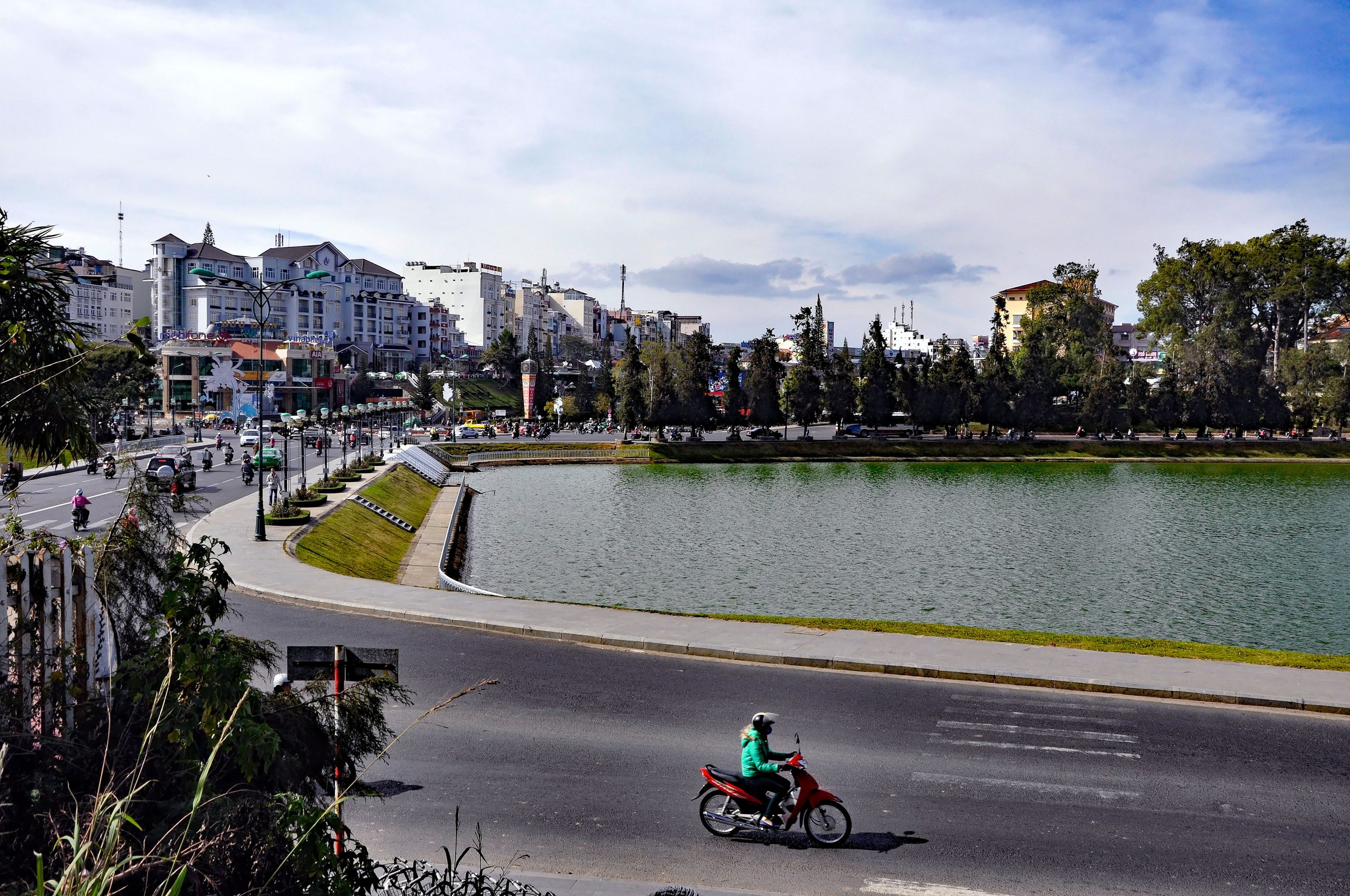
Start with the walk every Da Lat morning deserves: the flat loop around Xuan Huong Lake, a 5.1-kilometre ring road shaded by pines, with swan-shaped pedal boats for hire and cafés along the shore. On the lake’s eastern side, Lam Vien Square is marked by two giant glass structures shaped like an artichoke bud and a wild sunflower — Da Lat’s modern postcard shot.
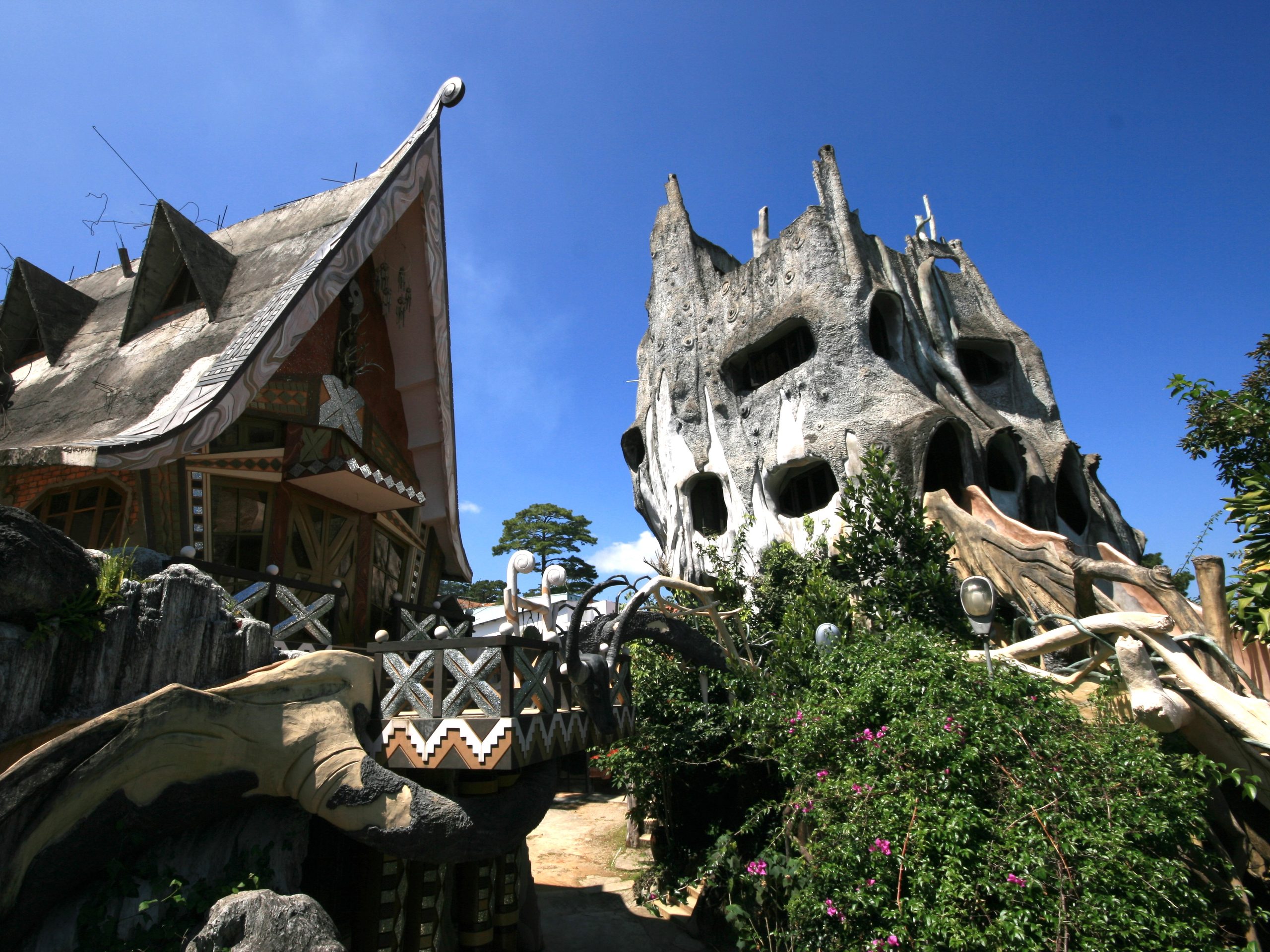
Late morning, head uphill to the Crazy House (the Hang Nga Guesthouse), a surreal, Gaudí-meets-treehouse maze of twisting concrete trunks, caves and rooftop walkways that is part guesthouse, part art project. It opens daily from 8:30am to 6pm, with adult entry around 80,000 dong — go before lunch to beat the tour groups threading the narrow stairs.
In the afternoon, visit Bao Dai’s Summer Palace (Palace III), built between 1933 and 1938 as the summer residence of Vietnam’s last emperor. Unlike many palace museums, its rooms survive with their original Art Deco furnishings — the royal family’s living quarters feel paused rather than reconstructed. If time remains, stroll the French Quarter’s villa-lined streets and the pink Da Lat Cathedral before dinner.
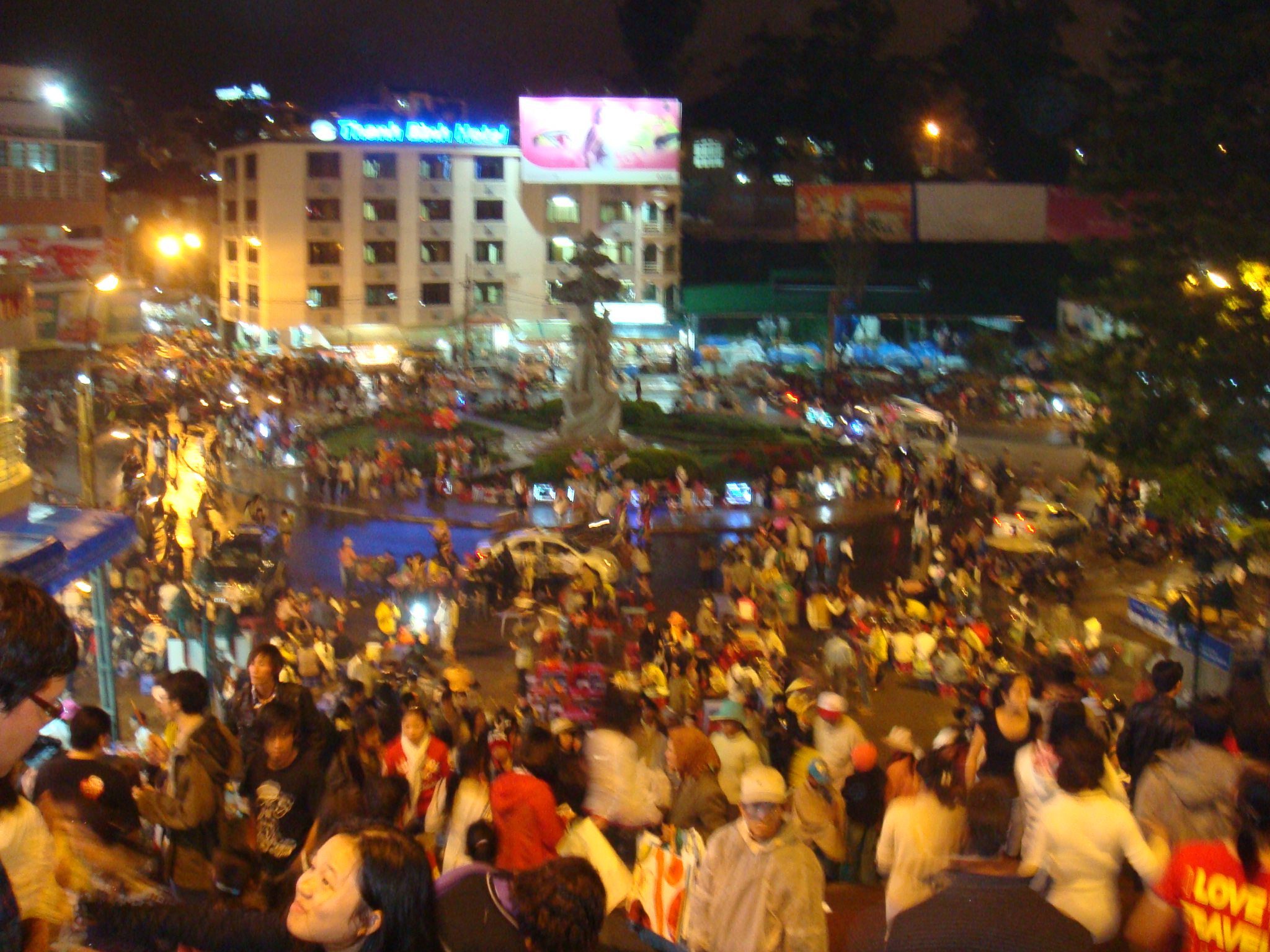
Evening belongs to the Da Lat Night Market, spilling around the central market steps: grilled rice-paper “Da Lat pizza” (banh trang nuong), cups of hot soy milk, sweet potatoes and corn roasting over coals, and strawberries in every form. It is touristy, cheerful and exactly what a first night here should be.
Day 2: The Cable Car, the Monastery and Datanla Falls
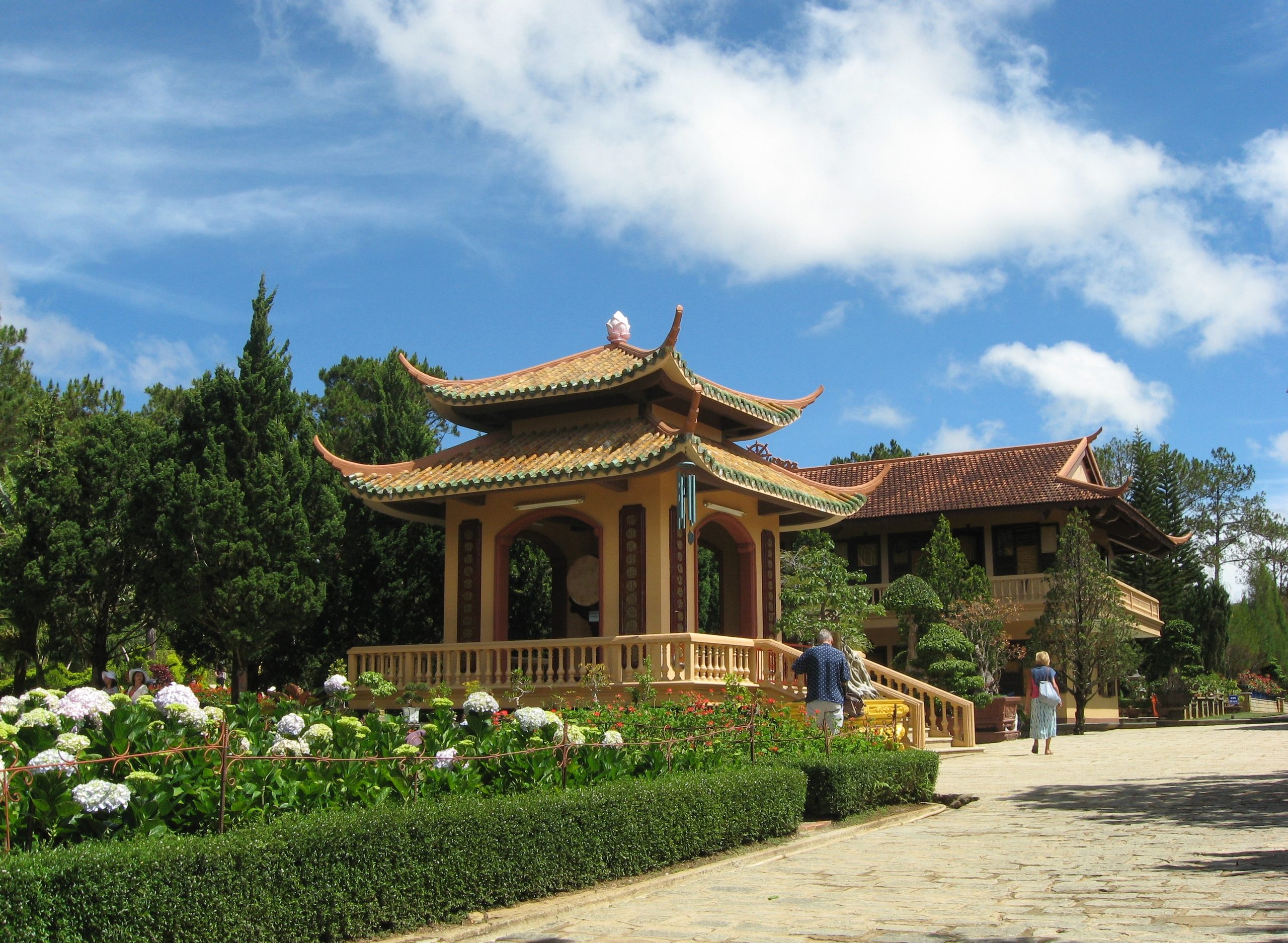
Take the Robin Hill cable car south of town: a 2.3-kilometre ride over pine forest and market gardens to Truc Lam Zen Monastery, opened in 1994 on Phoenix Mountain above Tuyen Lam Lake. The monastery gardens are calm and immaculate, and from the steps you can walk down to the lake itself — a 350-hectare reservoir ringed by pines, with boats and kayaks for hire. A return cable car ticket costs around 150,000 dong; note that the cars pause over lunch and stop in heavy rain, strong wind or thick fog, so go in the morning.
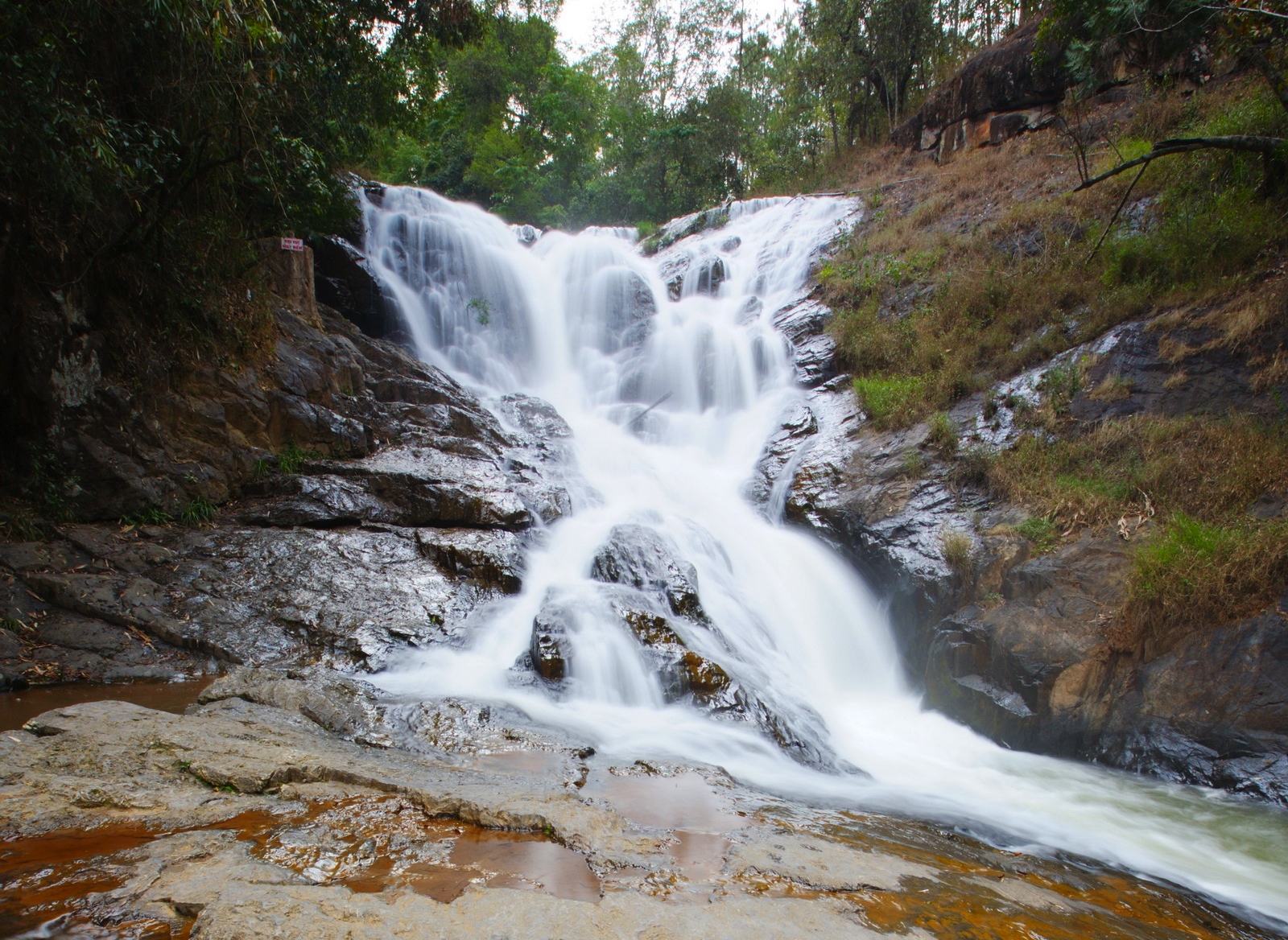
The afternoon is for Datanla Waterfall, about five kilometres south of the centre off the Prenn Pass road. Entry is around 80,000 dong, and most visitors reach the first cascade on the rider-controlled alpine coaster that winds down through the pines — you brake it yourself, which is either the appeal or the warning, depending on temperament. There are forest paths and further falls below for those who walk instead.
For the day’s full-adventure version, Datanla is also Da Lat’s canyoning home: a guided day of abseiling down waterfalls, sliding natural rock chutes and jumping into pools, finishing with kayaking on Tuyen Lam Lake. The best-regarded option is this full-day Datanla canyoning adventure (5.0 stars from nearly 3,000 reviews, around $70 per person, free cancellation up to 24 hours ahead). One honest safety note: canyoning here has a real accident history with unlicensed operators, so book only a licensed, heavily reviewed company, and accept that trips are cancelled after heavy rain — that caution is a feature, not a flaw.
Day 3: The Vintage Train, Langbiang and Coffee Country
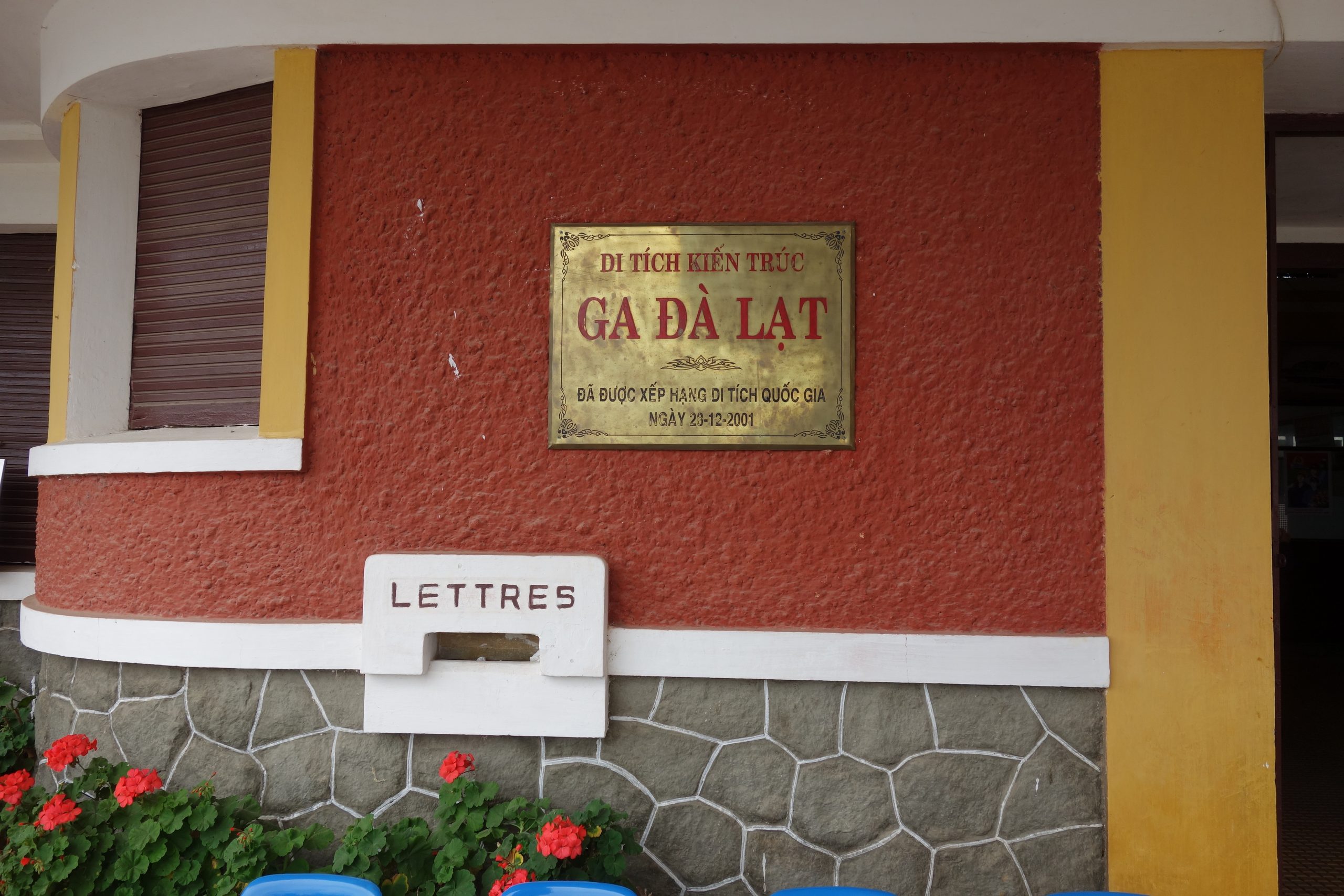
Spend the morning at Da Lat Railway Station, an Art Deco gem from the colonial era, and ride the vintage tourist train about seven kilometres east to Trai Mat — roughly 30 minutes each way through flower and vegetable farms. At Trai Mat, walk to Linh Phuoc Pagoda, a dazzling temple sheathed in mosaics made from broken glass, pottery and porcelain, with a 49-metre dragon built from thousands of bottles. Trains run daily, but departure times vary by date, so check the schedule for your day when you arrive in town.
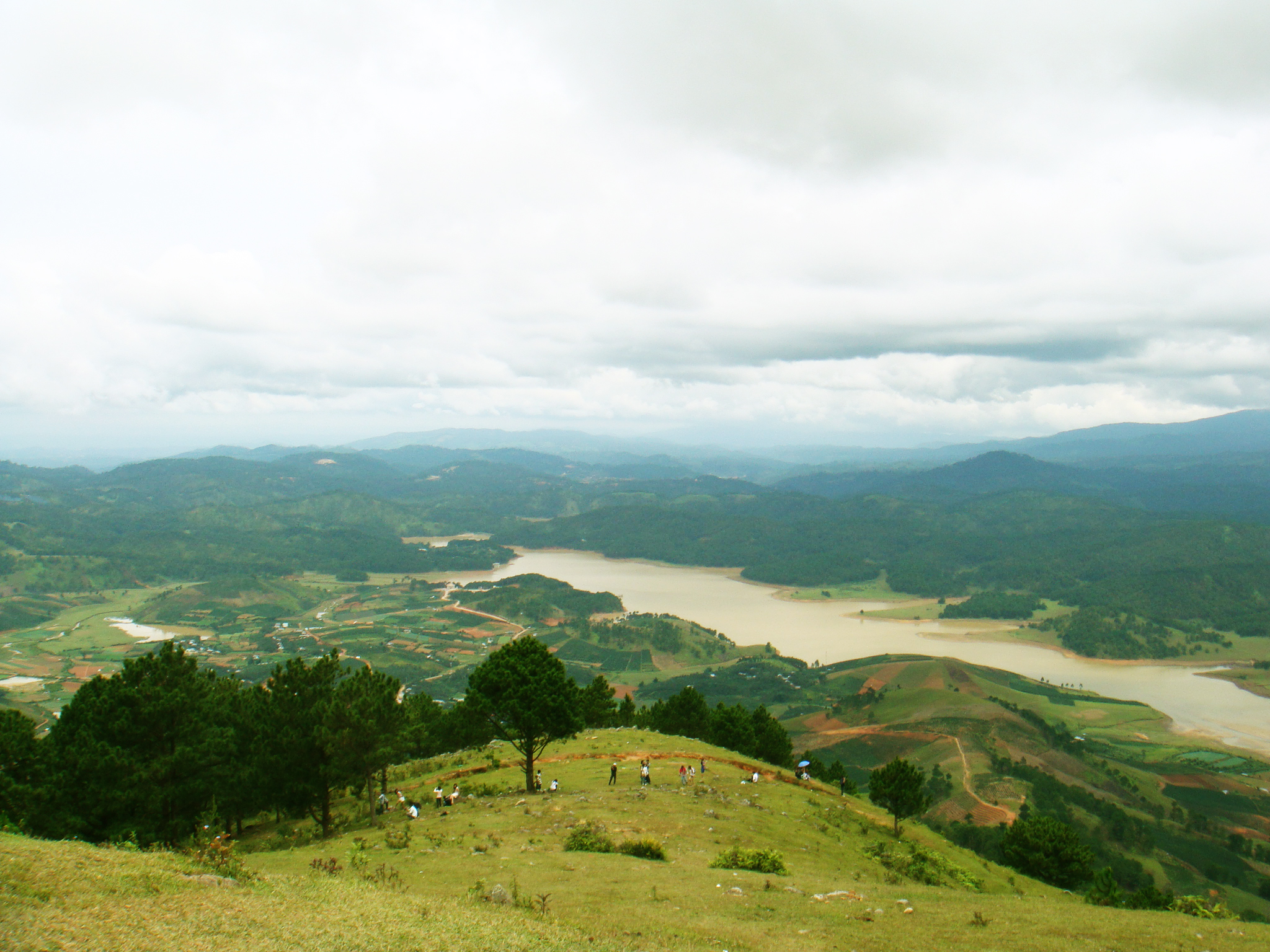
For the afternoon, choose your mountain. Langbiang, 12 kilometres north, is Da Lat’s landmark twin peak: shared jeeps climb to the 1,915-metre Radar Peak viewpoint, while hikers can push on toward the 2,167-metre summit, and K’Ho ethnic villages sit at the mountain’s foot. If you would rather have the logistics handled, this full-day Langbiang and Da Lat highlights tour (4.9 stars, around $33 per person with lunch included) combines Langbiang with Datanla, the Crazy House and the Clay Tunnel in one loop.
The other great Day 3 is the countryside. The farms around Da Lat grow the coffee, silk and flowers the lowlands cannot, and this small-group countryside and three-waterfalls day tour (4.9 stars from over 2,000 reviews, around $21 per person with lunch included) strings together Datanla, the wide terraced Pongour Waterfall, a silk factory, a cricket farm and the Me Linh Coffee Garden for tastings above the plantations. One thing to know before you book any countryside tour: Elephant Falls has been closed to visitors since 2021, with no confirmed reopening date — tours now view it from Linh An Pagoda nearby rather than from its base, and any itinerary promising otherwise is out of date.
What to Eat in Da Lat
Da Lat’s cool-climate produce drives its kitchen. Beyond the night market’s banh trang nuong and hot soy milk, look for kem bo (dense avocado ice cream), artichoke tea, strawberry jam and preserves to take home, and lau ga la e — a chicken hotpot fragrant with basil leaves that is practically the town’s official cold-evening dinner. Coffee is the other souvenir: the hillsides around town are some of Vietnam’s best arabica country.
Practical Tips for Da Lat
Best time to visit. The dry season runs from about December to March, with cherry blossom in January and February and the town’s famous flowers at their peak. November, when this itinerary is at its freshest, brings wild sunflowers and the first dry days. From May to October, expect afternoon downpours — waterfalls run fuller, but canyoning and the cable car can pause.
Book ahead. In the dry season and around Vietnamese public holidays, Da Lat fills with domestic travellers; reserve canyoning and countryside tours a day or two ahead, and expect the Crazy House and the Trai Mat train to be busiest mid-morning.
Keep planning. Da Lat is the highland chapter of a classic southern Vietnam route: beach first in Nha Trang, cool hills second, then either back to Ho Chi Minh City or on to the island finish in Phu Quoc. Browse our Vietnam guides collection for the full set of itineraries, stay guides and tour roundups, and the wider Southeast Asia guides roundup if your trip keeps going beyond Vietnam. Stay and tour guides for Da Lat itself are coming next — the highlands deserve the full treatment too.