
Disclosure: This post contains affiliate links. If you book through one of these links, I may earn a commission at no extra cost to you.
Never forget a thing before you fly. My free 8-page Travel Planning Checklist walks you through the whole trip — 6 planning timelines, 36 checks, from booking windows to travel-day basics. One email, no spam, unsubscribe anytime.
Da Lat does not have neighbourhoods in the big-city sense — it has altitudes, lake shores and pine hills, and where you sleep decides what kind of trip you have. Stay in the centre and you walk to the night market, the cafés and the lake loop, but you will hear the town. Stay out at Tuyen Lam Lake and you wake to mist on the water and birdsong, but every dinner in town is a 15-minute taxi ride. Neither is wrong; they are simply different holidays. This guide breaks down Da Lat’s four real bases — the city centre, the Xuan Huong Lake shore, the French villa hills, and Tuyen Lam Lake — with honest trade-offs and a hotel pick at every level. If you are still shaping your days, pair this with my Da Lat in 3 days itinerary, which groups the sights so your base and your sightseeing line up.
How to Choose Your Area in Da Lat
First-timers and short stays: the city centre around the market and Xuan Huong Lake. Everything is walkable, tour pickups are simplest here, and you can do the classic Da Lat evenings — the lake loop, then the night market — without touching a taxi.
Couples and romantics: the lake shore’s heritage hotels or a restored French villa in the hills. Da Lat was built as a honeymoon town for good reason, and its most atmospheric rooms are a century old.
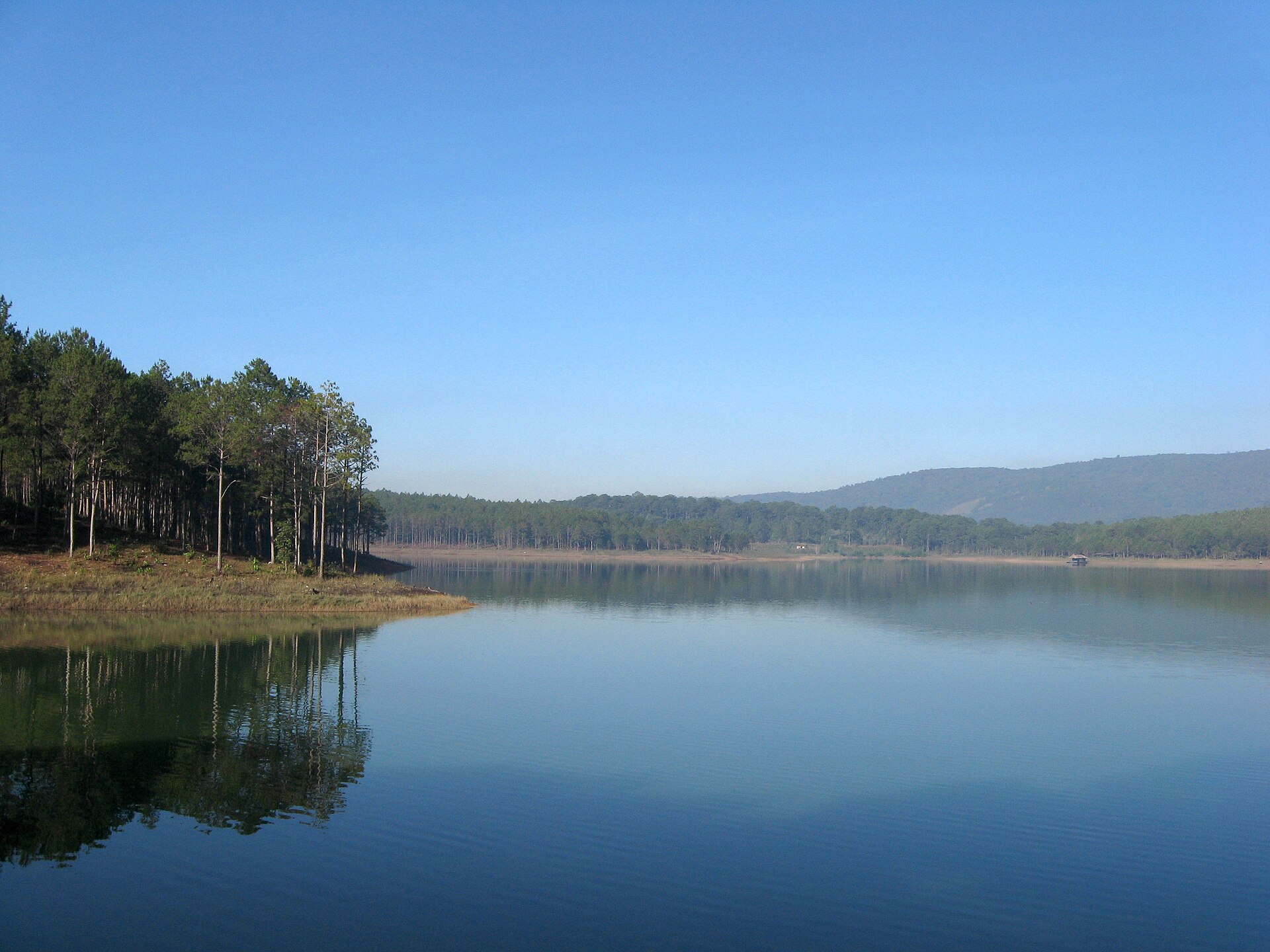
Families and anyone craving a resort reset: Tuyen Lam Lake, about six to seven kilometres south, where the big lakeside resorts have pools, space and pine forest — and where you will barely hear the town at all.
One warning that applies everywhere: Da Lat sits at 1,500 metres, and many smaller hotels have no air conditioning because they rarely need it — but heating matters more. In the cool season (roughly December to February), evenings can approach single digits, so check that your room has heating or at least serious blankets before you book the cheapest option in town.
City Centre and the Night Market: Best for First-Timers
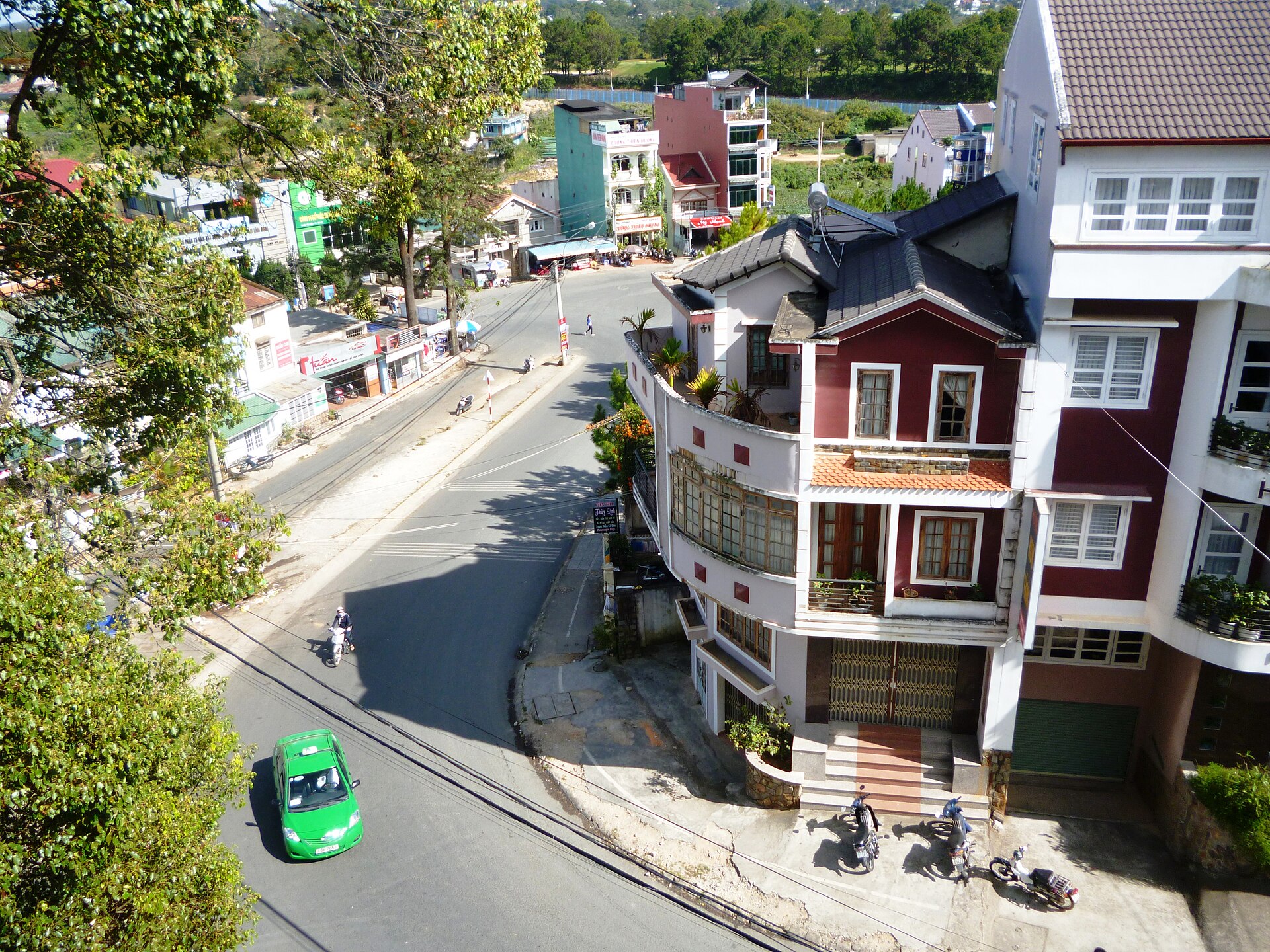
The centre — the streets around Da Lat Market, Hoa Binh Square and the top of Xuan Huong Lake — is the practical heart of town. This is where the night market spills out each evening, where the best concentration of cafés, bakeries and local restaurants sits, and where most tours collect their guests. Prices run lower here than at the lakeside resorts, and for a one- or two-night stay nothing else makes sense. The honest downsides are noise and crowds: the market streets are busy with motorbikes by day, and Vietnamese holiday weekends fill the centre completely.
The centre’s smart modern pick is Hotel Colline Dalat, a 152-room four-star that opened in 2019 on Phan Boi Chau Street — about a three-minute walk to the market and five to the lake. It is the reliable, contemporary option: proper heating, sound-insulated rooms by centre standards, and none of the heritage creak. For a lake-view classic in the same walkable zone, TTC Hotel – Ngoc Lan stands on Nguyen Chi Thanh above the market, with 91 rooms, many facing the lake, and a spa making the most of the view. It has no pool — in Da Lat’s climate, few centre hotels bother — but for location per dollar it is hard to beat. Budget travellers will find dozens of family-run mini-hotels and homestays in the lanes behind the market; standards vary widely, so prioritise recent reviews mentioning heating and hot water over photographs of the lobby.
Xuan Huong Lake and Tran Phu: The Classic Da Lat Stay
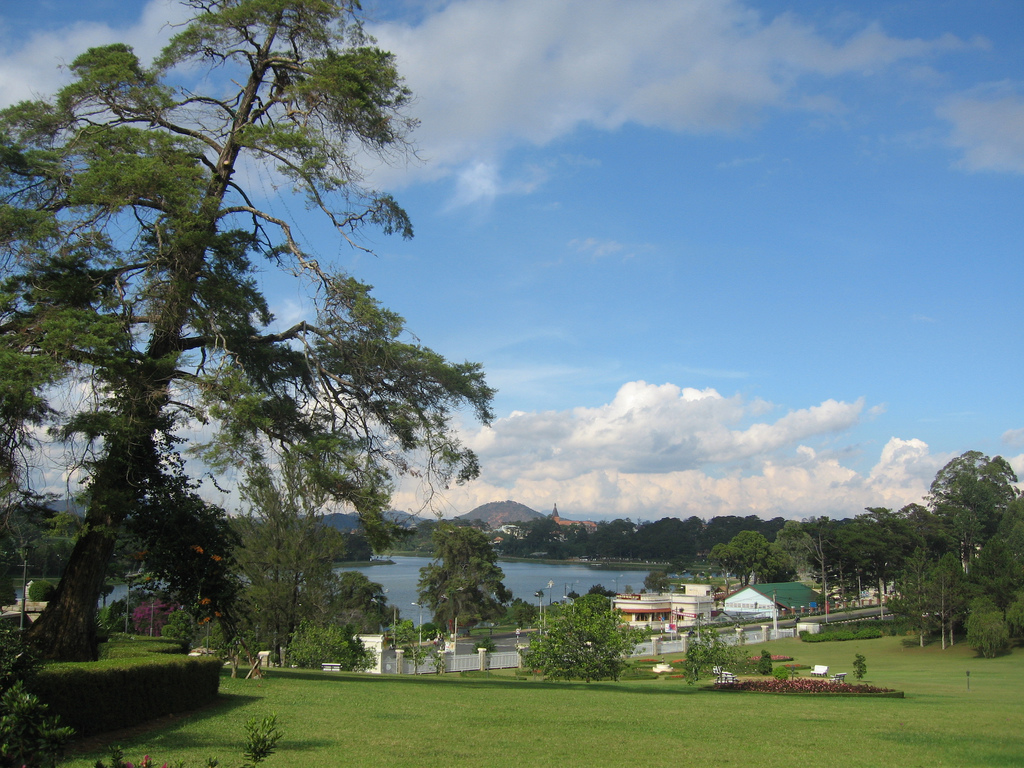
Walk five minutes from the market and the town changes character. The streets around Xuan Huong Lake — a crescent-shaped, man-made lake of about two kilometres long at the heart of town — are greener, quieter and grander, lined with pines and the surviving villas of the French hill station. This is the Da Lat of the postcards: morning mist on the water, couples on swan pedal boats, and the 5.1-kilometre lake loop as your daily walk. You are still an easy stroll from the centre’s restaurants, but nights are noticeably calmer. For most foreign visitors, this balance makes the lake shore the best overall base in Da Lat.
The address here is Dalat Palace Heritage Hotel, the town’s grande dame: opened in 1922 on Tran Phu Street above the lake, with 73 rooms, gardens running down toward the water, and a century of governors, emperors and honeymooners in its guest history. Rooms are classically furnished rather than cutting-edge, which is precisely the point — you are booking the atmosphere of the original hill station, with five-star service wrapped around it. Its sister property, Du Parc Hotel Dalat, stands a few doors along at 15 Tran Phu: opened in 1932, French-colonial in style, with 140 rooms at a gentler price than the Palace. The pair share the same superb position — lake in front, cathedral and centre behind — so choose the Palace for the splurge and Du Parc for the same neighbourhood on a mid-range budget.
The French Villa Hills: Best for Charm and Quiet
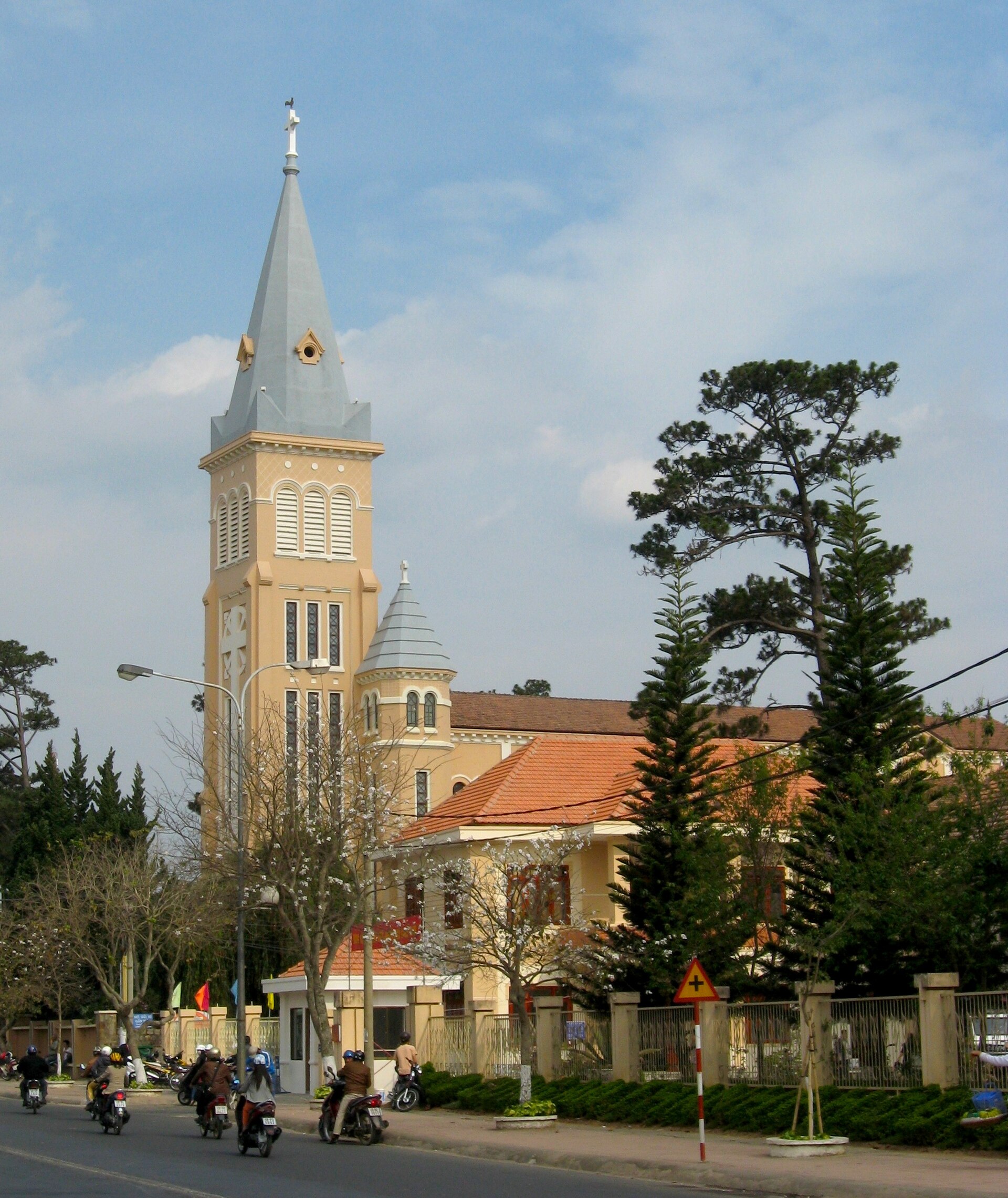
Da Lat’s third base is not a district so much as a scattering: the villa streets climbing the hills south and west of the lake, around Le Lai, Le Hong Phong and the road toward the Crazy House and Bao Dai’s Summer Palace. The French built some 2,000 villas here in the 1920s and 1930s, and the survivors — Normandy-style houses, chalets and Art Deco mansions among the pines — give this side of town its storybook feel. It is a 10- to 20-minute walk or a short Grab ride to the centre, which buys you quiet, views and morning birdsong. Stay here if atmosphere matters more than step-out-the-door convenience, and especially if you are staying three nights or more.
The definitive villa stay is Ana Mandara Villas Dalat Resort & Spa: 17 French villas built between the 1920s and 1930s on a pine-covered hill on Le Lai Street, restored room by room — some 87 rooms and suites spread three to five per villa, each house keeping its original character, with fireplaces, claw-foot tubs and creaking wooden floors as features, not flaws. There is a spa, an outdoor pool and a restaurant in a converted villa, and the whole property feels like a small, elegant village that happens to rent rooms. It is Da Lat’s priciest classic address and, for a special trip, the one travellers remember. A more modest way into the same hills is the Sammy Dalat Hotel on Le Hong Phong, a French-style four-star near the Crazy House end of the neighbourhood — a comfortable, good-value base for exploring the palace and villa streets on foot.
Tuyen Lam Lake: Best for Resorts, Nature and Families
About six to seven kilometres south of the centre, Tuyen Lam Lake is a 350-hectare reservoir in a pine valley — the same water you glide over on the Robin Hill cable car to Truc Lam Monastery. This is Da Lat’s resort zone: big properties on forested peninsulas, lake activities on the doorstep, and silence at night. The trade-off is real — there are few independent restaurants nearby, so you will eat at your resort or pay roughly 120,000–160,000 dong per taxi ride into town (many resorts run scheduled shuttles). Choose Tuyen Lam when the hotel itself is part of the holiday: honeymooners, families wanting pools and space, and anyone using Da Lat as a reset between Vietnam’s bigger cities. It also puts Datanla Waterfall and the monastery within minutes, and if the lake tempts you out on the water after a canyoning morning, the day trip most travellers book is this full-day Datanla canyoning adventure, which finishes with kayaking on Tuyen Lam itself.
The lake’s most polished address is Dalat Edensee Lake Resort and Spa, a low-rise lakeside retreat in the pines with rooms built around fireplaces, a spa, tennis and an indoor pool — the full European-lake-resort fantasy, transplanted to the Central Highlands. For scale and facilities, Terracotta Hotel & Resort Dalat spreads 330 rooms and lakeside villas across a roughly 17-hectare pine peninsula: multiple restaurants, an indoor pool and the easiest family logistics on the lake. Golfers should look at Swiss-Belresort Tuyen Lam, an Anglo-Norman-style resort beside the SAM Tuyen Lam golf course, with around 150 rooms — many with fireplaces — at the quiet far end of the valley.
Getting There and Getting Around
Airport. Lien Khuong Airport is about 30 kilometres south — allow 45 minutes to an hour to the centre, less to Tuyen Lam, which you pass on the way in. Shuttle buses and taxis meet flights; lakeside resorts can usually arrange transfers.
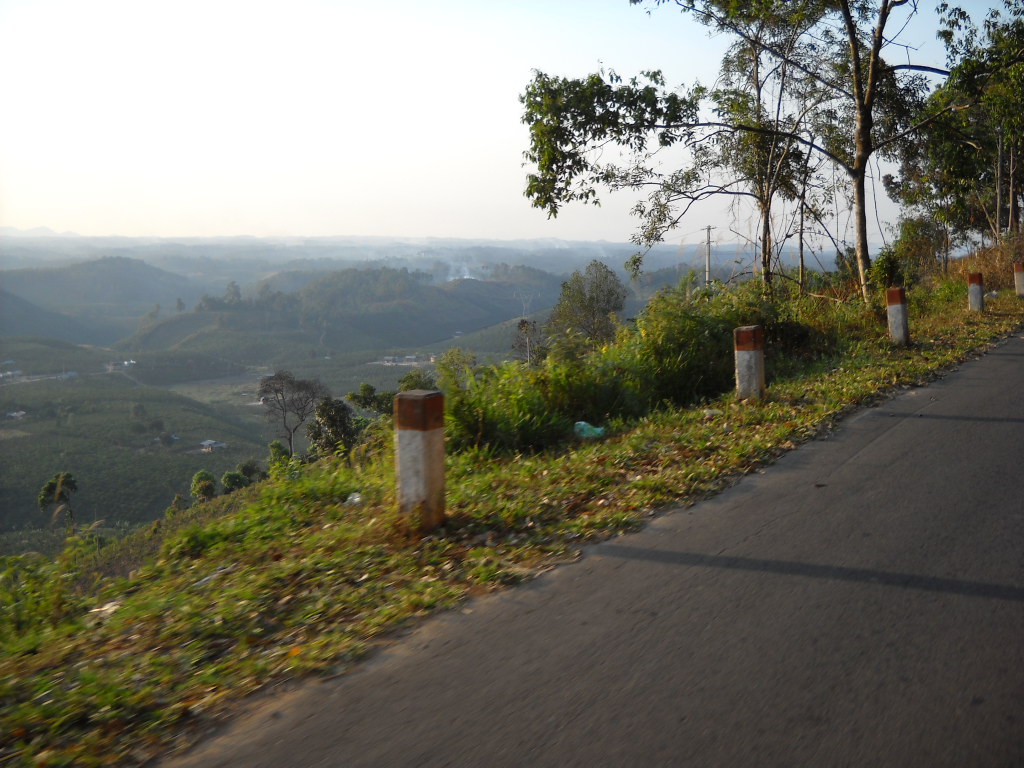
Around town. Centre and lake-shore hotels make Da Lat one of Vietnam’s few genuinely walkable cities. For the villa hills and Tuyen Lam, Grab cars are cheap and plentiful by day; after about 10pm, ask your hotel to book return taxis. If you are heading out on the countryside loop — Pongour Waterfall, the silk and coffee farms — the simplest option is this small-group countryside and three-waterfalls tour, which collects from centre hotels; and for the mountain day, this full-day Langbiang and city highlights tour saves negotiating jeeps at the gate. One honest note carried over from the itinerary: Elephant Falls has been closed since 2021 and is viewed from Linh An Pagoda only — any tour promising its base is out of date.
Where I Would Stay in Da Lat
For a first trip of two or three nights, base yourself on the lake shore: Du Parc if the budget is sensible, the Dalat Palace if it is not. You get the morning lake loop, the walkable centre and the quietest central nights. Add a fourth night and the villa hills earn their keep — Ana Mandara is the Da Lat stay people describe years later. Save Tuyen Lam for a trip where the resort is the destination, or pair it with the coast: the classic southern route runs beach first, hills second, exactly as in my Nha Trang stay guide, with a three-to-four-hour mountain road between the two. For the full set of routes and bases, browse our Vietnam guides collection — and wherever you land, pack the jacket. Da Lat’s cool evenings are the whole point.