
Bergen does not try to impress you. Norway’s second city sits quietly between seven mountains and the sea, all painted wooden houses, fish-market gulls and drizzle that comes and goes like weather with somewhere else to be. It is also the most rewarding city in Norway for a first-timer: in three days you can walk a UNESCO-listed Hanseatic wharf, ride a funicular above the rooftops, sail into a fjord so narrow the cliffs feel close enough to touch, and stand on a mountain summit looking back at all of it.
Never forget a thing before you fly. My free 8-page Travel Planning Checklist walks you through the whole trip — 6 planning timelines, 36 checks, from booking windows to travel-day basics. One email, no spam, unsubscribe anytime.
Disclosure: This post contains affiliate links. If you book through one of these links, I may earn a commission at no extra cost to you.
Before you go: the rain, the card, and the best months
Let’s deal with the rain first, because everyone asks. Bergen is one of Europe’s wettest cities — the Norwegian Meteorological Institute records about 2,495 mm of rain a year across roughly 201 rain days at the city station. Most of it is light, passing drizzle, and the city is built for it: covered arcades, warm cafés and museums everywhere. Pack a proper waterproof jacket and waterproof shoes, and treat sunshine as a bonus rather than a plan.
May is statistically the kindest month — the driest, the sunniest, with around 18 hours of daylight — while July is the warmest (average highs around 19.6°C) and also the busiest and priciest. September is a good shoulder bet: autumn colour, fewer cruise ships, lower prices. One purchase worth deciding on before you land is the Bergen Card: the 24-hour card costs NOK 400 and the 72-hour card NOK 600 (2026 prices), covering all city buses and the Bybanen light rail, including the airport line, plus free or discounted entry to more than 30 museums and attractions. It does not cover Vy trains, so it will not help with the Oslo–Bergen railway or the Flåm line.
Getting from the airport into town
Bergen Airport Flesland sits about 20 km south of the centre. The easiest arrival is the Bybanen light rail Line 1, which leaves from the terminal’s lower level and reaches Byparken in the city centre in about 45 minutes. A single Skyss ticket costs NOK 51 and is covered by the Bergen Card; buy it in the Skyss Billett app or at a ticket machine, as there are no onboard sales on the light rail.
Day 1: Bryggen, the Fish Market and the view from Fløyen
Morning: walk the Hanseatic wharf
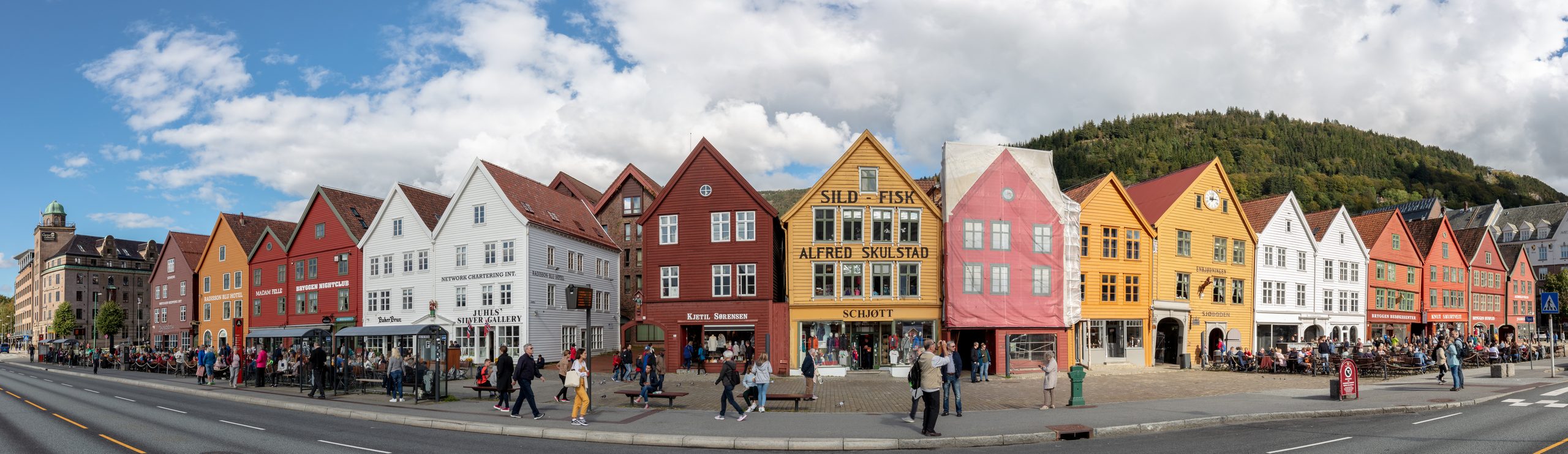
Start where Bergen started: Bryggen, the old Hanseatic wharf on the eastern shore of Vågen harbour. This row of colourful, gabled wooden warehouses has been a UNESCO World Heritage site since 1979. The Hanseatic League ran it as a closed German trading colony, the Kontor, from around 1360 to 1754, and the narrow passages behind the facades still hide craft workshops, galleries and tiny shops — the front is the postcard, the back lanes are the real Bryggen. Most of the standing buildings are reconstructions after the great fire of 1955, rebuilt to the historic footprint in traditional timber.
The best way to understand what you are looking at is a guided walk on your first morning. The Past & Present small-group walking tour runs two hours from Bergenhus Fortress through Bryggen and St Mary’s Church into the old-town neighbourhoods, with local authorised guides, and it is rated 4.9 out of 5 from more than 2,400 reviews, from around $36.
After the walk, duck into Bryggens Museum (NOK 170, free under 18), built over the excavations from the 1955 fire, and Schøtstuene (NOK 160 including a guided tour), the former Hanseatic assembly rooms. One thing to know before you go: the Hanseatic Museum’s main building is closed for restoration until 2027, with its exhibitions currently running from Schøtstuene instead.
Lunch at the Fish Market, then the fortress
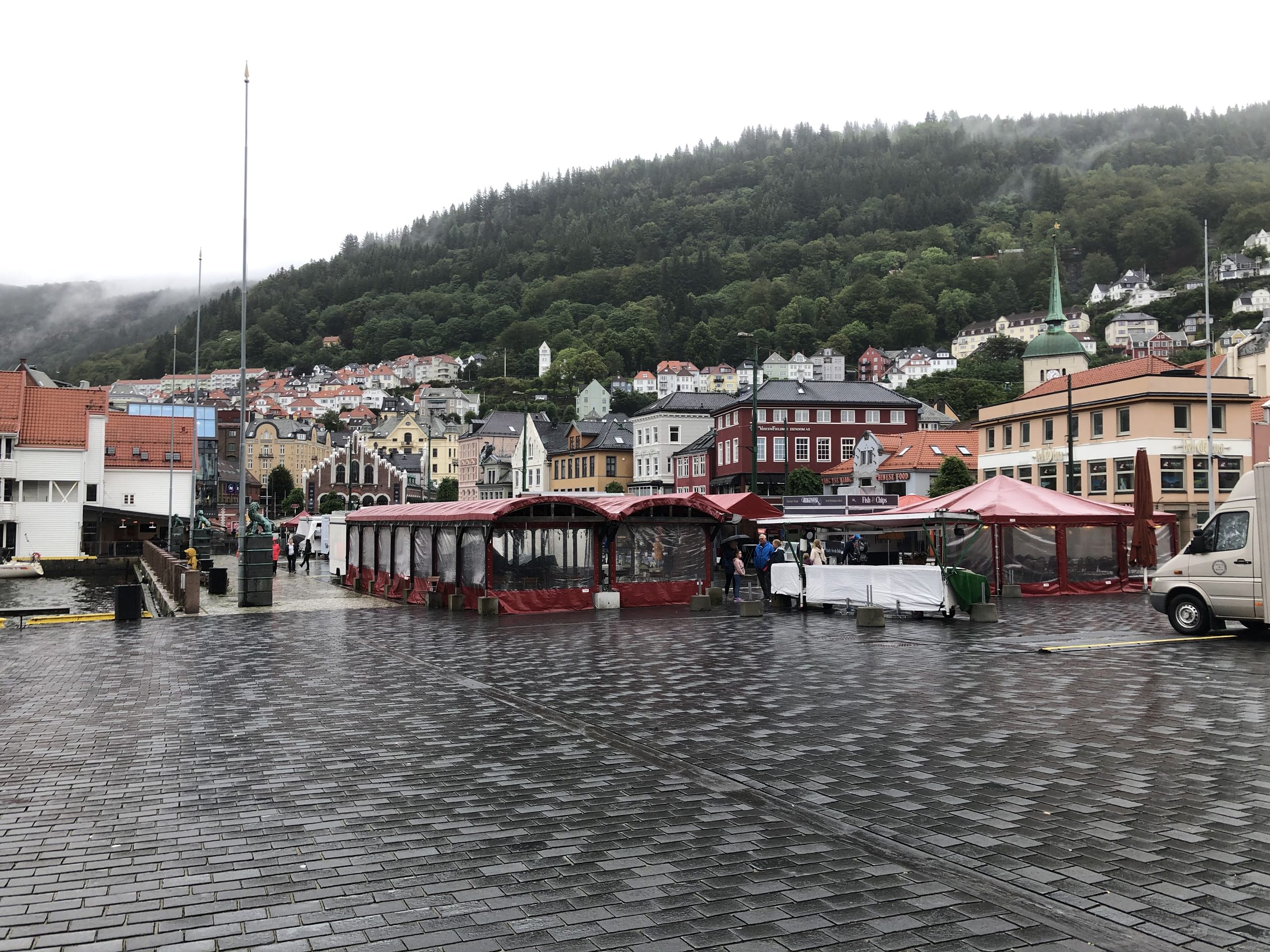
Two minutes from Bryggen, the Fish Market at Torget has been trading since the 1200s. The outdoor stalls run in summer (1 May–30 September, roughly 10:00–18:00) and the indoor Mathallen hall is open year-round. This is the place for a proper Bergen lunch: fish soup, salmon, king crab legs or a shrimp sandwich eaten at the harbour. Prices are Bergen prices, but the quality is the real thing.
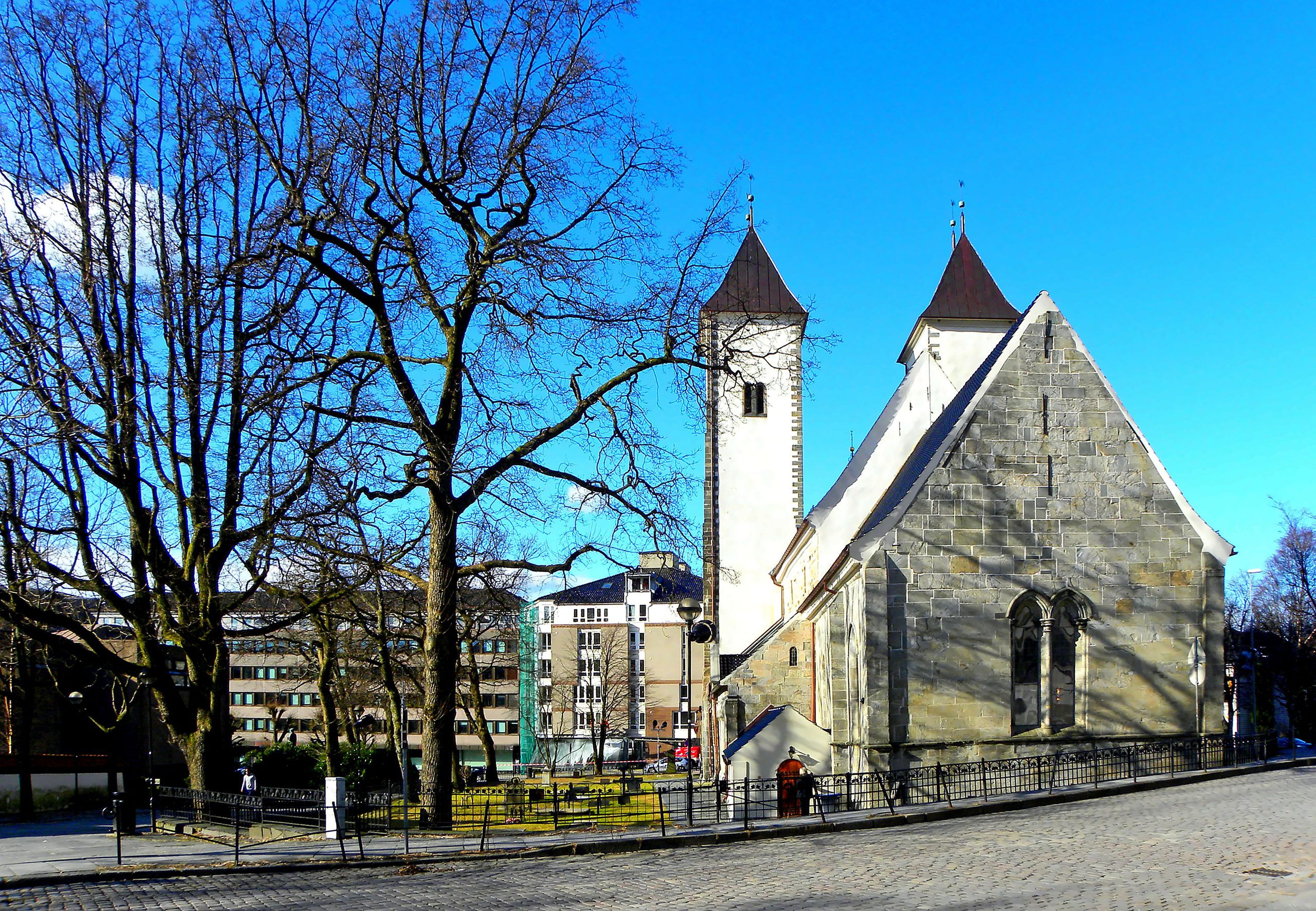
Walk north from the market to Bergenhus Fortress, at the harbour’s northern end, where the grounds are free to wander. Håkon’s Hall, the royal banquet hall built between 1247 and 1261, is Norway’s largest medieval secular building. Entry is NOK 120, free with the Bergen Card. Next door, the Rosenkrantz Tower (oldest parts from around 1270, expanded into a Renaissance residence in the 1560s) is a climb of narrow spiral stairs to roof views over the harbour; entry is NOK 170. Between them stands St Mary’s Church, Bergen’s oldest building, a 12th-century church still in use, with limited daytime opening hours — check on the day before you count on going inside.
Sunset: ride the Fløibanen to Mount Fløyen
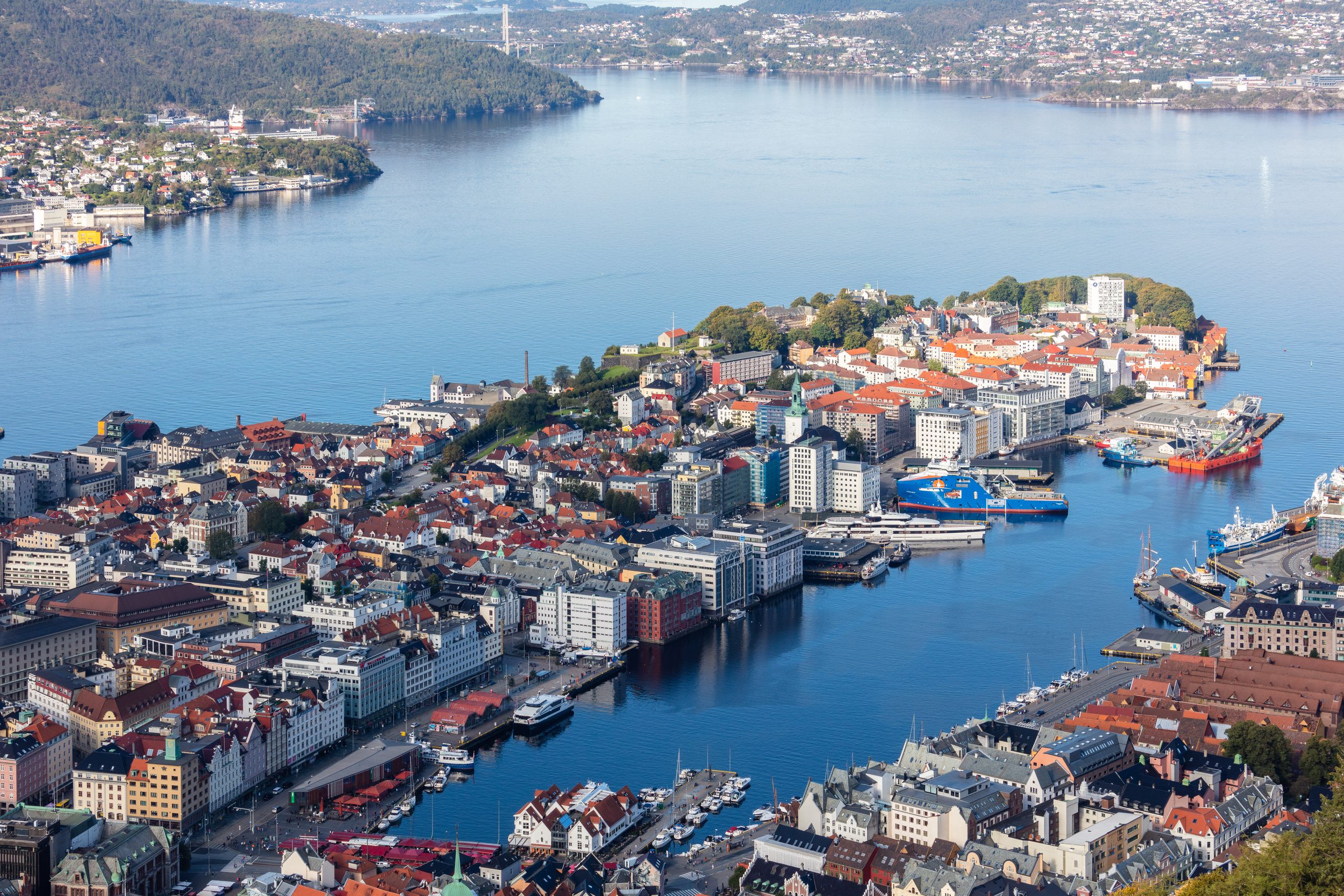
End day one above the city. The Fløibanen funicular leaves from just behind the Fish Market and climbs 320 metres to Mount Fløyen in about six minutes. An adult return is NOK 145 in winter and NOK 200 in summer when bought via the app, website or machine, and the Bergen Card halves it. The funicular runs until midnight, so time your ride for the last light: the viewpoint over the harbour, the wooden city and the fjord beyond is the single best view in Bergen, and the plateau walks, café and resident goats at the top make it worth an unhurried hour.
Day 2: out on the fjord, then the art museums
Morning: the Mostraumen fjord cruise
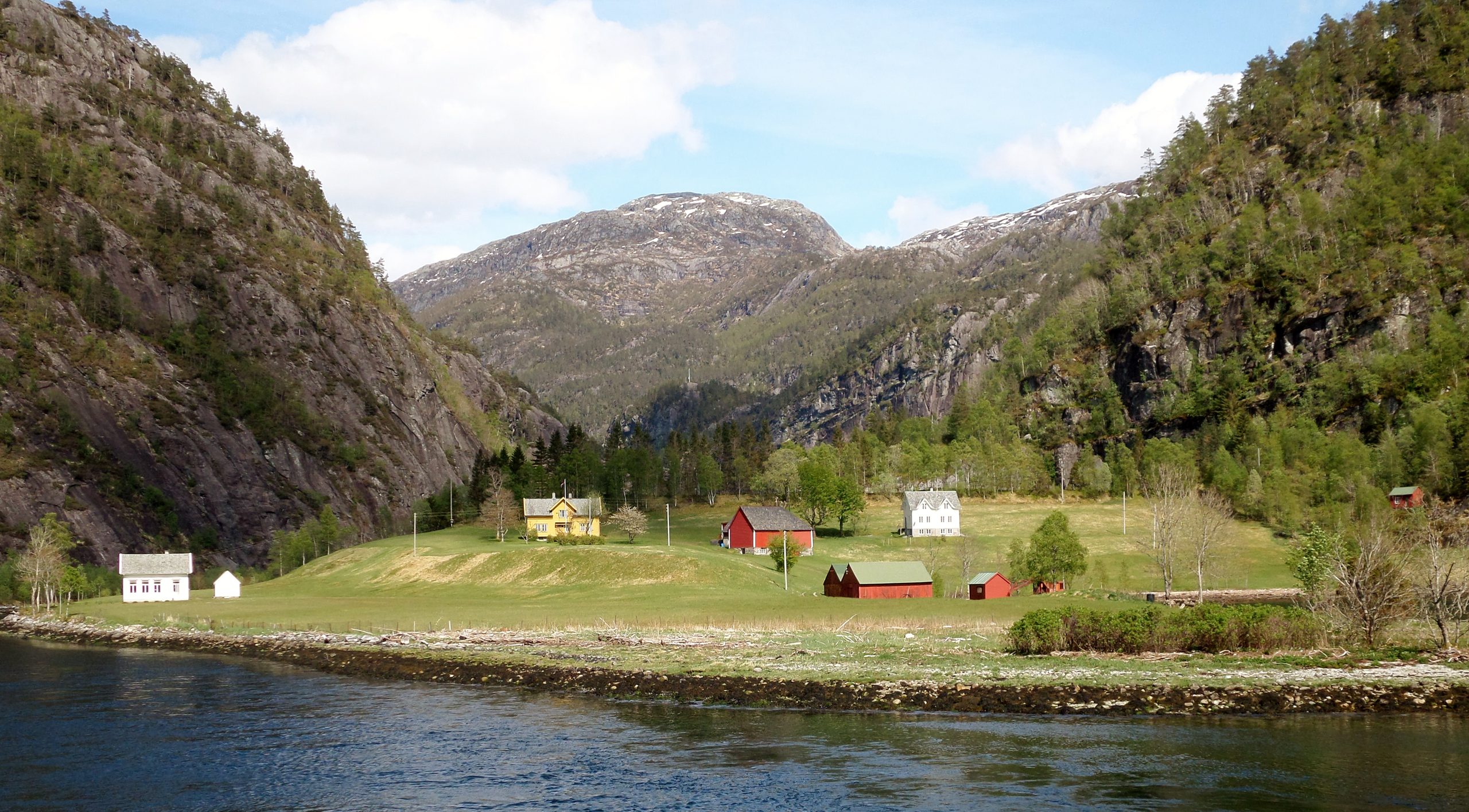
Bergen is called the gateway to the fjords, and day two is when you find out why. The signature trip is the Rødne Mostraumen cruise, a 3–3.5-hour round trip from Zachariasbryggen quay, right beside the Fish Market. It sails daily at 10:00 up the Osterfjord to the Mostraumen strait, a passage so narrow the cliffs close in on both sides, past a waterfall, and back by about 13:30. It runs year-round, rain or shine. Tickets are NOK 890 for adults in 2026 (NOK 940 in 2027), with 20% off on the Bergen Card.
Book the Mostraumen fjord cruise here — it is rated 4.7 out of 5 from more than 10,500 reviews, from around $92, with free cancellation up to 24 hours ahead and a reserve-now-pay-later option. Dress warmer than you think: even on a mild day, the wind on the open deck is cold, and the best seats are outside.
Afternoon: KODE and the city centre
Back on dry land, spend the afternoon in the KODE art museums, four buildings in a row along the Lille Lungegårdsvann lake in the centre. One NOK 200 ticket covers all four on the same day (under-18s free), and the Bergen Card makes it free from October to April and 25% off in summer. The Rasmus Meyer building holds one of the world’s largest Edvard Munch collections outside Oslo, alongside J.C. Dahl, Nikolai Astrup and Picasso.
Day 3: a mountain morning, Grieg’s house and the stave church — or the fjords, properly
Day three is a choice: the mountain-and-culture route keeps you in Bergen; the Nutshell route takes the whole day.
Option A: Ulriken, Troldhaugen and Fantoft
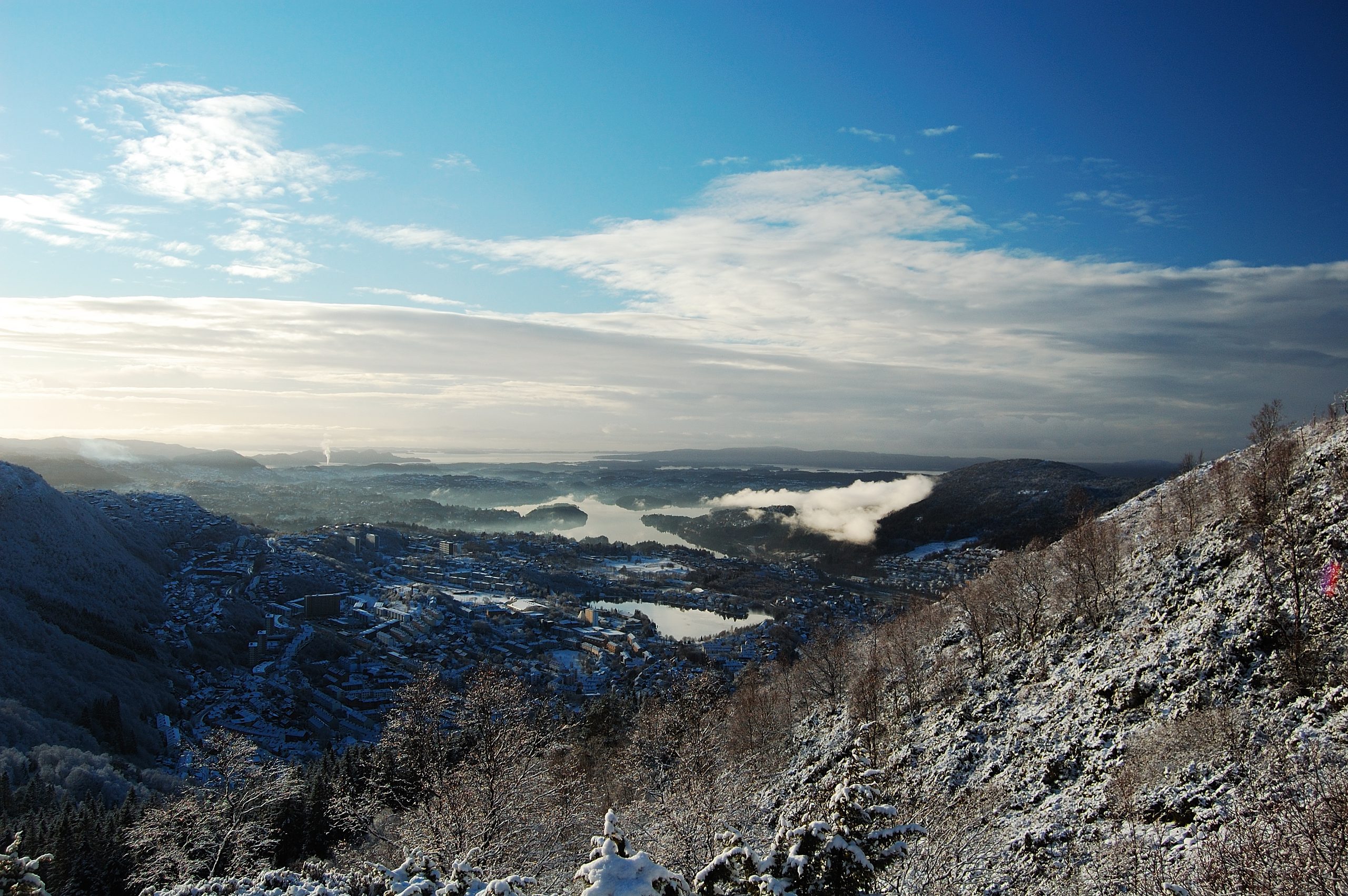
Start with Mount Ulriken, the tallest of Bergen’s seven mountains at 643 metres. The cable car has run since 1961 and takes about seven minutes to the summit, where there is a restaurant, a sky bar and a panorama over the city and the Byfjorden. An adult return is NOK 435, and the Bergen Card gives a discount. Hours are shorter in winter, the cable car is closed on Mondays from October to March — and closed for the whole of January 2027 for maintenance — so check ulriken643.no.
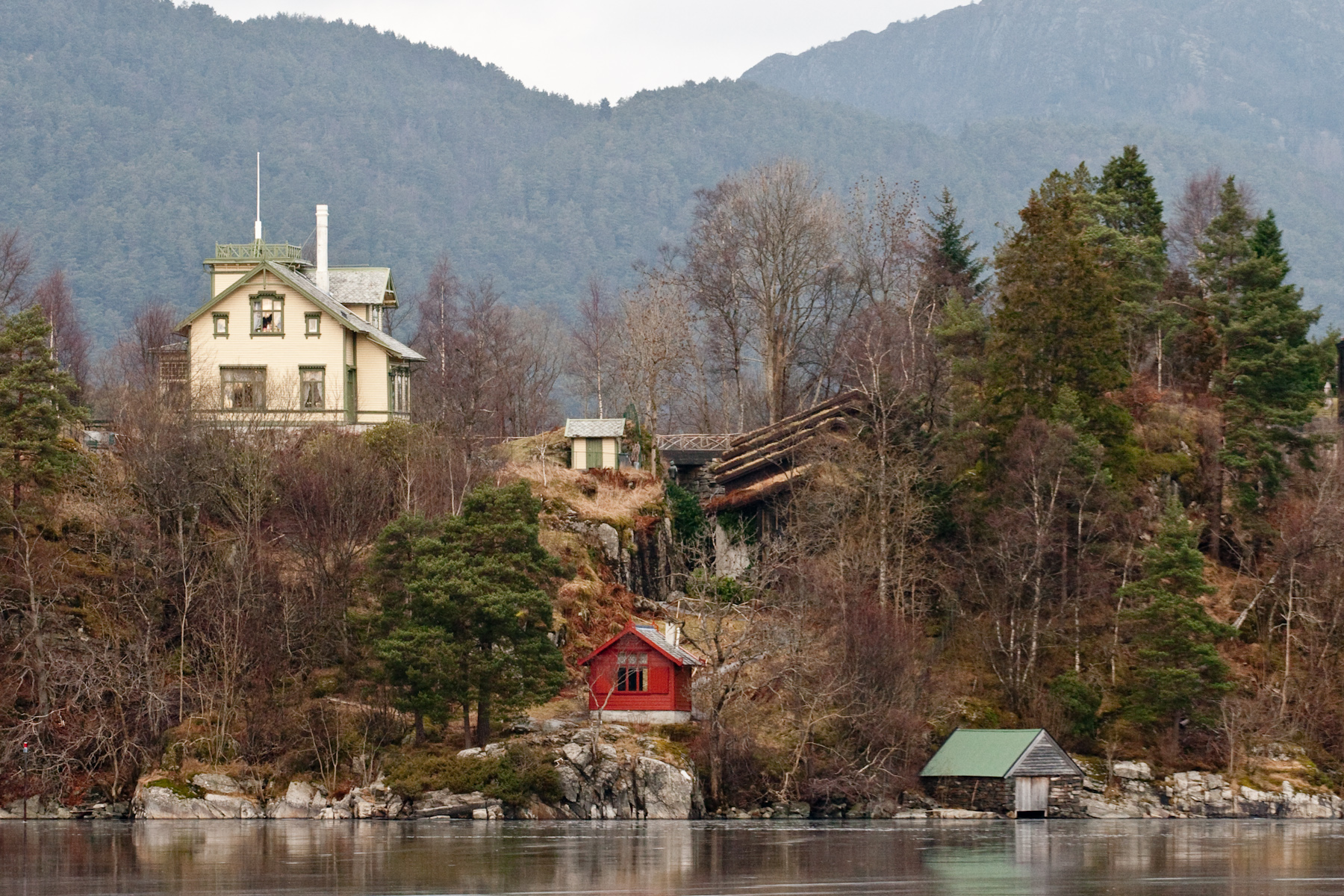
In the afternoon, take the Bybanen south to Troldhaugen, Edvard Grieg’s home on the shore of Lake Nordås, about 8 km from the centre. Grieg lived in the villa with his wife Nina for the last 22 summers of his life, and the grounds hold his composing hut by the lake and a concert hall that hosts more than 400 concerts a year, including daily lunch concerts in summer. One honest warning: the villa itself is closed for renovation until summer 2027, so go for the grounds, the hut and a concert, not a tour of the house interior.
On the way back, stop at Fantoft Stave Church — Bybanen Line 1 to Fantoft, then a signed woodland path. The church was originally built around 1150–1200, moved here in 1883 to save it from demolition, destroyed by arson in 1992 and rebuilt to the original design, reconsecrated in 1997. The present church is a reconstruction. Entry is NOK 90.
Option B: Norway in a Nutshell — Bergen to Flåm and back
If one fjord cruise left you wanting the full fjord country, this is the day trip. Norway in a Nutshell is a self-guided ticket package, not a guided tour: train from Bergen to Voss, bus to Gudvangen, a two-hour cruise through the Nærøyfjord — a UNESCO-listed fjord that narrows to just 250 metres between cliffs rising 1,400 metres — to Flåm, then the Flåm Railway up to Myrdal and the Bergen Railway home. The Flåm line climbs 866 metres in about an hour, one of the world’s steepest standard-gauge railways, with a five-minute photo stop at the Kjosfossen waterfall. The round trip takes 10–13 hours and runs daily year-round except 24–25 December and 1 January. The package starts at NOK 2,698 from Fjord Tours.
Book the Norway in a Nutshell round trip from Bergen here, from around $480, rated 4.5 out of 5. It is self-guided — your tickets and itinerary arrive by email and you follow them yourself — so read the timings carefully at each change. If you take this option, it replaces the whole of day three, not just the morning.
Practical tips for three days in Bergen
Stay central. For a three-day trip, base yourself in Sentrum, around Bryggen and the harbour, so the wharf, the market and the funicular are all on foot. Reserve early in summer — the good central hotels book out. If you are pairing Bergen with the capital, our Oslo in 3 Days itinerary and guide to where to stay in Oslo cover the other end of the country, and Copenhagen in 3 Days makes a natural next stop on a Nordic loop.
Mind the seasonal closures. Troldhaugen’s villa is closed until summer 2027, the Hanseatic Museum’s main building until 2027, Ulriken on winter Mondays and all of January 2027, and Gamle Bergen’s buildings only open 20 May–13 September. Check operator sites the week you travel rather than trusting a guidebook — including this one — on hours.
Bergen rewards the travellers who slow down for it: the ones who walk the back lanes of Bryggen instead of photographing the front, who ride the funicular at dusk, and who let a fjord cruise take a whole unhurried morning. Three days is exactly enough to do it properly — and exactly enough to start planning the next trip north.