
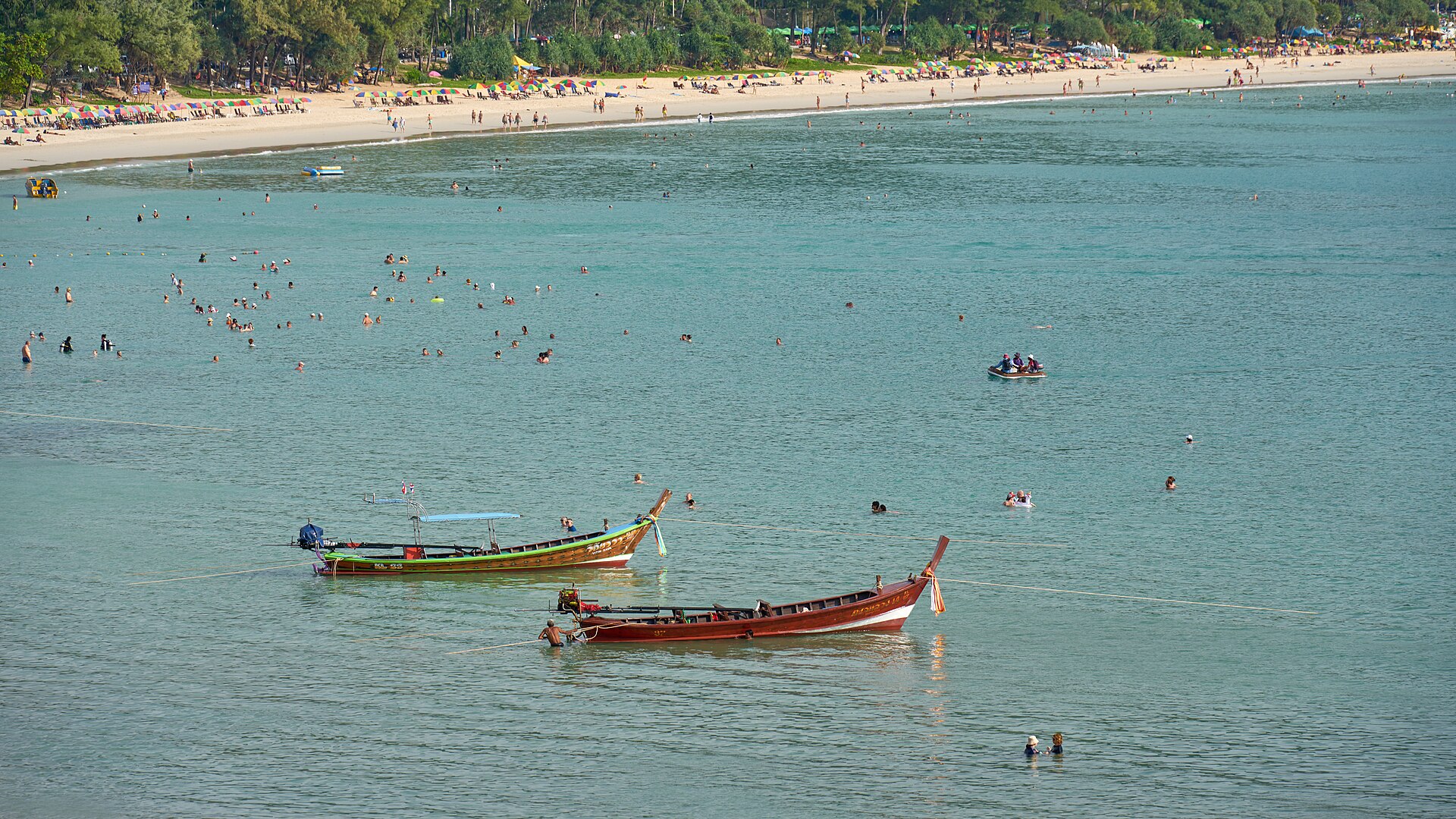
Phuket is a big island — roughly 50 kilometres from the airport in the north to the southern beaches — and where you sleep shapes your whole trip. Base yourself in Patong and you are in the middle of the action; base yourself in Kamala or Mai Khao and you may barely hear another voice on the beach. There is no single “best” area, only the best fit for the trip you want, so this guide walks the island area by area with a hotel pick (or two) for each: the nightlife strip, the family beaches, the quiet upscale bays, the lagoon resorts, the culture-rich Old Town, and the peaceful airport coast.
Never forget a thing before you fly. My free 8-page Travel Planning Checklist walks you through the whole trip — 6 planning timelines, 36 checks, from booking windows to travel-day basics. One email, no spam, unsubscribe anytime.
A few basics first. Phuket International Airport sits in the far north of the island: allow about 15 minutes to the Mai Khao resorts, 45 minutes to an hour to Phuket Town and Kamala, and around an hour to Patong, Kata and Karon. The dry season runs from November to April, when the west-coast sea is calm; from May to October the monsoon brings rain, rougher surf and red flags on the swimming beaches. If you are still sketching the trip itself, my Phuket in 3 days itinerary pairs neatly with the areas below.
Disclosure: This post contains affiliate links. If you book through one of these links, I may earn a commission at no extra cost to you.
Patong: For Nightlife and First-Timers Who Want It All on Foot
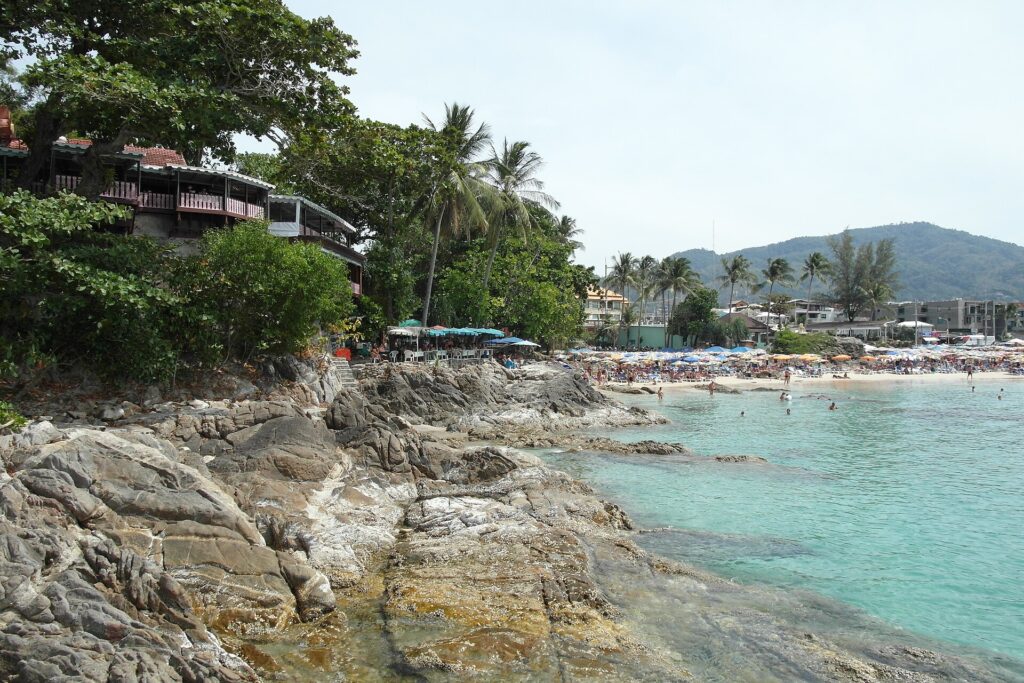
Patong is Phuket’s loudest, busiest and most convenient beach town: a 3-kilometre curve of sand backed by restaurants, markets, massage shops and the neon of Bangla Road, the pedestrianised bar street that takes over after dark. Stay here if you want everything walkable, tours that pick up at your door, and the island’s biggest choice of hotels. The trade-off is crowds — this is not the Phuket of empty beaches.
For a polished stay at the quieter southern end of the bay, Amari Phuket sits on its own headland above the water, about a mile from Bangla Road — close enough to walk in for the evening, far enough to sleep through it. If you’d rather be right in the middle of the beach road, the Four Points by Sheraton Phuket Patong Beach Resort puts a big, modern resort directly across from the sand, with the Jungceylon mall and nightlife a short stroll away.
Kata and Karon: For Families, Surfers and Easy Beach Days
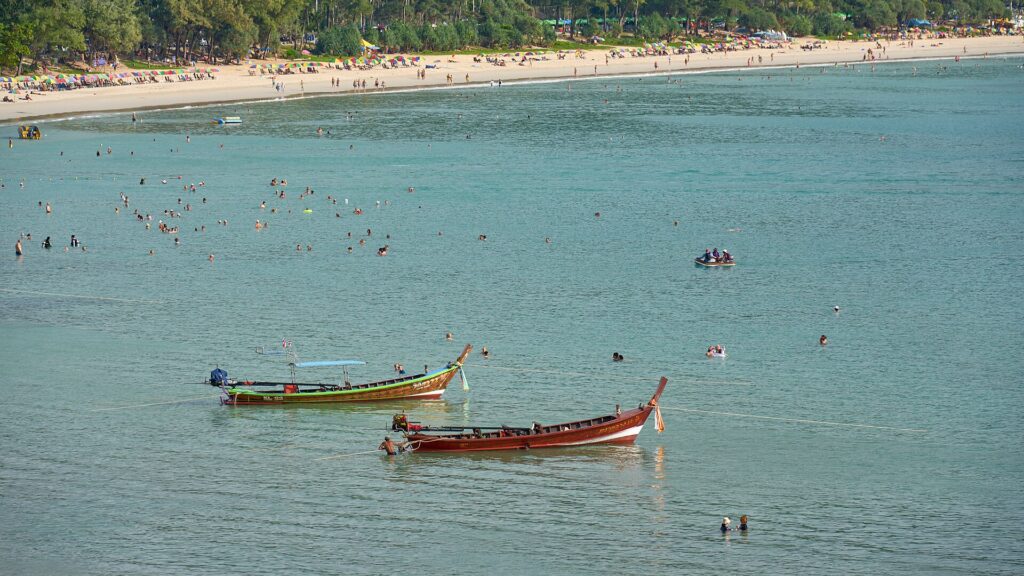
Twenty minutes south of Patong, the mood drops several notches. Kata is a pretty, family-friendly bay with a gentle dry-season swim and, in the wetter months, the island’s most reliable beginner surf — you can rent a board and book a lesson right on the sand. Just south again, little Kata Noi is the quieter cove locals love, while Karon, to the north, is one of Phuket’s longest beaches: broad, golden and spread out, with room to breathe even in high season.
The classic Kata Noi address is the Katathani Phuket Beach Resort, a big, garden-filled resort stretching along almost the entire cove, with multiple pools — a favourite for families who mostly want to stay put. On Karon Beach itself, the Centara Grand Beach Resort Phuket is built in the same Sino-Portuguese style as the Old Town shophouses, and its water park and lazy river make it arguably the most fun family base on this coast.
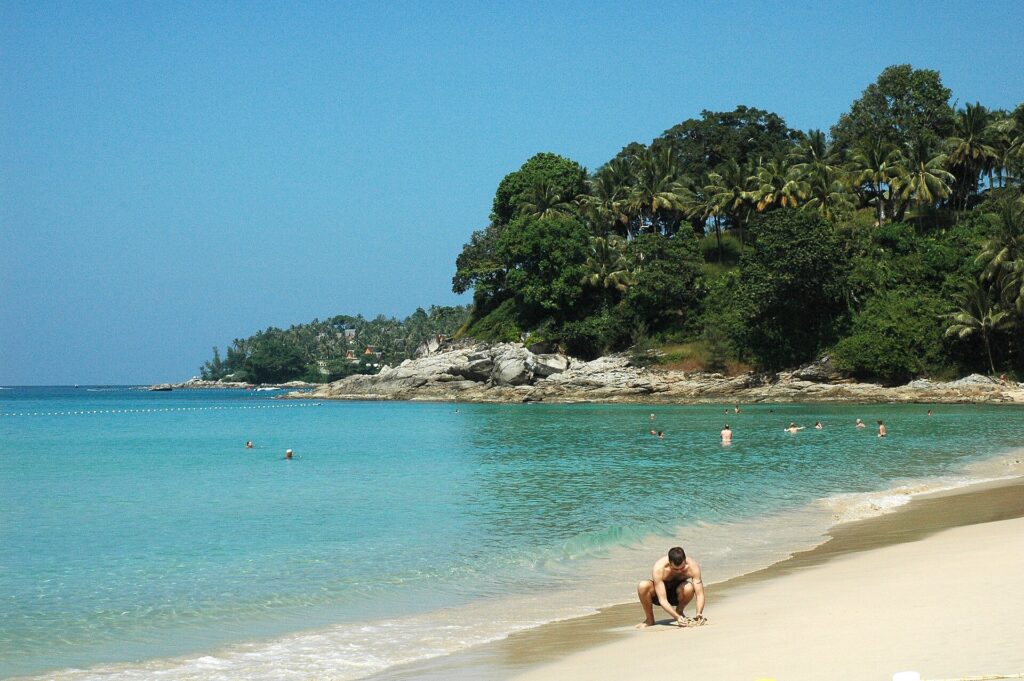
Kamala and Surin: For Quiet, Upscale Beach Time
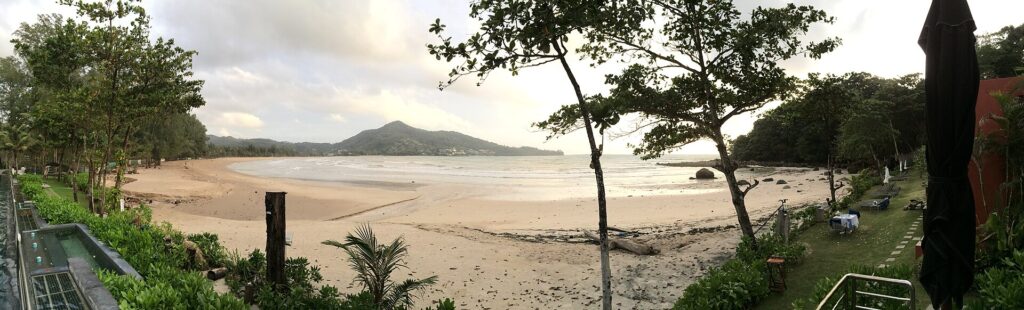
Head north from Patong and the island exhales. Kamala is a former fishing village with a long, calm bay, a handful of beach restaurants and a weekly night market — the kind of place where days arrange themselves around swims and long lunches. This is the coast for couples, honeymooners and anyone whose ideal evening is a quiet dinner rather than a bar crawl.
The standout here is the InterContinental Phuket Resort, spread between the beach and the forested hills, with five pools and one of the island’s best spas; Expedia guests rate it 9.6 out of 10. One bay south, Surin was Phuket’s original upmarket beach strip, and the The Surin Phuket hides on Pansea Beach, a small, secluded cove next door that feels a world away from Patong — yet it is only about 25 minutes up the coast.
Bang Tao and Laguna: For Resort Lovers and Golfers
Bang Tao is one of Phuket’s longest beaches, and its southern half is occupied by Laguna Phuket, a self-contained complex of resorts woven around lagoons and a golf course, with shuttle boats and buses connecting them all. Stay here if you like a big-resort bubble done well — kids’ clubs, beach clubs and spa pavilions — with the dining lanes of Boat Avenue just outside the gates when you want a change of scene.
The romantic splurge is Banyan Tree Phuket, where every one of the 218 villas has its own private pool around a saltwater lagoon. For families, the Angsana Laguna Phuket wraps a huge free-form lagoon pool around its beachfront site, with a kids’ club and activities that keep younger travellers busy from breakfast to sunset.
Phuket Old Town: For Culture, Food and Great-Value Stays
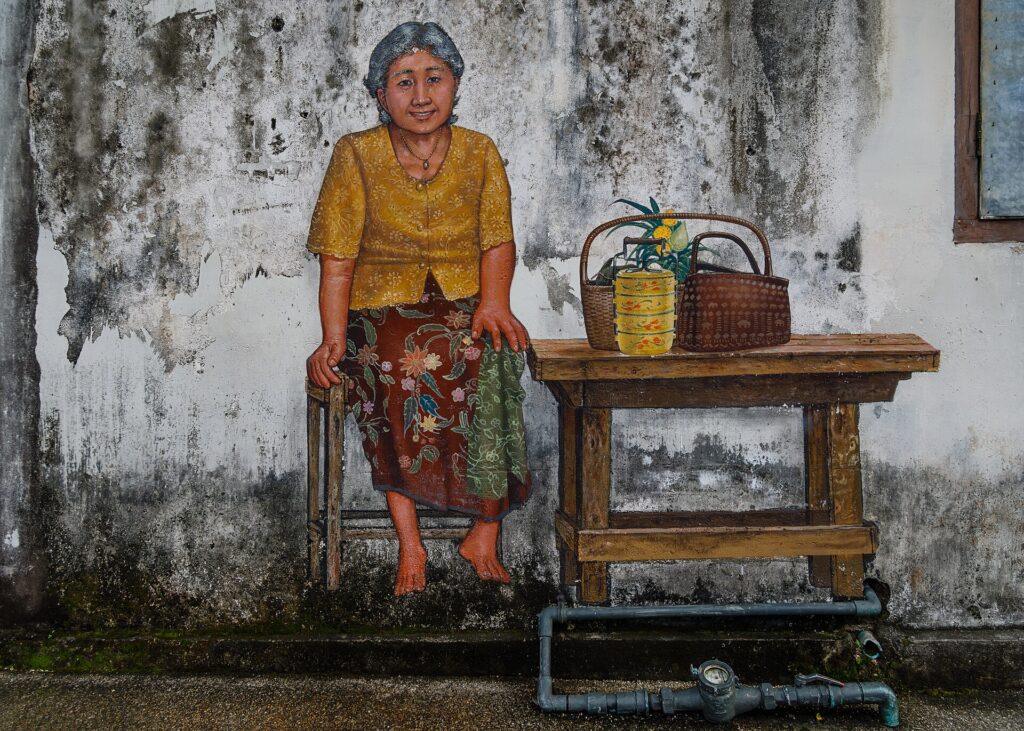
The island’s most interesting neighbourhood has no beach at all. Phuket Old Town grew rich on tin mining, and its Sino-Portuguese shophouses — painted in sorbet colours along Thalang Road, Dibuk Road and lantern-strung Soi Romanee — now hold cafés, galleries, street-art murals and some of the best local food in Thailand (UNESCO named Phuket a City of Gastronomy in 2015). On Sunday evenings, Thalang Road closes for the Lard Yai walking-street market. Stay here for character and value, and treat the beach as a day trip — the coast is 30–40 minutes away by road.
The most comfortable base is the Novotel Phuket City Phokeethra Hotel, a grand, colonial-style hotel a 12-minute walk from the Sunday market, with a pool for cooling off after a morning of wandering. Also look at The Memory at On On Hotel on Phangnga Road — Phuket’s oldest hotel, opened in 1929 and now a lovingly restored heritage stay; it is listed on Expedia, though I couldn’t surface a clean bookable link for it at the time of writing, so search for it by name. If you are combining Phuket with the north, my guide to where to stay in Chiang Mai uses exactly the same neighbourhood-by-neighbourhood approach.
Mai Khao and the Airport Coast: For Peace, Space and Easy Arrivals
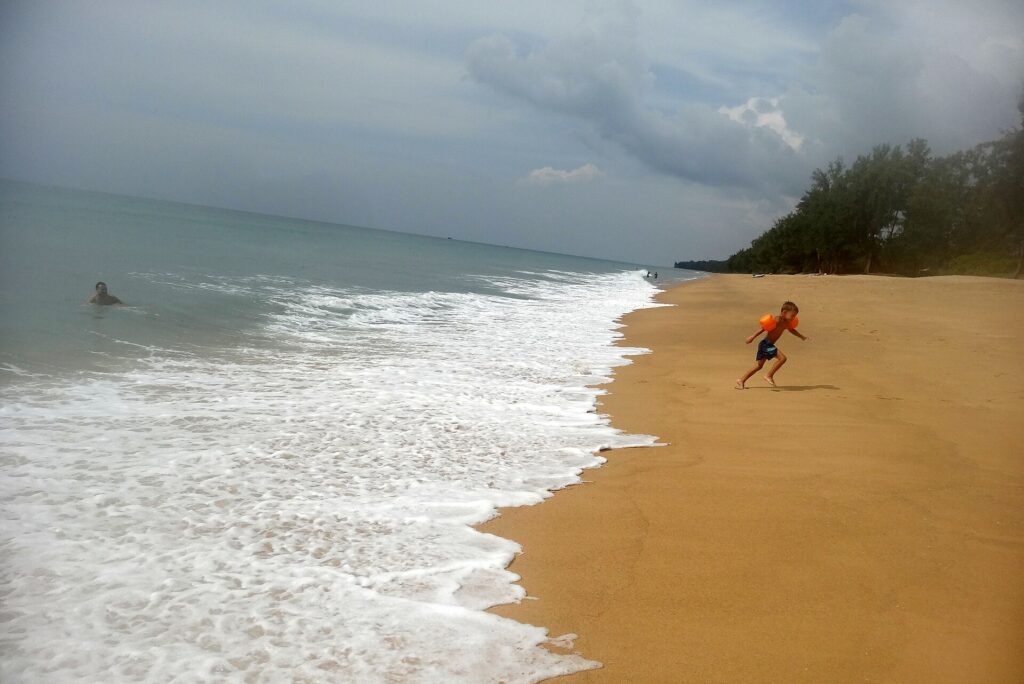
Phuket’s longest beach is also its emptiest. Mai Khao runs for kilometres along the north-west coast beside Sirinat National Park — no vendors, no jet skis, just sand, casuarina trees and, in nesting season, the hope of turtles. It is the island at its most peaceful, and 15 minutes from the airport makes it perfect for a first or last night — or a whole stay, if your plan is the resort pool and a very long walk.
For a design-led retreat, SALA Phuket Mai Khao Beach Resort does minimalist pool villas and a rooftop restaurant right on the sand, and guests rate it 9.6 out of 10. Families tend to choose the JW Marriott Phuket Resort & Spa, a big, green resort with three pools and a kids’ programme — plus good marine-turtle conservation work on this protected beach.
Three Phuket Days Out Worth Booking
Whichever area you choose, tours pick up from all of them, and these are the three days out I’d book first. For the Phi Phi Islands, go early: the Phi Phi Islands premium small-group early tour caps the group at 18 and reaches Maya Bay before the crowds, with Pileh Lagoon and Bamboo Island on the same trip. For Phang Nga Bay, the James Bond, Phang Nga Bay and Hong Island tour lets you choose a speedboat or a slower big boat, and adds canoeing through the sea caves of Panak and Hong islands. And for something gentler, a half day at the Phuket Elephant Nature Reserve is the ethical way to meet elephants here — observation only, with no riding, bathing or hand-feeding.
How to Choose (and Get Around)
The short version: Patong for nightlife and convenience, Kata or Karon for families and surfers, Kamala and Surin for quiet luxury, Bang Tao for a resort bubble, the Old Town for culture and value, and Mai Khao for space and easy airport runs. Getting between them takes some planning — there is no beach-to-beach public transit, so budget for taxis, Grab rides or hotel shuttles, and expect 20–30 minutes between neighbouring west-coast beaches. Many travellers split their stay: a few nights in the Old Town or Kata, then a decompression finish in Kamala or Mai Khao. For more route-planning help across the region, browse my roundup of the best Southeast Asia guides, which links the stay, itinerary and tour guides for every stop. Wherever you land, Phuket rewards the choosing — pick the base that matches your trip, and the island does the rest.