Phuket is Thailand’s largest island, and most first-timers make the same mistake: they pick one beach town, take one boat trip, and miss the island itself. Give it three days and a different Phuket appears — a pastel old town built on tin money, the island’s most sacred temple, a white marble Buddha on a jungle hilltop, and two of the most filmed seascapes on earth within day-trip reach. Land first, then sea: one day on the island, one at the Phi Phi Islands, one in Phang Nga Bay.
Never forget a thing before you fly. My free 8-page Travel Planning Checklist walks you through the whole trip — 6 planning timelines, 36 checks, from booking windows to travel-day basics. One email, no spam, unsubscribe anytime.
Disclosure: This post contains affiliate links. If you book through one of these links, I may earn a commission at no extra cost to you.
How to use this itinerary — and where to base yourself
Your base matters more in Phuket than almost anywhere in Thailand. The island is roughly 50 kilometres north to south, traffic crawls, and there is no train or metro — so where you sleep decides how your days feel. Patong is the lively option: the most hotels and restaurants and nightlife on Bangla Road, but busy and not especially pretty. Kata and Karon, in the southwest, are calmer, family-friendly beach towns closest to Wat Chalong and the Big Buddha. Phuket Old Town is the character pick — cafés, boutique hotels, the Sunday market — but it has no beach of its own.
Mind the airport transfer. The airport is in the far north: allow about 45 minutes to Phuket Town and around an hour to Kata, Karon or Patong. At a glance — Day 1: Old Town, Wat Chalong, the Big Buddha and a cape sunset. Day 2: the Phi Phi Islands by speedboat. Day 3: Phang Nga Bay and James Bond Island, with beach and elephant swaps if you would rather stay on land.
Day 1: Old Town, Wat Chalong and the Big Buddha
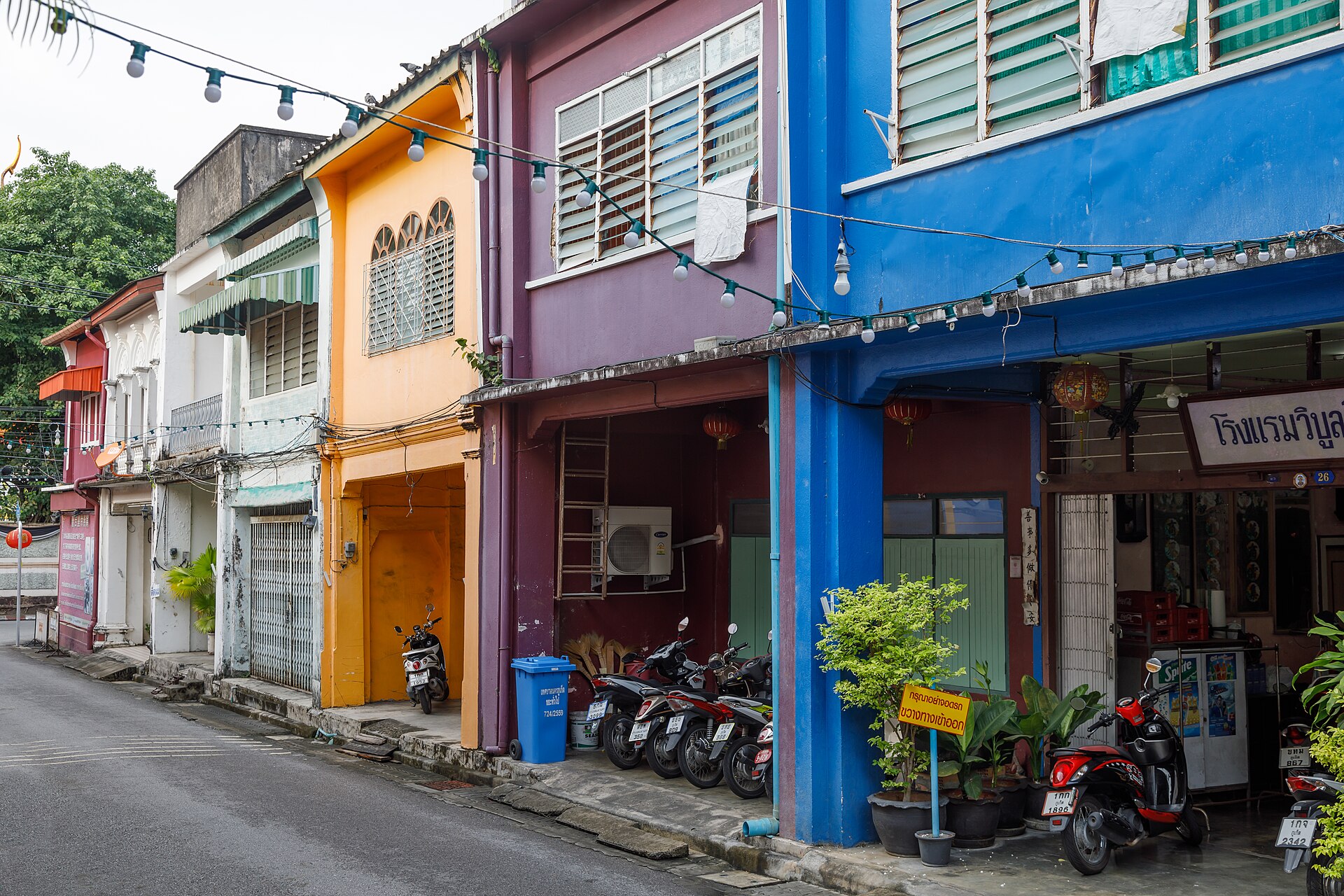
Spend the morning in Phuket Old Town, before the heat builds. Tin made this town rich in the 19th century, and Hokkien Chinese merchants built rows of Sino-Portuguese shophouses — European façades, Chinese courtyards, arcaded walkways that keep you in shade. Thalang Road is the prettiest street; duck down Soi Romanee, its photogenic side lane, then step into the Thai Hua Museum, a former Chinese-language school that tells the tin story. Eat as you go: Phuket is a UNESCO City of Gastronomy, and Old Town breakfasts — dim sum, Hokkien noodle soup, roti with curry — are a highlight, not a fuel stop.
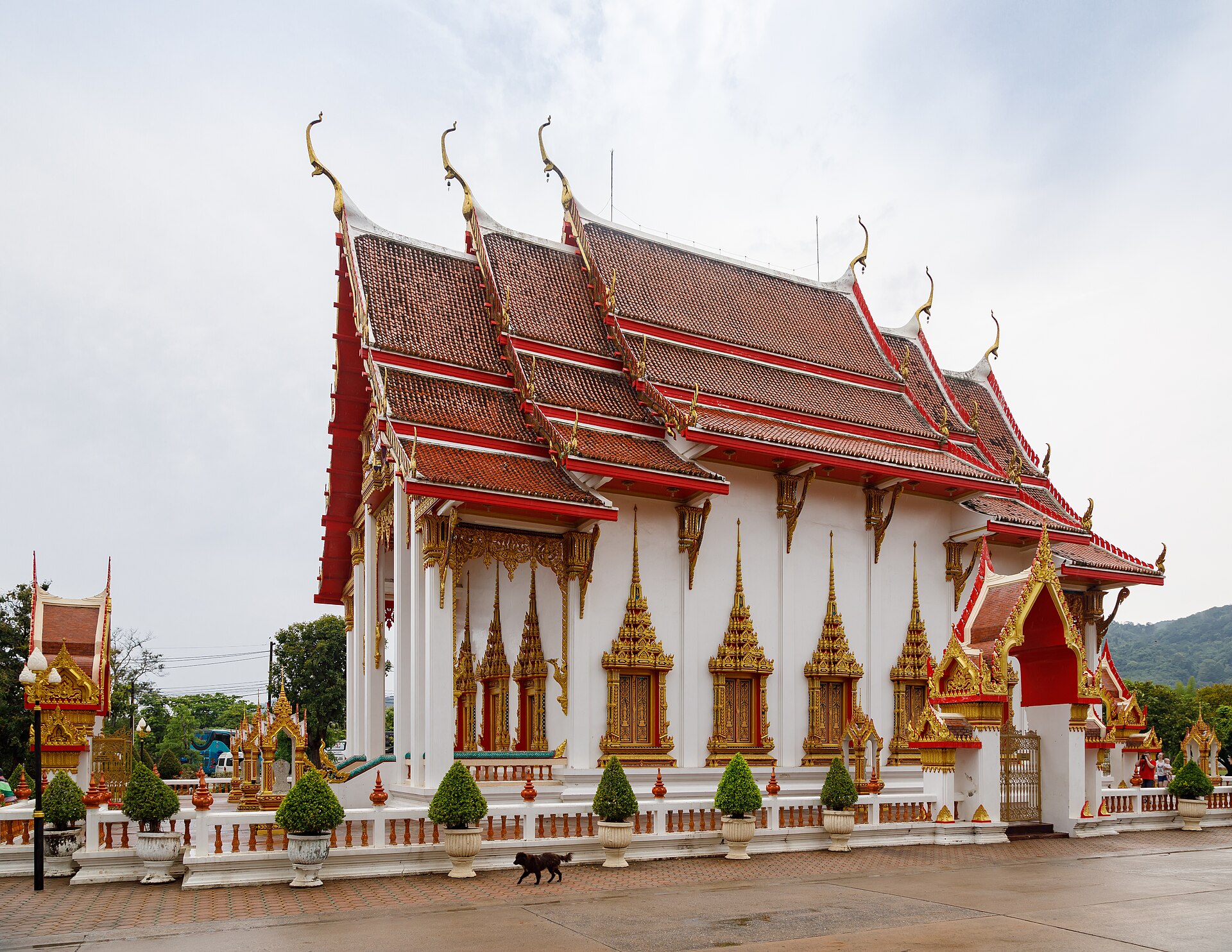
Continue south to Wat Chalong, about 8 kilometres away. Officially Wat Chaiyathararam, this is the largest and most important of Phuket’s temples, founded around 1837. Locals revere it for two monks, Luang Pho Chaem and Luang Pho Chuang, who sheltered and treated the injured during the tin miners’ rebellion of 1876. Climb the 60-metre Phra Mahathat Chedi — its top floor holds a fragment of the Buddha’s bone, gifted by Sri Lanka. Dress modestly (covered shoulders and knees, shoes off indoors) and give it an unhurried hour.
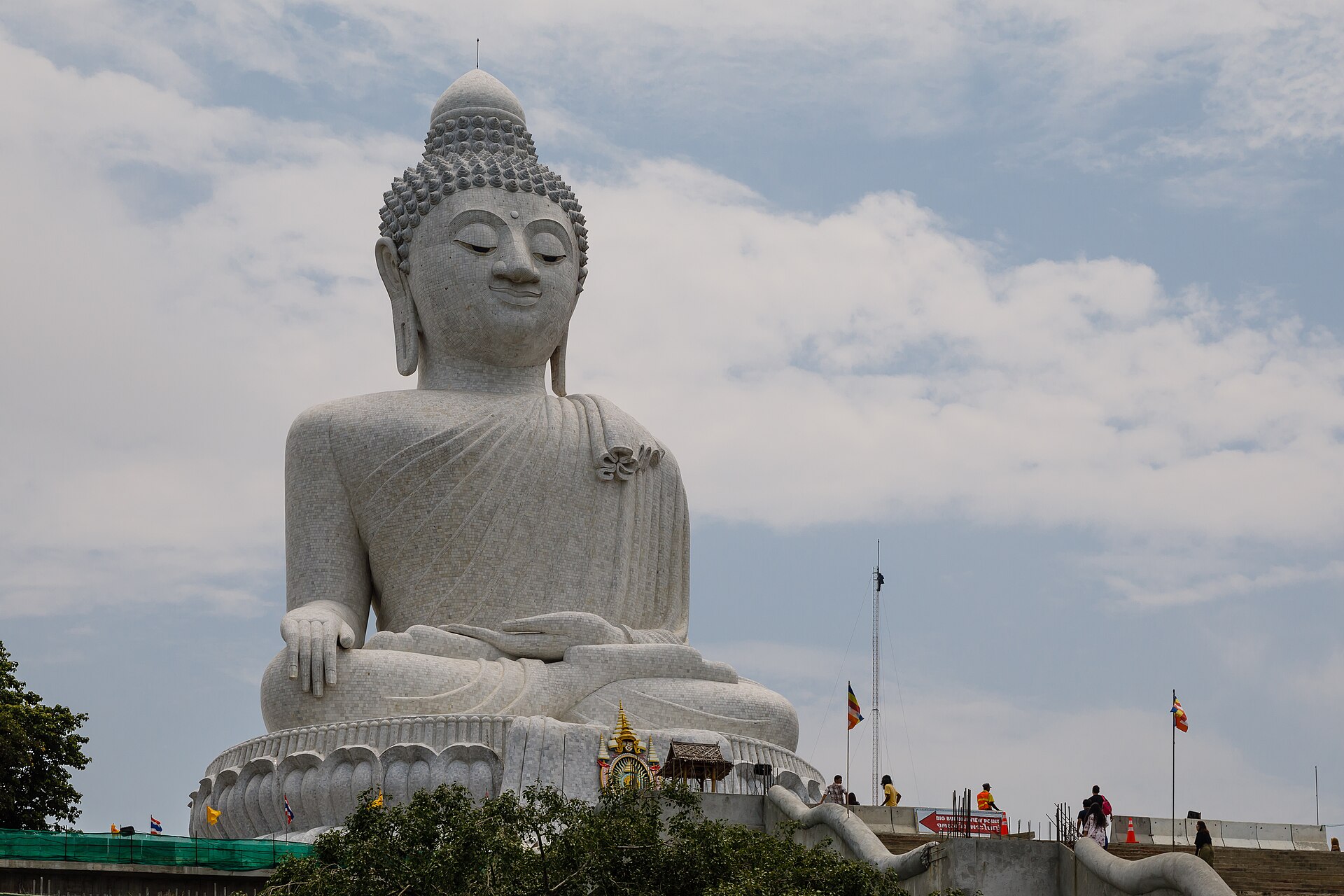
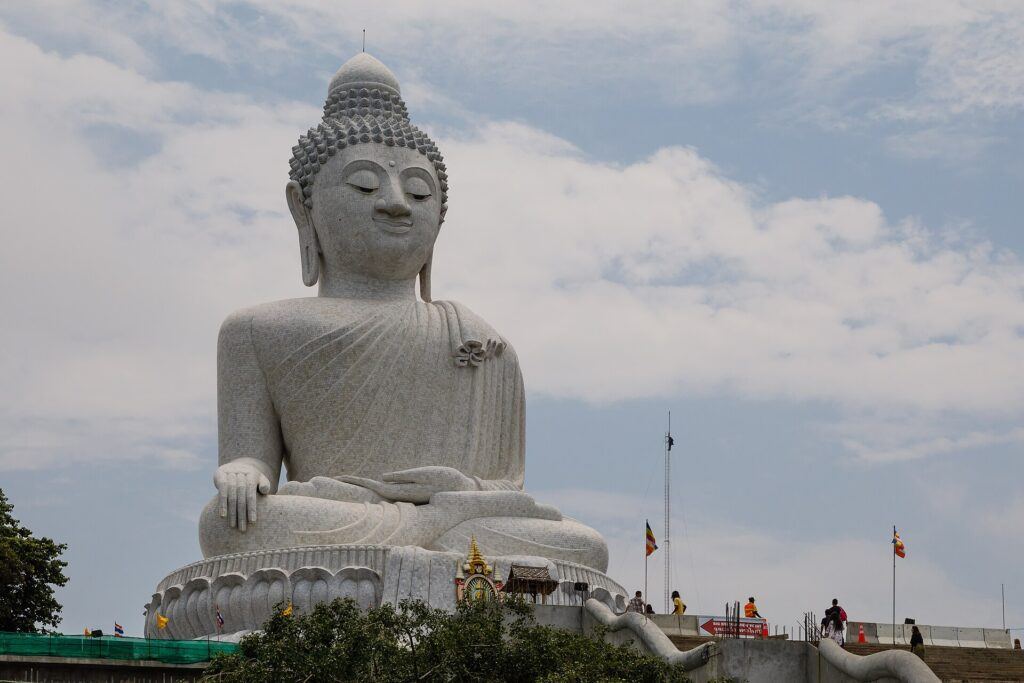
Finish the day up on Nakkerd Hill, at the Big Buddha. The 45-metre statue — white Burmese marble, visible from much of the south — sits about 400 metres above the sea, and the terrace view takes in Kata, Karon and Chalong Bay in one sweep. One update most older guides miss: the site was closed after a landslide in August 2024 and reopened only in March 2026, so hours quoted elsewhere are out of date. It currently opens daily around 9am to 6pm (last entry about 5:30pm), entry is free, and sarongs are lent at the entrance. Parts of the grounds can still be fenced off, so check locally. Afterwards, drive on to Promthep Cape, the island’s southern tip, for the classic sunset — or stop at Karon Viewpoint, where three bays curve away below you.
If Day 1 is a Sunday, you are in luck. From 4pm to 10pm, Thalang Road closes for Lard Yai, the Sunday Walking Street market — street food, crafts and live music in front of the shophouses. Graze along it for dinner. And if you would rather not drive on Day 1, a Phuket highlights tour with an ethical elephant visit covers Karon Viewpoint, the Big Buddha, Wat Chalong and Old Town in about six hours with a driver, and adds observation and feeding time with rescued elephants — no riding, no shows.
Day 2: The Phi Phi Islands by speedboat
Set the alarm: today is the big-sea day, and early boats beat both the crowds and the chop. Speedboats cross from Phuket’s east-coast marinas to the Phi Phi Islands in about 50 minutes (the cheaper ferry takes roughly two hours and only serves Phi Phi Don — it cannot take you to Maya Bay). Your first landfall is Ko Phi Phi Leh, the smaller, uninhabited island. Boats no longer enter Maya Bay itself; you land at the Loh Samah Bay pier on the far side and walk a boardwalk to the beach.
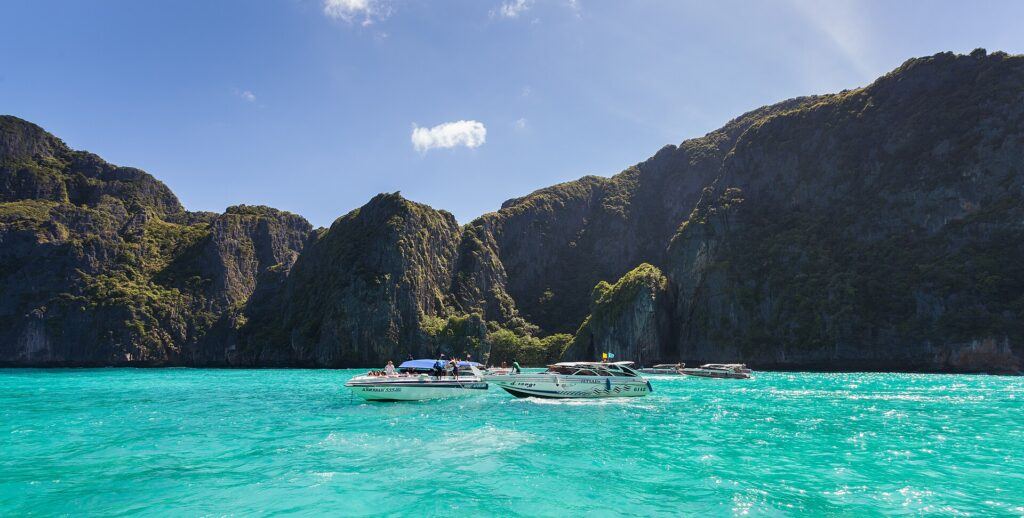
Know the Maya Bay rules before you go, so nothing surprises you. The bay made famous by The Beach was closed from 2018 to 2022 to let its reef recover, and it reopened under strict limits that still apply: no swimming in the bay (you can wade knee-deep), visits capped at about an hour, and a national park fee of 400 baht for foreign adults. The payoff for the rules is real — blacktip reef sharks cruise the shallows again. Your swim comes minutes later at Pileh Lagoon, a cliff-walled emerald inlet where boats moor and everyone gets in. Most tours then pass Viking Cave, continue to Phi Phi Don for lunch at Tonsai, and add a snorkelling stop or the twin-bay viewpoint if time allows. A well-reviewed way to run the day is this Phi Phi Islands adventure day trip by speedboat, which covers Maya Bay, Pileh Lagoon, Bamboo Island and Monkey Beach with a seaview buffet lunch — just budget the 400-baht park fee on top, as it is not included. Note for planners: Maya Bay closes every year from 1 August to 30 September for the ecosystem to rest, reopening on 1 October.
Day 3: Phang Nga Bay and James Bond Island
Day 3 trades open sea for a sheltered bay — and it is the more relaxing boat day. Ao Phang Nga National Park protects some 400 square kilometres of mangrove, caves and limestone karsts rising straight out of green water. The headline sight is Khao Phing Kan — James Bond Island since it played Scaramanga’s hideout in The Man with the Golden Gun (1974). Just offshore stands Ko Tapu, the slender 20-metre rock “nail” from the film’s poster shots; boats keep their distance to protect its eroded base. The 300-baht park fee is usually included in tour prices here — confirm when you book.
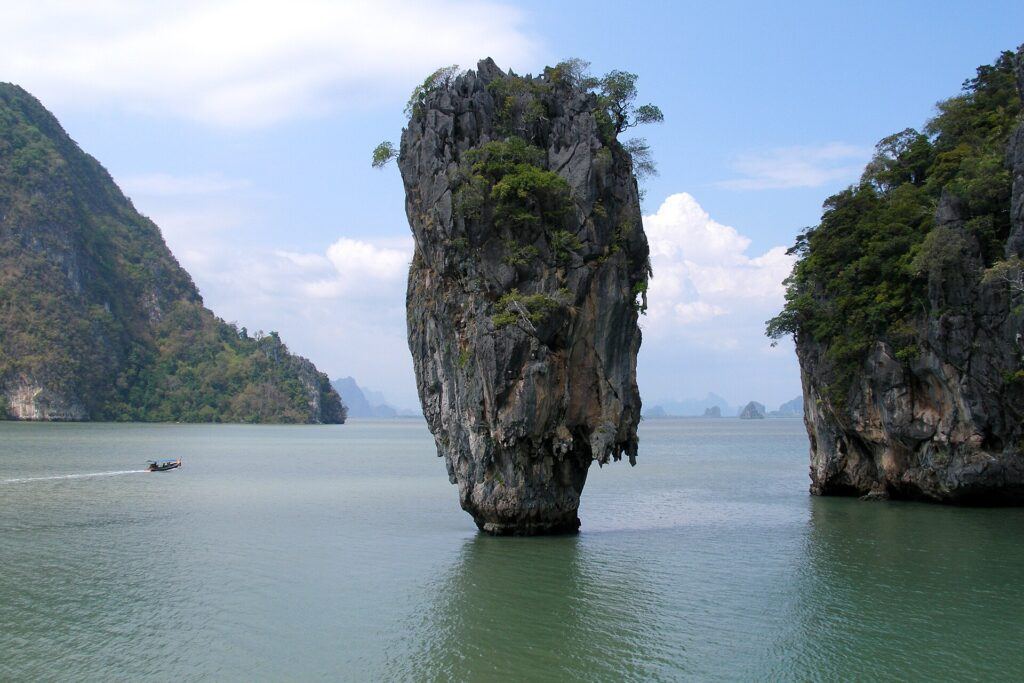
The bay’s best moments actually happen by canoe. Around Panak and Hong islands, guides paddle you through cave mouths into hidden lagoons ringed by cliffs — silent, shaded, and unlike anything on Day 2. Lunch is usually at Koh Panyee, a Muslim fishing village built on stilts over the water, famous for its floating football pitch. We recommend this Phang Nga Bay canoeing and James Bond Island tour — a big, stable escort boat (kinder than a speedboat if you are prone to seasickness), canoeing at Panak and Hong, James Bond Island, a buffet lunch on board and a final swim. If you have energy afterwards, end the trip where it should end — on the sand, watching the light go down over the Andaman.
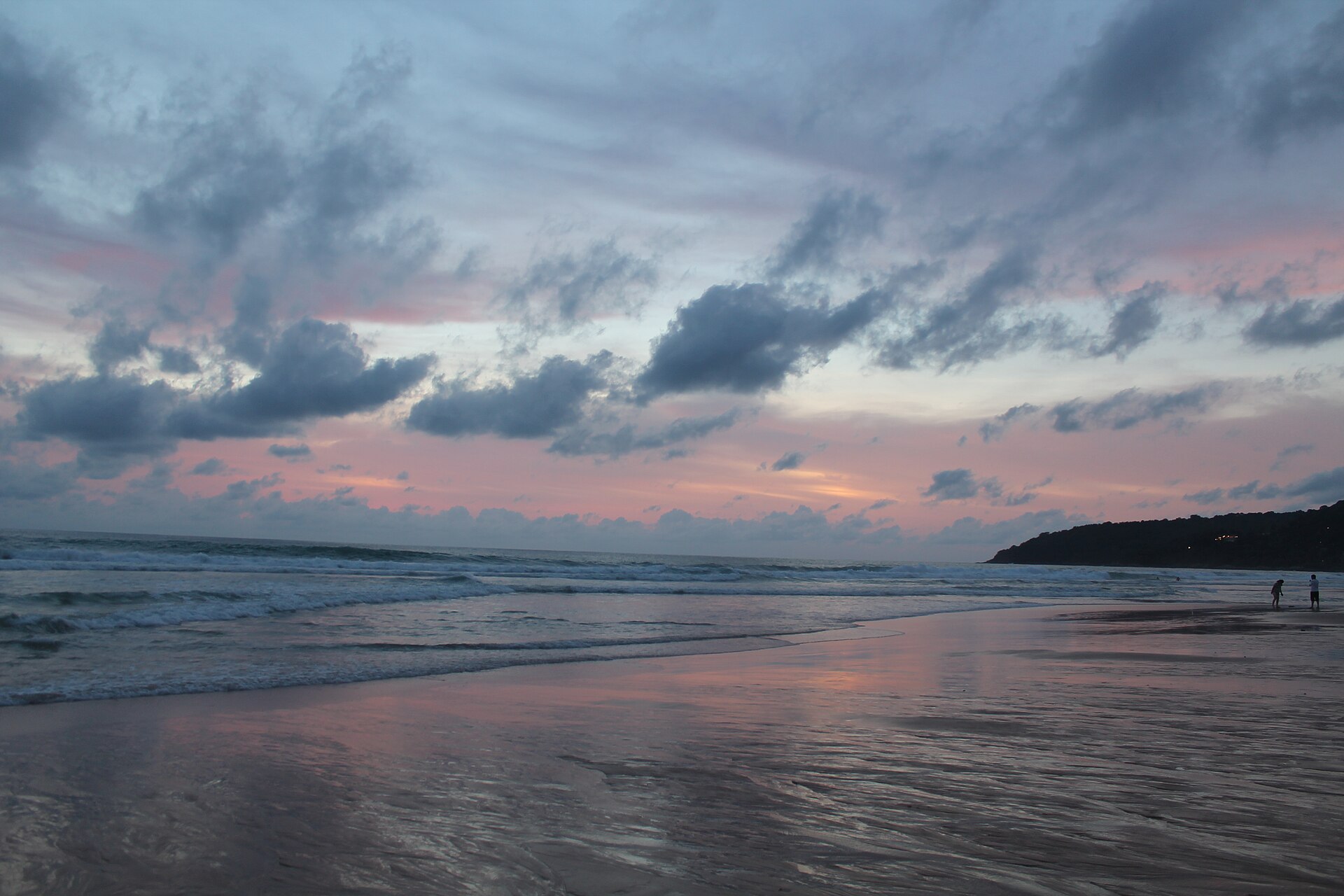
Prefer a land day? Swap Day 3 for a slow morning on Nai Harn or Kata beach and an afternoon at an observation-only elephant sanctuary with no riding. Two boat days in three is right for most first-timers; three is too many.
Practical tips for your 3 days
When to come. November to April is the dry season, with the calmest seas and most reliable boat days; December to February is the sweet spot and the busiest, so book ahead. From May to October the monsoon brings rain, rough crossings and cancelled tours. Respect the red flags on west-coast beaches in any season — the rip currents are dangerous, and a red flag means no swimming, full stop.
Getting around. Blue songthaews run from Ranong Road market in Phuket Town to the main beaches for small change, but they do not connect the beaches to each other. For cross-island hops like Day 1, use Grab, a hotel-arranged driver, or a metered taxi — confirm the meter before you set off. Carry small cash for park fees and stalls.
Temple and reef etiquette. Cover shoulders and knees at Wat Chalong and the Big Buddha, and remove shoes before entering temple buildings. In the marine national parks, use reef-safe sunscreen — several common chemical sunscreen ingredients are banned in Thai marine parks — and never stand on coral or feed the fish.
Three days gives Phuket a fair chance: the temples and old town most beach-only visitors never see, plus the two boat trips everyone pictures. It pairs beautifully with a city break — see how we spend 3 days in Bangkok before flying south, or head north afterwards with our Chiang Mai in 3 days itinerary. For the full regional picture, browse our Southeast Asia guides — and watch this space: our Phuket where-to-stay guide is coming next.