
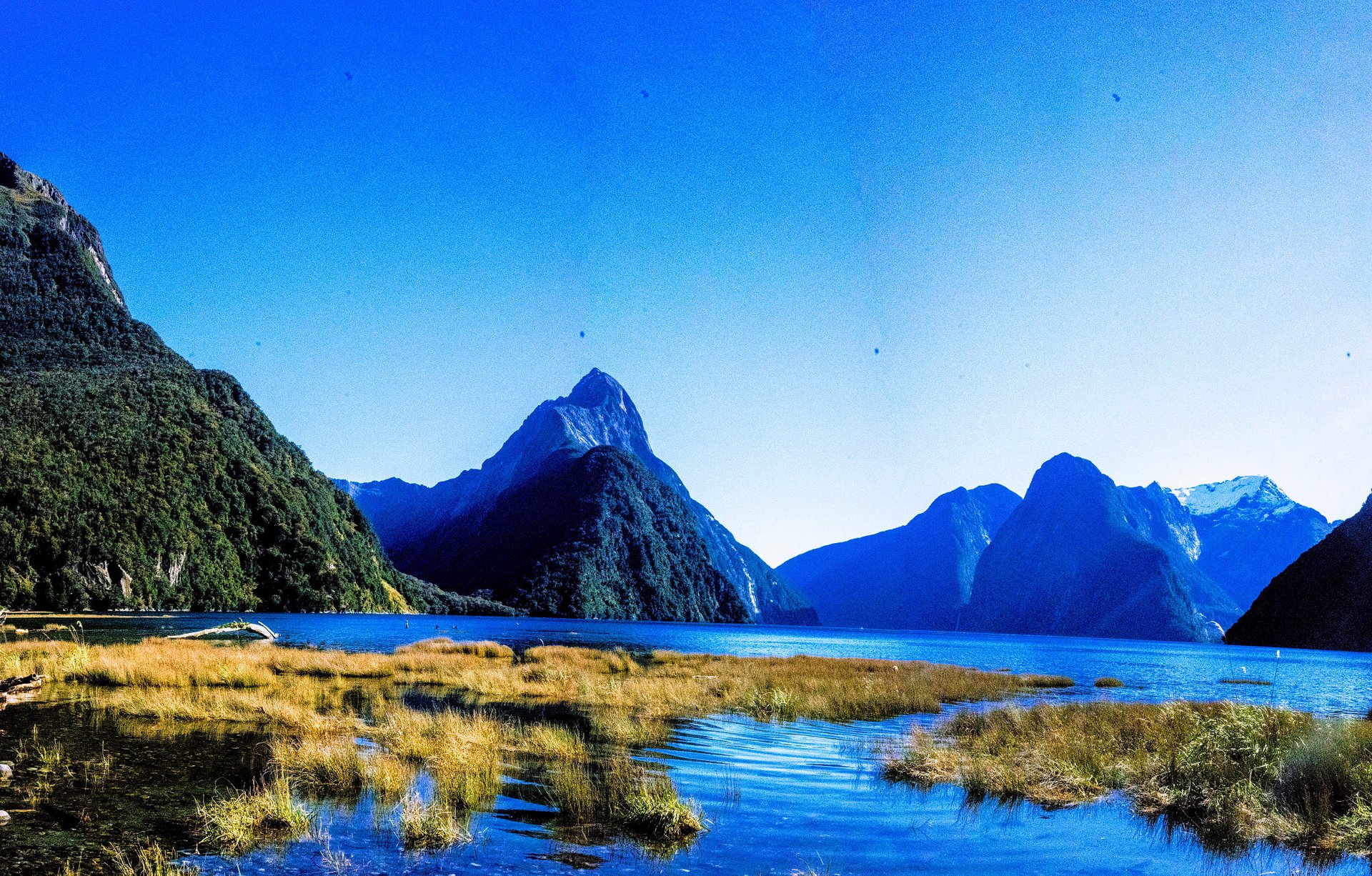
If Fiordland had a heavyweight title fight, it would be these two: the Milford Track, the 53.5-kilometre legend once called “the finest walk in the world,” and the Routeburn Track, the shorter, sharper alpine traverse that plenty of Kiwis quietly insist is the prettier of the pair. Both are Great Walks. Both cross Fiordland National Park. Both will quietly ruin every other hike for you afterward. But they are genuinely different undertakings — different lengths, different logistics, different price tags — and with the 2026/27 Great Walks season now underway, choosing the right one matters more than ever.
Planning a trip? Get our free Travel Planning Checklist:
I dug into both tracks — the distances, the huts, the booking reality for this season, and what each one actually feels like underfoot — so you can match the walk to your fitness, your calendar, and your budget. For the bigger South Island picture, see our South Island New Zealand adventure guide.
Disclosure: This post contains affiliate links. If you book through one of these links, I may earn a commission at no extra cost to you.
Milford Track vs Routeburn Track at a glance
| Milford Track | Routeburn Track | |
|---|---|---|
| Distance | 53.5 km, one way | 32 km, one way |
| Typical time | 4 days / 3 nights | 2–4 days / 1–3 nights |
| Highest point | Mackinnon Pass, 1,154 m | Harris Saddle, 1,255 m |
| Huts | Clinton, Mintaro, Dumpling | Routeburn Flats, Routeburn Falls, Lake Mackenzie (+ Lake Howden) |
| In-season hut cost (international adult) | NZ$152/night — NZ$456 for 3 nights | NZ$132/night — NZ$264 for 2 nights |
| Access | One way only: Glade Wharf (Lake Te Anau) → Sandfly Point (Milford Sound) | Two ends: Routeburn Shelter near Glenorchy ↔ The Divide near Te Anau |
| Booking pressure | Extreme — the fastest-selling Great Walk | High, but slightly less frantic |
| Best for | The classic pilgrimage; deep valleys and waterfalls | Maximum alpine drama per kilometre; tighter schedules |
The Milford Track: the legend
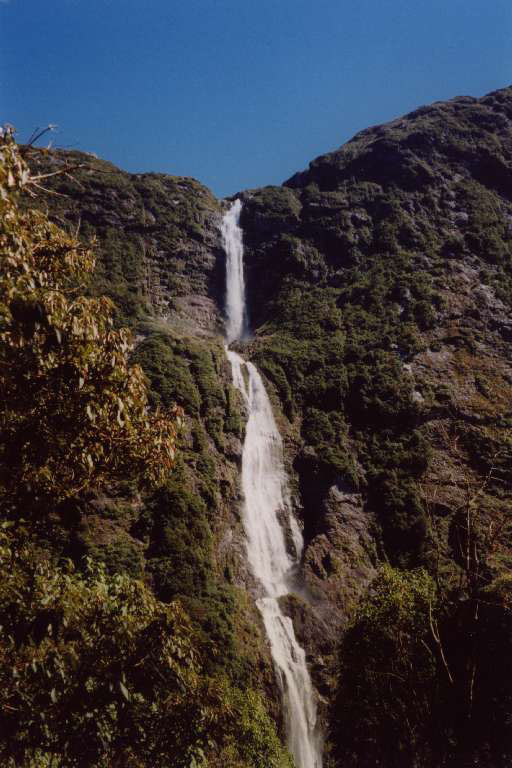
The Milford is the walk people fly to New Zealand for. Four days tracing the Clinton and Arthur valleys from the head of Lake Te Anau to the edge of Milford Sound, crossing the 1,154-metre Mackinnon Pass between two of the track’s three huts (Clinton, Mintaro, Dumpling). The headline acts: the 580-metre Sutherland Falls thundering down beside the track on day three, and the pass itself, where the weather can give you all four seasons before lunch.
What makes the Milford the Milford is immersion. It’s one way, there’s no shortcut, and there’s no cell coverage — for four days the track is the whole world. That fixed one-way format is also its main logistical demand: you arrive by boat at Glade Wharf and leave by boat from Sandfly Point, so you need transport at both ends. Most independent walkers book a Queenstown or Te Anau package covering the buses and water taxis (allow roughly NZ$300–350 per person from Queenstown), and many base themselves in Queenstown before and after — our Queenstown where-to-stay guide covers the best areas.
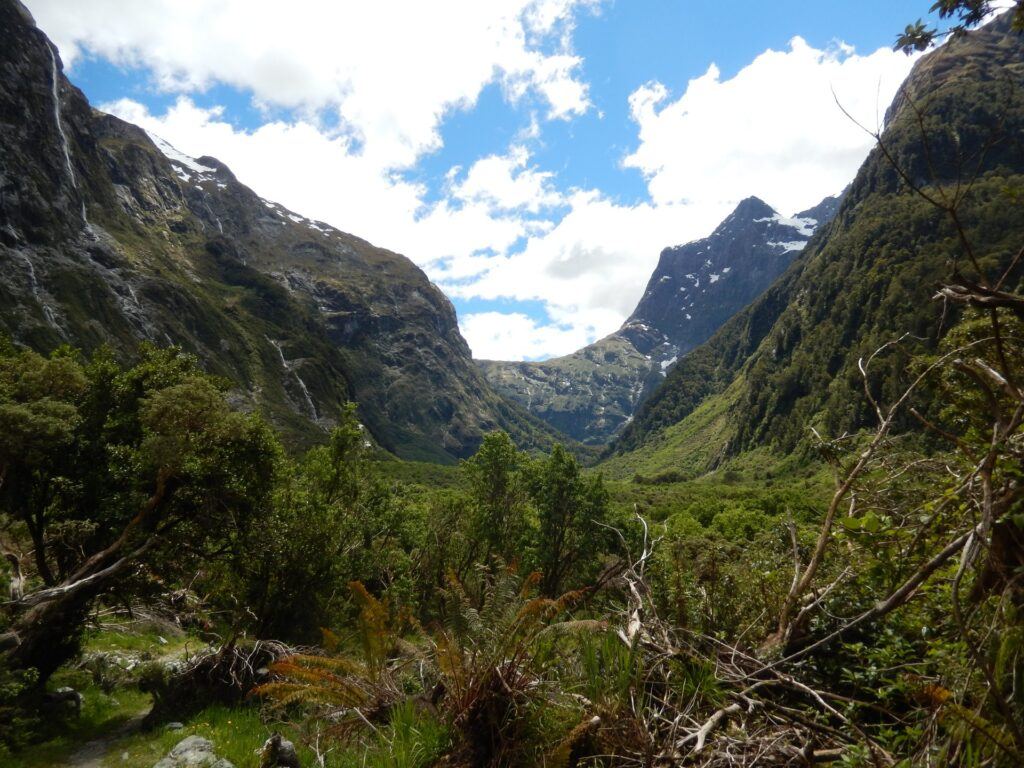
The honest catch: this is the hardest Great Walk to actually get onto. Bookings for the 2026/27 season opened at 9:30am NZT on 13 May 2026, and the peak summer dates went within hours. If you’re reading this mid-season, check DOC’s availability calendar for shoulder-season gaps — November, March and April still deliver the full experience with a fraction of the booking frenzy. In season the walk is rated intermediate; from May to October it’s a different beast entirely (avalanche terrain, no hut bookings, NZ$30-a-night first-come-first-served bunks) and only for genuinely experienced alpine trampers.
The Routeburn Track: the alpine showpiece
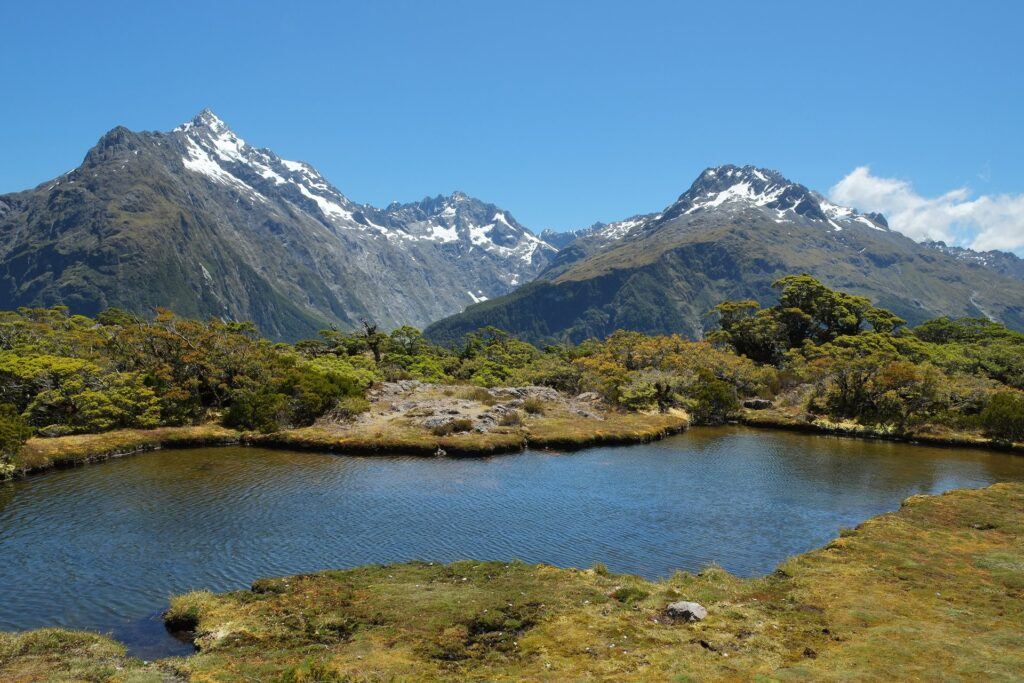
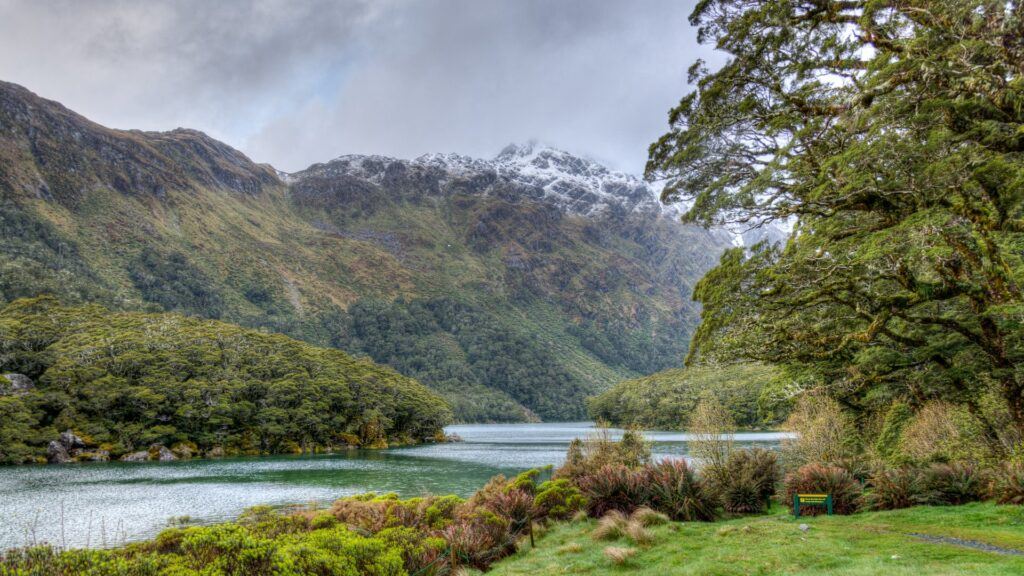
If the Milford is about the valleys, the Routeburn is about the tops. At 32 kilometres it’s nearly half the distance, but it punches far above its weight: the Harris Saddle at 1,255 metres is actually higher than the Mackinnon Pass, and the traverse serves up hanging valleys, alpine tarns and ridgeline panoramas that photographers dream about. Starting from either the Routeburn Shelter near Glenorchy or The Divide near Te Anau, most walkers take two or three nights across the Routeburn Flats, Routeburn Falls and Lake Mackenzie huts.
The Routeburn’s superpower is flexibility. Two trailheads mean you can walk it in either direction, and 325 kilometres of road separate the two ends — so you do need to sort transport, but you’ve got options, including car-relocation services. Budget travellers take note: there are bookable campsites at Routeburn Flats and Lake Mackenzie (NZ$28/NZ$42 per night NZ/international in season), which cuts the hut bill dramatically. And if you can’t spare three days, the Key Summit side track from The Divide is one of New Zealand’s great day walks — alpine tarns and panoramic views in about three hours return.
Cost-wise the Routeburn is the friendlier of the two: two hut nights at the international rate runs NZ$264 per adult versus NZ$456 for the Milford’s three. Bookings for 2026/27 opened 15 May 2026 and peak dates still sell out, but the pressure is a notch below Milford madness.
Head to head: how they actually compare
Scenery. Milford gives you the deep, glacier-carved world: rainforest valleys, the Sutherland Falls, the sheer drama of the pass. Routeburn gives you the high, open world: tarns, ridgelines, and those huge Fiordland panoramas. Neither is “better” — they’re different films. If waterfalls and rainforest are your thing, Milford. If alpine tops and big views are your thing, Routeburn.
Difficulty. Both are rated intermediate in the Great Walks season, and both demand reasonable fitness. The Milford’s challenge is cumulative — four days and one big pass day. The Routeburn’s is concentrated — shorter, but Harris Saddle is a proper alpine crossing and the weather up there changes fast. Neither is recommended for children under 10.
Crowds and booking. The Milford sells out first and fastest; missing the May booking release usually means waiting a year or gambling on cancellations. The Routeburn is merely very popular. If you’re planning now for the current season, the Routeburn is statistically your better bet for actually getting a hut.
Logistics. The Milford’s fixed one-way format means boat transfers at both ends and a night in Te Anau or Queenstown on either side. The Routeburn’s two trailheads give you more ways to play it, but the 325 km between them means transport planning is non-negotiable either way.
Booking your Great Walk: the 2026/27 season
The Great Walks season runs 1 November 2026 to 30 April 2027 (the Milford’s last departure is 28 April 2027), and bookings are already open — so the practical advice is simple: go to DOC’s booking site now and take what’s left, or aim for the shoulder months. Outside the season (May to October), no bookings are required and bunks are first-come, first-served at NZ$30 a night — but winter on these tracks means snow, ice and avalanche terrain, so this is strictly for experienced, well-equipped trampers.
One timely change worth knowing: on 1 October 2026, DOC added 32 more backcountry huts and hut-side campsites — mostly along busy Te Araroa sections in Canterbury and Nelson/Tasman — to its online booking system for stays from 1 November. With this rollout, all of DOC’s serviced huts are now bookable online, and from 1 November you can also buy Backcountry Hut Tickets ($15 per adult per night) through the same system instead of visiting a visitor centre — paper tickets are being phased out over a 12-month transition ending 1 November 2027. Note the fine print: an online hut ticket is proof of payment, not a booking — non-bookable huts remain first-come, first-served. Still, for anyone stitching a Great Walk together with extra backcountry nights, planning just got noticeably easier.
The verdict: which track is right for you?

Pick the Milford Track if you want the classic — the full four-day immersion, the Sutherland Falls, the bragging rights — and you can either book the instant dates release or travel in the shoulder season. Give it five to six days door to door.
Pick the Routeburn Track if you’re shorter on time, you want the best alpine views per kilometre walked, you’d like the option of camping to cut costs, or the Milford is simply booked out. Two to three days on the track, and the Key Summit day-walk fallback is superb.
Can’t decide? Walk the Routeburn this season and put the Milford on your calendar for the next booking release — Great Walks bookings for the 2027/28 season open in May 2027, and the Milford rewards the planner. Either way, you’re walking among New Zealand’s very best adventure experiences.
Short on time? Taste Fiordland without the four-day commitment
Not everyone can spare four days and a May booking alarm. These bookable experiences give you the flavour of the tracks in a single day:
Taste the Milford in a day — the Sound cruise. The classic consolation prize is the Milford Sound day trip from Queenstown: a glass-roof coach down the Milford Road with photo stops at Mirror Lakes and Monkey Creek, then a scenic cruise on the fiord itself. This day tour and cruise with awesomeNZ (4.5 from 570 reviews) includes a picnic lunch, onboard WiFi and free 24-hour cancellation, from $197.44 — the easiest way to stand in the fiord the Milford Track walks toward.
Walk the Routeburn in a day — guided. If the hut ballot defeats you, this guided full-day Routeburn hike from Queenstown covers up to 22 km of the track — beech forest, swing bridges, Routeburn Falls — with lunch, snacks, a local guide and return transport included (4.9 from 36 reviews, Badge of Excellence, free 24-hour cancellation). It’s the track’s greatest-hits version, no multi-day pack required.
Final word
There is no wrong answer here — only the walk that fits your trip. The Milford is the legend you’ll talk about for decades; the Routeburn is the alpine traverse that might just photograph better. Book early, pack for four seasons, and whichever you choose, give the sandflies at Sandfly Point the respect they deserve.