
Amsterdam’s greatest hits are no secret: the canal ring, the Rijksmuseum, the Anne Frank House. But the city I keep coming back to lives a layer underneath those postcard sights — in hidden courtyards, attic churches, and museums devoted to cats, self-playing pianos, and fluorescent art. After covering my Amsterdam in 3 Days itinerary and the main sights, this is the other Amsterdam — the one most visitors walk straight past. If you liked my London hidden gems guide, this is its Dutch sibling.
Planning a trip? Get our free Travel Planning Checklist:
Disclosure: This post contains affiliate links. If you book through one of these links, I may earn a commission at no extra cost to you.
1. Begijnhof — the courtyard time forgot
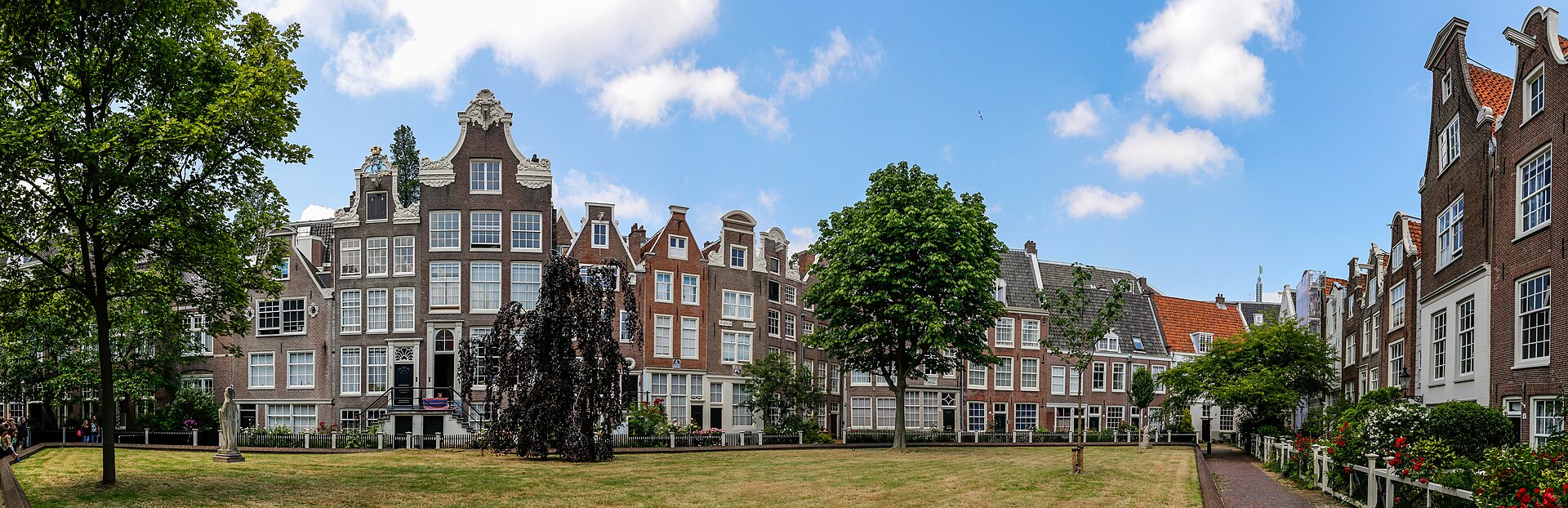
The Begijnhof, Amsterdam’s hidden medieval courtyard. Photo: Dietmar Rabich, CC BY-SA 4.0, via Wikimedia Commons
Step through an unassuming doorway off the busy Spui and the noise drops away. The Begijnhof is a hidden courtyard of historic houses gathered around a quiet green, home to a community of beguines — devout unmarried women — since the mid-14th century. The last beguine died in 1976, and the courtyard is still residential, which is why the house rules are strict: silence is requested, groups are capped at twelve, and bikes, dogs, and picnics stay outside.
It’s free to enter (daily 10:00–18:00; use the visitor entrance on Gedempte Begijnensloot), and inside you’ll find the Houten Huys — one of the oldest wooden houses in Amsterdam — plus a clandestine Catholic chapel from the era when Catholic worship had to hide. Go early in the morning, when you might have the courtyard nearly to yourself.
2. Our Lord in the Attic — a church hidden in a canal house
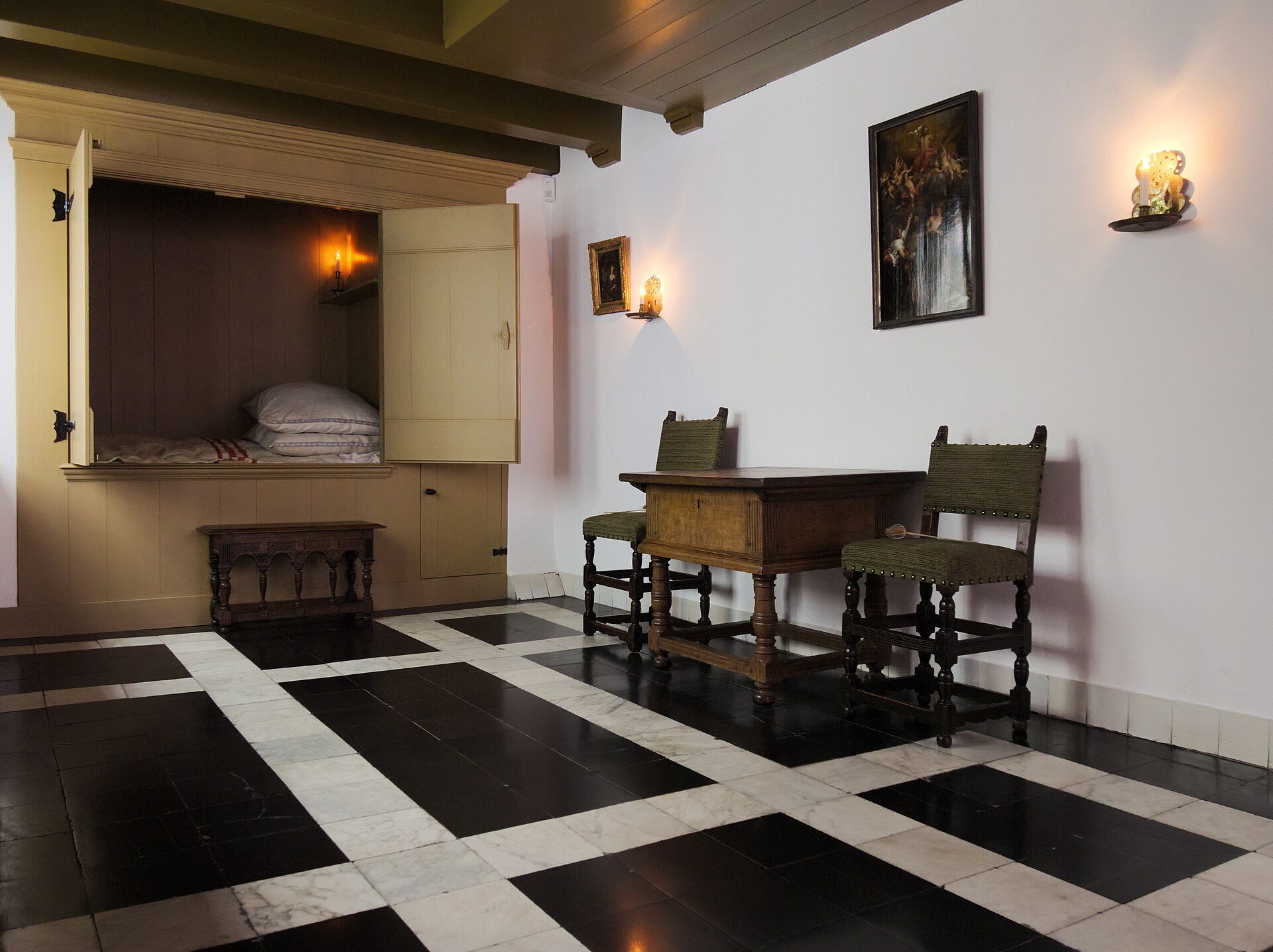
The secret attic church of Museum Ons’ Lieve Heer op Solder. Photo: C messier, CC BY-SA 4.0, via Wikimedia Commons
From the street at Oudezijds Voorburgwal 38–40, this looks like any other 17th-century canal house. Climb to the top and you’ll find a complete Catholic church hidden in the attic — pews, altar, organ, and all. After the Dutch Reformation, public Catholic worship was banned, so wealthy Catholic merchants built schuilkerken (hidden churches) inside their homes, quietly tolerated by the authorities as long as they stayed discreet.
Entry runs about €18 with a free audio guide included, and the museum fills in the whole story of Amsterdam’s secret Catholic life. It’s one of the city’s oldest house museums, and the moment the attic church comes into view is genuinely startling — no photo does the scale of it justice.
3. De Poezenboot — the world’s only floating cat sanctuary
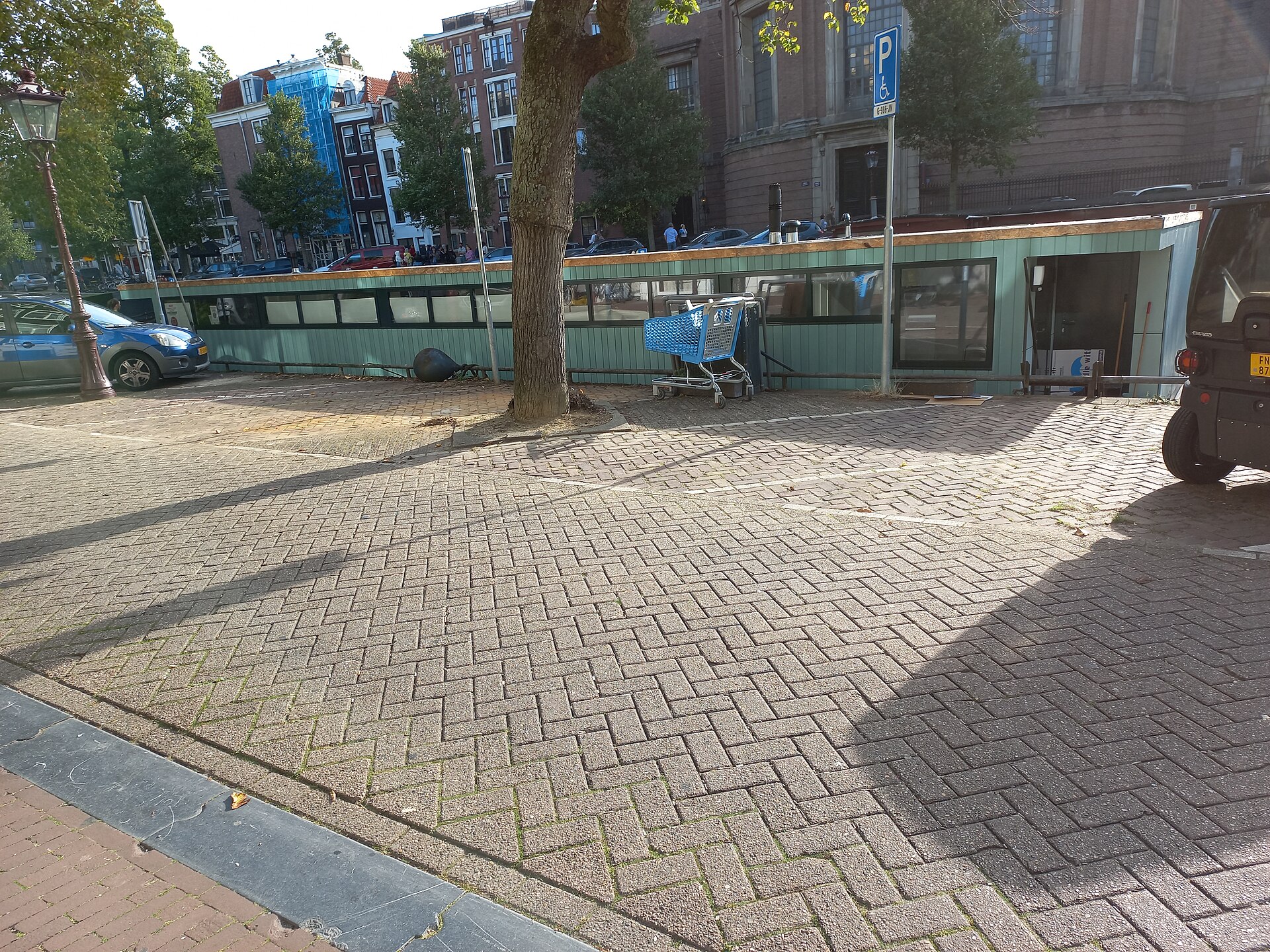
De Poezenboot, the floating cat sanctuary on the Singel. Photo: Ceescamel, CC BY-SA 4.0, via Wikimedia Commons
Moored on the Singel canal floats the world’s only floating cat sanctuary. Henriette van Weelde started sheltering Amsterdam’s stray cats in 1966; two years later she moved the operation onto a converted Dutch sailing barge, and De Poezenboot has been afloat ever since. Today it’s run entirely by volunteers caring for around fifty cats — some permanent residents, many looking for homes.
Visiting is free (donations keep the boat running — they’re currently fundraising for a new, energy-efficient vessel), but hours are tight: Tuesday, Friday, and Saturday from 13:00 to 15:00 only. Time it right and it’s the most heart-melting fifteen minutes in Amsterdam.
4. Kattenkabinet — an art museum for cat people
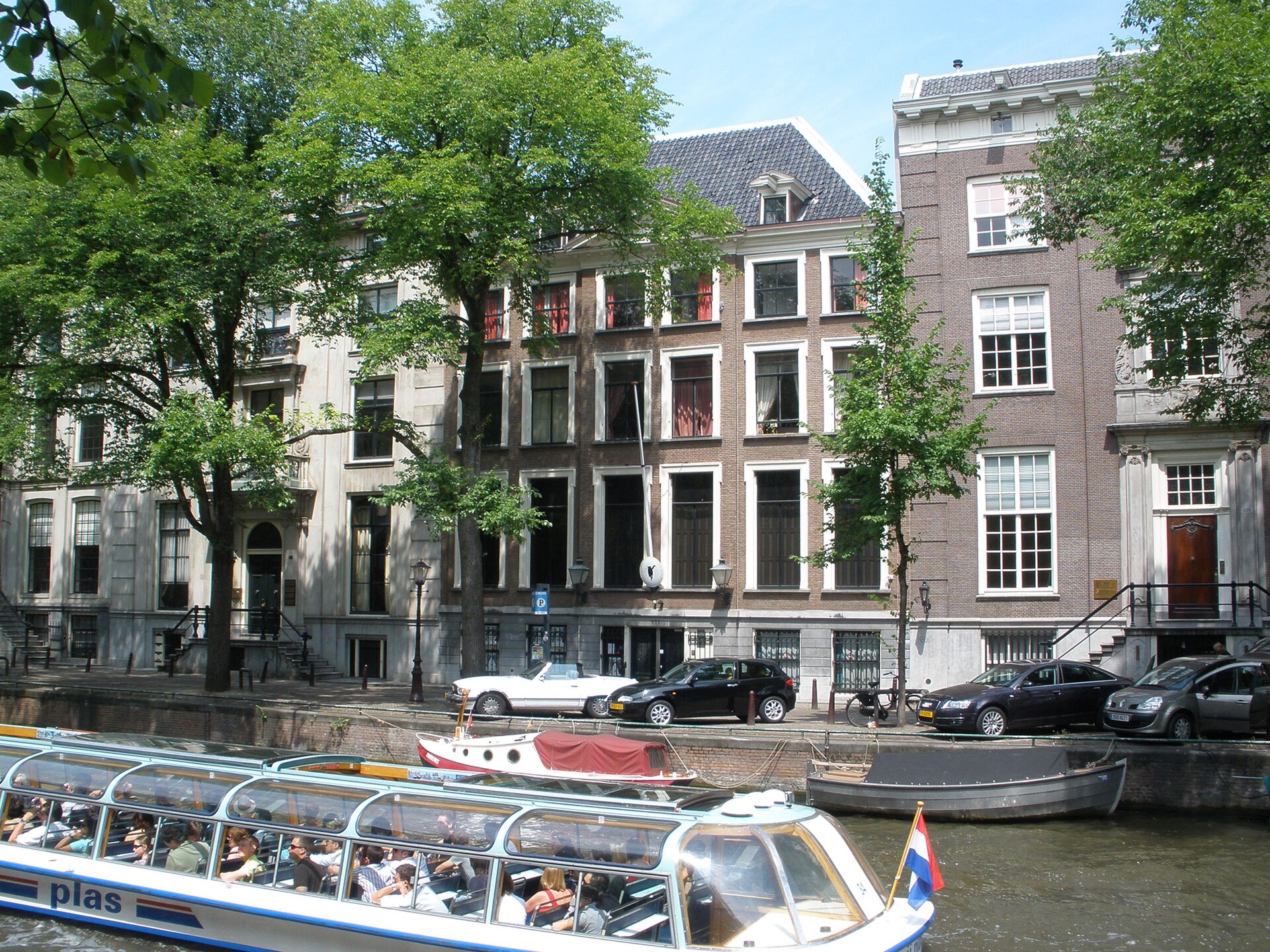
The Kattenkabinet on the Herengracht, an art museum devoted to cats. Photo: Jvhertum, public domain, via Wikimedia Commons
Staying with the feline theme: the Kattenkabinet is an art museum on the grand Golden Bend of the Herengracht devoted entirely to cats. Founder Bob Meijer opened it in 1990 in memory of his ginger tomcat John Pierpont Morgan (1966–1983), and the collection — Picasso, Rembrandt, Toulouse-Lautrec, Corneille, Steinlen — traces the cat’s role in art through the centuries.
The 1667 canal house is half the attraction — built for the Van Loon brothers, it once hosted John Adams during his time as U.S. ambassador. Real cats roam the rooms too. Entry is around €10; it’s open most afternoons but closed on Mondays, so plan accordingly.
5. Pianola Museum — where the pianos play themselves
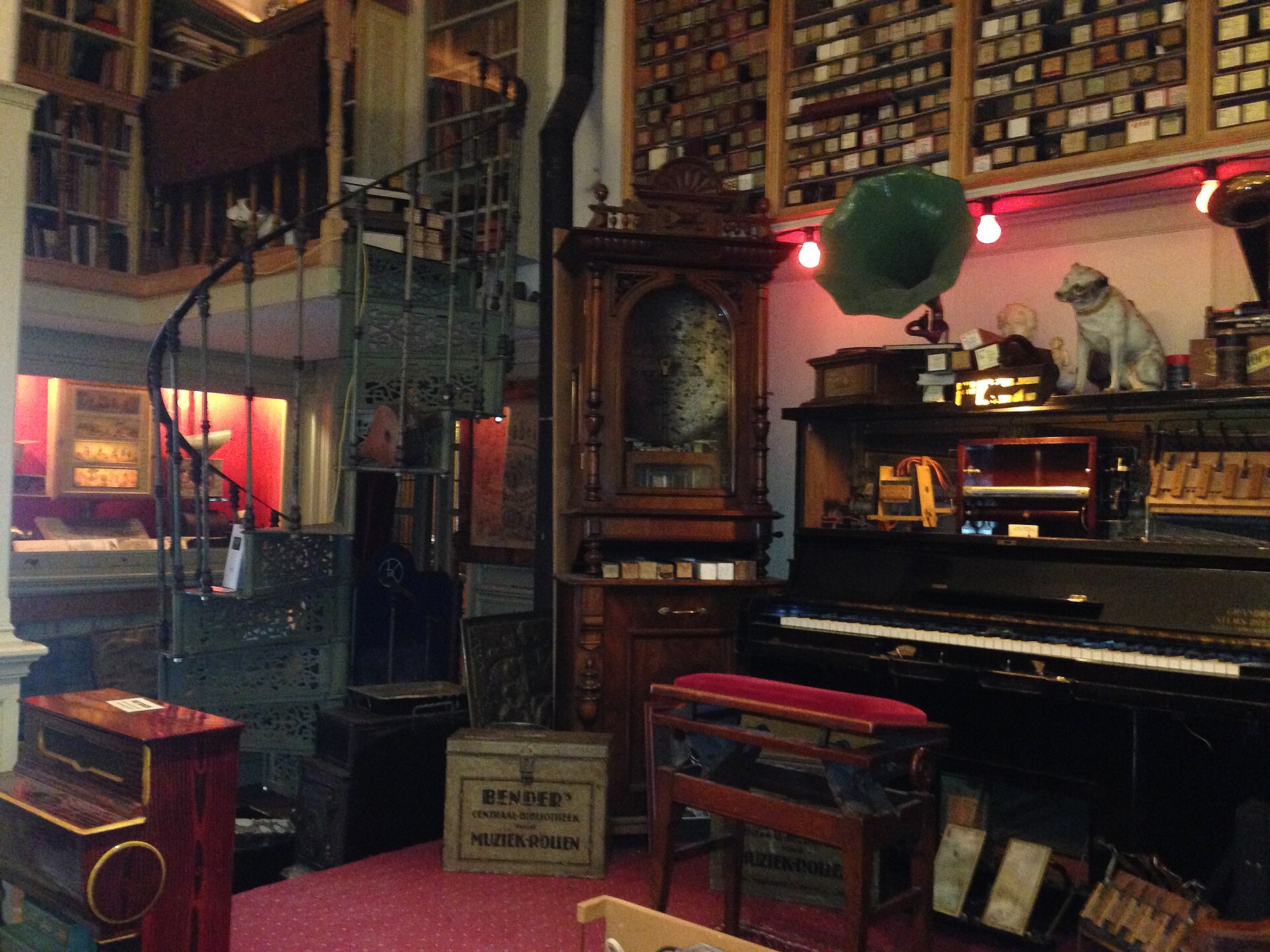
Self-playing pianos at the Geelvinck Pianola Museum in the Jordaan. Photo: Ymnes, CC BY-SA 4.0, via Wikimedia Commons
Tucked into the Jordaan at Westerstraat 106, the Geelvinck Pianola Museum is devoted to the player piano — the early-20th-century marvel that played music from punched paper rolls before recordings took over. The museum holds an archive of some 30,000 music rolls, and every visit includes live demonstrations: the staff feed the actual rolls into the century-old instruments and let them play.
It’s open Friday and Saturday 13:00–17:00 and Sunday 13:00–16:00, entry €9. The monthly concerts here sell out, which tells you everything about how seriously Amsterdam takes its self-playing pianos.
6. Electric Ladyland — a fluorescent cave in the Jordaan
Down a basement staircase at Tweede Leliedwarsstraat 5 in the Jordaan glows the world’s first museum devoted to fluorescence. Opened in 1999 by American artist Nick Padalino, Electric Ladyland is part art installation, part science exhibit: fluorescent minerals, fluorescent art, and a black-lit “participatory” room where visitors add their own glowing creations.
Visits are guided mini-tours, and entry runs about €5–8 (cash has historically been the way). Hours have shifted over the years, so check the official site before you go. It’s tiny, strange, and unforgettable.
7. Het Schip — the Amsterdam School’s brick masterpiece
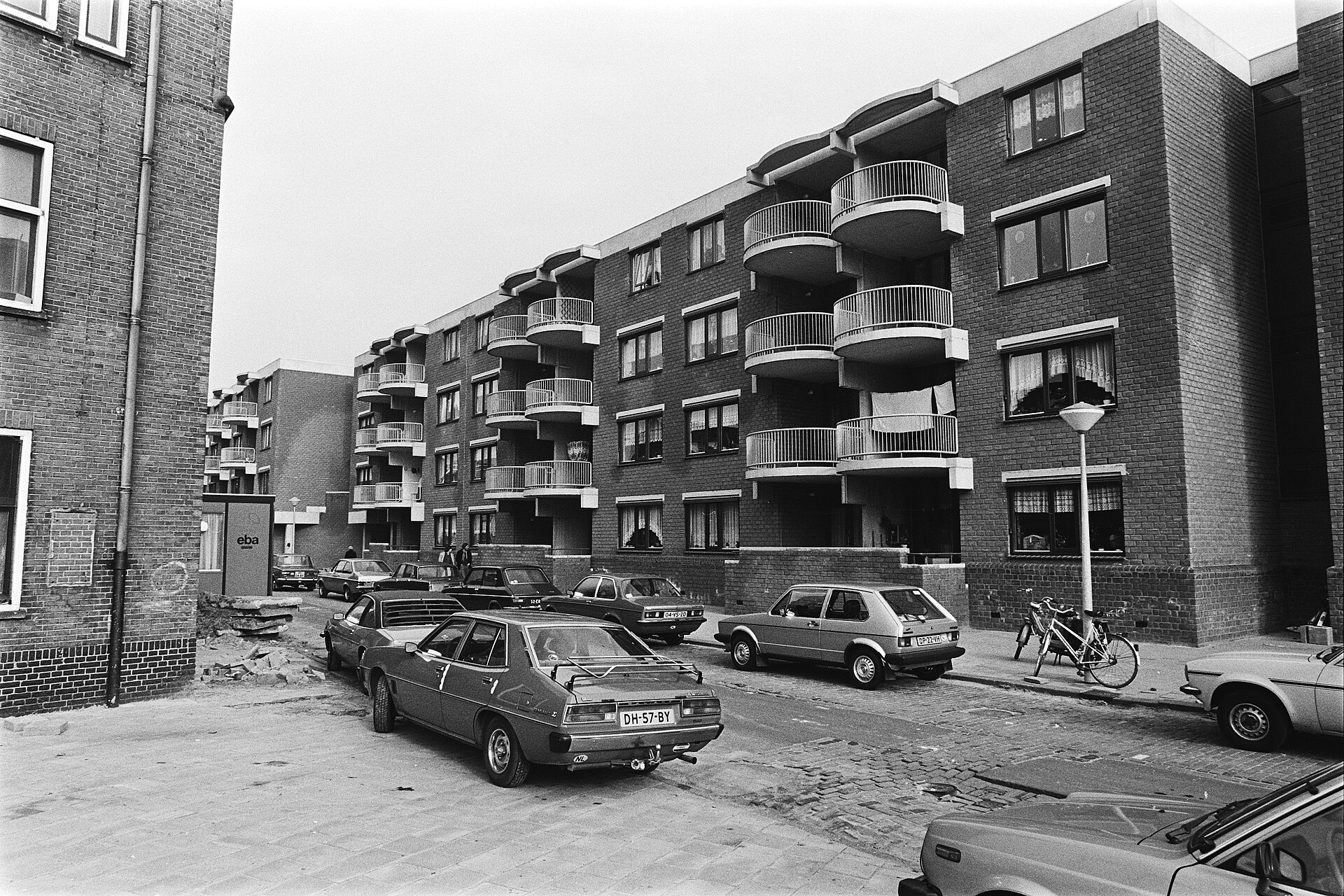
Het Schip, Michel de Klerk’s Amsterdam School masterpiece. Photo: Hans van Dijk, CC0, via Wikimedia Commons
Most visitors never make it to the Spaarndammerbuurt, which is a shame, because that’s where you’ll find Het Schip (“The Ship”) — the 1919–1921 workers’ housing complex by Michel de Klerk that is the undisputed masterwork of the Amsterdam School movement. Its rippling brick facades, sculptural tower, and expressionist details look like nothing else in the city.
The on-site museum (€17.50, Tuesday–Sunday 11:00–17:00, guided tour included in the price) covers the building’s history plus the original post office and a restored period apartment. The hourly tours are the way to see it — the guides make the brickwork come alive.
8. Zevenlandenhuizen — seven countries on one street
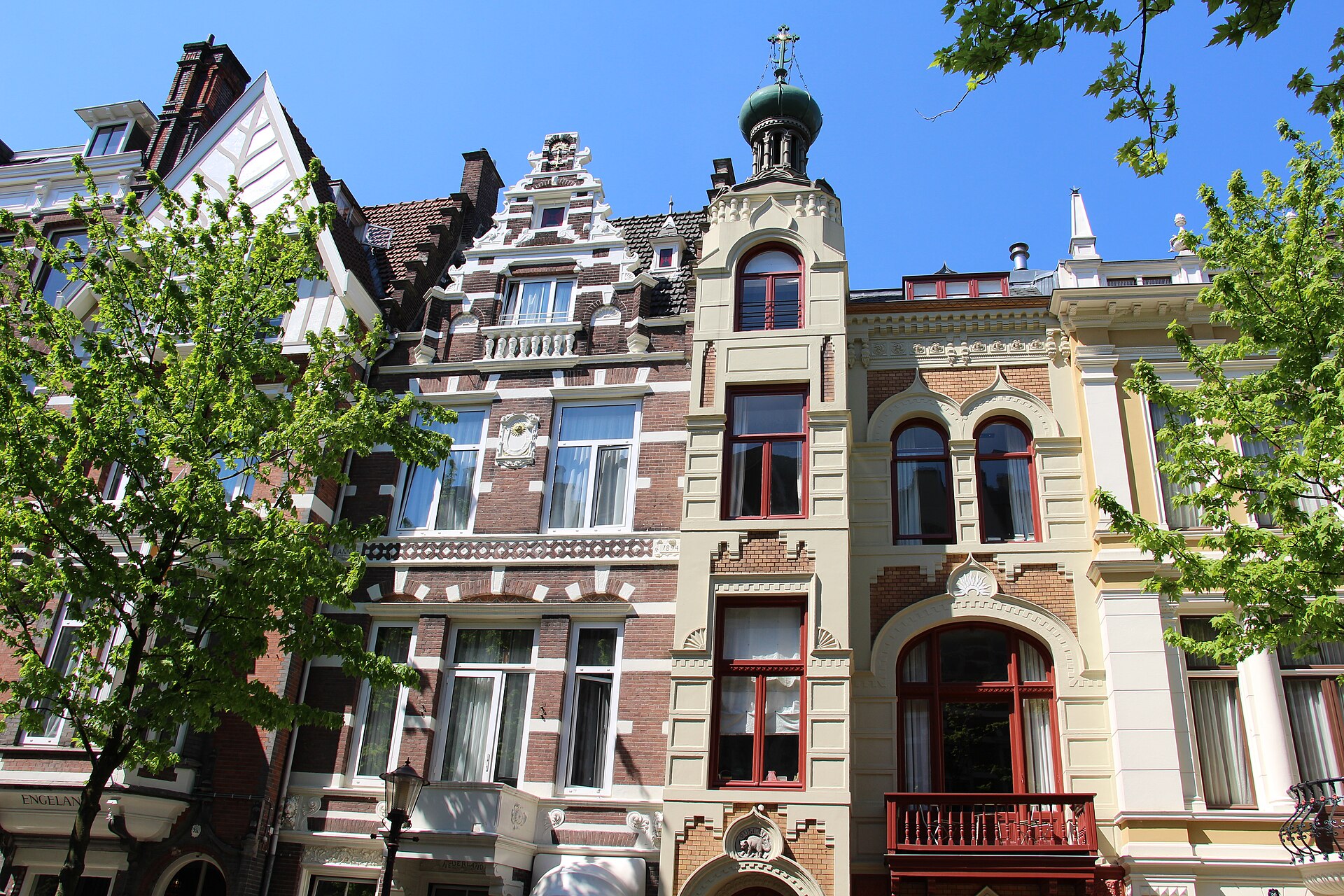
The Zevenlandenhuizen on Roemer Visscherstraat, each in a different country’s style. Photo: Fred Romero, CC BY 2.0, via Wikimedia Commons
On Roemer Visscherstraat, near the Vondelpark, stand seven adjoining houses — each designed in the architectural style of a different European country: Germany, France, Spain, Italy, Russia, the Netherlands, and England. Each house is labeled with its country, so the game is spotting the national flourishes as you walk the row.
Church architect Tjeerd Kuipers designed them in 1894 for philanthropist Sam van Eeghen. They’re private residences and offices, so this one is strictly a street-level sight — but as a free five-minute detour, it’s one of the city’s most delightful oddities.
9. NEMO’s rooftop — the best free view in Amsterdam

The free rooftop terrace of the NEMO Science Museum. Photo: Elekes Andor, CC BY-SA 4.0, via Wikimedia Commons
Renzo Piano’s ship-like, copper-green NEMO Science Museum rises over the Oosterdok — and its stepped rooftop is a free public terrace with panoramic views over the old town, the harbor, and the IJ. No museum ticket needed; just climb the exterior stairs on the east side.
The roof doubles as a “green city square” with interactive experiments, plus a café for the classic Dutch move of coffee with a view. Open Tuesday to Sunday 10:00–17:30. Note that the late Thursday openings some older guides mention were a summer-only experiment — don’t plan around them.
10. Museum Tot Zover — the museum of saying goodbye
The Netherlands’ museum of funerary culture sits in a former caretaker’s residence at Kruislaan 124, on the grounds of the De Nieuwe Ooster cemetery in Amsterdam-East. Museum Tot Zover explores how Dutch cultures past and present deal with death: death masks, miniature hearses, mourning jewelry woven from the hair of the deceased, and urns spanning centuries.
It’s thoughtful rather than morbid, and the cemetery grounds themselves are worth the trip. Open Wednesday to Sunday 11:00–17:00, adults €11. Pair it with the nearby Oosterpark for one of the city’s most local-feeling afternoons.
How to string them together
The gems cluster neatly. Do the center on foot in one morning: Begijnhof, Our Lord in the Attic, De Poezenboot, and the Kattenkabinet are all within a twenty-minute walk of each other. Give the Jordaan an afternoon — the Pianola Museum and Electric Ladyland plus the neighborhood’s brown cafés — and consider this 5-star-rated small-group Jordaan walking tour, which visits a hidden courtyard most walkers miss. Het Schip works as a western extension; the Zevenlandenhuizen fit into a Vondelpark stroll; NEMO’s rooftop plus Museum Tot Zover make an easy eastern half-day.
End a hidden-gems day the Amsterdam way — on the water. This evening canal cruise with cheese and drinks sails past the illuminated gabled houses, and after a day of secret courtyards and attic churches, the postcard view hits differently. For the practical side — where to sleep between all this exploring — my Where to Stay in Amsterdam guide breaks down the best neighborhoods.
The bottom line
Amsterdam rewards the curious. The main sights earn their crowds, but the city’s real character hides in a silent 14th-century courtyard, a church in an attic, a boat full of cats, and a museum of fluorescent art in a Jordaan basement. Hunt down even half of these ten and you’ll come home with the Amsterdam most visitors never see.