
Krakow is the rare European city that survived the Second World War with its medieval heart almost intact — and then kept living in it. Poland’s capital until the court moved to Warsaw at the end of the 16th century, it packs a royal castle, Europe’s largest medieval market square, a storied Jewish quarter and two UNESCO-listed day trips into a centre you can cross on foot in half an hour. Three days is enough to do it justice: one for the Old Town and Wawel, one for the essential, sobering journey to Auschwitz-Birkenau, and one split between an underground salt cathedral and the streets of Kazimierz.
Never forget a thing before you fly. My free 8-page Travel Planning Checklist walks you through the whole trip — 6 planning timelines, 36 checks, from booking windows to travel-day basics. One email, no spam, unsubscribe anytime.
This itinerary sequences everything by neighbourhood so you are never backtracking, and it flags the handful of things in Krakow you genuinely must book ahead — because here, the difference between a smooth trip and a frustrating one is almost always a timed ticket bought a week earlier.
Disclosure: This post contains affiliate links. If you book through one of these links, I may earn a commission at no extra cost to you.
Getting to Krakow and Getting Around
Most visitors arrive at Kraków John Paul II Airport, about 11 km west of the centre. The SKA1 train runs to Kraków Główny, the main station, in roughly 17–20 minutes, about every half hour — and Główny is only a 10–15 minute walk from the Main Market Square. The same SKA1 line also continues southeast to Wieliczka, which matters on Day 3.
Once you are in the centre, walk. The Old Town is ringed by the Planty, a leafy park on the line of the demolished city walls, and almost everything here sits inside or just beyond that green ring. Trams handle the longer hops — to Kazimierz, across the river to Podgórze, out to the station. You do not need a car for any of the three days.
Day 1: The Main Market Square, St Mary’s and Wawel Castle
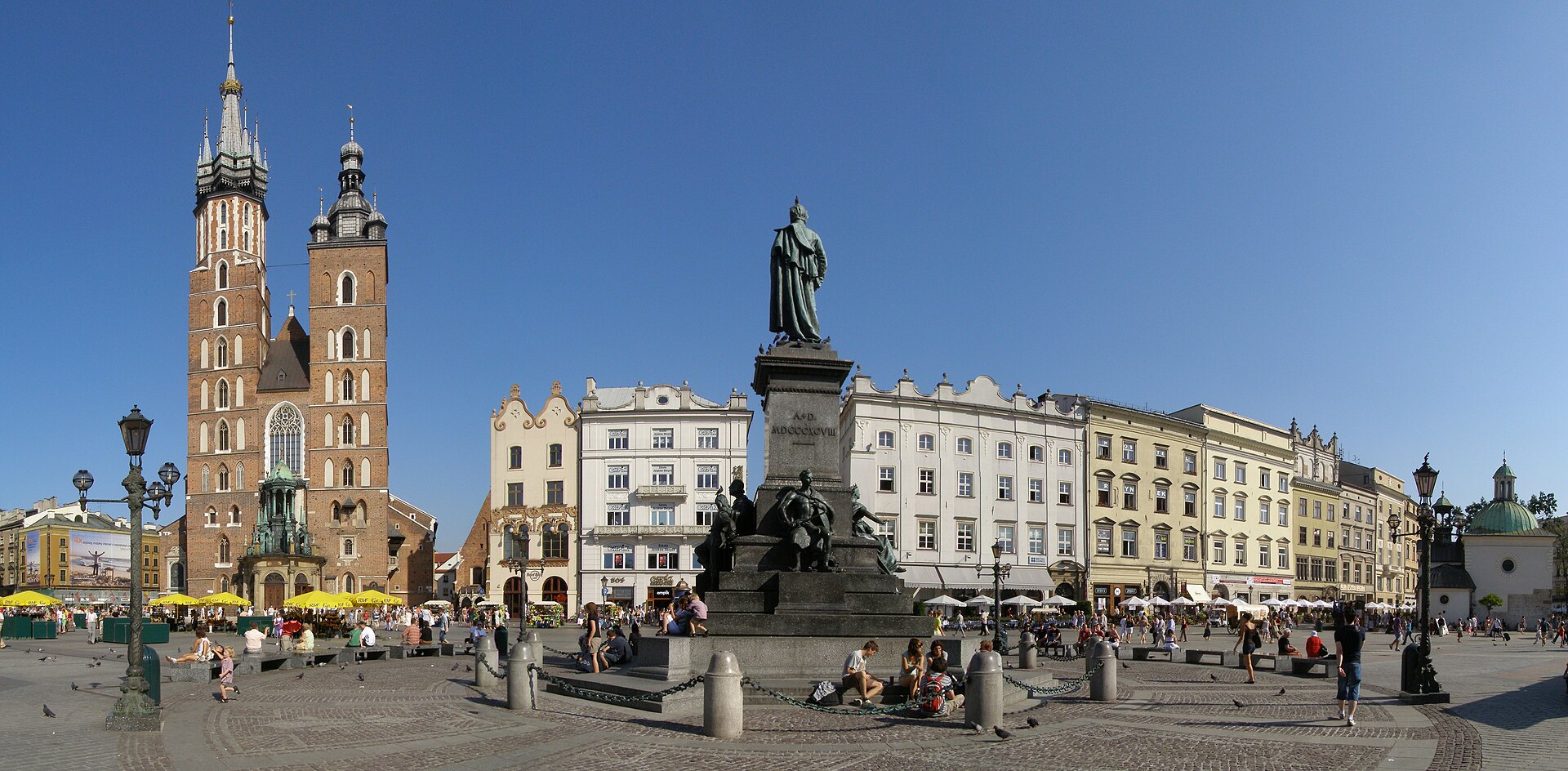
Start where Krakow starts: Rynek Główny, the Main Market Square, laid out in 1257 and measuring roughly 200 by 200 metres — the largest medieval town square in Europe. The long building in the middle is the Cloth Hall (Sukiennice), a Renaissance trading hall whose ground floor is still a market, lined with stalls selling amber, woodwork and textiles. The lone Gothic Town Hall Tower is all that remains of the old town hall.
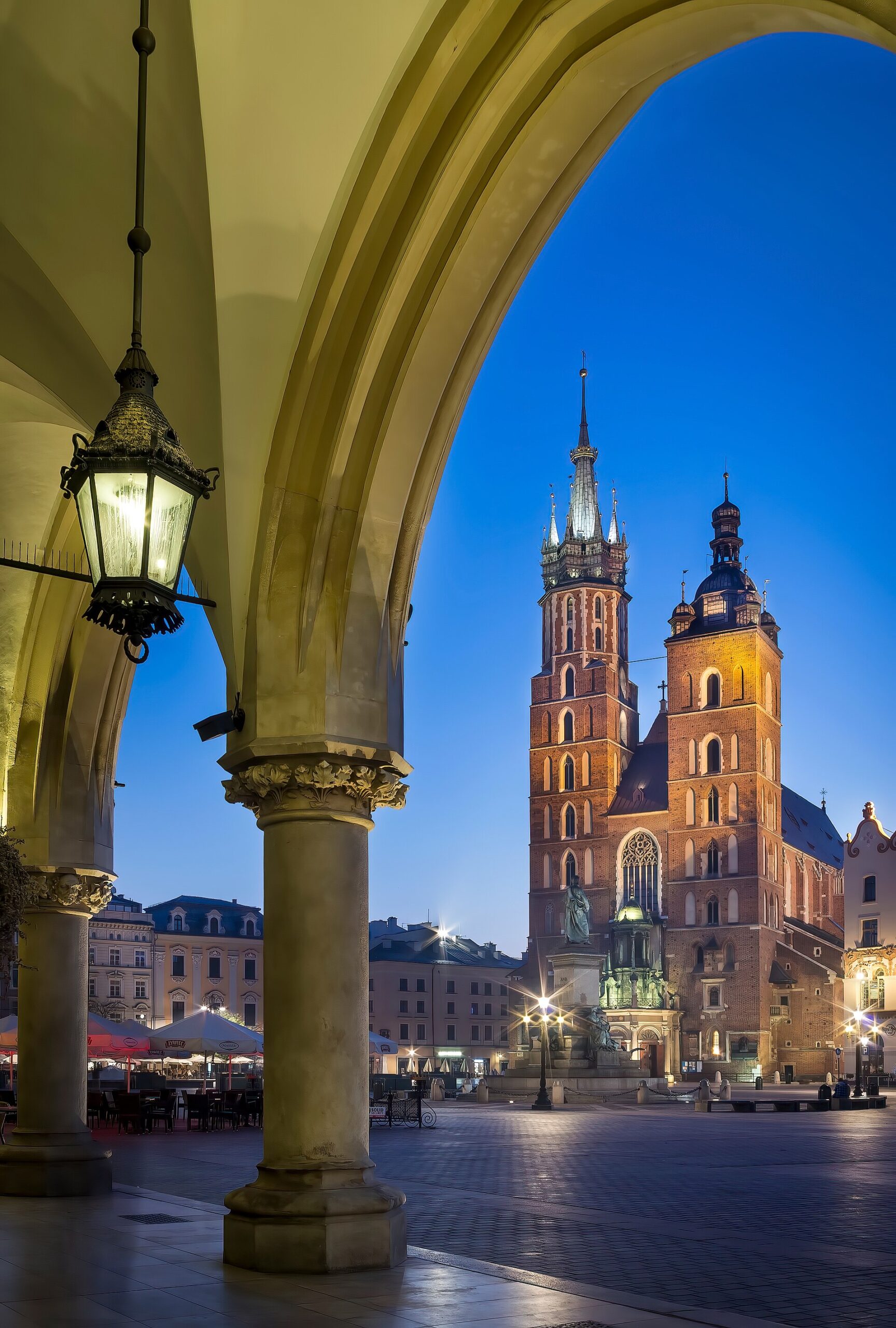
On the square’s eastern side stands St Mary’s Basilica, the brick Gothic church with the two uneven towers. Go inside for one object: the great wooden altarpiece carved by Veit Stoss, completed in 1489, a masterpiece of late-Gothic sculpture. Then time your exit to the hour. From the taller tower, a trumpeter plays the hejnał — a short call that stops abruptly, mid-note, in memory of the trumpeter said to have been shot while sounding the alarm during a 13th-century Mongol attack. It is played every hour, around the clock, and the whole square pauses for it.
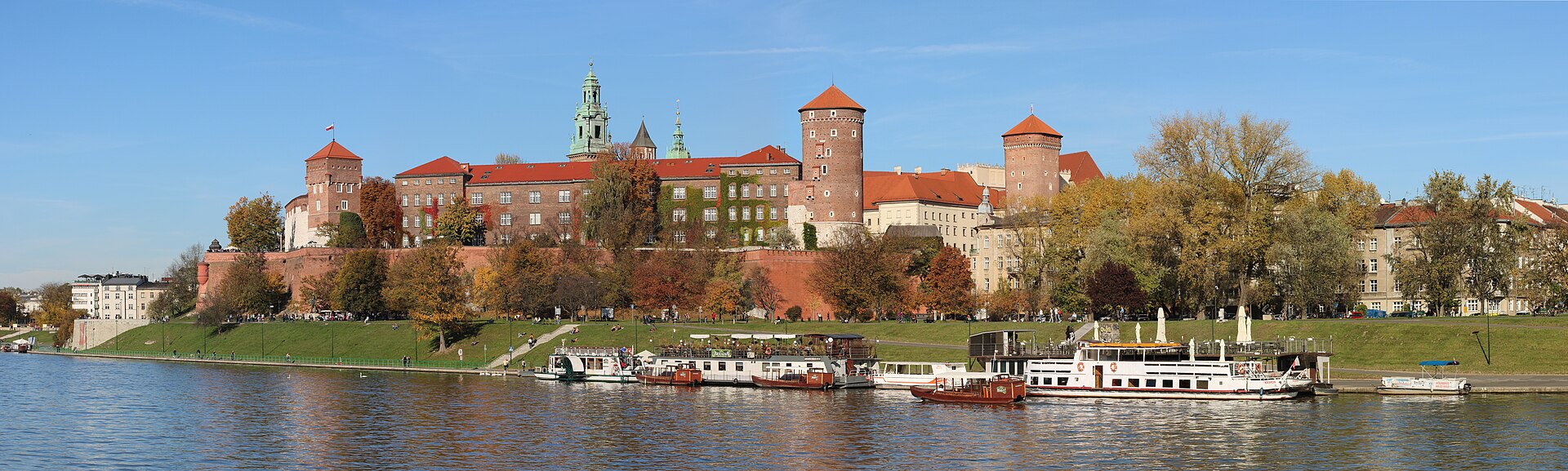
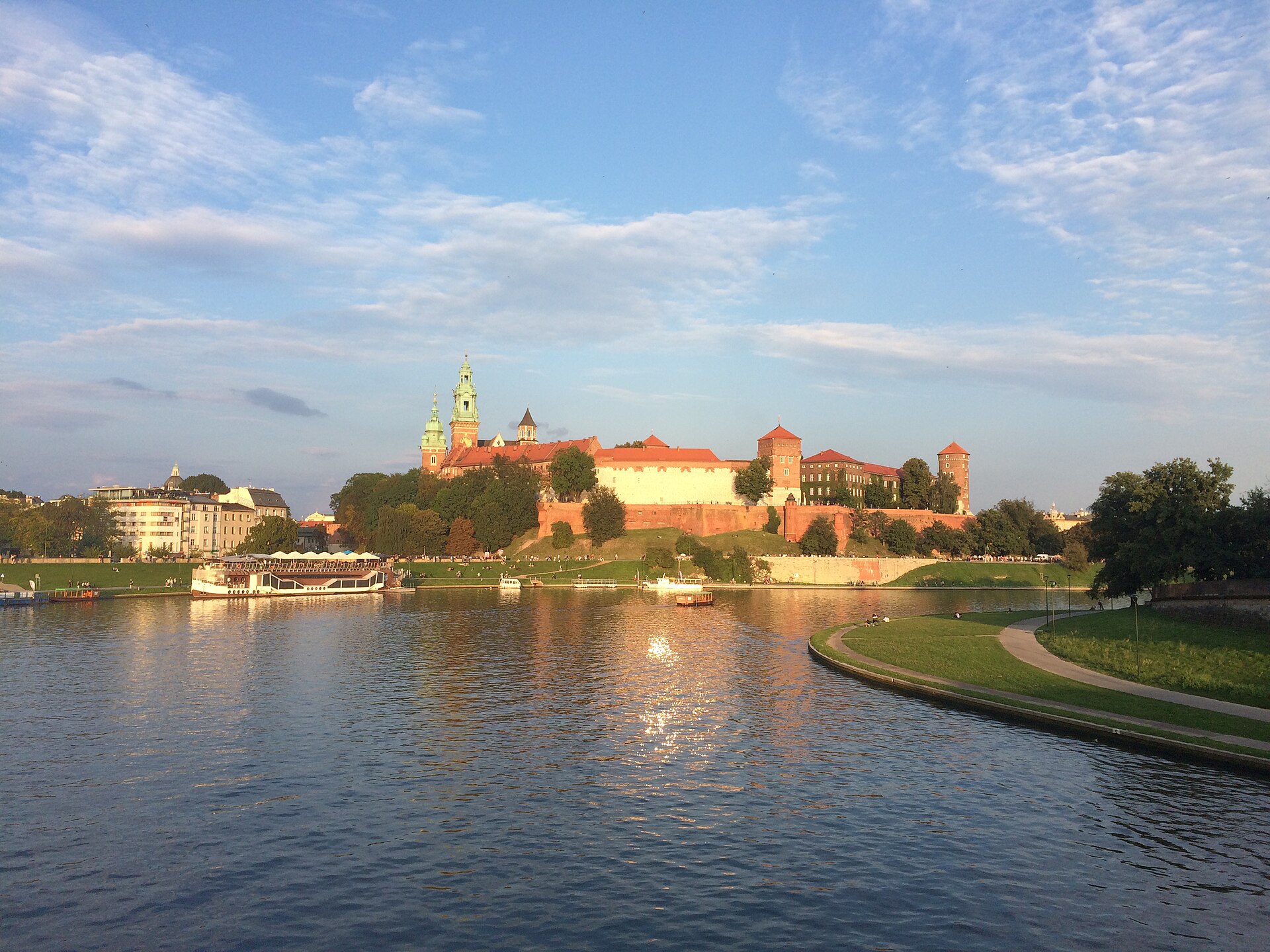
In the afternoon, walk the Royal Route down Grodzka Street to Wawel Hill. This was the seat of Polish kings for centuries: the cathedral is where they were crowned and where many are buried in its crypts. The castle is sold as separate timed exhibitions — the State Rooms, the Royal Private Apartments and the Crown Treasury among them — and the popular ones sell out days ahead, so book online before you travel. Even if you skip the interiors, the arcaded courtyard and the walk down to the Vistula riverbank, where the Wawel Dragon statue breathes real fire every few minutes, are free and unmissable.
Day 2: Auschwitz-Birkenau — the Essential Day Trip
Some 66 km west of Krakow, at Oświęcim, stands the Auschwitz-Birkenau Memorial and Museum: the largest Nazi concentration and extermination camp complex, where more than 1.1 million people, most of them Jews, were murdered between 1940 and 1945. It is not an easy day, and it should not be. But if you visit only one place outside Krakow, this is the one — allow a full day, and organise it properly.
The single most important fact for 2026: entry is now online-only. Since March 2026 the museum issues every entry pass through its official reservation site, visit.auschwitz.org, and nothing is sold at the gate. Booking opens 90 days ahead, passes are personalised — bring the passport or ID that matches the name on your booking — and English-language guided slots go first, so reserve as soon as your dates are fixed. The standard visit joins a guided tour with a museum educator, about three and a half hours across both parts of the site: Auschwitz I, the original camp, and Birkenau, the vast extermination camp about 3 km away, linked by a free shuttle bus. Free entry without a guide exists only for late-afternoon windows and still must be booked ahead. The museum does not recommend the visit for children under 14.
The simplest way to do it from Krakow is an organised tour with transport and your entry handled for you: this Auschwitz-Birkenau guided tour from Krakow with hotel pickup is highly rated across thousands of reviews and takes the booking risk out of the day entirely — expect six to seven hours door to door. Independent travellers can take the train to Oświęcim instead, but the entry-pass rule applies identically: no reservation, no entry.
Keep the evening of Day 2 deliberately quiet — a slow dinner and nothing else planned is the right shape for this day. One practical note: some operators sell combined Auschwitz-and-salt-mine days. They are physically possible, but pairing these two places back-to-back serves neither well; the salt mine gets its own space tomorrow.
Day 3: The Wieliczka Salt Mine, Then Kazimierz and Podgórze
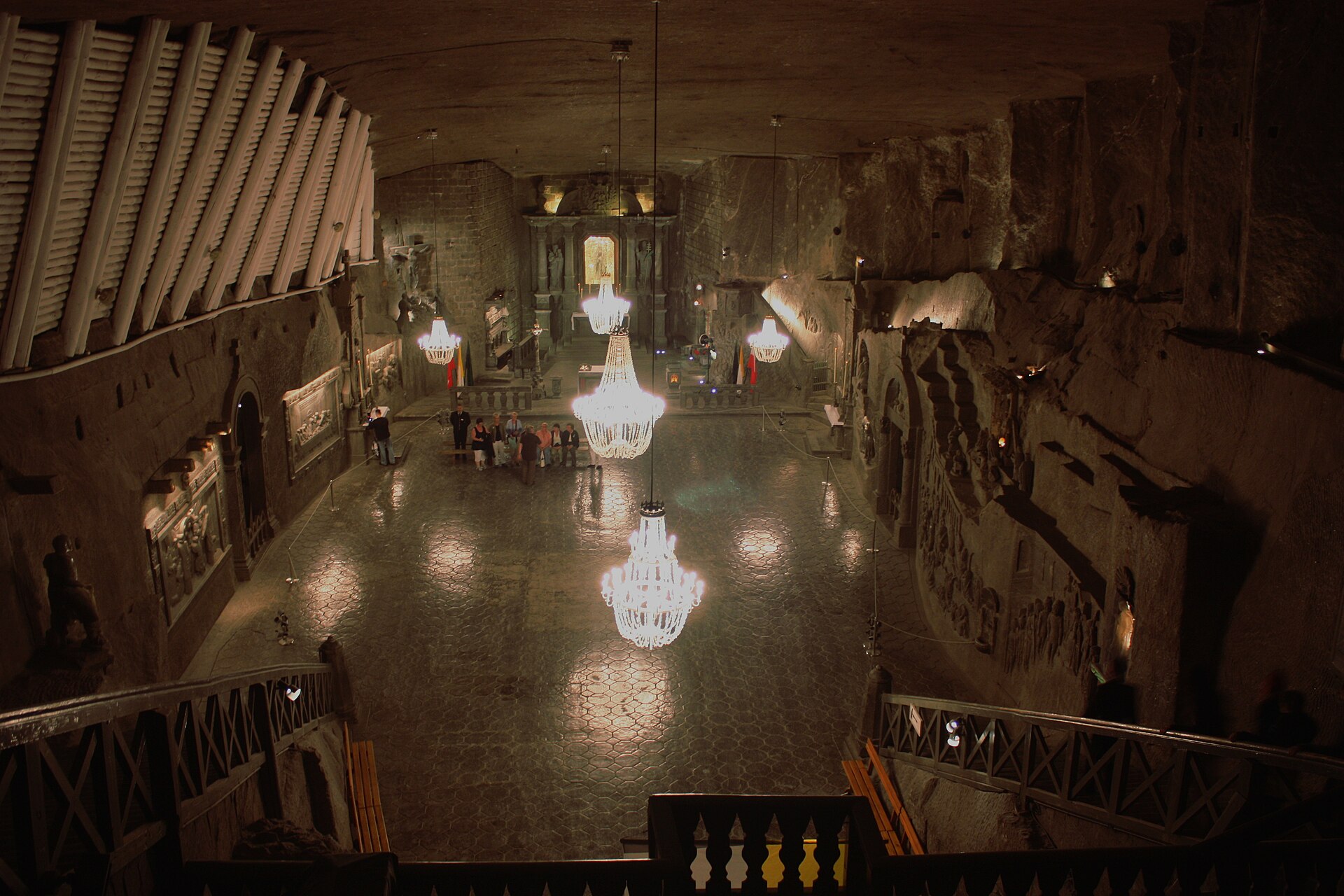
Start early and go underground. The Wieliczka Salt Mine, about 14 km southeast of Krakow, has been worked since the 13th century and was among the very first sites inscribed on the UNESCO World Heritage list in 1978. Visits run as a guided Tourist Route of about two to three hours: you descend a long wooden staircase — around 380 steps at the start, some 800 across the whole route — to galleries reaching about 135 metres down, passing salt statues, underground lakes and chapels carved by the miners themselves. The climax is the Chapel of St Kinga, a full church carved entirely from rock salt, chandeliers included. The temperature underground holds at roughly 14–16 °C all year, so bring a layer even in August. Ride the SKA1 train from Kraków Główny to Wieliczka Rynek-Kopalnia in about 25 minutes, or take a tour with transport and fast-track entry included — this Wieliczka Salt Mine tour with fast-track ticket is the well-reviewed option and removes the queue at the mine entrance, where independent visitors lose the most time.
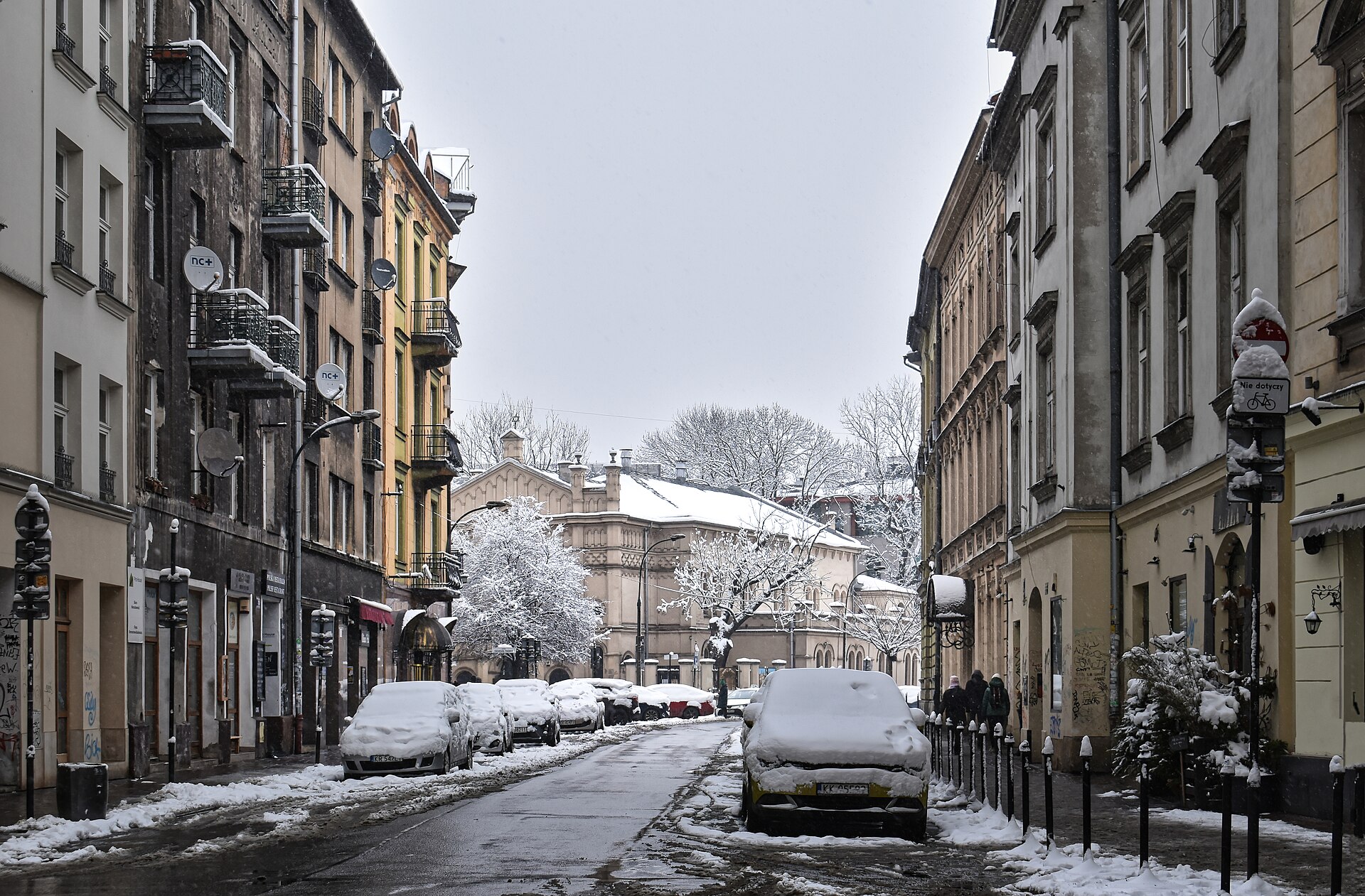
Back in Krakow by early afternoon, cross into Kazimierz, the city’s historic Jewish quarter, centred on Szeroka Street. Before the war this was one of the great centres of Jewish life in Europe; today its synagogues stand among cafés and galleries. Visit the Remuh Synagogue and its old cemetery, and the Old Synagogue, now a museum. Then walk to Plac Nowy and join the queue at the rotunda for a zapiekanka — a long, toasted open-faced baguette loaded with mushrooms and cheese, and Krakow’s definitive street snack.
From Plac Nowy it is a short walk across the Vistula into Podgórze, where the wartime ghetto stood. Its main square, Ghetto Heroes Square, is now a memorial: dozens of oversized empty chairs scattered across the cobbles, marking the belongings abandoned when the ghetto was liquidated in 1943. A few streets away in Zabłocie is Oskar Schindler’s former enamel factory, now one of Poland’s best museums: the exhibition covers the whole story of Krakow under Nazi occupation from 1939 to 1945, with Schindler’s preserved office at its heart. It is a timed-entry museum that sells out days ahead in peak season, and its free Mondays cannot be reserved in advance — book a weekday slot online, or take this guided tour of Kazimierz, Schindler’s Factory and the former ghetto, which strings this whole afternoon together with skip-the-line entry in about five hours. End the day back in Kazimierz, which has the city’s best evening energy.
Where to Base Yourself
For a first trip, the Old Town is the practical base: the square, Wawel and the station are all walkable, and Days 1 and 3 start at your door. Kazimierz is the characterful alternative — slightly lower prices, the best restaurants and nightlife, and still only a 15–20 minute walk from the Rynek. Pick the Old Town for sightseeing efficiency, Kazimierz if evenings matter as much as sights.
Book-Ahead Checklist and Practical Tips
- Auschwitz-Birkenau: reserve your entry pass or tour the moment your dates are set — online only, up to 90 days ahead, and bring matching ID.
- Wawel Castle: choose your exhibitions in advance; State Rooms and Crown Treasury slots sell out days ahead in season.
- Schindler’s Factory: timed entry, often sold out several days ahead in summer — do not count on the free Monday.
- Rynek Underground and Wieliczka: book timed slots at weekends and in peak season; the mine is guide-only, always. (The Underground museum, entered from the Cloth Hall, is the rainy-day star of Day 1.)
- Money: Poland uses the złoty, not the euro. Cards are accepted almost everywhere, including the mine and museums.
- When to go: late spring and early autumn bring warm weather without peak crowds. Come in December and the Rynek becomes one of Europe’s great Christmas markets — our guide to Europe’s 10 best Christmas markets has the dates and what to eat when you get there.
If Krakow Is One Stop on a Longer Trip
Krakow pairs naturally with the other great Central European capitals, all reachable by direct train or a short flight. If this format works for you, our Prague in 3 Days itinerary covers the castle and the Charles Bridge in the same day-by-day style, and Budapest in 3 Days does the same for the Danube’s grandest city. But give Krakow its full three days first: royal, medieval, joyful and, on Day 2, as serious as travel gets — it earns every hour of them.