
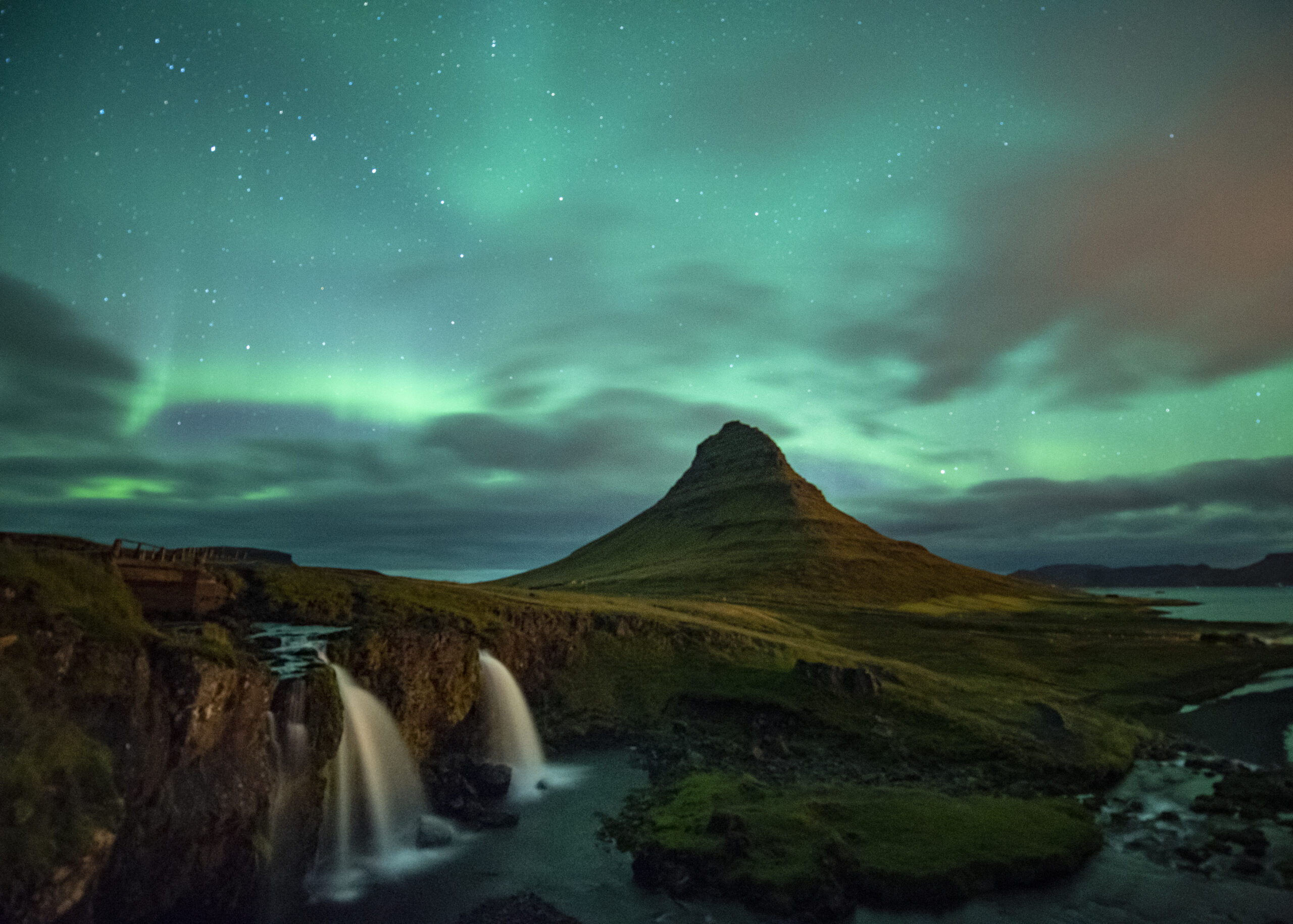
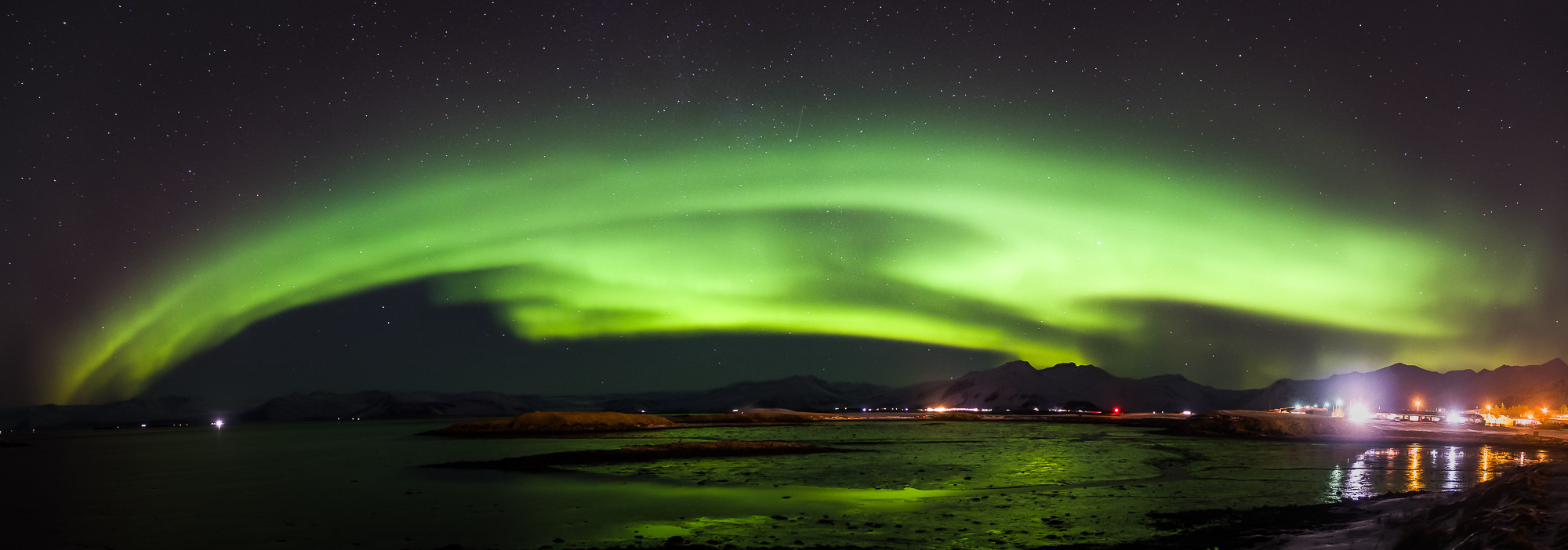
The first time the sky moves, you will not believe it. A faint green smudge low on the horizon thickens, brightens, then unspools into curtains that ripple from one edge of the sky to the other. People go quiet. Someone laughs. Nobody checks their phone. The Northern Lights do that to a crowd.
Never forget a thing before you fly. My free 8-page Travel Planning Checklist walks you through the whole trip — 6 planning timelines, 36 checks, from booking windows to travel-day basics. One email, no spam, unsubscribe anytime.
And right now is one of the best moments in a decade to see them. The 2026–27 aurora season in Iceland (roughly late August through mid-April) lands in the sweet spot just past the peak of Solar Cycle 25, when solar activity stays elevated and the displays stay dramatic. If Iceland’s aurora is on your list, this is the winter to go.
Disclosure: This post contains affiliate links. If you book through one of these links, I may earn a commission at no extra cost to you.
Why the 2026–27 Season Is Special
The sun runs on roughly 11-year cycles, and Solar Cycle 25 peaked around late 2024 into 2025. Here’s the part most travelers miss: the lights don’t switch off after the peak. Some of the most intense geomagnetic storms on record have arrived in the years just after solar maximum, and forecasters expect elevated activity to continue through 2026 and into 2027 before the long slide toward the next minimum around 2030–31. The following peak won’t arrive until the mid-2030s.
In plain terms: the 2026–27 season offers some of the strongest, most frequent auroras you’ll see for another decade. October 2026 sits right at the start of it, with dark nights back and the autumn equinox giving geomagnetic activity its seasonal lift.
When to Go: Months, Moonlight, and the Best Hours
You need three things to line up: darkness, clear skies, and solar activity. Iceland delivers darkness from late August to mid-April; the rest is timing and luck.
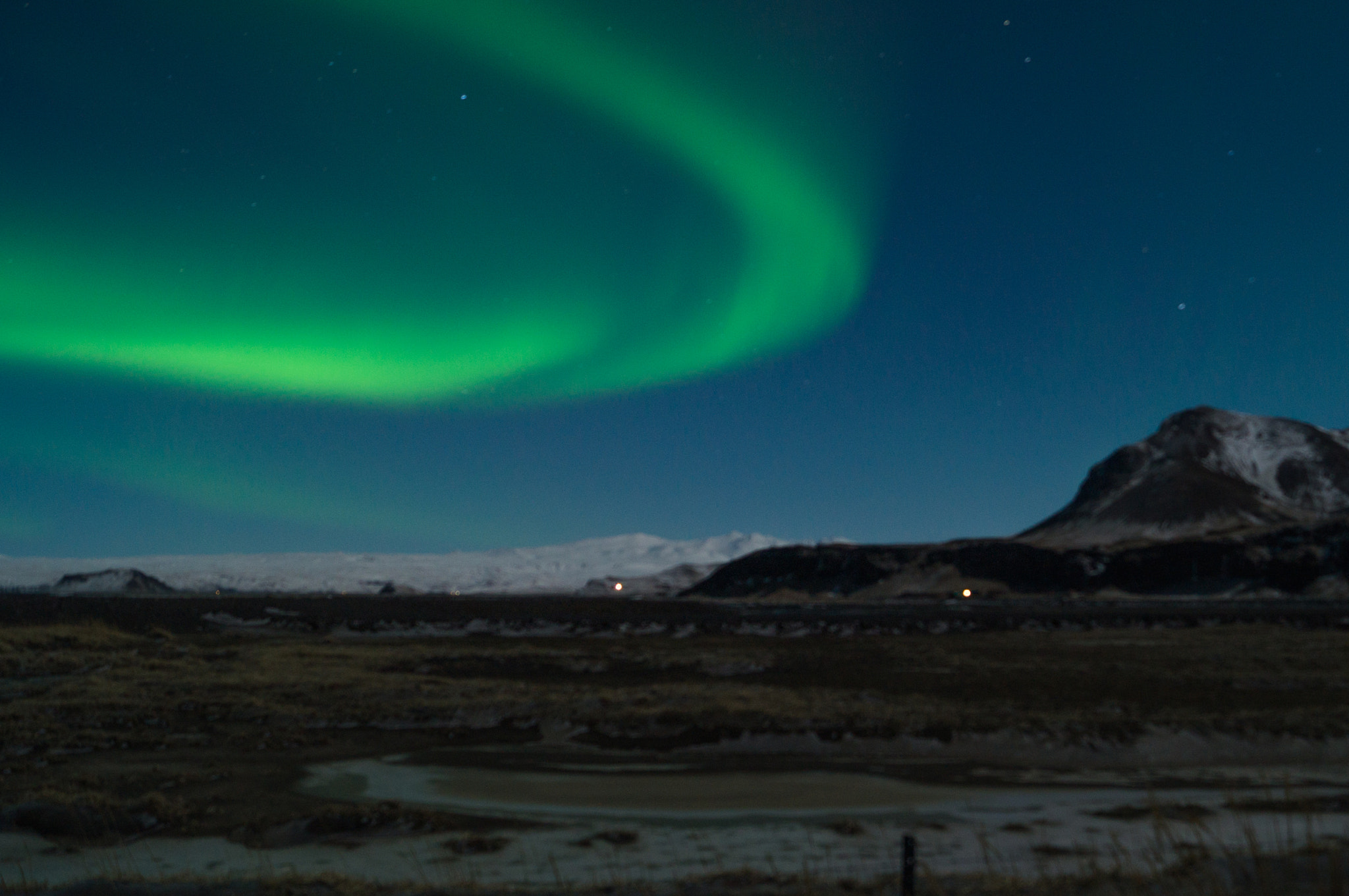
September–October and February–March are the sweet spot for most travelers. The nights are long and dark, the equinoxes bring a bump in geomagnetic activity, and the weather is far more forgiving than deep winter — roads stay open, and standing outside for hours is actually bearable. November–January brings the longest, darkest nights (near the December solstice, Reykjavík gets only about four hours of daylight) but also the cloudiest, stormiest conditions. Late August and April can still produce sightings, but the shorter nights shrink your window.
For the full picture on timing your trip, see our month-by-month guide to the best time to visit Iceland.
Within any night, the prime viewing window runs roughly 9pm to 2am, though the aurora can appear in any dark hour. One more trick: plan around the new moon. A moonless sky is a darker sky, and every bit of darkness helps.
Where to See the Northern Lights in Iceland
You can technically see the aurora from anywhere in Iceland on a strong night — it has even danced over Reykjavík itself. But light pollution is the enemy, and your odds climb sharply once you leave the city glow behind. These are the spots worth building a night around:
Þingvellir National Park. About 45 minutes from Reykjavík, this UNESCO-listed rift valley pairs wide-open dark skies with one of the most dramatic landscapes in the country. It’s the easiest serious aurora spot to reach from the capital, and visiting by day on the Golden Circle doubles as a scouting trip.
Kirkjufell, Snæfellsnes Peninsula. Iceland’s most photographed mountain, with its waterfall in the foreground, turns into the ultimate aurora backdrop when the lights come out. The peninsula packs beaches, lava fields, and glaciers into a few hours’ drive from Reykjavík.
Jökulsárlón Glacier Lagoon and Diamond Beach. Roughly 370 km (about five hours) east of Reykjavík along the Ring Road, the lagoon’s floating icebergs mirror the aurora on still nights — a double display of light and ice. It’s remote, so the skies stay exceptionally dark. If you’re driving the south coast anyway (see our 7-day Iceland Ring Road itinerary), plan an overnight here in aurora season.
Vík and Reynisfjara. The black-sand beach and sea stacks of Iceland’s south coast catch aurora pulses over the Atlantic — moody, wild, and far from city lights.
Near Reykjavík: Grótta Lighthouse. On the Seltjarnarnes peninsula at the edge of the capital area, Grótta is the go-to in-town escape when you don’t want to drive far. On strong nights, even Perlan’s hilltop perch works.
How to Read the Aurora Forecast
Every aurora hunter in Iceland checks the same source: the Icelandic Met Office, which publishes both an aurora activity forecast and a cloud-cover map. Read them together — a blazing solar forecast means nothing under solid cloud, and Iceland’s coastal weather changes fast.
You’ll also see the KP index quoted everywhere: a rough 0–9 gauge of geomagnetic disturbance. Higher numbers mean stronger displays visible over a wider area. Treat it as a guide, not gospel — local guides will tell you the forecast is often wrong in your favor, and the lights have a habit of appearing on “low” nights and hiding on “high” ones.
The honest rule: clouds ruin more aurora trips than the sun ever does. Build at least three or four nights into your trip, watch the cloud map each afternoon, and be ready to drive toward the clear patches.
Guided Tour or DIY Hunt?
Driving yourself works — rent a car, check the forecasts, and chase clear skies. But there’s a strong case for booking at least one guided hunt, especially on a short trip. Local guides read the cloud maps like fishermen read the sea, they know which dark pullouts face the right direction, and most importantly, the good operators offer free retries if the lights don’t show.
My pick for a first night is the Northern Lights Hunt with the Aurora Viking from Reykjavík (4.9 from 538 reviews, from $159 at the time of writing). It’s a small group — max 18 people — with an expert driver who repositions through the night chasing clear sky, professional aurora photos included, hot cocoa while you wait, and unlimited free retries until you see the lights. That retry policy is the real value: book it for your first night, and if the sky stays stubborn, you simply go again free.
What to Wear and How to Photograph the Lights
Aurora hunting means standing still in the dark, often in wind, and stillness gets cold fast. Dress like it matters, because it does: thermal base layers, an insulating mid-layer, a windproof and waterproof shell, warm hat, gloves (thin liner gloves under mittens if you’re handling a camera), and insulated, waterproof boots. Hand and foot warmers are cheap insurance.
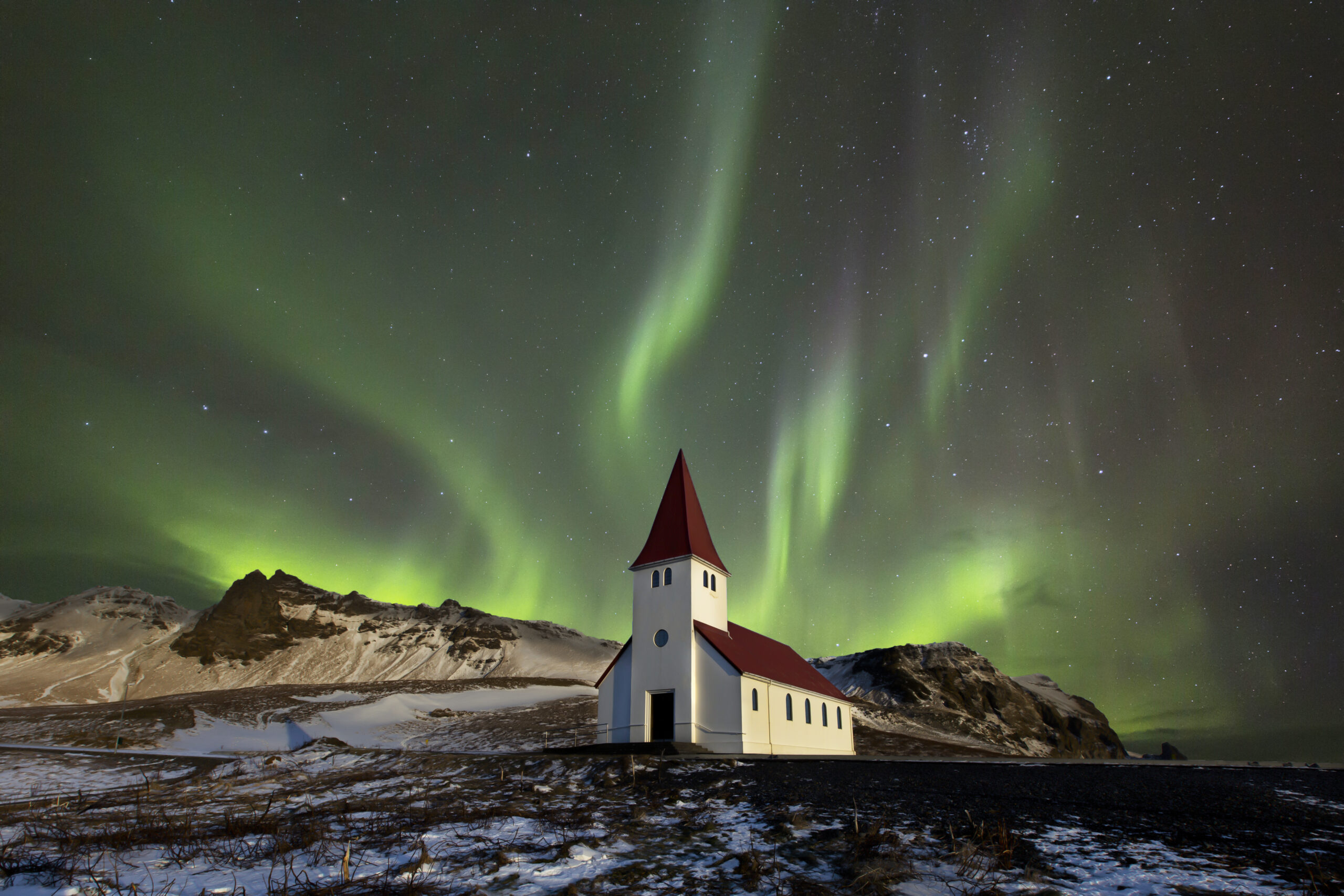
For photos, bring a tripod — non-negotiable — and shoot in manual: widest aperture your lens allows, ISO 1600–3200 to start, shutter 5–15 seconds, manual focus set to infinity (tape the focus ring once it’s dialed in). Turn off image stabilization on the tripod. And when the sky explodes, put the camera down for a minute. Watch it with your eyes first; the photos will still be there.
Pair the Lights with Iceland’s Best Winter Experiences
Aurora season overlaps perfectly with Iceland’s other winter-only wonders. Two pairings are worth building into the same trip:
Walk inside a glacier. Natural ice caves form each winter on Breiðamerkurjökull, an outlet of Vatnajökull — Europe’s largest glacier — and no two seasons’ caves are ever the same. Guides scout new caves every autumn, so each winter’s tour visits formations nobody has ever walked through before. The Original Ice Cave Tour in Jökulsárlón Glacier Lagoon (4.8 from 203 reviews, from $195) is run by Local Guide, the self-described ice-cave pioneers with four generations of glacier experience. It’s a small group, all safety gear is included, and tours cancelled for safety reasons get a full refund. Pair it with a night at the lagoon for aurora reflections on the icebergs.
Do the Golden Circle by day. Þingvellir does double duty: scout it in daylight, then return after dark for one of the best aurora viewpoints near Reykjavík. The Golden Circle Full-Day Tour with Kerið Crater (4.8 from over 27,500 reviews, from $88.95) covers Þingvellir, the erupting Strokkur geyser, and Gullfoss waterfall in 7–8.5 hours with free cancellation and reserve-now-pay-later. For more ways to fill your daylight hours, browse our top bookable Iceland tours and experiences.
If the Lights Don’t Show
It happens — even in a peak season, even with perfect planning. This is why the retry policies matter: book your aurora hunt early in the trip, keep three or four nights flexible, and treat every clear dark evening as a bonus hunt from wherever you’re staying. Step outside your hotel at midnight and look north. Some of the best displays happen when nobody planned for them.
And if the whole trip stays cloudy? Iceland in winter still gives you ice caves, geothermal lagoons steaming under snowfall, waterfalls in full spate, and daylight that paints everything gold for hours. The aurora is the headline, but it’s never the whole show.
The Bottom Line
The 2026–27 season is genuinely special: elevated solar activity, dark nights from late August to mid-April, and a few more years before the long quiet toward 2030. Go between September and March, get away from city lights, watch the cloud forecast as closely as the aurora forecast, and give yourself several nights. The sky does the rest — and when it moves for the first time, you’ll understand why people cross oceans for it.