
El Salvador is the smallest country in Central America, but it has one of the biggest volcanic personalities on Earth. More than 170 volcanic cones and craters punctuate this compact nation, strung along the Central America Volcanic Arc where the Pacific tectonic plate dives beneath the Caribbean plate. The result is a landscape where nearly every horizon is crowned by a volcano — and where travelers can hike active craters, peer into turquoise crater lakes, and stand on peaks that once guided ships across the Pacific.
Never forget a thing before you fly. My free 8-page Travel Planning Checklist walks you through the whole trip — 6 planning timelines, 36 checks, from booking windows to travel-day basics. One email, no spam, unsubscribe anytime.
Here are the volcanoes that make El Salvador a must for adventurous travelers.
Disclosure: This post contains affiliate links. If you book a tour through one of these links, I may earn a commission at no extra cost to you.
Santa Ana (Ilamatepec): The Turquoise Crater Lake
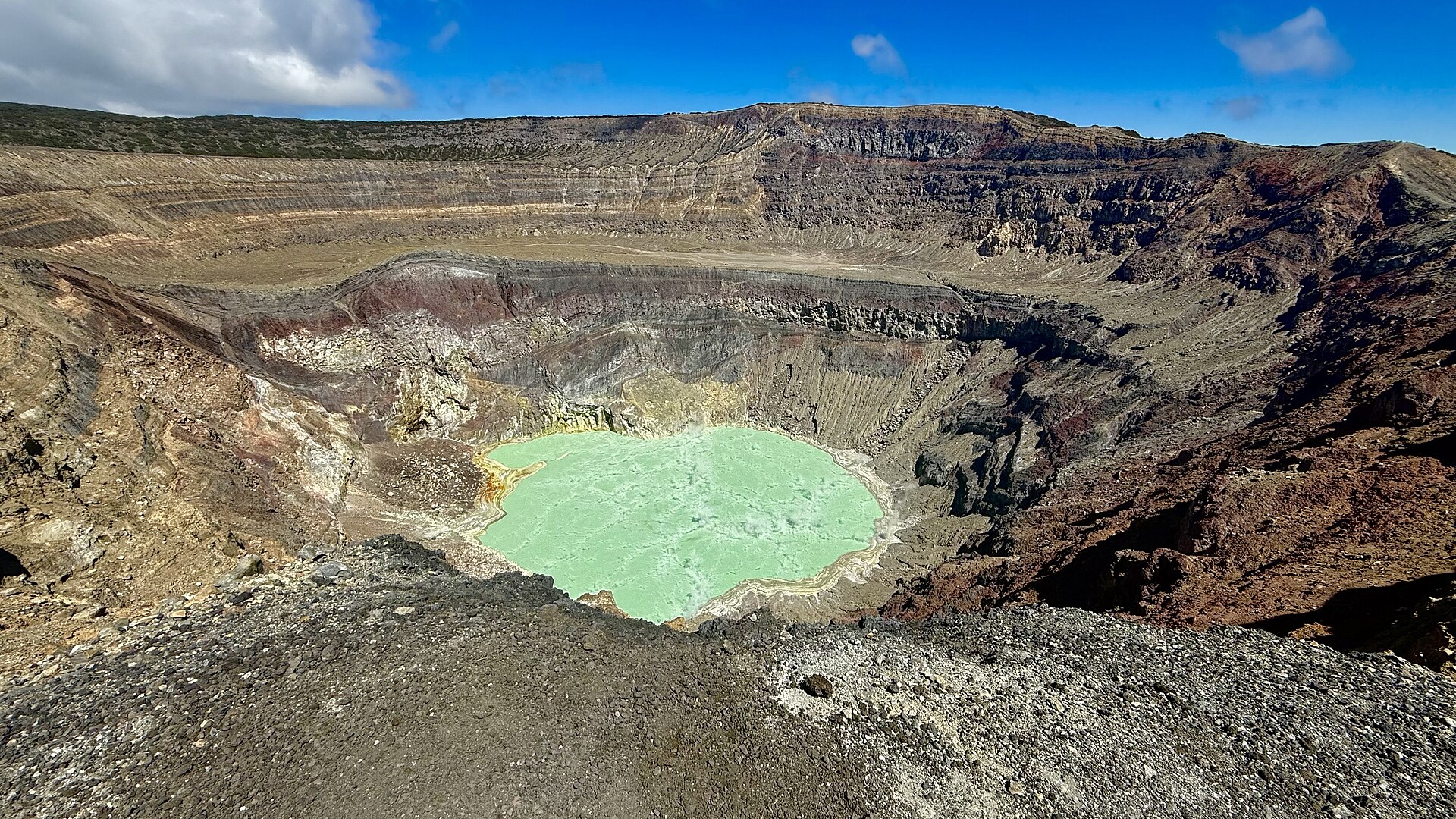
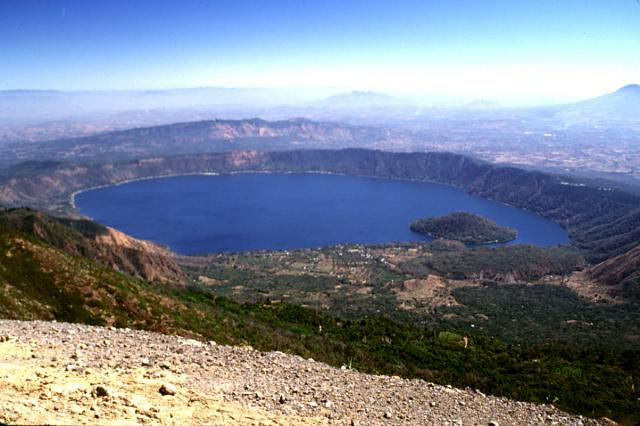
At 2,381 meters (7,822 feet), Santa Ana is the highest volcano in El Salvador and its most beloved hike. The roughly four-hour round-trip trek climbs through cloud forest in Los Volcanes National Park to a summit with one of Central America’s great natural spectacles: a steaming crater lake of impossible turquoise, colored by sulfur minerals. From the rim you can also see Izalco Volcano and Lake Coatepeque spread out below. Trails in the park require a certified guide, and sunrise departures under a sky full of stars are the classic way to do it. Santa Ana last erupted in 2005 and remains closely monitored. You can book a guided Ilamatepec Volcano ascent here.
Izalco: The Lighthouse of the Pacific
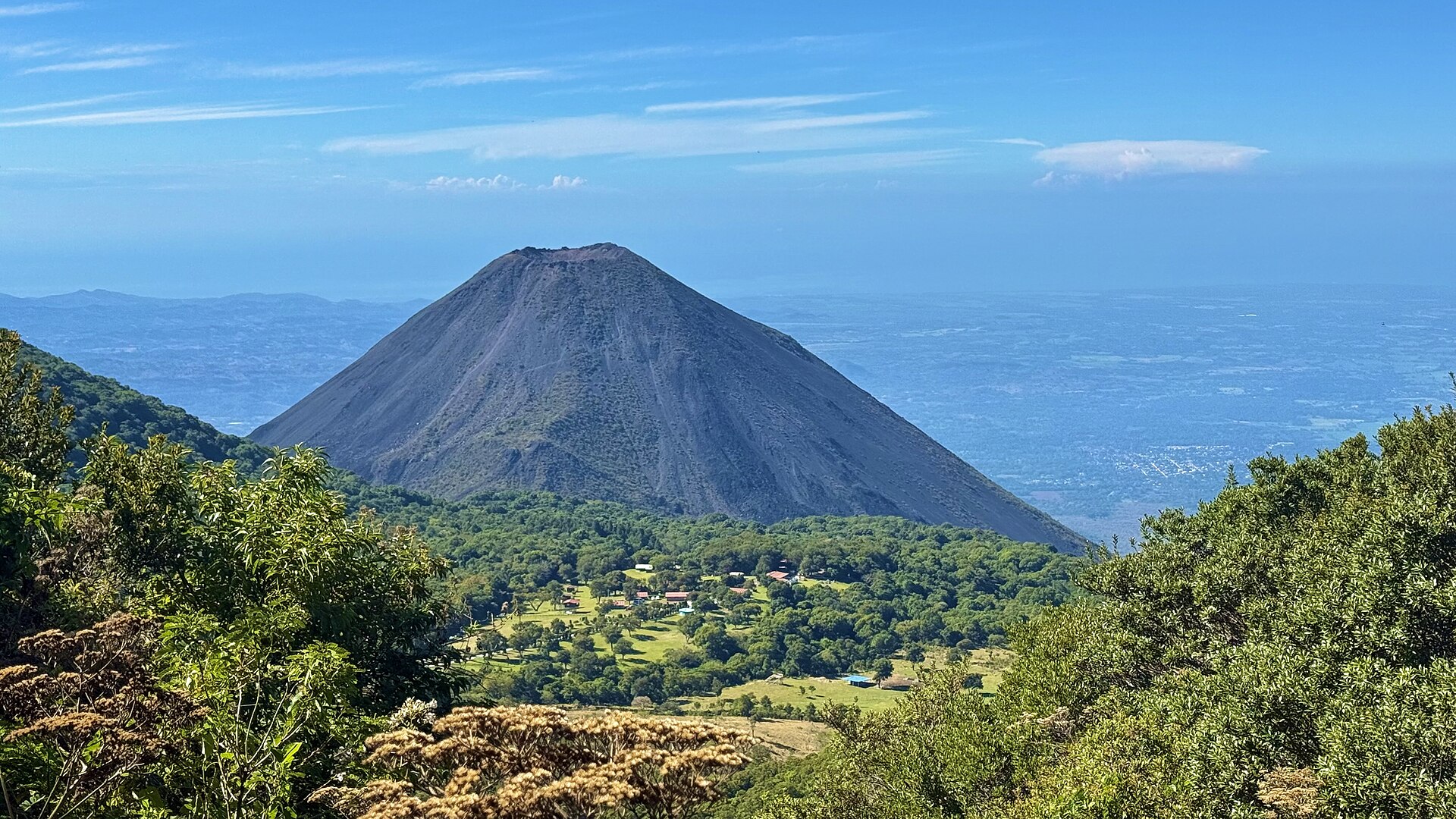
Born in 1770, Izalco is one of the youngest volcanoes in the Americas — and it spent nearly two centuries erupting almost continuously, glowing bright enough at night to guide ships on the Pacific. Sailors called it the “Lighthouse of the Pacific.” Today the 1,950-meter cone is quiet (its last eruption was in 1966), but the hike is anything but calm: a demanding 5.5-kilometer out-and-back climb of 695 meters through a lunar landscape of black volcanic rock and hissing fumaroles. From the top, the views of Santa Ana and Lake Coatepeque are spectacular. Bring your sturdiest boots — this one is challenging. For a guided option, this Izalco volcano trek pairs the climb with a stop at Lake Coatepeque.
San Salvador Volcano (Quezaltepec): The Capital’s Backdrop
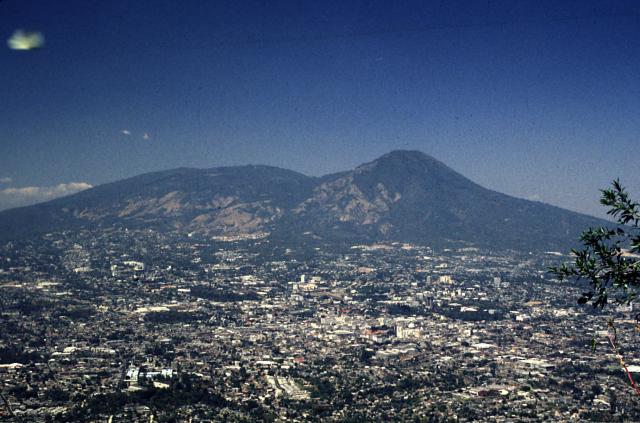
Rising 1,893 meters directly behind the capital city, the San Salvador Volcano dominates the skyline of San Salvador. Its broad crater, known as El Boquerón (“the big mouth”), is now a national park where you can walk the rim trail and look down into the forested crater floor. It’s the easiest major volcano to visit — minutes from the city — and on clear days the views stretch from the city to the Pacific coast. The volcano last erupted in 1917. Short on time? This adrenaline-filled morning tour departs from San Salvador.
San Miguel (Chaparrastique): The Restless Giant
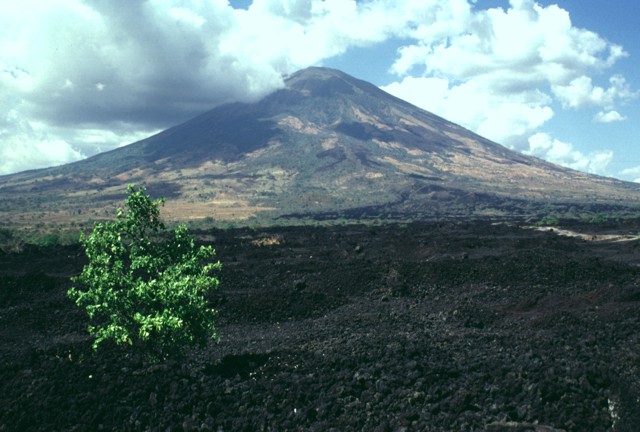
At 2,130 meters, San Miguel — also called Chaparrastique — is one of El Salvador’s most active volcanoes, with its most recent eruption in 2022. Its near-perfect cone rises more than 2,000 meters above the farmlands of the Pacific coastal plain, about 11 kilometers from the city of San Miguel. Because it’s under constant surveillance, visits are limited to hiking and summit climbs with local guidance — a raw, humbling encounter with a volcano that’s very much alive. Join a guided Chaparrastique volcano hike with local experts.
San Vicente (Chichontepec): The Mountain of Two Breasts
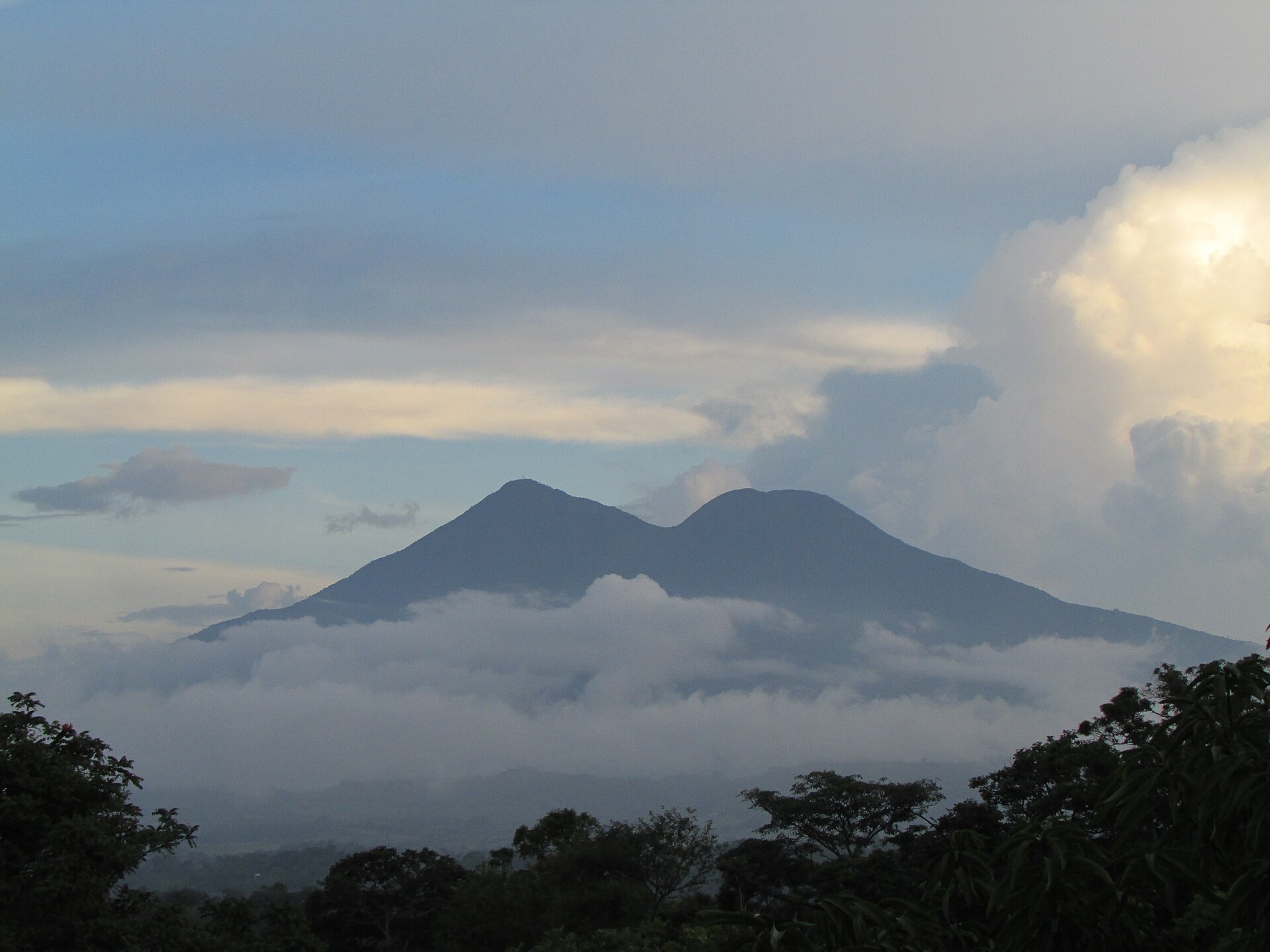
El Salvador’s second-highest volcano at 2,182 meters, San Vicente is known by its Nahuat name Chichontepec, “the mountain of the two breasts,” for its distinctive double summit. It’s an inactive stratovolcano cloaked in dense jungle, with hot springs and fumaroles — the Infiernillos — steaming on its flanks. Hikers can climb to the twin summits and soak in the thermal waters, about 65 kilometers from San Salvador. Experienced hikers can take on the San Vicente high-performance trail with a guide.
Conchagua: The Flying Jaguar
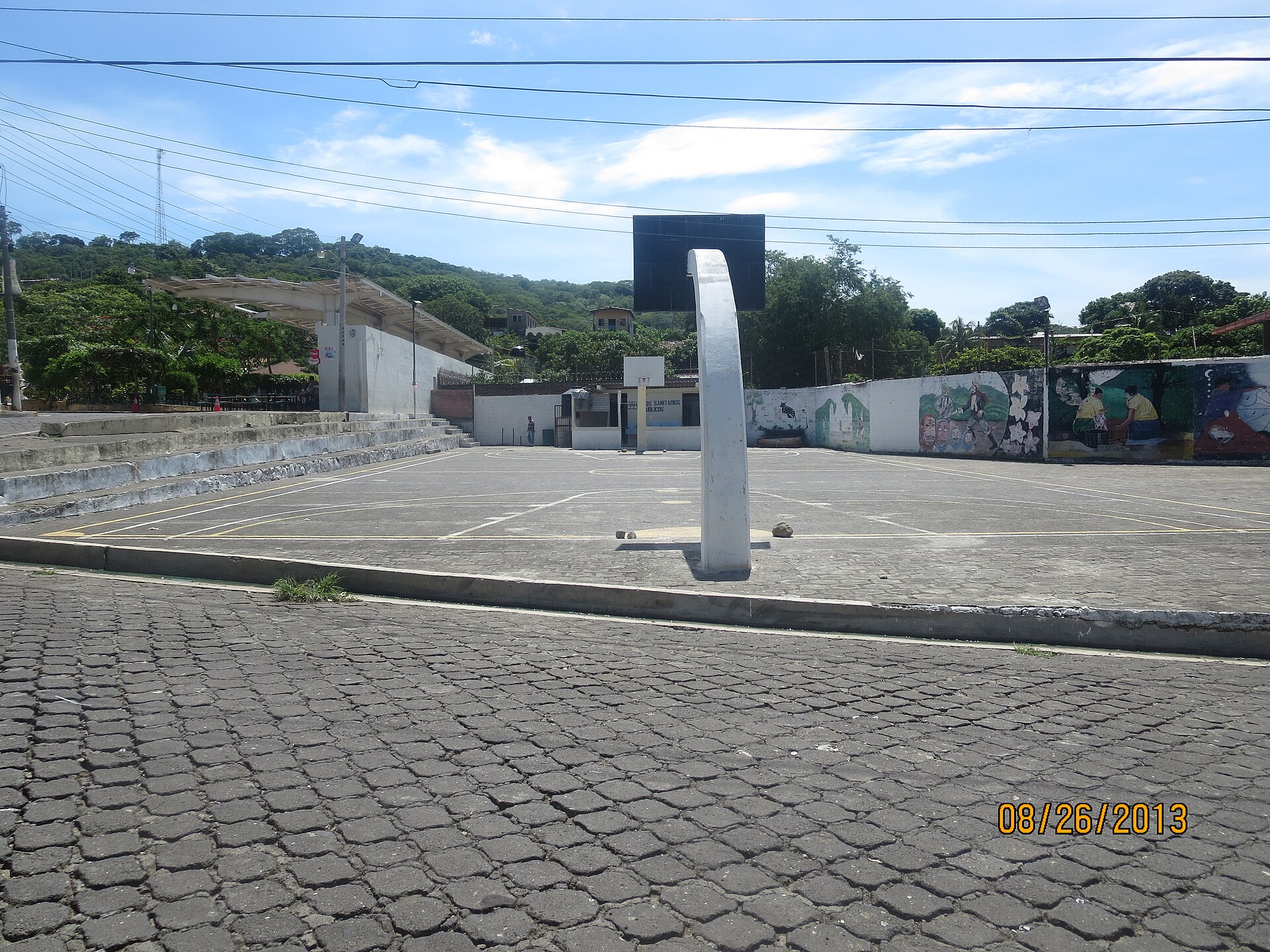
In the far east, overlooking the Gulf of Fonseca, Conchagua is a complex of two overlapping stratovolcanoes (Ocotal and Cerro de las Banderas) reaching 1,225 meters. Its Lenca name means “Flying Jaguar,” and indigenous legend holds that the goddess Comizahual’s spirit rests here. Unlike the restless western volcanoes, Conchagua is inactive and open — you can camp on the mountain, hike its forested slopes, and watch the sun rise over the gulf from the Mirador Espíritu de la Montaña lookout. It’s one of El Salvador’s most magical and least-visited peaks. Pair the lookout with volcano nature trails, birding, and camping on this guided mountain outing.
Cerro Verde: The Quiet Green One
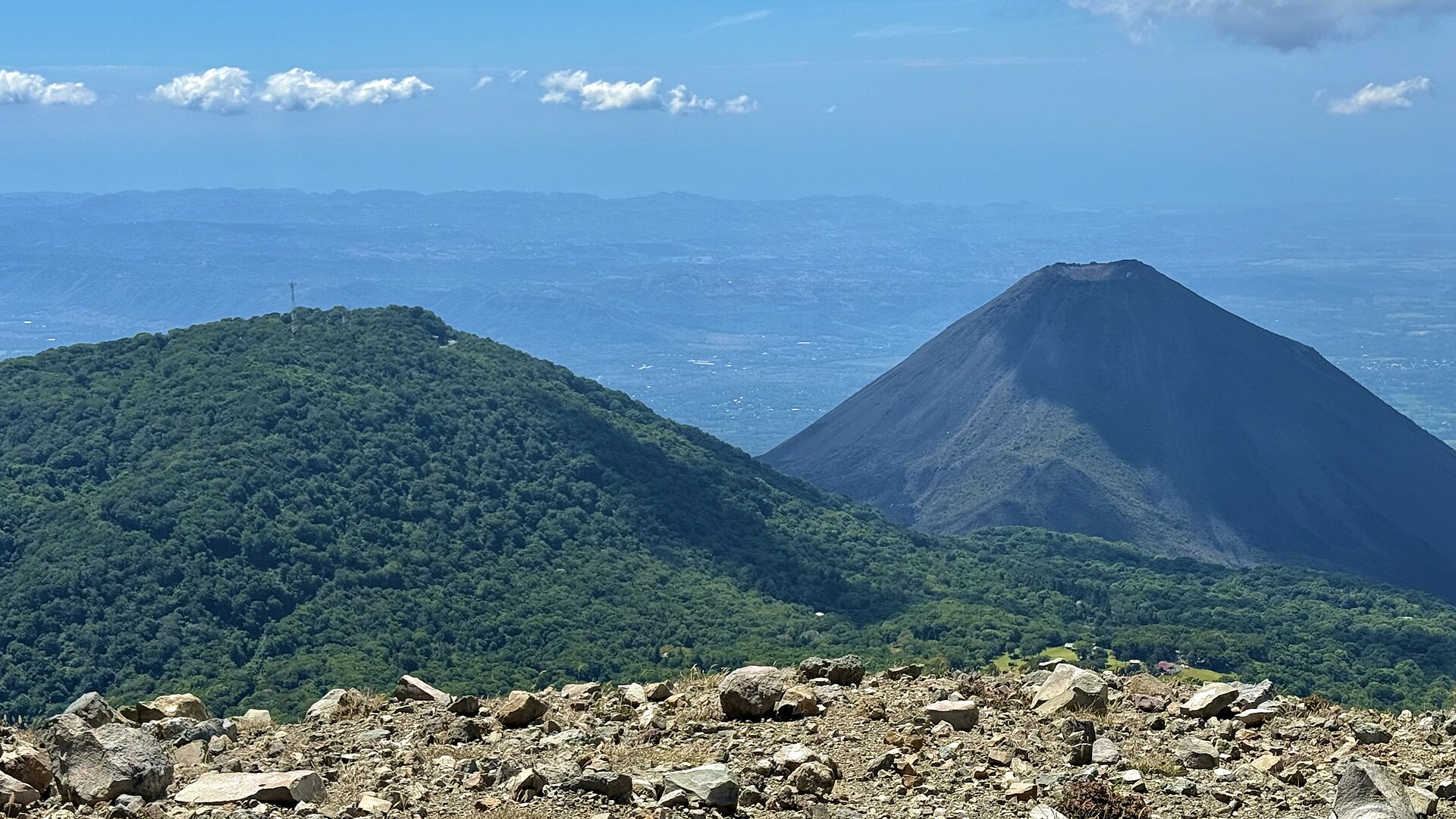
The extinct Cerro Verde, wrapped in cool cloud forest, completes the trio of Los Volcanes National Park alongside Santa Ana and Izalco. Its trails are gentler and shaded, rich with orchids and birdlife — a peaceful contrast to the stark black cone of Izalco next door. You can also visit Cerro Verde on a shared tour from San Salvador that includes the Mayan sites.
The Volcano Trilogy Challenge
Fit hikers often tackle the “volcano trilogy” — Santa Ana’s sunrise summit and Izalco’s demanding cone, sometimes in a single day. Standing on Izalco after already summiting Santa Ana is a true Central American bucket-list accomplishment.
Practical Tips for Hiking El Salvador’s Volcanoes
- Go in the dry season. November through April is ideal, with January to March offering the clearest trail conditions.
- Hire a certified guide. Trails in Los Volcanes National Park are only accessible with one — and local knowledge keeps you safe everywhere else too.
- Start early. Sunrise hikes beat the heat and the clouds, and the crater light at dawn is unforgettable.
- Gear up properly. Sturdy hiking boots (essential on Izalco’s volcanic rock), sunscreen, a hat, a light jacket for the summit, and plenty of water.
- Cool off after. A swim in the crater-formed Lake Coatepeque after the Santa Ana descent is a Salvadoran tradition worth adopting.
El Salvador may be small, but its volcanoes are anything but. From turquoise crater lakes to a cone that once guided ships, this is a country best experienced with your boots on volcanic soil and your eyes on the horizon.