
Bangkok can fill a week on its own — temples, markets, rooftop bars, more street food than anyone can finish. But some of the best days of a Thailand trip start with leaving the city. Within a few hours of the capital you can walk through the ruined temples of a former Siamese capital, watch a train squeeze through the middle of a working market, and stand on one of the world’s most famous railway bridges before swimming under a seven-tiered waterfall.
Never forget a thing before you fly. My free 8-page Travel Planning Checklist walks you through the whole trip — 6 planning timelines, 36 checks, from booking windows to travel-day basics. One email, no spam, unsubscribe anytime.
These are the three day trips I recommend to almost everyone, and they suit very different moods. Ayutthaya is the easy history day. The railway and floating markets are the early-start, only-in-Thailand day. Kanchanaburi is the long, moving, swim-at-the-end day. Timing matters for all three: Thailand’s cool, dry season from November to February is the most comfortable window for central Thailand, and in those months the good small-group tours sell out, so book a few days ahead. Still sorting out your base? Start with my Bangkok where-to-stay guide and pick a hotel near a BTS or MRT station — every trip below starts early.
Disclosure: This post contains affiliate links. If you book through one of these links, I may earn a commission at no extra cost to you.
At a Glance: Which Bangkok Day Trip Fits Your Day?
- Ayutthaya: about 80 km north, roughly 1.5 hours each way. Best for history lovers and first-timers who want a full but unhurried day.
- Maeklong Railway Market + Damnoen Saduak Floating Market: southwest of the city, 7–8 hours combined. Best for photographers, food lovers, and anyone who wants the classic “only in Thailand” morning.
- Kanchanaburi + Erawan Falls: about 130 km west, roughly 2.5–3 hours each way, around 12 hours door to door. Best for wartime history plus a waterfall swim in one long day.
1. Ayutthaya: The Ruined Capital (Best for History)
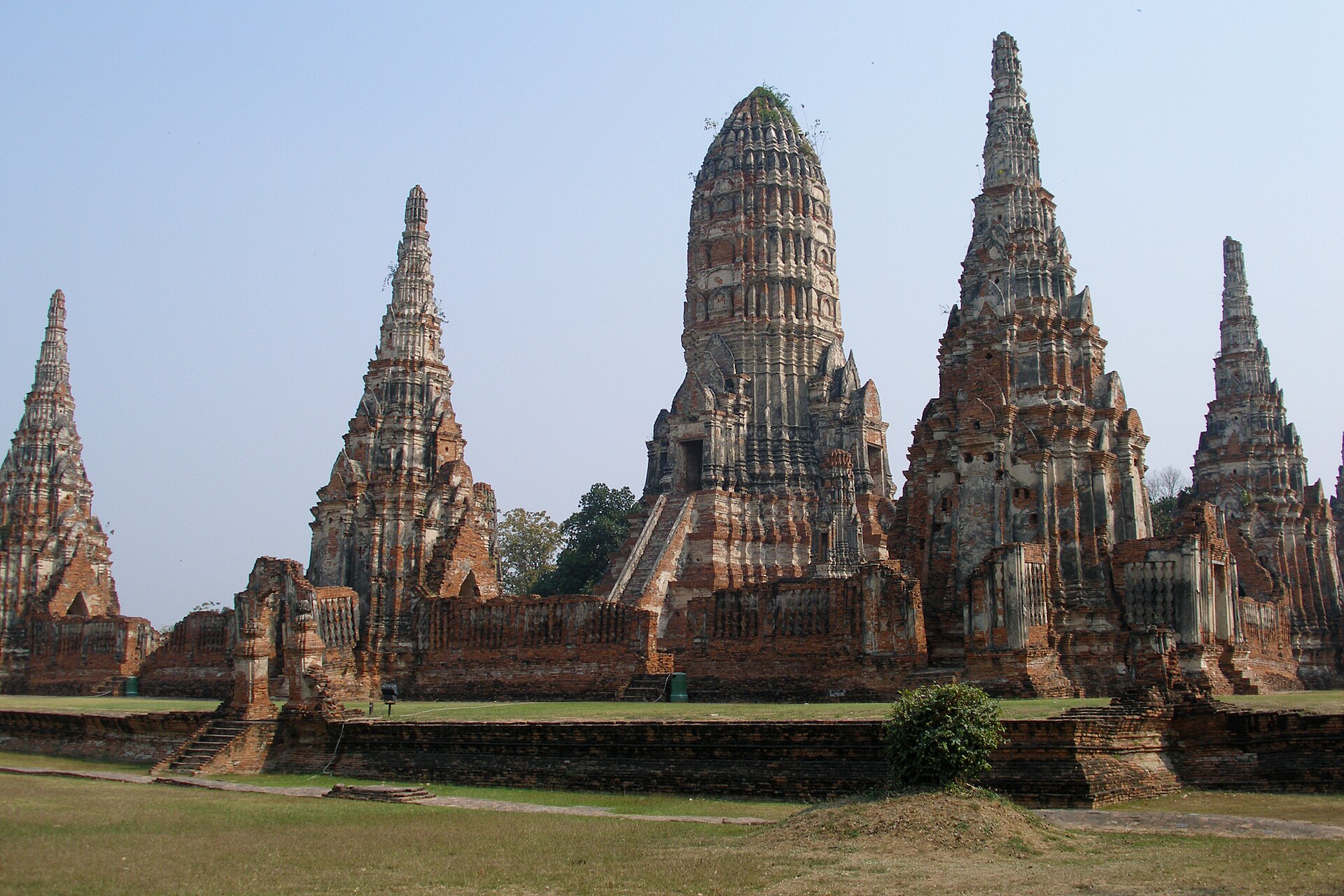
Ayutthaya was the capital of the Kingdom of Siam from 1350 until Burmese forces destroyed it in 1767, and its ruined temples — now a UNESCO World Heritage Site, inscribed in 1991 — sit on an island wrapped by rivers about 80 km north of Bangkok. It is the closest and easiest of the three trips, and the one I would pick if you only have one spare day and any interest at all in Thai history.
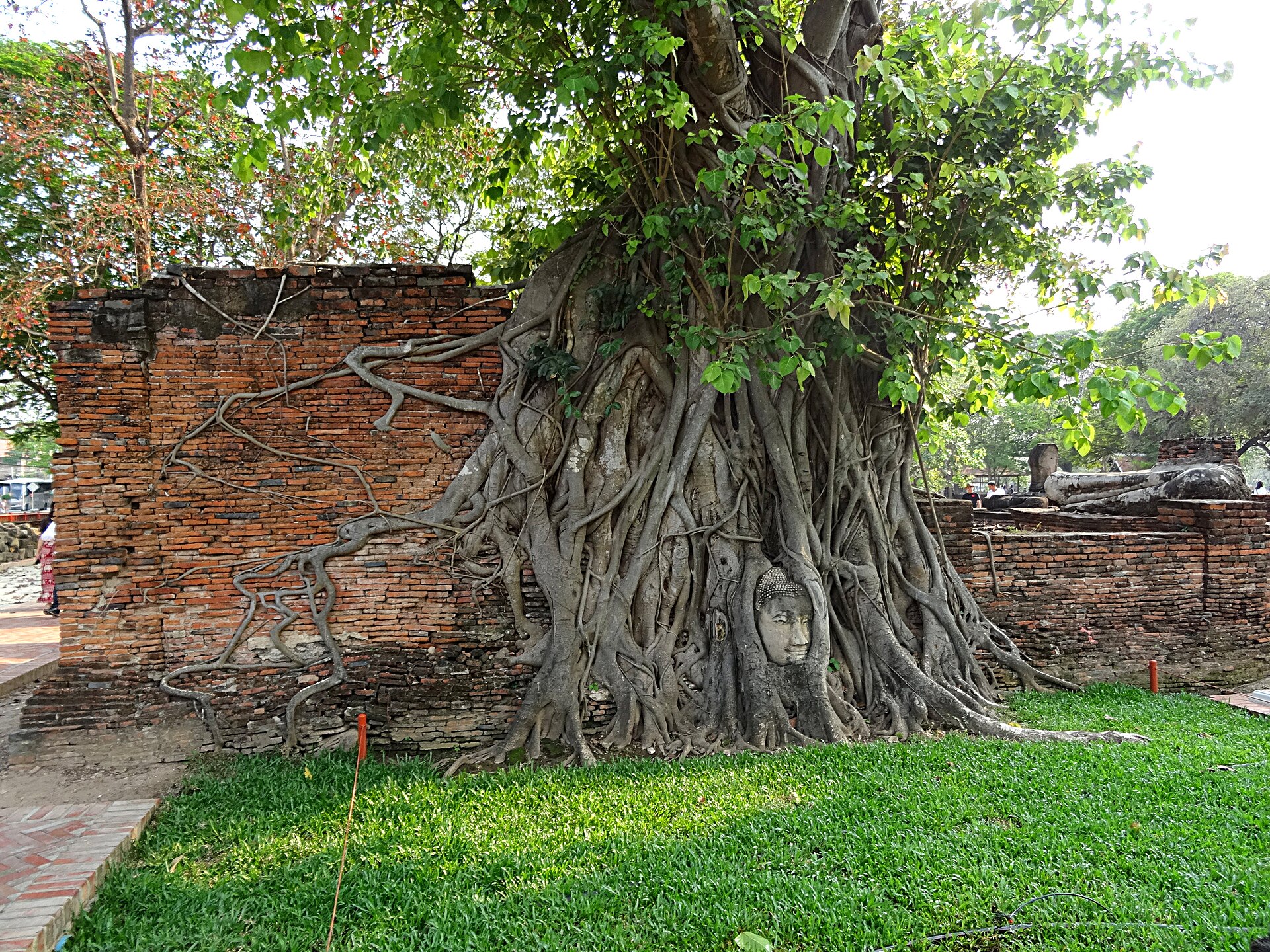
A good Ayutthaya day covers four or five temples without rushing. Start at Wat Mahathat, famous for the sandstone Buddha head gently held in the roots of a banyan tree — arrive early and you may have it nearly to yourself. Continue to Wat Phra Si Sanphet, the former royal temple in the old palace grounds, known for its three bell-shaped chedis that held the ashes of Ayutthaya kings. Finish at riverside Wat Chaiwatthanaram, built in 1630 with strong Khmer influence; its central prang photographs beautifully in late-afternoon light, so many tours save it for last. Most temples open around 8:00 AM and close around 6:00 PM. Individual temples charge a small fee, and a six-temple combo pass (300 THB at last check) is good value if you go independently.
You can do Ayutthaya by train or minivan on your own, but a guided tour is better value than it looks: the temples are spread out, the stories are half the experience, and the better tours bundle entry fees and lunch. My pick is the Ayutthaya temples guided tour with lunch — 4.7 stars from more than 12,000 reviews, about 7 hours, entrance fees and a buffet lunch included on the standard option, free cancellation up to 24 hours ahead, from around $33 per person.
2. Maeklong Railway Market + Damnoen Saduak Floating Market (Best for “Only in Thailand”)
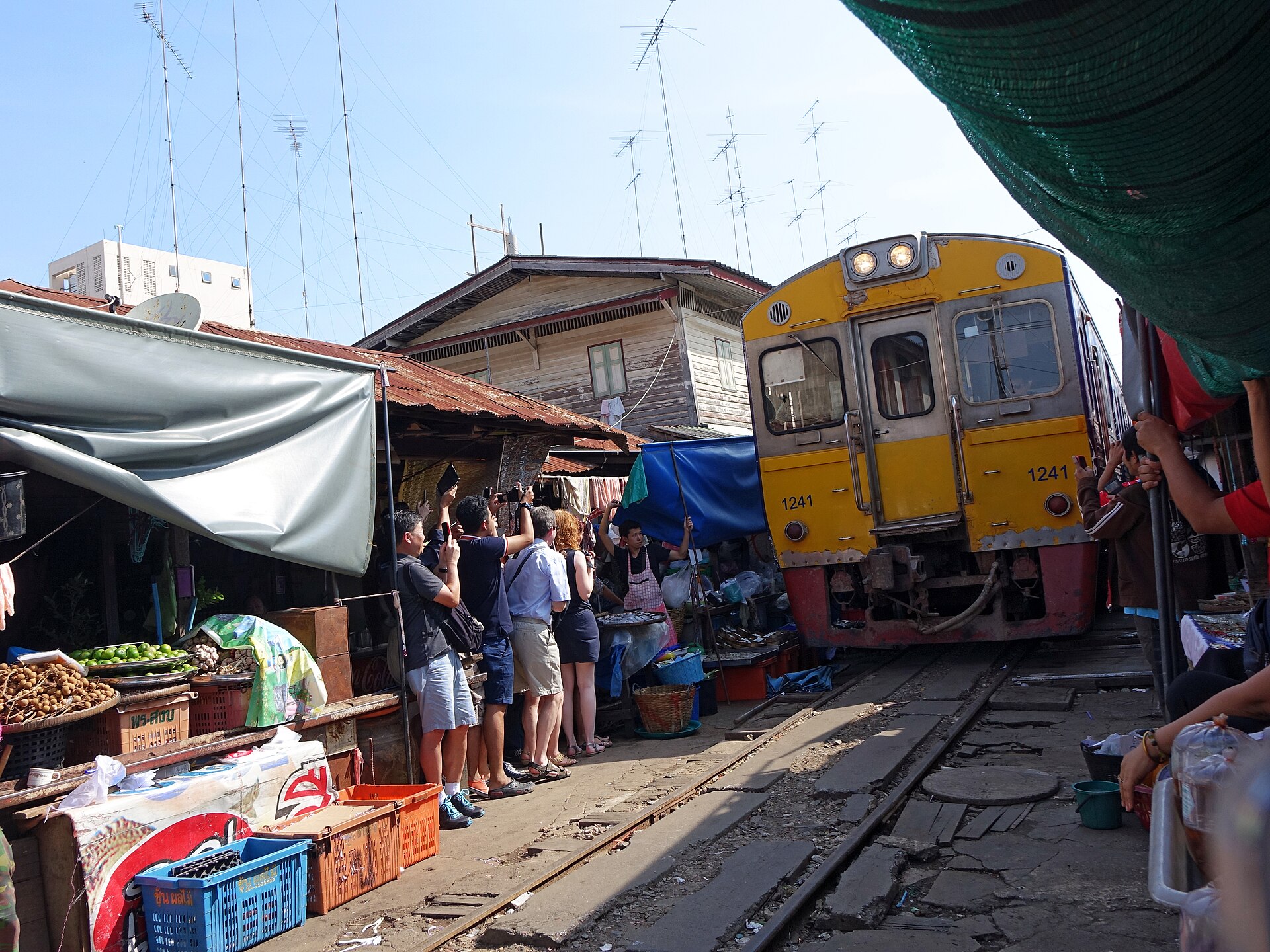
This combined trip is the one people describe at dinner parties for years. Maeklong Railway Market, about 70–80 km southwest of Bangkok, is a working fresh market built directly along an active railway line. Several times a day a train approaches, vendors calmly fold back their awnings and pull their crates clear of the tracks, the train passes within inches of the stalls — and minutes later the market has flowed back over the rails as if nothing happened. Locals call it Talat Rom Hup, the “umbrella pull-down market.” Published train times vary and change, so treat any timetable as an estimate and arrive 20–30 minutes before an expected pass. Entry is free; the market runs roughly 6:00 AM to 6:00 PM.
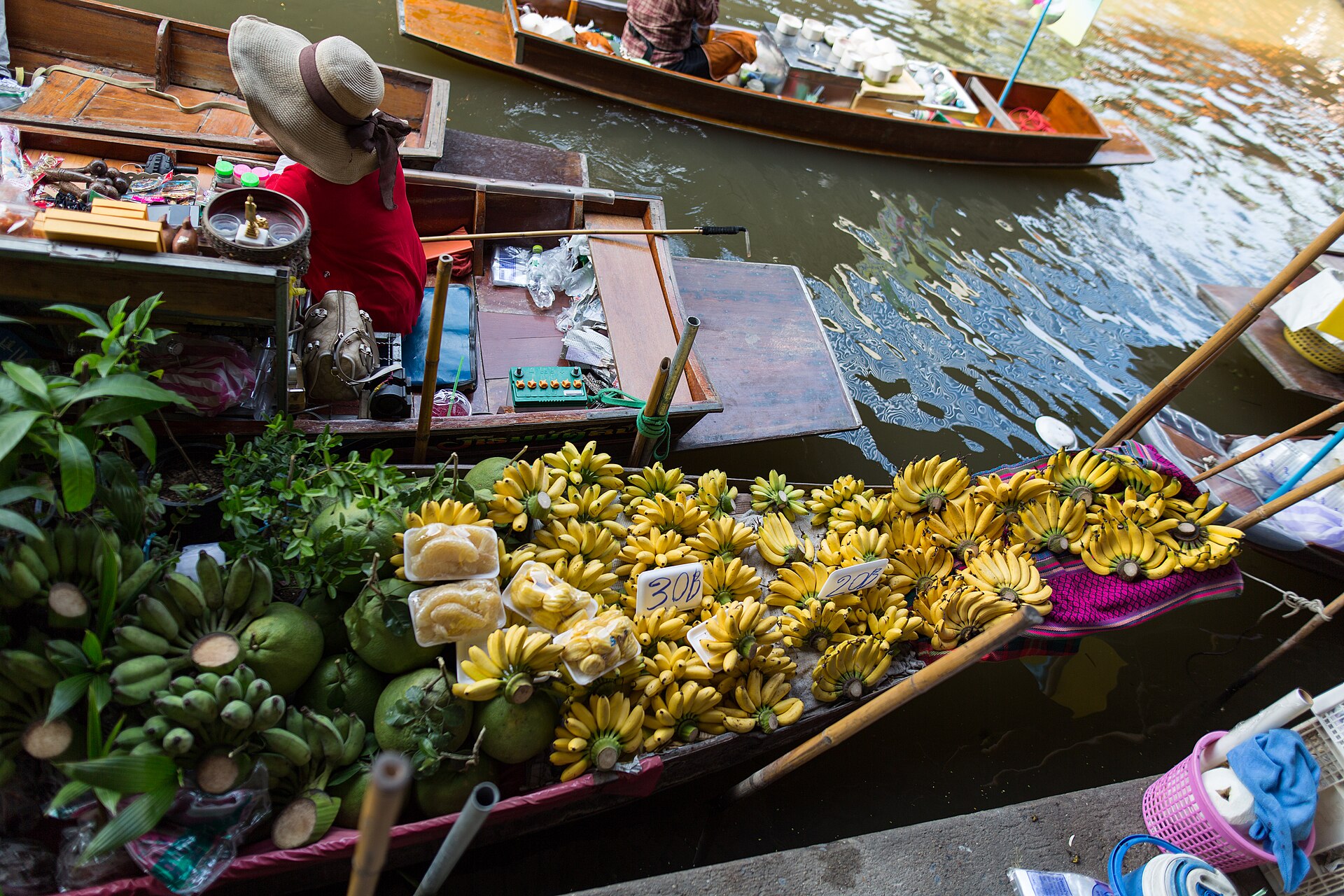
A short drive away, Damnoen Saduak Floating Market in Ratchaburi Province, about 100 km from Bangkok, is Thailand’s most famous floating market: vendors in wooden boats piled with fruit, flowers, and noodle soup, paddling narrow canals. The honest thing to know is that this is a morning-only experience — peak activity is roughly 7:00–9:30 AM and the canals quieten by late morning, which is why tours leave Bangkok around 6:30 AM. If a paddle-boat ride is not included in your tour, expect to pay roughly 150–300 THB per person for one; agree the price before you step in.
Because the two markets sit in the same direction and both reward an early start, they are almost always sold as one combined trip of 7–8 hours. My pick is the floating market and train market experience on Viator — 4.9 stars from more than 3,600 reviews, about 8.5 hours, from around $24. It includes the detail that makes the day: you ride the train from Ban Laem station into Maeklong itself, watching the market part around you from the carriage, plus the boat ride at Damnoen Saduak, an English-speaking guide, and free cancellation up to 24 hours ahead.
3. Kanchanaburi and Erawan Falls: History, Then a Swim (Best Long Day)
Kanchanaburi, about 130 km west of Bangkok, asks more of you — roughly 2.5–3 hours on the road each way — and gives more back. This is the day for travelers who want their sightseeing to mean something, and who like a waterfall at the end of it.
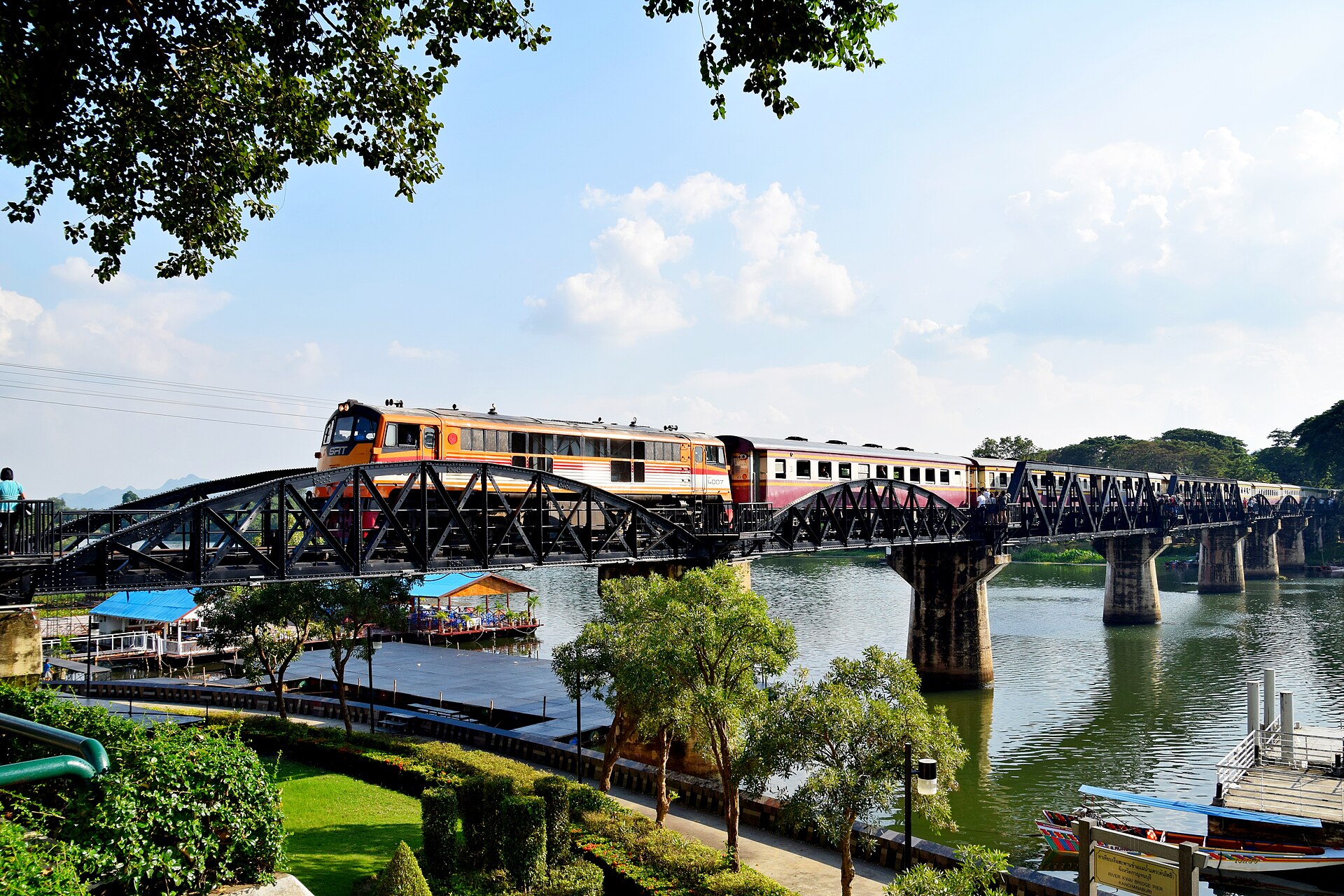
The town is known worldwide for the Bridge on the River Kwai, built in 1942–43 as part of the Thailand–Burma “Death Railway,” constructed by Allied prisoners of war and Asian laborers, many of whom died in brutal conditions. The original bridge was bombed in 1945; today’s is a post-war reconstruction keeping original curved spans alongside replacement spans. Trains still cross it, and visitors can walk across — entry is free. Pair it with the JEATH War Museum, founded in 1977 where the Khwae Yai and Khwae Noi rivers meet. JEATH stands for the nationalities involved — Japanese, English, Australian, American, Thai, and Dutch — and its reconstructed bamboo huts and prisoners’ own photographs and drawings make the history personal in a way a bridge alone cannot.
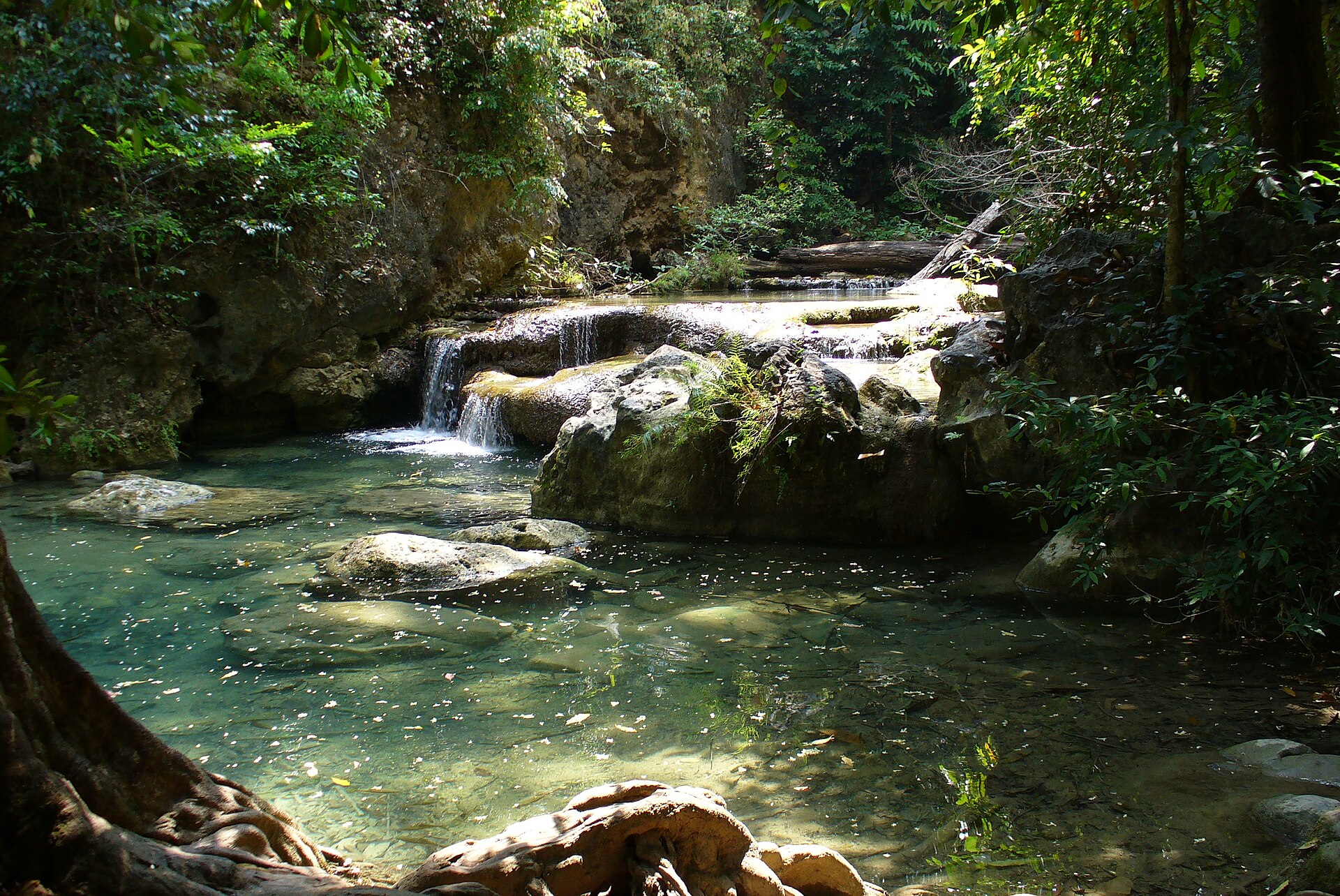
The afternoon belongs to Erawan National Park, about an hour northwest of Kanchanaburi town, and its seven-tiered Erawan Falls — named for the three-headed white elephant of Hindu mythology, which the top tier is said to resemble. Turquoise pools stack up a roughly 4 km round-trip trail; allow about 3 hours without swimming, 4 with. The park opens 8:00 AM–4:30 PM (upper tiers close at 3:30 PM), foreign-adult entry is 300 THB, and life jackets — mandatory for swimming — rent for 20 THB. No food or drinks are allowed beyond the second tier, which keeps the upper pools remarkably clean.
Doing all of this independently in one day means stringing together buses, songthaews, and park timings with no slack. The tour I recommend removes the friction: the Kanchanaburi full-day tour to the River Kwai and Erawan Falls — 4.9 stars, no more than 12 travelers, about 12 hours, from around $84, with JEATH Museum and Erawan entrance fees and lunch included, and free cancellation up to 24 hours ahead. It leaves early (6:30–7:15 AM), so plan a quiet evening before, not after.
Practical Tips Before You Book
- Go in the cool season if you can. November to February brings the lowest humidity and the most comfortable temple-hopping weather in central Thailand. March to May is intensely hot; June to October brings heavy rain, though Erawan Falls is at its fullest late in the rainy season.
- Respect the early starts. Every trip here leaves between 6:30 and 7:15 AM. That is not upsell — it is how you beat the heat, the crowds, and the floating market’s short morning window.
- Dress for temples. Ayutthaya’s temples and the JEATH museum grounds call for covered shoulders and knees; carry a light scarf or sarong in your daypack.
- Bring small baht notes. Boat rides, life jackets, market snacks, and the odd entry fee are all cash-and-small-bills territory.
- Choose one, do it properly. First trip and short on time? Ayutthaya. Traveling with kids or a camera? The markets. Fit, curious, and happy with a long day? Kanchanaburi. Stacking two of these into one day is the one mistake I would skip — each deserves its own morning.
Whichever you choose, a day outside Bangkok changes how the city feels when you return in the evening — smaller, friendlier, easier to read. If you are building out the rest of a Thailand trip, my Bangkok street-food guide will help you eat very well between day trips, and the Bangkok where-to-stay guide will put you in the right neighborhood for those early pickups. Safe travels — and set the alarm.