
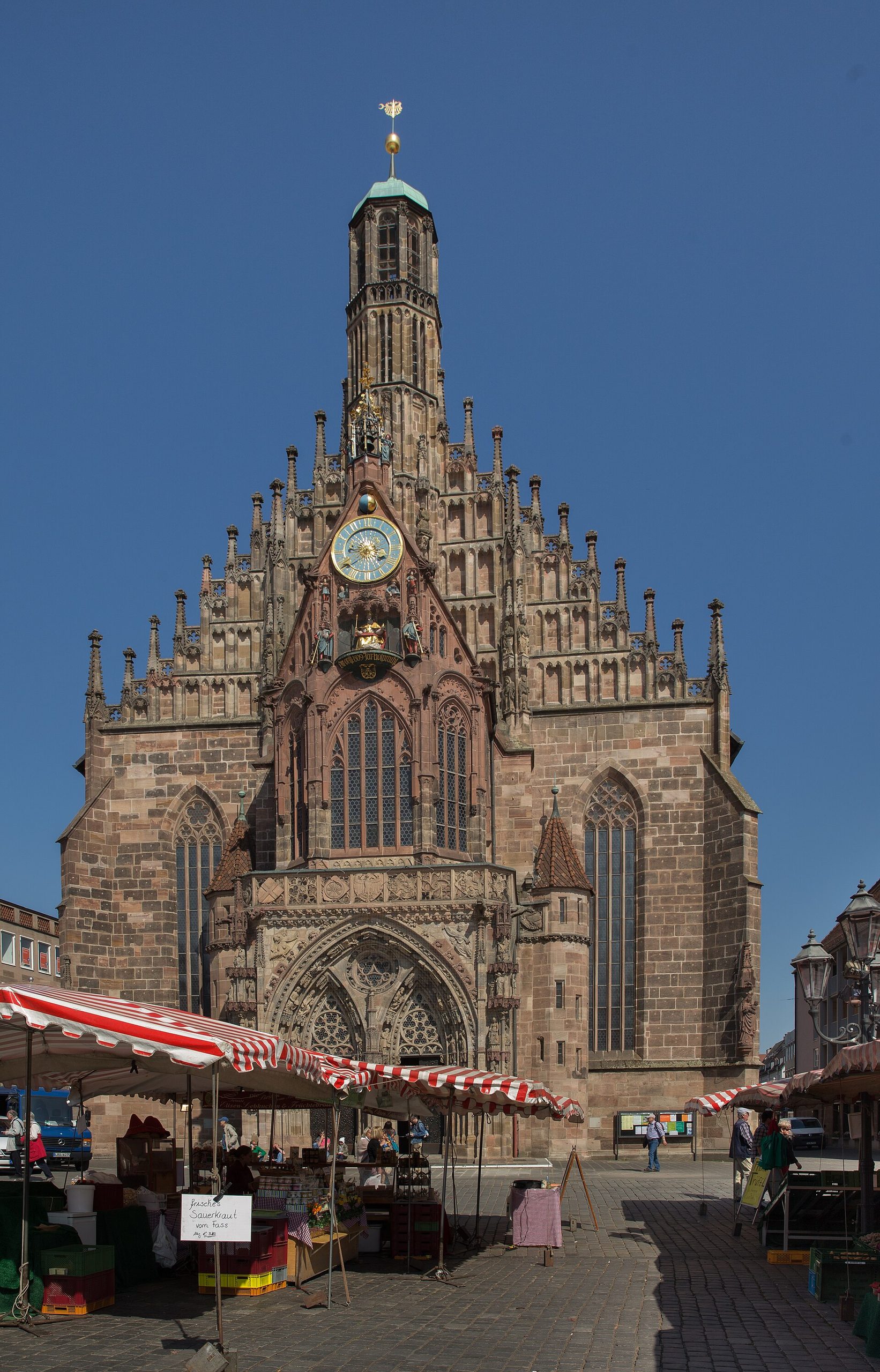
Nuremberg does Christmas like nowhere else in Germany. Its Christkindlesmarkt opened yesterday evening — Friday, November 27 — when the Christkind delivered her prologue from the balcony of the Frauenkirche and around 180 red-and-white stalls lit up the Hauptmarkt below her. It is Germany’s most famous Christmas market, and the one every other market gets measured against. This guide covers everything a first-timer needs: the 2026 dates and hours, the opening ceremony, the three markets hiding inside one trip, what to eat and buy, a walking route for your first evening, and the practical tips that make the difference between a magical visit and a crowded, cold one.
Never forget a thing before you fly. My free 8-page Travel Planning Checklist walks you through the whole trip — 6 planning timelines, 36 checks, from booking windows to travel-day basics. One email, no spam, unsubscribe anytime.
Disclosure: This post contains affiliate links. If you book through one of these links, I may earn a commission at no extra cost to you.
The essentials: dates, hours, and where it all happens
Nuremberg’s Christkindlesmarkt runs from Friday, November 27 to Thursday, December 24, 2026, on the Hauptmarkt, the main square of the walled Old Town. Stalls are open daily from 10 am to 9 pm; on opening day they stay open until 10 pm, and on Christmas Eve they close at 2 pm. Entry is free, as it always has been.
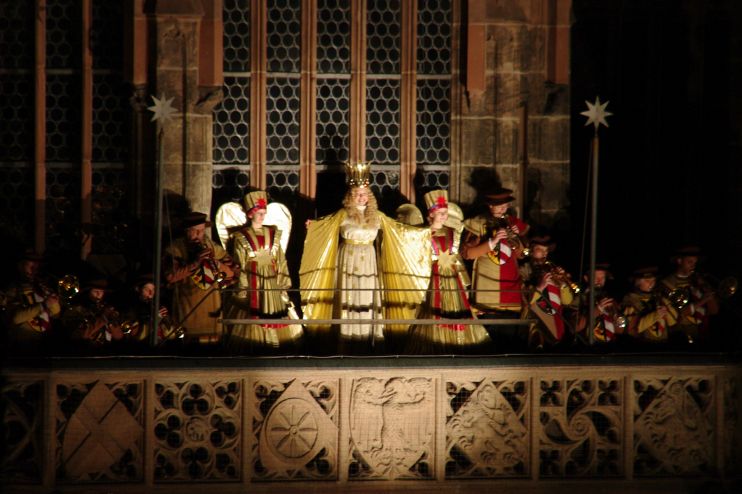
The market opened yesterday evening with the ceremony that makes Nuremberg different from every other Christmas market in Germany: at 5:30 pm, the Christkind — a young woman in a gold-and-white gown and crown, chosen by the city every two years — stepped onto the gallery of the Frauenkirche and delivered the opening prologue to the crowd below. For 2025 and 2026 the Christkind is Nora Falk. She returns to the markets through December, appearing at the children’s market and the main market on Tuesday to Friday afternoons, so even if you missed the opening, you can still catch her.
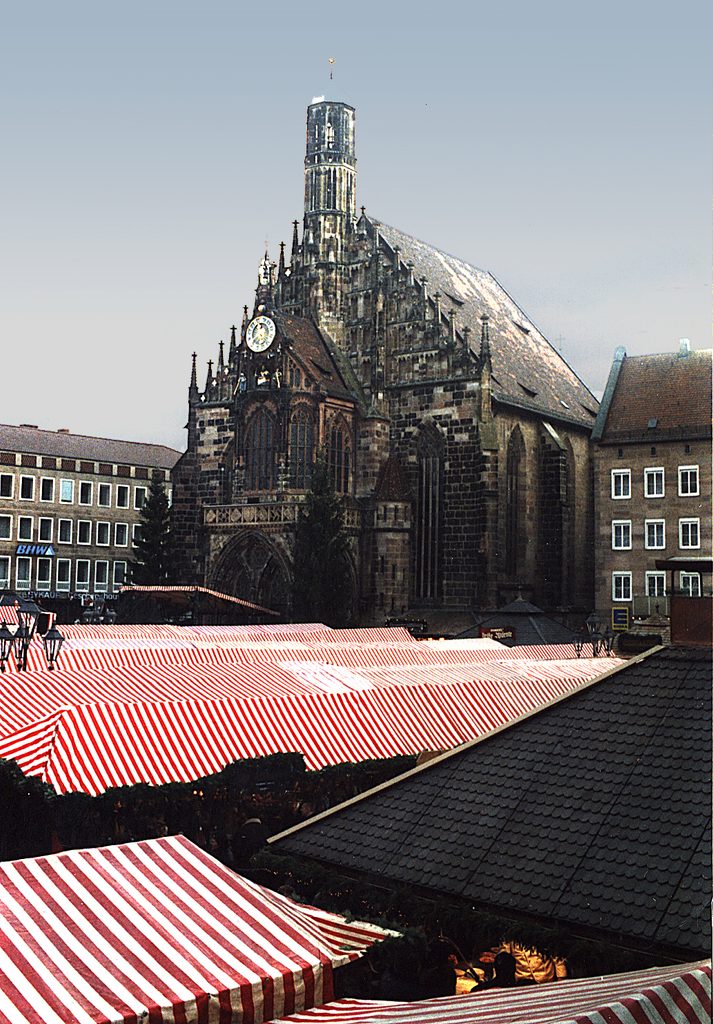
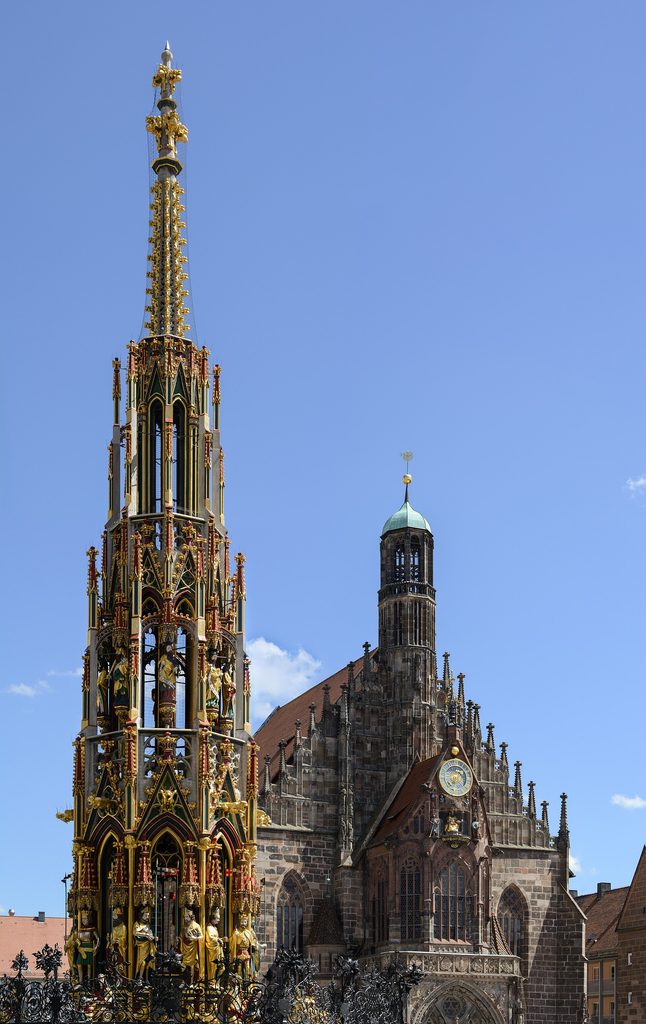
What you are walking into is one of the oldest Christmas markets in the world, with roots reaching back to the 16th century. Around 180 wooden stalls with red-and-white striped roofs fill the Hauptmarkt, framed by the Frauenkirche on one side, the Schöner Brunnen fountain in the corner, and the Gothic spires of St. Sebald church just to the north. It is the picture most people have in mind when they say “German Christmas market” — and it earns the reputation.
Three markets in one trip
First-timers often don’t realize Nuremberg is really three markets side by side, all within a few minutes’ walk of each other in the Old Town. Plan for all three and you get a much fuller day than the main square alone.
The Christkindlesmarkt on the Hauptmarkt is the famous one: handmade ornaments, nutcrackers, wooden toys, and food stalls, all under the Frauenkirche. This is where you spend the bulk of your time, and where the evening light show — the square lit up after dark — is at its best.
The Kinderweihnacht, the children’s Christmas market on Hans-Sachs-Platz, a short walk east of the Hauptmarkt, runs from November 27 to December 30 — it is the only part of the market that stays open after Christmas, reopening December 26 to 30 from 11 am to 8 pm. Expect a nostalgic carousel, a small Ferris wheel, a steam train, and hands-on stalls where kids can bake and make things. If you are traveling with children, start here: it is far less overwhelming than the main square at peak time.
The Markt der Partnerstädte, the Sister Cities’ market on Rathausplatz between the town hall and St. Sebald church, runs until December 23. Stalls from Nuremberg’s twin towns around the world sell food and crafts you won’t find on the Hauptmarkt — it is the quietest and most surprising corner of the whole event, and a good place to escape the main-square crowds.
While you are in the Old Town, walk south to the Handwerkerhof, the Craftsmen’s Courtyard by the Königstor gate, where artisans work in tiny half-timbered workshops — potters, glassblowers, and goldsmiths selling the kind of gifts that don’t come from a factory.
What to eat and drink
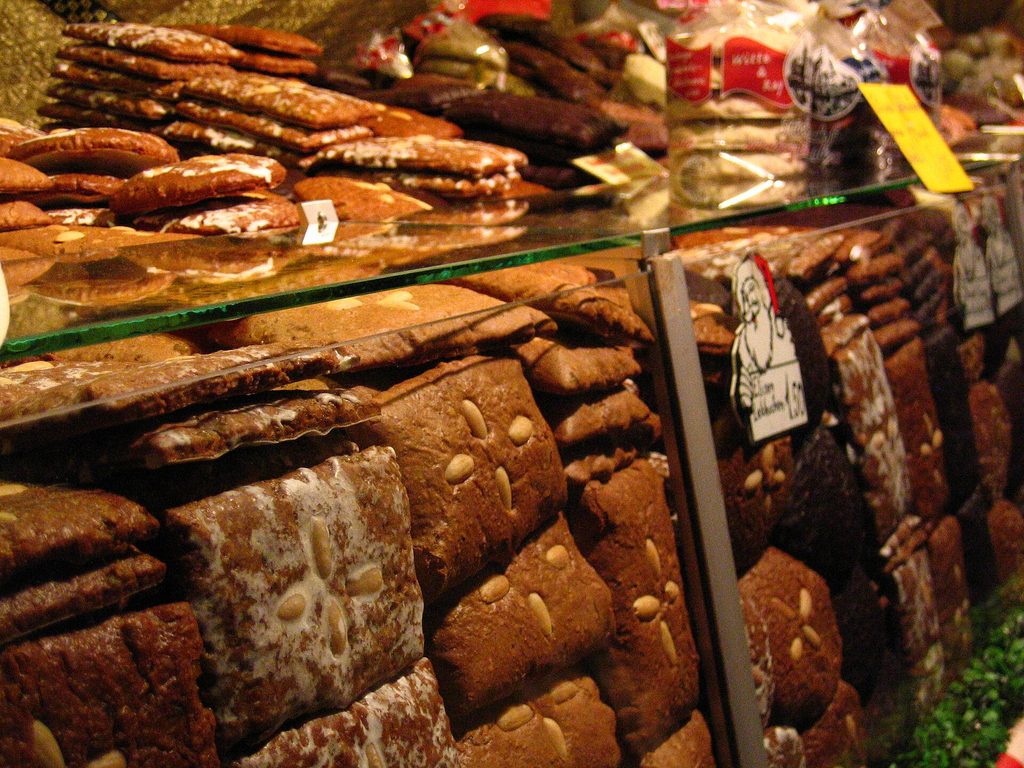
Nuremberg’s food is half the reason to come, and the tasting order matters. Start with the Nürnberger Lebkuchen, the soft, spiced gingerbread the city is famous for — the best is Elisenlebkuchen, made with a high proportion of nuts and almost no flour, sold in decorative tins that make the easiest souvenir in the market. Then the Nürnberger Rostbratwürste: tiny grilled sausages, traditionally served three in a roll — “Drei im Weckla” — with mustard. They are small enough that you can eat them standing at a stall and still have room for the rest.
To drink, order a Glühwein and expect a small deposit on the mug — the Pfand system means you pay a few euros extra, refunded when you return the mug, or you keep it, since each year’s design is a collectible. If you are feeling brave, try a Feuerzangenbowle: mulled wine crowned with a rum-soaked sugarloaf that is set alight and left to drip into the cup. Roasted almonds, candied apples, and hot chocolate round out the classics.
If you want a guide to do the choosing, this 2-hour Christmas City culinary walking tour (4.5 stars, from $57.95) walks the markets with a local guide and includes tastings of the food and drinks above — a smart first-evening move, since you learn which stalls are worth returning to.
What to buy
Build your shopping around the three things Nuremberg does better than anywhere else. First, Lebkuchen in a decorative tin — it travels well and keeps for weeks. Second, a Zwetschgenmännle, the little figure made from dried plums, nuts, and felt that has been the market’s mascot for generations; it is unbreakable, light, and unmistakably Nuremberg. Third, a Rauschgoldengel, the gold-foil angel that is the market’s emblem, sold in sizes from tree-topper to tiny ornament. Handmade wooden ornaments and nutcrackers fill the craft stalls between the food stands, and the Sister Cities’ market is where you find the gifts nobody else back home will have.
Two practical notes: carry some cash, because the smallest craft stalls are smoother with euros than with cards, and bring an extra tote bag. You will use it.
A first-timer’s walking route
Here is the loop I would walk on a first evening, when the lights are on and the square looks its best. Start at the Hauptmarkt and take a full lap of the stalls before buying anything — the craft stalls at the edges are the best ones, and prices vary. Look up at the Frauenkirche: its mechanical clock, the Männleinlaufen, puts on a small parade of figures at noon each day. Find the Schöner Brunnen, the ornate 14th-century fountain in the corner of the square, and spin one of its brass rings — local tradition says it brings good luck.
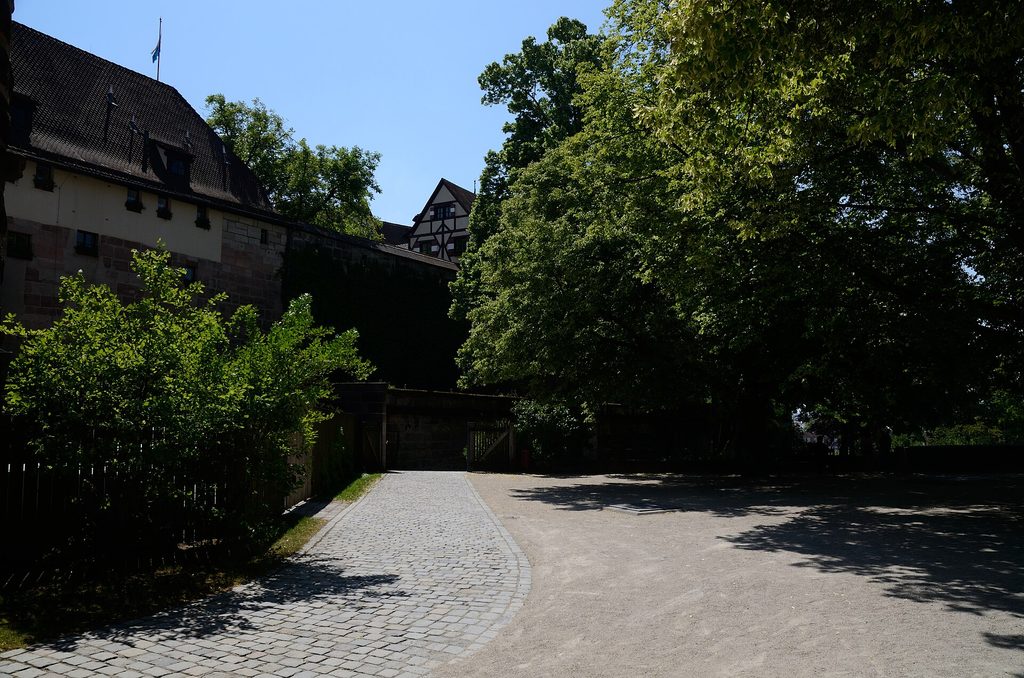
From there, walk the few steps to St. Sebald church, then up through the castle quarter to the Kaiserburg, Nuremberg’s imperial castle, for the view back over the rooftops and the lit market below. It is the best photograph in the city and the clearest sense of how compact the walled Old Town is — about a 20-minute walk end to end. Come back down through Weißgerbergasse, the curve of colorful half-timbered houses that survived the war, and finish at the Kinderweihnacht or the Sister Cities’ market, whichever you haven’t seen yet.
For the stories behind the stalls — the history of the market, the Christkind tradition, and the crafts — this private 90-minute Christmas market walking tour (4.7 stars, from $221 for your group) pairs you with a local guide who can shape the walk around your group, including kids.
Practical tips for a first visit
Go on a weekday if you can. The market is genuinely crowded on December weekends, especially after 6 pm, when the day-trip groups arrive. Weekday late mornings are the calmest time to browse; the square after dark is when it looks best, so come twice if your schedule allows — once to shop, once to soak it in.
Dress for standing around, not walking. You will spend hours mostly stationary, sipping and browsing in freezing air. Thermal base layers, a proper winter coat, and warm waterproof boots matter more than fashion.
Stay inside the walls if the market is the point of your trip. The Old Town is compact and almost entirely walkable, and a base near the Hauptmarkt means you can visit the stalls in short, warm bursts and drop shopping back at the room. My where to stay in Nuremberg guide breaks down the four neighborhoods that matter for a market trip, with hotel picks in each — December is the city’s highest-demand month, so book with a free-cancellation rate as early as you can.
Don’t build a one-night trip around the opening ceremony. It is magical, but it is also the single most crowded hour of the season. The market itself is the same the next morning, calmer and just as beautiful.
Consider a day trip. Nuremberg sits on good rail lines, and Rothenburg ob der Tauber — the medieval town that looks like a Christmas card year-round, with its own famous market — is about an hour away by train. It pairs naturally with a two- or three-night Nuremberg stay.
Pair it with the rest of the season
Nuremberg is one stop on a bigger Christmas-market route. My roundup of Europe’s 10 best Christmas markets for 2026 has the verified dates and what to try at each market, and if you want to string several together, my 7-day Vienna, Prague and Budapest Christmas markets itinerary shows how the capitals connect by rail. But if you only pick one German market this December, pick this one: it opened yesterday, it runs until Christmas Eve, and it is the market every other market is measured against.